Viernes, 16 de octubre de 2026




CONVERSATIONS
Cathryn Clüver Ashbrook: "Europeans, stop being so reactive and safeguard your institutions"
Is Europe prepared for the shockwave of democratic dismantling in the United States? In her new book The American Wake-Up Call, the German political scientist Cathryn Clüver Ashbrook warns in Agenda Pública that the current institutional erosion in Washington is not an accident, but a deliberate strategy of "systemic destruction." In an interview conducted in the context of the Munich Security Conference, and with a European radical right already acting as "strategic putty" for the MAGA movement, the author delivers an unmistakable warning to the Old Continent: "stop being so reactive" and safeguard your institutions.
-1920x1080.jpg)
Jeremy Cliffe interviews Cathryn Clüver Ashbrook, author of 'The American Wake-Up Call' at the MSC 2026.Agenda Pública
Europe can no longer afford the luxury of willful blindness. The second arrival of Donald Trump in the White House is not a mere anomaly, but the culmination of a calculated process of institutional erosion. As senior advisor of Bertelsmann Stiftung, Cathryn Clüver Ashbrook warns in her book The American Wake-Up Call, which we are previewing exclusively in Agenda Pública, we are witnessing the "first steps of systemic destruction" driven by an administration that has achieved what other illiberal leaders could only dream of: intervening simultaneously in every sphere of political and economic life in the world's leading power.
In a conversation with Jeremy Cliffe, editorial director of the European Council on Foreign Relations, Clüver Ashbrook explains how this dismantling did not happen overnight, but is rather the result of decades of polarization, media deregulation, and an aggressive reinterpretation of the Constitution. The strategists of the MAGA movement have forcefully relied on the "systematic weakening of our institutions" to concentrate presidential power, rewriting history and undermining the foundational pillars of a republic that is rapidly approaching its 250th anniversary.
Against this backdrop, the message for the Old Continent is an unmistakable wake-up call. It is no longer enough to wait for institutional checks and balances to contain the chaos; Europe must face reality head-on. Clüver Ashbrook urges us to develop "strategic creativity" to rethink our relationship with Washington and, most importantly, to safeguard our own democracies: "stop being so reactive. Take a step back, recognize the patterns, and see how the pieces connect."
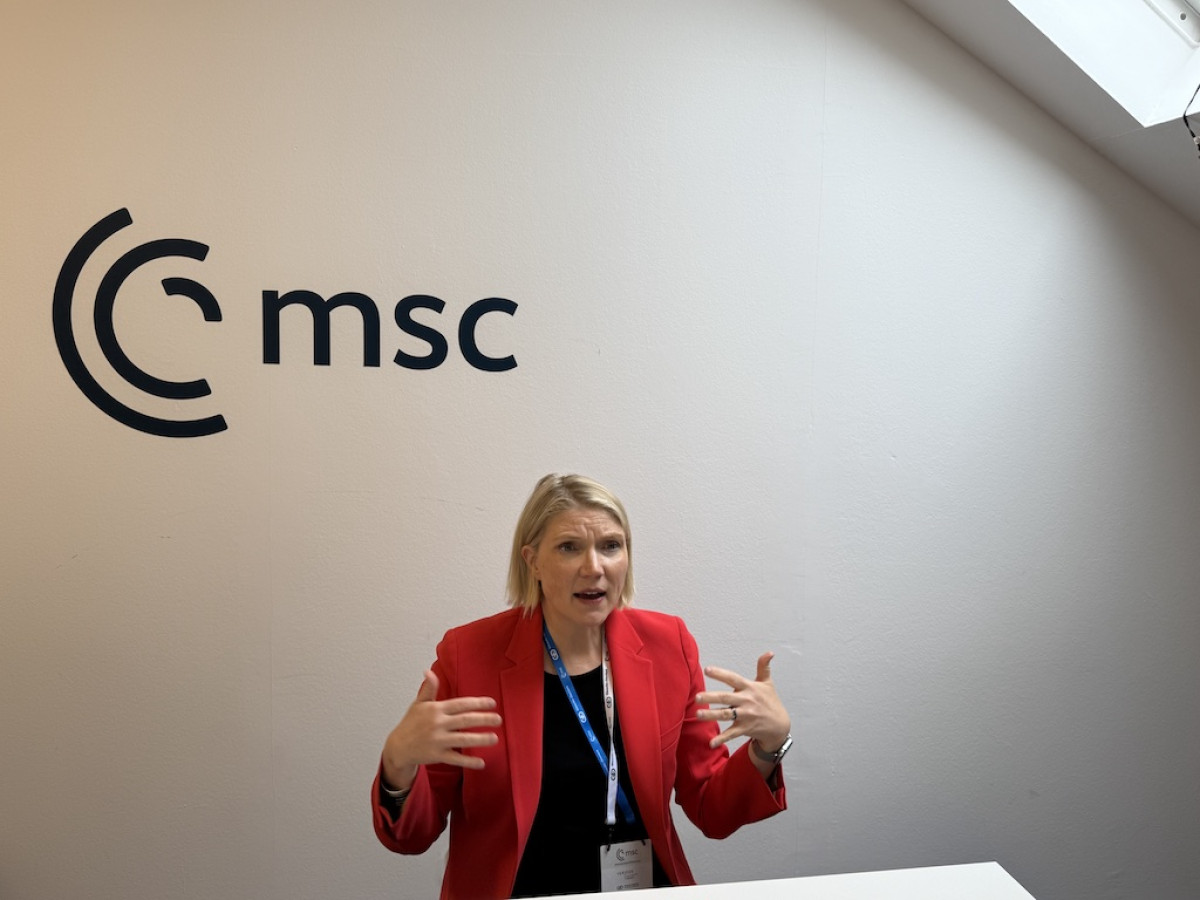
Thank you for sitting down with Agenda Pública. We’ve got your book in front of us, The American Wake-Up Call. What exactly is the American wake-up call?
It’s fundamentally a message to Europeans. Also to Germans in an election year, but above all to Europeans: be clear-eyed, and develop a stricter strategic mindset—what I call "strategic creativity"—in thinking about the relationship with the United States.
The book maps the beginnings of the systemic destruction by the Trump Administration that we’ve seen over the past year, something that to many Europeans feels extremely accelerated. This U.S. administration has done something that Orbán, Erdoğan, even the PiS government in Poland, failed to do: it has tried to tackle all areas of political and economic life in the United States at the same time, undergirded by the ideological beliefs of some of the key architects of the MAGA movement. Some are very clear; others are still becoming apparent.
Give us a brief tour of that long arc. Where do you begin it? How did we get to November 2024?
The premise of the book is to go back, in part, to the visionary intent of the American founders and the revolutionary ambition for the Declaration of Independence and the Constitution that followed. I wrote it in the year the United States turns 250, which manifested three inalienable rights: "life, liberty, and the pursuit of happiness".
A lot of us hear "the pursuit of happiness" now and think of American capitalism and its unbridled nature. That was not Jefferson’s intention. The idea was that this republic—newly forged, created from compromise, and then defended in blood—had to be continuously invested in. Thomas Jefferson saw the ongoing threats to democracy and from the start demanded eternal vigilance - only then can freedom be realized.
Over 30 years, the American system took its eye off the ball of strengthening democracy from the inside. The degradation of institutional trust doesn’t happen over night, including weakening of the fourth estate: a functional media.
The compromises that made the Declaration and the Constitution possible, were volatile. Writing in 1787, a state philosopher who went by the pseudonym "Cato," but was likely the governor of New York George Clinton, wrote that "if a president is possessed of ambition, he has power and time sufficient to ruin his country. And while there have been presidential failings in the past - including the politicization of the Justice Department and FBI in the Nixon years - norms and morals seemed to govern the office of the Presidency such that the United States was spared such a fate - until now.
In the book I investigate what structural elements changes over time made the second Trump administration and its ambitions to dismantle core functions of democracy possible? Politically much begins in the late 1980s with the fall of the Berlin Wall. For Europe, that was the beginning of Pax Americana and all things good: the West "won".
But for the Republican Party in the late ’80s, a couple of things became clear. Demographically, they were unlikely to win another popular vote for president. Since then, it’s only happened twice: 2004 with George W. Bush, and the miracle of 2024 with Donald Trump. They needed a different strategy. With the end of the outside enemy - the Soviet Union - they needed an enemy on the inside.
What used to work was: "we, the Republicans, are the bulwark against communism. If you vote the Democrats in…"—that long McCarthy line in American history. It didn’t work any more. In ’89, ’90, when the Wall came down, people like Newt Gingrich, who were charged with strategy inside the party, required a new narrative focused on the enemy within.
President Reagan’s deregulation of the media opens the doors for that language to enter a wider public debate, becoming part of a bifurcation of the media space into partisan environments. The strategists behind these moves - including Roger Ailes - then become major stewards of the capitalization of opinion-based information. Ailes goes on to create Fox News. Later, a Clinton decision in the early years of the Internet makes platform providers not liable for the content traded on these platforms, paving the way for information bubbles that now frame the perceived realities of many Americans.
_(1)-1920x1080.jpg) Cathryn Clüver Ashbrook is an expert on American politics. Photo: Agenda Pública
Cathryn Clüver Ashbrook is an expert on American politics. Photo: Agenda Pública
Wasn’t the rise of the PACs part of this?
The PACs - the consequences of the 2010 Supreme Court decision in the "Citizens United" case serve in an accelerating function: That’s when all the money comes into the system.
But in the meantime, you have a weakening of the idea of institutional facts, and what facts are that you can trust. That’s a slow-moving machine. In the Clinton years, there’s early massive market deregulation. Then you move into the internet era.
The changes to the media market, the information landscape, and the weakening of institutional trust run along one long line, but in stages. You end up with figures like Steve Bannon manipulating discourse, creating dystopian "realities", changing the narrative, to where we are now at the Munich Security Conference: Marco Rubio, the son of Cuban refugees, retelling a story of American history that’s entirely white.
It is important to understand that the instrumentalization of these slow-moving phenomena is the genius of the MAGA movement’s strategists. In some cases they contributed to the acceleration, in other areas they instrumentalized the emerging distances Americans had to one another - their retreat into social media bubbles, the hardening of partisan lines. While they were engaged in testing the strength of norms and rules, they simultaneously looked for legitimation of their rule-breaking behavior.
The reinterpretation of Article II of the Constitution is the beginning. "Unitary Executive Power," is the idea which MAGA strategists and their constitutional legal advisors wager on the word "vested," interpreted as being absolute. Congress, in their interpretation, simply hands over its power to the Executive. That is Russel Vought’s justification for an illegal maneuver called "impoundment," where the President reclaims previously Congress-appropriated funds, or claims authority to destroy the bureaucratic system of the United States from the inside. Agencies, so the theory goes, are instruments of the Executive branch and so that branch of power has absolute control - even if key agencies, like the Federal Reserve, the SEC or the FCC were set up by Congress to be independent and ensure expert control.
So what have we seen over this year? An administration ruling through executive order and creating new realities even if the judicial system pushes back. Those perceived new realities are reinforced by a shrinking media space. As media ownership becomes concentrated in fewer and fewer hands, the message space narrows, and what Americans hear becomes much smaller. Even if executive orders are threatened, norms have already been broken and checks and balances weakened.
In the first administration, Trump did three historic things for the neo-nationalist conservative movement, or the white nationalist conservative movement powered by evangelicals. Three things no previous Republican president has been able to do.
First, he changed the nature of the Supreme Court - a conservative majority for the foreseeable future. That check and balance is weakened, or no longer there. The Supreme Court, by and large, finds in favor of the president: the immunity decisions, the idea for ICE to be able to go after people who are not typically white, many things of that order.
Second, abortion: the ending of Roe v. Wade. A long-term evangelical project that started in the ’70s in Colorado Springs. Trump made that happen and locked in a base.
Why does that matter? Because in a country of immigrants and pluralism, before you learn how a bill becomes a law, you learn how to negotiate difference. Here they’re saying: no, that’s no longer needed. And the integration of American schools—Brown v. Board of Education—the civil rights movement was about that.
-1920x1080.jpg)
What’s astonishing listening to this is the long sweep of history—and what Europeans were thinking about the US, or not thinking about it, all that time. In Europe we have had long years of military dependency, procurement dependency, and maybe not wanting to see what was really happening in American politics. Even when Trump was first elected, the mantra was: "take him seriously but not literally"; "the grown-ups will contain him". Then he loses office, Biden returns, and it’s: "America’s back". After that comes 2024, and the belief "there’s no way Trump can win again". Why have we Europeans been so blind to this for so long?
Part of it is that we failed to understand that domestic politics always influences foreign policy, and vice versa.
And when people want to make predictions about the fate of Trump, I keep saying: look at Hungary and Turkey, and look behind the tech bubble, at fundamentals. Autocratization, kleptocracy and oligarchy come with massive economic downsides - and then a greater drive to control a suffering electorate.
This MAGA government hasn’t just meddled with governance. They have also meddled in American domestic economic life. Less successfully, and this is where it starts to become a danger to the Trump system, but they have meddled across it.
Attempting to get elite American universities to pay for workforce development programs - as is the case in many of the "deals" struck with the Ivy League universities - is incongruent because as much as this administration is deregulating the AI and semi-conductor industries it is factually preventing re-industrialization.
On tariffs - the Kiel Institute just its newest analysis on this - but we knew it: American consumers pay. Median American families: $1,000. Health care costs are rising. Long-term unemployment is up. And it’s partly connected to a shrinking industrial base.
Then you get to farmers. You get rid of USAID. Half the farmers producing shelf-stable grains, and the agricultural research in universities in Iowa and Indiana, were had their biggest client in USAID. You take it away, then what? You put tariffs on China, which means no soybeans going to China, leaving American farmers - again - to search for alternative crops and when that fails, the government has to come in with massive subsidies to fix a problem of its own making. Next, the government gives $20 billion, then a total of $40 billion, and massive IMF stewarded debt-relief to Argentina, and then Argentina starts selling soybeans to China. Its no surprise that American farmers are unhappy. Deportation policies have meant skilled farm workers are staying away, are being deported or are actively leaving voluntarily, while Americans aren’t stepping up to do these jobs. Imbalances in the economy are everywhere and across all sectors, bar AI.
It seems as if this administration has yet to realize the interconnected issues of all of their economic meddling, in part because bureaucratic expertise has been voided through DOGE and massive efforts to reduce expertise within the system - much of it, by the way, not actually residing in Washington, including the local expertise of the Departments of Agriculture and Forestry.
Under the tech bubble, as you will see more clearly over the course of this year, a homegrown, homemade economic crisis is emerging. That will affect the voters in the coalition Trump mobilized again for this remarkable historic victory.
And who will be blamed for that in the midterms?
President Trump will come up with plenty of targets. But in some respects that is almost beside the point. The system-control side has been clear and directed - they have been able to subvert and destroy the democratic and bureaucratic system in the United States - the policy layer on top has been a mess. That clash means that, to retain power, they need to do what we’ve seen accelerate over the last six months: attempt to control elections. It is deeply autocratic behavior.
What do you mean by bits from the first administration?
The legal case against Maduro, the Manhattan case, was written by Emil Bove in the first administration. Emil Bove later became the president’s personal lawyer.
-1920x1080.jpg)
And Greenland? He was talking about that in the first administration too.
Yes. The point is: there are personal interests in Trump’s immediate circle on these foreign policy issues that have very little to do with Realpolitik and everything to do with motivating resources to steward both a campaign for MAGA in the midterms but also to finance the influencing operations ahead of the elections in November. The first person to profit from the incursion in Venezuela was a commodity trader who gave the last Trump campaign $6 million; the "Greenland purchase," idea is the brainchild of billionaire Ronald Lauder, who donated $1.5 million to the last Trump campaign. These foreign policy maneuvers and the domestic policy pay-off have to be seen in concert.
Then widen the aperture, take a breath, and sort out your weaknesses. Canadian Prime Minister Mark Carney did not give his now famed Davos speech on Middle Powers without the Canadians having played through invasion scenarios for months, so that he could find language that was direct and clear-eyed about Canada’s own capacities.
Europe should do the same. Identify strategic assets you can deploy when the US starts having massive economic problems, which they will.
You mean assets like what? Tariffs?
Immediate responses to threats and long-term moves to take the sting out of threats that could yet emerge from the White House. Europeans have done more work on how the anti-coercion instrument would work in practice, and how to compensate companies that lose out when you enforce these mechanisms. That has gone a long way in sorting it out, but that is a tactical response, not a strategic one.
Which levers are most valuable for Europeans?
We saw it in Davos: Trump responds to markets and he responds to polling. That combination on Greenland, polling plus markets, worked. And at the end of the Davos speech, when he said: "if you start trying to pull out of American stock and bond markets, we will remember"—whatever that meant—the point is there mere floating of potential realities worked and the President backed down.
Do you think the small European troop deployments moved the needle, or was it more those other factors?
In Davos the President was responding to a reconnaissance mission. The fact that he seemed threatened by a short-term recon mission shows how weak our functional diplomacy is. The Bundeswehr sent 15 soldiers to take a look, they came back an entire day early from their mission and to the White House it is read as an offensive action. That suggests massive communication problems.
And on the economic side, Europe has tools, but it requires changing how we do industrial policy. In Germany in particular, politics and business decisions have long been separated. Yes, the chancellor takes a business delegation to China, but then business does business and politics does politics.
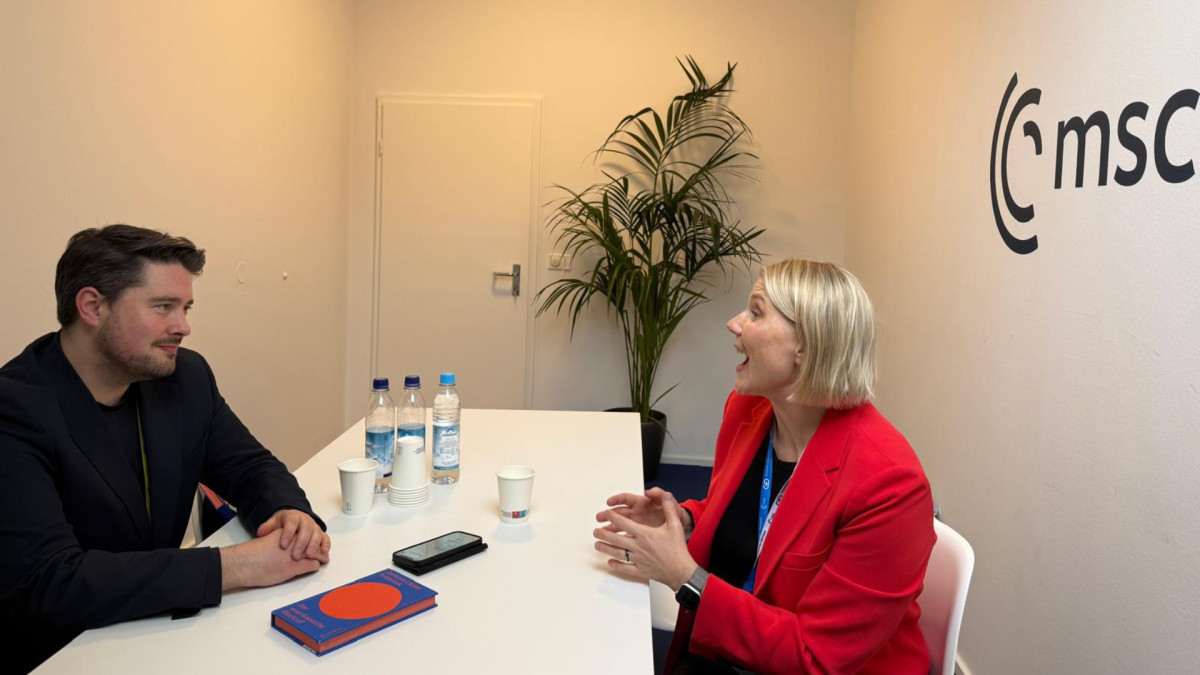
We don’t even have the language or the framework to think about this level of state capitalism.
The Americans would argue that the Trump interventions - golden shares, for instance - are just mimicking what Europe has done for a long time to protect and advance its economic champions. However, in the European case these moves have never been explicitly linked to offensive economic interests, which would constitute true economic statecraft. Everything has to serve the national interest at this moment. That requires a different discourse with European companies because as pain points in the US become obvious, Europeans have mechanisms to alleviate the pain - through investments but also through operational excellence, including robotics, electronics - machine building expertise that exists only in a few areas in the world, including Germany and Italy. Deploying these "tools" judiciously, politically could increase Europe’s hedging capacities. Those are power assets. In diplomatic terms, I would bring them into a hedging conversation.
That requires building an undergirding of economic statecraft inside Europe so you can deploy everything. Because, as I say in the book, the Trump administration is willing to use every tool, every tactic, to reach its objectives.
We heard it again yesterday, and I heard it here last year: Americans are happy to use what they call a "cowboy mentality". Rubio spoke admiringly about the Spanish cowboys. They want fast, and they want things to move.
Talking about Rubio: his speech was immediately called reassuring by some people on the stage, and even in some press write-ups. A message of reassurance, of embracing Europe. I don’t think that’s true. My sense is very few people here actually found it reassuring, probably including those who used the word. But you talk about the conversation we need to have to become more resilient as Europeans. There’s also this approach of trying to contain Trump—"contain him while we build independence". What message does that send to European voters?
That was the first thing I thought when I saw it.
You could argue that the people standing and clapping were also signalling back to Washington, because you always have to see the domestic piece too. In the race toward 2028, there’s a strong contest between Marco Rubio and J.D. Vance, and a speech like that includes telegraphing back to Washington. And maybe people in the room were telegraphing back to Donald Trump, to demonstrate their willingness to engage in partnership.
But it’s extremely dangerous for credibility. People stood and applauded, and then the minute they came out, many said: wow, what a white-revisionist speech.
There was a lot of dog-whistling in whitenationalist language aimed at a domestic audience. He uses English concepts, but they translate. UK audiences should see it too. The ethnonationalist attitudes were there.
And even if your goal is to send a message to Washington, your constituents are watching. I saw that big picture of the German defense minister applauding. He was the first person last year, right after J.D. Vance gave that speech, to get up and say: no way, no how. And he was similarly critical in his comments this year - but we all did see him standing in the ballroom of the Bayerischer Hof - when there are important state elections ahead in Germany.
German federalism is different than American federalism, even though structurally we inherited it from the Americans. But if you get an AfD governor in Saxony-Anhalt in September of this year, it will begin to break the system from the inside. Much of the longer-term corrosive elements that nurtured the acceleration in the US are already visible in domestic politics in Germany and all of Europe, as I illustrate in the book.
So for any European domestic audience, that moment of applause was dangerous. Afterwards, you can’t say: "I understood the racist dog-whistling, but I was applauding the quieter tone." That doesn’t work. Your voters are watching, too.
Let me ask you about the relationship between Trump and far-right movements in Europe. Is it good for far-right parties to have a good relationship with Trump, or can it backfire? If you’re a nationalist, you should protect your country. When Trump attacks Europe, or a European country…
You’re right: it’s a tricky moment for right-wing parties that don’t have a coherent framework of much of anything.
They want American money and American strategies. It works more easily in the UK, where there isn’t the same temptation of Russia. It’s much trickier for a party like the AfD, where for a long time the lure has been anti-Western and pro-Russian, especially to capture the German east.
There has been an early love affair, with senior figures in the party traveling to Washington to make the case that freedom of speech, freedom of political expression is under threat in Germany - and strong requests for the U.S. administration to keep up its criticism. The anti-EU stance bridges the Trump sympathizers and the pro-Russian elements in the party - but the historically grown anti-American roots of the party see general incongruence. If a normalization of Russia by the Americans comes to pass, in the way that Trump has long hoped it will, then perhaps these differences will nullify.
There are major incongruences between the ideological components coming out of Russia and out of the United States. What unifies them is this odd admiration for white nativism. This administration thinks Russia is admirable because it’s supposedly a Christian nation, despite the fact that Russia has 190 ethnic minority groups and is one of the most ethnically diverse countries in the world. But they don’t see that. They look at Putin, at how white he is, and at the conservative church that has embraced his approach to Ukraine. They see anti-woke, and authoritarian control, which Donald Trump thinks is wonderful.
The AfD also knows they need resources from the United States. The National Security Strategy implies that financial support for these movements will now come directly from the U.S. Department of State and other government resources.
The AfD wants the support, but it’s full of contradictions - exposing these contradictions and those embedded in the MAGA movement was part of why I wanted to write the book. I wanted people to understand the system and intention behind the destruction, wanted them to understand that their success did not happen in a vacuum or through accelerated genius, but through a tactical observation of the country’s weaknesses, and a strategic manipulation of these weaknesses with elements from the autocratic playbook to achieve this kind of acceleration. Over 40% of Germans don’t trust government institutions, the media market is shrinking across Europe, public schools have become the target of right-wing groups to recruit and create an atmosphere of denunciation and mistrust, as have other spaces that formerly held up social cohesion. I have been very heartened by the large audiences at my readings and events - that means the message is getting through: These shift are happening right here, right now - they are a dangerous breeding ground for further radicalization, as we have seen in the United States. The time for concerted action - to protect institutions, fortify the legal context, including party financing laws, double-down on political education in schools - that time is now.
Many thanks.
In a conversation with Jeremy Cliffe, editorial director of the European Council on Foreign Relations, Clüver Ashbrook explains how this dismantling did not happen overnight, but is rather the result of decades of polarization, media deregulation, and an aggressive reinterpretation of the Constitution. The strategists of the MAGA movement have forcefully relied on the "systematic weakening of our institutions" to concentrate presidential power, rewriting history and undermining the foundational pillars of a republic that is rapidly approaching its 250th anniversary.
Against this backdrop, the message for the Old Continent is an unmistakable wake-up call. It is no longer enough to wait for institutional checks and balances to contain the chaos; Europe must face reality head-on. Clüver Ashbrook urges us to develop "strategic creativity" to rethink our relationship with Washington and, most importantly, to safeguard our own democracies: "stop being so reactive. Take a step back, recognize the patterns, and see how the pieces connect."
Clüver Ashbrook during the conversation with Agenda Pública. Foto: Agenda Pública
Thank you for sitting down with Agenda Pública. We’ve got your book in front of us, The American Wake-Up Call. What exactly is the American wake-up call?
It’s fundamentally a message to Europeans. Also to Germans in an election year, but above all to Europeans: be clear-eyed, and develop a stricter strategic mindset—what I call "strategic creativity"—in thinking about the relationship with the United States.
The book maps the beginnings of the systemic destruction by the Trump Administration that we’ve seen over the past year, something that to many Europeans feels extremely accelerated. This U.S. administration has done something that Orbán, Erdoğan, even the PiS government in Poland, failed to do: it has tried to tackle all areas of political and economic life in the United States at the same time, undergirded by the ideological beliefs of some of the key architects of the MAGA movement. Some are very clear; others are still becoming apparent.
"One intention is to enable Europeans internally and make our democracies stronger so that systematic weakening of our democratic institutions and processes doesn’t happen to us"But the arc I map out is much longer than we Europeans want to give themselves credit for foreseeing. That’s what I try to do with the book: map the long arc and then the accelerated interventionist moves by this administration, so we have better diagnostic tools. One intention is to enable Europeans internally and make our democracies stronger so that systematic weakening of our democratic institutions and processes doesn’t happen to us, especially since this administration aims to export its strategies now. The other is to have better, more creative answers.
Give us a brief tour of that long arc. Where do you begin it? How did we get to November 2024?
The premise of the book is to go back, in part, to the visionary intent of the American founders and the revolutionary ambition for the Declaration of Independence and the Constitution that followed. I wrote it in the year the United States turns 250, which manifested three inalienable rights: "life, liberty, and the pursuit of happiness".
A lot of us hear "the pursuit of happiness" now and think of American capitalism and its unbridled nature. That was not Jefferson’s intention. The idea was that this republic—newly forged, created from compromise, and then defended in blood—had to be continuously invested in. Thomas Jefferson saw the ongoing threats to democracy and from the start demanded eternal vigilance - only then can freedom be realized.
Over 30 years, the American system took its eye off the ball of strengthening democracy from the inside. The degradation of institutional trust doesn’t happen over night, including weakening of the fourth estate: a functional media.
"The strategists behind this transformation get actively and aggressively build on this weakening to systematic dismantle the architecture of democracy and reinterpret the constitution to benefit presidential power"Democracy demands active engagement. The strategists behind this transformation get actively and aggressively build on this weakening to systematic dismantle the architecture of democracy and reinterpret the constitution to benefit presidential power. Forbes and Moody’s degraded the American credit rating a couple of times, not because of the first Trump administration, or the Trump-Biden change, or the second advent of the Trump administration, but because of 20 years of governance dysfunction.
The compromises that made the Declaration and the Constitution possible, were volatile. Writing in 1787, a state philosopher who went by the pseudonym "Cato," but was likely the governor of New York George Clinton, wrote that "if a president is possessed of ambition, he has power and time sufficient to ruin his country. And while there have been presidential failings in the past - including the politicization of the Justice Department and FBI in the Nixon years - norms and morals seemed to govern the office of the Presidency such that the United States was spared such a fate - until now.
In the book I investigate what structural elements changes over time made the second Trump administration and its ambitions to dismantle core functions of democracy possible? Politically much begins in the late 1980s with the fall of the Berlin Wall. For Europe, that was the beginning of Pax Americana and all things good: the West "won".
But for the Republican Party in the late ’80s, a couple of things became clear. Demographically, they were unlikely to win another popular vote for president. Since then, it’s only happened twice: 2004 with George W. Bush, and the miracle of 2024 with Donald Trump. They needed a different strategy. With the end of the outside enemy - the Soviet Union - they needed an enemy on the inside.
What used to work was: "we, the Republicans, are the bulwark against communism. If you vote the Democrats in…"—that long McCarthy line in American history. It didn’t work any more. In ’89, ’90, when the Wall came down, people like Newt Gingrich, who were charged with strategy inside the party, required a new narrative focused on the enemy within.
"President Reagan’s deregulation of the media opens the doors for that language to enter a wider public debate, becoming part of a bifurcation of the media space into partisan environments"In 1990, Gingrich published, "Language: A Key Mechanism of Control," - a toolkit for the 1994 Congressional race. Changes to political language and political media happened almost simultaneously: The end of the Media Fairness Act in 1987 in the Reagan administration made the advent of partisan news possible, while Gingrich reshaped political language on the right - he wanted Republicans to be "nasty." Descriptions of the political opponent as "anti-American, they’re anti-Christian" - enters the Republican vocabulary with Gingrich. This major shift in political language begins a weakening of political norms.
President Reagan’s deregulation of the media opens the doors for that language to enter a wider public debate, becoming part of a bifurcation of the media space into partisan environments. The strategists behind these moves - including Roger Ailes - then become major stewards of the capitalization of opinion-based information. Ailes goes on to create Fox News. Later, a Clinton decision in the early years of the Internet makes platform providers not liable for the content traded on these platforms, paving the way for information bubbles that now frame the perceived realities of many Americans.
Wasn’t the rise of the PACs part of this?
The PACs - the consequences of the 2010 Supreme Court decision in the "Citizens United" case serve in an accelerating function: That’s when all the money comes into the system.
But in the meantime, you have a weakening of the idea of institutional facts, and what facts are that you can trust. That’s a slow-moving machine. In the Clinton years, there’s early massive market deregulation. Then you move into the internet era.
The changes to the media market, the information landscape, and the weakening of institutional trust run along one long line, but in stages. You end up with figures like Steve Bannon manipulating discourse, creating dystopian "realities", changing the narrative, to where we are now at the Munich Security Conference: Marco Rubio, the son of Cuban refugees, retelling a story of American history that’s entirely white.
"This administration is now asking Americans to not trust their own eyes and their own ears, which is literally Orwellian"We’re coming up to the 250th anniversary in July 2026. Turning Point USA, Charlie Kirk’s organization, is building a national curriculum that eradicates all "blackness" from American history. There’s an AI exhibit right now in the Eisenhower Executive Office Building about the American founders that negates that Benjamin Franklin was a slave owner. There’s a whole dystopian whitewashing going on. On the fifth anniversary of the attack on the American capitol - January 6, 2021 - the official White House website unveiled a wholesale retelling of the events of that day, which hundreds of thousands of Americans followed on live television. Both in the retelling of lived history and current events, think only of Minnesota and the killings of Renee Good and Alex Pretti, this administration is now asking Americans to not trust their own eyes and their own ears, which is literally Orwellian. This administration is now openly asking Europeans to come along with their retelling of "Western civilization," as a white, nativist project.
It is important to understand that the instrumentalization of these slow-moving phenomena is the genius of the MAGA movement’s strategists. In some cases they contributed to the acceleration, in other areas they instrumentalized the emerging distances Americans had to one another - their retreat into social media bubbles, the hardening of partisan lines. While they were engaged in testing the strength of norms and rules, they simultaneously looked for legitimation of their rule-breaking behavior.
The reinterpretation of Article II of the Constitution is the beginning. "Unitary Executive Power," is the idea which MAGA strategists and their constitutional legal advisors wager on the word "vested," interpreted as being absolute. Congress, in their interpretation, simply hands over its power to the Executive. That is Russel Vought’s justification for an illegal maneuver called "impoundment," where the President reclaims previously Congress-appropriated funds, or claims authority to destroy the bureaucratic system of the United States from the inside. Agencies, so the theory goes, are instruments of the Executive branch and so that branch of power has absolute control - even if key agencies, like the Federal Reserve, the SEC or the FCC were set up by Congress to be independent and ensure expert control.
So what have we seen over this year? An administration ruling through executive order and creating new realities even if the judicial system pushes back. Those perceived new realities are reinforced by a shrinking media space. As media ownership becomes concentrated in fewer and fewer hands, the message space narrows, and what Americans hear becomes much smaller. Even if executive orders are threatened, norms have already been broken and checks and balances weakened.
In the first administration, Trump did three historic things for the neo-nationalist conservative movement, or the white nationalist conservative movement powered by evangelicals. Three things no previous Republican president has been able to do.
First, he changed the nature of the Supreme Court - a conservative majority for the foreseeable future. That check and balance is weakened, or no longer there. The Supreme Court, by and large, finds in favor of the president: the immunity decisions, the idea for ICE to be able to go after people who are not typically white, many things of that order.
Second, abortion: the ending of Roe v. Wade. A long-term evangelical project that started in the ’70s in Colorado Springs. Trump made that happen and locked in a base.
"In a country of immigrants and pluralism, before you learn how a bill becomes a law, you learn how to negotiate difference"Third, dismantling American public education, little by little. In the "one big, beautiful bill", for instance, if you fund a religious school, you get the same amount you put in back out as tax relief. Not 5%, not 3%—all of it. It’s basically like money laundering in the benefit of taking apart the public school system. Diversity is learned in the public school - which is why it has been a long-time Evangelical goal to see public education diminished.
Why does that matter? Because in a country of immigrants and pluralism, before you learn how a bill becomes a law, you learn how to negotiate difference. Here they’re saying: no, that’s no longer needed. And the integration of American schools—Brown v. Board of Education—the civil rights movement was about that.
His latest book is 'The American Wake-Up Call'. Photo: Agenda Pública
What’s astonishing listening to this is the long sweep of history—and what Europeans were thinking about the US, or not thinking about it, all that time. In Europe we have had long years of military dependency, procurement dependency, and maybe not wanting to see what was really happening in American politics. Even when Trump was first elected, the mantra was: "take him seriously but not literally"; "the grown-ups will contain him". Then he loses office, Biden returns, and it’s: "America’s back". After that comes 2024, and the belief "there’s no way Trump can win again". Why have we Europeans been so blind to this for so long?
Part of it is that we failed to understand that domestic politics always influences foreign policy, and vice versa.
And when people want to make predictions about the fate of Trump, I keep saying: look at Hungary and Turkey, and look behind the tech bubble, at fundamentals. Autocratization, kleptocracy and oligarchy come with massive economic downsides - and then a greater drive to control a suffering electorate.
This MAGA government hasn’t just meddled with governance. They have also meddled in American domestic economic life. Less successfully, and this is where it starts to become a danger to the Trump system, but they have meddled across it.
"A volatile American President has not provided the secure economic environment needed for massive investments in the United States industrial base"Remember: the promise was reindustrialization. If you go to the X page of the Labor Department you’ll see all these Aryan-looking men and "your country needs you" posters. The reality, though, is that Industrial production is contracting, not expanding, for two reasons: Investments are stalling, both domestically and those promised to come in through international trade deals, i.e. from Europe and Japan. These are being slow-walked for a reason - insecurity. A volatile American President has not provided the secure economic environment needed for massive investments in the United States industrial base.
Attempting to get elite American universities to pay for workforce development programs - as is the case in many of the "deals" struck with the Ivy League universities - is incongruent because as much as this administration is deregulating the AI and semi-conductor industries it is factually preventing re-industrialization.
On tariffs - the Kiel Institute just its newest analysis on this - but we knew it: American consumers pay. Median American families: $1,000. Health care costs are rising. Long-term unemployment is up. And it’s partly connected to a shrinking industrial base.
Then you get to farmers. You get rid of USAID. Half the farmers producing shelf-stable grains, and the agricultural research in universities in Iowa and Indiana, were had their biggest client in USAID. You take it away, then what? You put tariffs on China, which means no soybeans going to China, leaving American farmers - again - to search for alternative crops and when that fails, the government has to come in with massive subsidies to fix a problem of its own making. Next, the government gives $20 billion, then a total of $40 billion, and massive IMF stewarded debt-relief to Argentina, and then Argentina starts selling soybeans to China. Its no surprise that American farmers are unhappy. Deportation policies have meant skilled farm workers are staying away, are being deported or are actively leaving voluntarily, while Americans aren’t stepping up to do these jobs. Imbalances in the economy are everywhere and across all sectors, bar AI.
It seems as if this administration has yet to realize the interconnected issues of all of their economic meddling, in part because bureaucratic expertise has been voided through DOGE and massive efforts to reduce expertise within the system - much of it, by the way, not actually residing in Washington, including the local expertise of the Departments of Agriculture and Forestry.
Under the tech bubble, as you will see more clearly over the course of this year, a homegrown, homemade economic crisis is emerging. That will affect the voters in the coalition Trump mobilized again for this remarkable historic victory.
And who will be blamed for that in the midterms?
President Trump will come up with plenty of targets. But in some respects that is almost beside the point. The system-control side has been clear and directed - they have been able to subvert and destroy the democratic and bureaucratic system in the United States - the policy layer on top has been a mess. That clash means that, to retain power, they need to do what we’ve seen accelerate over the last six months: attempt to control elections. It is deeply autocratic behavior.
"That clash means that, to retain power, they need to do what we’ve seen accelerate over the last six months: attempt to control elections. It is deeply autocratic behavior"Europeans, meanwhile, failed to connect foreign policy impulses from the first Trump administration - Greenland and Venezuela were ideas that go back to the first four years of Trump - and are now failing to see the structural shifts in the country which will affect the political maneuvers this administration will go through to retain power and stewardship.
What do you mean by bits from the first administration?
The legal case against Maduro, the Manhattan case, was written by Emil Bove in the first administration. Emil Bove later became the president’s personal lawyer.
Clüver Ashbrook attended the Munich Security Conference. Photo: Agenda Pública
And Greenland? He was talking about that in the first administration too.
Yes. The point is: there are personal interests in Trump’s immediate circle on these foreign policy issues that have very little to do with Realpolitik and everything to do with motivating resources to steward both a campaign for MAGA in the midterms but also to finance the influencing operations ahead of the elections in November. The first person to profit from the incursion in Venezuela was a commodity trader who gave the last Trump campaign $6 million; the "Greenland purchase," idea is the brainchild of billionaire Ronald Lauder, who donated $1.5 million to the last Trump campaign. These foreign policy maneuvers and the domestic policy pay-off have to be seen in concert.
"Ben Haddad said on the Munich stage and what I say in the book: stop being so reactive. Step back, recognize the patterns, see how these things connect."And this brings us back to Europe, and to what French Europe-Minister Ben Haddad said on the Munich stage and what I say in the book: stop being so reactive. Step back, recognize the patterns, see how these things connect. At minimum, be smart enough in your diplomatic diagnostics to see it.
Then widen the aperture, take a breath, and sort out your weaknesses. Canadian Prime Minister Mark Carney did not give his now famed Davos speech on Middle Powers without the Canadians having played through invasion scenarios for months, so that he could find language that was direct and clear-eyed about Canada’s own capacities.
Europe should do the same. Identify strategic assets you can deploy when the US starts having massive economic problems, which they will.
You mean assets like what? Tariffs?
Immediate responses to threats and long-term moves to take the sting out of threats that could yet emerge from the White House. Europeans have done more work on how the anti-coercion instrument would work in practice, and how to compensate companies that lose out when you enforce these mechanisms. That has gone a long way in sorting it out, but that is a tactical response, not a strategic one.
Which levers are most valuable for Europeans?
We saw it in Davos: Trump responds to markets and he responds to polling. That combination on Greenland, polling plus markets, worked. And at the end of the Davos speech, when he said: "if you start trying to pull out of American stock and bond markets, we will remember"—whatever that meant—the point is there mere floating of potential realities worked and the President backed down.
Do you think the small European troop deployments moved the needle, or was it more those other factors?
In Davos the President was responding to a reconnaissance mission. The fact that he seemed threatened by a short-term recon mission shows how weak our functional diplomacy is. The Bundeswehr sent 15 soldiers to take a look, they came back an entire day early from their mission and to the White House it is read as an offensive action. That suggests massive communication problems.
"Europe has tools, but it requires changing how we do industrial policy. In Germany in particular, politics and business decisions have long been separated"Because in theory you could say: finally, Europeans are doing better threat assessment. Great. But if it’s interpreted the opposite way, we’re not communicating clearly, or in a way the other side understands. The mobilization of "Arctic Sentry," seems to indicate that on intelligence regarding joint Russian and Chinese moves in the Arctic the U.S. and Europe are aligned. So why continue to imply the Greenland issue remains unsettled, as we heard in Munich. The Europeans are working with that assumption and preparing all strategic options should the issue again rear its head.
And on the economic side, Europe has tools, but it requires changing how we do industrial policy. In Germany in particular, politics and business decisions have long been separated. Yes, the chancellor takes a business delegation to China, but then business does business and politics does politics.
Cliffe and Clüver Ashbrook discuss the United States, the European Union, and geopolitics. Photo: Agenda Pública
We don’t even have the language or the framework to think about this level of state capitalism.
The Americans would argue that the Trump interventions - golden shares, for instance - are just mimicking what Europe has done for a long time to protect and advance its economic champions. However, in the European case these moves have never been explicitly linked to offensive economic interests, which would constitute true economic statecraft. Everything has to serve the national interest at this moment. That requires a different discourse with European companies because as pain points in the US become obvious, Europeans have mechanisms to alleviate the pain - through investments but also through operational excellence, including robotics, electronics - machine building expertise that exists only in a few areas in the world, including Germany and Italy. Deploying these "tools" judiciously, politically could increase Europe’s hedging capacities. Those are power assets. In diplomatic terms, I would bring them into a hedging conversation.
That requires building an undergirding of economic statecraft inside Europe so you can deploy everything. Because, as I say in the book, the Trump administration is willing to use every tool, every tactic, to reach its objectives.
We heard it again yesterday, and I heard it here last year: Americans are happy to use what they call a "cowboy mentality". Rubio spoke admiringly about the Spanish cowboys. They want fast, and they want things to move.
Talking about Rubio: his speech was immediately called reassuring by some people on the stage, and even in some press write-ups. A message of reassurance, of embracing Europe. I don’t think that’s true. My sense is very few people here actually found it reassuring, probably including those who used the word. But you talk about the conversation we need to have to become more resilient as Europeans. There’s also this approach of trying to contain Trump—"contain him while we build independence". What message does that send to European voters?
That was the first thing I thought when I saw it.
You could argue that the people standing and clapping were also signalling back to Washington, because you always have to see the domestic piece too. In the race toward 2028, there’s a strong contest between Marco Rubio and J.D. Vance, and a speech like that includes telegraphing back to Washington. And maybe people in the room were telegraphing back to Donald Trump, to demonstrate their willingness to engage in partnership.
But it’s extremely dangerous for credibility. People stood and applauded, and then the minute they came out, many said: wow, what a white-revisionist speech.
"There was a lot of dog-whistling in whitenationalist language aimed at a domestic audience. He uses English concepts, but they translate. UK audiences should see it too"Aside from the strong white-nativist themes linked to the purported achievements of white civilisation, which negated the Secretary’s own family history, it had a few anti-semitic side swipes, such as when he encouraged the Germans to stop "atoning for their past." A past that includes the systematically organized death of 6 million Jews. To say that in Germany, which sees that work of atonement as never-ending, as self-defining takes some courage – but finds resonance in the AfD party manifesto.
There was a lot of dog-whistling in whitenationalist language aimed at a domestic audience. He uses English concepts, but they translate. UK audiences should see it too. The ethnonationalist attitudes were there.
And even if your goal is to send a message to Washington, your constituents are watching. I saw that big picture of the German defense minister applauding. He was the first person last year, right after J.D. Vance gave that speech, to get up and say: no way, no how. And he was similarly critical in his comments this year - but we all did see him standing in the ballroom of the Bayerischer Hof - when there are important state elections ahead in Germany.
German federalism is different than American federalism, even though structurally we inherited it from the Americans. But if you get an AfD governor in Saxony-Anhalt in September of this year, it will begin to break the system from the inside. Much of the longer-term corrosive elements that nurtured the acceleration in the US are already visible in domestic politics in Germany and all of Europe, as I illustrate in the book.
So for any European domestic audience, that moment of applause was dangerous. Afterwards, you can’t say: "I understood the racist dog-whistling, but I was applauding the quieter tone." That doesn’t work. Your voters are watching, too.
ARTÍCULOS RELACIONADOS
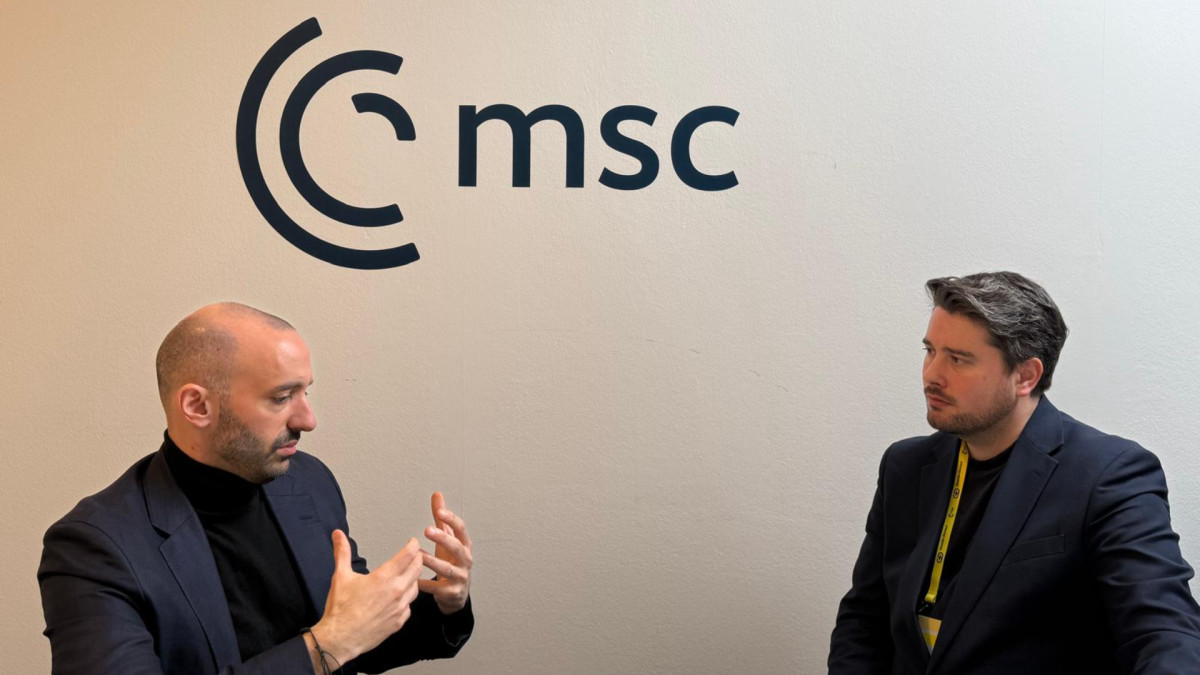
French minister delegate Benjamin Haddad (left) talks with Jeremy Cliffe (right) at the Munich Security Conference.Agenda Pública
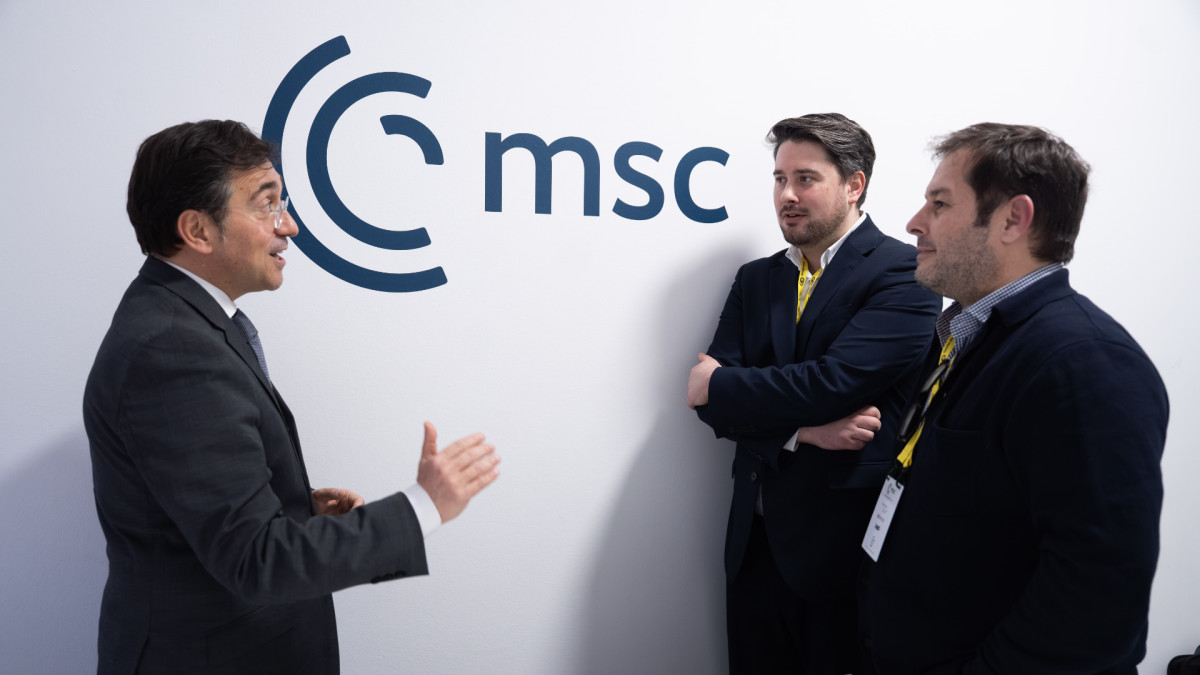
Spanish Foreign Minister José Manuel Albares (left), alongside ECFR editorial director Jeremy Cliffe (center), and the director and editor of 'Agenda Pública', Marc López Plana.Ministry of Foreign Affairs / Saioa Hermosa
Let me ask you about the relationship between Trump and far-right movements in Europe. Is it good for far-right parties to have a good relationship with Trump, or can it backfire? If you’re a nationalist, you should protect your country. When Trump attacks Europe, or a European country…
You’re right: it’s a tricky moment for right-wing parties that don’t have a coherent framework of much of anything.
They want American money and American strategies. It works more easily in the UK, where there isn’t the same temptation of Russia. It’s much trickier for a party like the AfD, where for a long time the lure has been anti-Western and pro-Russian, especially to capture the German east.
There has been an early love affair, with senior figures in the party traveling to Washington to make the case that freedom of speech, freedom of political expression is under threat in Germany - and strong requests for the U.S. administration to keep up its criticism. The anti-EU stance bridges the Trump sympathizers and the pro-Russian elements in the party - but the historically grown anti-American roots of the party see general incongruence. If a normalization of Russia by the Americans comes to pass, in the way that Trump has long hoped it will, then perhaps these differences will nullify.
There are major incongruences between the ideological components coming out of Russia and out of the United States. What unifies them is this odd admiration for white nativism. This administration thinks Russia is admirable because it’s supposedly a Christian nation, despite the fact that Russia has 190 ethnic minority groups and is one of the most ethnically diverse countries in the world. But they don’t see that. They look at Putin, at how white he is, and at the conservative church that has embraced his approach to Ukraine. They see anti-woke, and authoritarian control, which Donald Trump thinks is wonderful.
"Over 40% of Germans don’t trust government institutions, the media market is shrinking across Europe and public schools have become the target of right-wing groups to recruit and create an atmosphere of denunciation and mistrust"The MAGA movement, however, is clear-eyed about where it believes it can serve as stewards of success: It’s not trying to run Marine Le Pen or Jordan Bardella ideologically. They are a product of the French system. They can help with tactics and strategy - and of course with money - but the meddling on messaging is far less direct than elsewhere. The AfD still remains "strategic putty" for MAGA and so more attention lies there.
The AfD also knows they need resources from the United States. The National Security Strategy implies that financial support for these movements will now come directly from the U.S. Department of State and other government resources.
The AfD wants the support, but it’s full of contradictions - exposing these contradictions and those embedded in the MAGA movement was part of why I wanted to write the book. I wanted people to understand the system and intention behind the destruction, wanted them to understand that their success did not happen in a vacuum or through accelerated genius, but through a tactical observation of the country’s weaknesses, and a strategic manipulation of these weaknesses with elements from the autocratic playbook to achieve this kind of acceleration. Over 40% of Germans don’t trust government institutions, the media market is shrinking across Europe, public schools have become the target of right-wing groups to recruit and create an atmosphere of denunciation and mistrust, as have other spaces that formerly held up social cohesion. I have been very heartened by the large audiences at my readings and events - that means the message is getting through: These shift are happening right here, right now - they are a dangerous breeding ground for further radicalization, as we have seen in the United States. The time for concerted action - to protect institutions, fortify the legal context, including party financing laws, double-down on political education in schools - that time is now.
Many thanks.

Jeremy Cliffe
Editorial director and senior policy fellow at the European Council on Foreign Relations
He is based in Berlin. Previously he was international editor of the 'New Statesman'. Before that he spent eight years at The Economist, where he served as bureau chief in Brussels and Berlin, and was first the 'Bagehot' (UK) and then 'Charlemagne' (Europe) columnist. He studied at the universities of Oxford and Harvard.
Ahora en portada
16 de octubre de 2026
16 de octubre de 2026
16 de octubre de 2026
Noticias relacionadas
Hace 34 semanas
France’s plan for a stronger Europe: No strategic sovereignty without Eurobonds
Hace 34 semanas
Spain's roadmap against global disinformation: "The law of the jungle or the law of democracy"
Lo más leído