
Lunes, 19 de octubre de 2026



Jeremy Cliffe en Twitter @JeremyCliffe

Editorial director and senior policy fellow at the European Council on Foreign Relations
He is based in Berlin. Previously he was international editor of the 'New Statesman'. Before that he spent eight years at The Economist, where he served as bureau chief in Brussels and Berlin, and was first the 'Bagehot' (UK) and then 'Charlemagne' (Europe) columnist. He studied at the universities of Oxford and Harvard.
21/03/2026
-1920x1080.jpg)
ECFR editorial director Jeremy Cliffe (left) and senior fellow at the Carnegie Endowment for International Peace (CEIP), Oliver Stuenkel.Agenda Pública
The fracture in the relationship between the U.S. and Europe is having effects that go beyond the West. In this conversation between ECFR editorial director Jeremy Cliffe and German-Brazilian political scientist Oliver Stuenkel, they discuss the meaning of this space because "it is a concept that is not clearly defined even in Europe". They offer a review of geopolitical balances, Europe’s relationship with the Global South, and the future of European institutions in light of the positions adopted at the Munich Security Conference.
21/03/2026
El director editorial del ECFR, Jeremy Cliffe (izquierda) y el sénior 'fellow' en el Carnegie Endowment for International Peace (CEIP), Oliver Stuenkel.Agenda Pública
La fractura en la relación entre EE. UU. y Europa genera efectos más allá de Occidente. En esta conversación entre el director editorial del ECFR, Jeremy Cliffe, y el politólogo y divulgador germano-brasileño Oliver Stuenkel, se discute el significado de este espacio porque "ni siquiera está claro qué forma parte exactamente de Occidente o qué lo define". Proponen un repaso a los equilibrios geopolíticos, la relación de Europa con el Sur Global o el futuro de las instituciones europeas a la luz de las posiciones adoptadas en la Munich Security Conference.
01/03/2026
-1920x1080.jpg)
Jeremy Cliffe interviews Cathryn Clüver Ashbrook, author of 'The American Wake-Up Call' at the MSC 2026.Agenda Pública
Is Europe prepared for the shockwave of democratic dismantling in the United States? In her new book The American Wake-Up Call, the German political scientist Cathryn Clüver Ashbrook warns in Agenda Pública that the current institutional erosion in Washington is not an accident, but a deliberate strategy of "systemic destruction." In an interview conducted in the context of the Munich Security Conference, and with a European radical right already acting as "strategic putty" for the MAGA movement, the author delivers an unmistakable warning to the Old Continent: "stop being so reactive" and safeguard your institutions.
01/03/2026
Jeremy Cliffe entrevista a Cathryn Clüver Ashbrook, autora de 'The American Wake-Up Call' (La llamada de atención estadounidense), en la MSC 2026.Agenda Pública
¿Está Europa preparada para la onda expansiva del desmantelamiento democrático en Estados Unidos? Tras publicar su nuevo libro 'The American Wake-Up Call', la politóloga germano-alemana Cathryn Clüver Ashbrook advierte en 'Agenda Pública’ que la actual erosión institucional en Washington no es un accidente, sino una estrategia deliberada de "destrucción sistémica". En una entrevista realizada en el marco de la 'Munich Security Conference', y con una derecha radical europea que ya actúa como "masilla estratégica" para el movimiento MAGA, la autora lanza un toque de atención insoslayable al Viejo Continente: "dejad de ser tan reactivos" y blindad las instituciones.
16/02/2026
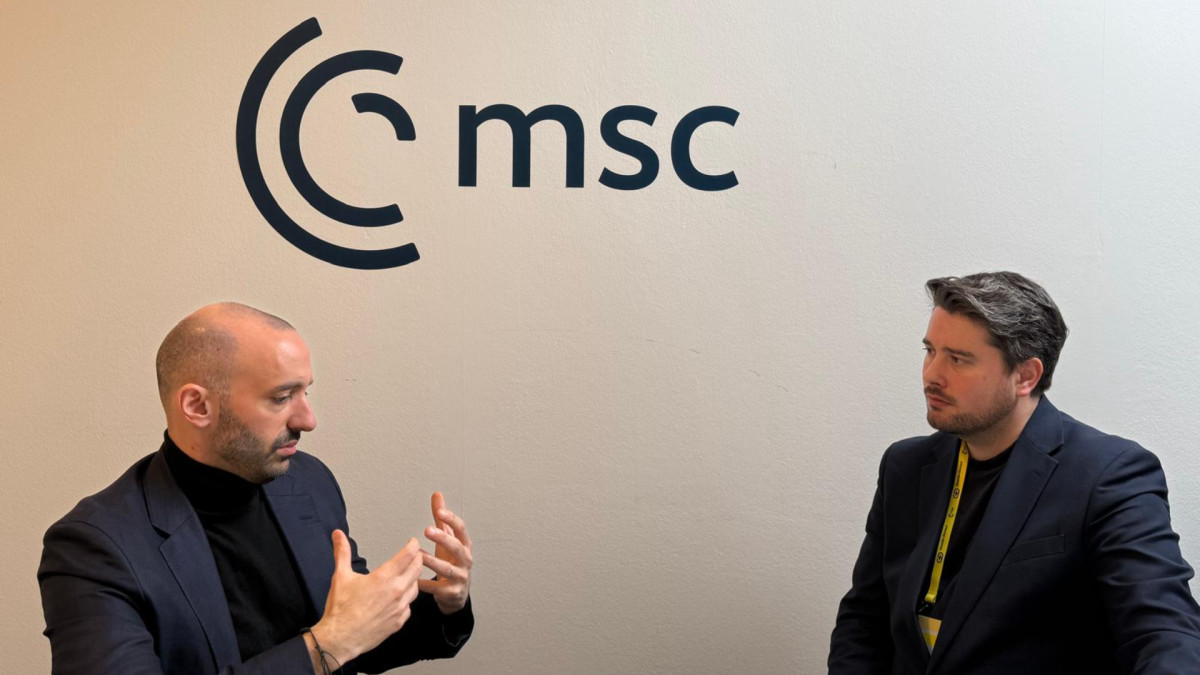
El ministro delegado francés Benjamin Haddad (izquierda) conversa con Jeremy Cliffe (derecha) en la Munich Security Conference.Agenda Pública
Benjamin Haddad, ministro delegado para Europa de Francia, conversa en profundidad con Jeremy Cliffe para 'Agenda Pública'. En la Munich Security Conference, Haddad sostiene que "la soberanía europea depende de su capacidad para actuar como una potencia coercitiva cuando sea necesario", propone una alianza en mercados de capitales con Alemania, Italia y España, advierte de que "no hay razón para que sea un tabú" la emisión conjunta de deuda y concluye que "hay que respaldar la honestidad con fuerza y poder". "Levantémonos como potencia", dice, y Europa tendrá "una relación transatlántica mucho más madura y equilibrada".
16/02/2026
French minister delegate Benjamin Haddad (left) talks with Jeremy Cliffe (right) at the Munich Security Conference.Agenda Pública
Benjamin Haddad, France’s minister delegate for Europe, speaks in depth with Jeremy Cliffe for 'Agenda Pública'. From the Munich Security Conference, Haddad argues that "European sovereignty depends on its ability to act as a coercive power if necessary", proposes a capital-markets alliance with Germany, Italy and Spain, warns that "there is no reason for joint debt issuance to be taboo", and concludes that "honesty must be backed by strength and power". "Let us rise as a power," he says, and Europe will have "a much more mature and balanced transatlantic relationship."
16/02/2026
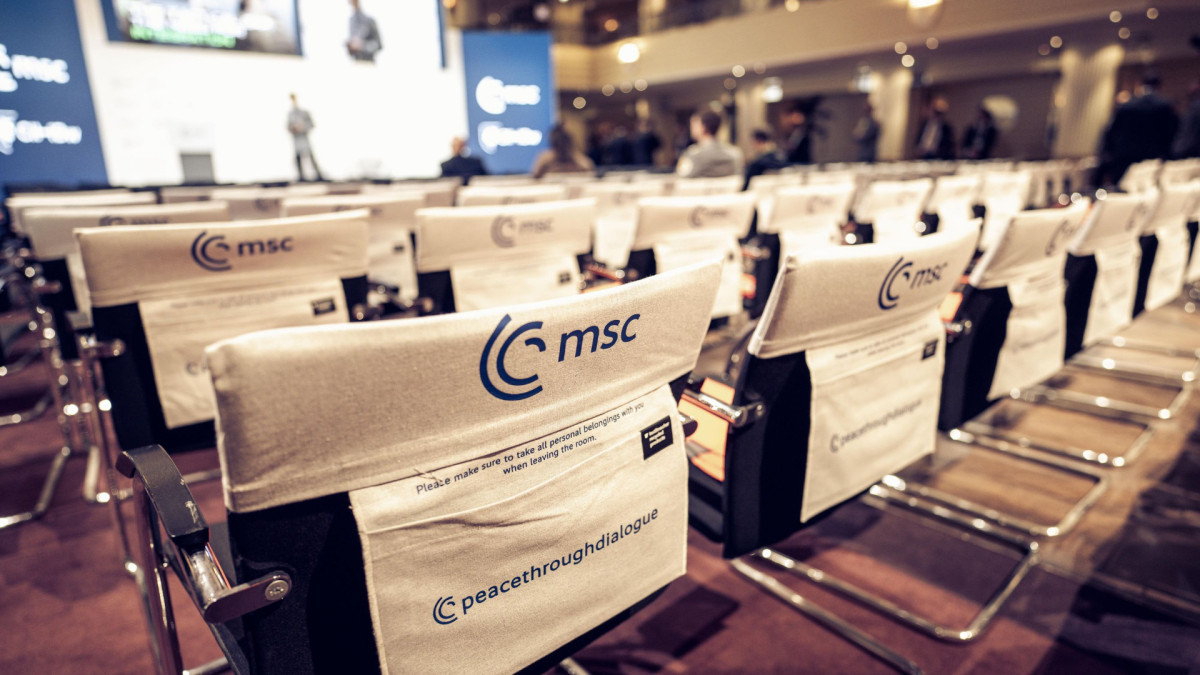
Momentos antes de arrancar la MSC.MSC / Preiss
"Lejos de ser otro lamento sobre el fin de Occidente", señala Jeremy Cliffe, columnista de 'Agenda Pública', la Conferencia de Seguridad de Múnich ha marcado "el momento en que Europa dejó de intentar seducir a Washington para empezar a construir su propia disuasión nuclear y defensa de los valores de la Ilustración". Un análisis para 'Agenda Pública' que contrasta frente a las visiones pesimistas.
15/02/2026
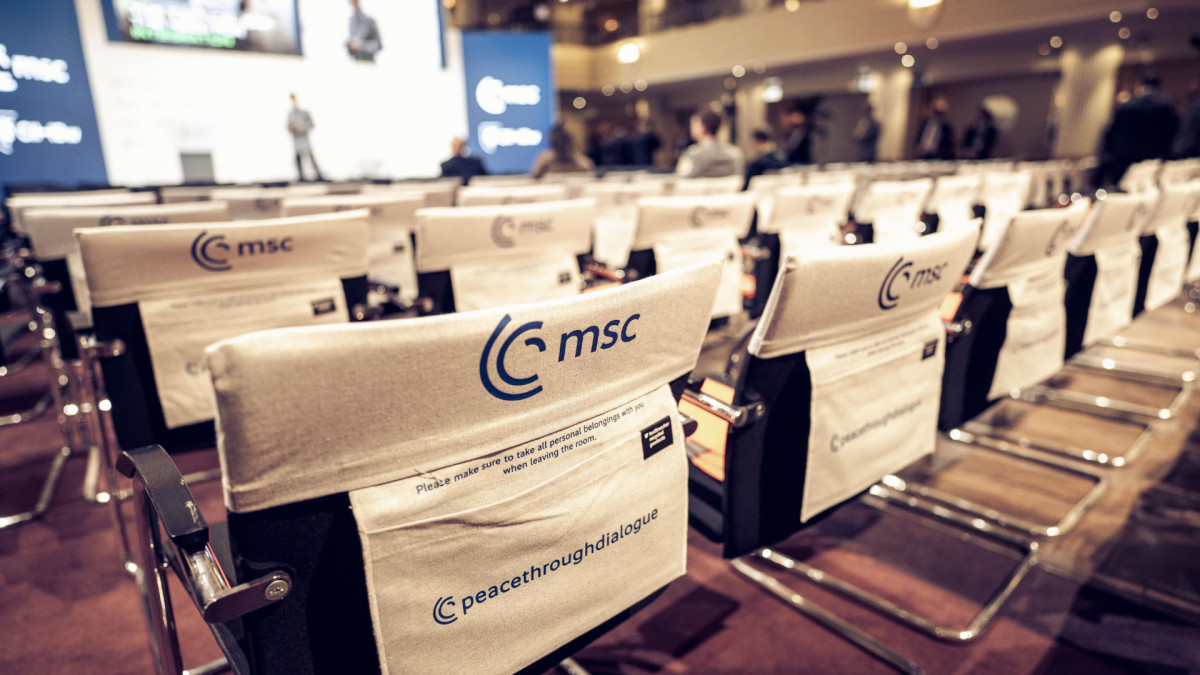
The evening before MSC 2026.MSC / Preiss
Jeremy Cliffe, columnist at 'Agenda Pública' and editorial director at the European Council on Foreign Relations, reports from the 2026 Munich Security Conference on a "good" transatlantic divorce: for the first time, the US and Europe state their differences frankly. Rubio frames his speech around cultural heritage; Macron, Merz, von der Leyen and Sánchez around defence and values. Cliffe highlights Europe’s push for eurobonds, coalitions of the willing and industrial preference to strengthen sovereignty and inject momentum into economic integration.
15/02/2026
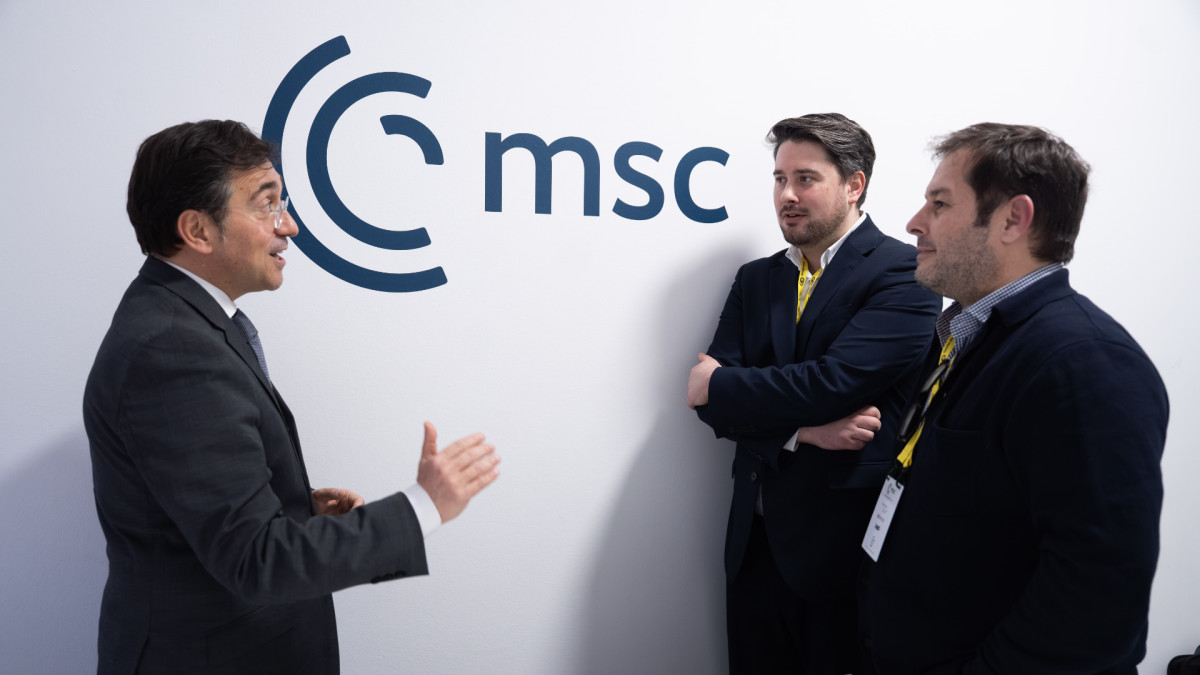
Spanish Foreign Minister José Manuel Albares (left), alongside ECFR editorial director Jeremy Cliffe (center), and the director and editor of 'Agenda Pública', Marc López Plana.Ministry of Foreign Affairs / Saioa Hermosa
Spanish Foreign Minister José Manuel Albares points out from the Munich Security Conference that "sovereignty means being free from trade coercion, from the threat of the use of force, and also achieving digital sovereignty". Jeremy Cliffe talks in depth for 'Agenda Pública' with the Spanish minister, who claims Spain's foreign policy is based on "humanist values versus an authoritarian vision of the world".
15/02/2026
El ministro de Asuntos Exteriores, José Manuel Albares (izquierda), junto al director editorial del ECFR, Jeremy Cliffe (centro) y el director y editor de 'Agenda Pública', Marc López Plana.Ministerio de Asuntos Exteriores / Saioa Hermosa
El ministro José Manuel Albares señala desde la Munich Security Conference que "la soberanía significa ser libres de la coacción comercial, de la amenaza del uso de la fuerza y también alcanzar la soberanía digital". Jeremy Cliffe conversa en profundidad para 'Agenda Pública' con el ministro español que reivindica la política exterior de España basada en "los valores humanistas frente a una visión autoritaria del mundo".
Página 1 de 3
Ahora en portada
19 de octubre de 2026
19 de octubre de 2026