



Victor Mallet, 'Financial Times': "Le Pen and Bardella are, in practice, seeking to leave the EU"
"They have pretended they do not want to leave, claiming they are willing to stay, but only if the EU changes fundamentally." In a conversation with Marc López Plana, Editor and Director of 'Agenda Pública', the 'Financial Times' senior editor and former Paris Bureau Chief, Victor Mallet, warns that "there are two ways to leave: exiting the existing institution, or staying in an institution so transformed that the effect is the same." His diagnosis serves as a red alert for Brussels: the arrival of the RN at the Élysée would not only transform the Republic but would "mortally weaken" the European Union. Is Europe prepared for its central pillar to cease being liberal-democratic?

In this conversation on Agenda Pública, Mallet dismantles the prejudices of metropolitan elites who continue to caricature the RN voter as a skinhead. The reality is that "de-demonization" has worked so well that even the business elite, historically hostile, has begun to court Le Pen and Bardella, assuming their victory is inevitable. However, Mallet points out a generational rift within the duo: while Le Pen remains tethered to an old-school pro-Russian vision, Bardella, younger and more pragmatic, attempts to align the party with the West regarding the war in Ukraine, aware that "the majority of his generation does not share that vision of Russia as a great Christian civilization."
The conversation also tackles the dangerous parallel with the United States. Mallet warns that the barrier between liberal democracy and illiberalism is more fragile than we believe. If Le Pen comes to power, the question is not just what she will do, but who will stop her. "The big problem for democrats and liberals is that they play by the rules and others don't," Mallet asserts, suggesting that France could follow the trajectory of PiS's Poland or Orbán's Hungary, but with a crucial difference: its capacity to drag all of Europe down in its fall.
.jpg)
Victor Mallet is the author of 'The Far Right in France: Le Pen, Bardella and the future of Europe'. Photo: Courtesy of Victor Mallet.
How will France be with a far-right President?
A tricky question. If there's a far-right President, it will be a dramatically different place, provided they also control the National Assembly. Otherwise, you could end up with a situation like the current one: Macron is President, but he does not control the National Assembly.
In Germany, getting the AfD into government is not so difficult. If you're the most popular party, you can do it, but usually in a coalition. Under the French voting system, it is much harder to get into government, to gain control of the National Assembly, especially if the other parties gang up against you through the Front Républicain, the cordon sanitaire. In Germany, they call it the firewall. If that happens, it's very difficult. But once a new party, or the far-right party, the Rassemblement National (RN), gets control of both the presidency and the National Assembly, they have almost complete power to do what they want. If they get those two institutions —the Élysée Palace and the Assemblée Nationale— France will change quite dramatically.
In what direction changes?
With that level of political control, they will start doing what's in their manifesto. They will massively reduce immigration. They will try to get rid of the right to be French if you're born in France. They will have a referendum, a constitutional referendum, which they may win, where they will try to take away the rights of anyone who isn't a French citizen. Egalité, liberté, fraternité will apply only to French citizens, and it will no longer be a universal right of all people in the world or all people in France who are living in France. That's quite a dramatic change.
"The European Union has been liberal internationalist: pro-democracy, pro-human rights, free trade... from a position of strength as a big trading bloc. That would be completely undermined by the far-right taking power in France"They'll restrict immigration. The biggest impact, though, apart from migration —which has somewhat declined in salience in French politics because governments across Europe are adopting similar hardline policies against asylum seekers and immigrants, including left-wing governments like the Labour Party in the UK— will be on the European Union, which would be fatally undermined.
The European Union has been liberal internationalist: pro-democracy, pro-human rights, free trade... from a position of strength as a big trading bloc. That would be completely undermined by the far-right taking power in France. If the AfD wins power in Germany, it would be even more extreme because France and Germany are the two pillars of the European Union.
Then there are the imponderables: what happens to the relationship with Russia, the relationship with Trump. One reason this is such a fascinating moment is that the fate of the far-right in France depends partly on what happens with Trump and what happens in the Ukraine war. Marine Le Pen was very pro-Russian and anti-Ukrainian until 2022, when Russia launched its full-scale invasion and tried to take Kyiv. Until then, she supported Russia taking over Crimea. She boasted about her relationship with Putin and Russia. She and her party were even financed by Russian money, politically speaking. All of this would produce fairly dramatic change.
Interestingly, apart from migration and the rights of non-citizens, it's not clear there would be super dramatic changes in how the French economy is run. There's a broad consensus in France, from far left to far right, that the country needs a well-financed welfare state that looks after people —social security. The far right in France is not challenging that in the way they do in the United States. They are not like Trump's people in that sense. They're much more statist.
They're a statist party, rather like the Communist Party or the Socialist Party, or indeed the centrist Republicans. No powerful party in France is economically liberal in the sense of wanting a free-for-all or unfettered capitalism. In that sense, they're in the same zone as all French political parties.
What about the relationship —ideologically— between Bardella and Le Pen? Because Le Pen might not be the candidate depending on the judges' ruling in June.
It's funny because she was his mentor and he was her protégé. She put him there because she recognized that he was a political phenomenon who could really make things work. He was incredibly successful. People say she is jealous of him and resents him, but if she is disqualified, he represents the only real hope for the party to get the presidency. In that sense, she can't afford to be nasty to him.
The interesting part is the political differences between them. He has been much more forthright in support for Ukraine and condemnation of Russia, which partly reflects...
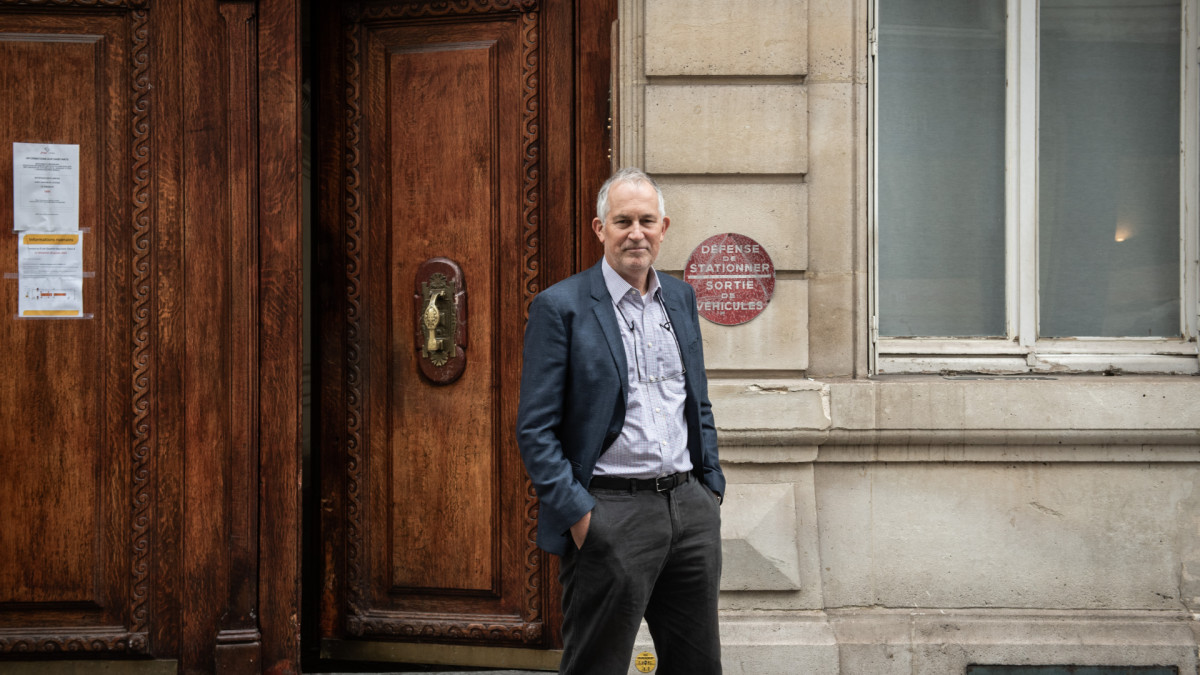
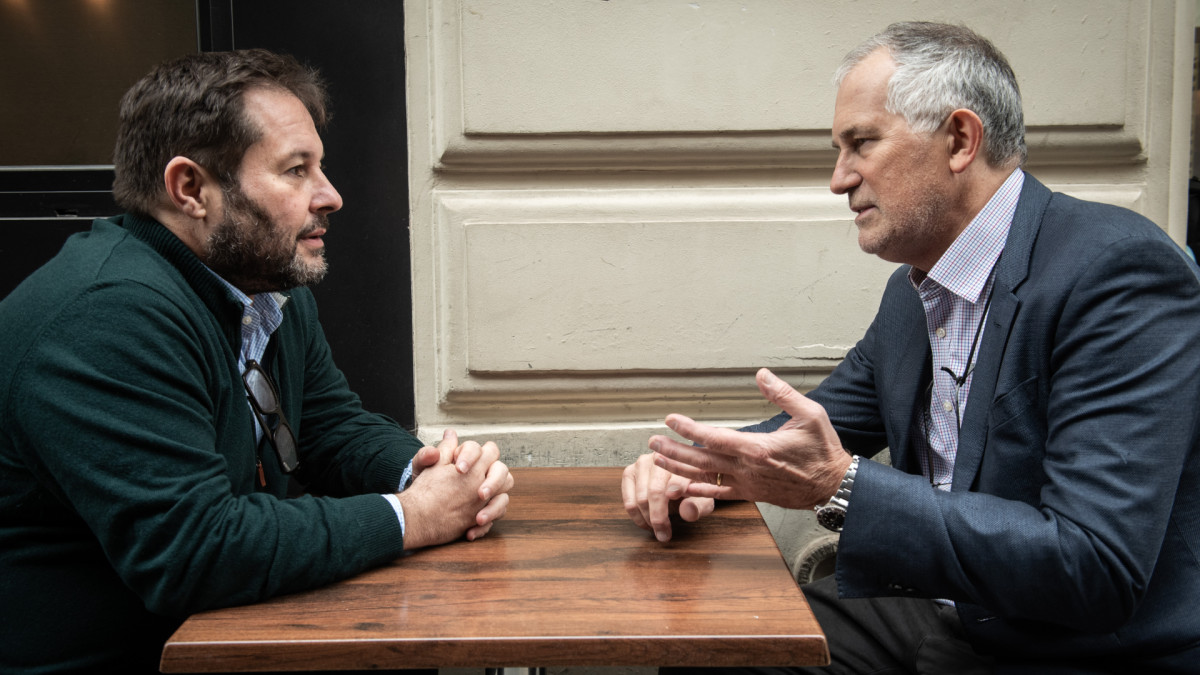
Victor Mallet explores the reality of the French far right and the divide between Jordan Bardella and Marine Le Pen. Photo: Agenda Pública / Bruno Arbesu
This is a big difference, right?
Yeah, it's a big difference. He's of the younger generation. Most people of his generation don't have this idea of Russia as a wonderful Christian, white, Eurasian civilization that must be allowed to hold sway across the Eurasian mainland —which is very much Jean-Marie Le Pen and Marine Le Pen's view. He's not like that at all. He's more like: "Russia's invaded and Ukraine's a sovereign nation, so what's going on there?" That's quite important.
"Bardella has this idea that if we are 'dédiabolisés' (normalized), then one way to normalize ourselves even more is to do an alliance with centre-right voters, Republican voters who will come to us"The other big difference is that he is much more open to a merger with the centre-right, or the traditional French right. He says we should open up the party to these people. It's already happened with Éric Ciotti. That will continue, and it will move faster with Bardella than it would with Le Pen, who remains cautious. She wants to keep the RN as just the RN, not a great group of the right. Bardella has this idea that if we are dédiabolisés —we've got rid of Nazi symbolism in the past, we were condemned as fascists, and we've normalized ourselves— then one way to normalize ourselves even more is to do an alliance with centre-right voters, Republican voters who will come to us.
Will we see this alliance in the near future?
It's already happening. Sixteen deputies in the National Assembly are part of a splinter group that broke away from Les Républicains, but it's completely aligned with Marine Le Pen. That has greatly weakened the centre-right. Some say, "Let's go along with Le Pen and Bardella so we can get into power again." Others say, "No, these people are too far to the right. They're too extreme. We want nothing to do with it." The centre-right is split, quite severely.
Could Bardella represent a different way for the French far-right to view Europe?
There's not much difference between him and Le Pen on Europe. The RN, the FN (Front National), Marine Le Pen and Bardella have always taken a nationalist view. They've always been anti-European federalism. Marine Le Pen did a massive U-turn: she used to promote leaving the European Union and leaving the Euro, but dropped it because it was so unpopular with French voters. Bardella has adopted more or less the same position. The nation state is paramount. So: we won't leave the Euro or the European Union, but we don't want European federal control over our regulations —for the environment and everything else.
And Europe is already changing. France is already changing as a result of the European Parliament being increasingly influenced by the far-right. Le Pen's party —Bardella's party— is the biggest single party in the European Parliament, bigger than the CDU in Germany. They also have lots of allies, not just in Hungary.
There are many far-right parties that are important in the European Parliament. When they coordinate —especially with the right wing of the right— they've already substantially watered down European Commission laws, for example on environmental regulation and trade. They have already weakened the Commission's liberal internationalist line. This started even before the far-right took power in France, and even before it took power in Germany. The European Union's traditional liberal outlook is already being undermined.
How do you compare the Front National with Meloni? I think they are quite similar, but we need to understand what this means for Europe.
Meloni changes, yes —and Marine Le Pen is similar in that sense. Like Meloni, Le Pen is pragmatic. If something doesn't work, she'll change it. Voters didn't like leaving the Euro, so she dropped it. Voters didn't like her stance toward Russia, so when Russia invaded, she changed her position.
The difference is that Meloni is in a coalition. If Marine Le Pen or Bardella get full control of the Élysée and the National Assembly, they won't be in a coalition. That means they can act without compromising if they want to. So whereas Meloni has welcomed 400,000 new migrants —with the idea that they would be legal migrants on a legal path because Italy needs workers— you might not see that pragmatism on immigration from the French far-right. But it depends on circumstances.
"It remains unclear how much a far-right government in France would be constrained by French realities, compared with how little Donald Trump is constrained by American realities at the moment"Have you read Marine Le Pen présidente - Dystopie politique 2026-2029? Thierry Pech imagined Marine Le Pen in the Élysée. This was before the court case. It's funny because, in the scenario —it's actually three authors— the hospital system starts to collapse and tourism goes into a tailspin because there aren't any immigrant workers. Nobody is there to work in hospitals. Eventually the economy collapses and they go cap in hand to Germany, with Marine Le Pen going to Friedrich Merz saying, "You've got to bail us out." The book ends with her wondering what to do. It's very good, and the economic parts are especially good.
It remains unclear how much a far-right government in France would be constrained by French realities, compared with how little Donald Trump is constrained by American realities at the moment. Could Bardella or Le Pen do what ICE is doing now in America? Or would there be mass protests?
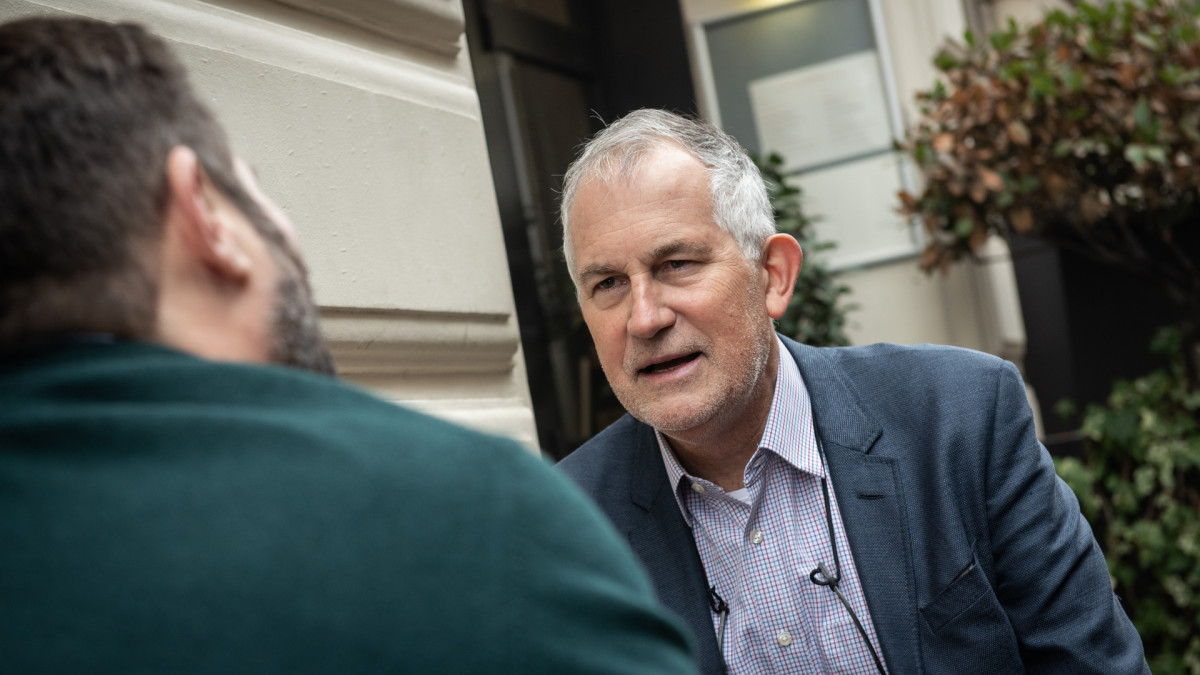
Mallet explains different far-right approaches to immigration. Photo: Agenda Pública / Bruno Arbesu
France has a tradition of mass protests. Whether they would have to be pragmatic, or whether they would run roughshod over the law like Trump has, is unclear. My guess is it would be harder in France than in America. Although who would have thought it would be so easy in America for Trump to do what he's done?
Who or what is responsible for the success of Marine Le Pen or Bardella?
When I conceived the book a couple of years ago, apart from Meloni, the French far-right was relatively out on its own. In the two years since then, we've had Vox in Spain, the AfD in Germany, Reform UK returning, Nigel Farage returning in the UK, and Trump elected again. Across Europe and across the world, there's a clear tendency.
It's been much analyzed. Society has become incredibly divided. There's resentment of the elite, resentment of the metropolitan elite. The metropolitan elite —liberals and leftists and people who live in Paris or Madrid or Washington DC— haven't done very well at predicting what would happen. I didn't think Trump would get elected in 2016; I told people, "Not a single woman is going to vote for Trump after his comments about grabbing pussies." Fifty percent of American women voted for him. I was wrong. I didn't think anyone in Britain would seriously support Brexit because it's such a dumb idea —why cut yourself off from your main market? But it happened.
When people say, "There's no way Bardella can get elected because he's too young and too stupid," the answer is: that's what we thought about Trump —too unpleasant, too stupid— and he got elected.
What's the secret? That's what the book is about. I go out and talk to people. People feel fed up with the existing establishment. It's not only that they're anti-establishment, not only that they're anti-Macron or anti-Socialist. They like what they see in Bardella and Le Pen. They see people who talk to them as equals, who understand their problems.
"What they focus on is the economy: the difficulty of making ends meet at the end of the month, prices, taxes, charges, electricity costs, regulations affecting farmers, etc. That's what they talk about, and that's what people want to hear"It's important to realize: I went to Bardella's New Year press conference. He barely mentioned migration. In 2022, Marine Le Pen barely mentioned migration —it was during COVID, when there weren't really migrants coming. Migration isn't the central issue now. What they focus on is the economy: the difficulty of making ends meet at the end of the month, prices, taxes, charges, electricity costs, regulations affecting farmers, etc. That's what they talk about, and that's what people want to hear. They're hitting the message people care about. It's a mistake to see them as a party obsessed only with migration. They're obsessed with getting to power, like all successful political parties.
When you meet people in the south of France or the north of France, among liberals —people in Madrid or Paris— there is sometimes this idea that RN supporters are skinheads with shaved heads, leather jackets and Nazi tattoos. It's not like that. Maybe it was closer to that 40 years ago, but it's not now. They're firemen, nurses, accountants, shopkeepers, bakers, butchers. I've interviewed so many people. They think these people represent change —and politicians always benefit from representing change.
A lot of it is this idea that they represent common sense, that they understand "normal people": middle-class people in America, working-class people in Europe. They understand our problems, therefore they'll deal with them better than everyone else.
On the left, there's a lot of agonizing about what went wrong. Why did Kamala Harris fail? Of course there were issues —too much wokery or whatever— but that's not the main reason she lost. The main reason she lost is that Trump won. There's a positive attraction that can be hard to see from the outside. Trump had positive attraction for many American voters. Marine Le Pen has positive attraction. People like her. They like Bardella. He has millions of followers on TikTok and other social media. He's like a star among the young, and she's a star among everyone else. They have a very strong pitch.
In opinion polls, they're far ahead. Le Monde published one of its annual surveys recently asking whether people share the ideas of the far right. Before the 2022 election, 29% said yes; now it's around 41 or 42%. The increase has been massive.
Remember: in that election Marine Le Pen won nearly 42% in the second round. She would only need another eight points to win outright if she runs again —or it could be Bardella. In current presidential polling, they're already in the 30s.
And also in the second round?
Yes. For the first time, there was talk recently that Bardella would win in the second round against any other currently available candidate. The short answer is: people like them, and they voice things voters care about.
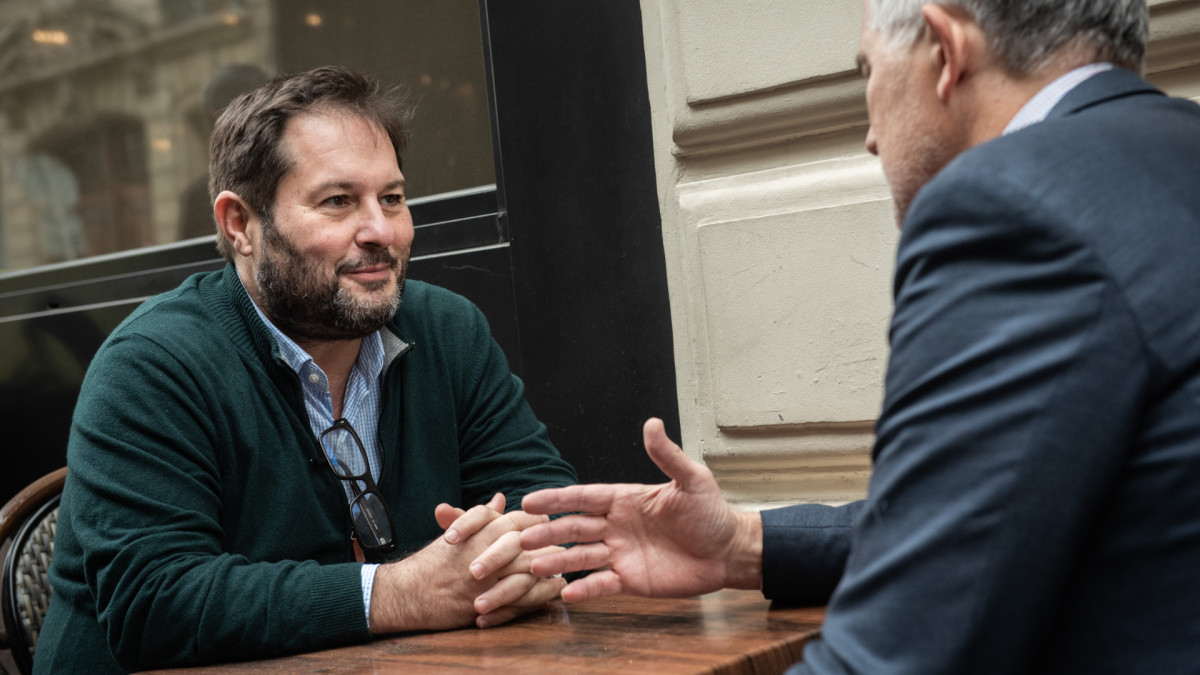
López Plana asks about the scenario in which the RN ends up in the Élysée. Photo: Agenda Pública / Bruno Arbesu
But do you think one explanation is that many people in our liberal democracies feel the system isn't responsive?
There are two issues. One is the rule of law. Maybe Europe and Japan and a couple of other countries are all that's left in terms of supporting international rule of law. In America, the national rule of law has basically collapsed, or is on the way to collapse. Neither America nor China nor Russia respect international law. Europe is the last super-empire that does, and Japan too, which is extraordinary.
"Once these parties get into power, the question becomes: if they screw up, how long will it take for people to want to get rid of them?"Then there's the internal question: what can be done? If you're a Macron centrist, that's where it gets hard. It's easy for the far-right to claim it can solve everything because it hasn't been in power. If Bardella had become Prime Minister, as he expected after the 2024 election, it would have been bad for the far-right. As Prime Minister for two or three years in a blocked system, he would have failed to do anything —as Prime Ministers do in blocked systems. They're set up to fail, as we've seen with others —Bayrou, Lecornu— they can't do anything. The other parties kept him out, and that helped him: now he goes into an election with a clean slate.
Once these parties get into power, the question becomes: if they screw up, how long will it take for people to want to get rid of them? And the deeper problem is if they do what Trump has done: he doesn't want to be got rid of. He doesn't believe in election results he doesn't like. If a government is capable of flouting democratic process to the point where elections can't be held —as in Turkey— then you have a serious problem. Even when people realize the far-right isn't the wonderful solution to everything —which inevitably they will— they may not be able to remove them unless the government behaves and abides by the law.
Look at Hungary. Orbán has been in power for nearly 15 years. He's unpopular —or at least more unpopular than the guy who would win the next election in a free contest. He's taking control of the media, the courts. Will he be able to rig the election? If he can't, it's a warning bell for the far-right across Europe: it shows you can stop them when they become unpopular. But he might do what Erdoğan has done and shut down the opposition.
Do you think it's better? In Spain, we have a debate about doing everything to prevent Vox from reaching the government. Is it necessary for the extreme right to reach government to be normalized, to be evaluated by the people as normal politicians, and to end the idea that they are somehow different?
It's an eternal dilemma in politics. When Islamists were about to come to power in Algeria, they were kept out. The result was anti-democratic. Many said it would have been better to let them take power and screw up. But the dilemma is: you let them take power and then they don't give up power —as has happened with many authoritarian governments around the world, whether right-wing, left-wing, Islamist, or anything else.
So the problem is: how do you, A, expose them to the reality of power and let them screw up, and B, maintain a system where they can be voted out in the next election? It's very difficult. There are many countries where people have failed to do that.
In France, the second round is designed to avoid it.
But often, this method of preventing the far-right from reaching the presidency might actually create more support. It's dangerous for democracy to try to avoid reality.
"If Marine Le Pen obeys the laws, behaves in a Republican manner, and she gets elected, she gets elected. The problem for Democrats and Liberals is that they abide by the rules and other people don't"You have to accept that if Marine Le Pen obeys the laws, behaves in a Republican manner, and she gets elected, she gets elected. The problem for Democrats and Liberals is that they abide by the rules and other people don't. Look at Poland: the Nationalist Party has maintained its ill-gotten gains and made life difficult for Donald Tusk. A liberal democratic government wouldn't do that because it would violate democratic norms. That automatically makes you weaker. It's like the way Democrats in America hesitated about stuffing the Supreme Court with judges because it felt wrong, whereas Trump would have no hesitation.
The two-round system is interesting. The famous line is: in the first round, voters vote for the person they want; in the second, they vote against the person they hate.
In the last two presidential elections, Jean-Luc Mélenchon came within two percentage points of qualifying for the second round. That's where the system could fail: if you have Bardella against Mélenchon, Bardella would win easily because more people hate the far left than hate the far right. That's where the system falls down. The strongest opponent to Bardella or Le Pen would be a strong centrist candidate with support from the left and the Republican right. But if it's Mélenchon —as it nearly was twice— then... If it had been Mélenchon versus Marine Le Pen in 2022, she probably would have won. She might even have won in 2017.
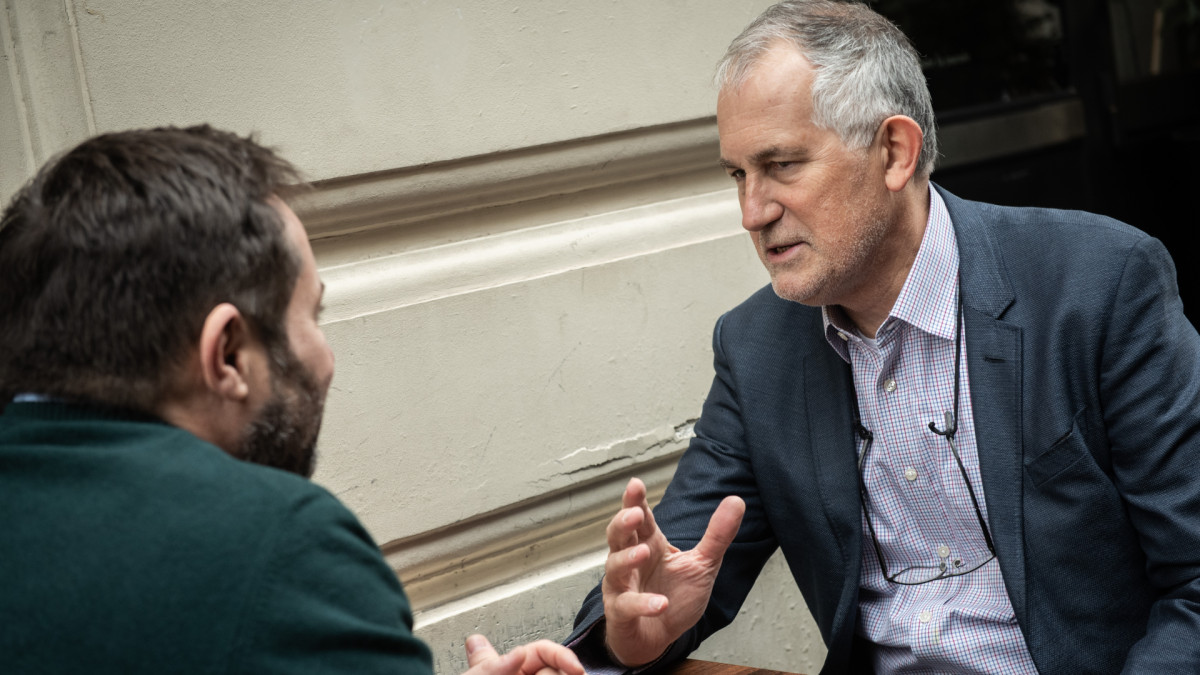
In two-round elections, Mallet explains, rejection of a particular candidate is a crucial variable. Photo: Agenda Pública / Bruno Arbesu
Let me ask you about Macron. What does he represent? He destroyed the traditional political party system to create a third way to become President —a pro-European centrist. But by destroying the party system, was Macron's first victory the first step toward this current "pandemic" of the far-right?
Macron was both a symptom and a cause. He could do what he did because the traditional parties of right and left were weak and had basically collapsed. In the last presidential election, Valérie Pécresse of the centre-right got under 5% —in England we'd say she lost her deposit. The Socialist candidate, whose party used to hold the Élysée under Mitterrand, got around 1.7%. It's extraordinary. That collapse is a present reality.
Blaming Macron for that is unfair. He exploited it successfully, as any politician would. He won. Where he can be faulted is that he didn't build a really strong centrist liberal party afterward. That's where European countries struggle. Someone tried to create a liberal party in Spain; it went nowhere.
"Macron should have built the centrist party properly. You can tell a party is weak when it keeps changing its name"In the UK, the Liberal Democrats have never really managed to become a dominant force. Macron should have built the centrist party properly. You can tell a party is weak when it keeps changing its name. The centre-right went from RPR to UMP to Les Républicains. Macron's party is the same. The name keeps changing, which means it doesn't have identity or history. It's weak, and it's very weak now. He could have invested in making it the core: "neither left nor right".
Politically, he is to blame for not building a stronger centrist party. As for achievements in power: governing France is extremely difficult. Every party wants lower taxes and more social services —but that's not possible. Politics is about difficult choices.
To Macron's credit, he tried to do difficult things, but voters blocked him. Look at pension reform: demographically and economically, the retirement age has to increase. Neighbouring countries have done it. But people don't want it. Politicians will say, "You want to retire at 62." Of course everyone wants to retire at 62. But the state can't afford it. If you want to retire at 62, you'll pay much more tax. Politicians rarely tell voters that truth.
The RN's biggest weakness, if it gets into power, is the economy. They don't understand trade-offs. Bardella's new book —What French people want / Ce que cherchent les Français— is basically campaign interviews. Nowhere does it convey hard choices: if you help fishermen, you can't help someone else; if you lower the pension age, you must raise taxes elsewhere.
Instead, you tell everyone yes and no one no. That's not leadership. That's a disaster. Macron ended up giving in politically, and the result is the budget deficit is through the ceiling. Spain must feel chipper that France is now the bad boy of the EU. Spain used to be criticized by France and Germany over deficits. Now France has the deficit...
Let me ask you about the capacity of Bardella and Le Pen's party to govern. Are they well-prepared? Do they have a team working in this direction, or civil servants collaborating with them?
Ten years ago, they would have been useless. They wouldn't have had anyone ready to do the jobs, and no one would have wanted to work for them. That's changed in recent years because they've become more successful. Every major businessman and business organization is meeting Bardella and Le Pen. Business works that way: you need to be on good terms with whoever may be in power. That signals they may be in power.
"Every major businessman and business organization is meeting Bardella and Le Pen. Business works that way"Billionaires are trying to make friends with them. Some already support them. Big business is also saying, "We have to deal with them. We have to take them seriously." Five or ten years ago, they wouldn't have done that because "we don't want to be associated with Nazis." That's completely changed.
There is still a lack of strong ministerial material. I asked Marine Le Pen this directly: "Even if you get into office, everyone knows you don't really understand the economy. What will you do?" She had a fairly good answer. She said she wouldn't insist on an RN finance minister; she would be happy to invite people from the centre-right to be ministers —especially finance minister.
Essentially, she was describing a cabinet of national unity. That's interesting because many people on the right and centre-right would want to take part in government —partly to "save France", partly because they want a job, and a nice job. Ten years ago, it would have been hard to recruit anyone because they'd say, "We don't want to be associated with a fascist government." That's changed.
Now Mélenchon might have a harder time finding people. The establishment tone has shifted to the right of the right. Billionaires like Vincent Bolloré help them work out economic policy. They want policies favourable to big business. Then you have the questions every incoming government faces: how statist will they be, how much will they ease regulation, how that affects consumers versus business, and so on.

In the Financial Times editor's view, today's economic elite is willing to collaborate with the far right. Photo: Agenda Pública / Bruno Arbesu
Let me ask you about what Le Pen said about the capture of Maduro. Let’s talk about the relationship between Trump and Le Pen.
Le Pen and Bardella are very careful about what they say about Trump. French people —Gaullists especially, but also across left and right— have long been suspicious of American imperialism. It's not unpopular in France to say you can't go around throwing your weight around the world. That's been a broadly French view.
"Remember the incident when Bardella was due to speak at CPAC and decided not to go because Steve Bannon did a Nazi salute"There's a chapter about Trump in the book. It's fascinating how European parties respond to him. There's the weird Meloni-Musk relationship, and Meloni becoming a Trump whisperer. Macron tried to be a Trump whisperer in the first term and was about as successful as anyone at trying to tame him.
Far-right parties in Europe have two reasons not to be too close to Trump. First, he's anti-European, and Europeans are European —even far-right Europeans aren't going to say, "I'm anti-European too." Second, his tariffs and related policies hurt France. If you support French business or farmers, that's a direct hit on the French population.
Then there's the example of what's happening in America. It's hard to tell how that plays in France, but probably not well —though I'm reading Le Monde rather than the Journal du Dimanche. If Trump really fucks up and America goes down the tubes —economic crash, riots— people will look at him and say, "Is that what you want here?" So they've been careful.
Remember the incident when Bardella was due to speak at CPAC and decided not to go because Steve Bannon did a Nazi salute. That captures the strategy. Bardella did say just after Trump was re-elected, "It's brilliant, he's chucking migrants out and we should do that in France." That was right after Trump took office on January 20. A few days later, at Bardella's New Year press conference, he said the same: "He's putting migrants on planes and sending them home; we should do that." But since then they've been careful not to identify as Trumpists. That's pragmatic. Other right-wing parties do the same —except, notably, Orbán is straight down the line Trump. The AfD is surprisingly pro-Trump —Alice Weidel met JD Vance and so on— but the AfD is very extreme, much more extreme than Le Pen.
This leads me to the next question: what about Trump's imperialism?
That's very unpopular in Europe, for everybody.
For example, in Spain, I think Pedro Sánchez, the Prime Minister, is taking advantage of this imperialism...
No. Pedro Sánchez is the bravest European leader at the moment.
But what does Trump's imperialism represent for the French far-right? Because I identify some potential future problems there.
The common ground is nationalism: the nation state. "Our nation is great." Make America great again. Make France great again.
But if you defend France, it's not possible to defend the United States.
Exactly. That's one reason the Patriots Group in the European Parliament has problems: by nature, nationalist parties struggle to agree with other nations because "our nation is the best." What they end up saying is: each controls its own nation and doesn't control anything else.
Unless something truly cataclysmic happens, it comes down to the economy, as in the US. US voters won't vote Trump out because of Venezuela; they'll do it because petrol is more expensive, milk is too expensive, they can't pay bills, health care costs go up. Same in France.
"If Trump takes Greenland, does anyone in France really care about Greenland? Probably not. People care much more about paying bills at the end of the month"Ukraine matters and could change everything if the war spills over. But even if Trump takes Greenland, does anyone in France really care about Greenland? Probably not. People care much more about paying bills at the end of the month. Le Pen and Bardella talk about that constantly, and it works. I've met voters who say, "I don't really agree with them on racism and immigration, but I really agree with them on the economy."
Maybe not Greenland, but Ukraine. France. If there is a peace agreement between the US, Russia, and Ukraine, and one point is that Ukraine quickly becomes an EU member... It could be a problem for the European Union. Economically. Also for France.
The French far-right frames this economically: energy prices. "We agree Russia shouldn't have invaded Ukraine," they say, "but we should keep buying Russian gas because otherwise gas is too expensive." "We understand Ukraine doesn't want to be invaded, but we don't want them to be part of the European Union because they're a massive agricultural exporter." For France, the last thing you want is another massive agricultural exporter in the EU, taking subsidies that used to go to the French. That's how they look at it.
They are voters, after all.
Yes. Many are. Nobody is looking at international law or the rights of a sovereign state to exist. It's all about, "What does this mean for me in my pocket?" Unfortunately, that is what counts.
But if Ukraine quickly becomes a member of the European Union, would that represent an economic problem for France?
It raises the issue of contributions to the European Union, a big theme for Bardella and Le Pen. Above all, agricultural exports would be a big problem for France. Grain, especially, but other things as well. Ukraine is an incredibly productive agricultural nation, and France is as well, and doesn't want to see its pre-eminence challenged. France has long taken a very large share of the Common Agricultural Policy budget. If a smaller share goes to France, it's a no.
"The RN has dissembled by pretending they don't want to leave Europe. They say they're prepared to stay, but only if it's fundamentally changed"Le Pen's answer would be: "We don't mind Ukraine being a member of the European Union if the European Union is changed into the institution we want it to be": a collection of nation states who meet occasionally and discuss foreign policy, but don't share regulation, don't share a market, and probably don't share environmental rules. A weakened European Union. In that scenario, the European Union would no longer be meaningful —and that is exactly what Le Pen wants. She doesn't want to leave the European Union, but she and people like Orbán want to change it into a shell of its former self: no real power, no overarching federal control. Something like the African Union: a set of states calling themselves a union, but essentially powerless —maybe sending a few peacekeepers, but nothing significant as a huge trading bloc.
Last question: there is a far-right that wants to change Europe and another that wants to leave it.
Marine Le Pen and Bardella always wanted to leave Europe, meaning the EU. On that point, Macron once said something funny about Brexit, to Boris Johnson at the Élysée: "You realize you can leave the European Union, but you can never leave Europe."
The RN has dissembled by pretending they don't want to leave Europe. They say they're prepared to stay, but only if it's fundamentally changed. In other words, they do want to leave the current system. There are two ways of leaving: you can leave the institution, or you can stay and change it so much that the effect is the same as leaving. That's where they are. And as more far-right parties gain power, that route —changing the EU until it's unrecognizable— looks increasingly possible.
Okay, thank you very much.