Sábado, 17 de octubre de 2026




Branko Milanovic: "When wealth become highly concentrated, the system becomes hypocritical"
After devoting his career to analyzing inequality, the Serbo-American economist warns that "political power tends to move toward those who have money," and that democracy ends up being "ostensible." In a conversation with 'Agenda Pública' vice president Rodrigo Pinedo, he also emphasizes that "globalization has been coming to an end on the external front" since the first Trump administration, but that "neoliberalism is not ending domestically."
_(1)_(1).jpg)
Milanovic speaks at the Cercle d'Economia meeting.David Zorrakino / Europa Press / ContactoPhoto
If we look at poverty or literacy figures, "the world is better" today than it was at the end of the 20th century, but "inequality is also higher in many places," and this "creates several problems." This is the warning issued by economist Branko Milanovic in a conversation with Agenda Pública.
The senior scholar at the Stone Center on Socio-Economic Inequality at the City University of New York and visiting professor at the LSE International Inequalities Institute warns that "neoliberalization has monetized many activities that used to be free", such as health care and education. "When we compare monetary incomes now and in the past without considering that essential goods like housing, health, and education have become much more expensive, the comparison becomes misleading," he asserts.
After devoting much of his career to analyzing inequality, he argues that it creates a political problem and undermines democracy itself. As he stresses, "when income and wealth become highly concentrated, political power tends to move toward those who have money, and the system becomes hypocritical." "It is an ostensible democracy but such that the rich rule," he says.
Likewise, the former chief economist of the World Bank’s Research Department maintains that with the first Trump administration began "the end of neoliberal globalization," while emphasizing that neoliberalism persists "domestically." "Under Trump we see reductions in taxes, deregulation, and the reduction in the size, or at least in importance, of government, and expanded production of oil and gas without environmental constraints. This is national market liberalism: neoliberal in the domestic economic arena, but not in international policy."
Many people ask why we continue to publish content about inequality when, in their view, the world is better than it was fifty years ago. Extreme poverty has fallen from 2.3 billion to 800 million people, literacy rates are the highest in history, and global incomes are higher. If the world has improved, why focus on inequality?
The world is better. Global incomes are higher today than they were 30 years ago, both globally and in many individual countries. But inequality is also higher in many places than it was 30 years ago.
Another important point is that neoliberalization has monetized many activities that used to be free, health and education are clear examples. In many countries, private systems offer better services than the public ones. So when we compare monetary incomes now and in the past without considering that essential goods like housing, health, and education have become much more expensive, the comparison becomes misleading. Incomes have not risen as much as they seem if we ignore the cost of these newly commercialized services.
A second issue is political. When income and wealth become highly concentrated, political power tends to move toward those who have money, and the system becomes hypocritical: it is an ostensible democracy but such that the rich rule.
Based on your research, will the rise of emerging economies such as China or India continue to reduce inequality between countries, or are we reaching a turning point where internal inequalities will dominate the global picture?
It is a complicated matter. Because of its very fast growth over the past 40 years, China has moved from being a poor country to surpassing the world median income. In urban China, the median income is now at the 70th percentile globally; in rural China, it is around the world median.
For African countries to close the gap, they would need growth rates of 7–8% per year, and none has achieved that. So we may be at an endpoint where global inequality increases, not because inequality within countries rises, but because Africa fails to catch up.
So we should shift the focus from inequality between countries to what is happening within each country?
That is a different focus. Historically, global inequality rose or fell depending on growth differences across countries.
If we look at inequality within countries, the picture is complex. Globally, people often say inequality keeps rising everywhere, but that is not accurate. If we compare OECD (Organisation for Economic Co-operation and Development) countries today with the 1980s, inequality has risen almost everywhere. But if we compare today with the year 2000, that is no longer true. In the United States inequality has been flat; in Spain it has been flat; in the UK inequality has actually declined over the past decade.
Inequality cannot rise indefinitely. It is limited not only by government policies but also by structural factors, no country can reach a point where one person owns everything. Social transfers, pensions, unemployment benefits, child allowances: all these place natural constraints.
Do you have examples where public policy helped reduce inequality?
Brazil is a good example. Brazil introduced unconditional cash transfers that represented no more than 1% of GDP but were heavily targeted to the poor. It also expanded access to university education. Other Latin American countries introduced conditional transfers with similar effects.
A particularly illustrative example comes from the United States during COVID-19. Market income inequality rose sharply because people lost jobs and income. It increased by 1.5 Gini points, an enormous jump. But thanks to massive government transfers under the CARES Act, disposable income inequality fell by 1.5 Gini points. That is a three-point swing, proof of what governments can achieve if they choose to act. Of course, it is not politically possible to sustain transfers worth 15% of GDP every year, but the episode shows the power of redistribution.
_(1).jpg)
Last year you wrote that Donald Trump’s return to the White House could mark the end of the globalization we knew. What have you seen since then?
The end of neoliberal globalization did not start with Trump’s second Administration; it began with his first. That is when tariffs on China were introduced. The Biden Administration essentially continued and even intensified these policies—towards China, Russia, Cuba, Iran, Venezuela.
Industrial policies reappeared, inconsistent with classical neoliberal ideas. The World Trade Organization (WTO) stopped functioning properly after the U.S. refused to appoint judges to its appellate body. We also saw the emergence of economic blocs and friend-shoring—outsourcing production only to friendly countries. All this was already under way before Trump returned.
My new book, The Great Global Transformation, argues that although globalization is ending externally, neoliberalism is not ending domestically. Under Trump we see reductions in taxes, deregulation, and the reduction in the size, or at least in importance, of government, and expanded production of oil and gas without environmental constraints. This is national market liberalism: neoliberal in the domestic economic arena, but not in international policy.
Given your background—born in Serbia and having spent your life in the U.S.—how do you see Europe’s position today?
I find European politics increasingly difficult to understand. Europe faces several problems: population decline, the need for migrant labour coupled with resistance to immigration, and an ideology of multicultural liberalism that coexists with physical border fences. These contradictions are puzzling.
I also feel that parts of the European elite still behave as if it were the 1990s, assuming they can lecture the rest of the world. But countries such as Brazil, South Africa and Indonesia are now far larger than most European states. Tanzania has the same population as France. India has 1.4 billion people and produces 9% of global GDP, compared with the UK’s 2%. The world has changed dramatically and the European elite is not necessarily aware of these changes.
Let’s move to Spain. The poorest 50% of Spaniards own just 6% of total net wealth, while the richest 5% own 53%. In the EU, these figures are 9% and 35%. Inequality is even higher in Spain. Do you have any advice for policymakers?
I lived in Spain and know the political landscape reasonably well. Spain is somewhat different from the rest of Europe. The Sánchez government has taken positions that diverge from the European mainstream, not only on Gaza, but even on Russia. Domestic policies also differ. Wealth inequality in Spain is indeed higher than the EU average, and historical reasons play a large role. But income inequality—measured through wages, interest, dividends, social transfers, self-employment income—has not increased significantly.
A final point concerns retirees. Across Europe, the incomes of those over 60 have overtaken those of people in their forties. In past decades, pension replacement rates were lower and older people generally had lower incomes. Many advantages—reduced prices for museums or transport—remain in place. Now, however, older generations often have higher incomes and these privileges. It may be time to rethink the system. Perhaps younger people should receive discounted museum or train tickets. The problem is that once people receive a benefit, it is very hard to take it away.
Thank you very much.
The senior scholar at the Stone Center on Socio-Economic Inequality at the City University of New York and visiting professor at the LSE International Inequalities Institute warns that "neoliberalization has monetized many activities that used to be free", such as health care and education. "When we compare monetary incomes now and in the past without considering that essential goods like housing, health, and education have become much more expensive, the comparison becomes misleading," he asserts.
After devoting much of his career to analyzing inequality, he argues that it creates a political problem and undermines democracy itself. As he stresses, "when income and wealth become highly concentrated, political power tends to move toward those who have money, and the system becomes hypocritical." "It is an ostensible democracy but such that the rich rule," he says.
Likewise, the former chief economist of the World Bank’s Research Department maintains that with the first Trump administration began "the end of neoliberal globalization," while emphasizing that neoliberalism persists "domestically." "Under Trump we see reductions in taxes, deregulation, and the reduction in the size, or at least in importance, of government, and expanded production of oil and gas without environmental constraints. This is national market liberalism: neoliberal in the domestic economic arena, but not in international policy."
Many people ask why we continue to publish content about inequality when, in their view, the world is better than it was fifty years ago. Extreme poverty has fallen from 2.3 billion to 800 million people, literacy rates are the highest in history, and global incomes are higher. If the world has improved, why focus on inequality?
The world is better. Global incomes are higher today than they were 30 years ago, both globally and in many individual countries. But inequality is also higher in many places than it was 30 years ago.
"High inequality in income makes it harder for people with limited resources to access education and become productive"The question of why we care about inequality comes up often, and some argue we should only focus on incomes and poverty. But inequality creates several problems. High inequality in income makes it harder for people with limited resources to access education and become productive. Many things that used to be free have become commercialized. Spain still has a relatively free education system up to a high level, but in many other countries access to good education depends heavily on private schools, which in turn open the doors to better universities and better jobs.
Another important point is that neoliberalization has monetized many activities that used to be free, health and education are clear examples. In many countries, private systems offer better services than the public ones. So when we compare monetary incomes now and in the past without considering that essential goods like housing, health, and education have become much more expensive, the comparison becomes misleading. Incomes have not risen as much as they seem if we ignore the cost of these newly commercialized services.
A second issue is political. When income and wealth become highly concentrated, political power tends to move toward those who have money, and the system becomes hypocritical: it is an ostensible democracy but such that the rich rule.
Based on your research, will the rise of emerging economies such as China or India continue to reduce inequality between countries, or are we reaching a turning point where internal inequalities will dominate the global picture?
It is a complicated matter. Because of its very fast growth over the past 40 years, China has moved from being a poor country to surpassing the world median income. In urban China, the median income is now at the 70th percentile globally; in rural China, it is around the world median.
"Because of its very fast growth over the past 40 years, China has moved from being a poor country to surpassing the world median income"Further fast growth brings China closer to rich countries but simultaneously pushes it further away from poor countries such as Ethiopia, Sudan, Congo, Bangladesh or Myanmar. China is no longer an engine of global inequality reduction. In fact, it now contributes slightly to higher global inequality. This means that India and the large African countries would have to become the main drivers of global inequality reduction.
For African countries to close the gap, they would need growth rates of 7–8% per year, and none has achieved that. So we may be at an endpoint where global inequality increases, not because inequality within countries rises, but because Africa fails to catch up.
So we should shift the focus from inequality between countries to what is happening within each country?
That is a different focus. Historically, global inequality rose or fell depending on growth differences across countries.
If we look at inequality within countries, the picture is complex. Globally, people often say inequality keeps rising everywhere, but that is not accurate. If we compare OECD (Organisation for Economic Co-operation and Development) countries today with the 1980s, inequality has risen almost everywhere. But if we compare today with the year 2000, that is no longer true. In the United States inequality has been flat; in Spain it has been flat; in the UK inequality has actually declined over the past decade.
Inequality cannot rise indefinitely. It is limited not only by government policies but also by structural factors, no country can reach a point where one person owns everything. Social transfers, pensions, unemployment benefits, child allowances: all these place natural constraints.
"Inequality cannot rise indefinitely. It is limited not only by government policies but also by structural factors, no country can reach a point where one person owns everything"We should adjust our narrative. In rich countries, inequality has stagnated at levels higher than 30 years ago but has not continued rising. In Latin America, inequality declined in several countries. Brazil saw a drop of about ten Gini points over 20 years, beginning even before Lula’s first term. Mexico also saw declines. These countries still have high inequality, but it is not increasing. China’s inequality has also been flat. So the narrative of endlessly rising inequality is somewhat disconnected from the past decade.
Do you have examples where public policy helped reduce inequality?
Brazil is a good example. Brazil introduced unconditional cash transfers that represented no more than 1% of GDP but were heavily targeted to the poor. It also expanded access to university education. Other Latin American countries introduced conditional transfers with similar effects.
A particularly illustrative example comes from the United States during COVID-19. Market income inequality rose sharply because people lost jobs and income. It increased by 1.5 Gini points, an enormous jump. But thanks to massive government transfers under the CARES Act, disposable income inequality fell by 1.5 Gini points. That is a three-point swing, proof of what governments can achieve if they choose to act. Of course, it is not politically possible to sustain transfers worth 15% of GDP every year, but the episode shows the power of redistribution.
The economist during the interview. Foto: Agenda Pública
Last year you wrote that Donald Trump’s return to the White House could mark the end of the globalization we knew. What have you seen since then?
The end of neoliberal globalization did not start with Trump’s second Administration; it began with his first. That is when tariffs on China were introduced. The Biden Administration essentially continued and even intensified these policies—towards China, Russia, Cuba, Iran, Venezuela.
Industrial policies reappeared, inconsistent with classical neoliberal ideas. The World Trade Organization (WTO) stopped functioning properly after the U.S. refused to appoint judges to its appellate body. We also saw the emergence of economic blocs and friend-shoring—outsourcing production only to friendly countries. All this was already under way before Trump returned.
My new book, The Great Global Transformation, argues that although globalization is ending externally, neoliberalism is not ending domestically. Under Trump we see reductions in taxes, deregulation, and the reduction in the size, or at least in importance, of government, and expanded production of oil and gas without environmental constraints. This is national market liberalism: neoliberal in the domestic economic arena, but not in international policy.
Given your background—born in Serbia and having spent your life in the U.S.—how do you see Europe’s position today?
I find European politics increasingly difficult to understand. Europe faces several problems: population decline, the need for migrant labour coupled with resistance to immigration, and an ideology of multicultural liberalism that coexists with physical border fences. These contradictions are puzzling.
"The world has changed dramatically and the European elite is not necessarily aware of these changes"Europe also benefited for decades from cheap Russian energy. Now it pays four times as much to import energy from the United States, which hurts competitiveness. At the same time, relations with China are deteriorating. From an economic and political perspective, these choices seem counterproductive.
I also feel that parts of the European elite still behave as if it were the 1990s, assuming they can lecture the rest of the world. But countries such as Brazil, South Africa and Indonesia are now far larger than most European states. Tanzania has the same population as France. India has 1.4 billion people and produces 9% of global GDP, compared with the UK’s 2%. The world has changed dramatically and the European elite is not necessarily aware of these changes.
Let’s move to Spain. The poorest 50% of Spaniards own just 6% of total net wealth, while the richest 5% own 53%. In the EU, these figures are 9% and 35%. Inequality is even higher in Spain. Do you have any advice for policymakers?
I lived in Spain and know the political landscape reasonably well. Spain is somewhat different from the rest of Europe. The Sánchez government has taken positions that diverge from the European mainstream, not only on Gaza, but even on Russia. Domestic policies also differ. Wealth inequality in Spain is indeed higher than the EU average, and historical reasons play a large role. But income inequality—measured through wages, interest, dividends, social transfers, self-employment income—has not increased significantly.
"Wealth inequality in Spain is indeed higher than the EU average, and historical reasons play a large role. But income inequality has not increased significantly"Spain also has a greater capacity to absorb migrants than many other European countries. I do not see in Spain the kind of backlash visible in Italy, France, or the UK. Spain’s population continues to grow, largely because of immigration from Latin America. Cultural similarity may help, but it is not a full explanation. Religion may play a role. But the broader point is that Spain’s experience differs in several ways. Migration, in particular, may be an advantage given the labour shortages across Europe. If countries need workers but close their borders, what do they expect to happen?
A final point concerns retirees. Across Europe, the incomes of those over 60 have overtaken those of people in their forties. In past decades, pension replacement rates were lower and older people generally had lower incomes. Many advantages—reduced prices for museums or transport—remain in place. Now, however, older generations often have higher incomes and these privileges. It may be time to rethink the system. Perhaps younger people should receive discounted museum or train tickets. The problem is that once people receive a benefit, it is very hard to take it away.
Thank you very much.
En colaboración con la Fundación "la Caixa"
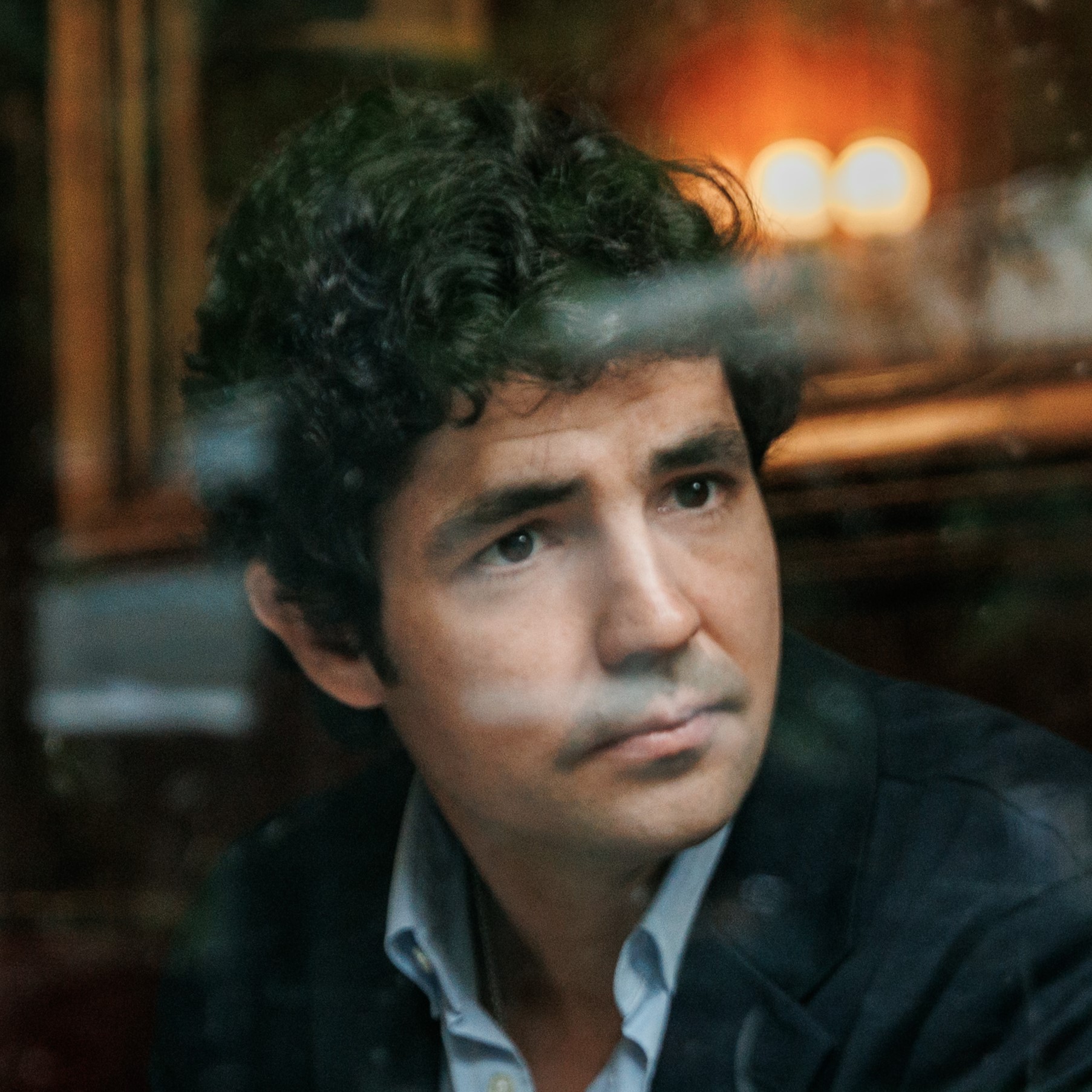
Rodrigo Pinedo Texidor
Periodista y anteriormente vicepresidente de 'Agenda Pública'
Apasionado de los medios. Licenciado en Derecho y Periodismo por la Universidad CEU San Pablo y Executive MBA por IESE, se curtió en distintas redacciones antes de trabajar en comunicación institucional, ocupando, entre otras responsabilidades, el cargo de director de Comunicación del Arzobispado de Madrid. Formó parte de los consejos de administración de TRECE, Cope y, después, Ábside Media. Entre 2024 y 2026 fue consejero delegado de BEKANE Media y vicepresidente de 'Agenda Pública'. Trabaja en comunicación corporativa y es patrono de la Fundación Luca de Tena.
Ahora en portada
17 de octubre de 2026
16 de octubre de 2026
Noticias relacionadas
Hace 41 semanas
Branko Milanovic: "Cuando la riqueza se concentra excesivamente, el sistema se vuelve hipócrita"
Hace 47 semanas
España: la desigualdad que no se mueve
Hace 64 semanas
Inseguridad económica, desigualdad y redistribución en países ricos
Lo más leído