Viernes, 16 de octubre de 2026




STRATEGIC AUTONOMY
Why is Musk attacking Sánchez? Social network restrictions for minors seek to curb Silicon Valley’s power
The new initiative from Pedro Sánchez to restrict access to social networks for minors under age 16 goes beyond child protection: it’s an attempt to reclaim regulatory power from global platforms that operate outside of European control. Strategic autonomy isn’t only about infrastructure or data but the political capacity to impose limits on those who dominate the digital ecosystem.

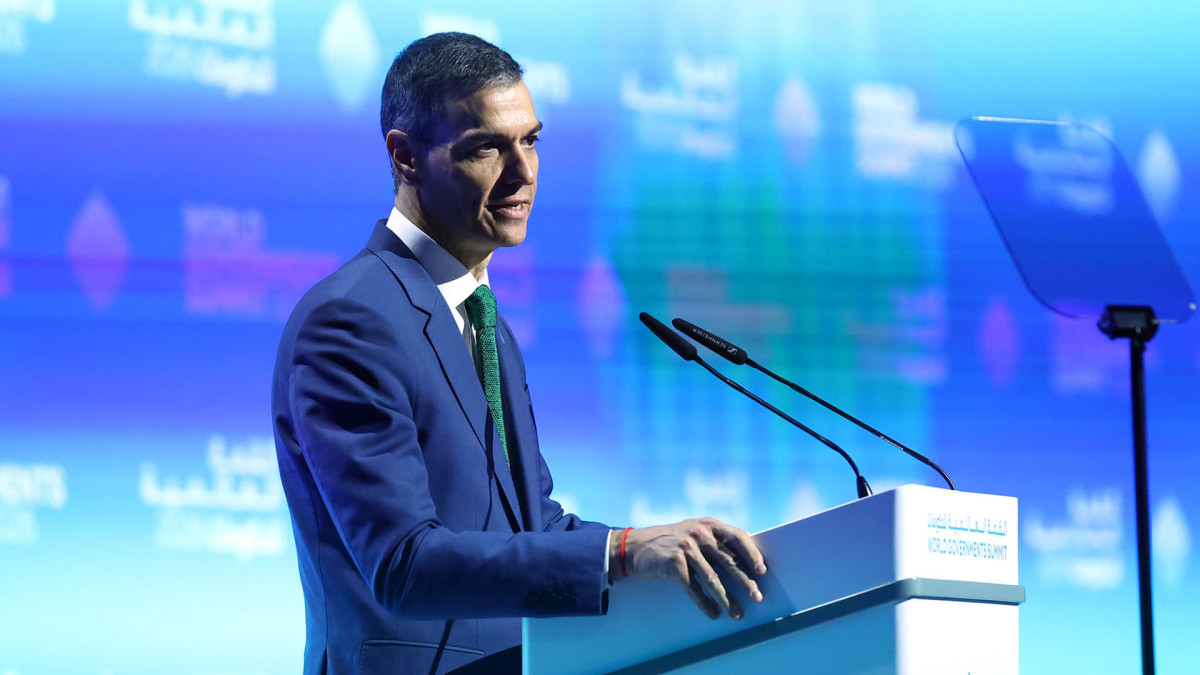
Pedro Sánchez announces in Dubai a measure to ban the use of social networks by minors under age 16Pool Moncloa / Fernando Calvo
Europe’s dependence on U.S. technological infrastructures has never been so evident, or so dangerous. From cloud services to artificial intelligence (AI), the majority of Europe’s digital economy operates under foreign control, exposing the continent to strategic and geopolitical risks that range far beyond economic competition.
Donald Trump’s return to the White House and his aggressive policies – from warnings over Greenland to pressures on European tech regulation – have been pushing the European Union and Spain to mitigate the imbalance. Owners of global tech companies such as Elon Musk have likewise harshly responded to regulatory announcements from Europe. First with France and now with Spain, reactions by Musk to a proposed prohibition of social network use by minors under 16 were quick in coming. "Dirty Sánchez is a tyrant and a traitor to the people of Spain," wrote Musk on his X platform, previously known as Twitter. That reaction should underline Europe’s need for a forceful response to a very salient question: "How can Europe function without depending on American technology?"
The European Parliament recently approved a resolution on technological sovereignty that promotes criteria for public procurement, as well as measures to favor European suppliers. At the same time, France and Germany have been pushing local infrastructure and software projects such as Mistral AI and openDesk, to reduce risks and to foster the growth of European tech champions.
Limiting access by minors to social networks directly confronts the power of the U.S. tech giants. This Spanish initiative reinforces a central concept of Europe’s strategic autonomy: that decisions around the design of digital environments (and their social, cognitive, and democratic effects) must respond to Europe’s own democratic criteria, and not merely to Silicon Valley’s commercial incentives.
From that perspective, regulating access to social networks becomes a tool for reinforcing European power. Just as the GDPR redefined global rules on privacy, initiatives like the Sánchez proposal suggest that Europe can – and should – set international standards for the governance of digital platforms, strengthening the continent’s decision-making capacity in response to offshore actors in the tech industry.
As a counterpoint, Joan Barata, an expert in digital governance and fundamental rights, warns that the protection of minors online requires a more nuanced approach than generalized prohibition. In his judgment, the risks of the digital environment cannot be separated from the social problems of the offline world, and excessively rigid measures can be easily circumvented (for example through VPNs), perhaps displacing the most vulnerable users toward spaces that are less moderate and more dangerous.
Barata also urges that a human rights perspective requires the careful weighing of freedom of expression, access to information, digital literacy, and civic participation by minors; he notes that unnecessary or disproportionate restrictions can end up violating fundamental freedoms. He argues that regulation should be based not on universal rejection, but on principles that force platforms to identify specific risks and to adapt their design and functionalities in proportionate ways, avoiding the use of intrusive age-verification systems that compromise privacy or introduce surveillance.
The confluence of technological monopoly, political power, and international pressure reinforces the need for a comprehensive European strategy that combines autonomy, regulation, and capacity for innovation.
Construction of an autonomous digital ecosystem will involve enormous challenges: political coordination, massive investment, and a long-term strategic vision. But the alternative of remaining dependent on foreign companies and governments carries unacceptable risks. Digital sovereignty is thus a requirement for strategic independence and the capacity for democratic decision-making.
Sharka, Bannon, and Nanz agree that digitalization can’t be neutral: technological infrastructures determine who has the power and who is subordinate, and Europe must take responsibility for protecting its autonomy and its citizens.
Europe now faces an historic choice: continue its dependency on U.S. technology, with all of the strategic vulnerabilities that such a course entails, or build its own infrastructure, innovation, and regulation capable of guaranteeing political, economic, and cultural independence.
"Without digital sovereignty, no other form of independence will be possible," concludes Nanz. The continent must now decide whether it will be a passive actor in the digital age or a player with the ability to define its own rules, ensuring that technology serves European autonomy and not external interests.
Donald Trump’s return to the White House and his aggressive policies – from warnings over Greenland to pressures on European tech regulation – have been pushing the European Union and Spain to mitigate the imbalance. Owners of global tech companies such as Elon Musk have likewise harshly responded to regulatory announcements from Europe. First with France and now with Spain, reactions by Musk to a proposed prohibition of social network use by minors under 16 were quick in coming. "Dirty Sánchez is a tyrant and a traitor to the people of Spain," wrote Musk on his X platform, previously known as Twitter. That reaction should underline Europe’s need for a forceful response to a very salient question: "How can Europe function without depending on American technology?"
Dirty Sánchez is a tyrant and traitor to the people of Spain 💩 https://t.co/B3oyHrBYpR
— Elon Musk (@elonmusk) February 3, 2026
Dependence on the U.S. and its strategic costs
The scale of Europe’s tech dependency is striking: in 2024, European customers spent nearly $25 billion on infrastructure services from the top five U.S. cloud providers, which the International Data Corporation (IDC) estimates at 83% of the European market. That concentration involves commercial risks while clearly limiting the political autonomy and strategic decision-making capacity of the European nations."Trump’s threats of military action on Greenland have reinforced the view that technological vulnerability can be a geopolitical weapon"Meanwhile, Trump’s threats of military action on Greenland have reinforced the view that technological vulnerability can be a geopolitical weapon. The EU has so far responded by accelerating initiatives around ‘technological sovereignty’, including the promotion of local storage clouds, legislation to protect data and strategic services, and public procurement criteria that are favorable to European products.
Digital sovereignty: a condition of independence
Patrizia Nanz, president of the European University Institute, stresses that digital sovereignty is a precondition for European independence. Control over the technological infrastructure, legislation on critical data, and the promotion of local businesses aren’t just economic issues but guarantors of political and democratic autonomy.The European Parliament recently approved a resolution on technological sovereignty that promotes criteria for public procurement, as well as measures to favor European suppliers. At the same time, France and Germany have been pushing local infrastructure and software projects such as Mistral AI and openDesk, to reduce risks and to foster the growth of European tech champions.
Protecting minors and Europe’s regulatory autonomy
In that context, the proposal from Spain’s President of the Government Pedro Sánchez to prohibit access by minors under 16 to social networks is conducive to the logic of European digital sovereignty. It’s both a policy to protect children and an affirmation of regulatory autonomy in the face of global platforms whose business model is based on capturing the attention, data, and behavior of users from an increasingly early age.Limiting access by minors to social networks directly confronts the power of the U.S. tech giants. This Spanish initiative reinforces a central concept of Europe’s strategic autonomy: that decisions around the design of digital environments (and their social, cognitive, and democratic effects) must respond to Europe’s own democratic criteria, and not merely to Silicon Valley’s commercial incentives.
"Protecting minors means protecting future European citizens from certain dynamics of technological dependence, algorithmic manipulation, and cultural colonization"Moreover, this proposal draws on evidence that it isn’t enough to control infrastructure, data, or cloud services – it’s also necessary to reclaim the ability to define the social and political limits of the digital ecosystem. Protecting minors means protecting future European citizens from certain dynamics of technological dependence, algorithmic manipulation, and cultural colonization that erode individual and collective autonomy.
From that perspective, regulating access to social networks becomes a tool for reinforcing European power. Just as the GDPR redefined global rules on privacy, initiatives like the Sánchez proposal suggest that Europe can – and should – set international standards for the governance of digital platforms, strengthening the continent’s decision-making capacity in response to offshore actors in the tech industry.
As a counterpoint, Joan Barata, an expert in digital governance and fundamental rights, warns that the protection of minors online requires a more nuanced approach than generalized prohibition. In his judgment, the risks of the digital environment cannot be separated from the social problems of the offline world, and excessively rigid measures can be easily circumvented (for example through VPNs), perhaps displacing the most vulnerable users toward spaces that are less moderate and more dangerous.
Barata also urges that a human rights perspective requires the careful weighing of freedom of expression, access to information, digital literacy, and civic participation by minors; he notes that unnecessary or disproportionate restrictions can end up violating fundamental freedoms. He argues that regulation should be based not on universal rejection, but on principles that force platforms to identify specific risks and to adapt their design and functionalities in proportionate ways, avoiding the use of intrusive age-verification systems that compromise privacy or introduce surveillance.
Technofeudalism and concentration of power
Despite being ideological opposites, Pedro Sánchez agrees here with former White House strategist Steve Bannon, who describes the phenomenon of ‘technofeudalism’ where citizens become digital servants to a small group of corporations that control data, algorithms, and platforms. According to Bannon, that concentration of power redefines relations between nations, companies, and individuals – which puts the freedom and autonomy of European society at risk. Going further, iGenius founder Uljan Sharka has offered a direct warning on AI: "If artificial intelligence means monopoly, it also means global dictatorship."The confluence of technological monopoly, political power, and international pressure reinforces the need for a comprehensive European strategy that combines autonomy, regulation, and capacity for innovation.
Emerging European alternatives
Microsoft, Amazon, and Google have begun to adapt to these demands. Microsoft extended its agreements with Delos Cloud to offer services under European control; Amazon launched a "sovereign cloud" in Germany; and Google created local joint-ventures to protect European data."Our commitment is clear: to do everything possible to build European champions. This is simply a refusal to be a vassal"France and Germany have complemented those initiatives with local investments in data centers, AI development, and open-source software, along with public procurement policies that prioritize European suppliers. Emmanuel Macron summed it up at Davos: "Our commitment is clear: to do everything possible to build European champions. This is simply a refusal to be a vassal."
Geopolitics and the challenge of European autonomy
Giuliano Da Empoli warns that Trump’s technology policy vis-à-vis Europe follows a pattern of "explicit imperial domination" where the pressure on allies isn’t just military or commercial but includes the digital field. Europe’s reliance on U.S. services amplifies that risk, affecting everything from critical infrastructure to the ability to control strategic information.Construction of an autonomous digital ecosystem will involve enormous challenges: political coordination, massive investment, and a long-term strategic vision. But the alternative of remaining dependent on foreign companies and governments carries unacceptable risks. Digital sovereignty is thus a requirement for strategic independence and the capacity for democratic decision-making.
Sharka, Bannon, and Nanz agree that digitalization can’t be neutral: technological infrastructures determine who has the power and who is subordinate, and Europe must take responsibility for protecting its autonomy and its citizens.
Europe now faces an historic choice: continue its dependency on U.S. technology, with all of the strategic vulnerabilities that such a course entails, or build its own infrastructure, innovation, and regulation capable of guaranteeing political, economic, and cultural independence.
"Without digital sovereignty, no other form of independence will be possible," concludes Nanz. The continent must now decide whether it will be a passive actor in the digital age or a player with the ability to define its own rules, ensuring that technology serves European autonomy and not external interests.
Etiquetas
Agenda Pública in English, Estados Unidos, España, Pedro Sánchez, Gobierno, redes sociales, menores Ahora en portada
16 de octubre de 2026
16 de octubre de 2026
16 de octubre de 2026
Noticias relacionadas
Hace 36 semanas
¿Por qué ataca Musk a Sánchez? La restricción de menores en redes busca frenar el poder de Silicon Valley
Hace 48 semanas
Sin inversión no hay soberanía digital: la asignatura pendiente de Europa
Lo más leído