Viernes, 16 de octubre de 2026




STRATEGIC AUTONOMY
Europe Needs Its Own FAFO Doctrine
"If Europe is not going to defend Denmark, then what exactly is the EU for?" asks Alberto Alemanno, Jean Monnet Professor of European Union Law at HEC Paris. As an expert in the Union's legal architecture, he considers Greenland to be "the most serious test of sovereignty for Europe since the Cold War." He proposes an EU that activates its strategic levers to defend its territory, but issues a final warning: deterrence "only works when the other party believes you will act."
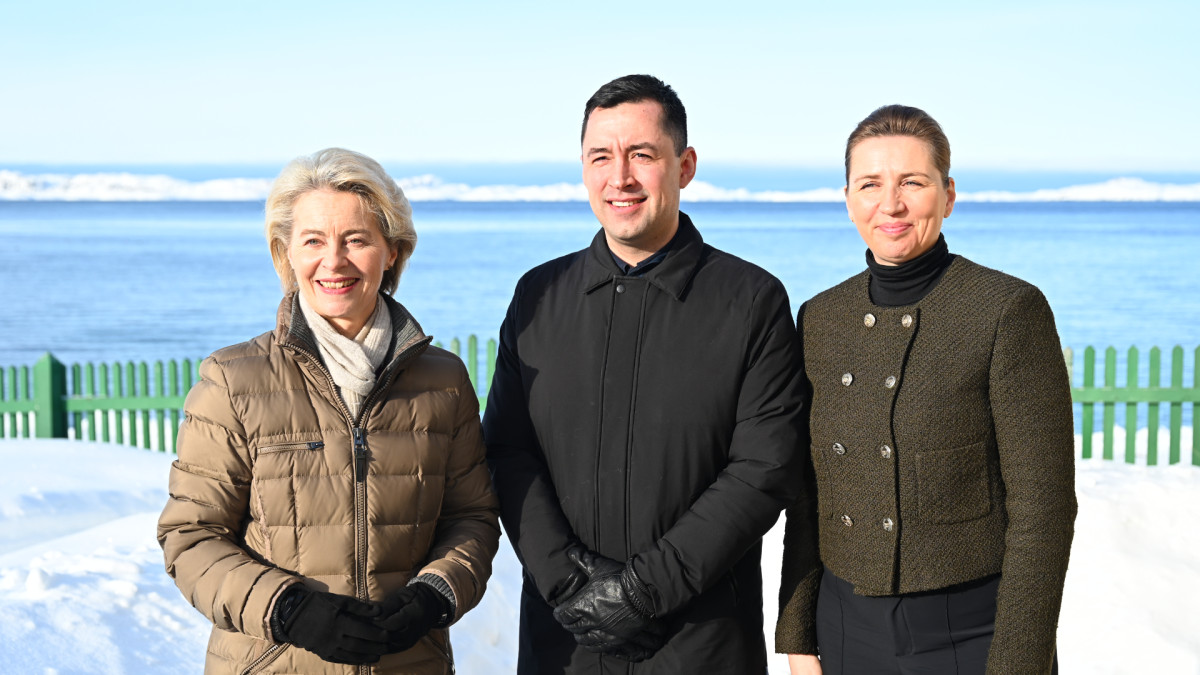
The president of the European Commission, Ursula von der Leyen, visited Greenland in 2024 together with the then prime minister of Greenland, Múte Bourup Egede, and the Danish prime minister, Mette Frederiksen.European Commission audiovisual service / Dati Bendo
For the first time in generations, ordinary Europeans are discovering through hard experience what decades of integration could never teach: their fates are indivisible. Russian missiles rain on Ukrainian cities, while their drones and fighter jet already entered their skies. Trump openly discusses seizing Greenland from a NATO ally as if European sovereignty were negotiable. His administration demands Europeans dismantle regulatory standards on digital privacy, climate and environmental protection, or face retaliation.
Yet when the President of the United States threatens to annex Greenland, what do those leaders deliver? Diplomatic murmurs. Carefully worded statements. The distinct sound of hoping the problem will go away. It will not.
This hesitancy teaches a dangerous lesson: that our territorial integrity is negotiable when politically convenient, that our solidarity is conditional, and that we can be bullied into submission by any power willing to raise its voice.
Consider what a unified European response could look like. Suspend the 2025 Turnberry’s US-EU trade deal. Impose targeted restrictions on American services, including the possibility to suspend some of its platforms starting from X after Grok going ‘spicy’ and generating sexualised images. Threaten to redirect sovereign debt away from dollar-denominated assets. None of these measures would be painless, but the point is precisely that Europe demonstrates it is willing to absorb costs in defence of its core interests. Deterrence only works when the other side believes you will act.
Yet this is not what Europeans expect from their leaders. Poll after poll shows that European citizens want the EU to assert itself on the world stage, to protect them, defend European interests, to speak with one voice. The gap between public expectation and elite hesitancy has never been wider.
Europe has had multiple wake-up calls. It kept hitting snooze. The alarm is now deafening.
The time for strategic ambiguity has passed. Europe must articulate, clearly and publicly, that any attempt to coerce or annex European territory will be met with comprehensive and sustained retaliation. Not because Europeans want or like conflict, but because the absence of such a commitment invites it.
Fool around and find out. It is time Europe meant it.
"The vast majority of citizens are favourable to EU-wide action: Europeans are ahead of their leaders, demanding European solutions because national ones manifestly fail"These demands are already translating in daily experiences teaching hundreds of millions of Europeans that the nation-state cannot protect them anymore. And the data confirms the transformation, with the vast majority of citizens are favourable to EU-wide action. Citizens are ahead of their leaders, demanding European solutions because national ones manifestly fail.
Yet when the President of the United States threatens to annex Greenland, what do those leaders deliver? Diplomatic murmurs. Carefully worded statements. The distinct sound of hoping the problem will go away. It will not.
Trump's threat
Greenland has become the crucible of Europe’s most serious sovereignty test since the Cold War. Repeated statements from Donald Trump advocating its acquisition, coupled with threats of economic coercion and an unwillingness to clearly rule out the use of force, amount to a direct challenge to the territorial integrity of an EU member state. Denmark is forced to assert basic principles of sovereignty while knowing it lacks the capacity to enforce them alone. Brussels, meanwhile, offers statements devoid of consequences.This hesitancy teaches a dangerous lesson: that our territorial integrity is negotiable when politically convenient, that our solidarity is conditional, and that we can be bullied into submission by any power willing to raise its voice.
"The EU needs its own FAFO doctrine: a clear, credible commitment that threats to any European territory will trigger unified economic, diplomatic, and institutional consequences"Washington now speaks openly in terms of FAFO, Fool Around and Find Out, a blunt signal that challenges to American interests trigger consequences. Europe should internalise the principle, if not the tone. The EU needs its own FAFO doctrine: a clear, credible commitment that threats to any European territory will trigger unified economic, diplomatic, and institutional consequences. Not debated case by case. Not delayed by unanimity. Automatic, proportional, and sustained.
How should Europe respond in defence of Greenland?
This is not about military bravado. Europe cannot and should not match American military power. But the EU possesses formidable assets it has never seriously deployed. It has the world's largest trade bloc. American corporations have over three trillion dollars invested on European soil. The euro remains the only credible alternative to the dollar. We run a services deficit with the United States, meaning American tech giants and financial institutions depend on access to our market. This gives Europe leverage, if we choose to use it.Consider what a unified European response could look like. Suspend the 2025 Turnberry’s US-EU trade deal. Impose targeted restrictions on American services, including the possibility to suspend some of its platforms starting from X after Grok going ‘spicy’ and generating sexualised images. Threaten to redirect sovereign debt away from dollar-denominated assets. None of these measures would be painless, but the point is precisely that Europe demonstrates it is willing to absorb costs in defence of its core interests. Deterrence only works when the other side believes you will act.
"When Washington demands that Denmark surrender Greenland, it is not asking one small Nordic country to capitulate. It is demanding that Europe accept subordination"The deeper failure, however, is political rather than strategic. For decades, European leaders have lamented the difficulty of making citizens feel part of a shared project. And yet here is the perfect opportunity: an external threat that treats all Europeans as Europeans, not as Germans or Spaniards or Danes. When Washington demands that Denmark surrender Greenland, it is not asking one small Nordic country to capitulate. It is demanding that Europe accept subordination.
Yet this is not what Europeans expect from their leaders. Poll after poll shows that European citizens want the EU to assert itself on the world stage, to protect them, defend European interests, to speak with one voice. The gap between public expectation and elite hesitancy has never been wider.
Decline or lack of political will?
The dominant narrative says Europe is in decline, too slow, too divided, too dependent on American protection. Much of this is self-inflicted, amplified by those who benefit from European weakness. But decline becomes a self-fulfilling prophecy only if we accept it. Europe remains immensely wealthy. Our combined economy rivals America's. What we lack is the will to jointly mobilise this wealth."If Europe fails this test, others will follow. Russia watches. China watches. Every autocrat wondering whether ‘Western solidarity’ is real or merely rhetorical is taking notes"The Greenland crisis is not an isolated incident. It is the first test of a new world order in which great powers carve up spheres of influence while smaller nations, including European nations, are expected to accept their diminished status. If Europe fails this test, others will follow. Russia watches. China watches. Every autocrat wondering whether ‘Western solidarity’ is real or merely rhetorical is taking notes.
Europe has had multiple wake-up calls. It kept hitting snooze. The alarm is now deafening.
The time for strategic ambiguity has passed. Europe must articulate, clearly and publicly, that any attempt to coerce or annex European territory will be met with comprehensive and sustained retaliation. Not because Europeans want or like conflict, but because the absence of such a commitment invites it.
Fool around and find out. It is time Europe meant it.
.png)
Alberto Alemanno
Catedrático Jean Monnet de Derecho Comunitario en HEC Paris
Académico y autor de 'Lobbying for Change: Find Your Voice to Create a Better Society' (Iconbooks, 2017). Catedrático Jean Monnet de Derecho Comunitario en HEC Paris, también ocupa una plaza de 'Democracy Fellow' en la Universidad de Harvard.
Ahora en portada
16 de octubre de 2026
16 de octubre de 2026
16 de octubre de 2026
Noticias relacionadas
Hace 40 semanas
Groenlandia y el test definitivo: por qué España debe defender la presencia militar europea
Hace 40 semanas
Pulso en Caracas, presión en Bruselas: las razones por las que España debe blindar ya la defensa europea
Lo más leído