Lunes, 12 de octubre de 2026




FIRMAS TOP
Who Calls the Shots in Washington on Venezuela: Key U.S. Players to Watch
The arrest of Nicolás Maduro marks a turning point for Venezuela. Now, "there are concerns about how democracy will be restored," and U.S. analyst J. P. Carroll points to senior government officials and key players in the US private sector who will decide much of what happens in the South American country.
.jpg)
Secretary of State Marco Rubio, following the operation to capture Nicolás Maduro alongside President Donald Trump.Official White House photo
In the aftermath of Nicolás Maduro and Cilia Flores being captured by U.S. forces and transported to New York City to stand trial on U.S. federal narcotrafficking charges, it remains to be seen what happens next. President Trump has said that the United States will "run" Venezuela in the interim, the specifics of what that entails remains unclear.
There are various different constituencies that will have a role to play in the days and weeks ahead. At the moment the Trump administration seems to be dealing with Vice President Delcy Rodríguez primarily while looking farther afield at the restoration of democracy in Venezuela as a medium or long-term goal after a certain post-Operation stability has been established.
While many Venezuelans and Venezuelan-Americans in the United States are pleased to see Maduro gone, there are concerns about what the restoration of democracy will look like. For the Venezuelan democratic opposition it remains to be seen if they will be installed in power, if they will take to the streets across Venezuela, or if new free and fair elections will be called with U.S. and possibly international oversight.
Here are some interesting people and organizations to look out for as this situation develops.
During the first Trump administration, Ratcliffe was the Director of National Intelligence (DNI), another key role in the broader U.S. intelligence community. As the DNI, Ratcliffe oversaw all intelligence community agencies, including the CIA, the National Security Agency (NSA), and the National Geospatial-Intelligence Agency (NGA), along with many others. It is worth noting that the NSA and NGA also played essential roles in the Operation to remove Maduro and Flores from Venezuela. And prior to serving as DNI, Ratcliffe served in Congress, representing Texas’ 4th Congressional District. Before his Congressional service, Ratcliffe, a lawyer by training, served as United States Attorney for the Eastern District of Texas. Ratcliffe completed his undergraduate studies at the University of Notre Dame and went to Southern Methodist University for law school.
Given the clandestine nature of the CIA’s work there are no personnel beyond Ratcliffe that can really be named. However, it is worth highlighting the work being done by intelligence officers in the CIA’s Directorate of Operations (known as The DO) which serves as the Agency’s tip of the spear in day-to-day intelligence collection from human sources (HUMINT).
While Congress may not have been privy to this operation prior to it taking place, they will play a key role in determining what funding and support Venezuela may receive in the long-term if there is a successful democratic transition. Here are some members of Congress to keep an eye on as things unfold.
-1920x1080.jpg)
There are various different constituencies that will have a role to play in the days and weeks ahead. At the moment the Trump administration seems to be dealing with Vice President Delcy Rodríguez primarily while looking farther afield at the restoration of democracy in Venezuela as a medium or long-term goal after a certain post-Operation stability has been established.
"President Trump expects the U.S. private sector – specifically the U.S. oil industry – to play an important role in rebuilding the country’s infrastructure"Stability in Venezuela will depend on various factors, including the possibility of U.S. economic investment in the country. If the United States does send money to Venezuela, this will involve Congress having to appropriate the relevant funds. Additionally, it is clear that President Trump expects the U.S. private sector – specifically the U.S. oil industry – to play an important role in rebuilding the country’s infrastructure.
While many Venezuelans and Venezuelan-Americans in the United States are pleased to see Maduro gone, there are concerns about what the restoration of democracy will look like. For the Venezuelan democratic opposition it remains to be seen if they will be installed in power, if they will take to the streets across Venezuela, or if new free and fair elections will be called with U.S. and possibly international oversight.
Here are some interesting people and organizations to look out for as this situation develops.
The Diplomats
It is clear that U.S. Secretary of State – and U.S. National Security Advisor – Marco Rubio played an essential and decisive role in leading this operation that resulted in Maduro’s removal from power to stand trial for U.S. federal narcotrafficking charges in New York City. Given his many years of advocating for human rights in Venezuela and his key roles on the Senate Foreign Relations and Senate Intelligence committees prior to becoming Secretary of State, Rubio has long looked forward to this day. But the longtime Cuban-American public servant from Florida had some help along the way in making this happen and there is no doubt that the days and weeks ahead will require important and sensitive diplomatic engagements involving many people. Below is a short list of some senior diplomats who may well have prominent roles to play in the future of U.S.-Venezuelan relations.- Deputy Secretary of State Christopher Landau. The Madrid-born Landau is a widely-respected member of the Trump administration foreign policy team and a key official under Secretary of State Marco Rubio. Landau’s father served in the U.S. Foreign Service and was a former U.S. Ambassador to Paraguay, Chile, and Venezuela. The elder Landau served as U.S. Ambassador to Venezuela from 1982 to 1985. Deputy Secretary of State Christopher Landau himself went on to a successful legal career after graduating from Harvard College and Harvard Law School before clerking twice at the Supreme Court under two Supreme Court Justices associated with the Court’s conservative wing: the late Associate Justice Antonin Scalia, and Associate Justice Clarence Thomas. Landau’s legal career in the private practice of law for more than three decades was focused on appellate litigation, having briefed and argued many cases before the U.S. Supreme Court and all of the federal courts of appeal. During the first Trump administration Deputy Secretary of State Christopher Landau served as the U.S. Ambassador to Mexico, the United States’ largest diplomatic mission. While Landau served as Ambassador to Mexico, the US-Mexico-Canada Free Trade Agreement was ratified and entered into force. It is widely understood in the State Department and Trump administration more broadly that Landau enjoys Rubio’s trust and a key part of his portfolio includes U.S. relations with Latin America.
- Under Secretary of State for Economic Affairs Jacob Helberg & Under Secretary of Commerce for International Trade William Kimmitt. Helberg and Kimmitt are key figures in advancing U.S. economic and trade interests on the world stage. If Venezuela does transition to democracy in the wake of Maduro’s ouster and opens up as a major Latin American market, they are poised to play key roles in advancing bilateral economic and trade ties. Helberg previously served on the Council of Economic Advisors at the White House. Prior to his White House service, Helberg was a Senior Advisor to the CEO of Palantir Technologies and served as a Commissioner on the U.S.-China Economic and Security Review Commission. Helberg holds an M.S. degree in cybersecurity risk and strategy from New York University. Prior to returning to public service, Kimmitt served as a Partner at the law firm Kirkland & Ellis. Before serving as Under Secretary of Commerce for International Trade, Kimmitt was a Senior Advisor to the Secretary of Commerce Howard Lutnick. During the first Trump administration Kimmitt served as Counselor to the U.S. Trade Representative. Kimmitt earned his J.D. from the Georgetown University Law Center.
- Ambassador Leandro "Lee" Rizzuto – U.S. Ambassador to the Organization of American States (OAS). As the Trump administration’s Ambassador to the OAS, Rizzuto will have a key role in the days and weeks to come as the United States look to maintain positive relations with countries across the Americas after this operation against Maduro, which has elicited a broad array of reactions in Latin America. There has been praise on the one hand from Argentine leader President Javier Milei, along with Ecuadorean President Daniel Noboa. However, there has also been condemnation from Brazilian President Luiz Inacio Lula da Silva, as well as Colombian President Gustavo Petro, and Mexican President Claudia Sheinbaum. Rizzuto previously served as U.S. Consul General in Bermuda during the first Trump administration. Before entering into public service, Rizzuto had a decades-long career at Conair Corporation, culminating in serving as Senior Vice President of Global Professional Business Units.
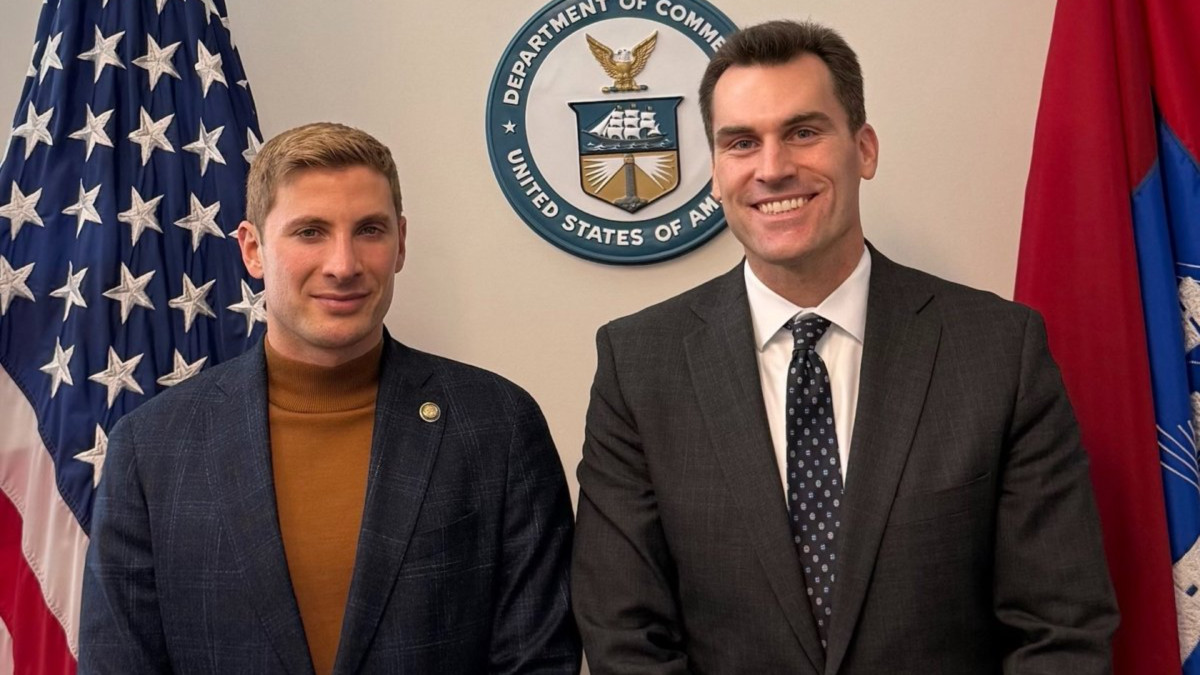
Jacob Helberg (left) and William Kimmitt (right). Foto: Social media accounts of the U.S. Trade Department.
The U.S. Department of War
As President Trump gave his press conference in the aftermath of the capture of Nicolás Maduro and Cilia Flores, among the handful of officials present were U.S. Secretary of War Pete Hegseth and the Chairman of the Joint Chiefs of Staff Air Force General Dan Caine. While there is no doubt that both men played key leadership roles in this operation, they did not do it alone. Here are some other key personnel to be aware of at the U.S. Department of War.- Acting Commander, U.S. Southern Command, U.S. Air Force Lieutenant General Evan L. Pettus. After the capture of Nicolás Maduro and Cilia Flores, Lt. Gen. Pettus might end up getting a promotion. Pettus has only been Acting Commander at U.S. Southern Command for a short period of time after it was announced in October 2025 that now-former U.S. Southern Command Commander U.S. Navy Admiral (ret.) Alvin Holsey would retire at the end of the year; Holsey retired on December 12th, 2025. Pettus is a United States Air Force Academy graduate who went on to earn an MBA at Bellevue University and a Master’s of Strategic Studies from the Air War College.
- Acting Director of the Defense Intelligence Agency (DIA), U.S. Army Major General Constantin E. Nicolet. Over the course of the many months that this operation was being prepared, a core component was the gathering of relevant intelligence. Central Intelligence Agency Director John Ratcliffe was present at President Trump’s post-Maduro capture press conference, and while the CIA undoubtedly made critically important contributions to this operation, so did other intelligence agencies, including DIA. In his position as Acting Director of DIA, U.S. Army Maj. Gen. Constantin E. Nicolet is the top adviser on military intelligence both to the Secretary of War and the Chairman of the Joint Chiefs of Staff. The position is always held by a three-star military officer and leadership changes about every three years between three-star officers of the Air Force, Army, Marines, and Navy. Maj. Gen. Nicolet is a graduate of Bucknell University who went on to earn a Master of Arts degree in Military Operational Art and Science from the Air Command and Staff College and a Master of Arts degree in Strategic Studies from the Army War College.
- Deputy Assistant Secretary of War for Americas Security Affairs, Joseph M. Humire. Humire is a U.S. Marine Corps veteran who served in Operation Iraqi Freedom, and has long been known in the Washington, D.C. think tank community and Americas policy circles for his expertise on transregional threats in the Western Hemisphere. He served as Executive Director of the Center for a Secure Free Society (SFS) from 2013 to 2025. Humire is a graduate of George Mason University.
The Central Intelligence Agency and CIA Director John Ratcliffe
CIA Director John Ratcliffe was in the room with President Trump and other senior personnel throughout the night as Maduro and Flores were captured and whisked away to the United States. The manner in which the intelligence gathered by the CIA in preparation for this Operation was praised in a press conference afterwards, clearly signaled the importance not only of the organization but also the trust that President Trump has in Director Ratcliffe.During the first Trump administration, Ratcliffe was the Director of National Intelligence (DNI), another key role in the broader U.S. intelligence community. As the DNI, Ratcliffe oversaw all intelligence community agencies, including the CIA, the National Security Agency (NSA), and the National Geospatial-Intelligence Agency (NGA), along with many others. It is worth noting that the NSA and NGA also played essential roles in the Operation to remove Maduro and Flores from Venezuela. And prior to serving as DNI, Ratcliffe served in Congress, representing Texas’ 4th Congressional District. Before his Congressional service, Ratcliffe, a lawyer by training, served as United States Attorney for the Eastern District of Texas. Ratcliffe completed his undergraduate studies at the University of Notre Dame and went to Southern Methodist University for law school.
Given the clandestine nature of the CIA’s work there are no personnel beyond Ratcliffe that can really be named. However, it is worth highlighting the work being done by intelligence officers in the CIA’s Directorate of Operations (known as The DO) which serves as the Agency’s tip of the spear in day-to-day intelligence collection from human sources (HUMINT).
"It was insinuated several times during the post-Operation press conference that the United States had successfully penetrated Maduro’s inner-circle"Ultimately, it was insinuated several times during the post-Operation press conference that the United States had successfully penetrated Maduro’s inner-circle given the level of detailed information that was laid out. Clearly, the CIA was central to this Operation.
The U.S. Congress
By his own admission, President Trump did not notify Congress about the operation to capture Maduro and Flores until after it was underway, and only then was the "Gang of Eight" – made up of the senior-most Republican and Democratic leaders in the U.S. Senate and U.S. House of representatives, along with the chairs and ranking members of the Senate and House intelligence committees – informed.While Congress may not have been privy to this operation prior to it taking place, they will play a key role in determining what funding and support Venezuela may receive in the long-term if there is a successful democratic transition. Here are some members of Congress to keep an eye on as things unfold.
- The Senators – Sen. John Curtis (UT-R) and Sen. Tim Kaine (VA-D). Senators Curtis and Kaine are the Chairman and Ranking Member, respectively, on the Western Hemisphere, Transnational Crime, Civilian Security, Democracy, Human Rights, and Global Women’s Issues of the Senate Foreign Relations Committees. Given their leadership roles on the Subcommittee, Curtis and Kaine have outsized influence on matters pertaining to the Western Hemisphere. Additionally, Curtis is known and internationally respected for his expertise in energy policy matters – a critically relevant issue to Venezuela – and is the founder of the Conservative Climate Caucus. Kaine for his part has longstanding expertise in Latin American affairs, speaks Spanish, and is known for having been the Democratic Party’s vice presidential candidate in 2016.
- The House Members – Rep. Maria Elvira Salazar (FL-27-R), Rep. Joaquin Castro (TX-20-D), Rep. Mario Diaz-Balart (FL-26-R), Rep. Carlos Gimenez (FL-28-R). The House Foreign Affairs Committee’s Subcommittee on the Western Hemisphere is Chaired by Rep. Maria Elvira Salazar, with Democratic Rep. Joaquin Castro serving as Ranking Member. Prior to serving in Congress, Maria Elvira Salazar, Salazar was a well-known journalist, recognized for her expertise in Latin American affairs. As for Castro, in addition to serving on the House Foreign Affairs Committee, he is also a member of the House Permanent Select Committee on Intelligence. Diaz-Balart and Gimenez are both Cuban-American Republicans like Salazar, and just like Salazar, they also represent South Florida Congressional districts which are home to large Venezuelan and Venezuelan American communities. Diaz-Balart is the Dean of the Florida Congressional Delegation, Vice-Chair of the powerful House Appropriations Committee, and serves as Chairman of the influential National Security, Department of State, and Related Programs Subcommittee of the Appropriations Committee. As for Gimenez, he is the Chairman of the Transportation and Maritime Security Subcommittee of the House Homeland Security Committee, a key role as maritime security concerns have increased in recent years. Additionally, Gimenez also serves on the House Armed Services Committee and U.S. House Select Committee on the Strategic Competition Between the United States and the Chinese Communist Party.
Representatives Maria Elvira Salazar, Joaquin Castro, and Mario Diaz-Balart. Foto: House of Representatives of the United States
The Business Community
If the Venezuelan economy opens up to international investment after a transition to democracy, there is no doubt that it will be a huge market with much potential. Pre-Hugo Chavez and Nicolás Maduro, the United States had a great deal of investment in Venezuela. The following entities and individuals may play key roles in what greater U.S. business engagement in Venezuela could look like in the future.- Chevron. In his press conference after the capture of Nicolás Maduro and Cilia Flores, President Trump said that, "We're going to have our very large United States oil companies, the biggest anywhere in the world, go in, spend billions of dollars, fix the badly broken infrastructure, and start making money for the country." It remains to be seen what President Trump’s aforementioned statement may translate to in the future. Notably, Chevron is the last U.S. oil major still operating in Venezuela. In the aftermath of the weekend’s developments, Chevron said in a statement, "Chevron remains focused on the safety and wellbeing of our employees, as well as the integrity of our assets. We continue to operate in full compliance with all relevant laws and regulations."
- The U.S. Chamber of Commerce Americas Program – Senior Vice President, Neil Herrington and Vice President, Anne McKinney. The U.S. Chamber of Commerce is the largest business organization in the world with members ranging from global Fortune 500 companies to top industry associations, small businesses, and chambers of commerce throughout the United States. Herrington and McKinney lead the Chamber’s Americas Program, which works to expand commercial ties between the United States and countries throughout the region. Before joining the Chamber in 2014, Herrington had varous roles in an international career at the intersection of business and public policy. Among his prior roles, Herrington served as Director of the State of California Office of Trade and Investment in Mexico City and also worked for the U.S. Trade Representative, specifically as a Senior Adviser to the Deputy USTR for Asia and Africa. Herrington has an MBA from the Wharton School of Business at the University of Pennsylvania. McKinney has been in her role with the Chamber since 2018, having come from being the Director of Investment Services at SelectUSA, for the U.S. Department of Commerce’s International Trade Administration (ITA). Before her time at ITA, McKinney served as Deputy Executive Director of AmCham Colombia. McKinney holds an M.A. in International Relations from the Johns Hopkins University School of Advanced International Studies (SAIS). Herrington and McKinney are widely-respected for their expertise in and knowledge of the Americas, something that will serve the Chamber and its members well in the days ahead.
- The Americas Society/Council of the Americas (AS/COA) and Ambassador (ret.) Kevin K. Sullivan, Vice President, Washington Office. The Americas Society is the most important U.S.-based forum for dialogue on the latest developments in the Americas. Meanwhile, the Council of the Americas is the top international business organization in the Americas, made up of the some of the most prominent international companies across several sectors. Ambassador (ret.) Kevin K. Sullivan leads the organization’s Washington, D.C. operations, having joined the organization in September 2025, after a long and distinguished diplomatic career which included serving as Deputy Assistant Secretary for South America at the State Department from August 2023 to March 2025. Some of his prior diplomatic postings include having served as U.S. Ambassador to Nicaragua from November 2018 to August 2023, as well as having been Interim Permanent Representative (Acting Head of Mission) at the U.S. Mission to the Organization of American States (OAS). Sullivan is a graduate of Georgetown University and holds a master’s degree from School of Public and International Affairs at Princeton University. There is no doubt that through his many high-level recent roles at the State Department that Sullivan is who AS/COA needs in Washington, D.C. during this delicate and uncertain time.
J. P. Carroll
Analista en Washington D. C. y columinsta de 'Agenda Pública'
MBA Internacional de IE Business School. Máster en Estudios Profesionales (MPS) en Relaciones Públicas y Comunicaciones Corporativas de la Universidad de Georgetown. Es el exdirector adjunto de Medios Hispanos del Comité Nacional Republicano (RNC). J.P. vive en el área de Washington, D. C.
Ahora en portada
12 de octubre de 2026
12 de octubre de 2026
11 de octubre de 2026
Noticias relacionadas
Hace 39 semanas
Quién manda en Washington sobre Venezuela: los actores clave de EE. UU. que seguir
Hace 39 semanas
Trump Detains Maduro: What Two U.S. 'Insiders' Reveal About the Political Impact
Hace 40 semanas
The shape of things to come: Europe in 2026
Lo más leído