Viernes, 16 de octubre de 2026




AFTER MACRON
How to keep the Élysée out of Le Pen’s hands in 2027
According to Miguel Ángel Ortiz-Serrano, PhD in Economic History and Professor of Economics, Emmanuel Macron’s two terms in office have left a France that’s "more socially divided, more politically polarized, and more economically depressed." Ahead of a 2027 presidential election with expected advances by Le Pen and Bardella, the expert on French politics takes up the question of what should be done by a moderate candidate to prevent a victory by the Rassemblement National.
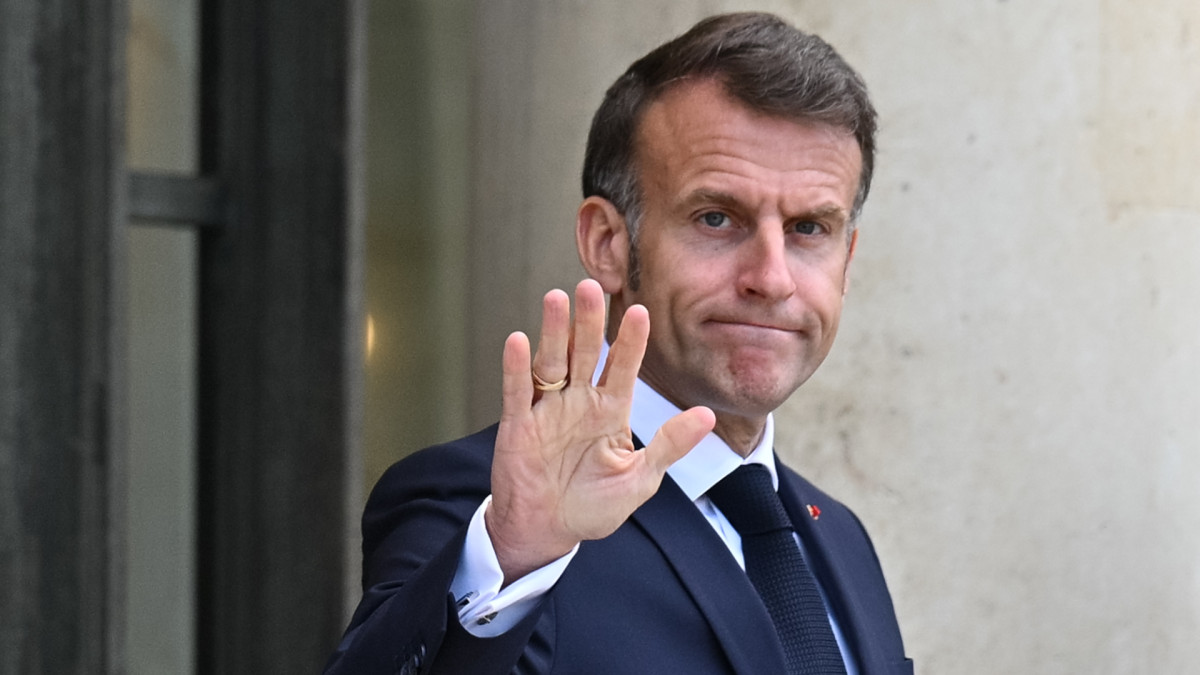
French President Emmanuel Macron at the Elysée Palace.Julien Mattia / Zuma Press / Europa Press
Seen from Spain, it seems that a year before President Emmanuel Macron is due to end his term as head of the French Republic, his country’s political and economic situation has been put on hold, with implications that only the 2027 presidential elections can unblock it. However, that impression is far from reality.
In recent months, France has taken a very active role in international geopolitics. Although it hasn’t led the opposition to attacks against Iran – a stance more associated with the governments of Spain and Italy – the invasion of Lebanon has caused Paris to press for containment of the escalating conflict, given the risk that the overall region could become a powder keg and difficult to manage. On the other hand, France has been intensely active in trying to resolve the war in Ukraine, largely in response to the lack of U.S. engagement since Donald Trump took office. Since the start of 2026, France has promoted several joint initiatives with Ukraine and Germany to address the next stages of the conflict. In addition, France has been among those pushing hardest to unblock international aid packages to Ukraine, which are considered essential to the stability of the country’s long-term defense.
As expected, those declarations haven’t gone down well with various forces in the parliamentary arc, which have already expressed opposition to increased taxation on labor income and further cuts to social expenditures. Although a press conference is expected, meant to clarify the line to be followed, everything indicates that the end of 2026 will see a slowdown in the economy and a rise in social discontent, which is already quite high.
A more conciliatory and magnanimous presidency. In domestic politics, polarization and distrust in Republican institutions go hand-in-hand, with neither coming first. One might have thought that Macron – a young President who ten years ago seemed well-aware of widening polarization, as well as the discredit into which the political system was sinking – would show more flexibility in dealing with the diversity of social forces and sensitivities once he came to power. This hasn’t proven to be the case, especially since his re-election. From the beginning, Macron revealed certain authoritarian tics that fed rejection from both the left and right. His style in domestic policy is personalistic, his actions marked by notable improvisation plus a limited ability to gauge the consequences of his decisions. The most obvious example was the dissolution of the National Assembly: far from freeing up the situation, it left the parliament ungovernable and launched a stage of instability, leading to a cascade of Prime Ministers across two years. It likewise failed to contain the advance of the radical right, despite the illegal-financing scandals surrounding it, including the disqualification of its leader. In the event of a victory over the Rassemblement National, whoever succeeds Macron will have to deal with a fragmented parliament and a radical right that’s no longer just an expression of boredom and anger but that’s instead positioned as an authentic alternative. Within that more radical right, two opposing visions coexist, but that issue merits separate analysis. At present, everything seems to indicate that, after 2027, if the situation hasn’t been addressed with diligence and flexibility, there’s a risk that the traditional parties and ideas of the post-1945 consensus will be wiped off the map, at least for a long while.
Sectors such as batteries and electric vehicles offer paradigmatic cases. Although Macron and his government have pushed to counteract the most negative effects of the shock (destruction of the business fabric, reallocation of investments, etc.), their actions have been viewed with suspicion by Germany for apparently favoring France’s own interests over those of the EU. The liberal dogmas of the 1990s are clearly outdated. China’s success in strategic sectors has come thanks to massive subsidies, systematic public intervention, and economies of scale in a huge domestic market. Given that Beijing is unlikely to give up those instruments, the threat of competitive displacement in areas like critical minerals, semiconductors, or aeronautics will continue to intensify. Convincing their different partners of the need to act won’t be easy; to move in the right direction, it will be necessary to build broader alliances among Member States.
The present year is therefore a decisive one for France, when foundations will be laid for its institutional development and external reach for a decade to come, once the presidential elections are over. The EU is interested in a strong France with a healthy economy and clearly defined objectives for the Union. France should be equally interested in building bridges with partners with whom tensions have mounted in the past, and in staying flexible about the overall future of the European project.
In recent months, France has taken a very active role in international geopolitics. Although it hasn’t led the opposition to attacks against Iran – a stance more associated with the governments of Spain and Italy – the invasion of Lebanon has caused Paris to press for containment of the escalating conflict, given the risk that the overall region could become a powder keg and difficult to manage. On the other hand, France has been intensely active in trying to resolve the war in Ukraine, largely in response to the lack of U.S. engagement since Donald Trump took office. Since the start of 2026, France has promoted several joint initiatives with Ukraine and Germany to address the next stages of the conflict. In addition, France has been among those pushing hardest to unblock international aid packages to Ukraine, which are considered essential to the stability of the country’s long-term defense.
"Inflation is reaching 2%, and the small margin left by the debt-to-GDP ratio is dragging down economic growth forecasts"At the national level, the situation seemed tranquil – until now. With the approval of this year’s budget, Sébastien Lecornu managed to calm the turbulent waters of parliament, but the outbreak of conflict in the Middle East has ruined even conservative forecasts. On May 19, the Prime Minister warned that social cuts might be deeper than expected, given the circumstances. The generalized increase in prices (especially for fuels) and frictions along France’s industrial supply chains have been hard-felt in recent weeks. Lecornu warned that the aid packages announced at the start of the conflict must now be reviewed and redistributed, so that the weight of the measures doesn’t fall exclusively on the State – the priority of which is to meet set deficit targets. Inflation is reaching 2%, and the small margin left by the debt-to-GDP ratio is dragging down economic growth forecasts.
As expected, those declarations haven’t gone down well with various forces in the parliamentary arc, which have already expressed opposition to increased taxation on labor income and further cuts to social expenditures. Although a press conference is expected, meant to clarify the line to be followed, everything indicates that the end of 2026 will see a slowdown in the economy and a rise in social discontent, which is already quite high.
The emotional balance of Macronism
In a way, that discomfort sums up the emotional balance of Emmanuel Macron’s two mandates. The President once promised to change everything to restore confidence in the Republican system and to guarantee its long-term stability; today, the feeling is that his objective hasn’t been met. Ten years later, the country seems to be more socially divided, more politically polarized, and more economically depressed. Republican institutions are in many ways mired in disrepute, and French society is voicing little hope about the future of its own country, regardless of the ideological spectrum. That discouragement is being reflected in voting trends; polls are pointing to a comfortable victory for the Rassemblement National in the first round of next year’s presidential election. Whether Marine Le Pen or Jordan Bardella leads the candidacy, the possibility of that party reaching the Elysée after a second round can no longer be ruled out, and there doesn’t seem to be another candidate capable of being viewed as "the lesser evil" by a majority of the electorate."The question then becomes: what ought to be done from the presidency of the Republic immediately following a victory over Le Pen’s party?"But suppose that such a profile existed. The question then becomes: what ought to be done from the presidency of the Republic immediately following a victory over Le Pen’s party? First of all, it should be clarified that those now being considered as potential candidates, such as Gabriel Attal or Édouard Philippe, do not a priori presuppose a revolution capable of inverting the State. Moreover, the country would still be facing the same urgent problems, like reducing the annual deficit to near 3%, or lightening the debt-to-GDP ratio, which greatly conditions any room for maneuver for a government proposing structural reforms. Given the current political situation, the government would be a liberal-conservative alliance. But even so, that need not translate into immobility. Since at least the end of World War II, France’s moderate right has often been active in the development of structural and institutional changes. The key isn’t so much what cannot be done (such as drastic or unjustified increases in expenditures) but in what hasn’t been done yet, thanks to a lack of political will. Such a platform might be perfectly acceptable for a future executive coming out of the 2027 elections, and it can be summarized in three points:
A more conciliatory and magnanimous presidency. In domestic politics, polarization and distrust in Republican institutions go hand-in-hand, with neither coming first. One might have thought that Macron – a young President who ten years ago seemed well-aware of widening polarization, as well as the discredit into which the political system was sinking – would show more flexibility in dealing with the diversity of social forces and sensitivities once he came to power. This hasn’t proven to be the case, especially since his re-election. From the beginning, Macron revealed certain authoritarian tics that fed rejection from both the left and right. His style in domestic policy is personalistic, his actions marked by notable improvisation plus a limited ability to gauge the consequences of his decisions. The most obvious example was the dissolution of the National Assembly: far from freeing up the situation, it left the parliament ungovernable and launched a stage of instability, leading to a cascade of Prime Ministers across two years. It likewise failed to contain the advance of the radical right, despite the illegal-financing scandals surrounding it, including the disqualification of its leader. In the event of a victory over the Rassemblement National, whoever succeeds Macron will have to deal with a fragmented parliament and a radical right that’s no longer just an expression of boredom and anger but that’s instead positioned as an authentic alternative. Within that more radical right, two opposing visions coexist, but that issue merits separate analysis. At present, everything seems to indicate that, after 2027, if the situation hasn’t been addressed with diligence and flexibility, there’s a risk that the traditional parties and ideas of the post-1945 consensus will be wiped off the map, at least for a long while.
"Whether with Merz or earlier with Scholz, the blindness with which Germany has faced recent challenges for European industry is flagrant"Economic security and strategic autonomy. In this respect, Germany and other countries close to its position (like the Netherlands and Austria) have become the main stumbling block within the EU to developing consistent, relevant, and sustainable economic planning over the long term. Whether with Merz or earlier with Scholz, the ineptness with which Germany has faced recent challenges for European industry is flagrant. Of special note has been its lack of action regarding what’s already known as China Shock 2.0, also deserving of detailed analysis and deeply affecting the productive capacity of Germany. Over the past two years, Chinese exports have grown almost exponentially – particularly to countries long identified as the EU’s economic core. Until recently, that rise in Chinese imports was offset by surpluses with other regions, but that effect is nearly exhausted. European companies are already competing with Chinese companies, both globally and within the EU.
Sectors such as batteries and electric vehicles offer paradigmatic cases. Although Macron and his government have pushed to counteract the most negative effects of the shock (destruction of the business fabric, reallocation of investments, etc.), their actions have been viewed with suspicion by Germany for apparently favoring France’s own interests over those of the EU. The liberal dogmas of the 1990s are clearly outdated. China’s success in strategic sectors has come thanks to massive subsidies, systematic public intervention, and economies of scale in a huge domestic market. Given that Beijing is unlikely to give up those instruments, the threat of competitive displacement in areas like critical minerals, semiconductors, or aeronautics will continue to intensify. Convincing their different partners of the need to act won’t be easy; to move in the right direction, it will be necessary to build broader alliances among Member States.
"France will need to set military objectives that are both ambitious and achievable, adapted to resources that are finite, despite their diversity"Spearhead of European geopolitical power. In terms of defense and intelligence, France is Europe’s top power. At a critical moment for the future of the EU, with an armed conflict on the doorstep and an unstable geopolitical context, it’s important for France to remain open-minded and devote all possible efforts to developing a common and coherent defense strategy. The candidate who succeeds Macron will have to take several factors into account. Regardless of the occupant of the White House, the cultural and political distance between Europe and the U.S. will increase. Concepts like the usefulness and relevance of NATO will have to be redefined, and the European Union has to find its own place in that scenario. With a planned defense expenditure of €413 billion for the period 2024-2030, and being Europe’s largest investor in military equipment, applied research, and experimental development, France will need to set military objectives that are both ambitious and achievable, adapted to resources that are finite, despite their diversity. The real challenge lies in reconciling the construction of a common European defense system with national competences in the field of security, historically regarded as an inalienable pillar of State sovereignty, constituting a European geopolitical sovereignty that does not exist to satisfy Washington’s demands or military interests. Overcoming resistance within the EU will be a major task for Macron’s successor, as will trying to correct mistakes made in common projects such as the SCAF, ‘the Aerial Combat System of the Future’.
The present year is therefore a decisive one for France, when foundations will be laid for its institutional development and external reach for a decade to come, once the presidential elections are over. The EU is interested in a strong France with a healthy economy and clearly defined objectives for the Union. France should be equally interested in building bridges with partners with whom tensions have mounted in the past, and in staying flexible about the overall future of the European project.

Miguel Ángel Ortiz-Serrano
Profesor de Historia de la Empresa en CUNEF Universidad.
Es doctor en Historia Económica por la Universidad Carlos III de Madrid y fue profesor de Economía en la Universidad de Sussex (Reino Unido). Ha desarrollado el grueso de su actividad investigadora en Sciences Po Paris, donde se ha especializado en el estudio de los mercados financieros en Francia y Europa a finales del siglo XIX.
Ahora en portada
16 de octubre de 2026
16 de octubre de 2026
16 de octubre de 2026
Noticias relacionadas
Hace 20 semanas
Cómo evitar que el Elíseo caiga en manos de Le Pen en 2027
Hace 53 semanas
Emmanuel Macron, entre la pared política y la espada económica
Hace 105 semanas
Michel Barnier, ¿la última apuesta de Macron para enderezar Francia?
Lo más leído