Domingo, 18 de octubre de 2026




ENERGY TRANSITION
The European Union weakens its main emissions-reduction tool (and China rubs its hands)
The European Commission is proposing to give industry an additional ten years to complete its decarbonisation. Linda Kalcher and Andrés Pelayo, from Strategic Perspectives, a European think tank specialising in energy policy, warn that this relief may ease immediate pressures, but could also weaken the incentives that turned the European carbon market into a global benchmark. Jobs, investment and technological leadership —an area in which China already holds a considerable advantage— are at stake.
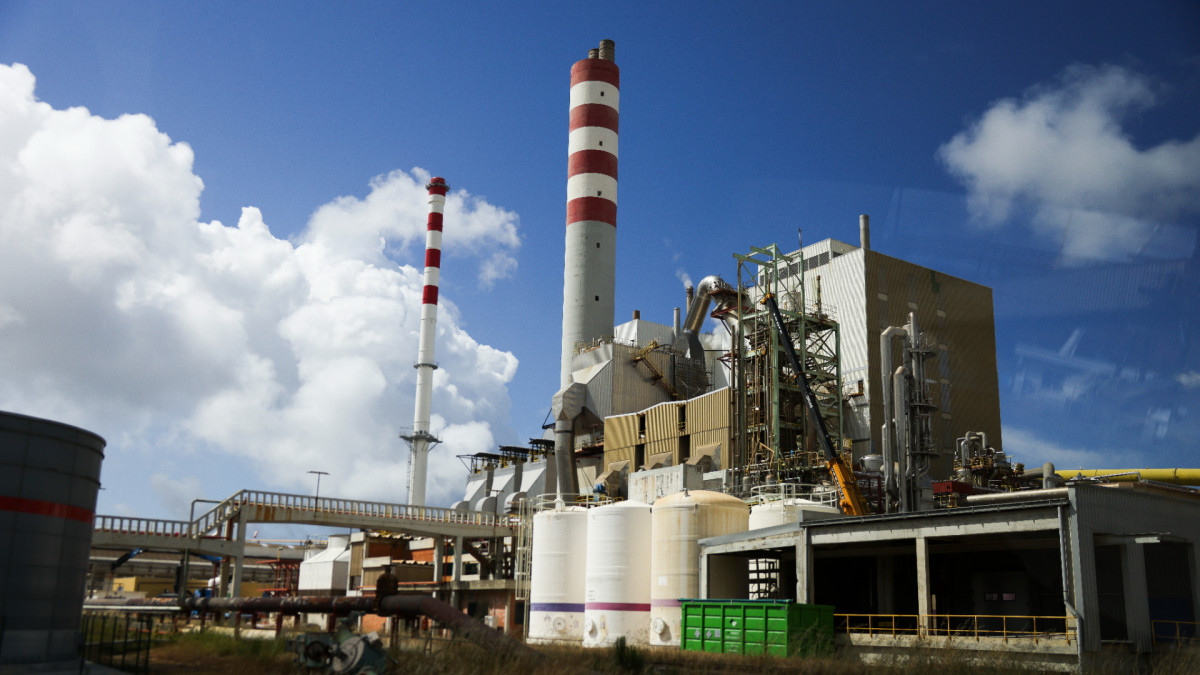
European Commission-funded projects, such as this factory in Setúbal, Portugal, are backing industrial investment to reduce greenhouse gas emissions.Comisión Europea
Napoleon is credited with the maxim never to interrupt an adversary in the middle of a mistake. China seems to be following that advice: watching in silence as Europe weakens its main tool for industrial decarbonization, eyeing technology leadership on clean industries and technologies.
The European Commission waited until the eve of the summer break to present its reform of its carbon market, the Emissions Trading System (ETS). It guides the decarbonisation of the power and industry sector while seeking to make companies more competitive on growing global markets for clean technologies.
The problem: the proposal has lost strength exactly when it mattered most.
The system's track record is measurable. Since 2005, it has raised more than €270 billion and cut emissions in the sectors it covers by 50%, without curbing output or growth. China, the United Kingdom, South Korea and California have each adopted their own version of the model. According to the World Bank, roughly 30% of global greenhouse gas emissions are now covered by some 80 carbon-pricing instruments.
Now why would the European Commission suggest weakening its market policies when other major economies are strengthening theirs? The reason is a mix of valid concerns and short-term political opportunism that has policymakers treating the ETS as scapegoat for problems they caused. Let’s unpack this.
It is true that European companies are facing a range of uncertainties over global tariffs, trade rules and geopolitical volatility. In addition, energy prices are increasing with every war that exposes the EU’s high dependence on imports of oil and gas. This hampers their competitiveness significantly. In this context, the current rules of the ETS would have required full decarbonisation of the power and industry sector by 2039, which is too difficult or costly to achieve for some energy-intensive companies. So a pragmatic solution for that was needed but instead, companies now got 10 more years which might weaken the incentives to innovate and keep up with China.
To be clear: the ETS proposal functions as a Trojan horse. It looks like a gift, giving European companies more time on emissions cuts, but it leaves them at a disadvantage against a Chinese industry that keeps accelerating. This is not the first time. The same pattern played out in the shift to electric vehicles: Europe slowed down while Chinese manufacturers gained global market share year after year. Heavy industry and the power sector risk being next, precisely the segments where decarbonization is cheapest and easiest to achieve.
The proposal can be improved by: strengthening the decarbonisation trajectory so clear incentives for innovation and investments are maintained; stronger focus on decarbonising the power sector first so industry can take more time and directing financial support back to the companies.
Not everyone reads the reform the same way. For part of European industry, worn down by years of high energy costs, the added flexibility comes as relief. It also reads as a win for governments that had spent months pushing for a looser ETS, Italy and Poland among them, who see the Commission's proposal as confirmation that their pressure worked.
Separating two distinct cost drivers helps here, since the debate often conflates them, sometimes deliberately.
The second cost driver does trace back to the ETS, though it is far smaller than commonly claimed. Back to the festival analogy: diluting the system now is like the organizers handing out free tickets to people who skipped the line. Anyone who bought a ticket early, betting that prices would keep rising, suddenly finds that being an early mover no longer pays off.
This reform benefits companies that have underinvested in decarbonization for years, or that have already shifted capital to China, where labor is cheaper and energy prices are lower. Meanwhile, European competitors that moved early, and were starting to see returns on that investment, read the Commission's move as a setback. The result: short-term relief for laggards and a medium-term competitive disadvantage for everyone else, a trade-off that benefits only the one rival that actually matters in this contest. Reaching the 2040 emissions target may now cost more than it needed to with early action. If competitiveness is at risk, so are valuable jobs and critical sectors. We’ve seen on solar power and electric vehicles how fast it can go.
Ireland holds the rotating Council presidency for the second half of 2026 and has flagged the ETS revision as a priority file and will push for a political agreement in principle at December's Environment Council.
Meanwhile, in Beijing, there's no need to intervene. Waiting for Europe to finish arguing with itself could do the job.
The European Commission waited until the eve of the summer break to present its reform of its carbon market, the Emissions Trading System (ETS). It guides the decarbonisation of the power and industry sector while seeking to make companies more competitive on growing global markets for clean technologies.
The problem: the proposal has lost strength exactly when it mattered most.
"China seems to be following that advice: watching in silence as Europe weakens its main tool for industrial decarbonization"Think of the ETS as festival tickets. Brussels issues a limited number, known as emission allowances for every tonne of Co2 emitted, and only ticket holders can enter the venue, meaning the carbon market. Each year, the supply shrinks at a fixed, pre-announced rate, so fewer allowances remain in circulation and prices go up - as do ticket prices for festivals. Power plants and the most energy intensive industries (steel, cement, chemicals, aviation, shipping) need one allowance per tonne emitted. The scarcer the supply, the higher the resale price, which pushes companies toward investing in low-carbon technology rather than paying for allowances.
The system's track record is measurable. Since 2005, it has raised more than €270 billion and cut emissions in the sectors it covers by 50%, without curbing output or growth. China, the United Kingdom, South Korea and California have each adopted their own version of the model. According to the World Bank, roughly 30% of global greenhouse gas emissions are now covered by some 80 carbon-pricing instruments.
Now why would the European Commission suggest weakening its market policies when other major economies are strengthening theirs? The reason is a mix of valid concerns and short-term political opportunism that has policymakers treating the ETS as scapegoat for problems they caused. Let’s unpack this.
It is true that European companies are facing a range of uncertainties over global tariffs, trade rules and geopolitical volatility. In addition, energy prices are increasing with every war that exposes the EU’s high dependence on imports of oil and gas. This hampers their competitiveness significantly. In this context, the current rules of the ETS would have required full decarbonisation of the power and industry sector by 2039, which is too difficult or costly to achieve for some energy-intensive companies. So a pragmatic solution for that was needed but instead, companies now got 10 more years which might weaken the incentives to innovate and keep up with China.
"Policymakers are treating the ETS as scapegoat for problems they caused"At the same time, some European governments such as Italy or Poland treated the ETS as a scapegoat. It was blamed for high energy prices even if the gas prices spiking due to war made them increase and drove inflation. Policymakers also pretended it was the ETS’ fault when steel companies would have lower demand and as a result, jobs are at risk. Instead, it is Chinese steel overcapacity entering the EU’s market.
To be clear: the ETS proposal functions as a Trojan horse. It looks like a gift, giving European companies more time on emissions cuts, but it leaves them at a disadvantage against a Chinese industry that keeps accelerating. This is not the first time. The same pattern played out in the shift to electric vehicles: Europe slowed down while Chinese manufacturers gained global market share year after year. Heavy industry and the power sector risk being next, precisely the segments where decarbonization is cheapest and easiest to achieve.
The proposal can be improved by: strengthening the decarbonisation trajectory so clear incentives for innovation and investments are maintained; stronger focus on decarbonising the power sector first so industry can take more time and directing financial support back to the companies.
Not everyone reads the reform the same way. For part of European industry, worn down by years of high energy costs, the added flexibility comes as relief. It also reads as a win for governments that had spent months pushing for a looser ETS, Italy and Poland among them, who see the Commission's proposal as confirmation that their pressure worked.
Separating two distinct cost drivers helps here, since the debate often conflates them, sometimes deliberately.
"For part of European industry, worn down by years of high energy costs, the added flexibility comes as relief"The first cost driver is energy, and it has a specific origin: Europe's dependence on imported gas and oil. That exposure dates to the break with Russian gas after the invasion of Ukraine, and it has since been compounded by volatile US foreign policy, particularly toward Iran. The ETS does not generate this cost. In fact, while energy prices spiked due to those same geopolitical tensions, the carbon price stayed stable. The International Energy Agency estimates the EU saved €51.4 billion on fossil fuel imports in 2025, thanks to renewable energy and European policy. Spain illustrates the point: with a larger share of renewables in its energy mix, it paid up to seven times less for electricity than Italy, which remains heavily dependent on gas to keep its industry running and homes heated.
The second cost driver does trace back to the ETS, though it is far smaller than commonly claimed. Back to the festival analogy: diluting the system now is like the organizers handing out free tickets to people who skipped the line. Anyone who bought a ticket early, betting that prices would keep rising, suddenly finds that being an early mover no longer pays off.
This reform benefits companies that have underinvested in decarbonization for years, or that have already shifted capital to China, where labor is cheaper and energy prices are lower. Meanwhile, European competitors that moved early, and were starting to see returns on that investment, read the Commission's move as a setback. The result: short-term relief for laggards and a medium-term competitive disadvantage for everyone else, a trade-off that benefits only the one rival that actually matters in this contest. Reaching the 2040 emissions target may now cost more than it needed to with early action. If competitiveness is at risk, so are valuable jobs and critical sectors. We’ve seen on solar power and electric vehicles how fast it can go.
"Reaching the 2040 emissions target may now cost more than it needed to with early action"The Commission proposal is just the first step to adjust the law. The file now moves to the Council and Parliament, with positions firming up in December and the first quarter of 2027 set as the target date for the three institutions to reach an agreement. It will be a heavy lift but is not impossible, especially as key elections - not only in Spain but also France, Italy, Poland and other countries loom. The 27 governments are far from unanimous, split between those pushing for deeper emissions cuts and those wanting to loosen the system further. On the other hand, the European Parliament has not formed stable majorities over the last months.
Ireland holds the rotating Council presidency for the second half of 2026 and has flagged the ETS revision as a priority file and will push for a political agreement in principle at December's Environment Council.
Meanwhile, in Beijing, there's no need to intervene. Waiting for Europe to finish arguing with itself could do the job.

Linda Kalcher
Directora ejecutiva de Strategic Perspectives
Es la fundadora de Strategic Perspectives en 2022. Antes pasó siete años en la European Climate Foundation, donde fue directora para Instituciones de la UE y Diplomacia del Green Deal y asesora especial de su consejera delegada, Laurence Tubiana. Fue asesora política del eurodiputado socialdemócrata Jo Leinen en la Comisión de Medio Ambiente del Parlamento Europeo.

Andrés Pelayo Alfonso
Analista de Asuntos Institucionales de la UE en Strategic Perspectives
Es analista de Asuntos Institucionales de la Unión Europea en Strategic Perspectives, 'think tank' con sede en Bruselas centrado en política climática, energética e industrial. Antes estuvo en el Parlamento Europeo, combinando comunicación política y análisis legislativo en distintas comisiones. Previamente fue consultor en GAD3 y periodista en 'The Objective Media'. Es máster en Análisis Político y Electoral por la Universidad Carlos III de Madrid.
Ahora en portada
17 de octubre de 2026
16 de octubre de 2026
Noticias relacionadas
Hace 14 semanas
Less dependence on China will mean costs for Europe and Spain
Hace 15 semanas
Spain wants Chinese technology. Beijing just said no
Hace 17 semanas
Diary of an MEP in China: What should Europe do about China’s industrial policy?
Lo más leído