Sábado, 17 de octubre de 2026




LÓPEZ PLANA'S EUROPEAN COMPASS
When profits fall from the sky, whose are they? The debate redefining European capitalism
At a time when Iberdrola and Repsol have announced semi-annual profits of €4.336 billion and €2.201 billion, respectively, the debate over "windfall profits" is back. In his weekly column, Marc López Plana, editor and director of 'Agenda Pública,' asks whether it is legitimate for governments to tax extraordinary profits when the circumstances that produced them also meant significant costs for citizens.
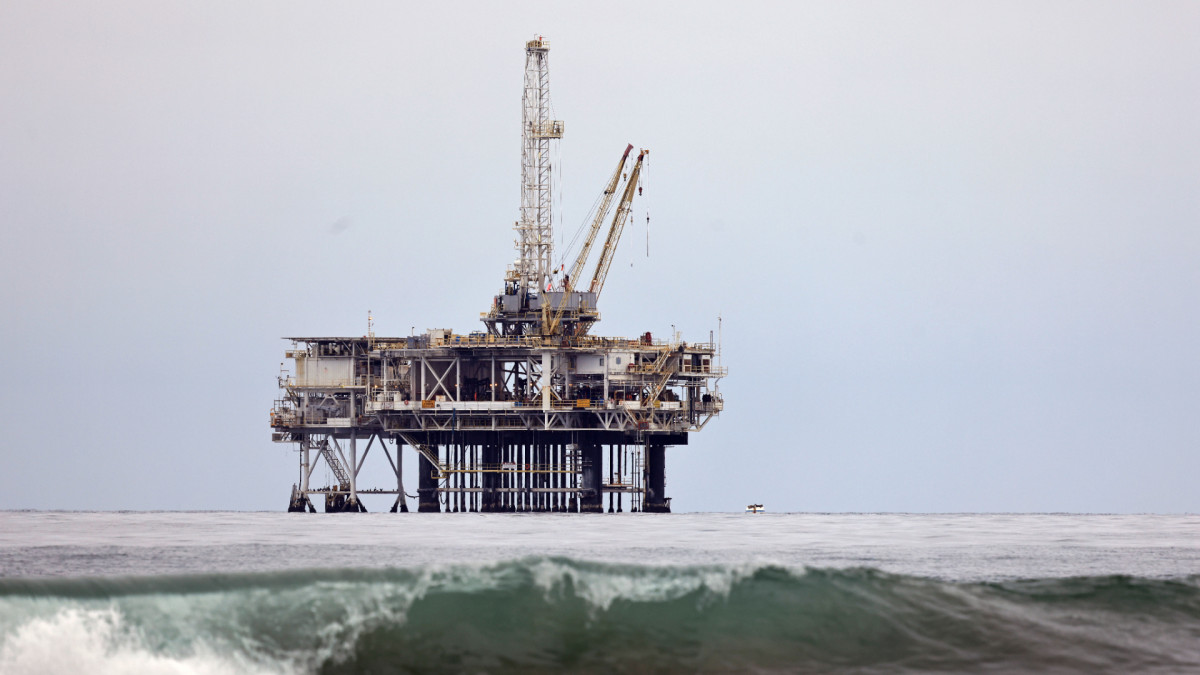
The oil industry is one of the sectors in which 'windfall profits' have been the subject of the most debate.Ruaridh Stewart / Zuma Press / Europa Press
When Pedro Sánchez defended the creation of an extraordinary tax on large energy companies and, subsequently, on banks, reactions were immediate. To detractors, the tax was an attack on investment and a fresh example of government interventionism. To supporters, it posed a basic question of justice: If certain companies were making exceptional profits thanks to extraordinary circumstances that were impoverishing millions of citizens, wasn’t it reasonable that some portion of those profits should return to society?
Yet again, this debate appears to reflect the political polarization in Spain. However, reducing the question to a dispute between the PSOE and the opposition means losing sight of a particularly interesting phenomenon. The matter of so-called 'windfall profits' is present and pertinent in Europe, having already entered the main economic debates at the national level. Therefore, the situation goes beyond taxes. It tackles the much deeper issue of who has the right to appropriate economic value in contexts like the Middle East, where no company is at fault, but where the costs are collectively borne.
The market economy promotes a simple logic: companies take risks, invest capital, innovate, and compete. If they get it right, they make a profit, but if they fail, they must bear the losses. At the same time, the State sets the rules of the game, correcting certain market failures and remaining responsible for the collection of general taxes in order to finance public services. In other words, profit and risk are part of the same social contract – or they used to be, because despite the proposed dynamics, the logic is beginning to crack.
Here arises the question that more and more European governments are now asking. If the extraordinary 'windfall' profit doesn’t respond private effort alone but, quite clearly, to collective circumstances, should a portion of those profits be returned to the collective?
President of the Government Pedro Sánchez responded affirmatively to that question. Spain was among the first European countries to propose extraordinary taxes on energy companies and banks. Sánchez has repeatedly argued that it’s unreasonable for certain companies to accumulate historic profits while households and other companies suffered unprecedented inflation. Although inherently political, that argument also carries moral weight.
The interesting thing is that Spain hasn’t been the only one to propose such a course. Italy approved a similar tax on energy companies, and the United Kingdom introduced an extraordinary levy on North Sea oil and gas companies under the Conservative government of Rishi Sunak. Similar measures have been taken by Greece, Romania, and other Member States, and the European Union itself has promoted mechanisms to capture part of the extraordinary profits obtained by certain energy companies after the explosion in prices caused by the war in Ukraine.
In other words, the debate has broken through ideological frameworks – or at least those of left versus right. The question of how to distribute revenues derived from exceptional events has taken on a European scale. And arriving at an answer to that question is far from simple, since the arguments are solid on both sides.
From that perspective, a democratic argument also pertains. In many strategic sectors – chiefly energy, banking, defense, and infrastructure – business activity depends on an extremely intense regulatory framework. The function of the State is straightforward: to grant licenses, establish rules, and regulate the market. If the public authority contributes decisively to creating the conditions for those benefits to exist, it’s legitimate to ask whether it also has the right to participate in profits when they reach exceptional size.
How has the other side responded? Critics warn that the concept of 'extraordinary profit' is extremely difficult to define. When does a high return cease to be a reward for risk and become windfall income, susceptible to taxation? Energy companies, for example, invest billions in projects with multi-decade horizons. Years of exceptional earnings often alternate with periods of significantly lower returns. Taxing only the favorable moments could profoundly alter the incentives to invest.
There’s also the problem of legal certainty. If governments are able to decide (depending on the political context) when a profit is 'excessive', then that has a direct effect on regulatory predictability. In sectors that require huge investments – from power grids to data centers to new technologies – regulatory stability is among the most valuable assets.
In short, both arguments contain their own share of truth. This might be because the real dilemma isn’t whether the State should intervene more or less in the economy; the central concern is to recognize that the very nature of European capitalism is undergoing change.
Throughout much of the 20th century, the idea that the State could correct the market was predominant. Today, the State actively contributes to creating the market. For example, the energy transition depends on vast public subsidies. The goal of European strategic autonomy (which we talk about so much) is mobilizing hundreds of billions in industrial aid. The defense industry is driven by public contracts. And pharmaceutical companies? They grew considerably during the pandemic, thanks in part to massive purchases financed by States. And let’s not forget technologies related to artificial intelligence, which depend on energy infrastructures, regulation, and public financing that profoundly condition their development. In all these areas, it’s increasingly difficult to separate the creation of private value from the public actions that make that value possible.
Naturally, that view engenders other risks. If every rise in profits can be subjected to political negotiation, it might create more obstacles to attracting investment and innovation. And as we know, these are issues on which Europe must continue to concentrate, thanks to competition from the U.S. and China. That’s probably the real dilemma in Europe.
Europe needs more private investment to finance the energy transition, digitalization, and defense. But it also faces growing social pressure to ensure that the enormous revenues derived from those efforts aren’t concentrated exclusively into a few companies, while the costs fall to average citizens. There’s no simple answer.
What does seem clear is that the concept of 'profit fallen from the sky' is here to stay. Every new crisis — each war, or pandemic, or technological revolution, or even each decision on monetary policy — will prompt the same question: Should the State limit itself to collecting general taxes, or can it claim a share of profits that wouldn’t have existed without certain extraordinary circumstances shared by the whole of society?
Pedro Sánchez has been one of the European leaders who has answered most resolutely in the affirmative. Other governments of diverse political persuasions have reached similar conclusions. Critics continue to warn of risks to investment and legal certainty, but both sides might be debating an even deeper issue without explicitly saying so.
Yet again, this debate appears to reflect the political polarization in Spain. However, reducing the question to a dispute between the PSOE and the opposition means losing sight of a particularly interesting phenomenon. The matter of so-called 'windfall profits' is present and pertinent in Europe, having already entered the main economic debates at the national level. Therefore, the situation goes beyond taxes. It tackles the much deeper issue of who has the right to appropriate economic value in contexts like the Middle East, where no company is at fault, but where the costs are collectively borne.
The market economy promotes a simple logic: companies take risks, invest capital, innovate, and compete. If they get it right, they make a profit, but if they fail, they must bear the losses. At the same time, the State sets the rules of the game, correcting certain market failures and remaining responsible for the collection of general taxes in order to finance public services. In other words, profit and risk are part of the same social contract – or they used to be, because despite the proposed dynamics, the logic is beginning to crack.
"In all these cases, the source of extraordinary profit wasn’t a business decision but an external shock that affected the entire society"The biggest crises in recent years have shown that a growing share of corporate profits no longer derives exclusively from corporate merit. Clear examples would include the pandemic, which disrupted entire markets in unpredictable ways, floowed by Russia’s invasion of Ukraine, which sent energy prices soaring – without any special innovation on the part of electricity or oil companies. As a result of the war, rapid hikes in the interest rate multiplied margins at banks while making mortgages more expensive for millions of families. In all these cases, the source of extraordinary profit wasn’t a business decision but an external shock that affected the entire society.
Here arises the question that more and more European governments are now asking. If the extraordinary 'windfall' profit doesn’t respond private effort alone but, quite clearly, to collective circumstances, should a portion of those profits be returned to the collective?
President of the Government Pedro Sánchez responded affirmatively to that question. Spain was among the first European countries to propose extraordinary taxes on energy companies and banks. Sánchez has repeatedly argued that it’s unreasonable for certain companies to accumulate historic profits while households and other companies suffered unprecedented inflation. Although inherently political, that argument also carries moral weight.
The interesting thing is that Spain hasn’t been the only one to propose such a course. Italy approved a similar tax on energy companies, and the United Kingdom introduced an extraordinary levy on North Sea oil and gas companies under the Conservative government of Rishi Sunak. Similar measures have been taken by Greece, Romania, and other Member States, and the European Union itself has promoted mechanisms to capture part of the extraordinary profits obtained by certain energy companies after the explosion in prices caused by the war in Ukraine.
In other words, the debate has broken through ideological frameworks – or at least those of left versus right. The question of how to distribute revenues derived from exceptional events has taken on a European scale. And arriving at an answer to that question is far from simple, since the arguments are solid on both sides.
"They’re not the usual reward for smart investment or innovation, but windfall gains derived from exceptional circumstances"Those who defend such taxes contend that extraordinary profits are just that: extraordinary. They’re not the usual reward for smart investment or innovation, but windfall gains derived from exceptional circumstances. If a company makes extra billions because a war artificially drives up the price of a commodity, or because a decision by a central bank automatically increases its own financial margins, then it would seem reasonable some of that profit could be used to compensate all who are bearing the costs of that same crisis.
From that perspective, a democratic argument also pertains. In many strategic sectors – chiefly energy, banking, defense, and infrastructure – business activity depends on an extremely intense regulatory framework. The function of the State is straightforward: to grant licenses, establish rules, and regulate the market. If the public authority contributes decisively to creating the conditions for those benefits to exist, it’s legitimate to ask whether it also has the right to participate in profits when they reach exceptional size.
How has the other side responded? Critics warn that the concept of 'extraordinary profit' is extremely difficult to define. When does a high return cease to be a reward for risk and become windfall income, susceptible to taxation? Energy companies, for example, invest billions in projects with multi-decade horizons. Years of exceptional earnings often alternate with periods of significantly lower returns. Taxing only the favorable moments could profoundly alter the incentives to invest.
There’s also the problem of legal certainty. If governments are able to decide (depending on the political context) when a profit is 'excessive', then that has a direct effect on regulatory predictability. In sectors that require huge investments – from power grids to data centers to new technologies – regulatory stability is among the most valuable assets.
In short, both arguments contain their own share of truth. This might be because the real dilemma isn’t whether the State should intervene more or less in the economy; the central concern is to recognize that the very nature of European capitalism is undergoing change.
Throughout much of the 20th century, the idea that the State could correct the market was predominant. Today, the State actively contributes to creating the market. For example, the energy transition depends on vast public subsidies. The goal of European strategic autonomy (which we talk about so much) is mobilizing hundreds of billions in industrial aid. The defense industry is driven by public contracts. And pharmaceutical companies? They grew considerably during the pandemic, thanks in part to massive purchases financed by States. And let’s not forget technologies related to artificial intelligence, which depend on energy infrastructures, regulation, and public financing that profoundly condition their development. In all these areas, it’s increasingly difficult to separate the creation of private value from the public actions that make that value possible.
"The concept of redistribution is compounded by the task of deciding how to distribute income generated by a permanent collaboration between the public and private sectors"Economist Mariana Mazzucato has been defending this very idea for years. The work of the State goes beyond correcting market failures, because it’s also capable of creating entire markets through public investment, research, regulation, and contracting. If we accept that premise, then the discussion over extraordinary profits takes on a different dimension. The concept of redistribution is compounded by the task of deciding how to distribute income generated by a permanent collaboration between the public and private sectors.
Naturally, that view engenders other risks. If every rise in profits can be subjected to political negotiation, it might create more obstacles to attracting investment and innovation. And as we know, these are issues on which Europe must continue to concentrate, thanks to competition from the U.S. and China. That’s probably the real dilemma in Europe.
Europe needs more private investment to finance the energy transition, digitalization, and defense. But it also faces growing social pressure to ensure that the enormous revenues derived from those efforts aren’t concentrated exclusively into a few companies, while the costs fall to average citizens. There’s no simple answer.
What does seem clear is that the concept of 'profit fallen from the sky' is here to stay. Every new crisis — each war, or pandemic, or technological revolution, or even each decision on monetary policy — will prompt the same question: Should the State limit itself to collecting general taxes, or can it claim a share of profits that wouldn’t have existed without certain extraordinary circumstances shared by the whole of society?
Pedro Sánchez has been one of the European leaders who has answered most resolutely in the affirmative. Other governments of diverse political persuasions have reached similar conclusions. Critics continue to warn of risks to investment and legal certainty, but both sides might be debating an even deeper issue without explicitly saying so.
"Then we need to ask who really «generates» the profits, as well as who can legitimately «claim» them"In European capitalism, more and more strategic sectors are now functioning as a co-production that combines private initiative with the regulatory role of the State. When as now the power exercised by the public sector acquires such a crucial dimension within the economy – financing innovation, protecting markets, guaranteeing infrastructures, and absorbing a large share of systemic risk – then we need to ask who really 'generates' the profits, as well as who can legitimately 'claim' them. Very likely, that will be an economic discussion that marks the next decade in Europe.
Ahora en portada
17 de octubre de 2026
16 de octubre de 2026
Noticias relacionadas
Hace 15 semanas
Learning to 'speak Italian': the pending challenge of Spain’s democracy
Hace 17 semanas
The lingering question after Germany’s defeat at the UN: did Berlin take Spain’s support for granted?
Hace 21 semanas
What’s happening to Germany?
Lo más leído