Domingo, 27 de septiembre de 2026



Temas del momento:
Venezuela Demografía Crisis en Ceuta Hacia 2027 "Ley de nietos" Redes sociales y menores Diane Coyle
LÓPEZ PLANA'S EUROPEAN COMPASS
The lingering question after Germany’s defeat at the UN: did Berlin take Spain’s support for granted?
Germany’s unexpected defeat at the United Nations has opened up a question in Europe: is Berlin still taking the support of its partners for granted? In his weekly column for 'Agenda Pública', editor and director Marc López Plana examines what this diplomatic setback reveals about the new balance of power in the EU, and how disagreements with Spain on key issues anticipate the end of automatic support in European politics.
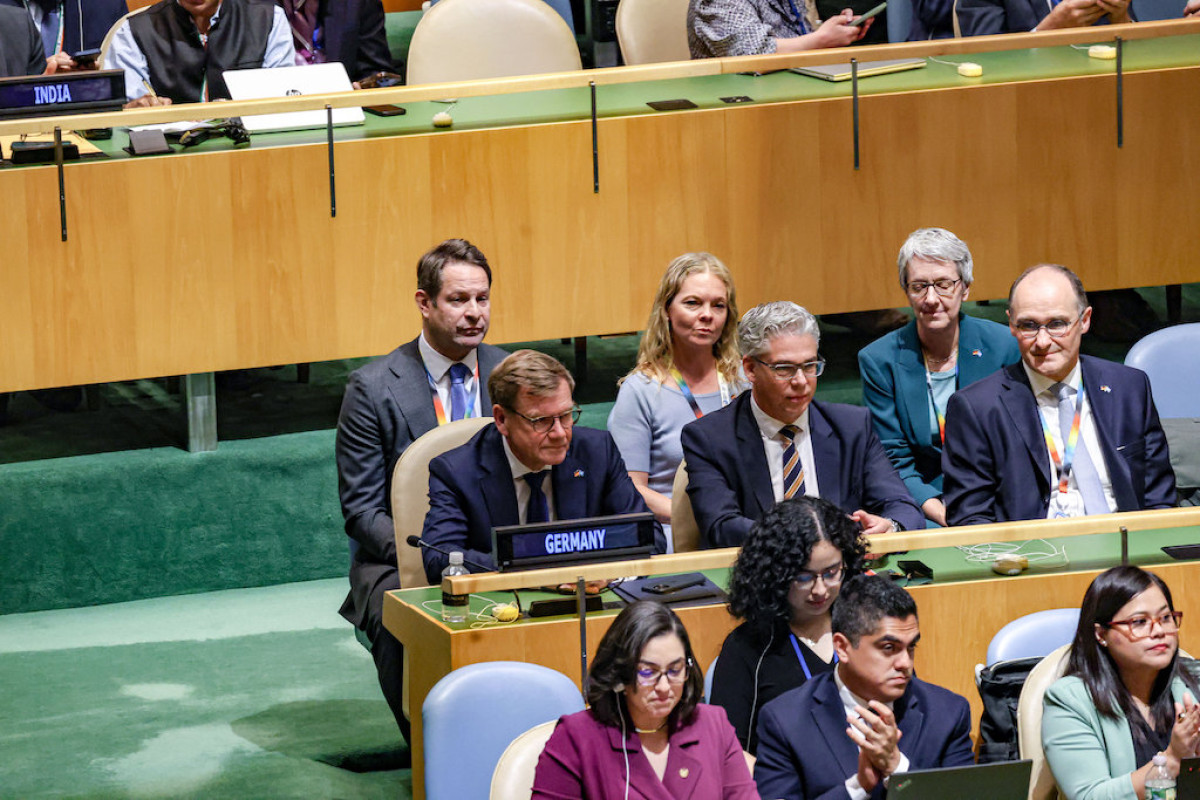
The German delegation after Germany lost the election to the UN Security Council.Bianca Otero / Zuma Press / Europa Press
On the 20th of May, José Manuel Albares travelled to Berlin for a working meeting with Germany’s new Foreign Minister, Johann Wadephul. Officially, the aim was to strengthen bilateral relations and to address topics on the European and international agenda, from the conflicts in Ukraine and the Middle East to multilateralism. But the meeting also had a much more concrete (and sensitive) dimension.
Spain arrived in Berlin with two very defined diplomatic priorities. The first was the official status of Catalan, Basque, and Galician in the European Union; the second, the evolution of Europe’s position on Israel and the war in Gaza.
According to sources familiar with the meeting, those two issues occupied a significant part of the ministers’ conversation. On both topics, Madrid was met with a negative response from Berlin.
The second discrepancy revolved around Israel. The official agenda of the visit expressly included the conflicts in the Middle East; on the same day, Albares announced from Berlin a summons of the Israeli chargé d’affaires in Madrid for the treatment of activists aboard the Gaza-bound flotilla, which he described as "monstrous, undignified, and inhumane." Spain and Germany have been at considerable odds for months over Europe’s response to the war in Gaza and the advisability of increasing political pressure on the Israeli government.
Fifteen days after that meeting, Germany suffered an unprecedented diplomatic defeat. For the first time in its history, Berlin failed to win a seat on the United Nations Security Council.
However, in some European capitals, people are beginning to ask a different question. Had Germany sufficiently pursued the support of its European partners? Or did they assume that support would be given out of inertia?
Spain is a particularly interesting case that highlights a phenomenon increasingly on view in European politics: the vanishing of automatic support. Nobody knows how Spain voted at the United Nations, because votes are secret. And truthfully, there’s no evidence of a direct link between bilateral differences and the outcome of the election.
But diplomacy rarely works in such a compartmentalized way. Governments accumulate political capital, or their capital erodes. They either build relationships of trust or drift apart, usually in silence. By connecting the dots of the positions taken, one can see how apparently unrelated concerns end up revealing a broader political climate.
Angela Merkel’s Germany could afford to say "no" many times. After all, Germany was the European Union’s center of gravity. Its economic and political weight meant that, even when disagreements arose, few partners were willing to question its leadership.
The Europe of 2026 is something different. The war in Ukraine has multiplied national sensitivities. Industrial policies have revived competition between Member States. The Middle East has uncovered profound political differences within the Union. And the logic of partner relations has become much more transactional.
In this new context, national priorities matter more than ever. For Pedro Sánchez’s government, the official status of the co-official languages has become a matter of political identity and European credibility. It’s not just another issue, but a very visible initiative of Spanish foreign action closely related to support from Junts.
The question of Israel is equally central. Spain has made the defense of international law and its stronger position vis-à-vis the Netanyahu government the hallmark of its foreign policy.
It was precisely on those matters where the governments noted in Berlin that their attitudes still differed.
For that reason, the lingering question following Germany’s defeat at the United Nations reaches beyond Spain. It’s now time to ask whether Germany has understood the extent to which the priorities of its partners can no longer be regarded as secondary issues.
The Germans have an expression for this type of situation: Misere auf hohem Niveau —lamenting from a privileged position—. The paradox of someone who remains in a privileged position but discovers that some advantages are no longer automatic.
Maybe that’s exactly what happened at the United Nations. Germany is still an indispensable European power, but the Europe of 2026 no longer works on the basis of implicit deference or automatic support. Even Berlin is obliged to persuade, to negotiate, and to listen.
Because European leadership has changed, and because being indispensable is no longer enough. Today, we also have to convince others that our priorities matter. When Berlin requested support for one of its own major diplomatic priorities, did it take time to really listen to the priorities of its closest partners?
Spain arrived in Berlin with two very defined diplomatic priorities. The first was the official status of Catalan, Basque, and Galician in the European Union; the second, the evolution of Europe’s position on Israel and the war in Gaza.
According to sources familiar with the meeting, those two issues occupied a significant part of the ministers’ conversation. On both topics, Madrid was met with a negative response from Berlin.
"The German position on the co-official languages was especially important"The German position on the co-official languages was especially important. For months, Germany has been the main point of reference among those countries still expressing legal and financial reservations to the Spanish initiative. Albares himself publicly admitted in Berlin that he had discussed the matter "extensively" with his German counterpart, though he declined to give details. Sources from Germany’s Foreign Ministry were more explicit: Berlin "has not changed its position."
The second discrepancy revolved around Israel. The official agenda of the visit expressly included the conflicts in the Middle East; on the same day, Albares announced from Berlin a summons of the Israeli chargé d’affaires in Madrid for the treatment of activists aboard the Gaza-bound flotilla, which he described as "monstrous, undignified, and inhumane." Spain and Germany have been at considerable odds for months over Europe’s response to the war in Gaza and the advisability of increasing political pressure on the Israeli government.
Fifteen days after that meeting, Germany suffered an unprecedented diplomatic defeat. For the first time in its history, Berlin failed to win a seat on the United Nations Security Council.
"In some European capitals, people are beginning to ask a different question. Had Germany sufficiently pursued the support of its European partners? Or did they assume that support would be given out of inertia?"In Germany, the debate has focused on the global reasons behind that defeat. One hears of deteriorating relations with the Global South, the degree of German support for Ukraine, or the political costs of certain positions on the Middle East.
However, in some European capitals, people are beginning to ask a different question. Had Germany sufficiently pursued the support of its European partners? Or did they assume that support would be given out of inertia?
Spain is a particularly interesting case that highlights a phenomenon increasingly on view in European politics: the vanishing of automatic support. Nobody knows how Spain voted at the United Nations, because votes are secret. And truthfully, there’s no evidence of a direct link between bilateral differences and the outcome of the election.
But diplomacy rarely works in such a compartmentalized way. Governments accumulate political capital, or their capital erodes. They either build relationships of trust or drift apart, usually in silence. By connecting the dots of the positions taken, one can see how apparently unrelated concerns end up revealing a broader political climate.
Angela Merkel’s Germany could afford to say "no" many times. After all, Germany was the European Union’s center of gravity. Its economic and political weight meant that, even when disagreements arose, few partners were willing to question its leadership.
The Europe of 2026 is something different. The war in Ukraine has multiplied national sensitivities. Industrial policies have revived competition between Member States. The Middle East has uncovered profound political differences within the Union. And the logic of partner relations has become much more transactional.
In this new context, national priorities matter more than ever. For Pedro Sánchez’s government, the official status of the co-official languages has become a matter of political identity and European credibility. It’s not just another issue, but a very visible initiative of Spanish foreign action closely related to support from Junts.
The question of Israel is equally central. Spain has made the defense of international law and its stronger position vis-à-vis the Netanyahu government the hallmark of its foreign policy.
It was precisely on those matters where the governments noted in Berlin that their attitudes still differed.
For that reason, the lingering question following Germany’s defeat at the United Nations reaches beyond Spain. It’s now time to ask whether Germany has understood the extent to which the priorities of its partners can no longer be regarded as secondary issues.
"The Germans have an expression for this type of situation: 'Misere auf hohem Niveau' —lamenting from a privileged position—. The paradox of someone who remains in a privileged position but discovers that some advantages are no longer automatic"Germany’s defeat at the Security Council doesn’t alter its economic weight or its centrality in Europe. Still, it suggests that even the continent’s leading power can no longer take for granted the political support of other nations.
The Germans have an expression for this type of situation: Misere auf hohem Niveau —lamenting from a privileged position—. The paradox of someone who remains in a privileged position but discovers that some advantages are no longer automatic.
Maybe that’s exactly what happened at the United Nations. Germany is still an indispensable European power, but the Europe of 2026 no longer works on the basis of implicit deference or automatic support. Even Berlin is obliged to persuade, to negotiate, and to listen.
Because European leadership has changed, and because being indispensable is no longer enough. Today, we also have to convince others that our priorities matter. When Berlin requested support for one of its own major diplomatic priorities, did it take time to really listen to the priorities of its closest partners?
Ahora en portada
27 de septiembre de 2026
26 de septiembre de 2026
Noticias relacionadas
Hace 14 semanas
La pregunta que deja la derrota alemana en la ONU: ¿dio Berlín por descontado el apoyo de España?
Lo más leído