Viernes, 16 de octubre de 2026



LÓPEZ PLANA'S EUROPEAN COMPASS
What’s happening to Germany?
Europe’s economic engine is seizing up, its political system wracked by paralysis and by the unstoppable rise of the AfD. Has the German model entered a phase of structural demolition? In his weekly column, 'Agenda Pública' editor and director Marc López Plana examines some current developments, from the exhaustion of Merz’s grand coalition to the industrial standoff with Spain over green funds. He finds an institutional crisis that is threatening to fracture the single market.
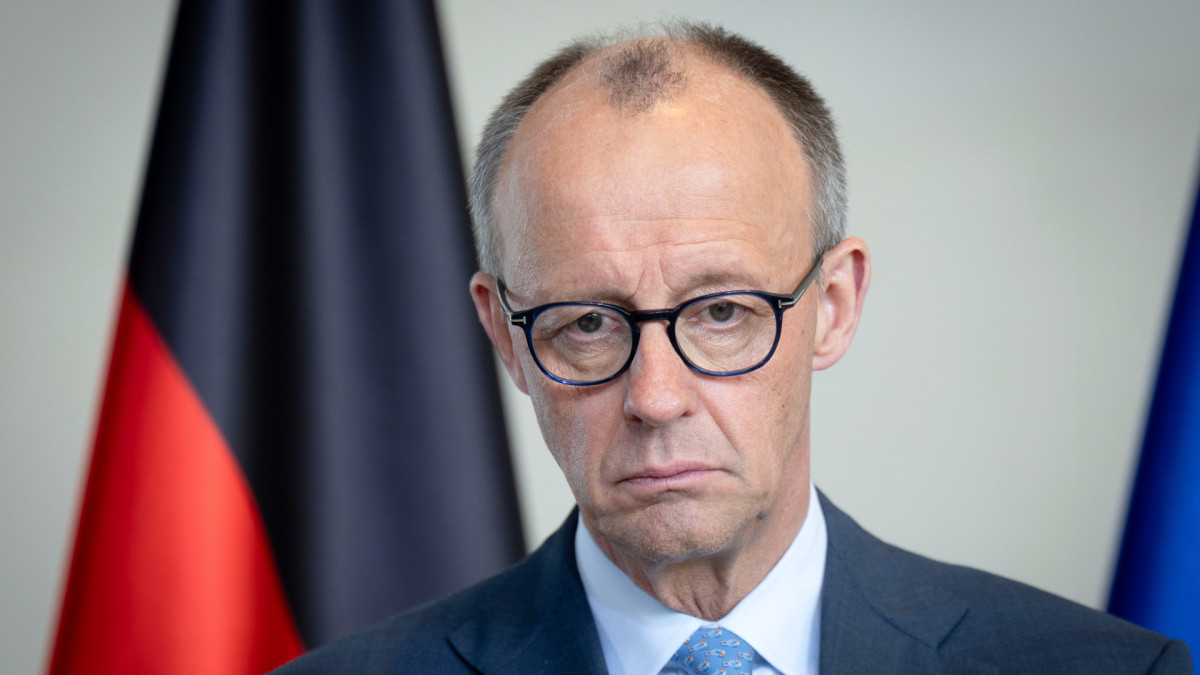
German Chancellor Friedrich Merz on April 16.Bernd Elmenthaler / Zuma Press / Europa Press
For many years, Germany has been Europe’s anchor of stability. Its economy was growing, political consensus was working, and the country’s major parties – the CDU/CSU (‘the Union’) and the SPD – guaranteed predictable alternation within a shared framework. Even when Europe was dealing with crises, Berlin conveyed a sense of institutional order and democratic rationality.
Today, that Germany seems to have broken down. The AfD is now leading in some national polls, surpassing support for both the Social Democrats and Christian Democrats. In some eastern states, such as Saxony-Anhalt, its support is nearing 40%, which would give it real capacity to block the political system. Meanwhile, at the federal level, the traditional parties continue to govern together in a grand coalition that many Germans no longer see as a stabilizing solution, but as a symptom of exhaustion. Is Germany entering a crisis of political representation and confidence in the future?
When Schröder became Chancellor in 1998, the SPD won more than 40% of the vote. And even after seven years of government, support in 2005 was still at 35%. From that point on, an almost continuous downslide has taken place. Scholz’s victory in 2021 – with just 25% – was an anomaly that could, perhaps, have been mistaken for a renaissance.
The diagnosis for Germany’s Social Democrats is also evident at a European level. France, Austria, and even the Scandinavian nations are exhibiting similar symptoms: loss of ideological identity, electoral fragmentation, and difficulty in constructing a coherent economic and cultural narrative in a world marked by globalization, immigration, and fear of decline. Spain is an exception, with Pedro Sánchez maintaining support from around 28% of intended voters under very complicated circumstances.
Germany is in urgent need of structural reforms: industrial competitiveness, pensions, defense, energy, bureaucracy, the labor market. But the two major parties disagree on almost everything.
The conservatives want an agenda more focused on competitiveness and deregulation. The SPD insists on strengthening redistribution and protecting the welfare state. Those differences have resulted in a government paralyzed by mutual distrust.
There’s also an element rarely mentioned outside of Germany: neither Merz nor vice-chancellor Lars Klingbeil had any true executive experience before coming to government, which may explain some of the social frustration. Germany is simultaneously facing an economic crisis, an immigration crisis, a security crisis, and a crisis of political confidence.
Moreover, the Executive seems incapable of constructing a convincing narrative about the future. A Koalitionsausschuss meeting between the CDU/CSU and the SPD was recently convened after several weeks of tension within the government of Merz and Klingbeil.
Germany must now remake its entire economic model in record time. And that is the context surrounding debates that are piquing considerable concern in Brussels and Madrid. Teresa Ribera, Executive Vice-President of the European Commission, recently warned in an interview with Agenda Pública that a necessary "reduction of dependencies" by Germany cannot be made "at the cost of the rupture" of the European single market.
The concern in Spain is clear. In Berlin, pressure is mounting to make rules on State aid more flexible, to accelerate deregulation and allow much more aggressive national industrial policies. Germany fears losing competitiveness to the United States and China, and it wants to act quickly. Meanwhile, the fear in southern Europe is that such a strategy could fracture the internal market and consolidate a two-speed industrial model for the continent.
Spain is observing this debate from a complex perspective. On the one hand, it wants to take advantage of the new European industrial map to attract investment linked to renewables, batteries, and green hydrogen. Madrid believes that the energy transition can redesign the economic balance across Europe.
This explains the differing attitudes of Madrid and Berlin on State aid, deregulation, and industrial policy. Spain’s fear is that Germany – economically weakened and politically pressured by the AfD – will prioritize a strategy of national reindustrialization that could damage the single market. This is already happening with the defense industry.
And there’s another worry: that the rise of the radical right in both countries will alter the European green consensus. If the AfD ever reaches the federal government, Germany could slow down part of the European climate and energy agenda. In Spain, the Vox party is already conditioning regional governments of the PP toward an agenda that’s more hostile to climate regulation, the deployment of green infrastructures, and certain priorities of the European Green Deal.
At stake is who will govern Germany, but above all which economic model will dominate Europe in the coming decades. The paradox for Germans is that they need more European solidarity to survive strategically, but domestic political pressure is increasingly them pushing toward national solutions.
This is happening in a particularly delicate context: Germany maintains a much more rigid dividing line than is typical elsewhere in Europe. Unlike in Spain – where the PP governs with Vox in several autonomous communities – cooperation between the CDU and the AfD remains essentially taboo. Within the German political establishment, there persists a widespread conviction: if the Christian Democrats were to make a pact with the AfD, they would likely break apart. That’s a powerful firewall, but it doesn’t come without costs.
At the regional level, there still exists a plurality of coalitions: left-wing governments in Hamburg and Bremen; conservative alliances in Bavaria; and pacts between the CDU and the Greens in some large federal states.
However, the system appears to be blocked at the federal level. The democratic parties are forced to govern together, while the opposition is represented by the AfD, and to some degree by Die Linke. This undermines one of the basic principles of any functional democracy: the possibility of a clear alternation.
And that lack of vision connects to a much broader crisis in Europe. The ecological transition, artificial intelligence, and European strategic autonomy are all potentially mobilizing narratives, but most European governments are regarding those changes as inevitable sacrifices, not as collective projects capable of improving the lives of citizens.
Today, Germany embodies that psychological exhaustion better than any other country. And there seems to be another crucial distinction from Spain: while the German political system transmits rigidity and blockage, Spanish politics – with all of its problems – remains much more competitive and open to confronting projects.
Maybe that’s why the AfD continues to grow. The less the major parties are willing to confront new projects, the larger the vacuum to be filled by extreme factions.
Today, that Germany seems to have broken down. The AfD is now leading in some national polls, surpassing support for both the Social Democrats and Christian Democrats. In some eastern states, such as Saxony-Anhalt, its support is nearing 40%, which would give it real capacity to block the political system. Meanwhile, at the federal level, the traditional parties continue to govern together in a grand coalition that many Germans no longer see as a stabilizing solution, but as a symptom of exhaustion. Is Germany entering a crisis of political representation and confidence in the future?
The slow collapse of the SPD
The decline of the SPD didn’t begin with former Chancellor Olaf Scholz, or with the war in Ukraine, or with inflation or the energy crisis. It really started in the wake of Gerhard Schröder’s tenure.When Schröder became Chancellor in 1998, the SPD won more than 40% of the vote. And even after seven years of government, support in 2005 was still at 35%. From that point on, an almost continuous downslide has taken place. Scholz’s victory in 2021 – with just 25% – was an anomaly that could, perhaps, have been mistaken for a renaissance.
The diagnosis for Germany’s Social Democrats is also evident at a European level. France, Austria, and even the Scandinavian nations are exhibiting similar symptoms: loss of ideological identity, electoral fragmentation, and difficulty in constructing a coherent economic and cultural narrative in a world marked by globalization, immigration, and fear of decline. Spain is an exception, with Pedro Sánchez maintaining support from around 28% of intended voters under very complicated circumstances.
"It’s fairly common in coalition governments, but holding together Germany’s grand coalition has taken a heavy toll on the SPD"And the dynamic in Germany has another problem: the grand coalition. Like several times in the past, the SPD has governed as a minority partner in coalition with 'the Union'. In political terms, this has meant real costs for the Social Democrats. For example, public policies that were both progressive and widely accepted – like the minimum wage – wound up being politically attributed to Angela Merkel. That’s common enough in coalition governments, but holding together Germany’s grand coalition has taken a heavy toll on the SPD.
The problem of Merz
The current chancellor came to power on the promise of a conservative turn and new German leadership in Europe, but to date, neither has happened. Merz is now deeply unpopular, even among a part of the conservative electorate. According to polls, no government has ever been so unpopular after only a year in office.Germany is in urgent need of structural reforms: industrial competitiveness, pensions, defense, energy, bureaucracy, the labor market. But the two major parties disagree on almost everything.
The conservatives want an agenda more focused on competitiveness and deregulation. The SPD insists on strengthening redistribution and protecting the welfare state. Those differences have resulted in a government paralyzed by mutual distrust.
There’s also an element rarely mentioned outside of Germany: neither Merz nor vice-chancellor Lars Klingbeil had any true executive experience before coming to government, which may explain some of the social frustration. Germany is simultaneously facing an economic crisis, an immigration crisis, a security crisis, and a crisis of political confidence.
Moreover, the Executive seems incapable of constructing a convincing narrative about the future. A Koalitionsausschuss meeting between the CDU/CSU and the SPD was recently convened after several weeks of tension within the government of Merz and Klingbeil.
The end of the German model
For years, Germany’s success was built on three extraordinarily comfortable bases: cheap (Russian) energy, privileged access to the Chinese market, and U.S. military protection. Then all three of those supports vanished, at the same time. The war in Ukraine forced an end to dependence on Russian energy. A Chinese slowdown directly hit German exports, especially the automobile industry. And Donald Trump (along with a new strategic consensus in the U.S.) made it clear that Europe will have to invest much more in its own defense.Germany must now remake its entire economic model in record time. And that is the context surrounding debates that are piquing considerable concern in Brussels and Madrid. Teresa Ribera, Executive Vice-President of the European Commission, recently warned in an interview with Agenda Pública that a necessary "reduction of dependencies" by Germany cannot be made "at the cost of the rupture" of the European single market.
The concern in Spain is clear. In Berlin, pressure is mounting to make rules on State aid more flexible, to accelerate deregulation and allow much more aggressive national industrial policies. Germany fears losing competitiveness to the United States and China, and it wants to act quickly. Meanwhile, the fear in southern Europe is that such a strategy could fracture the internal market and consolidate a two-speed industrial model for the continent.
Spain is observing this debate from a complex perspective. On the one hand, it wants to take advantage of the new European industrial map to attract investment linked to renewables, batteries, and green hydrogen. Madrid believes that the energy transition can redesign the economic balance across Europe.
"The most strategic dimension of this crisis may not be only in the polls but in the battle for Europe’s future energy and industrial model"On the other hand, Spain worries that Germany could fall under the domination of a national logic that weakens European cohesion. The most strategic dimension of this crisis may not be only in the polls but in the battle for Europe’s future energy and industrial model. In the past, Germany designed many of the EU’s economic rules, but the green transition has been threatening to upset that balance. Meanwhile, Spain has become one of the great energy and industrial hubs of southern Europe.
This explains the differing attitudes of Madrid and Berlin on State aid, deregulation, and industrial policy. Spain’s fear is that Germany – economically weakened and politically pressured by the AfD – will prioritize a strategy of national reindustrialization that could damage the single market. This is already happening with the defense industry.
And there’s another worry: that the rise of the radical right in both countries will alter the European green consensus. If the AfD ever reaches the federal government, Germany could slow down part of the European climate and energy agenda. In Spain, the Vox party is already conditioning regional governments of the PP toward an agenda that’s more hostile to climate regulation, the deployment of green infrastructures, and certain priorities of the European Green Deal.
At stake is who will govern Germany, but above all which economic model will dominate Europe in the coming decades. The paradox for Germans is that they need more European solidarity to survive strategically, but domestic political pressure is increasingly them pushing toward national solutions.
The AfD and the politics of fear
In this political vacuum, the AfD is gaining strength. Germany’s radical right has long since laid the foundations for its own institutionalization, and today it is capitalizing on economic fear, anxiety over immigration, and the exhaustion of the political center.This is happening in a particularly delicate context: Germany maintains a much more rigid dividing line than is typical elsewhere in Europe. Unlike in Spain – where the PP governs with Vox in several autonomous communities – cooperation between the CDU and the AfD remains essentially taboo. Within the German political establishment, there persists a widespread conviction: if the Christian Democrats were to make a pact with the AfD, they would likely break apart. That’s a powerful firewall, but it doesn’t come without costs.
At the regional level, there still exists a plurality of coalitions: left-wing governments in Hamburg and Bremen; conservative alliances in Bavaria; and pacts between the CDU and the Greens in some large federal states.
However, the system appears to be blocked at the federal level. The democratic parties are forced to govern together, while the opposition is represented by the AfD, and to some degree by Die Linke. This undermines one of the basic principles of any functional democracy: the possibility of a clear alternation.
"There’s a mathematical possibility that the AfD could win a parliamentary majority with just over 40% of the vote"The risk is that the AfD will end up becoming the only effective vehicle for electoral punishment, which could make for explosive scenes in eastern Germany. In Saxony-Anhalt and Mecklenburg-Western Pomerania, situations are being considered where all the democratic parties would have to unite to prevent ‘ultra’ governments. There’s even a mathematical possibility that the AfD could win a parliamentary majority with just over 40% of the vote if several small parties fail to pass the 5% threshold. Why? Because the more the traditional parties unite against the radical right, the more they feed the perception that they’re all part of the same bloc.
A democracy without a future?
Beyond the polls, the country’s emotional state is worth discussing. German politics has become defensive: defend democracy, defend Europe, defend Ukraine. Defend the industrial model. Defend the welfare state. However, almost no one is offering a compelling vision of the future.And that lack of vision connects to a much broader crisis in Europe. The ecological transition, artificial intelligence, and European strategic autonomy are all potentially mobilizing narratives, but most European governments are regarding those changes as inevitable sacrifices, not as collective projects capable of improving the lives of citizens.
Today, Germany embodies that psychological exhaustion better than any other country. And there seems to be another crucial distinction from Spain: while the German political system transmits rigidity and blockage, Spanish politics – with all of its problems – remains much more competitive and open to confronting projects.
Maybe that’s why the AfD continues to grow. The less the major parties are willing to confront new projects, the larger the vacuum to be filled by extreme factions.
Ahora en portada
16 de octubre de 2026
16 de octubre de 2026
16 de octubre de 2026
Noticias relacionadas
Hace 21 semanas
¿Qué le pasa a Alemania?
Hace 27 semanas
Merz pide a los alemanes que trabajen más horas, pero España muestra que se equivoca
Hace 30 semanas
Josep Borrell: "La Unión Europea no fue concebida para el mundo de hoy"
Lo más leído