Viernes, 16 de octubre de 2026




LÓPEZ PLANA'S EUROPEAN COMPASS
Learning to 'speak Italian': the pending challenge of Spain’s democracy
What would happen if the PSOE, Junts, and the PNV allowed the Partido Popular to govern? In his weekly column, Marc López Plana, editor and director of 'Agenda Pública', considers the moral panic that this simple hypothesis would provoke. Spain’s real problem is not the fragmentation of Congress but the inability of its elites to construct majorities without talk of treason. Find out why the country urgently needs to learn to 'speak Italian' to survive its own institutional complexity.

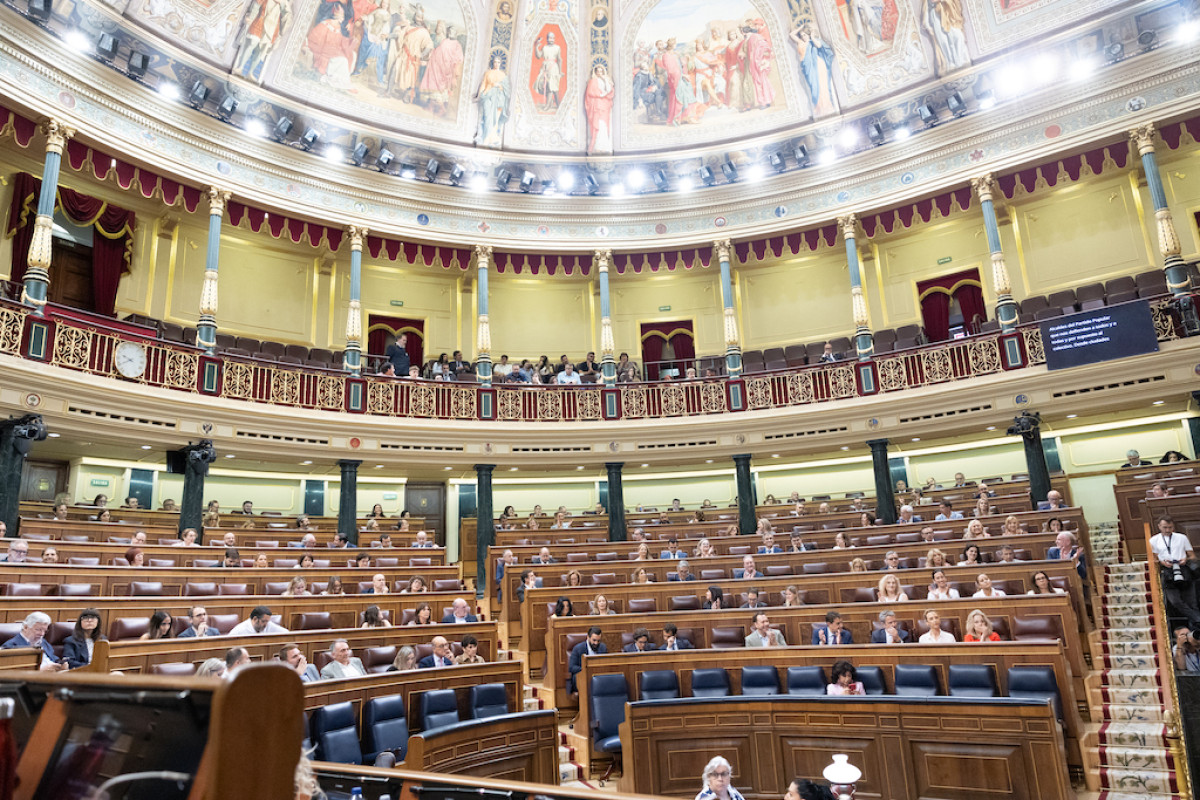
The PP bench applauds during a plenary session in the Congress of Deputies.Jesús Hellín / Europa Press
Last week, when Enric Juliana casually mentioned a hypothesis that would have seemed implausible ten years ago – the notion of a PP government, permitted or even supported by the PSOE, Junts, and the PNV – I immediately wondered how the opinionators would react. Surely, the reaction would be immediate. Not that nobody could believe that to be the most probable outcome of the next elections. Most striking would be the nature of the rejection prompted by such a suggestion.
The debate would certainly cease to be political and enter into morality. Might it be taken as a betrayal? Could the PSOE possibly allow Alberto Núñez Feijóo to govern? How would Junts justify such an agreement? What would voters think? The conversation would center on the legitimacy of such an operation, but most likely, no one would ask the essential question: Would it help resolve the problem of governability?
My purpose here isn’t to answer that question, or even to defend Juliana’s hypothesis. Most interesting is the order in which we formulate our questions. This hypothesis shines a light on a profound difference between two European democracies that we tend to box together under the label of "Southern Europe", but which have learned to conduct their politics in very different ways.
For decades, Italy was Europe’s laboratory of multi-party politics. Giovanni Sartori turned his party system into the classic example of "polarized pluralism": a democracy where numerous parties coexisted, separated by deep ideological differences, and where no single actor had sufficient strength to govern. It was an exercise in political praxis. Governing required permanent negotiation. Not due to a native culture of debate that was particularly dialogue-oriented, but because there was no other alternative. Negotiation ceased to be a virtue and became a condition of institutional survival.
Over time, that necessity shaped a certain political culture. Italy’s elites learned that governing meant the administration of balances rather than the imposition of programs; the preservation of channels of communication with irreconcilable adversaries; accepting that many decisions would be ambiguous, because absolute clarity would make agreement impossible. Italian politics developed an extraordinary capacity to live with complexity.
That development had obvious costs. It produced ephemeral governments, clientelism, opacity, a deep distrust of parties, and a permanent sense of provisionality. We shouldn’t idealize the Italian model, but we should recognize that it also produced a ruling class accustomed to distinguishing between electoral discourse and the construction of majorities.
Spain has traveled a very different path. The Transition did not seek to reproduce such a model, but rather its exact opposite. After four decades of dictatorship, the priority was to build stability. For more than thirty years, the electoral system, the configuration of Congress, and the political dynamics in play favored relatively clear alternation between two major national parties.
During that long period, the main lesson learned by Spain’s elites was not to coexist with five parliamentary partners. Instead, the goal consisted of replacing the incumbent adversary. Negotiations were still undertaken, of course. The governments of Felipe González, José María Aznar, José Luis Rodríguez Zapatero, and Mariano Rajoy all required support from nationalist parties at different moments. But those agreements were the complements (and not the bedrock) of what was essentially a two-party system.
In institutional terms, Spain today is much closer to the Italy described by Sartori or Gianfranco Pasquino than to Spain in the 1990s. And yet, our political culture continues to respond to another logic. Every extraordinary covenant is interpreted as an anomaly. Every change of position demands a moral explanation. Every negotiation becomes a debate about coherence rather than effectiveness.
We continue to argue as if alternation were still the natural mechanism of government. Therein lies what might be one of the greatest challenges of contemporary Spanish politics. The core issue isn’t fragmentation, which exists throughout much of Europe. Neither is the need to agree our most pressing concern: Germany, Belgium, the Netherlands, and the Nordic countries have all been doing that for decades. The difficulty at hand is that Spain still sees politics as fragmented into mental categories built for a two-party system. In a sense, our institutions have changed faster than our political culture.
Juliana’s proposal is interesting precisely for that reason – not because it necessarily describes the next government, or because such an outcome would be desirable, but because it forces a question that Spain continues to dodge. What happens when a democracy is no longer able to elect governments and needs to start constructing them?
Italy answered that question decades ago, and it did so at great cost, with highly debatable results. No sensible person would hope to import such a story. But Italy learned something that’s now becoming relevant to other European countries: governability doesn’t only consist of adding seats; it requires a political culture capable of accepting that negotiation is not an exception, but an ordinary form of power.
That’s why the significant question isn’t whether we might some day see a PP government tolerated by the PSOE, Junts, and the PNV. Maybe that will happen, or maybe it won’t. The question is different. If a significant portion of the Spanish debate keeps finding it impossible to even discuss this ‘Juliana hypothesis’ in functional terms, it’s because the first impulse in public debate is to ask who’s betraying whom before any governing majority can result.
This is what really differentiates Spain from Italy. Across decades, Italians came to see that stability depended on finding parliamentary coalitions capable of sustaining an executive – even if those combinations caused discomfort.
Spaniards came to accept that stability consisted of one of two major parties winning elections. But the Spain of 2026 no longer resembles that democracy. Spain’s parliament has changed, and its incentives and majorities have changed. The question now is whether its political culture can change at the same pace.
Because the real challenge for the decade ahead might not be to answer the question of who governs Spain but rather to learn that, in a fragmented democracy, government ceases to be a prize obtained through election and becomes a collective task of building majorities.
Italy learned that lesson out of necessity. Spain has been learning it since 2023, with a minority coalition government of two ideologically compatible parties, built with support from outside parties with considerable differences in outlook – and whose ideologies in many cases coincide more closely with that of the Partido Popular.
The debate would certainly cease to be political and enter into morality. Might it be taken as a betrayal? Could the PSOE possibly allow Alberto Núñez Feijóo to govern? How would Junts justify such an agreement? What would voters think? The conversation would center on the legitimacy of such an operation, but most likely, no one would ask the essential question: Would it help resolve the problem of governability?
My purpose here isn’t to answer that question, or even to defend Juliana’s hypothesis. Most interesting is the order in which we formulate our questions. This hypothesis shines a light on a profound difference between two European democracies that we tend to box together under the label of "Southern Europe", but which have learned to conduct their politics in very different ways.
"Italy has learned to think about politics from the need to build majorities. Spain, meanwhile, has learned to regard politics through the logic of alternation"In Italy, a proposal like this would have been preceded by another kind of discussion. Would it produce a stable majority? Will it prevent new elections? Will it allow budgets to be approved? Will it reduce uncertainty? What would each actor gain from the bargain, and what price would they pay? It’s not that Italians are less demanding of their leaders, or that their approach to politics is more cynical. Nor is it the case that Italy has better solved its own problems of governability; indeed, exactly the opposite may be true. The real difference is that Italy has learned to think about politics from the need to build majorities. Spain, meanwhile, has learned to regard politics through the logic of alternation. And that difference conditions the ways in which the two countries understand power.
For decades, Italy was Europe’s laboratory of multi-party politics. Giovanni Sartori turned his party system into the classic example of "polarized pluralism": a democracy where numerous parties coexisted, separated by deep ideological differences, and where no single actor had sufficient strength to govern. It was an exercise in political praxis. Governing required permanent negotiation. Not due to a native culture of debate that was particularly dialogue-oriented, but because there was no other alternative. Negotiation ceased to be a virtue and became a condition of institutional survival.
Over time, that necessity shaped a certain political culture. Italy’s elites learned that governing meant the administration of balances rather than the imposition of programs; the preservation of channels of communication with irreconcilable adversaries; accepting that many decisions would be ambiguous, because absolute clarity would make agreement impossible. Italian politics developed an extraordinary capacity to live with complexity.
That development had obvious costs. It produced ephemeral governments, clientelism, opacity, a deep distrust of parties, and a permanent sense of provisionality. We shouldn’t idealize the Italian model, but we should recognize that it also produced a ruling class accustomed to distinguishing between electoral discourse and the construction of majorities.
Spain has traveled a very different path. The Transition did not seek to reproduce such a model, but rather its exact opposite. After four decades of dictatorship, the priority was to build stability. For more than thirty years, the electoral system, the configuration of Congress, and the political dynamics in play favored relatively clear alternation between two major national parties.
During that long period, the main lesson learned by Spain’s elites was not to coexist with five parliamentary partners. Instead, the goal consisted of replacing the incumbent adversary. Negotiations were still undertaken, of course. The governments of Felipe González, José María Aznar, José Luis Rodríguez Zapatero, and Mariano Rajoy all required support from nationalist parties at different moments. But those agreements were the complements (and not the bedrock) of what was essentially a two-party system.
"The emergence of new parties altered the balance on which Spanish politics had depended since 1978"Governing still meant winning, but that began to change in 2015. The emergence of new parties altered the balance on which Spanish politics had depended since 1978. Congress stopped producing relatively simple majorities and slowly began to resemble other European parliaments where fragmentation was the norm. Without changing a single comma in the Constitution, Spain entered another stage. Today, several competitive national parties vie for attention, and territorial partners have become decisive parts of any majority. Governments now depend on permanent negotiations. Every opposition knows that it will probably need to reach an agreement in order to come to power.
In institutional terms, Spain today is much closer to the Italy described by Sartori or Gianfranco Pasquino than to Spain in the 1990s. And yet, our political culture continues to respond to another logic. Every extraordinary covenant is interpreted as an anomaly. Every change of position demands a moral explanation. Every negotiation becomes a debate about coherence rather than effectiveness.
We continue to argue as if alternation were still the natural mechanism of government. Therein lies what might be one of the greatest challenges of contemporary Spanish politics. The core issue isn’t fragmentation, which exists throughout much of Europe. Neither is the need to agree our most pressing concern: Germany, Belgium, the Netherlands, and the Nordic countries have all been doing that for decades. The difficulty at hand is that Spain still sees politics as fragmented into mental categories built for a two-party system. In a sense, our institutions have changed faster than our political culture.
Juliana’s proposal is interesting precisely for that reason – not because it necessarily describes the next government, or because such an outcome would be desirable, but because it forces a question that Spain continues to dodge. What happens when a democracy is no longer able to elect governments and needs to start constructing them?
Italy answered that question decades ago, and it did so at great cost, with highly debatable results. No sensible person would hope to import such a story. But Italy learned something that’s now becoming relevant to other European countries: governability doesn’t only consist of adding seats; it requires a political culture capable of accepting that negotiation is not an exception, but an ordinary form of power.
"If a significant portion of the Spanish debate keeps finding it impossible to even discuss this ‘Juliana hypothesis’ in functional terms, it’s because the first impulse in public debate is to ask who’s betraying whom before any governing majority can result"Spain seems to be standing at that precise turning point. Paradoxically, the more its institutions become Italianized, the more intensely a portion of its public debate clings to the old categories of alternation. This reaction might be understandable. Political cultures change much more slowly than party systems. The Constitution can remain the same while the country learns to govern itself in different ways.
That’s why the significant question isn’t whether we might some day see a PP government tolerated by the PSOE, Junts, and the PNV. Maybe that will happen, or maybe it won’t. The question is different. If a significant portion of the Spanish debate keeps finding it impossible to even discuss this ‘Juliana hypothesis’ in functional terms, it’s because the first impulse in public debate is to ask who’s betraying whom before any governing majority can result.
This is what really differentiates Spain from Italy. Across decades, Italians came to see that stability depended on finding parliamentary coalitions capable of sustaining an executive – even if those combinations caused discomfort.
Spaniards came to accept that stability consisted of one of two major parties winning elections. But the Spain of 2026 no longer resembles that democracy. Spain’s parliament has changed, and its incentives and majorities have changed. The question now is whether its political culture can change at the same pace.
Because the real challenge for the decade ahead might not be to answer the question of who governs Spain but rather to learn that, in a fragmented democracy, government ceases to be a prize obtained through election and becomes a collective task of building majorities.
Italy learned that lesson out of necessity. Spain has been learning it since 2023, with a minority coalition government of two ideologically compatible parties, built with support from outside parties with considerable differences in outlook – and whose ideologies in many cases coincide more closely with that of the Partido Popular.
Ahora en portada
16 de octubre de 2026
16 de octubre de 2026
16 de octubre de 2026
Noticias relacionadas
Hace 16 semanas
El respeto es la única vía para salvar la política española
Hace 16 semanas
Enric Juliana y Esteban Hernández: "El próximo Gobierno español recibirá fuertes presiones para corregir la aproximación a China"
Hace 16 semanas
El éxito de la fibra abre una nueva batalla regulatoria en España (y en Europa)
Lo más leído