Jueves, 15 de octubre de 2026




EXCLUSIVE STORY
Diary of an MEP in China: Is the Chinese economy really doing so well?
Beijing insists it is staying the course. But after an institutional visit to China with a European Parliament delegation, MEP Jonás Fernández detects signs of slowdown, excess industrial capacity and structural tensions that could shape the Asian giant’s next decade. 'Agenda Pública' publishes his on-the-ground analysis exclusively.

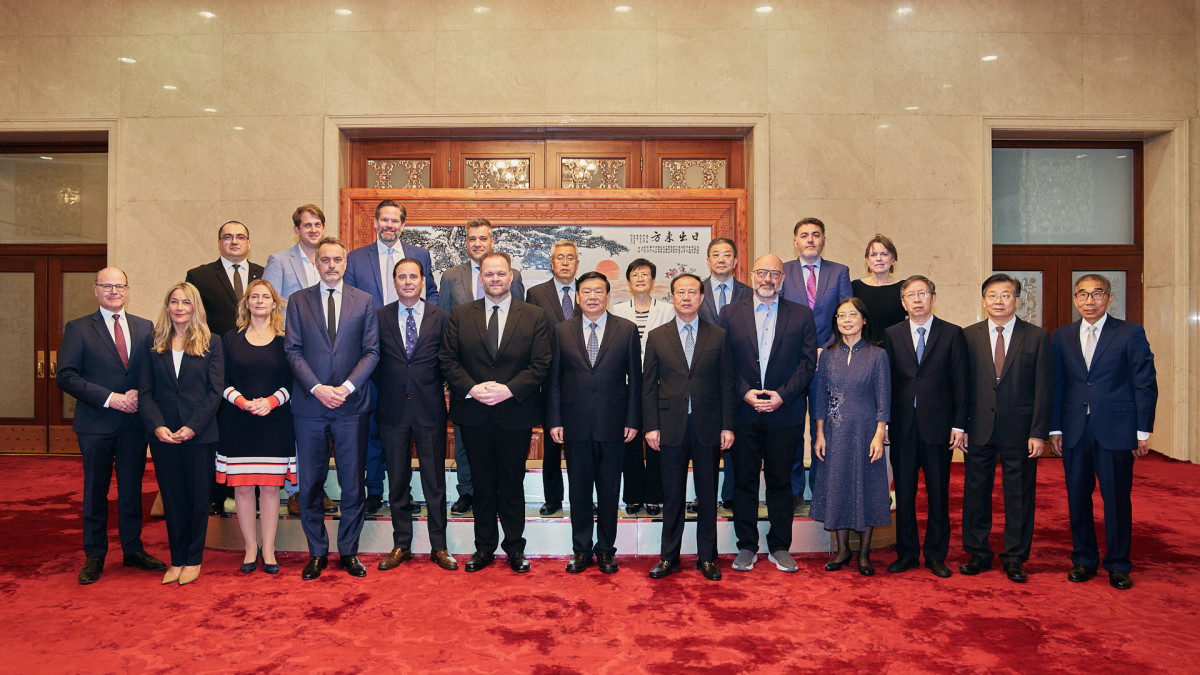
From 27 to 29 May, a delegation from the European Parliament paid an official visit to Beijing and Wuhan.European Parliament
China’s enigmas remain fairly inscrutable to the European observer, which is why I participated in a visit by the European Parliament to Beijing and Wuhan during the last week of May. I was looking for some certainty that would help me revise my first impression of the country, made when I attended a seminar in Shanghai in the spring of 2012 at the Europe-China Business School (CEIBS) while pursuing my Master’s degree in Business Administration and Management at IESE.
I now consider it necessary to convey to the people I represent some impressions drawn during my recent institutional visit.
My first observations, to be followed by a second course, are split into two parts: a quick interpretation of China’s strong economic growth from the 1980s to the present decade; then an analysis of the issues now facing the Chinese economy, which has seen its growth rate decrease by half, compared to prior decades of expansion. In this section, I address the problem of "involution" identified by the Chinese authorities themselves, along with the main pillars of the 15th Five-Year Plan that aspires to correct that problem.
In a subsequent installment, I’ll be providing a brief political overview of China and proposing a possible response by the European Union. But first things first.

After the collapse of that secular dynasty in 1912, China endured decades of civil wars and internal fragmentation. It also had to deal with continental occupations, especially at the hands of Imperial Japan and Russia – a morass from which it finally emerged through the victory of the Communist Party and the proclamation of the People’s Republic of China in 1949, thereafter entering another period of great instability under Mao Zedong.
Thus by the end of the 1970s, China was essentially a wasteland marked by famine and repression. Within that swamp, only Zhou Enlai – who safeguarded his position during the Cultural Revolution – managed to sustain minimal order and a vision of China’s role in the world. Even so, the country hit rock-bottom after more than a century of decadence, domination, fragmentation, chaos, daydreams, and underdevelopment.
The coming to power of Deng Xiaoping meant a drastic reorientation that was framed in economic terms through the euphemism "socialism with Chinese characteristics" – which signified a commitment to markets and capitalism while also keeping the power structure in the hands of the Communist Party. The problem to be addressed was less the transition from a planned economy to a market economy (as in the Soviet Union) than the ground-up construction an orderly economic model that China had lacked through the decades under Mao Zedong. Undoubtedly, that leader had focused too heavily on daydreams and permanent revolutions rather than the country’s economic development, perhaps in search of the Chinese "new man" under an Orientalist-Marxist teleology.
Deng Xiaoping led China into capitalism almost from scratch. This was an inefficient process but perhaps less complex than the dismantling of the Soviet economy in Russia, which involved a bureaucratic-administrative structure that Mao Zedong’s China didn’t have. On the other hand, while the Soviets sought to modernize their economy (through perestroika) and politics (through glasnost), Deng Xiaoping concentrated fiercely on the opening of markets, not changing the autocratic nature of the regime but improving its predictability. Those issues – the different initial conditions in the Soviet Union and China, plus differing degrees of reformist ambition – are perhaps useful to understanding the distinct evolutionary paths of those two countries from the 1980s onward.
Again, this growth model has been commonly seen in other countries, and its maintenance over time depends on the country’s initial distance from the full use of its 'idle' resources when liberalization begins, as well as the quantity of resources it can mobilize. At the same time, those processes are subject to emerging imbalances (political, economic, and social) that determine their ultimate success.
China started on this path with almost nothing. Its vast population of around 1 billion, which grew steadily until very recently, permitted the transit of a rural population into industrial activities, prompting positive productivity across several decades, from the 1980s to the early 2020s. The 'Asian Tigers' and Spain underwent shorter periods of hyper-development, in part because the nominal volume of their idle resources was infinitely smaller.
This interpretation of China’s economic success shouldn’t detract one iota from the skill with which Communist Party authorities have shaped the Chinese economy’s expansion for so long, in such an immense country. As I mentioned, these stages of development also generate new sources of imbalance. Internal tensions that have recently surfaced –political disputes over the management of rural-to-urban population flows; the construction of public services capable of avoiding social fracture and destabilization; the institutional involvement of diverse interest groups – testify to an extraordinary capacity for adaptation. Nonetheless, China’s economic success seems to lack a revolutionary theory of economic policy capable of overturning prior academic paradigms.
Under that interpretation of China’s development, we can ask ourselves how long China will last. We can ask whether China will be able to maintain the growth rates that have lifted hundreds of millions out of extreme poverty while legitimizing autocratic power, or whether it will enter the 'middle-income trap' into which other emerging economies have fallen, ultimately transforming consent into disaffection.
Given China’s global influence, the scenarios on which we need to work for the next few years will crucially depend on answering that question – as will the policies and accommodations that we as Europeans pursue with the renewed Middle Kingdom.
I do not anticipate a recession or a systemic crisis. Taking into account the opacity of information in China, it remains impossible to foresee future developments. But for the time being, signs are not indicating that the obstacles to economic growth present in China will be quickly overcome; nor are there signs on the horizon of new programs as ambitious as those promoted by Deng Xiaoping in the 1980s. We must wait and see.
Second, China’s top-down economic policies – represented by an industrial policy that has attracted the attention of all viewers – also face serious challenges. Development of the current five-year plan (which ends this year) has had to deal with a real estate bubble, which takes time to absorb. Housing prices have been falling for two and a half years, reaching cumulative price reductions of between 20% and 30%. That sharp collapse in real estate values has been depreciating the main savings asset of Chinese households, meanwhile boosting their savings rate and reducing consumption. For those reasons, inflation on consumer goods and services (the CPI value) was at 0.2% at the end of 2024, according to official statistics, while the GDP deflator, which further incorporates the prices of investment goods, yielded negative rates.
Likewise, overinvestment in housing has left real estate debt on bank balance sheets, and this has not yet been cleaned up. The State has been trying to absorb some bank losses (especially by local credit institutions in the hands of the public sector) by transferring non-performing loans to the central government, to maintain the credit flow. But the official statistics do not reflect an increase in mortgage defaults in line with the collapse in housing prices, which sows serious doubts about the success of the bank balance clean-up while also increasing the public debt acquired by the State.
This reality can be observed in specific sectors such as renewable energies. China has an installed capacity for solar panel production that is twice the current global demand, and demand is too soft to absorb all of the investment encouraged by the Government in recent years. As a result, prices are sinking, the sector is recording billion-dollar losses, and the workforce has already been reduced by over a third in some companies. Behind all this comes unpaid loans, granted by State-owned financial companies, where defaults are not reflected on bank balance sheets, thus delaying the resolution of a serious problem for the country’s banking stability.
Some might claim that such excess capacity will lead to future profits, despite current losses, justifying those assessments with theories on the protection of infant industries. However, if your installed capacity is twice global demand, it’s impossible to exploit the declining average costs and overcome current losses in the near future. Thanks to that factor, private analysts now believe that the sector needs to reduce its installed capacity to between 20% and 30% of its current size to recover profitability for its companies.
Here in the short term, we see that foreign exports are skyrocketing, seeking out demand not available in China, but at prices well below costs, which only increases the losses incurred. In this way, China is controlling the global market for solar panels, but its leadership has been built by destroying value. Meanwhile, consumers in third locations benefit from China’s industrial policy by transferring subsidies into their pockets; but those same exports can act as destructive forces on the industrial fabric of the rest of the world, with very negative economic and political effects.
On one side, Chinese industrial policy incorporates elements of competition between companies and regions in the micro-distribution of public support (credit, taxes, regulation, etc.); on the other, macro-level political decisions around resource-allocation have started showing inconsistencies.
When an economy is far from its 'production possibilities frontier', wrong decisions on resource-allocation have a much smaller negative effect on growth. It’s always better to do something than nothing, but when countries are already entering the middle-income bracket and working at full capacity, diverting resources from more efficient investments to less efficient ones takes a huge toll in terms of growth and well-being.
Therefore, all that glitters in the implementation of China’s industrial policy is not gold, as the public debate in Europe sometimes perceives it. Government investments in batteries, electric cars, steel, cement, wind turbines, high-speed train infrastructure, and other sectors are showing similar problems: reduced or even negative profitability, with excess capacity that’s impossible for the market to assimilate on a reasonable time-line, thereby generating deflation, credit defaults, and banking instability while destabilizing patterns of international trade.
It should be noted that all economies carry excess capacity in the goods or services they export, so the Chinese authorities are right to refuse to discuss the overcapacity of their economy. Spain, for example, has excess capacity in the tourism industry. This isn’t a problem if those exports contribute to the profitability of investments made. On the other hand, if your exports are the result of investments that can’t be made profitable at home, but that are made profitable abroad by setting prices below the real cost, then the problem isn’t excess capacity but the destruction of value. That problem – very present in conversations with the Chinese authorities – has come to be called 'involution'.
However, in sectors specifically promoted by the authorities through vertical and dirigiste industrial policies, excessive supply is precisely the fruit of those policies. Blaming strong competition for falling prices is reminiscent of campaigns against 'speculators', as can develop when a government sets a maximum price on an imported good, naturally leading to shortages and black markets.
The Chinese authorities are right to insist on differentiating between ordinary overcapacity and problems of 'involution', but they are wrong in their identification of the causes of the disease. Therefore, they have not altered their roadmap with respect to industrial policy in the current five-year plan, where they simply reorient the sectors into which similar support policies are to be applied.
On the other hand, in macroeconomic terms, the Government aspires to strengthen domestic demand, essentially via consumption, to overcome current deflationary trends and to make profitable the investment already installed. In this way, it wants to reduce its current account surplus, also reducing the tensions on international trade promoted by protectionist measures from third jurisdictions. To that end, the proposal has been made to expand coverage of social benefits, from birth subsidies to the strengthening of public pension systems – which should reduce the propensity to save, recently accentuated by the ongoing real estate crisis.
In other words, the absolute balance of the current account is exactly equal to the balance of the capital and financial account. This accounting identity is neither an economic theory nor a particular valuation. The relationship of an economy with the outside world – in both the real economy and the financial economy – must correspond, offering the same net balance but with the opposite sign. Thus, a reduction in the trade surplus must go hand-in-hand with a decline in the deficit of financial relations with the rest of the world. Which is to say the authorities must facilitate the net arrival of capital to China. Acting on just one side of that accounting identity (the current account) without complementary measures on the other (the capital and financial account) affects only export and import volumes, not their net balance.
To meet the target of reducing its current account surplus, the Chinese authorities must make progress in liberalizing financial flows and facilitating the arrival of foreign direct investment. Thus far, I have heard of no such proposal. The reduction of controls on foreign investment under the Chinese Communist Party’s corporate control policy is probably antithetical.
Without a policy of accompanying capital flows, it will be impossible for China to reduce its current account surplus; any policy to boost consumption that increases imports will also increase exports, bringing the net balance to the same absolute value as the capital and financial account and maintaining the same current imbalance.
In addition, the aging of the population – together with the current deflationary tensions, the high rates of youth unemployment, and the weakness of social policies – would necessitate a public boost to consumption, plus far-reaching institutional reforms that would be difficult to implement. In my meetings with the Chinese authorities, in response to my question about the need to deploy social security worthy of the name, in order to reduce savings rates, my interlocutors stated that they did not seek to create a "society of irresponsible people."
That response – which would delight our local neoliberals – reminded me of a European official who defined the cultural influence of the Chinese approach to social policies as "Calvinist communism." This is not the best starting point, from a strictly intellectual framework, from which to advance active policies that reinforce the redistribution of income – measures that in any case do not appear on the Chinese Communist Party’s list of objectives.
Without a plan to liberalize capital flows and the arrival of investment, and with a weak policy to accelerate consumption, I would not bet on a correction in the country’s macro variables, nor on a change in its growth model from exports to domestic demand – which China needs to reorient its economic model and international trade so as to minimize the negative effects of its industrial 'regression'.
Undoubtedly, regional and business competition during implementation of a dirigiste policy in the field of industry reduces the inefficiencies inherent when the territories and companies supported have been selected by the public sector. Those inefficiencies have lower costs when an economy is far from the frontier of its productive possibilities, but they can be lethal when the factors of production are already at full use.
However, the costs already present in the Chinese economy – from a real estate gamble lacking support from demand to investments in energy renewables and other sectors where installed capacity greatly exceeds not just Chinese but also global demand – anticipate increasing concerns around the sustainability of current growth rates.
Some of these new bets will certainly be successful and could result in China leading specific sectors in global markets. But the overinvestment that this will entail, in spite of the current 'involution' (which involves not just excess capacity but the destruction of value, with sales below costs) – and with no possibility of a 'learning curve' within a sustainable horizon – does not bolster an optimistic outlook for the Chinese economy
In short, in the absence of institutional changes that activate public coverage of essential services (education, health, pensions) and reduce the propensity to save, which is already likely to grow with an aging population, alongside a reorientation of public demand from investment to spending (from industrial policy to social policies), the transition from an economy focused on investment and exports to one based on consumption will not be possible. Nor will it be possible without measures aimed at financial markets that accompany the balancing of the current account, which must be paired with a balancing of the capital and financial account.
Therefore, the problems of 'involution', the causes of which have not been well identified by the Chinese authorities, and which are currently preventing increases in China’s growth and welfare rates, will not be solved soon – and neither will the destabilizing effects on global trade derived from that same 'involution'.
I now consider it necessary to convey to the people I represent some impressions drawn during my recent institutional visit.
My first observations, to be followed by a second course, are split into two parts: a quick interpretation of China’s strong economic growth from the 1980s to the present decade; then an analysis of the issues now facing the Chinese economy, which has seen its growth rate decrease by half, compared to prior decades of expansion. In this section, I address the problem of "involution" identified by the Chinese authorities themselves, along with the main pillars of the 15th Five-Year Plan that aspires to correct that problem.
In a subsequent installment, I’ll be providing a brief political overview of China and proposing a possible response by the European Union. But first things first.
Jonás Fernández, MEP and S&D coordinator in the European Parliament’s committee on economic affairs, during his visit to China. Photo: European Parliament
How did we get here?
In political, economic, and social terms, China in recent decades has built and consolidated a prominent role in the international sphere, regaining a position that it historically held until the Modern Age. Back when Europe was taking to the seas to conquer the globe, China under the Ming dynasty closed in on itself, banning shipbuilding, limiting foreign trade, and making maritime adventures difficult. Given the economic and political development of Europe (great discoveries, the Enlightenment, liberal revolutions on both sides of the Atlantic, the industrial revolution), China’s isolation led to century of humiliation by the early Western industrial and maritime powers along with the so-called 'opium wars', in which the decadent Qing dynasty found itself succumbing to external pressures as well as its own contradictions.After the collapse of that secular dynasty in 1912, China endured decades of civil wars and internal fragmentation. It also had to deal with continental occupations, especially at the hands of Imperial Japan and Russia – a morass from which it finally emerged through the victory of the Communist Party and the proclamation of the People’s Republic of China in 1949, thereafter entering another period of great instability under Mao Zedong.
"In political, economic, and social terms, China in recent decades has built and consolidated a prominent role in the international sphere"In his early years at the helm, and with Soviet support, Mao Zedong oversaw a strong period of industrialization; later, he again plunged China into long-term chaos. From the Hundred Flowers Campaign (1956-1957) to the Great Leap Forward (1958-1962) to the Cultural Revolution (1966-1976), he wound up destroying the country from top to bottom. Another political leader so long-lived and so absolutely deranged in the exercise of power would be difficult to find.
Thus by the end of the 1970s, China was essentially a wasteland marked by famine and repression. Within that swamp, only Zhou Enlai – who safeguarded his position during the Cultural Revolution – managed to sustain minimal order and a vision of China’s role in the world. Even so, the country hit rock-bottom after more than a century of decadence, domination, fragmentation, chaos, daydreams, and underdevelopment.
The coming to power of Deng Xiaoping meant a drastic reorientation that was framed in economic terms through the euphemism "socialism with Chinese characteristics" – which signified a commitment to markets and capitalism while also keeping the power structure in the hands of the Communist Party. The problem to be addressed was less the transition from a planned economy to a market economy (as in the Soviet Union) than the ground-up construction an orderly economic model that China had lacked through the decades under Mao Zedong. Undoubtedly, that leader had focused too heavily on daydreams and permanent revolutions rather than the country’s economic development, perhaps in search of the Chinese "new man" under an Orientalist-Marxist teleology.
Deng Xiaoping led China into capitalism almost from scratch. This was an inefficient process but perhaps less complex than the dismantling of the Soviet economy in Russia, which involved a bureaucratic-administrative structure that Mao Zedong’s China didn’t have. On the other hand, while the Soviets sought to modernize their economy (through perestroika) and politics (through glasnost), Deng Xiaoping concentrated fiercely on the opening of markets, not changing the autocratic nature of the regime but improving its predictability. Those issues – the different initial conditions in the Soviet Union and China, plus differing degrees of reformist ambition – are perhaps useful to understanding the distinct evolutionary paths of those two countries from the 1980s onward.
"The coming to power of Deng Xiaoping meant a drastic reorientation that was framed in economic terms through the euphemism 'socialism with Chinese characteristics'"The acceptance by China of capitalism, moderated through a certain gradualism, from the first moves under Deng Xiaoping until China’s entry into the World Trade Organization (2001) under Jiang Zemin, brought decades of intense growth. This evolution from autarkic policies to market development and global economic integration had already been experienced by other countries on their way to prosperity. Japan, South Korea, and Spain likewise went through a phase of explosive growth due to liberalizing policies (in Spain’s case, the Stabilization Plan of 1959). That phase was marked by displacement of the workforce from the primary sector and rural regions – where productivity was sometimes negative – toward new industries, directed and financed by the public sector. The abundant 'idle' labor force in rural environments migrated into cities and industries, triggering growth.
Again, this growth model has been commonly seen in other countries, and its maintenance over time depends on the country’s initial distance from the full use of its 'idle' resources when liberalization begins, as well as the quantity of resources it can mobilize. At the same time, those processes are subject to emerging imbalances (political, economic, and social) that determine their ultimate success.
China started on this path with almost nothing. Its vast population of around 1 billion, which grew steadily until very recently, permitted the transit of a rural population into industrial activities, prompting positive productivity across several decades, from the 1980s to the early 2020s. The 'Asian Tigers' and Spain underwent shorter periods of hyper-development, in part because the nominal volume of their idle resources was infinitely smaller.
This interpretation of China’s economic success shouldn’t detract one iota from the skill with which Communist Party authorities have shaped the Chinese economy’s expansion for so long, in such an immense country. As I mentioned, these stages of development also generate new sources of imbalance. Internal tensions that have recently surfaced –political disputes over the management of rural-to-urban population flows; the construction of public services capable of avoiding social fracture and destabilization; the institutional involvement of diverse interest groups – testify to an extraordinary capacity for adaptation. Nonetheless, China’s economic success seems to lack a revolutionary theory of economic policy capable of overturning prior academic paradigms.
Under that interpretation of China’s development, we can ask ourselves how long China will last. We can ask whether China will be able to maintain the growth rates that have lifted hundreds of millions out of extreme poverty while legitimizing autocratic power, or whether it will enter the 'middle-income trap' into which other emerging economies have fallen, ultimately transforming consent into disaffection.
Given China’s global influence, the scenarios on which we need to work for the next few years will crucially depend on answering that question – as will the policies and accommodations that we as Europeans pursue with the renewed Middle Kingdom.
"This economic success seems to lack a revolutionary theory of economic policy capable of overturning prior academic paradigms"In my view, China has already entered a period of economic slowdown, as is reflected in the current growth figures. At the same time, we’re also seeing the emergence of sectoral and financial bubbles resulting from the country’s dirigiste policy. Thus, growth rates will continue to moderate as we wait to discover whether the authorities will again reorient their economic policy – above all to cover the accumulating losses from industrial priorities that have failed in economic terms.
I do not anticipate a recession or a systemic crisis. Taking into account the opacity of information in China, it remains impossible to foresee future developments. But for the time being, signs are not indicating that the obstacles to economic growth present in China will be quickly overcome; nor are there signs on the horizon of new programs as ambitious as those promoted by Deng Xiaoping in the 1980s. We must wait and see.
The Third EU-China Interparliamentary Meeting in Beijing, with interlocutors from the Chinese National People’s Congress. Photo: European Parliament
A preliminary analysis of the Government’s economic plans
Demographics always prevail. China reached its peak population in 2021-2022, at more than 1.4 billion, but the problems it is facing today sound very familiar. The present fertility rate is around one child per woman of childbearing age, heralding a population decline to perhaps 1.3 billion by 2050 and a dramatic reduction to just 600 or 800 million by the end of the century. Revision of the one-child policy and current efforts to encourage the birth rate have come up against economic and cultural restrictions that aren’t helping to reverse current trends. Also, youth unemployment is at around 16%, which predicts the postponement of starting new families and, therefore, motherhood."For the time being, signs are not indicating that the obstacles to economic growth present in China will be quickly overcome"First, China is starting to suffer scarcity in a key factor of production – population; and its recourse to worker mobility from rural to industrial life is also exhausted. The demographic dividend that led the Chinese economy through several decades is fading, and its exact opposite effect is already being announced: a demographic winter.
Second, China’s top-down economic policies – represented by an industrial policy that has attracted the attention of all viewers – also face serious challenges. Development of the current five-year plan (which ends this year) has had to deal with a real estate bubble, which takes time to absorb. Housing prices have been falling for two and a half years, reaching cumulative price reductions of between 20% and 30%. That sharp collapse in real estate values has been depreciating the main savings asset of Chinese households, meanwhile boosting their savings rate and reducing consumption. For those reasons, inflation on consumer goods and services (the CPI value) was at 0.2% at the end of 2024, according to official statistics, while the GDP deflator, which further incorporates the prices of investment goods, yielded negative rates.
Likewise, overinvestment in housing has left real estate debt on bank balance sheets, and this has not yet been cleaned up. The State has been trying to absorb some bank losses (especially by local credit institutions in the hands of the public sector) by transferring non-performing loans to the central government, to maintain the credit flow. But the official statistics do not reflect an increase in mortgage defaults in line with the collapse in housing prices, which sows serious doubts about the success of the bank balance clean-up while also increasing the public debt acquired by the State.
"That sharp collapse in real estate values has been depreciating the main savings asset of Chinese households"That current environment of zero or negative inflation warns of the weakness of domestic demand as a whole – another victim of dirigiste industrial policies, where investments have failed to be recognized by demand, which might intensify in coming years, and which is exported to the rest of the world through the balance-of-payments account.
This reality can be observed in specific sectors such as renewable energies. China has an installed capacity for solar panel production that is twice the current global demand, and demand is too soft to absorb all of the investment encouraged by the Government in recent years. As a result, prices are sinking, the sector is recording billion-dollar losses, and the workforce has already been reduced by over a third in some companies. Behind all this comes unpaid loans, granted by State-owned financial companies, where defaults are not reflected on bank balance sheets, thus delaying the resolution of a serious problem for the country’s banking stability.
Some might claim that such excess capacity will lead to future profits, despite current losses, justifying those assessments with theories on the protection of infant industries. However, if your installed capacity is twice global demand, it’s impossible to exploit the declining average costs and overcome current losses in the near future. Thanks to that factor, private analysts now believe that the sector needs to reduce its installed capacity to between 20% and 30% of its current size to recover profitability for its companies.
Here in the short term, we see that foreign exports are skyrocketing, seeking out demand not available in China, but at prices well below costs, which only increases the losses incurred. In this way, China is controlling the global market for solar panels, but its leadership has been built by destroying value. Meanwhile, consumers in third locations benefit from China’s industrial policy by transferring subsidies into their pockets; but those same exports can act as destructive forces on the industrial fabric of the rest of the world, with very negative economic and political effects.
On one side, Chinese industrial policy incorporates elements of competition between companies and regions in the micro-distribution of public support (credit, taxes, regulation, etc.); on the other, macro-level political decisions around resource-allocation have started showing inconsistencies.
When an economy is far from its 'production possibilities frontier', wrong decisions on resource-allocation have a much smaller negative effect on growth. It’s always better to do something than nothing, but when countries are already entering the middle-income bracket and working at full capacity, diverting resources from more efficient investments to less efficient ones takes a huge toll in terms of growth and well-being.
Therefore, all that glitters in the implementation of China’s industrial policy is not gold, as the public debate in Europe sometimes perceives it. Government investments in batteries, electric cars, steel, cement, wind turbines, high-speed train infrastructure, and other sectors are showing similar problems: reduced or even negative profitability, with excess capacity that’s impossible for the market to assimilate on a reasonable time-line, thereby generating deflation, credit defaults, and banking instability while destabilizing patterns of international trade.
It should be noted that all economies carry excess capacity in the goods or services they export, so the Chinese authorities are right to refuse to discuss the overcapacity of their economy. Spain, for example, has excess capacity in the tourism industry. This isn’t a problem if those exports contribute to the profitability of investments made. On the other hand, if your exports are the result of investments that can’t be made profitable at home, but that are made profitable abroad by setting prices below the real cost, then the problem isn’t excess capacity but the destruction of value. That problem – very present in conversations with the Chinese authorities – has come to be called 'involution'.
"All that glitters in the implementation of China’s industrial policy is not gold, as the public debate in Europe sometimes perceives it"Despite a correct diagnosis of the 'disease', the Chinese authorities have evidently mistaken its causes – at least during the meetings held throughout our official mission. According to our Chinese interlocutors, 'involution' is the result of predatory competition between companies operating in those markets, a dispute over market share beyond any economic rationale that leads to prices being set below costs. Under that argument, the causes reside in extraordinarily high levels of market competition.
However, in sectors specifically promoted by the authorities through vertical and dirigiste industrial policies, excessive supply is precisely the fruit of those policies. Blaming strong competition for falling prices is reminiscent of campaigns against 'speculators', as can develop when a government sets a maximum price on an imported good, naturally leading to shortages and black markets.
The Chinese authorities are right to insist on differentiating between ordinary overcapacity and problems of 'involution', but they are wrong in their identification of the causes of the disease. Therefore, they have not altered their roadmap with respect to industrial policy in the current five-year plan, where they simply reorient the sectors into which similar support policies are to be applied.
On the other hand, in macroeconomic terms, the Government aspires to strengthen domestic demand, essentially via consumption, to overcome current deflationary trends and to make profitable the investment already installed. In this way, it wants to reduce its current account surplus, also reducing the tensions on international trade promoted by protectionist measures from third jurisdictions. To that end, the proposal has been made to expand coverage of social benefits, from birth subsidies to the strengthening of public pension systems – which should reduce the propensity to save, recently accentuated by the ongoing real estate crisis.
"The Chinese authorities are right to insist on differentiating between ordinary overcapacity and problems of 'involution'"However, the reduction of the current account surplus that the authorities claim to be pursuing must also address the deficit in the capital and financial account. That is to say, they must facilitate the flow of capital between Chinese households and firms and the rest of the world by advancing liberalization of the financial sector and foreign investment.
In other words, the absolute balance of the current account is exactly equal to the balance of the capital and financial account. This accounting identity is neither an economic theory nor a particular valuation. The relationship of an economy with the outside world – in both the real economy and the financial economy – must correspond, offering the same net balance but with the opposite sign. Thus, a reduction in the trade surplus must go hand-in-hand with a decline in the deficit of financial relations with the rest of the world. Which is to say the authorities must facilitate the net arrival of capital to China. Acting on just one side of that accounting identity (the current account) without complementary measures on the other (the capital and financial account) affects only export and import volumes, not their net balance.
To meet the target of reducing its current account surplus, the Chinese authorities must make progress in liberalizing financial flows and facilitating the arrival of foreign direct investment. Thus far, I have heard of no such proposal. The reduction of controls on foreign investment under the Chinese Communist Party’s corporate control policy is probably antithetical.
Without a policy of accompanying capital flows, it will be impossible for China to reduce its current account surplus; any policy to boost consumption that increases imports will also increase exports, bringing the net balance to the same absolute value as the capital and financial account and maintaining the same current imbalance.
In addition, the aging of the population – together with the current deflationary tensions, the high rates of youth unemployment, and the weakness of social policies – would necessitate a public boost to consumption, plus far-reaching institutional reforms that would be difficult to implement. In my meetings with the Chinese authorities, in response to my question about the need to deploy social security worthy of the name, in order to reduce savings rates, my interlocutors stated that they did not seek to create a "society of irresponsible people."
That response – which would delight our local neoliberals – reminded me of a European official who defined the cultural influence of the Chinese approach to social policies as "Calvinist communism." This is not the best starting point, from a strictly intellectual framework, from which to advance active policies that reinforce the redistribution of income – measures that in any case do not appear on the Chinese Communist Party’s list of objectives.
Without a plan to liberalize capital flows and the arrival of investment, and with a weak policy to accelerate consumption, I would not bet on a correction in the country’s macro variables, nor on a change in its growth model from exports to domestic demand – which China needs to reorient its economic model and international trade so as to minimize the negative effects of its industrial 'regression'.
"To my question about the need to deploy social security worthy of the name, in order to reduce savings rates, my interlocutors stated that they did not seek to create a 'society of irresponsible people'"In addition, the boost in demand from the public sector should redirect a portion of its budgetary efforts from the investments currently supported by industrial policy to the deployment of new social policies. Even so, there is no in-depth revision of the budget in the current five-year plan, which prioritizes spending over any investment equal to the challenges facing the country. Thus, within the scope of the industrial policy announced in this plan, a review is made of the Government’s sectoral commitments, but no change is proposed in the implementation of those policies.
Undoubtedly, regional and business competition during implementation of a dirigiste policy in the field of industry reduces the inefficiencies inherent when the territories and companies supported have been selected by the public sector. Those inefficiencies have lower costs when an economy is far from the frontier of its productive possibilities, but they can be lethal when the factors of production are already at full use.
However, the costs already present in the Chinese economy – from a real estate gamble lacking support from demand to investments in energy renewables and other sectors where installed capacity greatly exceeds not just Chinese but also global demand – anticipate increasing concerns around the sustainability of current growth rates.
Some of these new bets will certainly be successful and could result in China leading specific sectors in global markets. But the overinvestment that this will entail, in spite of the current 'involution' (which involves not just excess capacity but the destruction of value, with sales below costs) – and with no possibility of a 'learning curve' within a sustainable horizon – does not bolster an optimistic outlook for the Chinese economy
In short, in the absence of institutional changes that activate public coverage of essential services (education, health, pensions) and reduce the propensity to save, which is already likely to grow with an aging population, alongside a reorientation of public demand from investment to spending (from industrial policy to social policies), the transition from an economy focused on investment and exports to one based on consumption will not be possible. Nor will it be possible without measures aimed at financial markets that accompany the balancing of the current account, which must be paired with a balancing of the capital and financial account.
Therefore, the problems of 'involution', the causes of which have not been well identified by the Chinese authorities, and which are currently preventing increases in China’s growth and welfare rates, will not be solved soon – and neither will the destabilizing effects on global trade derived from that same 'involution'.

Jonás Fernández Álvarez
Diputado al Parlamento Europeo en el Grupo de la Alianza Progresista de Socialistas y Demócratas, del que es coordinador en el Comité de Asuntos Económicos y Monetarios
Fue Economista Jefe en Solchaga Recio & Asociados antes de ser elegido eurodiputado en 2014. Ha impartido docencia en la Universidad Carlos III, colabora en medios y cuenta con experiencia en asesoramiento económico al PSOE, así como en programas internacionales de liderazgo.
Ahora en portada
15 de octubre de 2026
15 de octubre de 2026
15 de octubre de 2026
Noticias relacionadas
Hace 47 semanas
Europe’s Omnibus Directive and the battle redefining power in Brussels
Hace 65 semanas
The Eurogroup must be dissolved
Hace 47 semanas
Agenda Pública in the European Parliament: two MEPs' critical analysis of global uncertainty
Lo más leído