Viernes, 16 de octubre de 2026




CONVERSATIONS
Oliver Stuenkel: "Europe remains a crucial partner for many democracies in the Global South"
The fracture in the relationship between the U.S. and Europe is having effects that go beyond the West. In this conversation between ECFR editorial director Jeremy Cliffe and German-Brazilian political scientist Oliver Stuenkel, they discuss the meaning of this space because "it is a concept that is not clearly defined even in Europe". They offer a review of geopolitical balances, Europe’s relationship with the Global South, and the future of European institutions in light of the positions adopted at the Munich Security Conference.
-1920x1080.jpg)
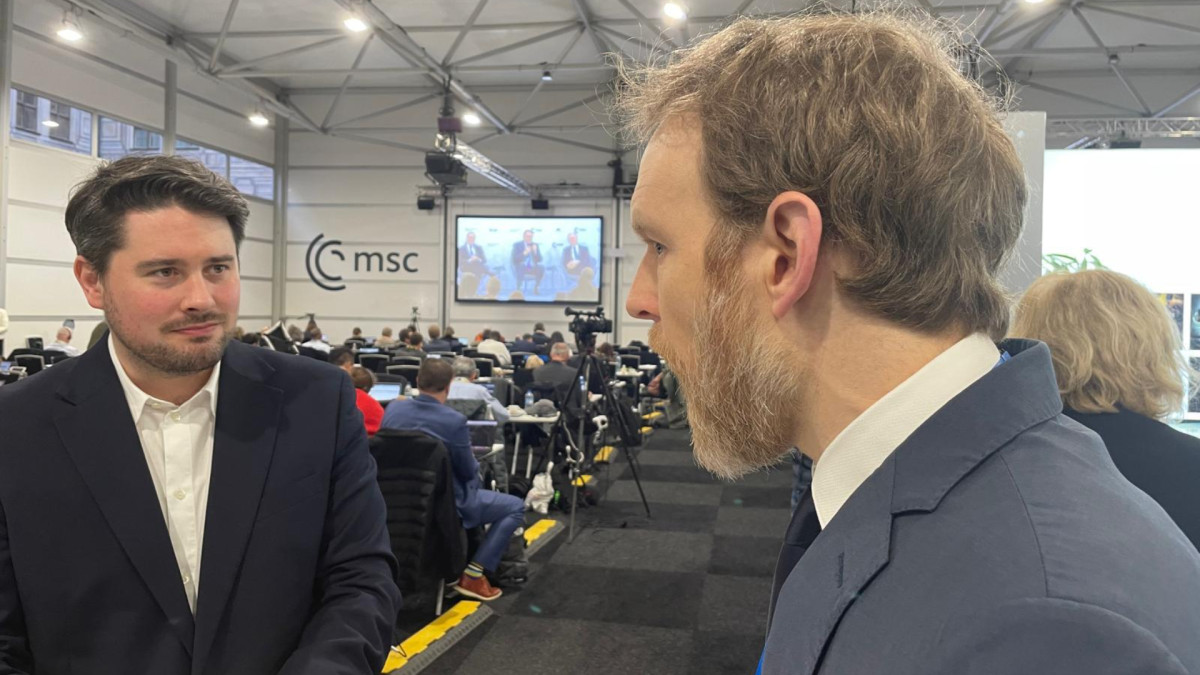
ECFR editorial director Jeremy Cliffe (left) and senior fellow at the Carnegie Endowment for International Peace (CEIP), Oliver Stuenkel.Agenda Pública
Is the Western bloc fracturing from its own command center? In this conversation from Munich, German-Brazilian academic Oliver Stuenkel unpacks his conclusions from the world’s most important security conference, warning that "the main agent of change in the international order is not a non-Western power trying to destabilize it, but the United States". Under this analysis, current U.S. diplomacy is imposing a significant divergence of values within its historic alliances.
While the Trump Administration appeals to a civilizational and religious identity, Stuenkel argues that the Old Continent prioritizes the strict defense of liberal democracy. At the same time, this has consequences across the geopolitical chessboard. Faced with the imposition of a doctrine based exclusively on national interests, the European Union is being forced to redefine its role in a world that already assumes this structural rupture. Given that "Trump is pushing Europeans toward greater autonomy and cooperation", one question hangs in the air: will the European institutions know how to use this severe crisis to consolidate genuine strategic independence?
As a keen observer of the global south, he also stresses that Washington’s current foreign policy is forcing countries such as Brazil and India to reduce their dependence. In a system where "might makes right", Stuenkel believes that countries in the global south are seeking to diversify their diplomatic and trade ties so as not to be forced exclusively into Beijing’s orbit.
-1920x1080.jpg)
What impressions has the Munich Security Conference left you with? In your view, where does the world stand after it?
Europeans have already absorbed the blow. No one is surprised anymore when Marco Rubio talks about civilizational erasure. That initial sense of shock has disappeared and, in its place, there are debates about how to manage this, how to adapt and even some conversations about what comes after Trump. In that sense, I sense a more constructive, more concrete and more pragmatic atmosphere than when J. D. Vance delivered that speech, when the dominant reaction was more one of paralysis.
You speak about bringing in more non-Western voices, and I know that effort is being made. But it is interesting because part of this year’s debate, and probably last year’s too, revolves around the meaning of the West. We have seen it in major speeches by Rubio, Merz or Macron, with all those references to the Enlightenment, civilization and history. How do you read that debate?
The West, as a concept, sometimes complicates the debate more than it helps, because it means different things to different people. If you look at history, you see that its meanings have changed a great deal, and it is not even clear what exactly belongs to the West or what defines it.
What we are seeing here is that the main agent of change in the international order is not a non-Western power trying to destabilize it, but the United States. And that is reflected even in the title of the conference itself, with this idea of destruction. I think that is highly relevant because, for decades, one of the great questions in academic and foreign-policy debates was whether rising non-Western powers would accept or integrate into the so-called Western liberal order.
If you read the BRICS summit declarations, you find language very favorable to the UN and multilateralism. Rubio, by contrast, explicitly says that the Western liberal order has not worked for the United States, that it has weakened the West. That, in itself, captures the present moment very well.
In Rubio’s view, those are the core elements of what is Western. That is why, from that perspective, immigration is a threat: because many migrants are not Christian. From a European perspective, or at least from the dominant perspective in Europe, the core lies in liberal democracy. If migrants come to Europe and do not undermine democracy, then immigration is not in itself a threat.
Could you expand a little on how you understand the European vision of the West or of its values? And, related to that, how do you think that vision is perceived by the rest of the world?
It is a concept that is not clearly defined even in Europe. In many texts it has a very vague geopolitical meaning, often basically equivalent to NATO. But even then it is not entirely clear who exactly belongs to the West. Sometimes Australia is included, even though it is not in NATO; sometimes Israel; sometimes even Latin America.
In Brazil, for example, the concept is ambiguous enough that there is no consensus. Some say: culturally we are part of the Western universe, but geopolitically we are not. In other words, it has several dimensions.
Rubio, by contrast, did not speak about liberal democracy. He spoke in civilizational terms and even said that the idea of expanding liberal democracy or of other countries embracing it is unrealistic. So, although his speech was not as abrupt as J. D. Vance’s, at bottom it confirms that, while Rubio says he believes in the transatlantic relationship, there is a profound divergence on values.
In practice, Rubio is telling Europeans to embrace the culture wars, something Europe’s political elites do not want to do. And there is also something striking: the current U.S. Administration seems almost obsessed with Europe. If everything revolves around America first, why does it matter so much that Europeans think exactly as they do? If they believe Europe is wrong, they could simply let Europe make its own mistakes.
It is almost a projection of their own culture war.
Exactly. There is something of a projection there. The U.S. Administration projects its preferences and its fears onto Europe, which it sees as a kind of spiritual partner. Trump may intervene occasionally in Latin American elections, but he usually does so in a far more improvised way, with a tweet or an isolated statement. There is no systematic effort to tell Latin America how it should think about its society. In Europe, by contrast, there is a much stronger civilizational, cultural and spiritual component.
If we assume that the West is fracturing, though even that will depend on how European politics evolves, because if more leaders like Vance or Trump come to power in Europe that may no longer be the case, how is that rupture projected onto the rest of the world, the so-called global majority or countries like Brazil, which in some ways feel both inside and outside the West at the same time? Because it could open an opportunity for a more attractive, more plural and more inclusive Europe. But the opposite could also happen: the fracture of the West could finally kill off the idea of a universalist project and accelerate the logic of multipolarity even further.
There are two issues here. The first is that, when you talk to people in Brazil, Turkey or India, current developments do not strike them as being as surprising or unsettling as they do many Europeans. Everyone agrees that we are living through dramatic change, but for many Europeans it feels almost like an existential rupture. Some say that "we are the Soviets of 1991." I understand that feeling because, for Europe, many very concrete things are changing.
That is why, in part of the global south, there is even a certain sense of opportunity, something Europe does not perceive in the same way. And, viewed from outside, I am actually more optimistic about Europe than many Europeans are, provided anti-EU forces do not continue to grow. If that were not the case, one could even say that Trump is pushing Europeans toward greater autonomy and cooperation, because he has become, together with Russia and China, the kind of threat that was needed to force the European project forward.
And also to find new partners.
Of course. And to act, as Macron says, as a true great power. Now, all of that coexists with anti-European forces within Europe itself. And I understand why that feels so destabilizing for Europeans.
In India and in other BRICS+ countries, it is not experienced in the same way. And the second point is that, for a long time, from Latin America and elsewhere, Europe was seen as a geopolitical appendage of the United States. That is changing. There is now a perception that, even if NATO still formally exists, Europe is beginning to act with greater autonomy. And that creates an opportunity for the global south and for a country like Brazil.
With the return of the Monroe Doctrine, Brazil and, in reality, every country south of Venezuela needs to diversify, hedge and reduce its exposure to the United States. The point is not to break, but to depend less and work more with others. Countries further north have less room for maneuver because they depend much more heavily on the United States and are, to some extent, forced to accommodate it.
If you are Mexico, you have very little room to maneuver. But if you are Brazil, which exports more to China than to Europe and the United States combined, then you can stand up much more firmly to U.S. pressure, as Lula did last year. And that is where strengthening ties with Europe becomes an opportunity, because Europe is no longer perceived as a simple appendage of Washington.
In fact, Lula is now traveling to India, and Brazil rejected the U.S. critical minerals deal because, from the Brazilian perspective, it implied a loss of sovereignty and a certain logic of exclusivity. Brazil also wants to attract European investment. There is some frustration with Europe’s slowness, because Europe arrives with proposals and figures that are not always comparable to those of the United States. But Brazil is looking precisely for that: not to depend on anyone in order to increase its strategic autonomy.
A German diplomat used an expression today that made me laugh: Europe is harmless and reliable. He was joking, but the phrase captures a real perception. Europe is not seen as a threat. That may change if it ever becomes a truly cohesive power, because it has everything it needs to become one, even if it is not there yet. From Brazil, the divisions between France, on the one hand, and Germany and Spain, on the other, over the EU-Mercosur deal still project an image of fragmentation.
When it comes to diversifying in technology, trade, investment and defense, Europe can be a key partner. Also because, in cultural and regulatory terms, Latin America more readily recognizes itself in the European approach on issues such as internet governance.
Is there room to weave a common, plural and democratic technological space between the United States and China? Germany and Spain, just like Brazil, have reasons not to want to imitate either the U.S. or the Chinese model in digital policy. Is it possible to build a third way, at least in technology? And, if so, could that logic be extended to other areas of the international system?
The big caveat is that, because of political polarization, it is becoming harder to close durable geopolitical deals. That is true in Europe, in the United States and in Latin America. Ideological swings can bring very different foreign-policy visions, even if, when you look closely, the substance does not always change that much.
Take Argentina. With a right-wing president, it is trying to move closer to the United States in a different way from the previous government. But Milei is still not willing to reduce economic ties with China. So yes, there are changes, but not a total rupture. He also continues to support the Mercosur agreement with the European Union, for example.
That said, it is very striking how much Spain’s decision to ban access to social media for under-sixteens, or the whole discussion about holding platforms responsible for algorithms that amplify disinformation, pornography or illicit material, resonates in Brazil and other countries. There you really do see a shared space for debate.
I would not yet say that there is a consolidated common strategic space, but there is certainly a very close public debate. What Sánchez says matters, and then a Brazilian congresswoman quotes it in an interview or comments on it on social media. That is quite significant.
There is also a clear perception: the more countries stand up to big tech, the harder it will be for companies like Meta to ask the White House to act on their behalf. For Brazil, where a large part of the political class wants a firmer position on internet governance, it matters that Europe is also moving. If it were only Brazil, U.S. pressure would be much greater. But if there are more actors, there is strength in numbers.
-1920x1080.jpg)
 What about the rest of the BRICS, aside from China?
That debate is much more confined to democracies, of course. In China or Russia there is not really a dilemma between limiting hate speech or disinformation and protecting freedom of expression. It is a different system.
And in India, for example?
There is some potential there, yes, although I have not yet seen a very strong articulation of it. In Brazilian debates on internet governance, I hear Australia, France or Spain mentioned a great deal, but India only rarely. That may also be because, within the BRICS space, this is not always a central issue. There is a certain hesitation, partly because China carries so much weight there. And neither Brazil nor India would be willing to embrace the Chinese model of digital governance.
On issues such as reform of the UN Security Council, for example, the BRICS can at least sustain a rhetorical consensus on the need to give more weight to India, Brazil or South Africa. But even there divisions emerge. And when they had to react to the U.S. strikes against Iran, there were several days of negotiations to agree on a statement. In the end, a completely neutral text came out, as if ChatGPT had been asked to draft a reaction without offending anyone. It did not even mention the United States. That already tells us a great deal about what the BRICS can or cannot do.
To end with Europe: we have talked about the opportunities of this moment, about how Europe can open itself to new alliances just as the United States retreats. Can you give concrete examples of areas, negotiations or formats in which Europe could turn that into reality and become a better global actor in a time of destruction and raw power politics?
Europe has a huge opportunity to engage with countries that are trying to hedge against the United States but do not want to fall into China’s arms. The initial reading of what Trump is doing is that he is pushing many countries toward China, because they want to depend less on Washington. But, for example, the current Brazilian government is very aware that it does not want to increase its strategic dependence on China, which is already considerable.
It is not a matter of saying: we hate the United States and now we want to go with China. Brazil is not even part of the Belt and Road Initiative, even though it would be a country fairly receptive to closer ties with Beijing. What exists is a general perception that, in this new world, it is wise to avoid depending too much on any one actor. That creates redundancies, makes globalization slower and more expensive, yes, but also more resilient.
For years, governments behaved almost like multinationals: if the cheapest supplier of a given component was in Russia, they bought one hundred percent from Russia. But if you no longer believe the world is stable, then you have to diversify. In Brazil, for example, it is now clear that dependence on Russian fertilizers is a vulnerability. Not necessarily because Russia will cut off supply, but because the United States might sanction those who buy them, or because of an internal Russian crisis, or because of an extreme weather event. There are simply too many possible scenarios. So the logic becomes: buy from Canada too, and produce part of it at home.
Resilience.
Exactly. Strategic resilience. It is an expression one hears constantly today, and Trump has accelerated that conversation even further, just as climate change has.
And for Europe, that opens opportunities.
Precisely. When you talk to Latin American military officials, you see that the major debate now is how to gain autonomy from the United States. They know it will take time. But the image of U.S. special forces entering a presidential palace in South America and taking a president away by force would be something we had never seen so explicitly. There have been covert actions, as in Chile, but not something so direct and visible. And even if nobody thinks that will happen tomorrow in Brazil, a military planner has the duty to consider every possible scenario.
If the idea takes hold in Washington that a Latin American country is unable to control organized crime, that can become a justification for external interference. There too there is room for cooperation with Europe. The same applies to protection against external interference during elections, disinformation, trade, technology and digital sovereignty.
I recently spoke with a Brazilian legislator who told me that perhaps it is not a good idea for all the data from our public health system to be stored in Virginia. Not because we do not trust the Americans, but because it is problematic for such sensitive infrastructure to depend on another country. That forces people to think about data centers in Brazil, and also about diversifying who builds them. They do not want everything to come from a single country, but neither do they want everything to come from China.
Latin America has resisted U.S. pressure to exclude Huawei to a considerable extent, but that does not mean it does not see the problems of the Chinese model. And here, precisely, Europe’s image as a reliable and non-threatening actor can be an advantage.
-1920x1080.jpg)
From that idea of harmless and reliable, of a Europe that is reliable and harmless, where should Europe get to?
What is happening in Ukraine is already changing how the world sees Europe, because the gaps left by U.S. abandonment have become visible. And yet Ukraine is still resisting. What still seems strange is that, if you look at the negotiations, the impression remains that the conversation is still mainly between Americans and Russians, with Ukraine sometimes present, but not with Europe leading. That has not changed yet.
The Americans are no longer really helping. That will change over time, but we are already moving toward a situation in which Europe has a more relevant geopolitical voice. Now, it will not happen immediately. And it does not help when von der Leyen goes to South America to celebrate a major trade agreement and, a week later, the European Parliament says perhaps everything should be reviewed. That leaves a bad taste.
Because, in the end, Europe is still seen by many democracies in the global south as a crucial democratic partner. And if something like that happened in April and the EU failed to rise to the occasion, that would also change the way the European project is perceived.
So it is a world of possibilities, but also of risks.
Absolutely. But there is a very interesting common thread in all this: when Europe shows strength within its own borders, whether on Ukraine, in the fight against disinformation, in technology or against internal authoritarianism, that also becomes a source of power outwardly.
And that is where the case of Sánchez also comes in.
Exactly. Sánchez is articulating an alternative vision of what it means to be Western. He said something along the lines of: "I am the prime minister of Spain, and this is why the West needs immigration." That is precisely the opposite thesis from Rubio’s. Exactly the opposite.
That brings us back to the starting point: there are rival visions of the West, and within Europe too there are different degrees of confidence when it comes to asserting an alternative of its own that connects with this moment and with the rest of the world. There is a great deal at stake.
I think that, outside Europe, people tend to be less pessimistic about Europe than Europeans themselves are. I find that very interesting.
In fact, my organization, the European Council on Foreign Relations, has done polling that shows exactly that: in places such as Brazil or India, Europe is often seen as a potential great power, on a par with the United States or China, and that is something very few Europeans themselves seem to believe.
I understand all the challenges. I also remember a very revealing debate with a Brazilian legislator and a European delegation. One of the Brazilians said: "It is very difficult to understand how Europe works, the Commission and all the rest of it." And one of the Europeans replied: "We do not fully understand it either." It was funny, but also true. Perhaps part of the problem is that Europe needs to explain itself better.
But perhaps the problem is also that more and more people in Europe think like Rubio. Perhaps this is not only a division between Europe and the United States, but about how people understand their lives and their societies, beyond the country they live in.
Yes, and that is a very important point. Right now we see this division, but if you speak to a Democratic senator here in Munich, you will find that on many of these issues they fully agree with most Europeans. And if you speak to an AfD politician, you will find that they immediately identify with the Trumpist interpretation of the West. So of course this can change.
So it is not a simple divide between Europe and the United States.
Exactly. It is not. But even so, the current framework is still one of a fairly strong European consensus. And the data show that a clear majority of Europeans believe the European Union has benefited them. Even if Le Pen were to win in France, for example, she is not so aligned with a total rupture, because most French people do not want to leave the EU. We have also seen that in reactions such as those over Greenland or Trump’s threats.
Trump may deserve the Charlemagne Prize. He has united Europe, and not only Europe. If all this leads to greater European unity, then yes, it can be said that he has provoked strategic debates of an intensity I had never seen before: about how to become more agile, more resilient and more autonomous in today’s world.
Thank you very much.
While the Trump Administration appeals to a civilizational and religious identity, Stuenkel argues that the Old Continent prioritizes the strict defense of liberal democracy. At the same time, this has consequences across the geopolitical chessboard. Faced with the imposition of a doctrine based exclusively on national interests, the European Union is being forced to redefine its role in a world that already assumes this structural rupture. Given that "Trump is pushing Europeans toward greater autonomy and cooperation", one question hangs in the air: will the European institutions know how to use this severe crisis to consolidate genuine strategic independence?
As a keen observer of the global south, he also stresses that Washington’s current foreign policy is forcing countries such as Brazil and India to reduce their dependence. In a system where "might makes right", Stuenkel believes that countries in the global south are seeking to diversify their diplomatic and trade ties so as not to be forced exclusively into Beijing’s orbit.
Stuenkel is also a researcher at Harvard, a professor at Fundação Getulio Vargas (FGV) in São Paulo and a public commentator. Photo: Agenda Pública
What impressions has the Munich Security Conference left you with? In your view, where does the world stand after it?
Europeans have already absorbed the blow. No one is surprised anymore when Marco Rubio talks about civilizational erasure. That initial sense of shock has disappeared and, in its place, there are debates about how to manage this, how to adapt and even some conversations about what comes after Trump. In that sense, I sense a more constructive, more concrete and more pragmatic atmosphere than when J. D. Vance delivered that speech, when the dominant reaction was more one of paralysis.
"I’m positively surprised that Europe has stopped speaking in abstract terms and is now entering into very concrete debates"We have moved forward a great deal. The discussions are now much more specific: critical minerals, trade agreements, increasing defense spending. I still think there should be a broader non-Western presence, and that remains a challenge. It is not necessarily the organizers’ fault; it is also the case that, for some leaders, being here is simply not a priority. But overall, I’m positively surprised that Europe has stopped speaking in abstract terms and is now entering into very concrete debates.
You speak about bringing in more non-Western voices, and I know that effort is being made. But it is interesting because part of this year’s debate, and probably last year’s too, revolves around the meaning of the West. We have seen it in major speeches by Rubio, Merz or Macron, with all those references to the Enlightenment, civilization and history. How do you read that debate?
The West, as a concept, sometimes complicates the debate more than it helps, because it means different things to different people. If you look at history, you see that its meanings have changed a great deal, and it is not even clear what exactly belongs to the West or what defines it.
What we are seeing here is that the main agent of change in the international order is not a non-Western power trying to destabilize it, but the United States. And that is reflected even in the title of the conference itself, with this idea of destruction. I think that is highly relevant because, for decades, one of the great questions in academic and foreign-policy debates was whether rising non-Western powers would accept or integrate into the so-called Western liberal order.
If you read the BRICS summit declarations, you find language very favorable to the UN and multilateralism. Rubio, by contrast, explicitly says that the Western liberal order has not worked for the United States, that it has weakened the West. That, in itself, captures the present moment very well.
"If migrants come to Europe and do not undermine democracy, then immigration is not in itself a threat"And there is also a significant divergence between how the United States defines the West and how Europe defines it. We saw that in Rubio’s speech, when the secretary of state spoke of the need for spiritual renewal, something that sounds strange to most Europeans. It is language that exists in Europe, yes, but more on the radical right: a mixture of identity politics, race and religion, especially Christianity.
In Rubio’s view, those are the core elements of what is Western. That is why, from that perspective, immigration is a threat: because many migrants are not Christian. From a European perspective, or at least from the dominant perspective in Europe, the core lies in liberal democracy. If migrants come to Europe and do not undermine democracy, then immigration is not in itself a threat.
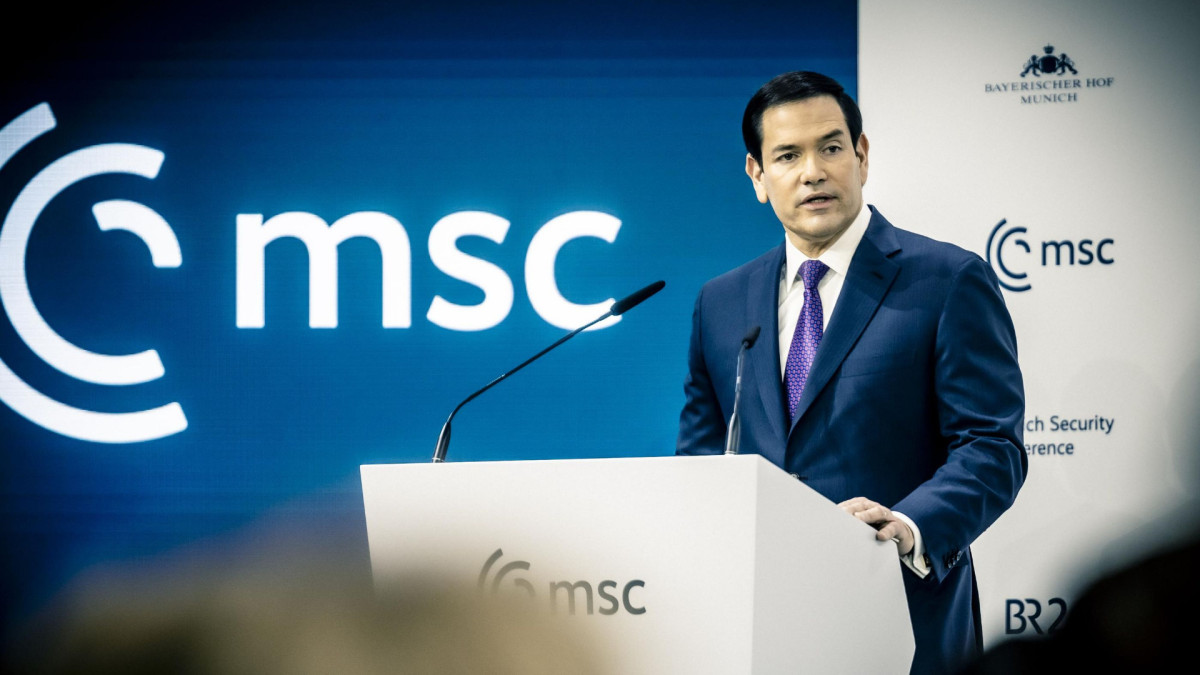
Secretary of State Marco Rubio at the Munich Security Conference. Photo: MSC / Preiss
Could you expand a little on how you understand the European vision of the West or of its values? And, related to that, how do you think that vision is perceived by the rest of the world?
It is a concept that is not clearly defined even in Europe. In many texts it has a very vague geopolitical meaning, often basically equivalent to NATO. But even then it is not entirely clear who exactly belongs to the West. Sometimes Australia is included, even though it is not in NATO; sometimes Israel; sometimes even Latin America.
In Brazil, for example, the concept is ambiguous enough that there is no consensus. Some say: culturally we are part of the Western universe, but geopolitically we are not. In other words, it has several dimensions.
"If you listen to Rubio and then watch the reaction of most of the Europeans in the room, you realize that this is not how they understand the West"Precisely because of that ambiguity, it is a somewhat treacherous debate. But if you listen to Rubio and then watch the reaction of most of the Europeans in the room, you realize that this is not how they understand the West. One European participant told me afterwards: "Rubio spoke about the West, but that is not my West." I found that very telling. Because for that person, the West is above all about liberal democracy, about how liberal values are put into practice.
Rubio, by contrast, did not speak about liberal democracy. He spoke in civilizational terms and even said that the idea of expanding liberal democracy or of other countries embracing it is unrealistic. So, although his speech was not as abrupt as J. D. Vance’s, at bottom it confirms that, while Rubio says he believes in the transatlantic relationship, there is a profound divergence on values.
In practice, Rubio is telling Europeans to embrace the culture wars, something Europe’s political elites do not want to do. And there is also something striking: the current U.S. Administration seems almost obsessed with Europe. If everything revolves around America first, why does it matter so much that Europeans think exactly as they do? If they believe Europe is wrong, they could simply let Europe make its own mistakes.
It is almost a projection of their own culture war.
Exactly. There is something of a projection there. The U.S. Administration projects its preferences and its fears onto Europe, which it sees as a kind of spiritual partner. Trump may intervene occasionally in Latin American elections, but he usually does so in a far more improvised way, with a tweet or an isolated statement. There is no systematic effort to tell Latin America how it should think about its society. In Europe, by contrast, there is a much stronger civilizational, cultural and spiritual component.
If we assume that the West is fracturing, though even that will depend on how European politics evolves, because if more leaders like Vance or Trump come to power in Europe that may no longer be the case, how is that rupture projected onto the rest of the world, the so-called global majority or countries like Brazil, which in some ways feel both inside and outside the West at the same time? Because it could open an opportunity for a more attractive, more plural and more inclusive Europe. But the opposite could also happen: the fracture of the West could finally kill off the idea of a universalist project and accelerate the logic of multipolarity even further.
There are two issues here. The first is that, when you talk to people in Brazil, Turkey or India, current developments do not strike them as being as surprising or unsettling as they do many Europeans. Everyone agrees that we are living through dramatic change, but for many Europeans it feels almost like an existential rupture. Some say that "we are the Soviets of 1991." I understand that feeling because, for Europe, many very concrete things are changing.
"The so-called rules-based order does exist, yes, but it is violated constantly, and it is often the global south that suffers the consequences"But if you speak to people in Brazil or India, many react by saying: "Well, we have been saying and doing this for years." It is a world in which power matters much more than traditional Western rhetoric suggested. The so-called rules-based order does exist, yes, but it is violated constantly, and it is often the global south that suffers the consequences. That sense that, to some extent, might makes right has long been part of the global south’s perception. So too has the whole discussion about Western hypocrisy.
That is why, in part of the global south, there is even a certain sense of opportunity, something Europe does not perceive in the same way. And, viewed from outside, I am actually more optimistic about Europe than many Europeans are, provided anti-EU forces do not continue to grow. If that were not the case, one could even say that Trump is pushing Europeans toward greater autonomy and cooperation, because he has become, together with Russia and China, the kind of threat that was needed to force the European project forward.
Cliffe and Stuenkel explore the concept of the West and the position of countries such as Brazil. Photo: Agenda Pública
And also to find new partners.
Of course. And to act, as Macron says, as a true great power. Now, all of that coexists with anti-European forces within Europe itself. And I understand why that feels so destabilizing for Europeans.
In India and in other BRICS+ countries, it is not experienced in the same way. And the second point is that, for a long time, from Latin America and elsewhere, Europe was seen as a geopolitical appendage of the United States. That is changing. There is now a perception that, even if NATO still formally exists, Europe is beginning to act with greater autonomy. And that creates an opportunity for the global south and for a country like Brazil.
With the return of the Monroe Doctrine, Brazil and, in reality, every country south of Venezuela needs to diversify, hedge and reduce its exposure to the United States. The point is not to break, but to depend less and work more with others. Countries further north have less room for maneuver because they depend much more heavily on the United States and are, to some extent, forced to accommodate it.
If you are Mexico, you have very little room to maneuver. But if you are Brazil, which exports more to China than to Europe and the United States combined, then you can stand up much more firmly to U.S. pressure, as Lula did last year. And that is where strengthening ties with Europe becomes an opportunity, because Europe is no longer perceived as a simple appendage of Washington.
In fact, Lula is now traveling to India, and Brazil rejected the U.S. critical minerals deal because, from the Brazilian perspective, it implied a loss of sovereignty and a certain logic of exclusivity. Brazil also wants to attract European investment. There is some frustration with Europe’s slowness, because Europe arrives with proposals and figures that are not always comparable to those of the United States. But Brazil is looking precisely for that: not to depend on anyone in order to increase its strategic autonomy.
"Having an additional actor with whom to cooperate and with whom to balance the United States is good news for the global south"From that perspective, the transatlantic rupture is seen as an opportunity. China is there, India is there and others are there too. Having an additional actor with whom to cooperate and with whom to balance the United States is good news for the global south. Europe, moreover, is not perceived as a threat. In the Brazilian public debate, people sometimes call me a CIA agent or a Chinese agent, depending on who is criticizing me. But nobody ever calls me a European agent.
A German diplomat used an expression today that made me laugh: Europe is harmless and reliable. He was joking, but the phrase captures a real perception. Europe is not seen as a threat. That may change if it ever becomes a truly cohesive power, because it has everything it needs to become one, even if it is not there yet. From Brazil, the divisions between France, on the one hand, and Germany and Spain, on the other, over the EU-Mercosur deal still project an image of fragmentation.
When it comes to diversifying in technology, trade, investment and defense, Europe can be a key partner. Also because, in cultural and regulatory terms, Latin America more readily recognizes itself in the European approach on issues such as internet governance.
Is there room to weave a common, plural and democratic technological space between the United States and China? Germany and Spain, just like Brazil, have reasons not to want to imitate either the U.S. or the Chinese model in digital policy. Is it possible to build a third way, at least in technology? And, if so, could that logic be extended to other areas of the international system?
The big caveat is that, because of political polarization, it is becoming harder to close durable geopolitical deals. That is true in Europe, in the United States and in Latin America. Ideological swings can bring very different foreign-policy visions, even if, when you look closely, the substance does not always change that much.
Take Argentina. With a right-wing president, it is trying to move closer to the United States in a different way from the previous government. But Milei is still not willing to reduce economic ties with China. So yes, there are changes, but not a total rupture. He also continues to support the Mercosur agreement with the European Union, for example.
That said, it is very striking how much Spain’s decision to ban access to social media for under-sixteens, or the whole discussion about holding platforms responsible for algorithms that amplify disinformation, pornography or illicit material, resonates in Brazil and other countries. There you really do see a shared space for debate.
I would not yet say that there is a consolidated common strategic space, but there is certainly a very close public debate. What Sánchez says matters, and then a Brazilian congresswoman quotes it in an interview or comments on it on social media. That is quite significant.
There is also a clear perception: the more countries stand up to big tech, the harder it will be for companies like Meta to ask the White House to act on their behalf. For Brazil, where a large part of the political class wants a firmer position on internet governance, it matters that Europe is also moving. If it were only Brazil, U.S. pressure would be much greater. But if there are more actors, there is strength in numbers.
ARTÍCULOS RELACIONADOS
Jeremy Cliffe interviews Cathryn Clüver Ashbrook, author of 'The American Wake-Up Call' at the MSC 2026.Agenda Pública
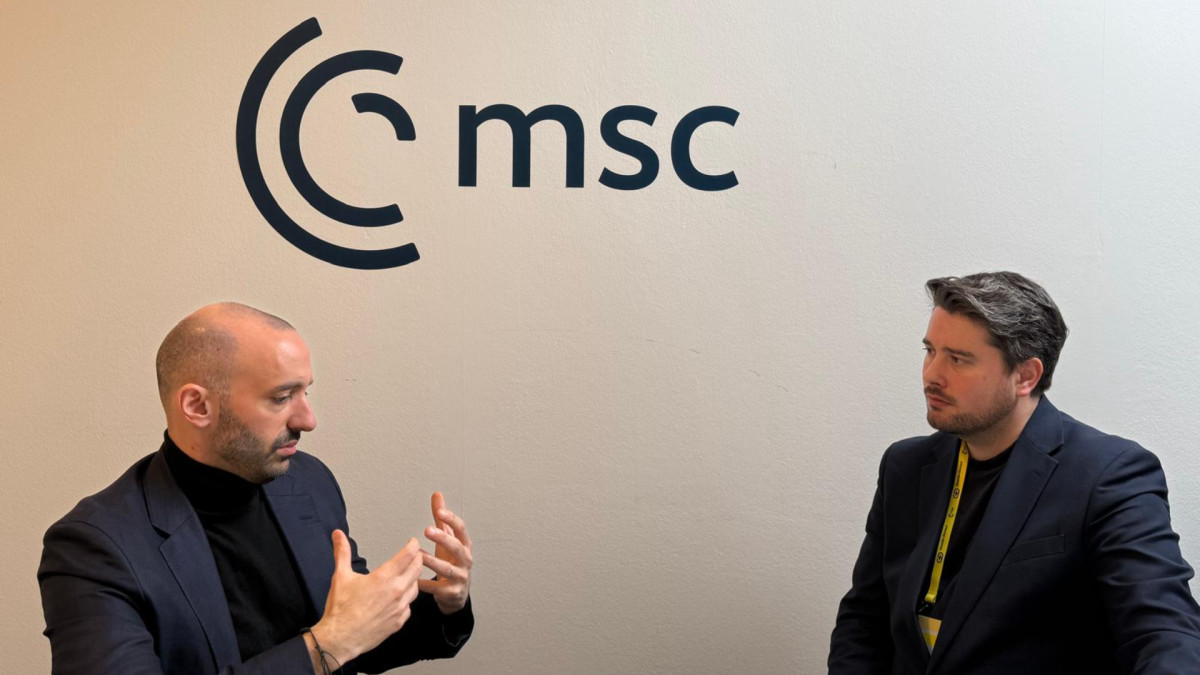
French minister delegate Benjamin Haddad (left) talks with Jeremy Cliffe (right) at the Munich Security Conference.Agenda Pública
That debate is much more confined to democracies, of course. In China or Russia there is not really a dilemma between limiting hate speech or disinformation and protecting freedom of expression. It is a different system.
And in India, for example?
There is some potential there, yes, although I have not yet seen a very strong articulation of it. In Brazilian debates on internet governance, I hear Australia, France or Spain mentioned a great deal, but India only rarely. That may also be because, within the BRICS space, this is not always a central issue. There is a certain hesitation, partly because China carries so much weight there. And neither Brazil nor India would be willing to embrace the Chinese model of digital governance.
"On some issues [the BRICS] can be useful, but on others there is not even a real conversation, precisely because democracies and autocracies coexist within the group"That also shows the limits of the BRICS. On some issues they can be useful, but on others there is not even a real conversation, precisely because democracies and autocracies coexist within the group. With enlargement, the BRICS increasingly resemble a conference like this one in Munich: a space where very different actors gather and can hold bilateral conversations. Suddenly Brazil and India realize they can cooperate on critical minerals, or Ethiopia and others find common interests. In that sense, it is more a platform than an alliance.
On issues such as reform of the UN Security Council, for example, the BRICS can at least sustain a rhetorical consensus on the need to give more weight to India, Brazil or South Africa. But even there divisions emerge. And when they had to react to the U.S. strikes against Iran, there were several days of negotiations to agree on a statement. In the end, a completely neutral text came out, as if ChatGPT had been asked to draft a reaction without offending anyone. It did not even mention the United States. That already tells us a great deal about what the BRICS can or cannot do.
To end with Europe: we have talked about the opportunities of this moment, about how Europe can open itself to new alliances just as the United States retreats. Can you give concrete examples of areas, negotiations or formats in which Europe could turn that into reality and become a better global actor in a time of destruction and raw power politics?
Europe has a huge opportunity to engage with countries that are trying to hedge against the United States but do not want to fall into China’s arms. The initial reading of what Trump is doing is that he is pushing many countries toward China, because they want to depend less on Washington. But, for example, the current Brazilian government is very aware that it does not want to increase its strategic dependence on China, which is already considerable.
It is not a matter of saying: we hate the United States and now we want to go with China. Brazil is not even part of the Belt and Road Initiative, even though it would be a country fairly receptive to closer ties with Beijing. What exists is a general perception that, in this new world, it is wise to avoid depending too much on any one actor. That creates redundancies, makes globalization slower and more expensive, yes, but also more resilient.
For years, governments behaved almost like multinationals: if the cheapest supplier of a given component was in Russia, they bought one hundred percent from Russia. But if you no longer believe the world is stable, then you have to diversify. In Brazil, for example, it is now clear that dependence on Russian fertilizers is a vulnerability. Not necessarily because Russia will cut off supply, but because the United States might sanction those who buy them, or because of an internal Russian crisis, or because of an extreme weather event. There are simply too many possible scenarios. So the logic becomes: buy from Canada too, and produce part of it at home.
Resilience.
Exactly. Strategic resilience. It is an expression one hears constantly today, and Trump has accelerated that conversation even further, just as climate change has.
And for Europe, that opens opportunities.
Precisely. When you talk to Latin American military officials, you see that the major debate now is how to gain autonomy from the United States. They know it will take time. But the image of U.S. special forces entering a presidential palace in South America and taking a president away by force would be something we had never seen so explicitly. There have been covert actions, as in Chile, but not something so direct and visible. And even if nobody thinks that will happen tomorrow in Brazil, a military planner has the duty to consider every possible scenario.
"There is room in defense, in intelligence and also in cooperation against organized crime, which is becoming a major strategic challenge in Latin America"In that context, Europe is an ideal partner. That also requires Europe to rise to the occasion, of course. Its priority today is not to export more military equipment but to meet its own needs, although it is already a significant exporter. But there is room in defense, in intelligence and also in cooperation against organized crime, which is becoming a major strategic challenge in Latin America and, at the same time, a source of vulnerability vis-à-vis the United States.
If the idea takes hold in Washington that a Latin American country is unable to control organized crime, that can become a justification for external interference. There too there is room for cooperation with Europe. The same applies to protection against external interference during elections, disinformation, trade, technology and digital sovereignty.
I recently spoke with a Brazilian legislator who told me that perhaps it is not a good idea for all the data from our public health system to be stored in Virginia. Not because we do not trust the Americans, but because it is problematic for such sensitive infrastructure to depend on another country. That forces people to think about data centers in Brazil, and also about diversifying who builds them. They do not want everything to come from a single country, but neither do they want everything to come from China.
Latin America has resisted U.S. pressure to exclude Huawei to a considerable extent, but that does not mean it does not see the problems of the Chinese model. And here, precisely, Europe’s image as a reliable and non-threatening actor can be an advantage.
The German-Brazilian political scientist is a close observer of current political developments in Latin America. Photo: Agenda Pública
From that idea of harmless and reliable, of a Europe that is reliable and harmless, where should Europe get to?
What is happening in Ukraine is already changing how the world sees Europe, because the gaps left by U.S. abandonment have become visible. And yet Ukraine is still resisting. What still seems strange is that, if you look at the negotiations, the impression remains that the conversation is still mainly between Americans and Russians, with Ukraine sometimes present, but not with Europe leading. That has not changed yet.
The Americans are no longer really helping. That will change over time, but we are already moving toward a situation in which Europe has a more relevant geopolitical voice. Now, it will not happen immediately. And it does not help when von der Leyen goes to South America to celebrate a major trade agreement and, a week later, the European Parliament says perhaps everything should be reviewed. That leaves a bad taste.
"If Orbán’s government were to win by rigging the election, we would enter completely new territory, because there has never been an EU government that has openly falsified an election"But that is precisely where the opportunities lie. Everything could change if there were an anti-EU government in France, or if a harder radical right came to power in a key country. I also find it interesting that here in Munich there has barely been any discussion of the Hungarian elections on 12 April. If Orbán’s government were to lose, that would be one thing. But if it were to win by rigging the election, we would enter completely new territory, because there has never been an EU government that has openly falsified an election. If that happened and Europe failed to react, it would also have global consequences.
Because, in the end, Europe is still seen by many democracies in the global south as a crucial democratic partner. And if something like that happened in April and the EU failed to rise to the occasion, that would also change the way the European project is perceived.
So it is a world of possibilities, but also of risks.
Absolutely. But there is a very interesting common thread in all this: when Europe shows strength within its own borders, whether on Ukraine, in the fight against disinformation, in technology or against internal authoritarianism, that also becomes a source of power outwardly.
And that is where the case of Sánchez also comes in.
Exactly. Sánchez is articulating an alternative vision of what it means to be Western. He said something along the lines of: "I am the prime minister of Spain, and this is why the West needs immigration." That is precisely the opposite thesis from Rubio’s. Exactly the opposite.
"Spain is growing economically, and that challenges that narrative of a stagnant, exhausted Europe trapped in the past"In that sense, agenda-setting also matters. And, in Spain’s case, there have been two recent examples of how a European country can shape the debate. Spain is also growing economically, and that challenges that narrative of a stagnant, exhausted Europe trapped in the past. That is why I think the message one hears more and more often is so important: stop looking back with nostalgia. The last eighty years were good, but now Europe has to explain why this moment can also be a great opportunity and how that affects the continent’s image from outside.
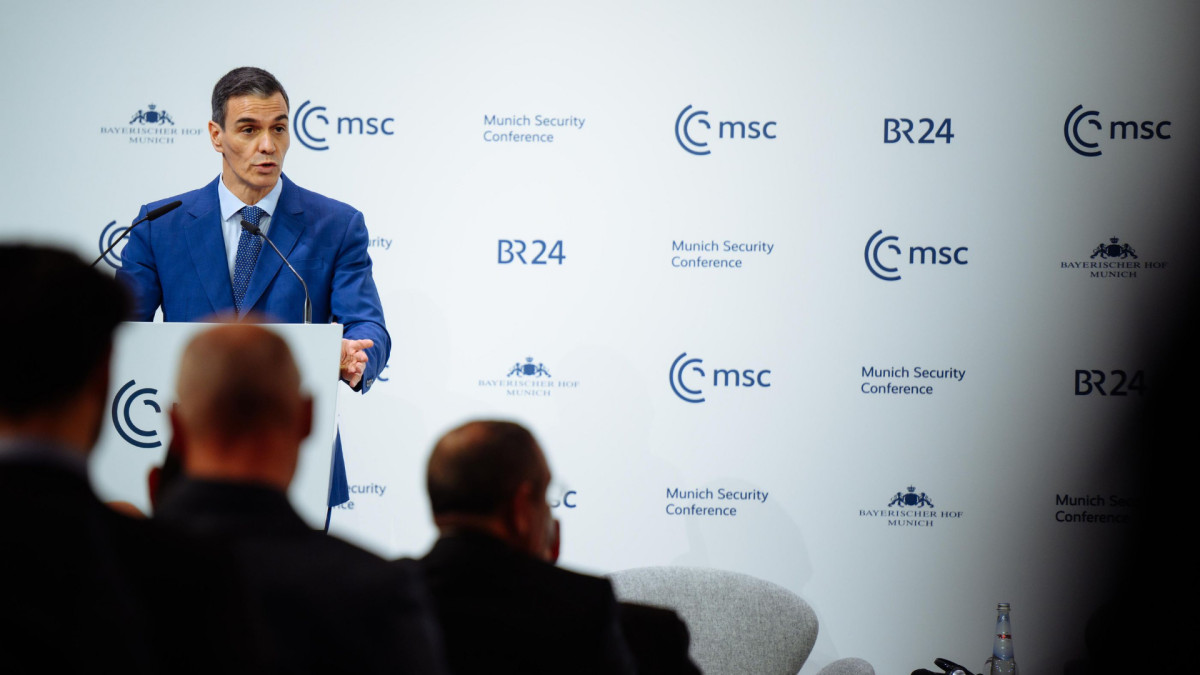
Prime Minister Pedro Sánchez during his participation in the Munich Security Conference. Photo: MSC / Preiss
That brings us back to the starting point: there are rival visions of the West, and within Europe too there are different degrees of confidence when it comes to asserting an alternative of its own that connects with this moment and with the rest of the world. There is a great deal at stake.
I think that, outside Europe, people tend to be less pessimistic about Europe than Europeans themselves are. I find that very interesting.
In fact, my organization, the European Council on Foreign Relations, has done polling that shows exactly that: in places such as Brazil or India, Europe is often seen as a potential great power, on a par with the United States or China, and that is something very few Europeans themselves seem to believe.
I understand all the challenges. I also remember a very revealing debate with a Brazilian legislator and a European delegation. One of the Brazilians said: "It is very difficult to understand how Europe works, the Commission and all the rest of it." And one of the Europeans replied: "We do not fully understand it either." It was funny, but also true. Perhaps part of the problem is that Europe needs to explain itself better.
But perhaps the problem is also that more and more people in Europe think like Rubio. Perhaps this is not only a division between Europe and the United States, but about how people understand their lives and their societies, beyond the country they live in.
Yes, and that is a very important point. Right now we see this division, but if you speak to a Democratic senator here in Munich, you will find that on many of these issues they fully agree with most Europeans. And if you speak to an AfD politician, you will find that they immediately identify with the Trumpist interpretation of the West. So of course this can change.
So it is not a simple divide between Europe and the United States.
Exactly. It is not. But even so, the current framework is still one of a fairly strong European consensus. And the data show that a clear majority of Europeans believe the European Union has benefited them. Even if Le Pen were to win in France, for example, she is not so aligned with a total rupture, because most French people do not want to leave the EU. We have also seen that in reactions such as those over Greenland or Trump’s threats.
Trump may deserve the Charlemagne Prize. He has united Europe, and not only Europe. If all this leads to greater European unity, then yes, it can be said that he has provoked strategic debates of an intensity I had never seen before: about how to become more agile, more resilient and more autonomous in today’s world.
Thank you very much.

Jeremy Cliffe
Editorial director and senior policy fellow at the European Council on Foreign Relations
He is based in Berlin. Previously he was international editor of the 'New Statesman'. Before that he spent eight years at The Economist, where he served as bureau chief in Brussels and Berlin, and was first the 'Bagehot' (UK) and then 'Charlemagne' (Europe) columnist. He studied at the universities of Oxford and Harvard.
Ahora en portada
16 de octubre de 2026
16 de octubre de 2026
16 de octubre de 2026
Noticias relacionadas
Hace 32 semanas
Cathryn Clüver Ashbrook: "Europeans, stop being so reactive and safeguard your institutions"
Hace 34 semanas
France’s plan for a stronger Europe: No strategic sovereignty without Eurobonds
Lo más leído