Viernes, 16 de octubre de 2026




ANALYSIS
Europe's military dependence on the United States and how to overcome it
Raffaele Madaio (PhD Candidate, Universidad de Granada; European Doctoral School on CSDP; Università degli Studi Guglielmo Marconi) analyzes the EU's deepening defence reliance on the US amid recent conflicts and political shifts. He advocates for market integration and joint financing to strengthen the EDTIB and achieve real strategic autonomy.
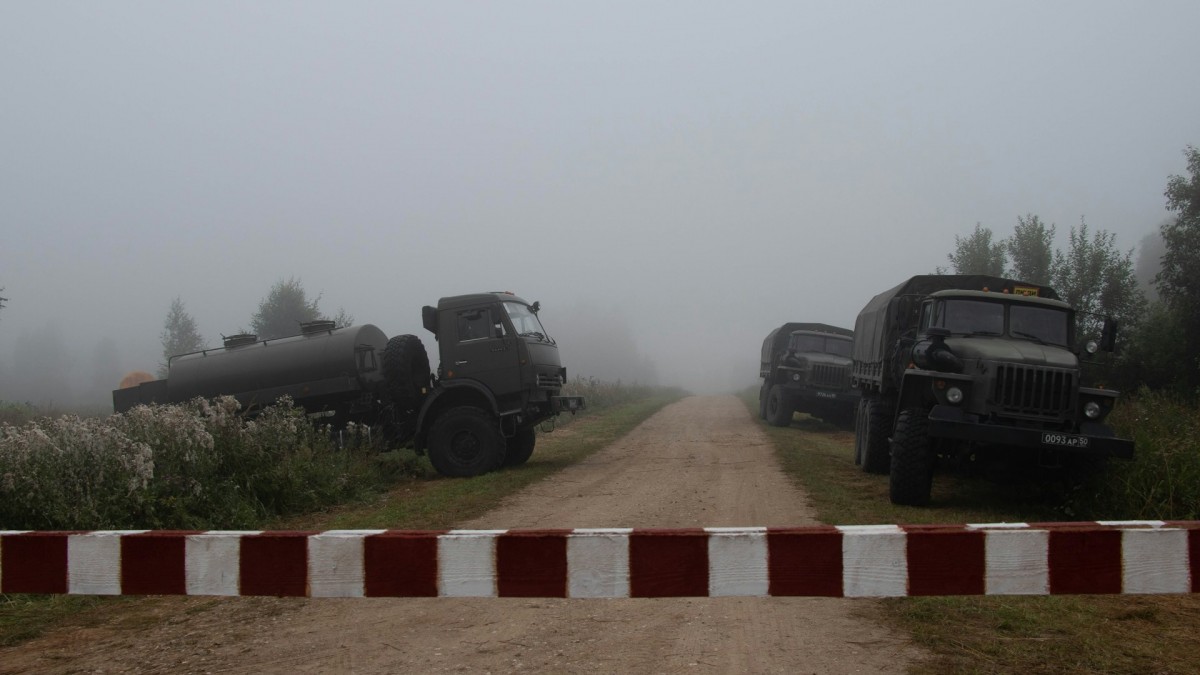
Europe is scrambling to set up a new defence strategy in the face of Trump.Unsplash / Ignat Kushanrev
In line with the 2023 Granada Declaration, improving the European Union's defence preparedness and readiness in capabilities requires the development of a robust, adaptable, and sustainable technological and industrial base (EDTIB).
A complex framework characterizes the EU's attempt to implement its defence policy, due to balancing competencies between the EU institutions and the Member States.
This complexity stems from the unique supranational structure of the EU, characterized by its sui generis nature and reliance on intergovernmental decision-making in matters of defence.
In a way, this justifies the delays in fully completing the common defence policy.
While Article 24 of the Lisbon Treaty gives the EU competence for the common foreign and security policy, including developing a common defence policy (which can lead to collective defence with unanimous consent), national security remains the exclusive competence of individual Member States.
Thus, protectionism may seem illogical at first glance, but it is often driven by the desire for sovereignty and the need to retain autonomous decision-making in military matters.
The Treaty on the Functioning of the EU specifically references protectionism within the EU.
Article 346 authorizes Member States to derogate from the rules of the common market, stating that "any Member State may take measures deemed essential for the protection of its security interests, in particular with regard to the production of or trade in arms, munitions and war material".
The difficult path of integration in the European defence sector has not yet been completed because the Member States are reluctant to conclude agreements that curtail their authority, which is defined as a core state power.
Geographical constraints, strategic cultural and military doctrines, international alliances, and budgetary considerations are among the political reasons for these decisions.
Why is a strong, resilient defence industry crucial for the EU?
Historically, after the Cold War, the European defence industry prioritized the production of military equipment geared towards the new international context, which shifted from symmetrical to asymmetrical warfare.
In peacetime, limited quantities of ammunition and weapons were produced.
Analysis of data from the European Defence Agency (EDA) shows that prioritization and investment in defence among Member States has declined since the end of the Cold War.
This trend is particularly notable given the overlapping crises which have significantly impacted the European Union.
These include acts of terrorism, economic instability, migration challenges, Brexit, and the COVID-19 pandemic. As North Atlantic Treaty Organization (NATO) and EU data shows, European defence spending fell drastically until the illegal annexation of Crimea.
In stark contrast, spending has risen steadily since 2014, when it totalled at 147 billion euros. EU countries' defence spending has increased by more than 30% between 2021 and 2024, reaching an estimated high of 326 billion euros. That is 1.9% of the EU's GDP and close to the 2% target set at the NATO summit in Wales 2014.
Russia's invasion of Ukraine poses a grave threat to Europe's security within the context of the defence industry, exemplifying both a shortage of weapons and ammunition.
The resurgence of conflict in Europe reveals the damaging effects of the persistent underinvestment in EU defence.
National defence markets have led to an uncompetitive EDTIB characterized by underinvestment, fragmentation, duplication, inefficiency, and low levels of cooperation in military procurement.
Although Member States have been prompted to increase the allocation of economic resources to the defence sector, this does not necessarily indicate that the defence industry is in a positive or healthy condition.
As the Commissioner for Defence and Space, Andrew Kubilius, anticipated, a good recipe for implementing European defence needs two more ingredients: "spend better and spend European".
The EU needs a full spectrum of military capabilities to deter threats and execute any necessary tasks effectively.
Autonomy, if not strategic, then at least industrial, remains at the centre of the agenda.
USA-EU a historical relation
Following the collapse of the European Defence Community in 1954, the European Union has enjoyed a prolonged period of peace, facilitated by NATO's protective umbrella.
However, the war in Ukraine has highlighted a well-known reality: Europe's significant dependence on the United States, through NATO, for its defence.
The decision, made by Finland and Sweden to join the transatlantic alliance, underscores this renewed reliance and NATO's pivotal role in ensuring the security of Europe.
Currently, Europeans have little space to manoeuvre and act in the military domain compared to the US. The EU depends on US support, even for the few and relatively modest military operations launched within the framework of the Common Foreign and Security Policy.
As the example of Poland shows, without coordination, Member States could favour quick supply solutions from non-European sources, primarily from the USA, but also from Israel and South Korea.
Following the war in Ukraine, the Trump administration's approach poses a second major external challenge to European defence, particularly its reliance on US support.
This became clearer in the first week of March 2025, when the Trump administration blocked intelligence and communications data for the first time, significantly weakening the Ukrainian defence forces.
This was a setback for the EU, which sees Ukraine's defence as its top priority but lacks the corresponding capacities.
EU's internal difficulties, which include not only the differing political willingness, have led to relations with the USA being taken for granted over time.
Therefore, maintaining the US presence in Europe, especially in the short term to support defence industry capabilities, is critical to regional stability.
Replacing this heavy dependence on American assets and technologies will be a long, expensive, and industrially demanding process.
The transition from customer to security provider is a central challenge for the European community.
European defence industry stakeholders
President Ursula von der Leyen's political guidelines and the numerous conclusions of the European Council have highlighted the state of the European defence industry.
For this reason, the new Plan Rearm Europe and the White Paper on the future of EU defence seek solutions to strengthen the European technological industrial base.
The European defence industry consists of several large multinationals, medium-sized companies, and over 2,000 small and medium-sized enterprises (SMEs).
The leading EU defence companies are based in France, Germany, Italy, Spain, and Sweden. The most important companies in terms of defence revenue include Airbus, Thales, Dassault, Rheinmetall, Leonardo, MBDA, Navantia, Indra and Saab.
Therefore, European defence companies are mostly structured along internal borders, with demand coming mainly from national governments.
The European Parliamentary Research Service estimates direct employment in the industry at 500,000 people. In 2024, only 19 of the top 100 defence companies were headquartered in the EU.
Although some European companies are globally competitive, the industrial base of EU defence has weaknesses, vulnerabilities, and structural deficiencies.
The European defence industry's capacity to produce military systems and equipment is demonstrably insufficient to meet current and projected needs, a shortfall exacerbated by the twin pressures of technological innovation and ongoing military conflict.
Increasing the production of European-made weapons and ammunition will be difficult and time-consuming, as evidenced by the recent pandemic, war-related supply chain disruptions, shortages of raw materials, scarcity of critical minerals, and lack of semiconductors.
Microchips are also critical components and are ubiquitous in defence matériel, ranging from military aircraft to missiles. The EU imports nearly all the microchips used, mostly from Taiwan.
Overcoming industrial fragmentation in Europe is difficult due to several factors increasing the complexity and administrative costs of cooperation, different national requirements, national industrial policy considerations, and a lack of experts at the national level and procurement agencies.
How to strengthen the European defence industry?
The EU defence industry is at a crossroads and faces complex challenges and opportunities. The way forward requires a multi-faceted approach.
Creating an accurate single market is paramount and involves harmonizing regulations across Member States to promote seamless cooperation and interoperability.
Streamlining governance and reducing bureaucratic hurdles are crucial to improving competitiveness and achieving economies of scale.
At the same time, concerted efforts on technological innovation are essential to keep the EU at the forefront of defence capabilities.
Addressing these interlinked issues will boost the EU's defence capabilities and foster a more robust and competitive defence industry capable of meeting the challenges of the 21st century.
What is the role of the EU?
The European Union is undoubtedly capable of utilizing available resources to support Member States through financial instruments.
These measures aim to assist countries facing greater challenges, such as Spain and Italy, in boosting their investment capacity.
In this context, the new role of the European Investment Bank (EIB) is pivotal, as it will not only promote the development of dual technologies but also of strategic infrastructure.
Other measures, such as demobilizing private capital, will also be evaluated.
The new MFF must include all economic resources to meet the challenges, especially in the defence sector.
Without a clear political will, it will be impossible to achieve the planned objectives.
One complex variable is time and how much is available for development.
A complex framework characterizes the EU's attempt to implement its defence policy, due to balancing competencies between the EU institutions and the Member States.
This complexity stems from the unique supranational structure of the EU, characterized by its sui generis nature and reliance on intergovernmental decision-making in matters of defence.
In a way, this justifies the delays in fully completing the common defence policy.
While Article 24 of the Lisbon Treaty gives the EU competence for the common foreign and security policy, including developing a common defence policy (which can lead to collective defence with unanimous consent), national security remains the exclusive competence of individual Member States.
Thus, protectionism may seem illogical at first glance, but it is often driven by the desire for sovereignty and the need to retain autonomous decision-making in military matters.
The Treaty on the Functioning of the EU specifically references protectionism within the EU.
Article 346 authorizes Member States to derogate from the rules of the common market, stating that "any Member State may take measures deemed essential for the protection of its security interests, in particular with regard to the production of or trade in arms, munitions and war material".
The difficult path of integration in the European defence sector has not yet been completed because the Member States are reluctant to conclude agreements that curtail their authority, which is defined as a core state power.
Geographical constraints, strategic cultural and military doctrines, international alliances, and budgetary considerations are among the political reasons for these decisions.
Why is a strong, resilient defence industry crucial for the EU?
Historically, after the Cold War, the European defence industry prioritized the production of military equipment geared towards the new international context, which shifted from symmetrical to asymmetrical warfare.
In peacetime, limited quantities of ammunition and weapons were produced.
Analysis of data from the European Defence Agency (EDA) shows that prioritization and investment in defence among Member States has declined since the end of the Cold War.
This trend is particularly notable given the overlapping crises which have significantly impacted the European Union.
These include acts of terrorism, economic instability, migration challenges, Brexit, and the COVID-19 pandemic. As North Atlantic Treaty Organization (NATO) and EU data shows, European defence spending fell drastically until the illegal annexation of Crimea.
In stark contrast, spending has risen steadily since 2014, when it totalled at 147 billion euros. EU countries' defence spending has increased by more than 30% between 2021 and 2024, reaching an estimated high of 326 billion euros. That is 1.9% of the EU's GDP and close to the 2% target set at the NATO summit in Wales 2014.
Russia's invasion of Ukraine poses a grave threat to Europe's security within the context of the defence industry, exemplifying both a shortage of weapons and ammunition.
The resurgence of conflict in Europe reveals the damaging effects of the persistent underinvestment in EU defence.
National defence markets have led to an uncompetitive EDTIB characterized by underinvestment, fragmentation, duplication, inefficiency, and low levels of cooperation in military procurement.
Although Member States have been prompted to increase the allocation of economic resources to the defence sector, this does not necessarily indicate that the defence industry is in a positive or healthy condition.
As the Commissioner for Defence and Space, Andrew Kubilius, anticipated, a good recipe for implementing European defence needs two more ingredients: "spend better and spend European".
"Governments do not procure much together; cooperative procurement accounts for less than 20% of spending, and they do not focus enough on our own market: almost 80% of procurement in the past two years has come from outside the European Union"Better spending is needed to close the capability gaps that were identified in the Rearm Plan, boosting European procurement, which still stands at 20%, and reducing the dependence on third countries. As Mario Draghi stated in La Hulpe on 16 April 2024: "In the defence industry, for example, the lack of economies of scale is hampering the development of European industrial capabilities, a problem recognized in the recent European Defence Industrial Strategy. Governments do not procure much together; cooperative procurement accounts for less than 20% of spending, and they do not focus enough on our own market: almost 80% of procurement in the past two years has come from outside the European Union. To meet new defence and security needs, we need to strengthen our joint procurement, improve the coordination of our spending and the interoperability of our equipment, and significantly reduce our international dependencies."
The EU needs a full spectrum of military capabilities to deter threats and execute any necessary tasks effectively.
Autonomy, if not strategic, then at least industrial, remains at the centre of the agenda.
USA-EU a historical relation
Following the collapse of the European Defence Community in 1954, the European Union has enjoyed a prolonged period of peace, facilitated by NATO's protective umbrella.
However, the war in Ukraine has highlighted a well-known reality: Europe's significant dependence on the United States, through NATO, for its defence.
The decision, made by Finland and Sweden to join the transatlantic alliance, underscores this renewed reliance and NATO's pivotal role in ensuring the security of Europe.
Currently, Europeans have little space to manoeuvre and act in the military domain compared to the US. The EU depends on US support, even for the few and relatively modest military operations launched within the framework of the Common Foreign and Security Policy.
As the example of Poland shows, without coordination, Member States could favour quick supply solutions from non-European sources, primarily from the USA, but also from Israel and South Korea.
"EU's internal difficulties, which include not only the differing political willingness, have led to relations with the USA being taken for granted over time"As pointed out by Raluca Csernatoni, "The reality is that Europe is strategically and critically dependent on its partners, especially when it comes to conventional and high-tech military assets".
Following the war in Ukraine, the Trump administration's approach poses a second major external challenge to European defence, particularly its reliance on US support.
This became clearer in the first week of March 2025, when the Trump administration blocked intelligence and communications data for the first time, significantly weakening the Ukrainian defence forces.
This was a setback for the EU, which sees Ukraine's defence as its top priority but lacks the corresponding capacities.
EU's internal difficulties, which include not only the differing political willingness, have led to relations with the USA being taken for granted over time.
Therefore, maintaining the US presence in Europe, especially in the short term to support defence industry capabilities, is critical to regional stability.
Replacing this heavy dependence on American assets and technologies will be a long, expensive, and industrially demanding process.
The transition from customer to security provider is a central challenge for the European community.
European defence industry stakeholders
President Ursula von der Leyen's political guidelines and the numerous conclusions of the European Council have highlighted the state of the European defence industry.
For this reason, the new Plan Rearm Europe and the White Paper on the future of EU defence seek solutions to strengthen the European technological industrial base.
The European defence industry consists of several large multinationals, medium-sized companies, and over 2,000 small and medium-sized enterprises (SMEs).
The leading EU defence companies are based in France, Germany, Italy, Spain, and Sweden. The most important companies in terms of defence revenue include Airbus, Thales, Dassault, Rheinmetall, Leonardo, MBDA, Navantia, Indra and Saab.
Therefore, European defence companies are mostly structured along internal borders, with demand coming mainly from national governments.
The European Parliamentary Research Service estimates direct employment in the industry at 500,000 people. In 2024, only 19 of the top 100 defence companies were headquartered in the EU.
Although some European companies are globally competitive, the industrial base of EU defence has weaknesses, vulnerabilities, and structural deficiencies.
The European defence industry's capacity to produce military systems and equipment is demonstrably insufficient to meet current and projected needs, a shortfall exacerbated by the twin pressures of technological innovation and ongoing military conflict.
Increasing the production of European-made weapons and ammunition will be difficult and time-consuming, as evidenced by the recent pandemic, war-related supply chain disruptions, shortages of raw materials, scarcity of critical minerals, and lack of semiconductors.
Microchips are also critical components and are ubiquitous in defence matériel, ranging from military aircraft to missiles. The EU imports nearly all the microchips used, mostly from Taiwan.
Overcoming industrial fragmentation in Europe is difficult due to several factors increasing the complexity and administrative costs of cooperation, different national requirements, national industrial policy considerations, and a lack of experts at the national level and procurement agencies.
How to strengthen the European defence industry?
The EU defence industry is at a crossroads and faces complex challenges and opportunities. The way forward requires a multi-faceted approach.
Creating an accurate single market is paramount and involves harmonizing regulations across Member States to promote seamless cooperation and interoperability.
Streamlining governance and reducing bureaucratic hurdles are crucial to improving competitiveness and achieving economies of scale.
At the same time, concerted efforts on technological innovation are essential to keep the EU at the forefront of defence capabilities.
Addressing these interlinked issues will boost the EU's defence capabilities and foster a more robust and competitive defence industry capable of meeting the challenges of the 21st century.
What is the role of the EU?
The European Union is undoubtedly capable of utilizing available resources to support Member States through financial instruments.
These measures aim to assist countries facing greater challenges, such as Spain and Italy, in boosting their investment capacity.
In this context, the new role of the European Investment Bank (EIB) is pivotal, as it will not only promote the development of dual technologies but also of strategic infrastructure.
Other measures, such as demobilizing private capital, will also be evaluated.
"A concrete and genuine negotiation on the following Multiannual financial framework (MFF) 2028/2034 is needed to reach the 2024 European Defence Industrial Strategy (EDIS) goals"As the PESCO, EDF, and EDIRPA projects end, a concrete and genuine negotiation on the following Multiannual financial framework (MFF) 2028/2034 is needed to reach the 2024 European Defence Industrial Strategy (EDIS) goals at developing and procure joint capacities.
The new MFF must include all economic resources to meet the challenges, especially in the defence sector.
Without a clear political will, it will be impossible to achieve the planned objectives.
One complex variable is time and how much is available for development.

Raffaele Madaio
Investigador en el ámbito de la defensa y la seguridad
Doctorando en la Universidad de Granada; Escuela Europea de Doctorado sobre PCSD; Università degli Studi Guglielmo Marconi.
Ahora en portada
16 de octubre de 2026
16 de octubre de 2026
16 de octubre de 2026
Noticias relacionadas
Hace 80 semanas
Trump isolates himself, while we come closer together
Hace 83 semanas
Three ideas for the EU to counter the predatory US administration
Lo más leído