Domingo, 18 de octubre de 2026




CONVERSATIONS
Chatham House Director: "It is the kind of moment that requires governments to define themselves and where their countries stand"
Bronwen Maddox, Director and Chief Executive of Chatham House, talks to Marc López Plana, Director and Editor of 'Agenda Pública', about Spain, Trump, China, European defence and the future of the European Union. "It would be unwise to rely on Trump to defend Europe," she says, whilst calling on the continent to step up and "defend its industries."

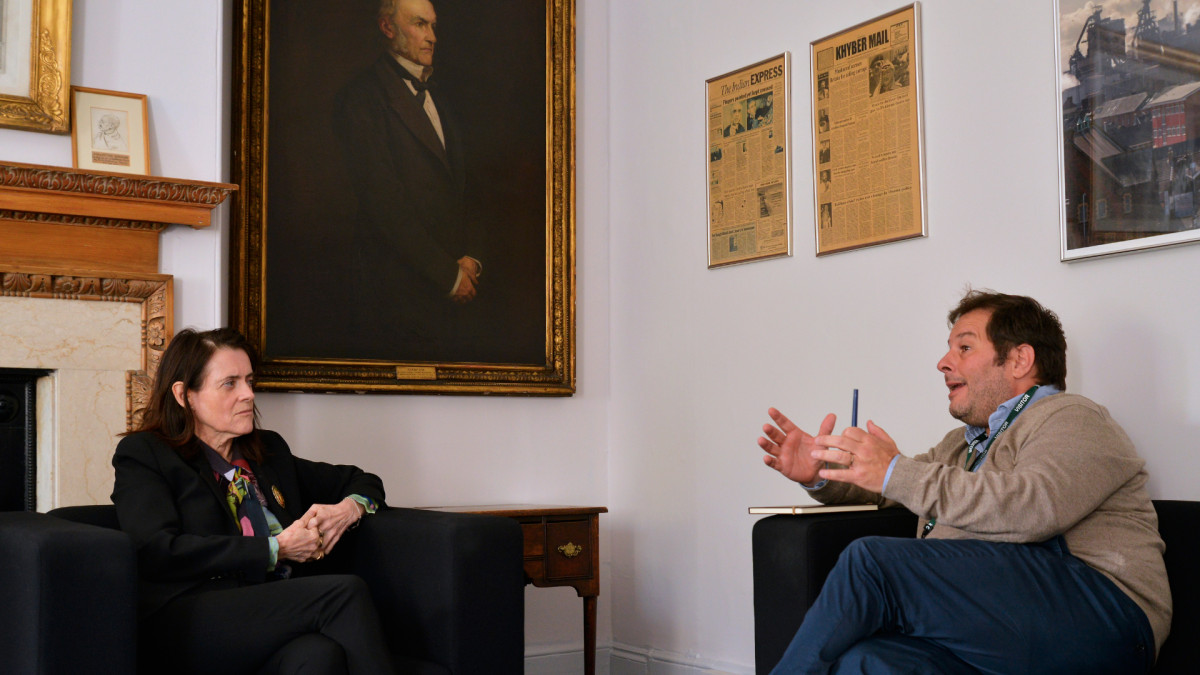
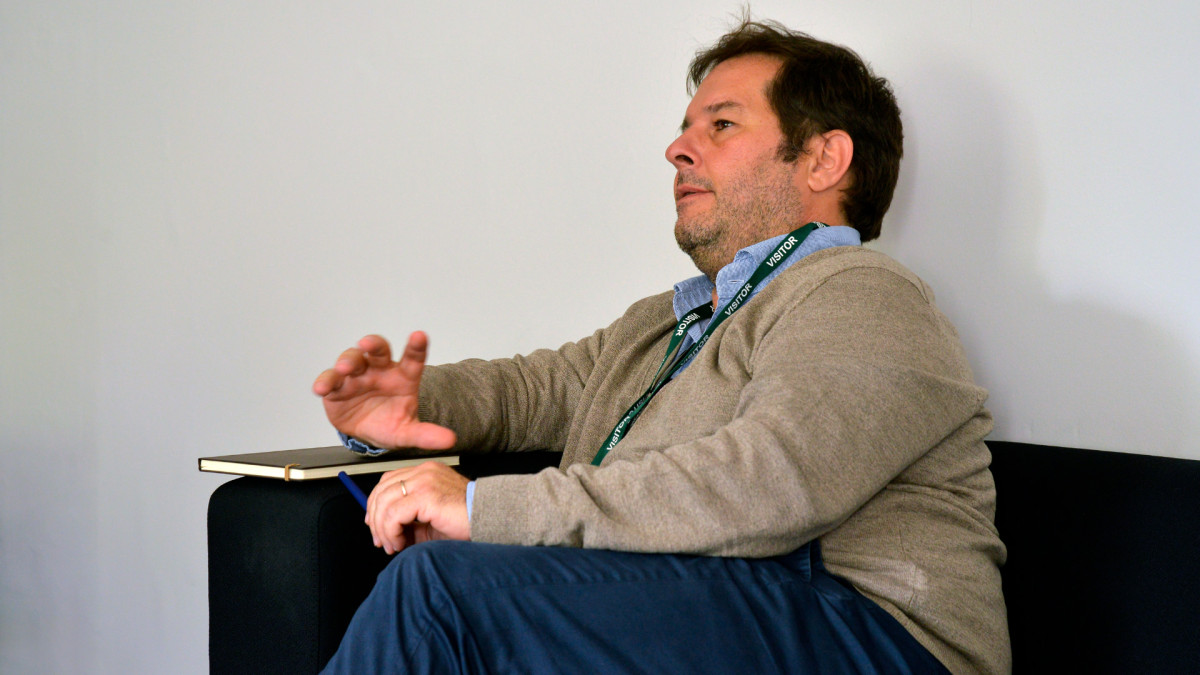
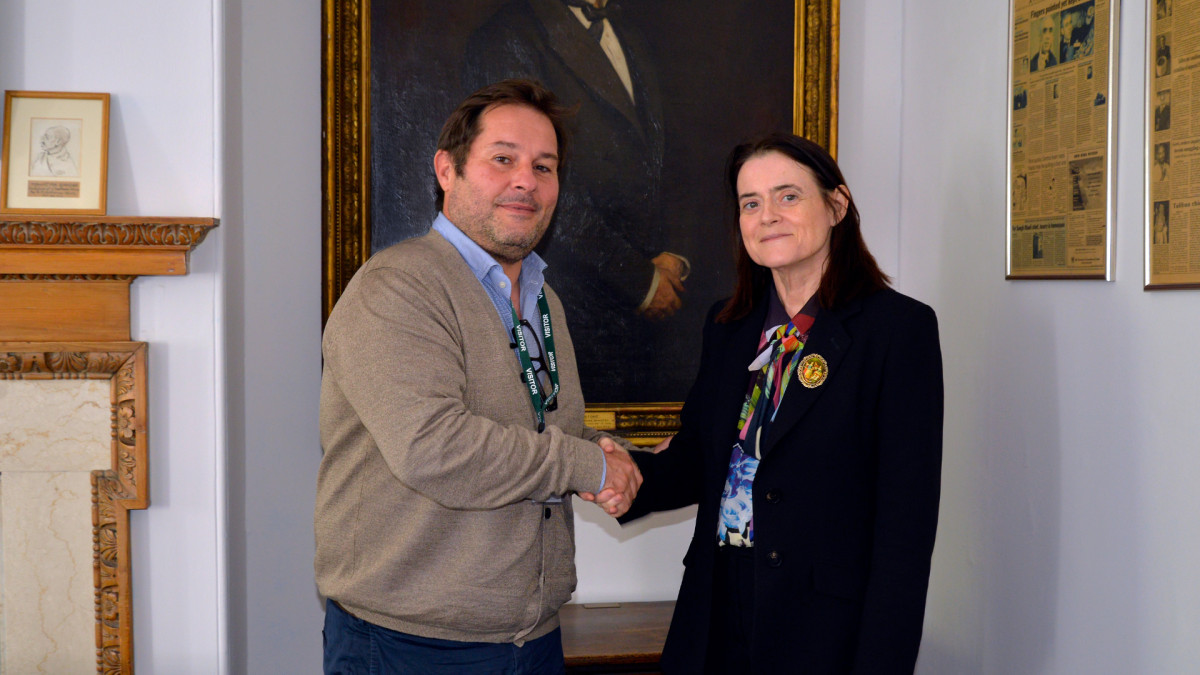
Bronwen Maddox, Director and Chief Executive of Chatham House, and Marc López Plana, Director and Editor of 'Agenda Pública'.Agenda Pública / Mark York
Spain is experiencing a singular moment of international exposure. Its positions on Gaza, Iran and European strategic autonomy have placed the Spanish government in a global conversation shaped by threats, realignments and growing uncertainty about the role of the United States. Bronwen Maddox, director and chief executive of Chatham House, is watching the present closely and raises the debate to a broader scale: Europe can no longer act as if the old order were still intact.
At Chatham House headquarters in London, its chief executive sets out a highly demanding scenario for European democracies. Populist pressure, industrial fragility, technological dependence and doubts about Washington are converging at the same moment. For her, the rise of forces such as AfD is the result of social tensions to which traditional parties have not known how to respond.
The director of the British think tank also points to the external challenge. While Russia is forcing Europe to rethink its security model, China threatens entire sectors of industry. The United States, meanwhile, even beyond Trump, no longer offers the same certainties. "Europe has an enormous incentive to get its act together on the economy and on defence", she argues.
I would like to ask you first about Spain, because it is in a good moment —I don’t quite know how to put it— in terms of international exposure. What is your view of what Spain and the Spanish government are doing on the global stage?
Spain is making its mark by saying: we have a set of views. We do not agree with the action against Iran. We do not agree with what is happening in Gaza. And it is making that very clear. There is the possibility of retaliation from the US; President Trump has talked about throwing Spain out of NATO. But we will have to see how far those threats are actually followed through.
Do you think European elites are well prepared to understand and survive this global situation?
They should be prepared. Donald Trump did not come out of nowhere. He came out of political forces that had been building for a long time in the United States and that have echoes in other countries. Many European countries face the same pressures: migration, the feeling of having lost manufacturing jobs, and culture wars that may be more acute in the United States, but also resonate in Europe. Trump reflected all those forces. He has his own character, but he represents dynamics that also appear in European countries.
Almost every European leader has to deal with budget pressures: how to pay for a country’s expectations on health, education and pensions without enough money. Manufacturing jobs are disappearing; tech companies are everywhere and have enormous amounts of money, but it is very difficult to tax them. Without tax, you do not have a state. And yet you still have to go back to voters and say: this is very difficult; now vote for me again. All democratic countries have this problem at the moment. Jean-Claude Juncker put it very well years ago when he said: "We know exactly what to do; we just don’t know how to get re-elected after doing it."
So I am not sure that elites —if I can use that word— have fully come to terms with that. But they should. They have had long enough to look properly at why people are so angry.
Because, if they do not, what happens? What could happen if European elites are unable to understand the real situation? In the most recent polls, AfD appears in first place.
That is the consequence: parties on the right and the left that offer much simpler and more radical solutions rise and rise and rise. We are seeing it in the UK, especially on the left with the Green Party, which is no longer mainly an environmental party. It is campaigning on the economy and on Gaza, and it is getting a huge youth vote.
We are seeing all of this. If AfD were to come to power in Germany, it would completely change the way the European Union works. No one should be complacent or assume that the status quo will continue. What those populist parties are addressing is a challenge that every party must now address, including centrist ones: how to give people a sense of hope and growth without offering answers that are perfect, simple and quick.
Is it possible to build more Europe right now with that angry population in our societies? Because it does not seem easy to have a more powerful and unified European Union.
Yes, it is difficult. But external pressure helps a lot. On the one hand, there is Russia, a threat to the whole EU —even if Spain is further away, it is a threat to the whole EU— along with the quiet cyber war, disinformation and everything happening there. There is a major physical threat, the unresolved conflict in Ukraine, and then there is the US saying: we are not going to guarantee European defence, we are leaving it to you, with all the uncertainty about what may come next.
Then there is China, with a very energetic policy of selling all its goods to the world and showing little interest in buying anything. That is a huge threat to European companies and industry. All these are reasons why the European Union has an enormous incentive to get its act together on the economy and on defence.
Let me ask you about the next midterm elections in the United States. In Europe, Von der Leyen, for example, seems to be waiting for the moment when Trump could lose them. But could we not perhaps end up with a more dangerous Trump after losing those elections?
That is an interesting point. He will be angry. Very, very angry. The question will be whether he is caged by the US Constitution or not, and that is something we do not know at the moment. Let us assume he loses the House of Representatives and that every week more Senate seats seem to be in play. What happens then? It is hard to say. If he lost both houses, they would try to impeach him, and that would make him extremely angry.
He has shown that he is willing to try to be president simply by Sharpie pen, through executive orders. He has already signed more in one year than in his entire first term: more than 220. It is very difficult for any constraint to keep up with that pace, whether Congress or the courts, though they can start to do so. That is exactly what Democrats in Congress would begin to do immediately. They would also feel less afraid.
He will be angry. I do not know how much he can do if he loses all that. The more important question is what you assume right now. Do you wait for the Democrats to come back? That is risky. Any country or company dealing with the US should assume that most of what Trump has done will stay. He has a very particular personality, vindictive and marked by personal attacks.
But assume it sticks: that the next president keeps the tariffs —which is likely—; that there may be more conciliatory words on Europe and defence, although there will still be a question mark over NATO.
Is Iran Trump’s real mistake?
Yes, he has made other mistakes, and some of the tariffs may turn out to be among them. But Iran is the most immediate mistake. It does not look as if he can get out of it. It is a war that may not have an end, because Iran has an incentive to keep it going. It has affected the whole world, and the whole world is angry with him and wants him to shut it down, but he cannot. It is a big mistake.
His bigger mistake is not finding a coherent way to deal with China. There is only one thing an American president has to get right at this moment: how to deal with China. And here we have a very confused picture. There are people in his Administration saying that China is the big threat, while Trump says Nvidia can sell its second-best chips to China and sends very confused messages about Taiwan.
But the United States has never had a rival like China: in technology, economy, military power and ideology. And the one thing a president really has to get right is that. He has not done so. If you are looking for a technical mistake right now, Iran is it.
And what about Europe’s China policy?
Europe has to make some decisions now. It will have to take measures, using existing legislation, to protect its industries; otherwise it will not have any manufacturing left. At the same time, as Mario Draghi has written, Europe needs to make the single market work much better and its capital markets function better, in order to provide more capital for companies so that they remain European and are not bought by China or the US.
We have already seen what has happened to the car industry and to solar panels. There are 20 other industries. Pharmaceuticals is next. It is almost impossible to compete with China. They have access to hospital data, they can test things in days or weeks rather than months or years. They can license immediately. Any molecule we make, they can make better, one European company told me.
What is happening with the relationship between the UK and Europe? Will we see interesting developments in this relationship in the coming years?
There are small talks under way about minor improvements, and there will probably be some, but they are exhausting for both sides. Even small compromises —such as European students paying UK fees rather than international fees— are politically sensitive. There will be some improvements, but no major changes.
Pressure on the government comes from business, and also from travellers asking why they are waiting two hours to go on summer holidays because of fingerprints and all that. The pressure is building. We may have to wait for the next general election in the UK. I would be surprised if one of the parties —Labour, the Liberal Democrats or the Greens— did not campaign in favour of rejoining, or joining, the customs union.
There is a strong economic argument for moving back, and many allies for it. But European countries also have many other priorities. Relations with France are always difficult, whether on defence or fish.
Not only for you, but also for other EU countries.
Yes, it is interesting. I was recently at the Delphi Economic Forum, in Greece, where many countries said that negotiating with France is an obstacle. If I had to give advice to Keir Starmer’s team, it would be to spend more time in Brussels and less on bilateral relations. That is the way back.
There is public support, although it is not yet overwhelming. The pressure is moving in that direction. Another key point is that migration numbers are falling significantly, which reduces the sensitivity around the issue.
Are you worried about the role of the main powers in the EU —France and Germany—, which seem unable to work together?
This is very interesting. One reason I travel a lot to countries outside the UK, France and Germany is that other European countries have very different stories. Spain, Ireland, Greece —and Poland in a different way— are saying: we have had our own crises, now we are doing quite well. Now we can give lessons to the UK, France and Germany.
The Greeks are particularly keen to give Germany lessons on growth, after all the lessons they received from Angela Merkel over the years. Europe is changing. Countries are finding their own solutions. But it is a problem that France and Germany are struggling domestically and also struggling to work together.
In terms of the European Union and its economic situation, it seems that the South is performing better than the North or the centre of Europe, much better than Germany and France. Having Germany in a weak economic situation is a problem.
It is a problem for the rest of Europe. Germany is key to European defence. It is investing heavily in its own industry, and it is central to Europe’s defence and to Europe’s sense of itself. Germany is not antagonistic towards the United States, but it is essential for Europe to define itself with more distance from the US than in the past.
Germany is central to whatever happens with Ukraine, and its voice is essential on enlargement.
Enlargement and, at the same time, more unity in Europe?
It is always difficult. The more members you add, the greater the risk of having very different voices. It is a relief to have the Hungarian election result, but you cannot rely on that. Other cases may emerge. Even Moldova is saying: let us in, we are perfect, no exemptions, let us join immediately.
Enlargement is an extremely difficult question for the EU.
When we talk about enlargement, we can talk about Ukraine. But is it possible to have Ukraine in the European Union without a clear solution in terms of the Russian invasion?
Everyone is looking towards that accession. There is talk about observer status: being in meetings, but without voting and without being included in the Common Agricultural Policy. It is difficult without a proper solution. Any entry into the EU implies a defence umbrella. We will hear more about that in the future.
So it is difficult to imagine Ukraine joining quickly, even though many want it to win the conflict.
One consequence of the midterm elections, if Trump loses, could be something like: "I am tired of Europe and Ukraine, take responsibility yourselves. My interests are in the Pacific." Is that possible?
It is more likely that he would not respond coherently to a challenge. He may be angry, but that does not necessarily translate into a systematic withdrawal. The message has already landed in Europe: you will have to pay more for your defence.
If Russia does something provocative —such as taking a Swedish island— it could trigger NATO. That is one of the current concerns.
In the public debate, we have, on the one hand, platforms and tech companies investing heavily in US elections and creating problems in the European Union. On the other hand, we have think tanks like Chatham House trying to create a critical mass of thinking about the world and the global situation. My question is: how do you compete with tech companies that are able to shape the atmosphere and public opinion in a way that is very different from think tanks?
The key is to look for alternatives. For a year now, Europeans have been looking for alternatives to American technology: what technology is essential and what is not. At the moment, systems such as Microsoft operating systems are difficult to replace, but that is exactly the kind of thought experiment people are now doing.
In social media, there are alternatives, depending on how companies behave. Taxation is also essential, because these companies operate across borders. What is different now is that the US government often intervenes on their side, linking tariffs or political pressure to tech regulation.
That combination of forces is new and powerful. But countries are still looking for alternatives with urgency.
Thank you very much.
At Chatham House headquarters in London, its chief executive sets out a highly demanding scenario for European democracies. Populist pressure, industrial fragility, technological dependence and doubts about Washington are converging at the same moment. For her, the rise of forces such as AfD is the result of social tensions to which traditional parties have not known how to respond.
The director of the British think tank also points to the external challenge. While Russia is forcing Europe to rethink its security model, China threatens entire sectors of industry. The United States, meanwhile, even beyond Trump, no longer offers the same certainties. "Europe has an enormous incentive to get its act together on the economy and on defence", she argues.
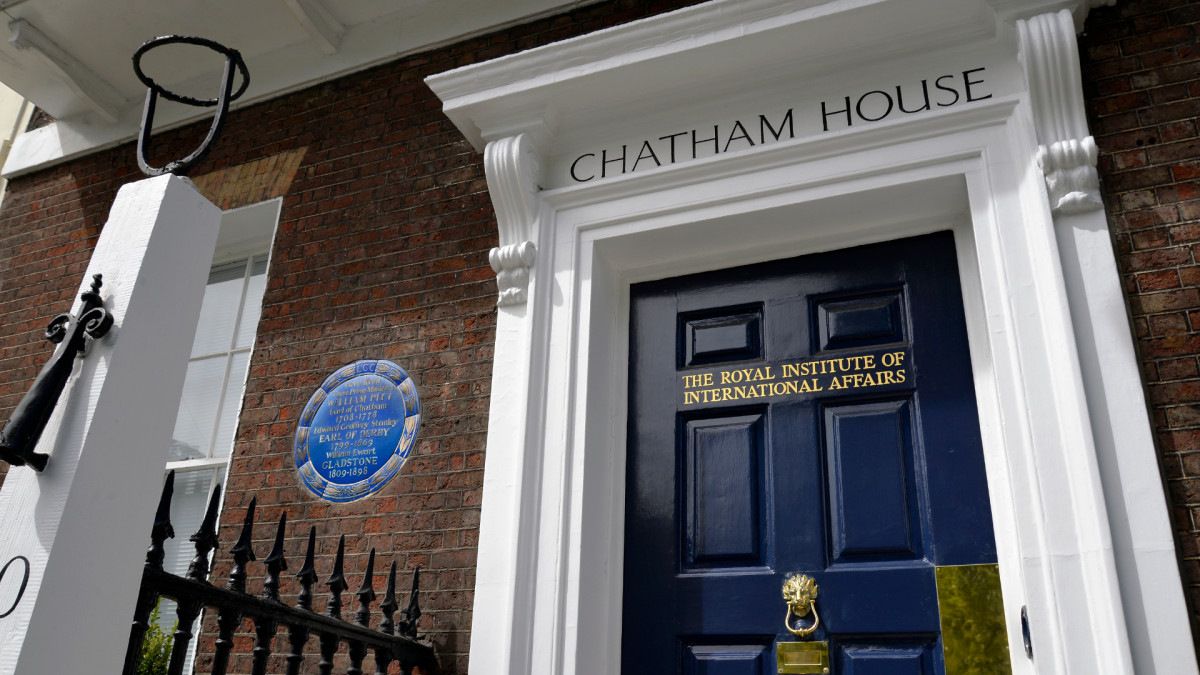
Founded in 1920, Chatham House is also known as the Royal Institute of International Affairs. Photo: Agenda Pública / Mark York
I would like to ask you first about Spain, because it is in a good moment —I don’t quite know how to put it— in terms of international exposure. What is your view of what Spain and the Spanish government are doing on the global stage?
Spain is making its mark by saying: we have a set of views. We do not agree with the action against Iran. We do not agree with what is happening in Gaza. And it is making that very clear. There is the possibility of retaliation from the US; President Trump has talked about throwing Spain out of NATO. But we will have to see how far those threats are actually followed through.
"This is the kind of moment that requires governments to define themselves and to define where their countries stand"It is always difficult for any leader to know whether people at home care and how those words will be received internationally. But this is the right moment for leaders to say: this is our position. Mark Carney, in Canada, has done something similar by saying that, faced with all these challenges, this is where his country stands. It is brave for a leader to be that clear. It depends, of course, on understanding what voters at home want, but this is the kind of moment that requires governments to define themselves and to define where their countries stand.
Do you think European elites are well prepared to understand and survive this global situation?
They should be prepared. Donald Trump did not come out of nowhere. He came out of political forces that had been building for a long time in the United States and that have echoes in other countries. Many European countries face the same pressures: migration, the feeling of having lost manufacturing jobs, and culture wars that may be more acute in the United States, but also resonate in Europe. Trump reflected all those forces. He has his own character, but he represents dynamics that also appear in European countries.
Almost every European leader has to deal with budget pressures: how to pay for a country’s expectations on health, education and pensions without enough money. Manufacturing jobs are disappearing; tech companies are everywhere and have enormous amounts of money, but it is very difficult to tax them. Without tax, you do not have a state. And yet you still have to go back to voters and say: this is very difficult; now vote for me again. All democratic countries have this problem at the moment. Jean-Claude Juncker put it very well years ago when he said: "We know exactly what to do; we just don’t know how to get re-elected after doing it."
"Who the elites are is a big question. They are different in every country, and I am not sure they have remained the same"So elites should understand those pressures on countries. Now, who the elites are is a big question. They are different in every country, and I am not sure they have remained the same. There was a lot of anger among many populations —certainly in the UK since the 2008 financial crisis— towards elites, whether banks or political elites, who led countries into this problem. Ordinary people suffered, and yet it does not seem to them that the people who made those decisions were punished in any way or suffered themselves.
So I am not sure that elites —if I can use that word— have fully come to terms with that. But they should. They have had long enough to look properly at why people are so angry.
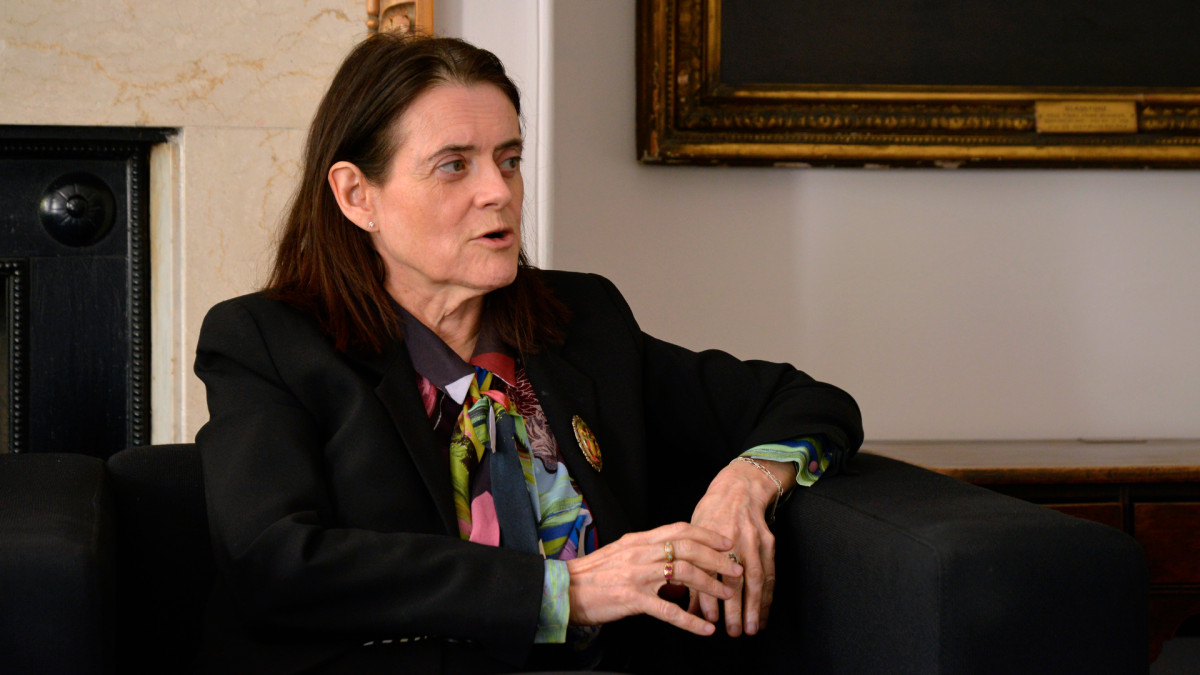
López Plana asks about the capacity of European elites to understand the new global scenario. Photo: Agenda Pública / Mark York
Because, if they do not, what happens? What could happen if European elites are unable to understand the real situation? In the most recent polls, AfD appears in first place.
That is the consequence: parties on the right and the left that offer much simpler and more radical solutions rise and rise and rise. We are seeing it in the UK, especially on the left with the Green Party, which is no longer mainly an environmental party. It is campaigning on the economy and on Gaza, and it is getting a huge youth vote.
We are seeing all of this. If AfD were to come to power in Germany, it would completely change the way the European Union works. No one should be complacent or assume that the status quo will continue. What those populist parties are addressing is a challenge that every party must now address, including centrist ones: how to give people a sense of hope and growth without offering answers that are perfect, simple and quick.
Is it possible to build more Europe right now with that angry population in our societies? Because it does not seem easy to have a more powerful and unified European Union.
Yes, it is difficult. But external pressure helps a lot. On the one hand, there is Russia, a threat to the whole EU —even if Spain is further away, it is a threat to the whole EU— along with the quiet cyber war, disinformation and everything happening there. There is a major physical threat, the unresolved conflict in Ukraine, and then there is the US saying: we are not going to guarantee European defence, we are leaving it to you, with all the uncertainty about what may come next.
Then there is China, with a very energetic policy of selling all its goods to the world and showing little interest in buying anything. That is a huge threat to European companies and industry. All these are reasons why the European Union has an enormous incentive to get its act together on the economy and on defence.
Let me ask you about the next midterm elections in the United States. In Europe, Von der Leyen, for example, seems to be waiting for the moment when Trump could lose them. But could we not perhaps end up with a more dangerous Trump after losing those elections?
That is an interesting point. He will be angry. Very, very angry. The question will be whether he is caged by the US Constitution or not, and that is something we do not know at the moment. Let us assume he loses the House of Representatives and that every week more Senate seats seem to be in play. What happens then? It is hard to say. If he lost both houses, they would try to impeach him, and that would make him extremely angry.
He has shown that he is willing to try to be president simply by Sharpie pen, through executive orders. He has already signed more in one year than in his entire first term: more than 220. It is very difficult for any constraint to keep up with that pace, whether Congress or the courts, though they can start to do so. That is exactly what Democrats in Congress would begin to do immediately. They would also feel less afraid.
"Trump has shown that he is willing to try to be president simply by Sharpie pen, through executive orders"It is still very striking how quiet Congress is at the moment. This is an election year, but they are very afraid of tech money coming against them. They are afraid of people who feel they are on Trump’s side feeling licensed to attack them. There is a lot of fear there, and that struck me very strongly a couple of weeks ago in Washington.
He will be angry. I do not know how much he can do if he loses all that. The more important question is what you assume right now. Do you wait for the Democrats to come back? That is risky. Any country or company dealing with the US should assume that most of what Trump has done will stay. He has a very particular personality, vindictive and marked by personal attacks.
But assume it sticks: that the next president keeps the tariffs —which is likely—; that there may be more conciliatory words on Europe and defence, although there will still be a question mark over NATO.
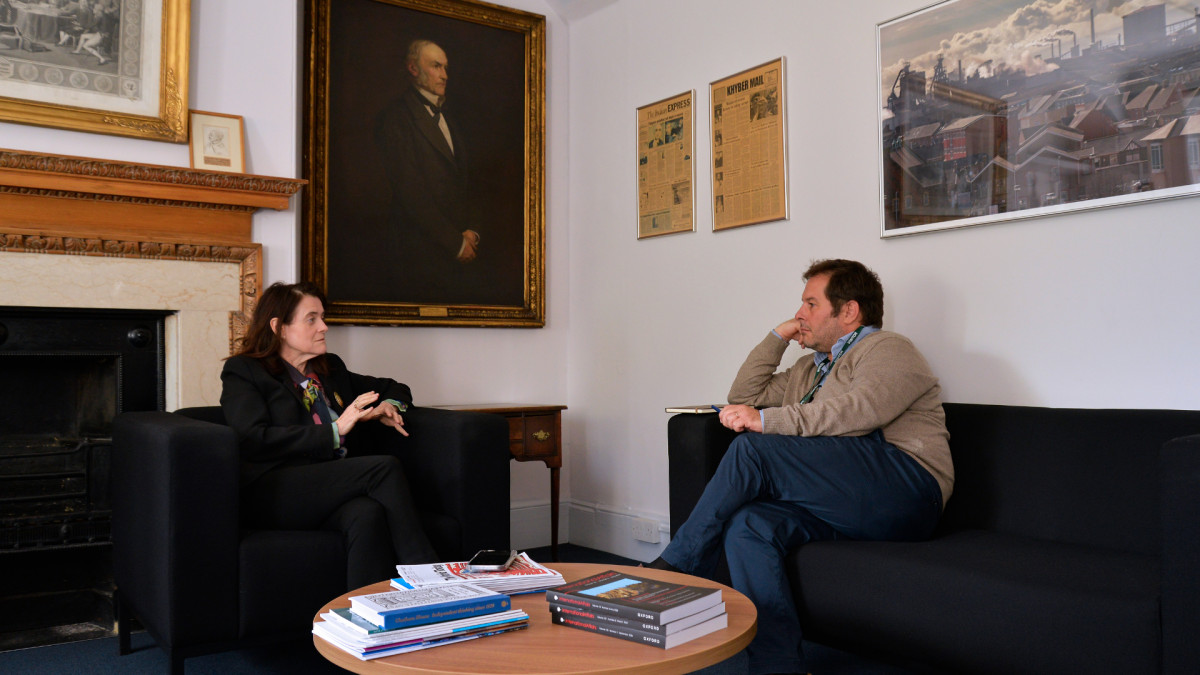
Maddox answers questions about the US midterm elections and Trump’s room for manoeuvre before a hostile Congress. Photo: Agenda Pública / Mark York
Is Iran Trump’s real mistake?
Yes, he has made other mistakes, and some of the tariffs may turn out to be among them. But Iran is the most immediate mistake. It does not look as if he can get out of it. It is a war that may not have an end, because Iran has an incentive to keep it going. It has affected the whole world, and the whole world is angry with him and wants him to shut it down, but he cannot. It is a big mistake.
His bigger mistake is not finding a coherent way to deal with China. There is only one thing an American president has to get right at this moment: how to deal with China. And here we have a very confused picture. There are people in his Administration saying that China is the big threat, while Trump says Nvidia can sell its second-best chips to China and sends very confused messages about Taiwan.
"The United States has never had a rival like China: in technology, economy, military power and ideology"The message China is probably taking from Iran is that the United States would not defend Taiwan, or perhaps could not defend Taiwan. That is one way to read the National Security Strategy from the end of last year. Why define your interest by longitude? It seems narrow. That strategy can be read as a retreat from China.
But the United States has never had a rival like China: in technology, economy, military power and ideology. And the one thing a president really has to get right is that. He has not done so. If you are looking for a technical mistake right now, Iran is it.
And what about Europe’s China policy?
Europe has to make some decisions now. It will have to take measures, using existing legislation, to protect its industries; otherwise it will not have any manufacturing left. At the same time, as Mario Draghi has written, Europe needs to make the single market work much better and its capital markets function better, in order to provide more capital for companies so that they remain European and are not bought by China or the US.
We have already seen what has happened to the car industry and to solar panels. There are 20 other industries. Pharmaceuticals is next. It is almost impossible to compete with China. They have access to hospital data, they can test things in days or weeks rather than months or years. They can license immediately. Any molecule we make, they can make better, one European company told me.
"It is urgent for Europe to decide whether Chinese competition is unfair because of subsidies and whether it should protect its industries"It is urgent for Europe to decide whether Chinese competition is unfair because of subsidies and whether it should protect its industries. It has to make those decisions in weeks or months. China is keeping many companies running at a loss, supported by state banks. That cannot go on forever, but its current policy is to flood the world with goods, and that is a huge threat to Europe.
What is happening with the relationship between the UK and Europe? Will we see interesting developments in this relationship in the coming years?
There are small talks under way about minor improvements, and there will probably be some, but they are exhausting for both sides. Even small compromises —such as European students paying UK fees rather than international fees— are politically sensitive. There will be some improvements, but no major changes.
Pressure on the government comes from business, and also from travellers asking why they are waiting two hours to go on summer holidays because of fingerprints and all that. The pressure is building. We may have to wait for the next general election in the UK. I would be surprised if one of the parties —Labour, the Liberal Democrats or the Greens— did not campaign in favour of rejoining, or joining, the customs union.
There is a strong economic argument for moving back, and many allies for it. But European countries also have many other priorities. Relations with France are always difficult, whether on defence or fish.
The conversation addresses the relationship between the United Kingdom and the European Union after Brexit. Photo: Agenda Pública / Mark York
Not only for you, but also for other EU countries.
Yes, it is interesting. I was recently at the Delphi Economic Forum, in Greece, where many countries said that negotiating with France is an obstacle. If I had to give advice to Keir Starmer’s team, it would be to spend more time in Brussels and less on bilateral relations. That is the way back.
There is public support, although it is not yet overwhelming. The pressure is moving in that direction. Another key point is that migration numbers are falling significantly, which reduces the sensitivity around the issue.
Are you worried about the role of the main powers in the EU —France and Germany—, which seem unable to work together?
This is very interesting. One reason I travel a lot to countries outside the UK, France and Germany is that other European countries have very different stories. Spain, Ireland, Greece —and Poland in a different way— are saying: we have had our own crises, now we are doing quite well. Now we can give lessons to the UK, France and Germany.
The Greeks are particularly keen to give Germany lessons on growth, after all the lessons they received from Angela Merkel over the years. Europe is changing. Countries are finding their own solutions. But it is a problem that France and Germany are struggling domestically and also struggling to work together.
In terms of the European Union and its economic situation, it seems that the South is performing better than the North or the centre of Europe, much better than Germany and France. Having Germany in a weak economic situation is a problem.
It is a problem for the rest of Europe. Germany is key to European defence. It is investing heavily in its own industry, and it is central to Europe’s defence and to Europe’s sense of itself. Germany is not antagonistic towards the United States, but it is essential for Europe to define itself with more distance from the US than in the past.
Germany is central to whatever happens with Ukraine, and its voice is essential on enlargement.
López Plana asks about the role of France and Germany in a Europe seeking greater autonomy and cohesion. Photo: Agenda Pública / Mark York
Enlargement and, at the same time, more unity in Europe?
It is always difficult. The more members you add, the greater the risk of having very different voices. It is a relief to have the Hungarian election result, but you cannot rely on that. Other cases may emerge. Even Moldova is saying: let us in, we are perfect, no exemptions, let us join immediately.
Enlargement is an extremely difficult question for the EU.
When we talk about enlargement, we can talk about Ukraine. But is it possible to have Ukraine in the European Union without a clear solution in terms of the Russian invasion?
Everyone is looking towards that accession. There is talk about observer status: being in meetings, but without voting and without being included in the Common Agricultural Policy. It is difficult without a proper solution. Any entry into the EU implies a defence umbrella. We will hear more about that in the future.
So it is difficult to imagine Ukraine joining quickly, even though many want it to win the conflict.
One consequence of the midterm elections, if Trump loses, could be something like: "I am tired of Europe and Ukraine, take responsibility yourselves. My interests are in the Pacific." Is that possible?
It is more likely that he would not respond coherently to a challenge. He may be angry, but that does not necessarily translate into a systematic withdrawal. The message has already landed in Europe: you will have to pay more for your defence.
"We are not in a live war with Russia, even if Ukraine is. But it would be foolish to rely on Trump defending Europe"It is the job of politicians to persuade voters to accept trade-offs between welfare, health, pensions and defence. It is very difficult to make voters afraid of Russia, but not too afraid. We are not in a live war with Russia, even if Ukraine is. But it would be foolish to rely on Trump defending Europe.
If Russia does something provocative —such as taking a Swedish island— it could trigger NATO. That is one of the current concerns.
In the public debate, we have, on the one hand, platforms and tech companies investing heavily in US elections and creating problems in the European Union. On the other hand, we have think tanks like Chatham House trying to create a critical mass of thinking about the world and the global situation. My question is: how do you compete with tech companies that are able to shape the atmosphere and public opinion in a way that is very different from think tanks?
The key is to look for alternatives. For a year now, Europeans have been looking for alternatives to American technology: what technology is essential and what is not. At the moment, systems such as Microsoft operating systems are difficult to replace, but that is exactly the kind of thought experiment people are now doing.
In social media, there are alternatives, depending on how companies behave. Taxation is also essential, because these companies operate across borders. What is different now is that the US government often intervenes on their side, linking tariffs or political pressure to tech regulation.
That combination of forces is new and powerful. But countries are still looking for alternatives with urgency.
Thank you very much.
Ahora en portada
18 de octubre de 2026
18 de octubre de 2026
17 de octubre de 2026
Noticias relacionadas
Hace 22 semanas
La directora de Chatham House: "Es el tipo de momento que exige a los gobiernos definirse y definir dónde se sitúan sus países"
Lo más leído