Domingo, 18 de octubre de 2026




CONVERSATIONS
Teresa Ribera: "Defending the European legacy means continuing to build together"
For Teresa Ribera, Executive Vice-President of the European Commission for a Clean, Just and Competitive Transition, the European Union is going through "an existential moment": it must act faster without "reducing environmental and social standards," strengthen the single market, and respond to pressure from the U.S., Russia and China without betraying its values. In this conversation with the director and editor of Agenda Pública, Marc López Plana, the European Commission’s number two warns that the "reduction of dependencies that Germany may need" cannot come "at the expense of breaking up" the single market, and argues that big tech companies "must comply with European rules."

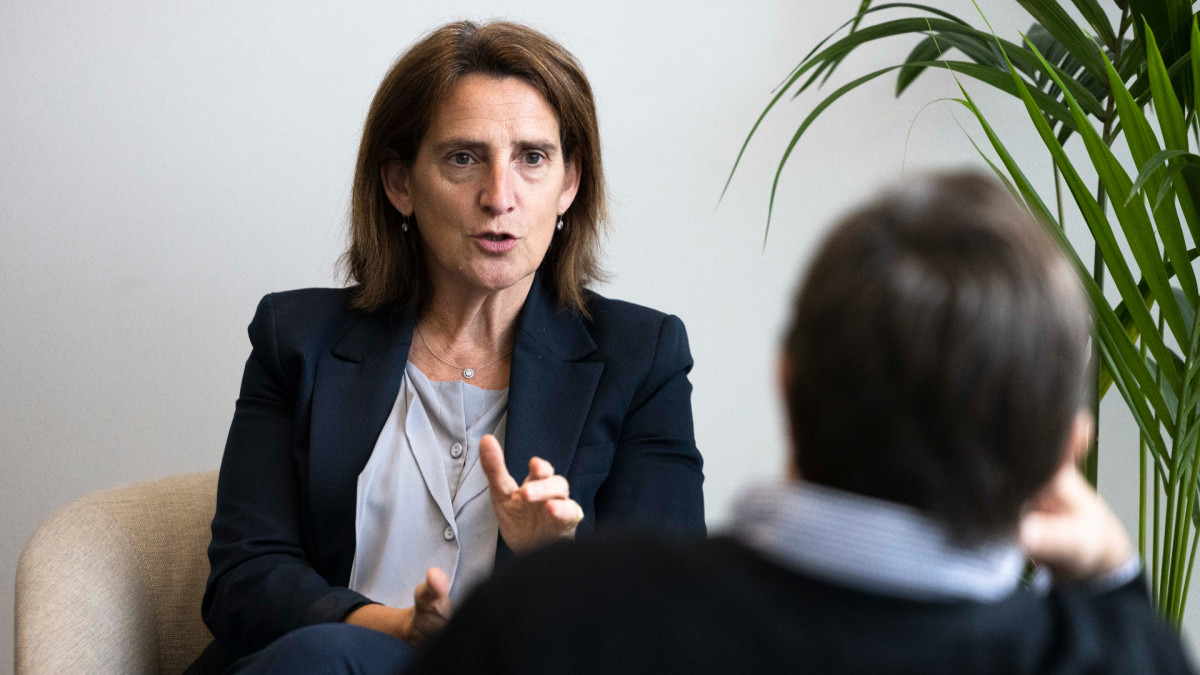
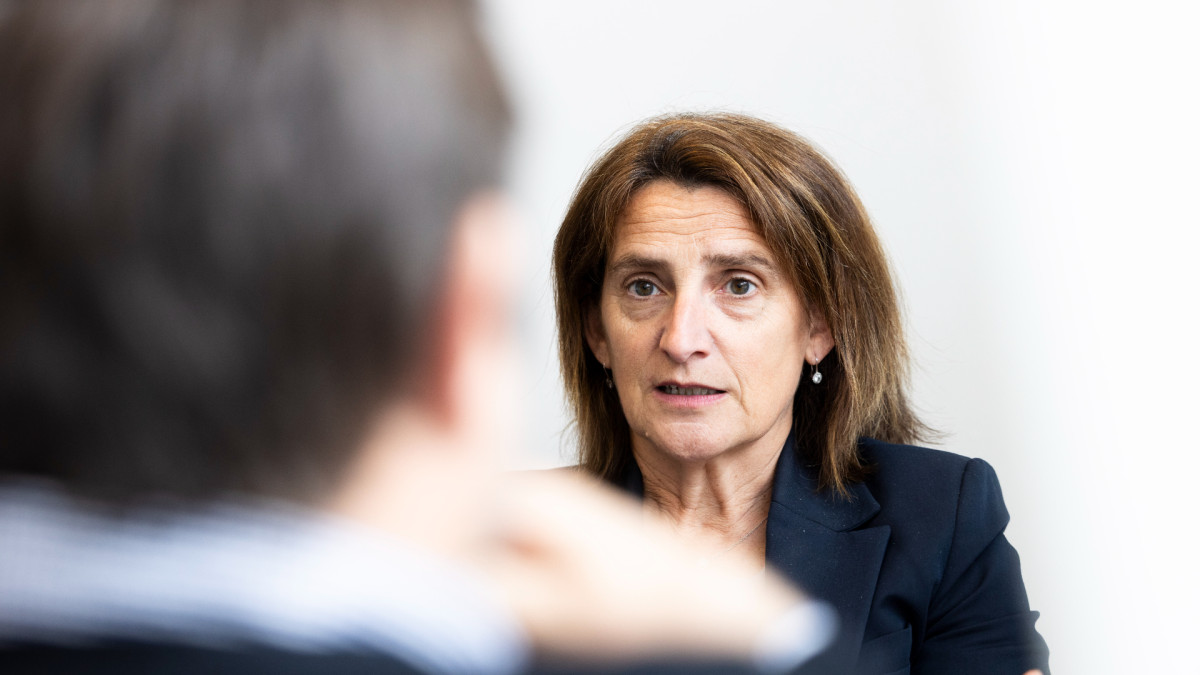
Teresa Ribera welcomes 'Agenda Pública' to the European Commission headquarters in Brussels. Bru Agency
The European Union finds itself caught between unprecedented external pressure and internal fragmentation that threatens its capacity to respond. In a conversation in Brussels, at the Berlaymont building — the headquarters of the European Commission, where the Executive Vice-President has her office — with Marc López Plana, Ribera frames the debate in terms of political survival: preserving the Union’s founding values, avoiding polarization, and becoming more agile without turning simplification into deregulation. For her, Europe’s problem is not a lack of diagnosis, but the difficulty of acting as a true "political animal" at a moment when prosperity, the welfare state, and global influence depend on faster decision-making.
The conversation explores the major fronts shaping today’s European debate: competition policy, European champions, energy, industrial policy, state aid, the single market, and the growing power of digital platforms. Ribera argues for an update of competition rules that would allow European companies to gain scale without handing "blank checks" to large corporations, defends Spain’s commitment to renewable energy, and warns that Europe cannot replace one dependency — on energy imports — with another in the digital sphere. Her position combines industrial pragmatism with the defense of standards: more integration, stronger domestic capabilities, and common rules to ensure that transformation does not fracture the European project.
How would you define this moment for the European Union?
This is an existential moment. The European Union has to decide whether to hold onto its founding values and its will to continue building a true union – capable of creating sufficient space and dimension to guarantee a high quality of life for its citizens, as was committed to in the Treaties – or whether it will fall victim to growing polarization and the search for scapegoats in this turbulent time.
Obviously, external pressures have generated tension within Europe. Over a very short period, we’ve moved into a situation where our main partner in building multilateralism since the end of the Second World War no longer practices that particular relationship of trust, even directing a large part of its aggression at the European Union.
Add to that a close neighbor focused on an extremely dangerous and aggressive expansionist drive. And then there’s China, an industrial power that’s growing at breakneck speed. We also face difficulties in remaining cohesive while defending our values on the international stage, and in reconciling our domestic and foreign agendas.
It seems difficult to reconcile two realities: on the one hand, a European Union that needs to be more united; on the other, countries that are increasingly politically fragmented. Spain, Italy, France, and Germany are finding greater difficulty in forming majorities and making decisions. That national fragmentation then affects the European Council and the European Parliament. How does this difficult moment in national politics fit with the need for greater European unity?
If we step back and get a little distance, which is always worthwhile when confronting major problems, we’re actually much closer than what’s reflected in the broad, vastly diverse parliamentary arc that we see in our national congresses and at the European Parliament. The values, the principles, the sense of Europe, and the pride of feeling European are all still very present. That helps.
Moreover, the European project has long shown that even in very complex situations, we’re capable of finding creative solutions with which to face our responsibilities together. Perhaps the most terrible recent challenge has been Russia’s invasion of Ukraine, plus Europe being blackmailed in terms of the availability of first-class raw materials for energy. Fragmentation was clearly sought, but it wasn’t achieved. It wasn’t easy to address that issue, and yet we did so successfully.
Now pressures from outside are accumulating, which has created a fertile space for populism and for giving free rein to the frustrations or fears that we feel when acknowledging the need to be courageous in our responses.
So it’s necessary to bear two things in mind. The first is that, if we take a little distance, we’ll find that we’re closer than we think. The second is that, in order to succeed right now, we need to act on two different planes.
What do I mean? When we see what the major issues are – how our responses can be simplified and more agile, how we can gain competitiveness while still generating wealth internally, or how we can increase our space as an intermediate power by building updated alliances with third countries – we learn that there’s scope enough to find a proposal adjusted to our current challenges.
For too long, we’ve taken it for granted that our advantages would be sustained on their own, without needing to be cared for, meaning we could concentrate on insulting, deriding, or highlighting the things that didn’t work. Now is a time to remember what does work, to defend it and to keep our values in mind when modulating our responses.
The Commission is attempting just such an exercise, with great difficulty at times, but with certain commitment. If the traditional period required to generate answers was two or three years until a legislative proposal emerged, we know that today we need to be extraordinarily agile. Maybe we have to reduce the will to regulate and act within the margins we already have – which are many, and very creative, and which allow us to better deal with action on the ground.
In our communications and explanations, we must demand that our political representatives – those of us in the European institutions, but also in national politics – be much more careful about how we explain ourselves, how we criticize, and how we issue proposals.
Let’s transform that anger and displeasure into proposals for solutions. The list of problems is relatively easy to compile. The responsibility of a good politician is to find solutions to those problems.
Can simplifying and moving faster contradict the protection of certain rights?
That depends on how it’s done. I’ve been very critical of some initiatives that have been promoted, because if simplification is equated with reducing environmental and social standards, that’s not simplifying. It’s deregulating and undoing the basic foundation of a project based on an open market economy with high social and environmental standards.
That’s our model. It’s what citizens aspire to. I don’t think that our democratic societies could overcome a crisis of non-protection of values, such as the deregulation of our environmental and social model would entail.
In any case, of course there’s room for simplification. Simplifying doesn’t imply getting rid of the umbrella shared by the 27 Members, because that would lead to 27 different regulations. Simplification means asking ourselves how we can respond with greater agility; how we ensure that the Commission’s capacity for action or funding of projects be much more operational, and faster; and how we guide the transformation of our economies.
Simplifying means that wherever we identify a need – for example, electrifying our final energy consumption as quickly as possible – we may have to think about how to provide solutions so that all citizens have access to some obvious answers, such as heat pumps.
Therefore, to simplify is to think about how we build an internal market, how we further the lifting of borders, and how we make it easier for citizens and companies to have much quicker access to their everyday reality without reducing environmental or social standards.
Global champions, competition, or the single market: which should be Europe’s priority?
All three.
There’s a very important debate here. I don’t believe that it’s in Europe’s interests – for the economy, consumers, or European companies – to activate a ‘blank check’ policy where big business decides the rules of the world or which interests deserve protection.
In fact, we’re seeing the opposite: a response to the sector where the cumulative concentration of power has been greatest, which is the digital sphere. We’re not interested in that lack of competition. It would limit the stimulus to innovation, improvement, and the ability to create high-quality products and services.
Fortunately, today we live in a world with many more actors who are developing more capabilities and who are now in a position where they can make very significant leaps in terms of technological innovation. If there are two important vectors in the overall growth of the global economy, they’re in the green (clean) technologies and the digital arena. And those are growing very substantially across many diverse economies, not only the Western ones.
There’s also a desire to participate in our internal market, because it’s a high-quality market with 450 million people with high purchasing power, in comparative terms.
What happens is that, on many occasions, the construction of European champions capable of competing in global markets comes up against a difficulty that doesn’t necessarily derive from the will to guarantee competition, competitiveness, and stimulation of innovation. It’s much more linked to the difficulty of operating at the European scale, due to the fragmentation of 27 national markets. That hasn’t yet been overcome, thanks to the construction of the internal market.
That’s where we have to reconcile how we can facilitate the rapid integration of our markets, and this was among the commitments made by the President in her last State of the Union address. It was also emphasized by both Draghi and Letta in their reports, and again by Letta at a recent meeting, when he raised the idea of One Europe, One Market.
From a competitive perspective, we also need to update the ways in which the advantages, disadvantages, and potential harms of those operations are assessed. If we need innovation, scale, and resilience in our internal market, to make room for our industries to grow, we must be aware that, in many cases, the benefits associated with a merger or acquisition take time to materialize.
Consumer protection is still the most important thing. There is certainty around the likely damage: we can identify that immediately, because it would occur directly after a merger. The benefits, on the other hand, can take a while to materialize.
What we want to do is to think about how we can contribute while respecting our own mandate in this effort to promote innovation, resilience, sustainability, size, and scalability in our companies. And we want to do it in very transparent ways: explaining which criteria we consider important and sharing them in advance.
We also intend to establish a dialogue from the outset to better understand the advantages and disadvantages of an operation of those characteristics. That makes it possible to assess from the start the extent to which an operation would be solvent as well as promising for medium-term profits – or else the extent to which difficulties would render the operation untenable, to spare ourselves that discussion.
We’re now in the midst of public consultation on those guidelines, which I believe to be groundbreaking – perhaps the most innovative to be published and shared by any jurisdiction thus far. There have been recent updates made in the United Kingdom and the United States, and I think they’re extremely interesting.
The path is made by walking. At this moment, we have an opportunity to finish our fine-tuning and adjusting. It’s been an extremely participatory process where we’ve listened to everyone. A very considerable portion of the community linked to competitive practices – academic, legal, and business – have made their contributions public and helped us to arrive where we are today.
So we need everything at once: global scale, the internal market, and updated criteria to evaluate pro-competitive operations, favorable for attaining scale, meanwhile respecting the ultimate meaning of our raison d’être.
Spain has made a clear commitment to renewable energy and to lower energy prices, more than other countries. Three vectors show up in the European debate: cheap Spanish energy, which attracts investment but can’t always reach the rest of Europe; France and its commitment to nuclear; and Germany, which is experiencing economic hardships, although it can still resort to State aid. How are those three realities compatible within Europe’s industrial agenda?
Beyond comments on national politics that don’t correspond to me in my position, there are several important reflections. The first is a retroactive reproach to those who have thrown a wrench in the gears – and continue to do so – in terms of the green economy, sustainability, and the efficient use of resources. The efficient use of resources frees up money to be used for improvements in training and further innovation.
The example of certain goods meant for mass consumption, which may or may not be clean, reveals the extent to which frontal attacks on this process of transformation (which Europe identified early on, and which it’s been promoting for years) have been a mistake.
For over 20 years we’ve been working on a process to electrify mobility, recognizing the importance of the automotive industry on our continent, in both direct and indirect employment. There’s been fierce opposition to that process of change. Some have even irresponsibly accused those of us who defend such changes and their industrial follow-up of defending ideological positions.
Suddenly, we’re faced with two very significant factors. First, there are those who have overtaken us in terms of development. Second, we’re still depending on something we don’t have. We depend on fossil fuels that we don’t possess, even though we have the capacity to electrify the end-uses.
There are countries that likewise don’t have fossil-fuel resources but that have achieved electrification of final energy use above 30%, with amazing speed. Europe, on the other hand, remains stagnant at around 23%. Mobility and thermal uses continue to depend to a large extent on gas and oil imports, which hinders the process of change.
I think we’ve done well. We still have pending arbitration from political decisions made by the previous government, but today, Spain is in a much more solid, solvent, and attractive position, from the perspective of industrial deployment – much safer for domestic consumers than other countries in the European Union that haven’t promoted transformation with the same intensity.
Today we understand – and unfortunately, the war in Iran underlines this – that the reasons we need to accelerate our move to electrification, efficiency of energy use, and the construction of responses from resources we already have aren’t only environmental, moral, or in the interest of public health, although all three of those are very important. Other reasons include security of supply, economic security, and security period.
We cannot remain at the mercy of blackmail from third countries, geopolitical tensions, or conflicts and wars that have been linked to energy since the 19th century.
Other countries in central Europe have placed different bets. France made an early commitment to nuclear power and will maintain it for the next generation. Then there are countries that have long served as the engine of the European economy and as leaders in the technological revolution, but that are now experiencing complications.
Our collective responsibility is to find an accommodation where everyone feels good about the opportunity to keep on building. That includes how to cover the need for modernization and the reduction of dependencies that Germany may face. At the same time, responses to that need for adaptation and the transformation of our economic model as a continent, and as a single market, can’t be made at the expense of breaking up that same single market, or at the risk of undoing decades of internal market-building.
That’s why, from the very beginning of this mandate, we wanted to demonstrate that our economic commitment and our industrial vocation as a continent are linked to clean industry. We know that it’s a race against the clock, and that a very large proportion of Member States want to follow the process of modernizing their industries.
However, if we want to follow that process, we need common rules. We must identify market failures that need attention, to understand what provisional supports might be occurring in one place or another, and to avoid distortions and bad practices in the use of public resources, or real inequalities within an equivalent market level. That’s what guarantees effective, transparent, and honest competition between the different industrial bases.
This is the reality we’re living today, regardless of the challenges it might still entail for national governments trying to integrate these rules.
Then there’s a dimension that has become especially relevant: to be facilitators of these changes while respecting the Treaties. Thus, openness to discovering the simplest possible answers is paramount.
There’s a growing debate about Big Tech. For example, discussions of access by minors to social networks. But there’s also the question of how non-European companies act in a market like Europe, which has its own rules. At the same time, it seems that the U.S. government wants to use those companies in its relationship with the EU to achieve greater regulatory flexibility. How do you ensure that companies with greater economic strength respect European standards?
This is an extremely interesting area in which we must work very quickly, for many reasons. When we look at differentials in competitiveness between the U.S. and European economies, they’re not in industry, or in services across the board. They’re fundamentally in two types of services: digital and financial. There’s a competitiveness gap, which introduces another element of productivity into the economy.
In the rest – across basic industry – we continue to be much more competitive in terms of quality, remuneration, and worker satisfaction. Therefore, we see quite clearly where we have to make a very significant commitment, as a continent and as an economic power.
We had Skype until Microsoft bought it. We had WhatsApp until Facebook bought it. We also had Booking. We’ve seen many companies vanish or be integrated into large groups.
With regard to the digitalization of the economy and the digital reality, we’re now facing a profound transformation of the economic model, of productivity, and of social relations and the ways that information, advertising, and the provision of services arrive, and how we interpret or perceive data, with possible risks of bias.
The first crucial fact is that these companies have grown in a context of tacit consent, with a lack of governance and in defiance of rules beyond those they impose on themselves. Our reaction came late, mainly through rules on competition, in both the U.S. jurisdiction and in our own.
Reacting after the fact is always more complicated, but we do have powerful tools: the Digital Markets Act and the Digital Services Act, which I believe are faster and more effective than traditional antitrust mechanisms.
These companies that have been so hugely successful receive over 30% of their results and turnover from the European market. Therefore, they care about and must comply with European rules. You have to comply with the rules of the place where you’re operating, not the rules of the country where you’re headquartered.
This happens everywhere, regardless of nationality. The quality and health-protection standards in the U.S. olive oil market are met by our companies, regardless of whether the oil is produced in Italy, Greece, or Spain. Well, this is equivalent. Operating patterns in European digital markets must comply with the rules of the European digital market.
This should be beyond question. It’s our obligation to our consumers and to our market. It’s also our obligation to try to ensure that the relationship with the other market watchdogs in other jurisdictions remains as fluid as possible – the more consistent and compatible, the better.
At the core, the concerns of the average American citizen over non-consensual use of images of their children, or the introduction of addicting elements into an algorithm, are quite similar to the concerns of the average European citizen. And the ruling of a U.S. court may be very similar to that of a European court.
The things we’re talking about aren’t so different. But we’re addressing a reality that has grown outside the boundaries of regulation, because there weren’t any regulatory restrictions on that growth. It’s always more difficult to introduce these kinds of limits later on.
Likewise, even as we witness the explosive growth of new digital realities, consensus has been forming. Content created from synthetic sources, without human intervention, is already part of our daily digital reality. Artificial intelligence is growing at an exponential rate and is already being applied in terms of defense, aggression, social surveillance, and limitation of rights.
This poses extremely significant problems. What is the code of ethics behind it? What is the reality in terms of transparency or accountability? How can we ensure that this technology is used for good, for people, that its purpose is focused on human well-being?
Today we’re asking ourselves how it’s possible that a lack of access to digital services in our daily lives can be declared a kind of civil death: bank accounts, transfers, hotel reservations. That has happened with judges at the International Criminal Court and with United Nations officials. At the push of a button, as we say.
How is it possible to digitally identify someone, then follow them until death? How is it possible to use tools of artificial intelligence as weapons of war? How is it possible for a business owner to warn "we’ve developed a tool that we now have to stop, because we know that it’s capable of identifying our weaknesses and using them against us."?
Our air traffic, our financial traffic, and much of our reality are now virtual. So are public health services, citizen data, election results, and the information that reaches us. So we’re clearly facing an extremely important generational challenge.
We can’t succumb to any sort of temptation, pressure, or extortion with regard to our obligation as Europeans to develop our own industrial capacities, so as not to depend on third parties. We can’t let ourselves be blackmailed like we were not so long ago in terms of energy. At the same time, we need to think about what kind of governance and safeguards can ensure that our progress stays linked to the progress of people.
This is one of the greatest challenges ahead of us, and we can’t give up. We’re making remarkable efforts, and it’s my conviction that, in addition to being remarkable and transversal, our responses have to be very rapid, based on values and the early identification of risks that we don’t want to have to deal with in the medium term.
But I insist: in many of these elements, our concerns coincide with the concerns of a very significant portion of people worldwide.
Thank you very much.
The conversation explores the major fronts shaping today’s European debate: competition policy, European champions, energy, industrial policy, state aid, the single market, and the growing power of digital platforms. Ribera argues for an update of competition rules that would allow European companies to gain scale without handing "blank checks" to large corporations, defends Spain’s commitment to renewable energy, and warns that Europe cannot replace one dependency — on energy imports — with another in the digital sphere. Her position combines industrial pragmatism with the defense of standards: more integration, stronger domestic capabilities, and common rules to ensure that transformation does not fracture the European project.
Teresa Ribera welcomes Marc López Plana at the Berlaymont to discuss the European Union’s political moment. Photo: Bru Agency
How would you define this moment for the European Union?
This is an existential moment. The European Union has to decide whether to hold onto its founding values and its will to continue building a true union – capable of creating sufficient space and dimension to guarantee a high quality of life for its citizens, as was committed to in the Treaties – or whether it will fall victim to growing polarization and the search for scapegoats in this turbulent time.
Obviously, external pressures have generated tension within Europe. Over a very short period, we’ve moved into a situation where our main partner in building multilateralism since the end of the Second World War no longer practices that particular relationship of trust, even directing a large part of its aggression at the European Union.
Add to that a close neighbor focused on an extremely dangerous and aggressive expansionist drive. And then there’s China, an industrial power that’s growing at breakneck speed. We also face difficulties in remaining cohesive while defending our values on the international stage, and in reconciling our domestic and foreign agendas.
"If we continue to move slowly – if we betray our values and undo the European project – we’ll be doomed to agony"All of this is enormously challenging. We have the strengths, the values, and the opportunities to keep finding solutions, but if we continue to move slowly – if we betray our values and undo the European project – we’ll be doomed to agony and very significant changes to the geopolitical order, and to our ability to offer prosperity, the welfare state, and the model of success that today’s Europe represents in the world.
It seems difficult to reconcile two realities: on the one hand, a European Union that needs to be more united; on the other, countries that are increasingly politically fragmented. Spain, Italy, France, and Germany are finding greater difficulty in forming majorities and making decisions. That national fragmentation then affects the European Council and the European Parliament. How does this difficult moment in national politics fit with the need for greater European unity?
If we step back and get a little distance, which is always worthwhile when confronting major problems, we’re actually much closer than what’s reflected in the broad, vastly diverse parliamentary arc that we see in our national congresses and at the European Parliament. The values, the principles, the sense of Europe, and the pride of feeling European are all still very present. That helps.
Moreover, the European project has long shown that even in very complex situations, we’re capable of finding creative solutions with which to face our responsibilities together. Perhaps the most terrible recent challenge has been Russia’s invasion of Ukraine, plus Europe being blackmailed in terms of the availability of first-class raw materials for energy. Fragmentation was clearly sought, but it wasn’t achieved. It wasn’t easy to address that issue, and yet we did so successfully.
Now pressures from outside are accumulating, which has created a fertile space for populism and for giving free rein to the frustrations or fears that we feel when acknowledging the need to be courageous in our responses.
So it’s necessary to bear two things in mind. The first is that, if we take a little distance, we’ll find that we’re closer than we think. The second is that, in order to succeed right now, we need to act on two different planes.
"Now is a time to remember what does work, to defend it and to keep our values in mind when modulating our responses"On the one hand, we need to use our proximity for the broad lines of European construction and the European response. On the other hand, we need to be much more effective and agile in responses that impact citizens, in our external actions, and in defense of a political animal that the European Union was never designed to be.
What do I mean? When we see what the major issues are – how our responses can be simplified and more agile, how we can gain competitiveness while still generating wealth internally, or how we can increase our space as an intermediate power by building updated alliances with third countries – we learn that there’s scope enough to find a proposal adjusted to our current challenges.
For too long, we’ve taken it for granted that our advantages would be sustained on their own, without needing to be cared for, meaning we could concentrate on insulting, deriding, or highlighting the things that didn’t work. Now is a time to remember what does work, to defend it and to keep our values in mind when modulating our responses.
The Commission is attempting just such an exercise, with great difficulty at times, but with certain commitment. If the traditional period required to generate answers was two or three years until a legislative proposal emerged, we know that today we need to be extraordinarily agile. Maybe we have to reduce the will to regulate and act within the margins we already have – which are many, and very creative, and which allow us to better deal with action on the ground.
In our communications and explanations, we must demand that our political representatives – those of us in the European institutions, but also in national politics – be much more careful about how we explain ourselves, how we criticize, and how we issue proposals.
"We can’t stay in the short dribble of being angry, because we can always find infinite reasons to be angry"Everyone has the right and the obligation to criticize what doesn’t work. However, this is a time when the most important thing is to build bridges, join forces, and be effective in our response. We can’t stay in the short dribble of being angry, because we can always find infinite reasons to be angry.
Let’s transform that anger and displeasure into proposals for solutions. The list of problems is relatively easy to compile. The responsibility of a good politician is to find solutions to those problems.
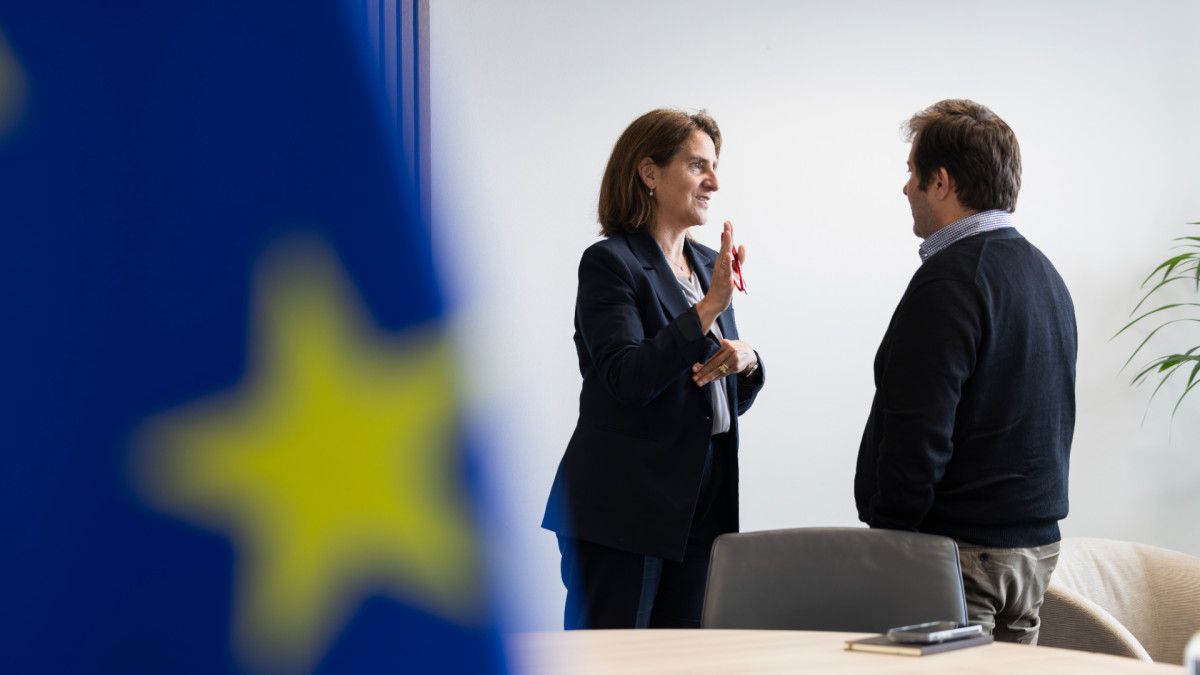
Ribera also serves as European commissioner for Competition. Photo: Bru Agency
Can simplifying and moving faster contradict the protection of certain rights?
That depends on how it’s done. I’ve been very critical of some initiatives that have been promoted, because if simplification is equated with reducing environmental and social standards, that’s not simplifying. It’s deregulating and undoing the basic foundation of a project based on an open market economy with high social and environmental standards.
That’s our model. It’s what citizens aspire to. I don’t think that our democratic societies could overcome a crisis of non-protection of values, such as the deregulation of our environmental and social model would entail.
In any case, of course there’s room for simplification. Simplifying doesn’t imply getting rid of the umbrella shared by the 27 Members, because that would lead to 27 different regulations. Simplification means asking ourselves how we can respond with greater agility; how we ensure that the Commission’s capacity for action or funding of projects be much more operational, and faster; and how we guide the transformation of our economies.
Simplifying means that wherever we identify a need – for example, electrifying our final energy consumption as quickly as possible – we may have to think about how to provide solutions so that all citizens have access to some obvious answers, such as heat pumps.
"Simplifying doesn’t imply getting rid of the umbrella shared by the 27 Members"That’s simplification: not having to go through a regulatory process that takes three years, then waiting for a transposition of rules at the national level. It’s possible to be much more agile with instruments directly linked to the implementation, operationalization, or clarification of a regulatory fabric that can sometimes contain contradictions, overlaps, and distinct developments in each Member State, plus at the intermediate levels required to complete application.
Therefore, to simplify is to think about how we build an internal market, how we further the lifting of borders, and how we make it easier for citizens and companies to have much quicker access to their everyday reality without reducing environmental or social standards.
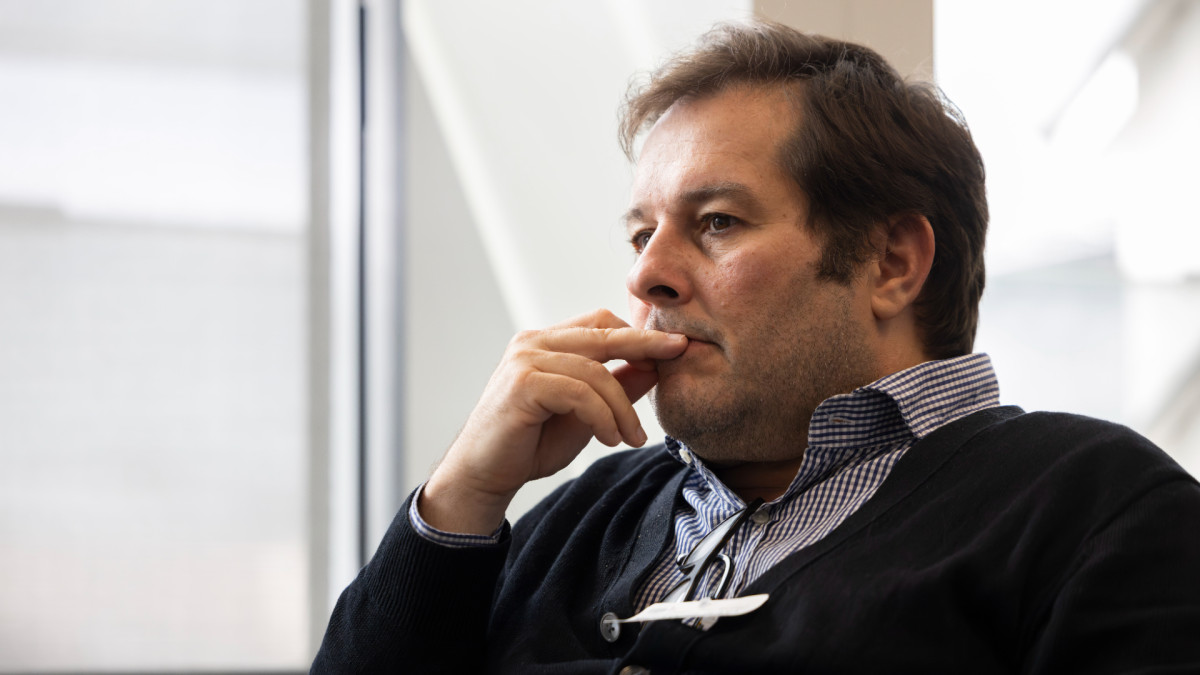
Marc López Plana asks Teresa Ribera about the tension between regulatory simplification and the protection of rights on the European agenda. Photo: Bru Agency
Global champions, competition, or the single market: which should be Europe’s priority?
All three.
There’s a very important debate here. I don’t believe that it’s in Europe’s interests – for the economy, consumers, or European companies – to activate a ‘blank check’ policy where big business decides the rules of the world or which interests deserve protection.
In fact, we’re seeing the opposite: a response to the sector where the cumulative concentration of power has been greatest, which is the digital sphere. We’re not interested in that lack of competition. It would limit the stimulus to innovation, improvement, and the ability to create high-quality products and services.
Fortunately, today we live in a world with many more actors who are developing more capabilities and who are now in a position where they can make very significant leaps in terms of technological innovation. If there are two important vectors in the overall growth of the global economy, they’re in the green (clean) technologies and the digital arena. And those are growing very substantially across many diverse economies, not only the Western ones.
There’s also a desire to participate in our internal market, because it’s a high-quality market with 450 million people with high purchasing power, in comparative terms.
What happens is that, on many occasions, the construction of European champions capable of competing in global markets comes up against a difficulty that doesn’t necessarily derive from the will to guarantee competition, competitiveness, and stimulation of innovation. It’s much more linked to the difficulty of operating at the European scale, due to the fragmentation of 27 national markets. That hasn’t yet been overcome, thanks to the construction of the internal market.
"The construction of European champions capable of competing in global markets comes up against the difficulty of operating at the European scale"Some sectors are particularly important in this area. We lack a single market in telecommunications, in energy, and in capital and financial services. That fragmentation generates greater costs for the companies involved and also for consumers, who look for alternatives in other markets, whether to grow as companies or to not resign themselves to whatever their national market offers.
That’s where we have to reconcile how we can facilitate the rapid integration of our markets, and this was among the commitments made by the President in her last State of the Union address. It was also emphasized by both Draghi and Letta in their reports, and again by Letta at a recent meeting, when he raised the idea of One Europe, One Market.
From a competitive perspective, we also need to update the ways in which the advantages, disadvantages, and potential harms of those operations are assessed. If we need innovation, scale, and resilience in our internal market, to make room for our industries to grow, we must be aware that, in many cases, the benefits associated with a merger or acquisition take time to materialize.
Consumer protection is still the most important thing. There is certainty around the likely damage: we can identify that immediately, because it would occur directly after a merger. The benefits, on the other hand, can take a while to materialize.
What we want to do is to think about how we can contribute while respecting our own mandate in this effort to promote innovation, resilience, sustainability, size, and scalability in our companies. And we want to do it in very transparent ways: explaining which criteria we consider important and sharing them in advance.
We also intend to establish a dialogue from the outset to better understand the advantages and disadvantages of an operation of those characteristics. That makes it possible to assess from the start the extent to which an operation would be solvent as well as promising for medium-term profits – or else the extent to which difficulties would render the operation untenable, to spare ourselves that discussion.
We’re now in the midst of public consultation on those guidelines, which I believe to be groundbreaking – perhaps the most innovative to be published and shared by any jurisdiction thus far. There have been recent updates made in the United Kingdom and the United States, and I think they’re extremely interesting.
The path is made by walking. At this moment, we have an opportunity to finish our fine-tuning and adjusting. It’s been an extremely participatory process where we’ve listened to everyone. A very considerable portion of the community linked to competitive practices – academic, legal, and business – have made their contributions public and helped us to arrive where we are today.
So we need everything at once: global scale, the internal market, and updated criteria to evaluate pro-competitive operations, favorable for attaining scale, meanwhile respecting the ultimate meaning of our raison d’être.
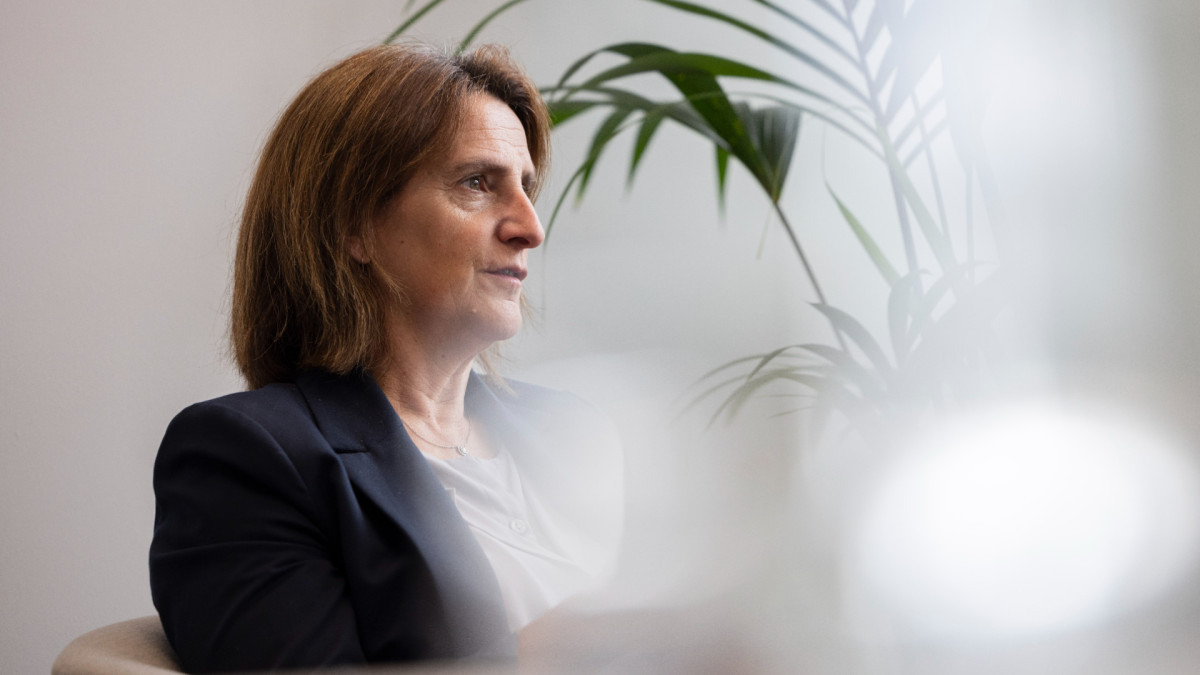
The European Commission’s first executive vice-president addresses the debate on competition, the single market and European champions. Photo: Bru Agency
Spain has made a clear commitment to renewable energy and to lower energy prices, more than other countries. Three vectors show up in the European debate: cheap Spanish energy, which attracts investment but can’t always reach the rest of Europe; France and its commitment to nuclear; and Germany, which is experiencing economic hardships, although it can still resort to State aid. How are those three realities compatible within Europe’s industrial agenda?
Beyond comments on national politics that don’t correspond to me in my position, there are several important reflections. The first is a retroactive reproach to those who have thrown a wrench in the gears – and continue to do so – in terms of the green economy, sustainability, and the efficient use of resources. The efficient use of resources frees up money to be used for improvements in training and further innovation.
The example of certain goods meant for mass consumption, which may or may not be clean, reveals the extent to which frontal attacks on this process of transformation (which Europe identified early on, and which it’s been promoting for years) have been a mistake.
For over 20 years we’ve been working on a process to electrify mobility, recognizing the importance of the automotive industry on our continent, in both direct and indirect employment. There’s been fierce opposition to that process of change. Some have even irresponsibly accused those of us who defend such changes and their industrial follow-up of defending ideological positions.
Suddenly, we’re faced with two very significant factors. First, there are those who have overtaken us in terms of development. Second, we’re still depending on something we don’t have. We depend on fossil fuels that we don’t possess, even though we have the capacity to electrify the end-uses.
There are countries that likewise don’t have fossil-fuel resources but that have achieved electrification of final energy use above 30%, with amazing speed. Europe, on the other hand, remains stagnant at around 23%. Mobility and thermal uses continue to depend to a large extent on gas and oil imports, which hinders the process of change.
"It wasn’t just a matter of enjoying cheaper energy than others, but of sustaining affordable energy"Spain has learned quite well the extent to which betting on something we did have – and turning it into a vector for building a powerful industrial and services ecosystem – can lead to great success. It wasn’t just a matter of enjoying cheaper energy than others, but of sustaining affordable energy, eliminating unwanted import costs, increasing air quality and health, lowering dependencies, while at the same time generating a very attractive industrial fabric of capital goods, installation, and maintenance.
I think we’ve done well. We still have pending arbitration from political decisions made by the previous government, but today, Spain is in a much more solid, solvent, and attractive position, from the perspective of industrial deployment – much safer for domestic consumers than other countries in the European Union that haven’t promoted transformation with the same intensity.
Today we understand – and unfortunately, the war in Iran underlines this – that the reasons we need to accelerate our move to electrification, efficiency of energy use, and the construction of responses from resources we already have aren’t only environmental, moral, or in the interest of public health, although all three of those are very important. Other reasons include security of supply, economic security, and security period.
We cannot remain at the mercy of blackmail from third countries, geopolitical tensions, or conflicts and wars that have been linked to energy since the 19th century.
Other countries in central Europe have placed different bets. France made an early commitment to nuclear power and will maintain it for the next generation. Then there are countries that have long served as the engine of the European economy and as leaders in the technological revolution, but that are now experiencing complications.
Our collective responsibility is to find an accommodation where everyone feels good about the opportunity to keep on building. That includes how to cover the need for modernization and the reduction of dependencies that Germany may face. At the same time, responses to that need for adaptation and the transformation of our economic model as a continent, and as a single market, can’t be made at the expense of breaking up that same single market, or at the risk of undoing decades of internal market-building.
That’s why, from the very beginning of this mandate, we wanted to demonstrate that our economic commitment and our industrial vocation as a continent are linked to clean industry. We know that it’s a race against the clock, and that a very large proportion of Member States want to follow the process of modernizing their industries.
However, if we want to follow that process, we need common rules. We must identify market failures that need attention, to understand what provisional supports might be occurring in one place or another, and to avoid distortions and bad practices in the use of public resources, or real inequalities within an equivalent market level. That’s what guarantees effective, transparent, and honest competition between the different industrial bases.
This is the reality we’re living today, regardless of the challenges it might still entail for national governments trying to integrate these rules.
"The Commission also has a responsibility as guardian of the Treaties, which may include the opening of proceedings on infractions, or sanctions"And again, as regards the role of the Commission, or how we can simplify, I believe that our obligation at this difficult time is to facilitate that process of change. It isn’t enough to say "you can’t do it that way" – although that’s important, and one of the conclusions that arises once and again. The Commission also has a responsibility as guardian of the Treaties, which may include the opening of proceedings on infractions, or sanctions.
Then there’s a dimension that has become especially relevant: to be facilitators of these changes while respecting the Treaties. Thus, openness to discovering the simplest possible answers is paramount.
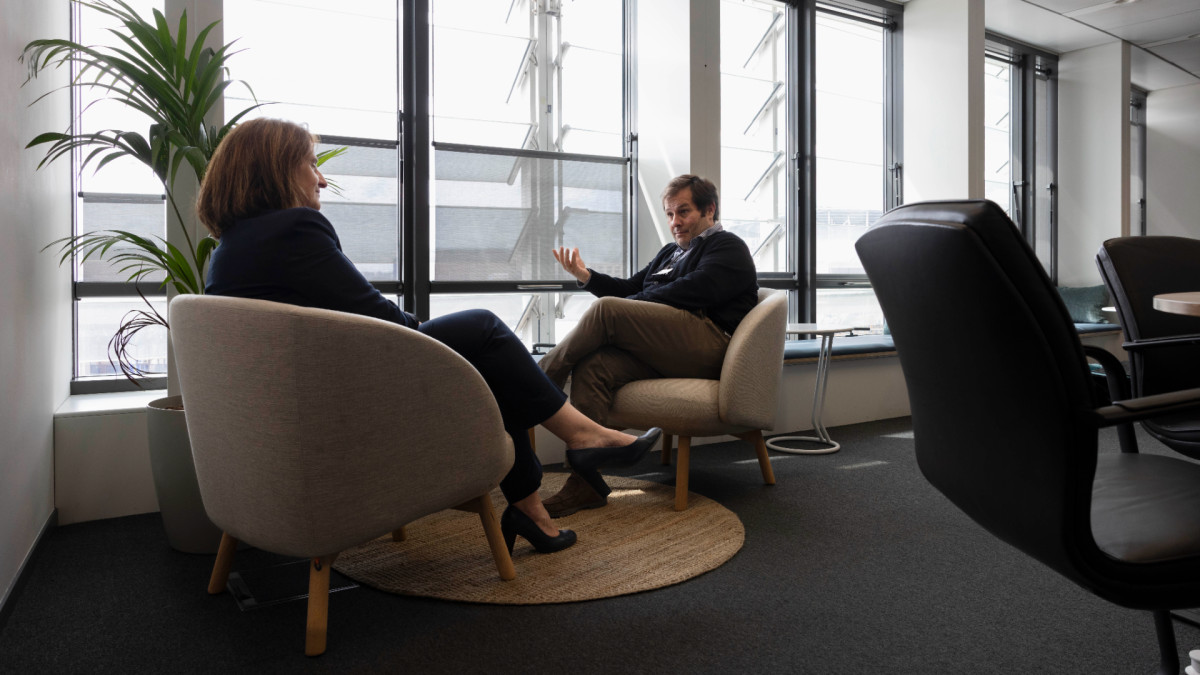
Teresa Ribera analyses the power of Big Tech and the need for platforms to respect European rules. Photo: Bru Agency
There’s a growing debate about Big Tech. For example, discussions of access by minors to social networks. But there’s also the question of how non-European companies act in a market like Europe, which has its own rules. At the same time, it seems that the U.S. government wants to use those companies in its relationship with the EU to achieve greater regulatory flexibility. How do you ensure that companies with greater economic strength respect European standards?
This is an extremely interesting area in which we must work very quickly, for many reasons. When we look at differentials in competitiveness between the U.S. and European economies, they’re not in industry, or in services across the board. They’re fundamentally in two types of services: digital and financial. There’s a competitiveness gap, which introduces another element of productivity into the economy.
In the rest – across basic industry – we continue to be much more competitive in terms of quality, remuneration, and worker satisfaction. Therefore, we see quite clearly where we have to make a very significant commitment, as a continent and as an economic power.
"We’re now facing a profound transformation of the economic model, of productivity, and of social relations and the ways that information, advertising, and the provision of services arrive"Europe has a large number of startups as well as the knowledge, quantum development, and computing that can generate digital services. However, in the growth of those services and companies, there has been difficulty in finding financial instruments that allow them to scale up. The speed with which other actors have grown so aggressively means that many companies are absorbed or disappear. We’re trying to solve this with our overall digital-development package, which includes a remarkable industrial and economic component.
We had Skype until Microsoft bought it. We had WhatsApp until Facebook bought it. We also had Booking. We’ve seen many companies vanish or be integrated into large groups.
With regard to the digitalization of the economy and the digital reality, we’re now facing a profound transformation of the economic model, of productivity, and of social relations and the ways that information, advertising, and the provision of services arrive, and how we interpret or perceive data, with possible risks of bias.
The first crucial fact is that these companies have grown in a context of tacit consent, with a lack of governance and in defiance of rules beyond those they impose on themselves. Our reaction came late, mainly through rules on competition, in both the U.S. jurisdiction and in our own.
Reacting after the fact is always more complicated, but we do have powerful tools: the Digital Markets Act and the Digital Services Act, which I believe are faster and more effective than traditional antitrust mechanisms.
These companies that have been so hugely successful receive over 30% of their results and turnover from the European market. Therefore, they care about and must comply with European rules. You have to comply with the rules of the place where you’re operating, not the rules of the country where you’re headquartered.
This happens everywhere, regardless of nationality. The quality and health-protection standards in the U.S. olive oil market are met by our companies, regardless of whether the oil is produced in Italy, Greece, or Spain. Well, this is equivalent. Operating patterns in European digital markets must comply with the rules of the European digital market.
This should be beyond question. It’s our obligation to our consumers and to our market. It’s also our obligation to try to ensure that the relationship with the other market watchdogs in other jurisdictions remains as fluid as possible – the more consistent and compatible, the better.
At the core, the concerns of the average American citizen over non-consensual use of images of their children, or the introduction of addicting elements into an algorithm, are quite similar to the concerns of the average European citizen. And the ruling of a U.S. court may be very similar to that of a European court.
The things we’re talking about aren’t so different. But we’re addressing a reality that has grown outside the boundaries of regulation, because there weren’t any regulatory restrictions on that growth. It’s always more difficult to introduce these kinds of limits later on.
Likewise, even as we witness the explosive growth of new digital realities, consensus has been forming. Content created from synthetic sources, without human intervention, is already part of our daily digital reality. Artificial intelligence is growing at an exponential rate and is already being applied in terms of defense, aggression, social surveillance, and limitation of rights.
This poses extremely significant problems. What is the code of ethics behind it? What is the reality in terms of transparency or accountability? How can we ensure that this technology is used for good, for people, that its purpose is focused on human well-being?
"Do the democratic governments have the power, or are they just the ones who configured this vast network of dependencies?"This also poses the question of who really holds power. Do the democratic governments have the power, or are they just the ones who configured this vast network of dependencies? Because these tools are obviously useful and have brought many positive results; but they also place certain actors on the margins of national reality in positions of great power.
Today we’re asking ourselves how it’s possible that a lack of access to digital services in our daily lives can be declared a kind of civil death: bank accounts, transfers, hotel reservations. That has happened with judges at the International Criminal Court and with United Nations officials. At the push of a button, as we say.
How is it possible to digitally identify someone, then follow them until death? How is it possible to use tools of artificial intelligence as weapons of war? How is it possible for a business owner to warn "we’ve developed a tool that we now have to stop, because we know that it’s capable of identifying our weaknesses and using them against us."?
Our air traffic, our financial traffic, and much of our reality are now virtual. So are public health services, citizen data, election results, and the information that reaches us. So we’re clearly facing an extremely important generational challenge.
We can’t succumb to any sort of temptation, pressure, or extortion with regard to our obligation as Europeans to develop our own industrial capacities, so as not to depend on third parties. We can’t let ourselves be blackmailed like we were not so long ago in terms of energy. At the same time, we need to think about what kind of governance and safeguards can ensure that our progress stays linked to the progress of people.
This is one of the greatest challenges ahead of us, and we can’t give up. We’re making remarkable efforts, and it’s my conviction that, in addition to being remarkable and transversal, our responses have to be very rapid, based on values and the early identification of risks that we don’t want to have to deal with in the medium term.
But I insist: in many of these elements, our concerns coincide with the concerns of a very significant portion of people worldwide.
Thank you very much.
Ahora en portada
18 de octubre de 2026
18 de octubre de 2026
17 de octubre de 2026
Noticias relacionadas
Hace 23 semanas
Ribera explica el equilibrio de Bruselas sobre las fusiones empresariales
Hace 23 semanas
¿Cuáles son los nombres propios que importan en la batalla española por el presupuesto de la UE?
Hace 27 semanas
'European Pulse Forum 2026': Barcelona se erige como el centro del debate público europeo
Lo más leído