Viernes, 16 de octubre de 2026




AGENDA PÚBLICA EU
Global disorder, accelerated by tweets
From Kissinger’s secret visit to Beijing to the U.S. president threatening war via social network posts. Citing those two extremes, MEP Adrián Vázquez Lázara (EPP) sums up how diplomacy has changed. In his view, the 'immediacy', 'overexposure', and 'algorithmic logic' embodied in Donald Trump are transmuting diplomacy, weakening the rules-based international order, and forcing Europe to rethink its collective security, including in cognitive terms.
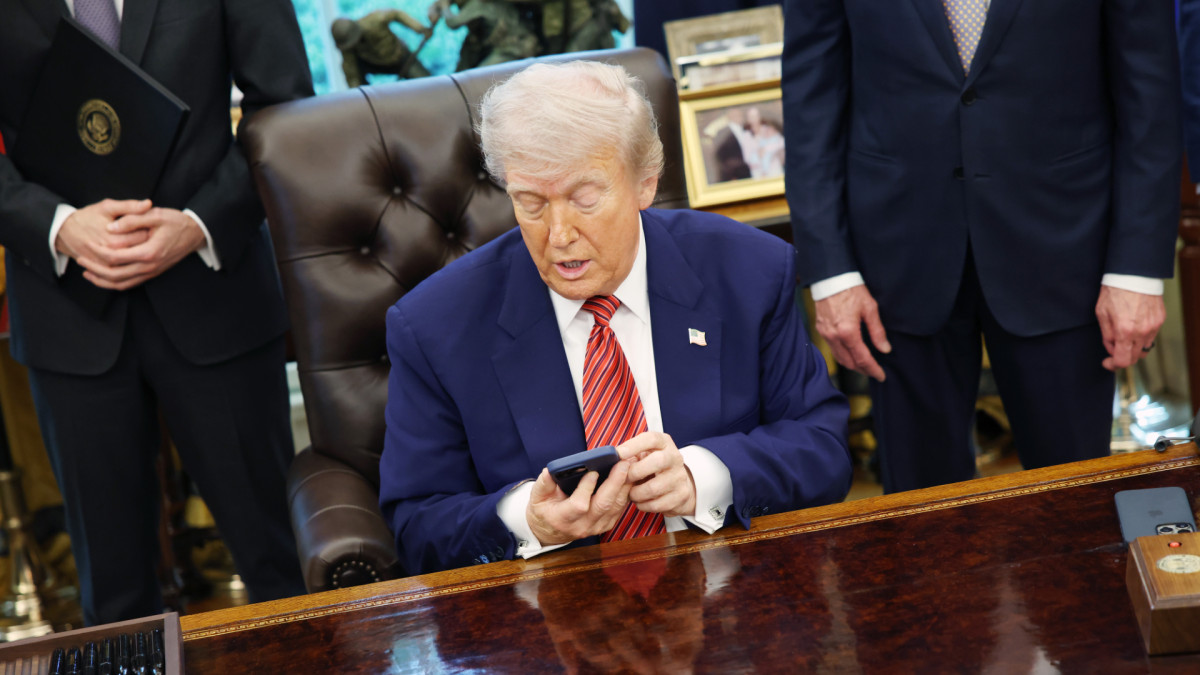
U.S. President Donald Trump uses his mobile phone in the Oval Office.Samuel Corum - Pool vía CNP / Zuma Press / Europa Press
In 1971, Henry Kissinger traveled in secrecy to Beijing. During an official visit to Islamabad, the top U.S. security advisor alleged an intestinal disturbance and, with the help of Yahya Khan, then President of Pakistan, he traveled to the Chinese capital and met with authorities of the People's Republic of China. That clandestine visit, without public statements or press conferences, paved the way for President Richard Nixon's first visit to communist China – a geopolitical move that inaugurated the normalization of U.S. relations with the incipient Asian giant and reconfigured the Cold War balance.
Kissinger's discretion was no anomaly in the practice of international relations but an essential instrument that made agreements between parties possible. The diplomat summed it up well, with characteristic precision: diplomacy is the art of limiting power. When everything is immediate – when every step is a communications coup or demonstration of force – there can be no room for nuance, calm, or the construction of solid and lasting agreements.
According to an investigation by the UK Parliament, the company Cambridge Analytica accessed the data of 87 million Facebook users through an application designed to build psychological profiles of voters. The company's stated aim was to identify pro-remain voters, supporters of traditional parties, and citizens who did not intend to vote, all in order to persuade them to support departure from the EU – or else to demobilize them. Christopher Wylie, the firm's former director of research and the scandal's main whistleblower, told Parliament that without that operation in micro-segmentation, the resulting vote would have been different. Cambridge Analytica's data-mining and micro-segmenting infrastructure showed how private and public actors could potentially influence a referendum with the power to change the geopolitical landscape of Europe.
Since then, social networks have become a tool in every electoral campaign, also serving as one more weapon in Putin's daily arsenal to destabilize the European Union, and as a direct route for the radicalization of Islamist groups, multiplying their capacity to activate terrorist cells around the planet.
European and Asian foreign ministries were forced to analyze those messages with the same rigor they would bring to an official diplomatic cable. A former State Department legal advisor warned that under international law, such statements could be construed as a threat of genocide. UN Secretary-General António Guterres pointed out that no military objective can justify the total destruction of a society. The world stood silent before the impotence of the old international institutions, incapable of articulating an effective response to that heartbreaking form of exerting diplomatic pressure.
Diplomatic virtues of the old order, such as verbal prudence and deliberate rigor, have been brusquely displaced in the search for a resolution to the Iranian conflict. Previously, communiqués had to be drafted, reviewed, and validated. Diplomatic cables went through multiple filters; protocol was the true expertise of great diplomats. This slowness served a function, helping to cool down crises, open new solutions, and afford the parties time to refine their agreements. Today, anyone who disconnects for just a few hours can miss out entirely. Anyone hoping for depth, double derivatives, and finezza is simply excluded from the analysis. The new world order doesn't wait – social media platforms have deleted all deliberate friction. And by doing so, they've turned impulsiveness into an ordinary resource of foreign policy.
This paradox raises an alarm for all defenders of liberalism. Liberal democracies built the international order on the assumption that more communication produces greater understanding, and the internet was the technological manifestation of that enlightened dream. But today's algorithmic design has reversed the old logic: more communication only produces more fragmentation, more polarization, and more susceptibility to manipulation. Hyperbole isn't seen as a dysfunction of the system. In many cases, it's an intentional function incentivized by a platform's business model, which seeks to maximize attention rather than truth, or respect for facts.
The lesson to be drawn is that the EU cannot be a spectator of this transformation. We have already approved the DSA, the most advanced regulatory instrument on Earth as regards the responsibility of large platforms vis-à-vis the real world, of which they form a part. Nevertheless, what we need now is something qualitatively different, or we'll end up as impotent as preachers in a barren desert.
First of all, we need a regime of extraterritorial liability for external actors who involve themselves in the electoral processes of Member States, to increase our ability to detect and neutralize content directed by foreign powers against European strategic interests. Secondly, we need to reduce our dependence on non-European information infrastructures. The alternative would be to remain under someone else's umbrella, then get rained on when they decide to remove it. And finally, we need to integrate the cognitive dimension into our collective security strategy, understanding that we can't fight the titans of the 21st century using 20th-century capabilities.
This conviction should guide all those who lose their way on social networks, as well as those who measure the success of an international policy by an increase in virtual followers. Europe can and must show that it is still possible to build an international chessboard where rules matter, where facts carry weight, and where diplomacy remains, as Kissinger proposed, the art of limiting power.
Kissinger's discretion was no anomaly in the practice of international relations but an essential instrument that made agreements between parties possible. The diplomat summed it up well, with characteristic precision: diplomacy is the art of limiting power. When everything is immediate – when every step is a communications coup or demonstration of force – there can be no room for nuance, calm, or the construction of solid and lasting agreements.
"The rules-based international order is too slow, too rigid, too analogue for a world that must always react at full speed"Fifty-five years later, on April 7th, in the context of the war against Iran, the President of the world's leading power announced on his personal social platform that "a whole civilization will die tonight, never to be brought back again." A few hours later, he declared a truce, as well as "total and complete victory." His ultimatum – launched via Truth Social, in verbiage that any common citizen might use to express day-to-day indignation – signals something well beyond a change of style. It's the most visible symptom of a structural transformation decades in the making, because classic diplomacy cannot operate with the immediacy and overexposure of today's social networks. The result is often resentment of the rules-based international order, now considered too slow, too rigid, too analogue for a world that must always react at full speed.
Brexit, Cambridge Analytica, and the geopolitics of social networks
Brexit was the first great laboratory for this new order. The referendum of 23 June 2016 was decided by less than 2% of the UK vote. Within that narrow margin, we found space enough for a major discussion about whether democracy can survive big data.According to an investigation by the UK Parliament, the company Cambridge Analytica accessed the data of 87 million Facebook users through an application designed to build psychological profiles of voters. The company's stated aim was to identify pro-remain voters, supporters of traditional parties, and citizens who did not intend to vote, all in order to persuade them to support departure from the EU – or else to demobilize them. Christopher Wylie, the firm's former director of research and the scandal's main whistleblower, told Parliament that without that operation in micro-segmentation, the resulting vote would have been different. Cambridge Analytica's data-mining and micro-segmenting infrastructure showed how private and public actors could potentially influence a referendum with the power to change the geopolitical landscape of Europe.
Since then, social networks have become a tool in every electoral campaign, also serving as one more weapon in Putin's daily arsenal to destabilize the European Union, and as a direct route for the radicalization of Islamist groups, multiplying their capacity to activate terrorist cells around the planet.
"The existence of regulation to protect European democracy in the digital space is itself good news"The power of social media became so evident that the richest man in the world, Elon Musk acquired what is now known as X — a platform with over 600 million users — with the stated aim of influencing the future of politics in the U.S. and across the world. The consequences weren't slow in reaching European politics. On 20 December 2024, the owner of X (then a prominent advisor to the Republican candidate for the White House) posted: "Only the AfD can save Germany," just a few weeks before that country's federal elections. The German government described the statement as electoral interference. Some 150 officials of the European Commission monitored in real time Musk's subsequent interview with AfD (Alternative for Germany) candidate Alice Weidel, to determine whether he was violating the EU's Digital Services Act (DSA). The existence of regulation to protect European democracy in the digital space is itself good news. However, the institutional response by the EU was merely to observe, proving that there's still a long way to go in adapting our institutions to the new digital geopolitical chessboard.
Iran, Trump, and the European response to the new digital disorder
The current case of Iran has taken this logic to its ultimate consequences. Trump's aforementioned message ("A whole civilization will die tonight, never to be brought back again. I don't want that to happen, but it probably will") would have caused authentic intestinal disturbance for an architect of the old world order like Kissinger, had he chanced to read it. Moreover, that threat had been preceded by another, two days earlier, referring to Hormuz: "Open the Fuckin' Strait, you crazy bastards, or you'll be living in Hell." And in that same message, with the same crudeness: "Praise be to Allah."European and Asian foreign ministries were forced to analyze those messages with the same rigor they would bring to an official diplomatic cable. A former State Department legal advisor warned that under international law, such statements could be construed as a threat of genocide. UN Secretary-General António Guterres pointed out that no military objective can justify the total destruction of a society. The world stood silent before the impotence of the old international institutions, incapable of articulating an effective response to that heartbreaking form of exerting diplomatic pressure.
"Anyone hoping for depth, double derivatives, and Florentine finesse is simply excluded from the analysis"In another post, scarcely ten hours after the ultimatum, Trump announced a ceasefire, which he presented as a "total and complete victory." What had been treated as a threat of mass destruction became just one more forgotten statement in the cacophony of social networks. No deliberation in the Security Council, no consultation with European allies, no procedure before any international body.
Diplomatic virtues of the old order, such as verbal prudence and deliberate rigor, have been brusquely displaced in the search for a resolution to the Iranian conflict. Previously, communiqués had to be drafted, reviewed, and validated. Diplomatic cables went through multiple filters; protocol was the true expertise of great diplomats. This slowness served a function, helping to cool down crises, open new solutions, and afford the parties time to refine their agreements. Today, anyone who disconnects for just a few hours can miss out entirely. Anyone hoping for depth, double derivatives, and finezza is simply excluded from the analysis. The new world order doesn't wait – social media platforms have deleted all deliberate friction. And by doing so, they've turned impulsiveness into an ordinary resource of foreign policy.
This paradox raises an alarm for all defenders of liberalism. Liberal democracies built the international order on the assumption that more communication produces greater understanding, and the internet was the technological manifestation of that enlightened dream. But today's algorithmic design has reversed the old logic: more communication only produces more fragmentation, more polarization, and more susceptibility to manipulation. Hyperbole isn't seen as a dysfunction of the system. In many cases, it's an intentional function incentivized by a platform's business model, which seeks to maximize attention rather than truth, or respect for facts.
"The new global disorder is precisely that: moving faster than the outdated rails of classical international institutions can withstand"The evidence is clear. According to the World Economic Forum's 2025 Global Risks Report, 64% of experts anticipate a fragmented world order marked by competition between great powers, while more than half foresee instability over the next two years. NATO has already recognized the cognitive dimension as a new domain of warfare. What used to be newspaper editorials are now algorithms of personalized recommendation with the capacity to mobilize voters, destabilize governments, and legitimize extremism. The great paradigm shift is two-sided: everything happens faster, and we all have greater capacity to exert a relative influence on everything that happens. The advantages are obvious, but the risks are similar to those of a potential AVE accident: when moving at higher speeds with more passengers, the magnitude will be greater in the event of a derailment. The new global disorder is precisely that: moving faster than the outdated rails of classical international institutions can withstand.
The lesson to be drawn is that the EU cannot be a spectator of this transformation. We have already approved the DSA, the most advanced regulatory instrument on Earth as regards the responsibility of large platforms vis-à-vis the real world, of which they form a part. Nevertheless, what we need now is something qualitatively different, or we'll end up as impotent as preachers in a barren desert.
First of all, we need a regime of extraterritorial liability for external actors who involve themselves in the electoral processes of Member States, to increase our ability to detect and neutralize content directed by foreign powers against European strategic interests. Secondly, we need to reduce our dependence on non-European information infrastructures. The alternative would be to remain under someone else's umbrella, then get rained on when they decide to remove it. And finally, we need to integrate the cognitive dimension into our collective security strategy, understanding that we can't fight the titans of the 21st century using 20th-century capabilities.
"For 60 years, we Europeans have been patiently complying, supporting multilateralism and the establishment of an international order based on rules and institutions"Kissinger warned of the importance of building a reputation for reliable responsibility in order to operate firmly and decisively in international affairs. Without that, it becomes very difficult to deploy any sort of tactical intelligence when trying to reach agreements. Europe already enjoys such a reputation. For 60 years, we Europeans have been patiently complying, supporting multilateralism and the establishment of an international order based on rules and institutions. We cannot allow our reputation and our confidence in order over anarchy to be threatened by the incendiary rhetoric of actors who have learned that in the digital environment, scandal has no costs, only an audience.
This conviction should guide all those who lose their way on social networks, as well as those who measure the success of an international policy by an increase in virtual followers. Europe can and must show that it is still possible to build an international chessboard where rules matter, where facts carry weight, and where diplomacy remains, as Kissinger proposed, the art of limiting power.
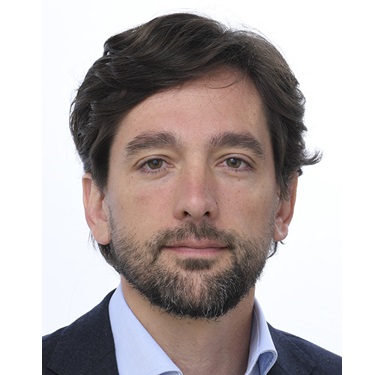
Adrián Vázquez Lázara
Eurodiputado del PP
Es vicepresidente de la Comisión de Asuntos Constitucionales del Parlamento Europeo. También es miembro de la Delegación de Relaciones con Estados Unidos y expresidente de la Comisión de Asuntos Jurídicos. Graduado en Relaciones Internacionales por la Lindenwood University y profesor asociado en ESADE.
Ahora en portada
16 de octubre de 2026
16 de octubre de 2026
16 de octubre de 2026
Lo más leído