Sábado, 17 de octubre de 2026




AGENDA PÚBLICA EU
Partido Popular MEP Antonio López-Istúriz analyzes Donald Trump: "Responding to him on his own ground means losing, because he’ll always go one step further"
In conversation with 'Agenda Pública', Antonio López-Istúriz talks about the Atlantic relationship and Spain’s role in it, the EU-Mercosur trade agreement, and Europe’s foreign activities. The experienced MEP calls for "formulas such as qualified majority" – which is faster than unanimity – to speed advances on key issues like defense. Also, he reminds us that the European project remains successful: "We’re still moving forward, and Europe is still part of the solution."
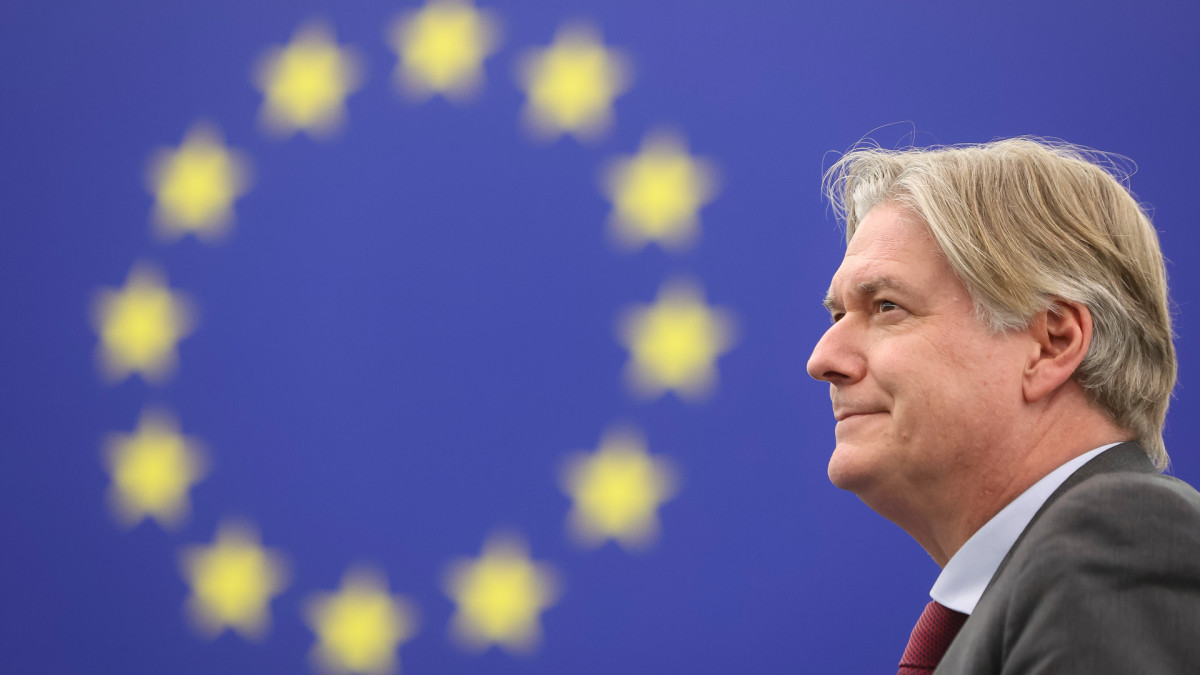
Antonio López-Istúriz White is an MEP for the Partido Popular and former secretary general of the European People’s Party.European Parliament, 2025
This year, he will mark twenty-two years as a Member of the European Parliament. And in 2022, he reached two decades as secretary general of the European People’s Party. Antonio López-Istúriz White is therefore one of the Spanish politicians with the most experience on the European stage, but also a keen observer of American culture. In particular, he is familiar with the "logics" of "doing business in New York" which, in his view, are precisely the tactics President Donald Trump uses when negotiating with the European Union, among others.
Out of respect, because Trump was "democratically elected by the American people," he believes Europe would do well to avoid "rising to every threatening statement" from Trump. In that regard, he laments the position adopted by the Spanish government, which he says is "saying one thing in Madrid, another in Brussels, and another in Washington." Although he shares some concern about the international context, he believes the executive should not be "sending messages from Madrid" without first coordinating them with its partners.
In his review of the political agenda, he defends the implementation of the agreement with Mercosur, while also saying he understands the concerns of the agricultural sector. On security, he welcomes the fact that "Europe is moving toward stronger defense organization within NATO," although he insists it would be worth exploring formulas other than unanimity. Finally, when asked for an optimistic message about Europe, he argues that "we have lived through many crises, and this one will pass too."
The Atlantic relationship has changed significantly in recent months. Now the European Parliament seems ready to ratify the trade agreement with the United States, while some countries, including Spain, are distancing themselves on issues such as Iran. How do you interpret this duality in Europe?
It is logical. There is no reason to be alarmed that European countries react in different ways to international circumstances. It is not the first time. Some of us have long been arguing that foreign and defense policy should move toward more agile formulas than unanimity, because the times demand greater speed in decision-making.
Instead, we sometimes see grandstanding statements, with an element of self-promotion or electoral calculation, that add nothing to a coordinated European solution. The reality is that the Union remains a highly successful economic and financial construction, but not yet a political one. That is why member states continue, whenever they can, to pull in their own direction. The priority of northern countries regarding Ukraine is not the same as ours, which is more focused on the South. That is precisely why we all sit down in Brussels: to coordinate those efforts.
Staying with Washington, has the perception of Donald Trump and the position of the parties changed since his return?
The first thing is to accept the nature of the man. He was democratically elected by the American people, not by some foolish white minority in the Midwest, but by a majority. And we also have to face the fact that the Democratic Party’s offer was not attractive to many people. I even have relatives who changed their vote for that reason: not because Trump thrilled them, but because there was no convincing alternative.
The United States remains a democracy, whether people like it or not, and it really grates on me when it is compared to Russia, China or Iran. One has to be careful with that. Its leader was democratically elected and behaves like someone who has spent his life negotiating from a position of strength. He comes from the New York business world and applies those logics.
Trying to answer Trump on his own ground is a losing strategy, because he will always go one step further, with an even harsher statement. The best thing is to keep your composure, remain patient, and think strategically about what Europe can contribute afterward, for example in Gaza’s reconstruction, in Middle East stability or on energy issues such as the Strait of Hormuz. There Europe does have capacity, even if it is not a front-line military power.
 You have spoken before about Trump’s negotiating style. Do you think the example of Greenland helps explain how he operates?
Yes, because it shows it very clearly. At one point the threat over Greenland was taken seriously, the markets reacted and fell sharply, and Trump backed down. Four or five months later, nobody is talking about it anymore.
That is why I ask for patience and for people not to overreact to the first statements of someone who may wake up each morning with a different idea. We must maintain the utmost respect, of course, but also act in our own way and not allow ourselves to be dragged along by every initial gesture.
Trump’s return has reinforced the idea in Europe of seeking new partners. In that debate, Mercosur figures prominently. Your party, the European People’s Party, has supported the agreement for years, but in recent months there has been debate about its entry into force. What has happened?
The European Commission, under Ursula von der Leyen, has pursued a policy of trade agreements with potential partners in our broader neighborhood. India, Australia, Mexico and, of course, Mercosur are part of that. It is a fundamental agreement.
Experience shows that these agreements end up working. I remember the problems years ago with the agreement with Canada [CETA], even with regional parliaments refusing to ratify it. Yet, once it was provisionally applied and started generating prosperity and jobs, the protests disappeared. That often happens.
Something similar is happening with Mercosur. It has been portrayed as a threat, but in reality it introduces rules where none existed before. That is a key point. Previously, agricultural products were entering the European Union with very limited control. Mercosur, by contrast, includes guarantees and safeguard clauses that make it possible to suspend the agreement if the rules at the border are not respected.
And have those who defend the agreement explained well enough why it is positive?
Without a doubt, it could be communicated better. But today the more reasonable parties are competing against extremely aggressive disinformation, especially from the extremes, which works with great ease on social media. That is the major communications disadvantage today.
I do not want the parties I belong to to become that. I do not want to defend positions with half-truths or messages designed to manipulate public opinion. I would rather maintain a calm and steady line, even if it is less attractive than the big headlines launched by the extremes and easily made viral.
I would not say it is only a communication problem, although there may be some of that. The European Union itself should also make a greater pedagogical effort around these agreements. But the information battle today is very harsh.
In just the last few weeks, Donald Trump, Marco Rubio and Scott Bessent have all pointed directly at Spain. Are we facing the risk of a real rupture between Washington and Spain, or Europe, or is this more a matter of political narrative?
We have a government that says one thing in Madrid, another in Brussels and another in Washington. It talks about "no to war," but then there are facts pointing in another direction, such as the use of bases or the hundreds of registered military flights that have landed in Rota. That creates enormous inconsistency.
This is being understood as a pre-electoral period, and arguments from the past are being recycled that no longer attract as much attention. The problem is that those national or electoral impulses may end up harming the country, because the real negotiation is meanwhile taking place between the European Union and the United States, on trade matters, in NATO and in other international institutions.
If a government holds a certain position, it must defend it in NATO or in the European Union, not send messages from Madrid without agreeing them with its partners. That does not work and creates discomfort, not only with Trump, but also among other European governments watching with concern as Spain goes its own way. Some prime ministers may agree with that line and others, no doubt, do not, but the discomfort is real because of the habit of announcing positions outside the channels of European consensus.
When we talk about Iran or other conflicts, people often say that the European Union does not have a clear voice in foreign policy. Do you share that diagnosis?
We have a High Representative, Kaja Kallas, who is doing her job, and also a President of the Commission, Ursula von der Leyen, who is very visible on these issues. The problem is not so much the absolute absence of voices as the very nature of the European Union itself.
As Jean Monnet said, Europe advances through crises. That already happened in monetary and financial matters after the 2008 crisis, which strengthened European cohesion and the role of the European Central Bank. In foreign policy and defense, we are now in a similar phase: crises are showing the need to move forward, but solutions do not arrive overnight.
In defense, moreover, the leap has been enormous in very few years. Before, there was not even a defense committee in the European Parliament or a commissioner dedicated to this area. Today, both exist. Europe is moving toward greater defense organization within NATO and in line with so-called strategic autonomy. Not because of the will of a single person, but because the states have gradually understood that this is the necessary direction.
You chaired the delegation for relations with Israel in the European Parliament. Today you remain in it as a member. I want to ask you about the law passed in the Israeli Knesset that makes death by hanging the default sentence for Palestinians convicted of "terrorist acts" intended to "deny the existence of the State of Israel." What position do you think the European Union should adopt? And what do you think personally?
I know Israel well, and it is worth remembering something basic: Israel is a democratic state. One may like or dislike its prime minister, just as happens in other democratic countries, but one has to start from that fact.
That said, if we are talking about the death penalty, in whatever form, the European position is clear: we do not support it. The European Union cannot directly interfere in the domestic politics of a democratic country, but it can issue resolutions or statements, and it is logical for it to do so if it considers that appropriate.
To finish, so far we have touched on very negative issues, which certainly do not invite much optimism on almost any front. Do you see any reason for a more hopeful message?
It is difficult to compete with the noise and with the increasingly absurd headlines circulating on social media. Even so, speaking from the experience of someone who has spent more than twenty years in international politics, I would say one thing: we are not facing the end of the world.
We recently celebrated the fiftieth anniversary of the European People’s Party, and I was thinking about everything Europe has gone through since the 1970s: far more serious energy crises, enormous social instability, racial conflict, the Cold War. We have gone through many crises, and this one will pass too.
I do not offer false hope: of course there will be crises, as there always have been. But there will not be a Third World War. There was not one during the Cold War, and there will not be one now. In the end, human reason prevails.
Crises do not always close completely, and sometimes they reopen old wounds. There is a clear recent example in Northern Ireland, where, after Brexit, historic tensions between Catholics and Protestants resurfaced. But even there the European Union has played a decisive role through programs of rapprochement and stability. That is a role Europe must not abandon. That would be my most positive message: despite everything, we are still moving forward, and Europe remains part of the solution.
Thank you very much.
Out of respect, because Trump was "democratically elected by the American people," he believes Europe would do well to avoid "rising to every threatening statement" from Trump. In that regard, he laments the position adopted by the Spanish government, which he says is "saying one thing in Madrid, another in Brussels, and another in Washington." Although he shares some concern about the international context, he believes the executive should not be "sending messages from Madrid" without first coordinating them with its partners.
In his review of the political agenda, he defends the implementation of the agreement with Mercosur, while also saying he understands the concerns of the agricultural sector. On security, he welcomes the fact that "Europe is moving toward stronger defense organization within NATO," although he insists it would be worth exploring formulas other than unanimity. Finally, when asked for an optimistic message about Europe, he argues that "we have lived through many crises, and this one will pass too."
The Atlantic relationship has changed significantly in recent months. Now the European Parliament seems ready to ratify the trade agreement with the United States, while some countries, including Spain, are distancing themselves on issues such as Iran. How do you interpret this duality in Europe?
It is logical. There is no reason to be alarmed that European countries react in different ways to international circumstances. It is not the first time. Some of us have long been arguing that foreign and defense policy should move toward more agile formulas than unanimity, because the times demand greater speed in decision-making.
"I would prefer fewer premature statements and for positions to be defended where they belong: in the European Council"The European Union has always moved forward through crises, and this one once again shows the need for greater coordination in foreign and defense policy. In the meantime, member states react in different ways. I would prefer fewer premature statements and for positions to be defended where they belong: in the European Council, with everyone seated at the table, trying to persuade their partners.
Instead, we sometimes see grandstanding statements, with an element of self-promotion or electoral calculation, that add nothing to a coordinated European solution. The reality is that the Union remains a highly successful economic and financial construction, but not yet a political one. That is why member states continue, whenever they can, to pull in their own direction. The priority of northern countries regarding Ukraine is not the same as ours, which is more focused on the South. That is precisely why we all sit down in Brussels: to coordinate those efforts.
Staying with Washington, has the perception of Donald Trump and the position of the parties changed since his return?
The first thing is to accept the nature of the man. He was democratically elected by the American people, not by some foolish white minority in the Midwest, but by a majority. And we also have to face the fact that the Democratic Party’s offer was not attractive to many people. I even have relatives who changed their vote for that reason: not because Trump thrilled them, but because there was no convincing alternative.
The United States remains a democracy, whether people like it or not, and it really grates on me when it is compared to Russia, China or Iran. One has to be careful with that. Its leader was democratically elected and behaves like someone who has spent his life negotiating from a position of strength. He comes from the New York business world and applies those logics.
"The best thing is to keep your composure, remain patient, and think strategically about what Europe can contribute afterward"What Europe must do is avoid rising to every threatening statement. Very often, they are negotiating tactics designed to bring him to the table from a dominant position, whether with Venezuela, Iran or the Europeans. Faced with that, we must remain patient and act at our own pace, the European pace, which can sometimes be cumbersome and difficult, but which includes all the Union’s sensitivities and is also part of defending our values.
Trying to answer Trump on his own ground is a losing strategy, because he will always go one step further, with an even harsher statement. The best thing is to keep your composure, remain patient, and think strategically about what Europe can contribute afterward, for example in Gaza’s reconstruction, in Middle East stability or on energy issues such as the Strait of Hormuz. There Europe does have capacity, even if it is not a front-line military power.
ARTÍCULOS RELACIONADOS
Antonio López-Istúriz White es eurodiputado del Partido Popular y ex secretario general del Partido Popular EuropeoParlamento Europeo, 2025
The two leaders meet during a visit by the Hungarian to Rome last summer.Roberto Monaldo / Zuma Press / ContactoPhoto
Yes, because it shows it very clearly. At one point the threat over Greenland was taken seriously, the markets reacted and fell sharply, and Trump backed down. Four or five months later, nobody is talking about it anymore.
That is why I ask for patience and for people not to overreact to the first statements of someone who may wake up each morning with a different idea. We must maintain the utmost respect, of course, but also act in our own way and not allow ourselves to be dragged along by every initial gesture.
Trump’s return has reinforced the idea in Europe of seeking new partners. In that debate, Mercosur figures prominently. Your party, the European People’s Party, has supported the agreement for years, but in recent months there has been debate about its entry into force. What has happened?
The European Commission, under Ursula von der Leyen, has pursued a policy of trade agreements with potential partners in our broader neighborhood. India, Australia, Mexico and, of course, Mercosur are part of that. It is a fundamental agreement.
Experience shows that these agreements end up working. I remember the problems years ago with the agreement with Canada [CETA], even with regional parliaments refusing to ratify it. Yet, once it was provisionally applied and started generating prosperity and jobs, the protests disappeared. That often happens.
Something similar is happening with Mercosur. It has been portrayed as a threat, but in reality it introduces rules where none existed before. That is a key point. Previously, agricultural products were entering the European Union with very limited control. Mercosur, by contrast, includes guarantees and safeguard clauses that make it possible to suspend the agreement if the rules at the border are not respected.
"I understand farmers’ anger, because they face unfair competition from products that do not meet the same sanitary standards, but Mercosur introduces guarantees that did not exist before"That is why I say the problem is not Mercosur. The problem is the prior disorder and the lack of control over products that were already entering from different places. I understand farmers’ anger, because they face unfair competition from products that do not meet the same sanitary standards, but Mercosur introduces guarantees that did not exist before. What we need is more information and less disinformation. The agreement could be very beneficial for Europe and especially for Spain.
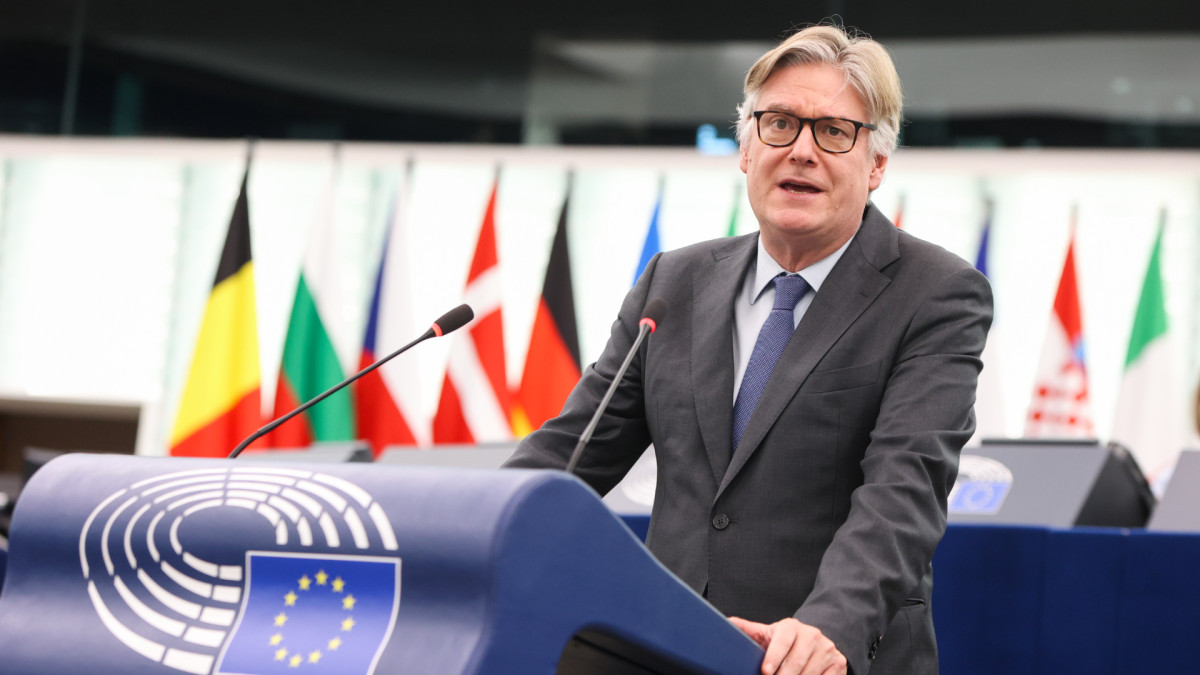
López-Istúriz during a plenary session in the European Parliament. Photo: European Parliament, 2026.
And have those who defend the agreement explained well enough why it is positive?
Without a doubt, it could be communicated better. But today the more reasonable parties are competing against extremely aggressive disinformation, especially from the extremes, which works with great ease on social media. That is the major communications disadvantage today.
I do not want the parties I belong to to become that. I do not want to defend positions with half-truths or messages designed to manipulate public opinion. I would rather maintain a calm and steady line, even if it is less attractive than the big headlines launched by the extremes and easily made viral.
I would not say it is only a communication problem, although there may be some of that. The European Union itself should also make a greater pedagogical effort around these agreements. But the information battle today is very harsh.
In just the last few weeks, Donald Trump, Marco Rubio and Scott Bessent have all pointed directly at Spain. Are we facing the risk of a real rupture between Washington and Spain, or Europe, or is this more a matter of political narrative?
We have a government that says one thing in Madrid, another in Brussels and another in Washington. It talks about "no to war," but then there are facts pointing in another direction, such as the use of bases or the hundreds of registered military flights that have landed in Rota. That creates enormous inconsistency.
This is being understood as a pre-electoral period, and arguments from the past are being recycled that no longer attract as much attention. The problem is that those national or electoral impulses may end up harming the country, because the real negotiation is meanwhile taking place between the European Union and the United States, on trade matters, in NATO and in other international institutions.
If a government holds a certain position, it must defend it in NATO or in the European Union, not send messages from Madrid without agreeing them with its partners. That does not work and creates discomfort, not only with Trump, but also among other European governments watching with concern as Spain goes its own way. Some prime ministers may agree with that line and others, no doubt, do not, but the discomfort is real because of the habit of announcing positions outside the channels of European consensus.
When we talk about Iran or other conflicts, people often say that the European Union does not have a clear voice in foreign policy. Do you share that diagnosis?
We have a High Representative, Kaja Kallas, who is doing her job, and also a President of the Commission, Ursula von der Leyen, who is very visible on these issues. The problem is not so much the absolute absence of voices as the very nature of the European Union itself.
As Jean Monnet said, Europe advances through crises. That already happened in monetary and financial matters after the 2008 crisis, which strengthened European cohesion and the role of the European Central Bank. In foreign policy and defense, we are now in a similar phase: crises are showing the need to move forward, but solutions do not arrive overnight.
"Twenty-seven member states each have their own view, and a common foreign policy is built out of the balance between north, south, east and west"I prefer this system, which may be slower, but is also safer and more democratic. Twenty-seven member states each have their own view, and a common foreign policy is built out of the balance between north, south, east and west. If it could be done faster with formulas such as qualified majority voting, all the better, but that is for the member states to decide.
In defense, moreover, the leap has been enormous in very few years. Before, there was not even a defense committee in the European Parliament or a commissioner dedicated to this area. Today, both exist. Europe is moving toward greater defense organization within NATO and in line with so-called strategic autonomy. Not because of the will of a single person, but because the states have gradually understood that this is the necessary direction.
You chaired the delegation for relations with Israel in the European Parliament. Today you remain in it as a member. I want to ask you about the law passed in the Israeli Knesset that makes death by hanging the default sentence for Palestinians convicted of "terrorist acts" intended to "deny the existence of the State of Israel." What position do you think the European Union should adopt? And what do you think personally?
I know Israel well, and it is worth remembering something basic: Israel is a democratic state. One may like or dislike its prime minister, just as happens in other democratic countries, but one has to start from that fact.
That said, if we are talking about the death penalty, in whatever form, the European position is clear: we do not support it. The European Union cannot directly interfere in the domestic politics of a democratic country, but it can issue resolutions or statements, and it is logical for it to do so if it considers that appropriate.
"If the European Union speaks out on the death penalty in Israel, that will be consistent with its general position. The important thing is that it do so using universal rather than selective criteria"My only objection is that this sensitivity should be applied with the same intensity in every case. I would like to see the same level of condemnation when it comes to executions in China, Iran, Russia or Venezuela. On these issues, one has to be even-handed and speak with the same standard about all countries. Therefore, if the European Union speaks out on the death penalty in Israel, that will be consistent with its general position. The important thing is that it do so using universal rather than selective criteria.
To finish, so far we have touched on very negative issues, which certainly do not invite much optimism on almost any front. Do you see any reason for a more hopeful message?
It is difficult to compete with the noise and with the increasingly absurd headlines circulating on social media. Even so, speaking from the experience of someone who has spent more than twenty years in international politics, I would say one thing: we are not facing the end of the world.
We recently celebrated the fiftieth anniversary of the European People’s Party, and I was thinking about everything Europe has gone through since the 1970s: far more serious energy crises, enormous social instability, racial conflict, the Cold War. We have gone through many crises, and this one will pass too.
"The EU has an extraordinary welfare system and must also learn to defend it against powers that do not accept democracy or freedoms"The European Union has shown that it knows how to strengthen itself in difficult moments. It has an extraordinary welfare system and must also learn to defend it against powers that do not accept democracy or freedoms. In that regard, I am very concerned that the question I was asked most often during the 2024 campaign was whether there was going to be a Third World War. That reveals a serious public communication problem.
I do not offer false hope: of course there will be crises, as there always have been. But there will not be a Third World War. There was not one during the Cold War, and there will not be one now. In the end, human reason prevails.
Crises do not always close completely, and sometimes they reopen old wounds. There is a clear recent example in Northern Ireland, where, after Brexit, historic tensions between Catholics and Protestants resurfaced. But even there the European Union has played a decisive role through programs of rapprochement and stability. That is a role Europe must not abandon. That would be my most positive message: despite everything, we are still moving forward, and Europe remains part of the solution.
Thank you very much.
.png)
Antonio López-Istúriz White
Eurodiputado del Partido Popular
Ha desarrollado la mayor parte de su carrera política en Bruselas desde 1997. Fue asesor de José María Aznar (1998-2002) y, desde 2002 hasta 2022, secretario general del Partido Popular Europeo. Es eurodiputado desde 2004 y actualmente preside la Delegación en la Comisión Parlamentaria Mixta UE-México. Además, es vicepresidente del Foro Europeo Conservador y del Intergrupo del Parlamento Europeo sobre los Derechos del Niño. También es secretario ejecutivo de la Internacional Demócrata de Centro (IDC). Ha sido reconocido con diversas distinciones internacionales y es patrono de fundaciones dedicadas a la protección de menores y personas vulnerables.
Ahora en portada
16 de octubre de 2026
16 de octubre de 2026
16 de octubre de 2026
Noticias relacionadas
Hace 28 semanas
El eurodiputado popular Antonio López-Istúriz analiza a Donald Trump: "Intentar responderle en su propio terreno es perder, porque siempre va a ir un paso más allá"
Hace 85 semanas
The debate on the European right: Orbán or Meloni?
Lo más leído