Domingo, 18 de octubre de 2026




AGENDA PÚBLICA EU
The debate on the European right: Orbán or Meloni?
Viktor Orbán and Giorgia Meloni represent two different forms of leadership on the European right, marked by their political trajectories, the history of their countries and their relationship with EU institutions. Antonio López-Istúriz White, MEP for the Spanish Partido Popular, opens the EU Public Agenda section with his analysis from Brussels.
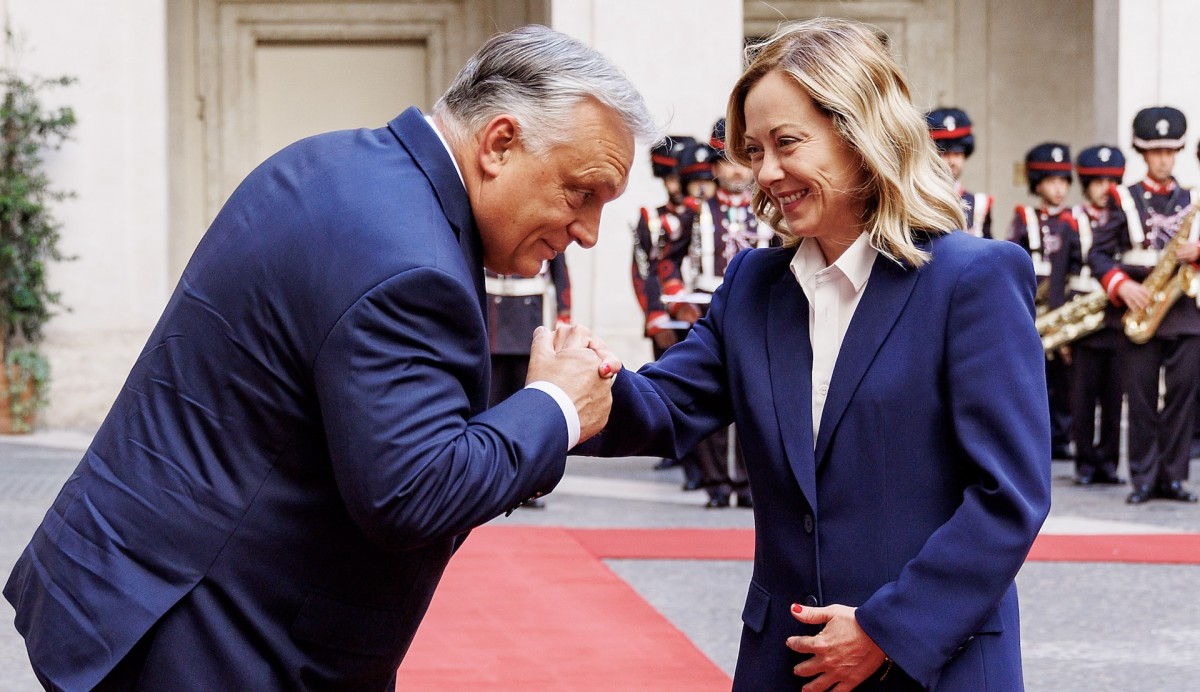
The two leaders meet during a visit by the Hungarian to Rome last summer.Roberto Monaldo / Zuma Press / ContactoPhoto
From the beginning, we must distinguish the political realities of Hungary and Italy. The former comes from a past subjected to the Soviet system, but with a great tradition of fighting for its independence, both during the times of the Austro-Hungarian Empire and under the yoke of Moscow. The peculiarities of the Hungarian language, its culture and its history make them an Eastern European people of rebellious and nonconformist character.
The Italian political reality is conditioned by a past that stretches, neither more nor less, from the implementation of the first fascist experiment before the Second World War to a grey system, dominated for decades by Christian democracy. An even greyer system, if possible, maintained as a brake on a possible advance of communism, until the outbreak of the Tangentopolis scandal. The two parties that had shared power since the fall of Mussolini disappeared in the nineties: the socialist party and Christian democracy itself.
Starting from this basis, we find two European leaders who also emerge from different realities. Viktor Orbán debuted in 1989 as a young leader with a historic speech against communism and, from the democratic beginnings, he militates in parties of a liberal character. Elected Prime Minister for the first time in 2010, his Government was a classic European centre-right, but it was torpedoed by the European Commission every other day, which demanded more economic reforms.
Here it is worth noting that the European Commission has a historical and proven mania for forcing centre-right governments to implement reforms and then, whether by chance or not, losing that same enthusiasm when it comes to a left-wing Government. Without wishing to ideologise the matter, it appears that the Commission is apparent about which governments can spend and which should save when it issues its opinions on the matter.
Giorgia Meloni is a product of the transformation of the Italian far right during the nineties into a more acceptable right at European level. Thanks to the fine strategic intelligence of Gianfranco Fini and the collaboration of Silvio Berlusconi, who tried to attract these voters to the centre-right in various coalitions led by Forza Italia. In fact, Meloni was a minister in one of Berlusconi's governments.
But she had the vision and courage to later set up her own party, Fratelli d'Italia. Initially, she collected the meagre electoral harvest of Fini's previous Alleanza Nazionale, being the only one who did not support Mario Draghi's technical Government. After Forza Italia's fall in electoral results, she became the reference point for any voter in the country's right-wing spectrum.
It is very complicated for a Spanish mentality to understand the ups and downs of Italian politics, but it is enough to assume one principle: they are neither red nor blue, neither Real Madrid nor FC Barcelona; they will never allow themselves to be pigeonholed in extreme positions or resort to a civil war to settle their ideological differences. And if they assume ideological extremes, they will do so temporarily and seeking some tactical benefit that the moment demands.
Therefore, and under this prism, it is easy to understand the changes that have taken place in the Italian right, which were not predicted by the European and Spanish press. At first, the media attacked the Meloni phenomenon, only to later discover the new leader of the European right, with an international influence not seen since Angela Merkel.
Meloni has known how to gather around her the best of all tendencies and families of the Italian right. The maximum exponent of this thesis is her collaboration with Antonio Tajani, Minister of Foreign Affairs, Silvio Berlusconi's political right hand for years and a fundamental piece of Italian European politics in the past two decades. She has been President of the European Parliament and Vice-President of the European Commission.
The close collaboration of the Meloni-Tajani duo is, in my view, the origin of the leadership that Italy is assuming in the European Council, albeit without publicity or great fireworks, but with firm decision. The absence of the long-standing leadership of France and Germany is to blame.
Let the Spanish media be a bit more Mediterranean and understand that Meloni is not a vampire to the Italian and European far right, but a very pragmatic Italian politician. Who even attracts votes from the Italian left (which is not very difficult, given the state of the left in that country) and who has staying power.
The big reservation I have is to know whether she will follow the Trumpian agenda of trying to divide European partners during the coming months. Or whether she will be part of the European leadership that negotiates united against the hurricane that threatens us from Washington.
To be followed with interest, for it is known to all in Brussels that, without the opinion of the Italian, the Council does not make a move.
The Italian political reality is conditioned by a past that stretches, neither more nor less, from the implementation of the first fascist experiment before the Second World War to a grey system, dominated for decades by Christian democracy. An even greyer system, if possible, maintained as a brake on a possible advance of communism, until the outbreak of the Tangentopolis scandal. The two parties that had shared power since the fall of Mussolini disappeared in the nineties: the socialist party and Christian democracy itself.
Starting from this basis, we find two European leaders who also emerge from different realities. Viktor Orbán debuted in 1989 as a young leader with a historic speech against communism and, from the democratic beginnings, he militates in parties of a liberal character. Elected Prime Minister for the first time in 2010, his Government was a classic European centre-right, but it was torpedoed by the European Commission every other day, which demanded more economic reforms.
Here it is worth noting that the European Commission has a historical and proven mania for forcing centre-right governments to implement reforms and then, whether by chance or not, losing that same enthusiasm when it comes to a left-wing Government. Without wishing to ideologise the matter, it appears that the Commission is apparent about which governments can spend and which should save when it issues its opinions on the matter.
"It seems that the Commission is apparent about which governments can spend and which should save when it issues its opinions on the matter"Other rulers of the European People's Party, having gone through this double standard, did not make much of this peculiar tradition, but not Viktor. I witnessed the transformation of a leader of the EPP, its vice-president, into something that within the political family we called, at first with sympathy, as l'enfant terrible. The scourge of European institutions emerged and the subsequent leader of Euroscepticism, preaching a return to the origins of the EU, the devolution of powers to the Member States and becoming the role model for subsequent European far-right leaders.
Giorgia Meloni is a product of the transformation of the Italian far right during the nineties into a more acceptable right at European level. Thanks to the fine strategic intelligence of Gianfranco Fini and the collaboration of Silvio Berlusconi, who tried to attract these voters to the centre-right in various coalitions led by Forza Italia. In fact, Meloni was a minister in one of Berlusconi's governments.
But she had the vision and courage to later set up her own party, Fratelli d'Italia. Initially, she collected the meagre electoral harvest of Fini's previous Alleanza Nazionale, being the only one who did not support Mario Draghi's technical Government. After Forza Italia's fall in electoral results, she became the reference point for any voter in the country's right-wing spectrum.
It is very complicated for a Spanish mentality to understand the ups and downs of Italian politics, but it is enough to assume one principle: they are neither red nor blue, neither Real Madrid nor FC Barcelona; they will never allow themselves to be pigeonholed in extreme positions or resort to a civil war to settle their ideological differences. And if they assume ideological extremes, they will do so temporarily and seeking some tactical benefit that the moment demands.
Therefore, and under this prism, it is easy to understand the changes that have taken place in the Italian right, which were not predicted by the European and Spanish press. At first, the media attacked the Meloni phenomenon, only to later discover the new leader of the European right, with an international influence not seen since Angela Merkel.
Meloni has known how to gather around her the best of all tendencies and families of the Italian right. The maximum exponent of this thesis is her collaboration with Antonio Tajani, Minister of Foreign Affairs, Silvio Berlusconi's political right hand for years and a fundamental piece of Italian European politics in the past two decades. She has been President of the European Parliament and Vice-President of the European Commission.
The close collaboration of the Meloni-Tajani duo is, in my view, the origin of the leadership that Italy is assuming in the European Council, albeit without publicity or great fireworks, but with firm decision. The absence of the long-standing leadership of France and Germany is to blame.
"The close collaboration of the Meloni-Tajani duo is, in my view, the origin of the leadership that Italy is assuming in the European Council"If I had to choose, as the title of this article demands, between both leaderships, I find more attractive, perhaps due to our Mediterranean affinity, the Meloni option. Less noisy and certainly less divisive, she respects the European commitment whilst defending her principles and values, many of which I share. And those I do not share, at least I know that with the Italians I can discuss and reach consensus.
Let the Spanish media be a bit more Mediterranean and understand that Meloni is not a vampire to the Italian and European far right, but a very pragmatic Italian politician. Who even attracts votes from the Italian left (which is not very difficult, given the state of the left in that country) and who has staying power.
The big reservation I have is to know whether she will follow the Trumpian agenda of trying to divide European partners during the coming months. Or whether she will be part of the European leadership that negotiates united against the hurricane that threatens us from Washington.
To be followed with interest, for it is known to all in Brussels that, without the opinion of the Italian, the Council does not make a move.
.png)
Antonio López-Istúriz White
Eurodiputado del Partido Popular
Ha desarrollado la mayor parte de su carrera política en Bruselas desde 1997. Fue asesor de José María Aznar (1998-2002) y, desde 2002 hasta 2022, secretario general del Partido Popular Europeo. Es eurodiputado desde 2004 y actualmente preside la Delegación en la Comisión Parlamentaria Mixta UE-México. Además, es vicepresidente del Foro Europeo Conservador y del Intergrupo del Parlamento Europeo sobre los Derechos del Niño. También es secretario ejecutivo de la Internacional Demócrata de Centro (IDC). Ha sido reconocido con diversas distinciones internacionales y es patrono de fundaciones dedicadas a la protección de menores y personas vulnerables.
Ahora en portada
17 de octubre de 2026
16 de octubre de 2026
Noticias relacionadas
Hace 88 semanas
Madrid, la ciudad donde la derecha radical europea celebra a Trump
Hace 88 semanas
Meloni y Orbán en la era Trump: distintos enfoques con un mismo objetivo
Lo más leído