Sábado, 17 de octubre de 2026




LÓPEZ PLANA'S EUROPEAN COMPASS
Europe as a pillar of NATO, or European self-defense? An alliance insider’s unvarnished view
This week’s column by Marc López Plana, editor and director of 'Agenda Pública', explores the internal logic of power following a conversation with Javier Colomina, Spain’s highest office-holder in the NATO alliance. Colomina’s insider perspective offers complex insights on the real costs of every strategic decision – the central question being whether Spain and Europe should enhance their roles within NATO or opt to pursue autonomous defense.
-1920x1080.jpg)
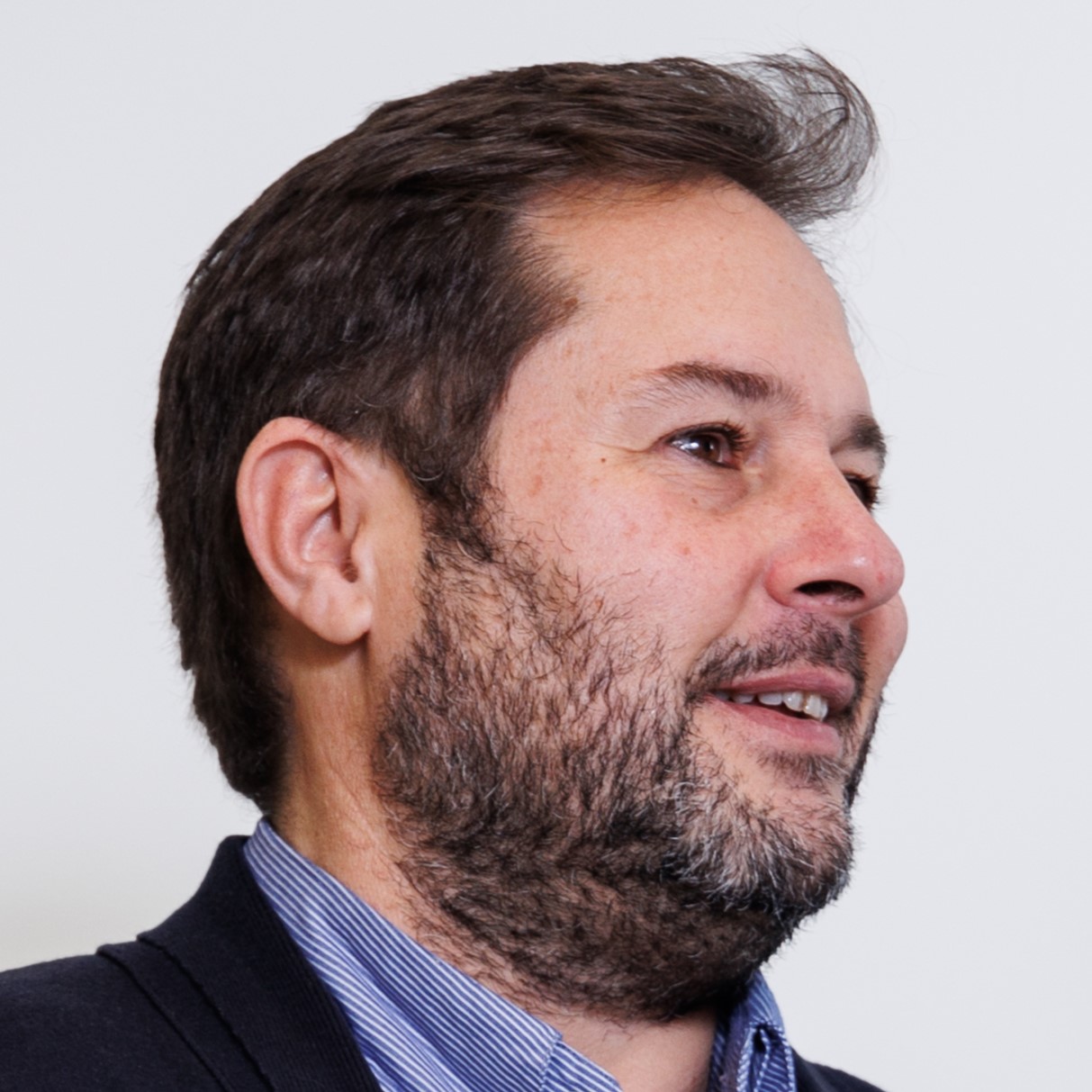
At a 'Agenda Pública' micro-seminar on defense.Agenda Pública / Tsun Ho
It is very difficult to enter the debate over whether Spain should commit to strengthening NATO’s European pillar or, instead, defend the creation of an autonomous European defense. My first reaction as a committed European — and I have reflected on this — would be to say that Spain should push for a European army for defense. All that is missing is for the President of the United States to say, as he did last Friday, that he "would be fine with withdrawing the bases from Spain and other NATO countries that do not cooperate on the security of Hormuz," and then it becomes even clearer to me that Europe’s bet must be its own defense model.
Recently, Josep Borrell told me that, in relation to European defense, “if we continue as we are, with an increasingly less homogeneous mix of increasingly different countries, it will be very difficult to do what we have not yet decided to do. We are who we are in order to do what we do today. The question is whether we should remain exactly the same in order to do what we have not yet decided to do.” It is a harsh but realistic reflection on what the European Union can do in defense matters.
What follows are a few reflections on my conversations with Javier Colomina in a global security setting in which Europe is confronting the most difficult and complex strategic environment it has faced in decades. Colomina, Deputy Assistant Secretary General of NATO and Special Representative for the Southern Neighbourhood, argues that security challenges have reached an unprecedented level of simultaneity: from Russia’s war of invasion in Ukraine and the conflict in Gaza to instability in the Sahel, China’s hybrid threats and the impact of climate change.
Against this backdrop, the question of whether Europe should strengthen its role within NATO or seek a defense of its own is not merely rhetorical, but a matter of strategic survival.
Maintaining that bond requires far-reaching political commitments, such as the historic decision reached at the Hague summit in June 2025, where it was agreed that all allies should invest 5% in defense. Of that figure, 3.5% is directed straight to military matters, while the remaining 1.5% is focused on other priority areas. Colomina warns that the cost of total autonomy would be unaffordable; if Europe chose to operate outside the NATO framework, the spending required to guarantee its security could easily rise to 6% or 7% of GDP.
A departure from the transatlantic framework would open up a highly complex nuclear scenario among European partners. At present, the nuclear power of the United States prevents the risk of internal proliferation; without it, dilemmas would emerge over whether to expand Europe’s own nuclear capability or whether countries such as Germany, Italy or Spain should launch their own proliferation plans, shelved for decades. For that reason, Colomina concludes that Europe’s best option is burden shifting: achieving greater autonomy and industrial capacity, but always within the certainty offered by the transatlantic framework.
At the same time, support for Ukraine remains an absolute priority as long as the conflict lasts, which requires maintaining the mission of coordinating training and ensuring the constant delivery of the essential weaponry needed for its defense. Finally, the Alliance’s agenda assigns growing strategic relevance to the so-called Southern Dimension, focused on addressing instability in the Sahel, conflicts in the Middle East and security across the Mediterranean basin, aspects that Javier Colomina identifies as fundamental to the stability of countries such as Spain and which will set the tone of the next summit in Turkey.
Javier Colomina’s view suggests that Europe’s path is not independence, but rather greater autonomy within the transatlantic framework. Europe must wake from its lethargy and assume burden shifting (the sharing of burdens), increasing its capabilities and industrial output, but always under the Alliance’s umbrella. Security is a harsh reality: if Europe is unable to respond to the current strategic moment, it will remain dependent on other actors — whether the United States, Russia or China — to define its destiny.
Recently, Josep Borrell told me that, in relation to European defense, “if we continue as we are, with an increasingly less homogeneous mix of increasingly different countries, it will be very difficult to do what we have not yet decided to do. We are who we are in order to do what we do today. The question is whether we should remain exactly the same in order to do what we have not yet decided to do.” It is a harsh but realistic reflection on what the European Union can do in defense matters.
"Talking to a political insider means gaining access to the internal logic of power, to its nuances, limits and contradictions; it adds complexity and reveals the real costs of each decision"This Friday, at the micro-event organized by Agenda Pública on the defense industry, I had the chance to speak with a NATO insider, Javier Colomina. He is the Spaniard holding the highest-ranking post in the Atlantic alliance. And one realizes that talking to a political insider is not the same as simply having an opinion on an issue: the former means accessing the internal logic of power, its nuances, limits and contradictions, often invisible in public debate; the insider adds complexity and reveals the real costs of each decision.
What follows are a few reflections on my conversations with Javier Colomina in a global security setting in which Europe is confronting the most difficult and complex strategic environment it has faced in decades. Colomina, Deputy Assistant Secretary General of NATO and Special Representative for the Southern Neighbourhood, argues that security challenges have reached an unprecedented level of simultaneity: from Russia’s war of invasion in Ukraine and the conflict in Gaza to instability in the Sahel, China’s hybrid threats and the impact of climate change.
Against this backdrop, the question of whether Europe should strengthen its role within NATO or seek a defense of its own is not merely rhetorical, but a matter of strategic survival.
The end of lethargy and dependence on North America
Europe has lived through a period of strategic lethargy from which it has been abruptly awakened. The reality is that there is a strategic dependence on the United States that is not only military, but also economic, commercial and political. This vulnerability is starkly visible in the Ukrainian conflict: 90% of the missiles Ukraine uses to defend itself come from U.S. supplies. It is not a question of Europe lacking the will to buy them, but of Europeans simply not having those weapons in their inventories."The arrival of disruptive messages from Washington in recent years has forced European foreign ministries to move at a pace that is not their own"This situation has laid bare a "very stubborn reality" about the transatlantic framework. The arrival of disruptive messages from Washington in recent years has forced European foreign ministries to move at a pace that is not their own, accepting that security is too important not to react.
The NATO model versus the European alternative
For Javier Colomina, the answer to the dilemma between Atlantic and European security is clear: the transatlantic relationship is the fundamental framework that has allowed European societies to prosper for the past 76 years. Although cooperation with the United States may prove difficult or "costly" under certain administrations, Colomina argues that working on an alternative would be infinitely more expensive and complex.Maintaining that bond requires far-reaching political commitments, such as the historic decision reached at the Hague summit in June 2025, where it was agreed that all allies should invest 5% in defense. Of that figure, 3.5% is directed straight to military matters, while the remaining 1.5% is focused on other priority areas. Colomina warns that the cost of total autonomy would be unaffordable; if Europe chose to operate outside the NATO framework, the spending required to guarantee its security could easily rise to 6% or 7% of GDP.
"If Europe decided to operate outside the NATO framework, the spending required to guarantee its security could easily rise to 6% or 7% of GDP"The physical presence of the United States remains an essential pillar of the continent’s stability, with 80,000 troops stationed on European soil and shared military bases in key countries, including two in Spain. Without U.S. backing, Europe would be forced to lead debates it currently prefers to avoid because of their extreme difficulty, such as who should lead nuclear defense.
A departure from the transatlantic framework would open up a highly complex nuclear scenario among European partners. At present, the nuclear power of the United States prevents the risk of internal proliferation; without it, dilemmas would emerge over whether to expand Europe’s own nuclear capability or whether countries such as Germany, Italy or Spain should launch their own proliferation plans, shelved for decades. For that reason, Colomina concludes that Europe’s best option is burden shifting: achieving greater autonomy and industrial capacity, but always within the certainty offered by the transatlantic framework.
Strategic priorities: from The Hague to Ankara
The Alliance’s strategic roadmap, drawn from the Hague summit in June 2025 to the next meeting in Ankara in July 2026, sets out clear priorities that Europe must embrace with determination if it wants to consolidate itself as a relevant partner on the global chessboard. First, it is imperative to implement effectively the 5% defense-investment commitment, a political decision already taken that now requires rigorous execution by all allies."It is imperative to implement effectively the 5% defense-investment commitment"This mobilization of resources must be transferred directly to the defense industry in order to turn that financial muscle into real, tangible military equipment, a critical area where much more decisive and substantial action is expected from the European Union in order to transform capital into operational capabilities.
At the same time, support for Ukraine remains an absolute priority as long as the conflict lasts, which requires maintaining the mission of coordinating training and ensuring the constant delivery of the essential weaponry needed for its defense. Finally, the Alliance’s agenda assigns growing strategic relevance to the so-called Southern Dimension, focused on addressing instability in the Sahel, conflicts in the Middle East and security across the Mediterranean basin, aspects that Javier Colomina identifies as fundamental to the stability of countries such as Spain and which will set the tone of the next summit in Turkey.
The industrial challenge and national sovereignty
The core problem of European defense is not only a lack of money, but its fragmentation. As long as Europe continues to think of its defense industry as a purely national issue tied to electoral interests or local employment, it will not be able to close the gap with the major global defense industries."As long as Europe continues to think of its defense industry as a purely national issue tied to electoral interests or local employment, it will not be able to close the gap with the major global defense industries"At present, 80% of what Europe buys is purchased from outside the continent (including the United States, the United Kingdom or Turkey). To reverse this, a "change in the decision-making process" is needed, along with deep reflection on the areas of national sovereignty that member states have still not delegated to the European Commission, specifically in foreign policy and defense. Without some concession in governance, Europe’s industry will struggle to compete with the single North American market.
Javier Colomina’s view suggests that Europe’s path is not independence, but rather greater autonomy within the transatlantic framework. Europe must wake from its lethargy and assume burden shifting (the sharing of burdens), increasing its capabilities and industrial output, but always under the Alliance’s umbrella. Security is a harsh reality: if Europe is unable to respond to the current strategic moment, it will remain dependent on other actors — whether the United States, Russia or China — to define its destiny.
Ahora en portada
17 de octubre de 2026
16 de octubre de 2026
Noticias relacionadas
Hace 29 semanas
¿Pilar europeo de la OTAN o defensa propia europea? La cruda visión de un 'insider' de la Alianza
Hace 30 semanas
Josep Borrell: "The European Union wasn’t conceived for today’s world"
Hace 80 semanas
Javier Colomina (NATO): "Spain is particularly well positioned in the world to play a mediation role"
Lo más leído