



Javier Colomina (NATO): "Spain is particularly well positioned in the world to play a mediation role"
Javier Colomina, the highest-ranking Spaniard in NATO, analyses in a conversation with 'Agenda Pública' the future of the Alliance at a pivotal moment. As Deputy Assistant Secretary General and Special Representative for the Southern Neighbourhood, he discusses with our director, Marc López Plana, the challenges in defence, the impact of Trump's return and the relationship with the countries of the South.
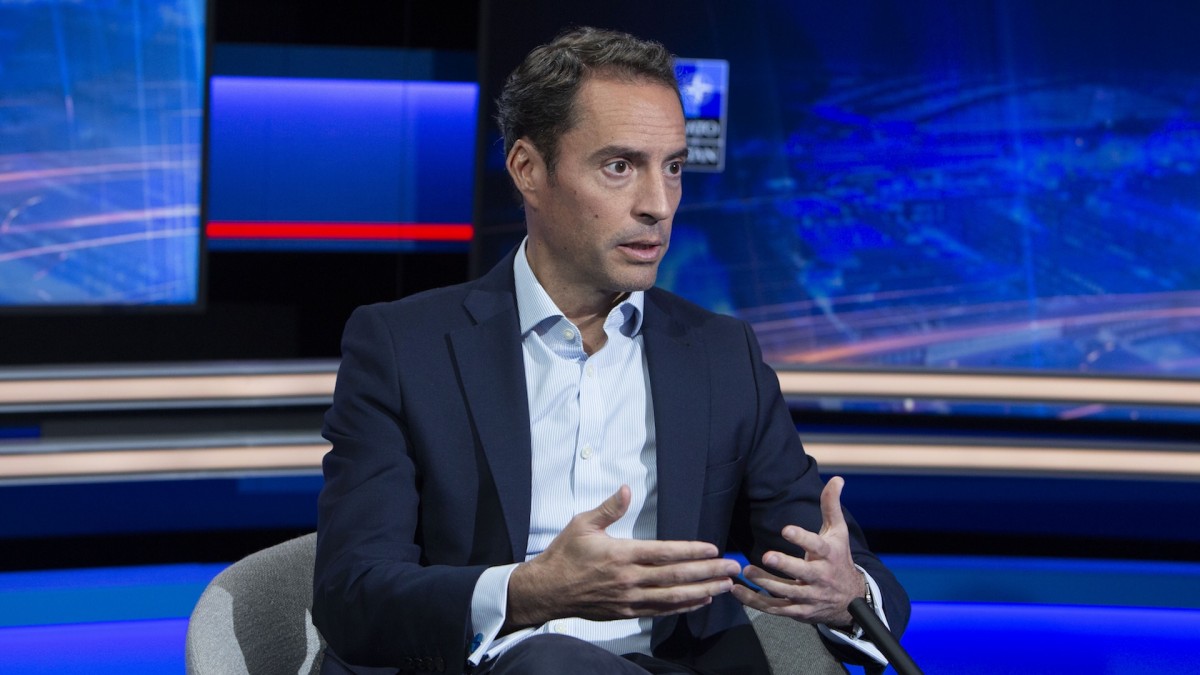
He is the highest-ranking Spanish diplomat in the North Atlantic Treaty Organisation and combines his position as Deputy Assistant Secretary General with that of Special Representative of the Alliance for the Southern Neighbourhood, including regions such as the Middle East, North Africa and the Sahel. We spoke with him at a key moment, just before the ministerial meeting of Allied countries that begins today in Brussels, which will be attended by, among others, José Manuel Albares (Spain) and Marco Rubio (USA). Colomina points out that "things are heard and read, but we are guided by what we are told, not by what might be heard or read" in relation to the new Trump Administration's commitment to NATO and concludes: "The commitment they have expressed to us has truly been very consistent" in "all the closed-door meetings we have had, from President Trump" to "Secretary of State Rubio".
Regarding the debate about increasing investment and defence spending, Colomina warns that "in recent years" we have evolved from "a concept of collective defence to a concept of collective security, which has many more implications, particularly for citizens". "We have already moved away from conventional defence, which was clearly handled by the military and security forces. Now we must incorporate elements such as resilience, hybrid threats, and cyber. That's why there is increasing talk of a societal approach, the whole-of-society approach". And he warns: "We need to be better prepared for any incident, whether military, civilian, or a natural disaster".
What does the southern neighbourhood mean from NATO's perspective?
For us, the southern neighbourhood is the Mediterranean region, the Middle East, the Gulf, and the Sahel. It is defined to some extent by the partners we have in the region. The seven Mediterranean partners that range from Mauritania to Israel and therefore cover the Mediterranean area and the Middle East, and the four partners we have in the Gulf. To this, Iraq is added. Mauritania is a Sahelian partner and this, combined with the enormous fragility of that subregion, leads us to fully incorporate the Sahel into our definition of the southern neighbourhood.
Might there be a perception that NATO is currently looking much more to the east than to the south?
I believe that is precisely what has changed since the last Washington Summit. NATO is an organisation that has traditionally looked to the east and was created to look to the east. It has taken time for the organisation to start looking at other regions and prioritising other regions, not just the south.
Over the years, several countries have shown great interest in making this happen, particularly Spain, Italy, and Portugal. And that work eventually bore fruit in the decisions that were first taken in Vilnius, where a deep reflection was launched on the opportunities and challenges seen in the south and how NATO should address them. Over time, this reflection led to an action plan that was negotiated among the thirty-two allies and then approved by the heads of state and government in Washington, after which I was appointed special representative.
"NATO's priority will continue to be support for Ukraine and the eastern front, but now the allies have agreed that the south should also be a priority"
All this means that, of course, the organisation's priority will continue to be support for Ukraine and the eastern front, but now the allies have agreed that the south should also be a priority. It's difficult to say which is the main one, which is the second, which is the third. I don't get into that. It is simply another priority that has been approved, that is on the Council's table and on which we are working seriously since the adoption of the action plan and my appointment.
From our perspective, it is significant that a Spaniard is responsible for the southern neighbourhood. Do you bring a Spanish perspective?
Of course. I am not convinced that when the appointment was made, the Secretary General particularly considered my nationality, but rather the position and function I already held in the organisation. Since I was already very much in contact with the work we do with our partners. But it is evident that I bring a Spanish perspective, of which I am also very proud.
Spain is a committed ally that contributes a great deal to our collective defence, with very significant deployments on the eastern front. At the same time, it has been one of the countries that has traditionally pushed most for the southern dimension of the Alliance. And moreover, it has done so permanently, over the last decades. It is truly a state policy.
"What a Spaniard brings is a greater knowledge of what is happening in the south, a deeper understanding of the challenges we see in the region and how to address them"
What a Spaniard brings, in my humble opinion, is a greater knowledge of what is happening in the south, a more profound understanding of the challenges we see in the region and how to address them. I'm not saying that other colleagues of other nationalities could not do it, but we are a country that is particularly well positioned to play a role that often involves mediating. Other times, exerting pressure, and sometimes simply staying in the background because the situation requires it.
Spain, which has traditionally played that role, is very present in the south in general, with a significant network of embassies. It could, therefore, be said that in this case nationality is an added value. For a Spanish diplomat already with a certain experience, as was my case, it was perhaps somewhat less complicated to tackle a task like this.
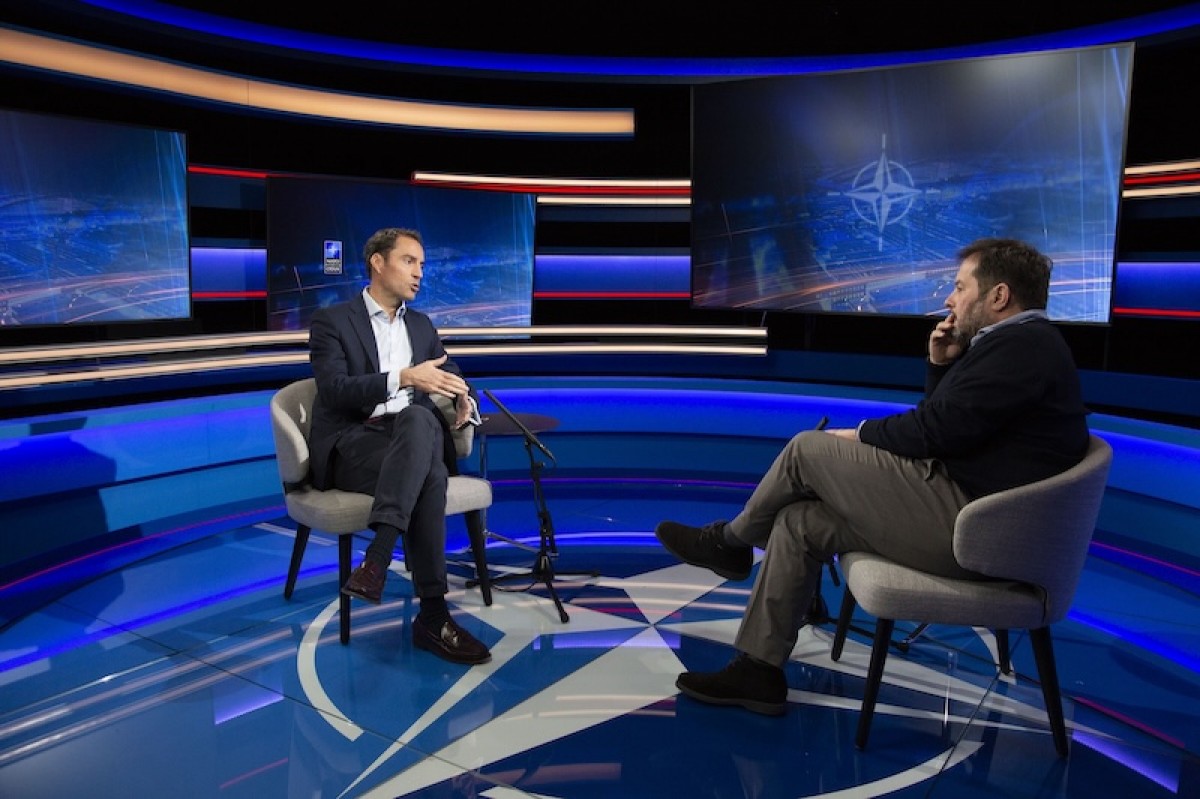
The conversation took place in the studios located at NATO headquarters in Brussels. Photo: Agenda Pública / Delmi Álvarez
If you had to point out the main threats or risks coming from the southern neighbourhood, what would you highlight?
I would say that for the organisation I represent, there are two essential axes. One is the fight against terrorism and the other is geostrategic competition, the presence of strategic competitors, particularly Russia, but also China, and to a lesser extent, but particularly disruptive, Iran.
Apart from these two main elements, there are others, which perhaps are not direct responsibilities of the Alliance, such as irregular migration or illicit trafficking, which particularly affect the Gulf of Guinea and the Sahel. From there, they end up impacting our stability. These are challenges that fall more directly within the remit of the European Union or the bilateral efforts of many of our allies. But there is no doubt that what we do at NATO to increase regional stability by improving the defence capabilities of our partners also has a positive impact on those other challenges.
Does the medium or long-term strategy contemplate the incorporation of these southern neighbourhood countries as NATO allies?
No. The Washington Treaty is clear regarding its radius of action, SACEUR's area of responsibility, which is the Euro-Atlantic region, and which does not include the territory of our southern partners. Therefore, to consider such an expansion, we would first have to redefine the Euro-Atlantic zone, and that is not something that is being considered or seems realistic.
What is being considered is the increase in political relations and practical cooperation with countries that are already partners and with countries that are not. Among those countries that are not partners, there are several countries in Africa and other regions that are currently considering increasing their relationship with the Alliance. Some with the aim of increasing political dialogue and perhaps practical cooperation, and others to move towards establishing a formal partnership relationship.
Being a partner allows you to benefit from all the cooperation opportunities that we offer. If you are not a partner, you can have a political relationship, and you can, at certain times, through ad hoc approval procedures by the thirty-two allies, benefit from some cooperation project. However, if you are a partner, the partnership document allows you to directly access all lines of cooperation.
There is a wide spectrum of cooperation activities, from training and education, interoperability, to exercises of all types and conditions, which allow for strengthening the partnership relationship. This does not imply Article 5 at all, which only extends to the thirty-two allies. But the fact of having a partnership with the Alliance can provide a certain deterrent element. NATO is a visible and compelling flag, which logically becomes more present as the relationship with each of our partners increases and the partnership strengthens.
Is there any particularly important country in the southern neighbourhood, for example, Morocco?
Morocco is an active partner and its partnership is clearly growing. A partner with whom we are interested in continuing to cooperate. It is true that Morocco has shown in the last two or three years a willingness to increase cooperation, perhaps greater than other countries in the region. It is a country that, undoubtedly, has experience and effective military capabilities and from which, and hence, we can learn.
"Morocco is an active partner and its partnership is clearly growing. It has shown in the last two or three years a clear willingness to increase cooperation, perhaps greater than other countries in the region"
In general, with the various countries in the region, what interests us is to build a relationship that benefits both of us, the intersection between their interests and ours. We want to know how they see the region, how they address challenges and threats with their means. And we know that they, logically, want to learn from what we do better and where we have more experience, command and control, training and education, military planning, or interoperability.
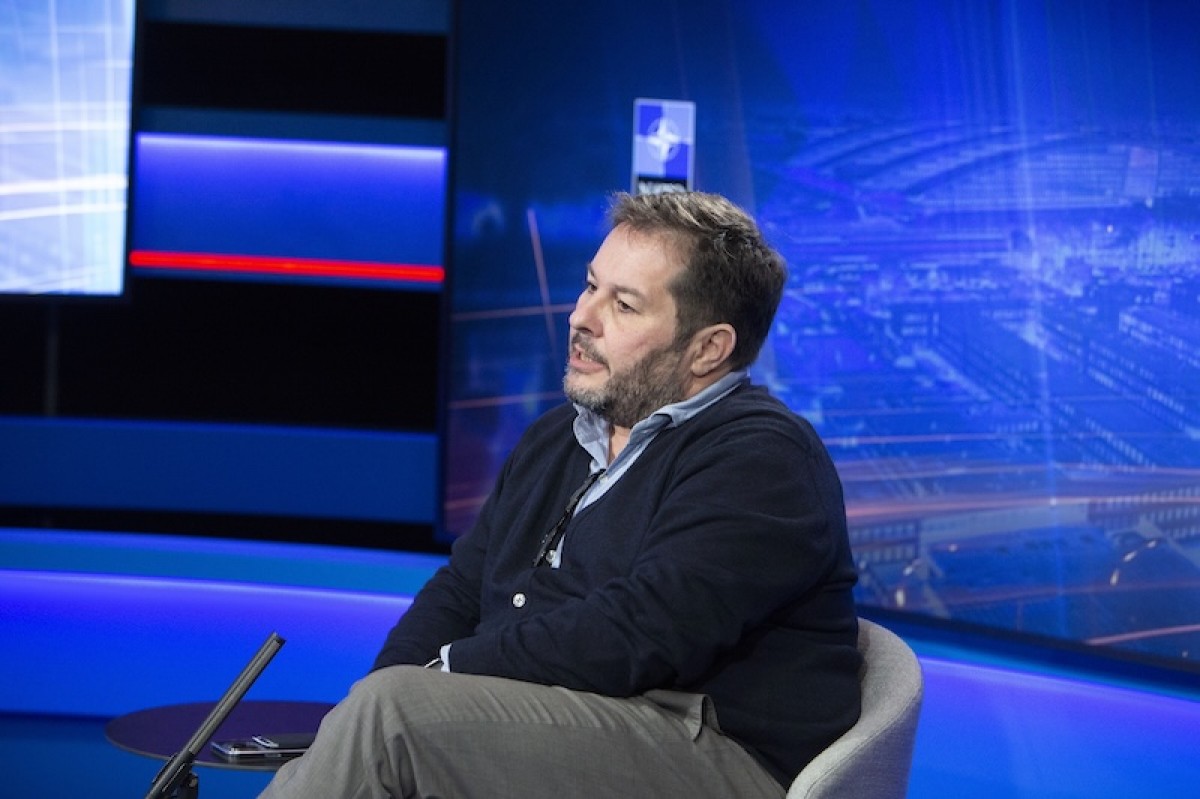
The conversation took place in the studios located at NATO headquarters in Brussels. Photo: Agenda Pública / Delmi Álvarez
How do you analyse the position of the new American Administration in relation to Europe and in relation to NATO? How can it affect your work in the southern neighbourhood, which is strategic for the United States, which has essential alliance relationships with Morocco and Israel?
I'll start with the American commitment to the organisation. They have confirmed to us time and again in all the closed-door meetings we have had—with President Trump, Secretary of State Rubio, Secretary of Defence Hegseth or National Security Advisor Michael Waltz—that their commitment is solid and robust with the organisation and with Article 5. Things are heard and read, but we are guided by what we are told. And the commitment they have expressed to us has truly been very consistent.
"The United States has confirmed to us that its commitment is solid and robust with the organisation and with Article 5"As for the new American Administration's commitment to the south and how it might affect my own work, we have not yet been able to have the necessary conversations in that regard. The American Administration takes time to form at all levels, and as of today, it is not yet fully formed. Therefore, it is difficult to know what their specific policies will be on many of the specific issues that are part of NATO's agenda.
But I am convinced that the southern neighbourhood will continue to be important for the United States. Many of the elements of our Action Plan will continue to be essential for American foreign and defence policy priorities, such as the fight against terrorism or geostrategic competition. Undoubtedly, we will have to work, and we will have to seek an understanding with the new American administration, which is essential for what NATO can do.
In Spain, as you know, we are in an open debate about the need to allocate 2% of GDP to defence. How do you understand defence today in a world where the role of terminology and disinformation are fundamental in destabilising countries? Where is it a priority to invest in defence today?
I believe that recently we have evolved from a concept of collective defence to a concept of collective security, which has many more implications for citizens. This has an impact not only on the army and security forces, but on the administration in general and on society as a whole.
"We have evolved from a concept of collective defence to a concept of collective security. Now we need to incorporate elements such as resilience, hybrid threats and cyberspace"It is necessary to incorporate elements such as resilience, hybrid threats and cyberspace. Moreover, climate change. That is why there is increasing talk of a societal approach, the whole-of-society approach, which the Nordic countries in particular have been developing for years. We need to be better prepared for any incident, military or civilian, including a natural disaster.
Recently, the Alliance has fully incorporated these aspects into its debate, along with the conventional or nuclear military aspects that have always been part of our essence. It is the combination of all this that we must respond to with a 360-degree perspective. But if you combine all of this, the multitude and diversity of challenges in the various areas mentioned, you need more resources. With the resources that were traditionally invested in defence, it is not enough if we want to maintain credible defence and deterrence that allows us to face with guarantees the spectrum of threats and challenges in all the areas mentioned.
Thank you very much, Javier.
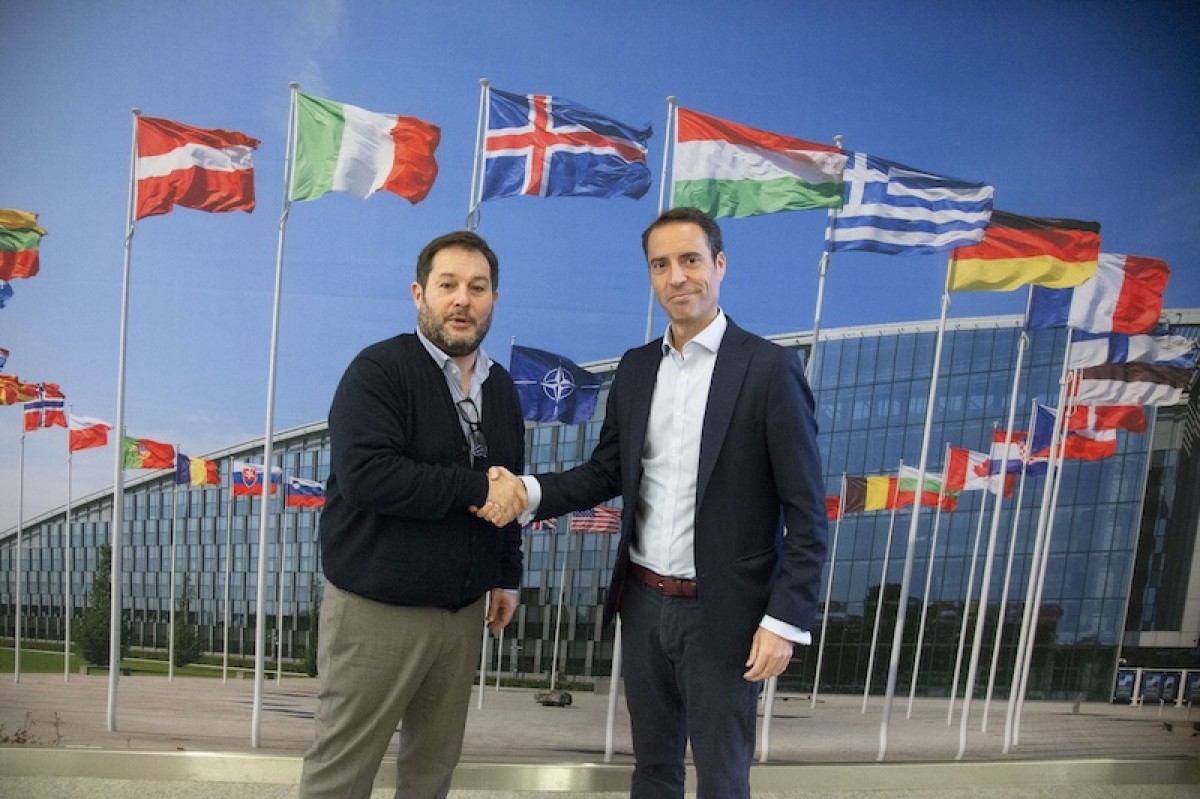
Colomina says goodbye to López Plana after the interview. Photo: Agenda Pública / Delmi Álvarez