Viernes, 16 de octubre de 2026



CONVERSATIONS
Olaf Scholz's Head of the Federal Chancellery in Agenda Pública: The election is a "choice between Scholz and Merz —and the coalition partners they might bring"
Wolfgang Schmidt is the German Minister for Special Affairs and head of Olaf Scholz's Chancellery. He is the key figure in his government. In the midst of the serious crisis in the country, Marc López Plana, Agenda Pública's Director, had a conversation with him in Berlin. In this context, Minister Schmidt is clear: "The European People's Party should know that flirting with the far right is the wrong way to go, and it can backfire".
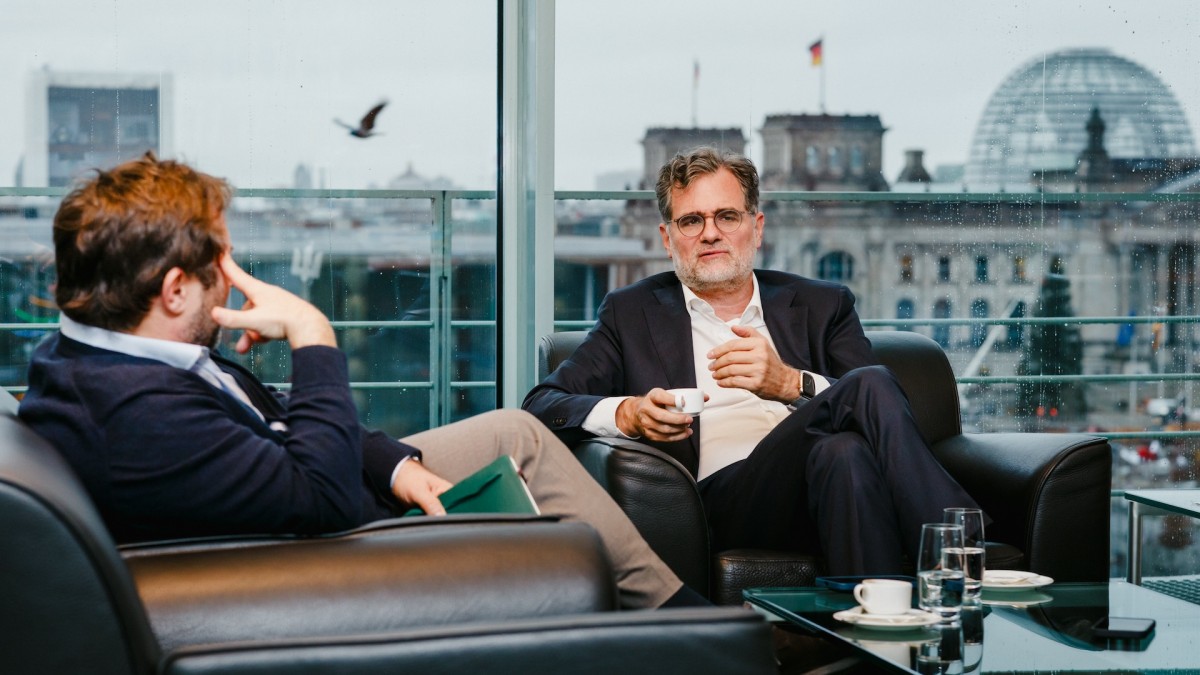
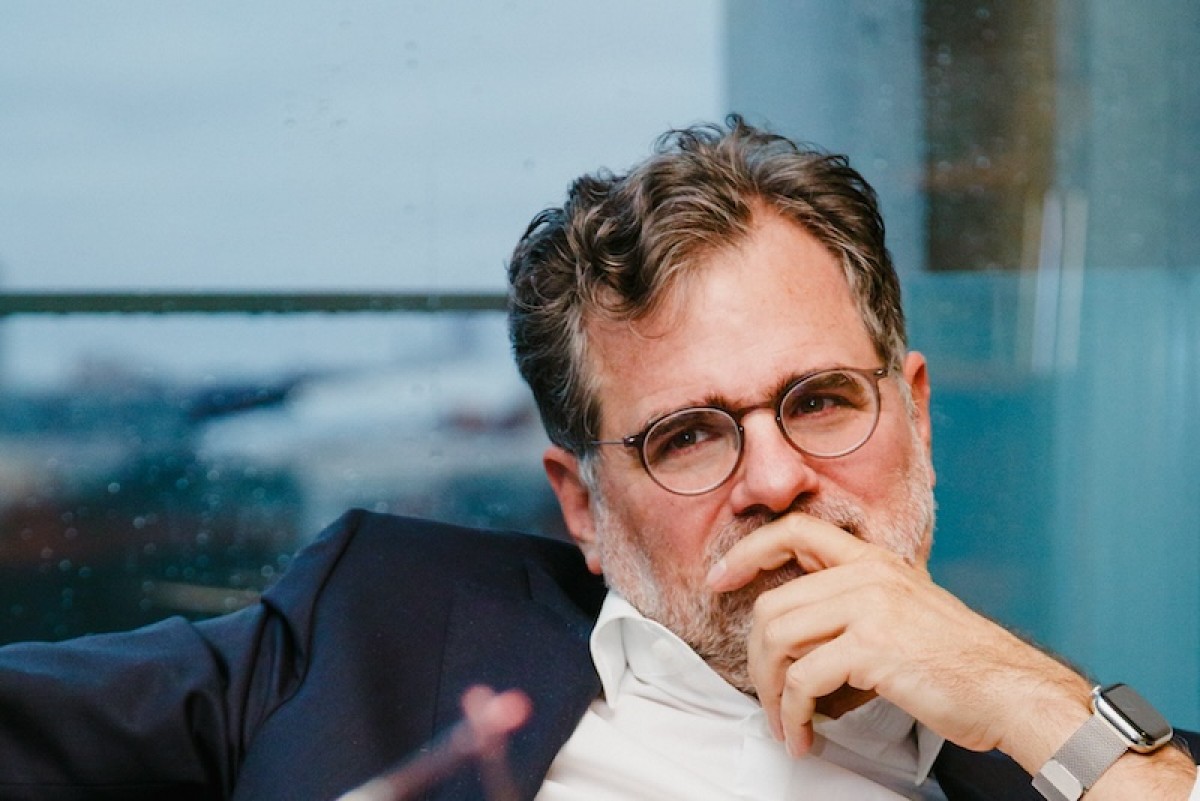
Wolfgang Schmidt receives Agenda Pública in his Berlin office in front of the Bundestag.Agenda Pública / Patricia Sevilla
Wolfgang Schmidt is said to have been Olaf Scholz's true Foreign Minister, and after the elections he may also be the true Foreign Minister in Germany's next government. "He has been involved in all the major decisions of the German government," according to Politico Europe. In this conversation with Agenda Pública he discusses key aspects of current affairs in Germany, Europe and Spain: "The European Union needs a strong and stable political centre".
The Head of the Chancellery is, according to members of his own party, "the most important person after Scholz" to the extent that he is credited with the decision to make Germany one of Ukraine's main military supporters. From an economic perspective, his stance is clear, "the US Inflation Reduction Act (IRA) shows how state intervention can catalyse transformation." In Schmidt's view, Germany, Spain, and the EU require strong public investment to be able to compete better in the world and transform their economies.
Why did Scholz ultimately decide this was the moment to ask the Liberals to leave the coalition government?
The deeper issue was that, for the first time, three very different parties had formed a coalition at the federal level. And this coalition got stress-tested by the Russian war of aggression against Ukraine. That war also had significant financial impacts on Germany: the extensive support for Ukraine, both with military equipment and economic aid, costs billions of euros. Added to this are the payments for Ukrainian refugees in Germany. Furthermore, securing energy supplies after the cessation of Russian gas imports costs the state additional billions. Altogether, these expenditures amounted to over 21 billion euros in 2024 alone.
 How would you evaluate Olaf Scholz's mandate, and how can you explain to Germans and Europeans why another term is necessary, given challenges like Merkel's legacy, the Russian invasion of Ukraine, and economic vulnerabilities?
Chancellor Scholz's tenure has been marked by unprecedented crises: the COVID-19 pandemic, the Russian war against Ukraine and the energy crises with far-reaching consequences for Germany, as an export-driven and industrialized economy.
Scholz’s government responded with remarkable speed, for example, to the energy crises. Before the Russian aggression, Germany imported nearly 60 % of its gas from Russia. When gas supplies stopped abruptly in August 2022, in record time, Germany constructed six LNG terminals to stabilize supply and bring down energy prices.
Given, as you say, that the next government will likely be a coalition and the current administration seems unable to secure a second term. Do you think the CDU would lean towards forming an alliance with the Greens or the SPD?
The political landscape is now more fragmented than ever. German voters vote à la carte. Forming coalitions is becoming increasingly difficult. It requires parties with differing ideologies to join forces. The traffic light coalition (Social Democrats, Liberals and Greens) exemplifies these challenges, especially as it united three historically distinct parties with fundamental divergent views on taxation, the welfare state, debt, and climate policy.
Incumbent governments across the globe have faced backlash amid inflation, declining real wages, and rising public dissatisfaction. Germany is no exception, grappling with inflation, the steepest real wage drop since World War II in 2022 (-4%), and the logistical challenges of integrating 1.6 million refugees over two years. But there is good news: Real wages have increased for the sixth consecutive quarter, and the inflation rate is significantly decreasing.
Two key issues stand out: the debt ceiling and Ukraine. First, is there a viable path to reform the debt ceiling?
Germany has by far the lowest debt-to-GDP ratio of all G7 countries —less than 65 percent. The G7 average is about 120-130 percent. Specific borrowing to fund infrastructure like railways and other crucial investments would pay off in the long run. We are already seeing a lack of funding that is affecting our economy.
However, Germany’s debt brake is enshrined in the Constitution. Amendments require a two-thirds majority in both houses: the Bundestag and Bundesrat. It is a politically challenging task to modernize the debt brake, but a necessary one in view of the major challenges ahead. For instance, the upcoming need to finance the 2% NATO spending goal from the regular budget by 2028 will demand an additional €30 billion annually.
Second, why did Scholz call Putin shortly after Trump’s victory?
It is up to Ukraine and its democratically elected leadership to determine the path forward. While military support for Ukraine remains crucial, diplomatic channels must remain open to explore steps for negotiations, even amid the current stalemate.
Manfred Weber seems to be leaning toward the far right. In Spain, this episode was seen through the lens of a conflict between Teresa Ribera and the Partido Popular, but I think the issue goes beyond that.
It includes Vox as well.
Exactly. Weber seems to be signalling to the Social Democratic Party that things might change during this mandate and that he has the option to form other alliances. How do you think the European election in June are shaping the current EU?
What we’re seeing in Germany and elsewhere in the EU is a more fragmented electorate, which complicates coalition-building for traditional parties. The days of one dominant party partnering with a smaller one are over in Germany.
At the European level, this fragmentation is evident too. While the European People's Party might be tempted to explore alternatives or threaten their partners with a potential shift, they should know that flirting with the far right is the wrong way to go and it can backfire. For example, in Germany, any association with the party Alternative for Germany (AfD) would be politically fatal. The EU needs a strong and stable political centre. Cooperation between the European Social Democrats and the European People’s Party is key for this.
Do you think Germany would be better prepared for a Trump administration with a grand coalition?
What matters most is a strong and resilient EU. Externally, that means meeting NATO commitments, like 2% defence spending and consolidating the defence sector. Internally, Europe must reform its decision-making to avoid gridlock caused by unanimity rules.
The reality is that in a world heading towards 10 billion people, even Germany with its 84 million inhabitants is small. Acting collectively as the EU, with 450 million people, is the only way to have real influence. For example, having the European Commission negotiate trade deals is crucial. Without that, not only smaller countries would have struggled immensely.
As a candidate in Hamburg, what do you think of the European Commission’s proposal to centralize budget management, especially in countries with federal or quasi federal structures like Germany and Spain?
In Germany, the federal government handles national contributions to the EU budget. While I can understand that the federal states want a say in how funds are distributed, we need to ensure that the EU budget is managed efficiently.
However, the key debate about the EU budget will be on new revenue sources. The COVID-19 pandemic, the Russian war against Ukraine, energy costs, and other crises have left many member states financially exhausted.
We also need to address climate disasters. In València, the recent flooding was devastating, as you know. Germany has faced similar challenges. These disasters are becoming more frequent. Shouldn’t we allocate more funds for rebuilding efforts like in València?
The images and reports from the catastrophic flooding in València were shocking. One thing is clear: Climate change will lead to more extreme weather events. We need to prepare for this – at the European, national, regional, and local levels. This also includes the need to invest more in preventive and protective measures. I assume that these issues will also play a role in the negotiations on the EU budget.
That will require significant investment.
Addressing climate change is the challenge of our time. Transforming an industrialized, fossil-fuel-based economy into a net-zero society by 2045 —in less than 21 years— is a monumental task. Floods, like the ones in València, are a stark reminder that the crisis is real and demands urgent, coordinated action.
In Spain, many are buying Chinese electric cars.
That’s a challenge for German and European carmakers: they must produce and offer affordable electric vehicles.
The Head of the Chancellery is, according to members of his own party, "the most important person after Scholz" to the extent that he is credited with the decision to make Germany one of Ukraine's main military supporters. From an economic perspective, his stance is clear, "the US Inflation Reduction Act (IRA) shows how state intervention can catalyse transformation." In Schmidt's view, Germany, Spain, and the EU require strong public investment to be able to compete better in the world and transform their economies.
Why did Scholz ultimately decide this was the moment to ask the Liberals to leave the coalition government?
The deeper issue was that, for the first time, three very different parties had formed a coalition at the federal level. And this coalition got stress-tested by the Russian war of aggression against Ukraine. That war also had significant financial impacts on Germany: the extensive support for Ukraine, both with military equipment and economic aid, costs billions of euros. Added to this are the payments for Ukrainian refugees in Germany. Furthermore, securing energy supplies after the cessation of Russian gas imports costs the state additional billions. Altogether, these expenditures amounted to over 21 billion euros in 2024 alone.
"The Liberals had been planning their exit for quite some time"The liberal finance minister insisted that this sum be covered within the regular budget. Meanwhile, the SPD and the Greens wanted to use the emergency clause of the debt brake to finance it. In 2024, after long and tough negotiations within the coalition, this amount was managed through reallocations within the budget. However, this was no longer possible for the draft of the 2025 federal budget. For that year, the dispute centred around 12.5 billion euros that the liberal finance minister wanted to finance from the regular budget. He proposed cutting pensions or reallocating funds from municipalities and federal states. From the Chancellor’s perspective, this approach was unacceptable. This then became the immediate trigger for the coalition’s collapse. As we now learn from media investigations, the Liberals had been planning their exit for quite some time.
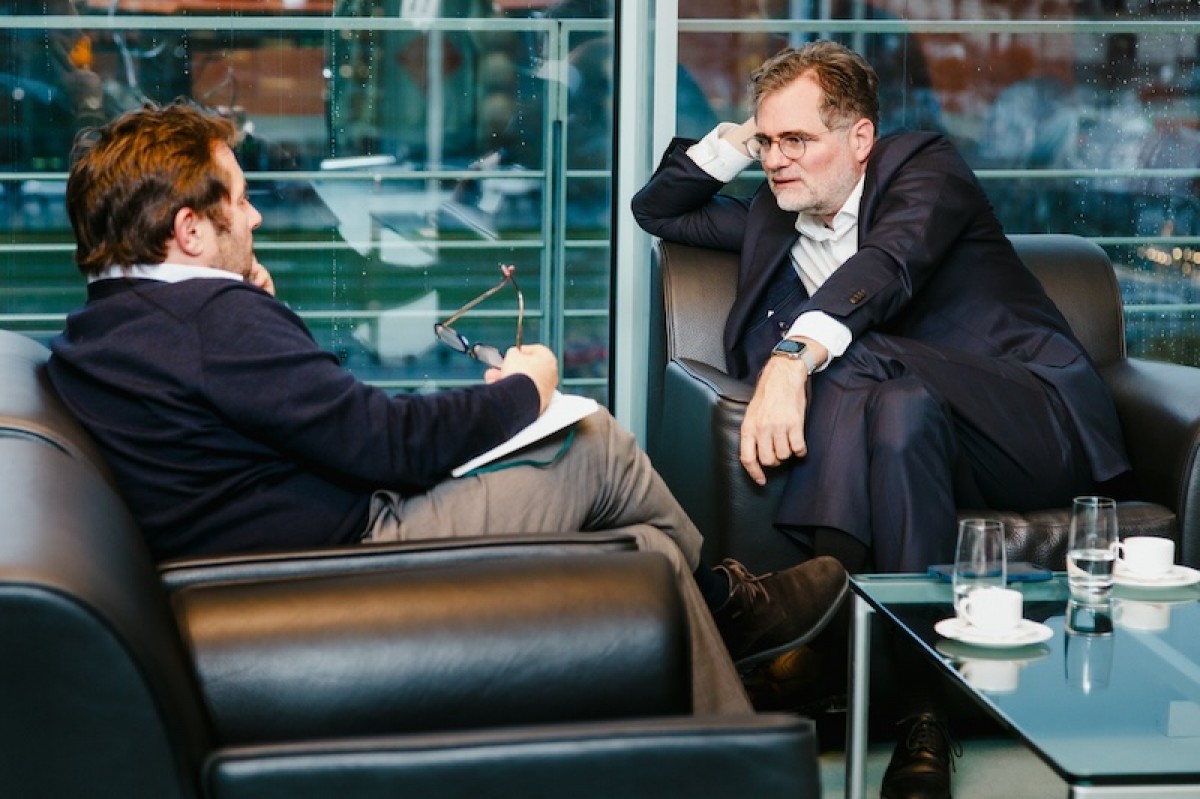
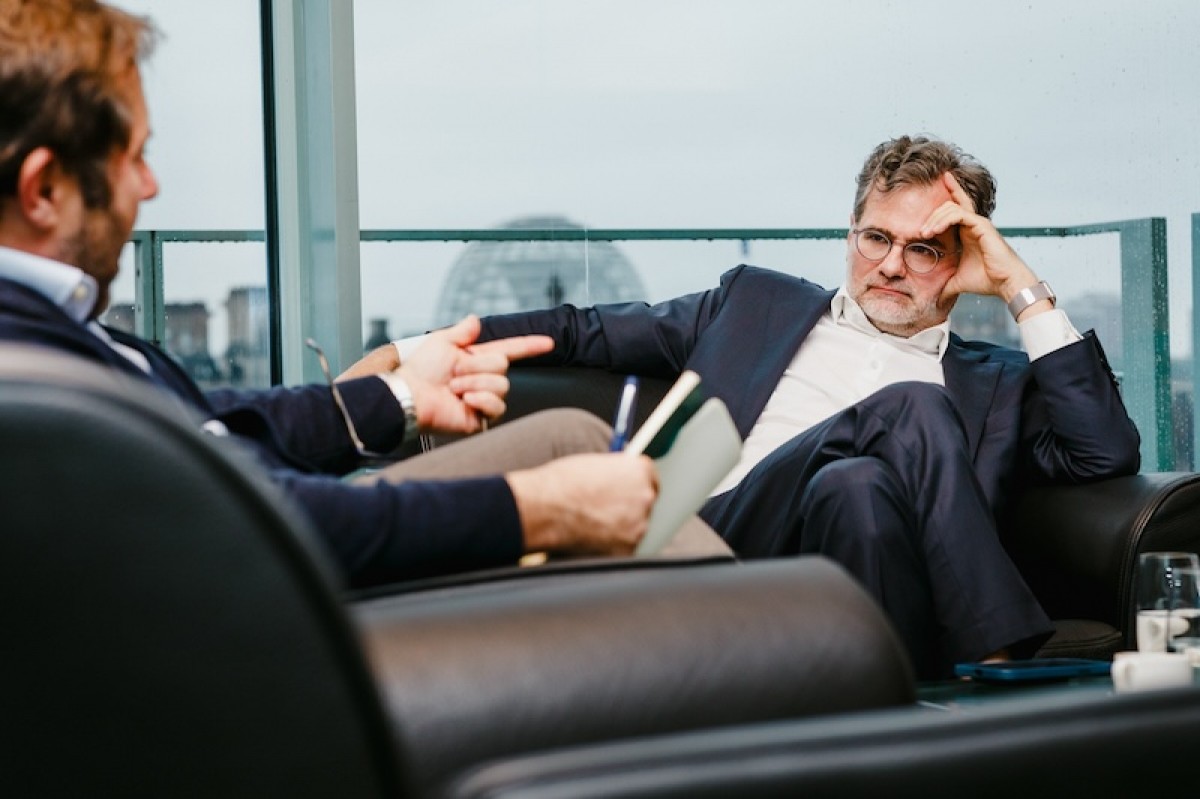
Marc López Plana, Agenda Publica's Director, converses with Wolfgang Schmidt. Photo: Agenda Pública / Patricia Sevilla
Chancellor Scholz's tenure has been marked by unprecedented crises: the COVID-19 pandemic, the Russian war against Ukraine and the energy crises with far-reaching consequences for Germany, as an export-driven and industrialized economy.
Scholz’s government responded with remarkable speed, for example, to the energy crises. Before the Russian aggression, Germany imported nearly 60 % of its gas from Russia. When gas supplies stopped abruptly in August 2022, in record time, Germany constructed six LNG terminals to stabilize supply and bring down energy prices.
"The next election will focus on the future —on ideas, plans, and solutions for the challenges ahead"The next election will focus on the future —on ideas, plans, and solutions for the challenges ahead. We need to modernize our country, ensure affordable energy costs, manage grand transitions in sectors like the automotive industry and in digitalisation, ensure good jobs and social cohesion and invest in our security. The voters will ask: who has the answers to these issues? It will likely be a coalition that involves one or more current coalition partners. Scholz’s great experience and prudent leadership has steered Germany through the crises with resilience, and his focus on long-term solutions is the case for another term. As Joe Biden aptly said, "Don’t compare me to the Almighty, compare me to the alternative."
Given, as you say, that the next government will likely be a coalition and the current administration seems unable to secure a second term. Do you think the CDU would lean towards forming an alliance with the Greens or the SPD?
The political landscape is now more fragmented than ever. German voters vote à la carte. Forming coalitions is becoming increasingly difficult. It requires parties with differing ideologies to join forces. The traffic light coalition (Social Democrats, Liberals and Greens) exemplifies these challenges, especially as it united three historically distinct parties with fundamental divergent views on taxation, the welfare state, debt, and climate policy.
"The next election will likely boil down to a choice between Scholz and Merz —and the coalition partners they might bring"Looking ahead, the next election will likely boil down to a choice between Scholz and Merz —and the coalition partners they might bring. The question is not only who will lead, but who has the best answers. The election campaign offers clarity through public discourse on the future of the country. The Christian Democrats (CDU) may attempt to downplay controversial issues to secure power, but the Social Democrats (SPD) will aim to highlight key differences, ensuring voters understand what is at stake for Germany's future.
Incumbent governments across the globe have faced backlash amid inflation, declining real wages, and rising public dissatisfaction. Germany is no exception, grappling with inflation, the steepest real wage drop since World War II in 2022 (-4%), and the logistical challenges of integrating 1.6 million refugees over two years. But there is good news: Real wages have increased for the sixth consecutive quarter, and the inflation rate is significantly decreasing.
Wolfgang Schmidt, Germany's Federal Minister for Special Affairs. Photo: Agenda Pública / Patricia Sevilla
Two key issues stand out: the debt ceiling and Ukraine. First, is there a viable path to reform the debt ceiling?
Germany has by far the lowest debt-to-GDP ratio of all G7 countries —less than 65 percent. The G7 average is about 120-130 percent. Specific borrowing to fund infrastructure like railways and other crucial investments would pay off in the long run. We are already seeing a lack of funding that is affecting our economy.
However, Germany’s debt brake is enshrined in the Constitution. Amendments require a two-thirds majority in both houses: the Bundestag and Bundesrat. It is a politically challenging task to modernize the debt brake, but a necessary one in view of the major challenges ahead. For instance, the upcoming need to finance the 2% NATO spending goal from the regular budget by 2028 will demand an additional €30 billion annually.
Second, why did Scholz call Putin shortly after Trump’s victory?
It is up to Ukraine and its democratically elected leadership to determine the path forward. While military support for Ukraine remains crucial, diplomatic channels must remain open to explore steps for negotiations, even amid the current stalemate.
"Scholz’s outreach to Putin reflects a broader imperative to maintain communication, even with adversaries, in the context of war"In his call with Putin, Scholz condemned the Russian war of aggression against Ukraine and called on President Putin to end it and withdraw troops. He urged Russia to be prepared to negotiate with Ukraine with the aim of achieving a just and lasting peace, and emphasized Germany's unwavering determination to support Ukraine in its defensive struggle against Russian aggression. Scholz’s outreach to Putin reflects a broader imperative to maintain communication, even with adversaries, in the context of war.
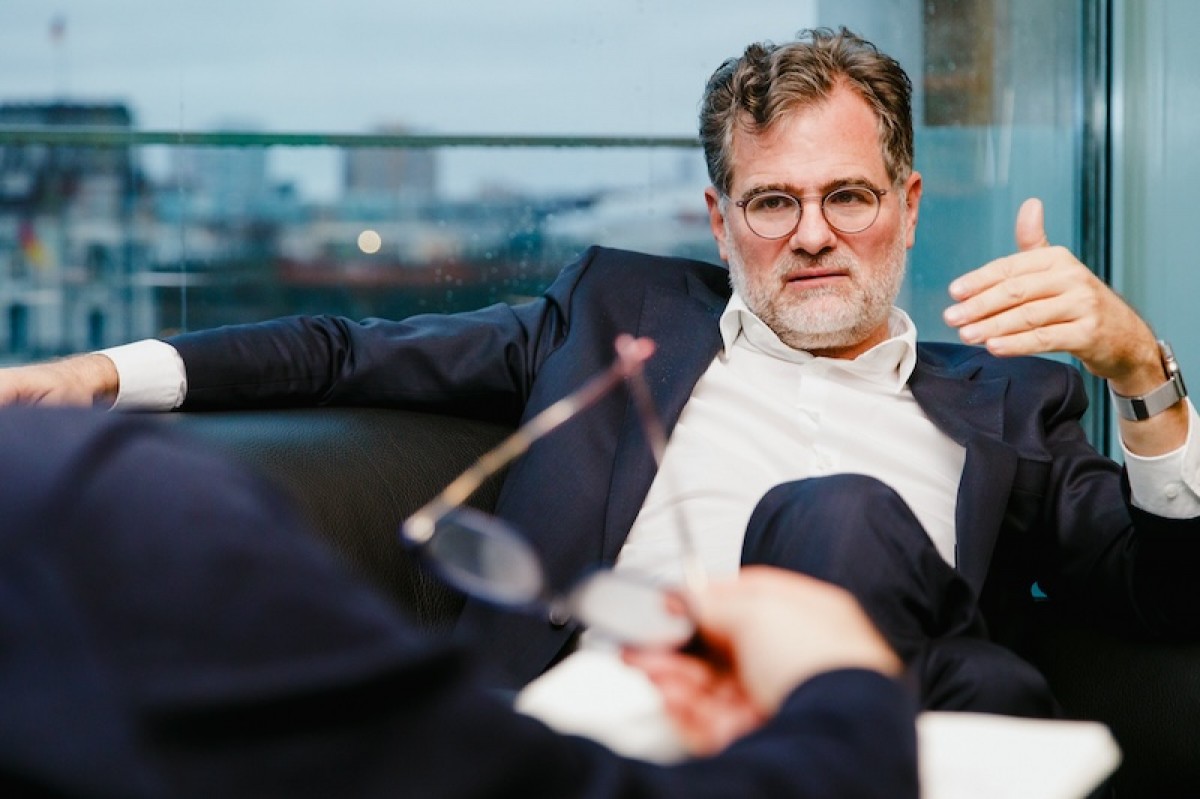
Schmidt expects the election to boil down to a choice between Scholz and Merz, and the coalition partners they might bring. Photo: Agenda Pública / Patricia Sevilla
Manfred Weber seems to be leaning toward the far right. In Spain, this episode was seen through the lens of a conflict between Teresa Ribera and the Partido Popular, but I think the issue goes beyond that.
It includes Vox as well.
Exactly. Weber seems to be signalling to the Social Democratic Party that things might change during this mandate and that he has the option to form other alliances. How do you think the European election in June are shaping the current EU?
What we’re seeing in Germany and elsewhere in the EU is a more fragmented electorate, which complicates coalition-building for traditional parties. The days of one dominant party partnering with a smaller one are over in Germany.
At the European level, this fragmentation is evident too. While the European People's Party might be tempted to explore alternatives or threaten their partners with a potential shift, they should know that flirting with the far right is the wrong way to go and it can backfire. For example, in Germany, any association with the party Alternative for Germany (AfD) would be politically fatal. The EU needs a strong and stable political centre. Cooperation between the European Social Democrats and the European People’s Party is key for this.
Do you think Germany would be better prepared for a Trump administration with a grand coalition?
What matters most is a strong and resilient EU. Externally, that means meeting NATO commitments, like 2% defence spending and consolidating the defence sector. Internally, Europe must reform its decision-making to avoid gridlock caused by unanimity rules.
The reality is that in a world heading towards 10 billion people, even Germany with its 84 million inhabitants is small. Acting collectively as the EU, with 450 million people, is the only way to have real influence. For example, having the European Commission negotiate trade deals is crucial. Without that, not only smaller countries would have struggled immensely.
"We need to address key issues like migration, competitiveness, and economic growth to make the EU more appealing to our citizens"I agree, but populists like Meloni campaign on nationalistic messages, promising to defend their countries above all. Even populists acknowledge the importance of European unity. All Member states realize that without the EU's collective strength, their countries would be more vulnerable. Brexit is a stark reminder that going alone is rarely a good idea. We need to address key issues like migration, competitiveness, and economic growth to make the EU more appealing to our citizens.
As a candidate in Hamburg, what do you think of the European Commission’s proposal to centralize budget management, especially in countries with federal or quasi federal structures like Germany and Spain?
In Germany, the federal government handles national contributions to the EU budget. While I can understand that the federal states want a say in how funds are distributed, we need to ensure that the EU budget is managed efficiently.
However, the key debate about the EU budget will be on new revenue sources. The COVID-19 pandemic, the Russian war against Ukraine, energy costs, and other crises have left many member states financially exhausted.
To Schmidt, the aim of Scholz's phone call with Putin was to maintain communication lanes open. Photo: Agenda Pública / Patricia Sevilla
We also need to address climate disasters. In València, the recent flooding was devastating, as you know. Germany has faced similar challenges. These disasters are becoming more frequent. Shouldn’t we allocate more funds for rebuilding efforts like in València?
The images and reports from the catastrophic flooding in València were shocking. One thing is clear: Climate change will lead to more extreme weather events. We need to prepare for this – at the European, national, regional, and local levels. This also includes the need to invest more in preventive and protective measures. I assume that these issues will also play a role in the negotiations on the EU budget.
That will require significant investment.
Addressing climate change is the challenge of our time. Transforming an industrialized, fossil-fuel-based economy into a net-zero society by 2045 —in less than 21 years— is a monumental task. Floods, like the ones in València, are a stark reminder that the crisis is real and demands urgent, coordinated action.
"Germany, Spain, and the EU need to invest in energy-friendly technologies —like electrolysers, transformers, and wind turbines— that our SMEs and our engineers can develop"While private investments are essential, public infrastructure investments are crucial where there’s no immediate business case. The US Inflation Reduction Act shows how state intervention can catalyse transformation. Germany, Spain, and the EU need to invest in energy-friendly technologies —like electrolysers, transformers, and wind turbines— that our SMEs and our engineers can develop. People in the EU need affordable, climate-friendly alternatives. If you commute daily and can’t afford an electric car —especially with no market for affordable used electric vehicles— how can you switch?
In Spain, many are buying Chinese electric cars.
That’s a challenge for German and European carmakers: they must produce and offer affordable electric vehicles.
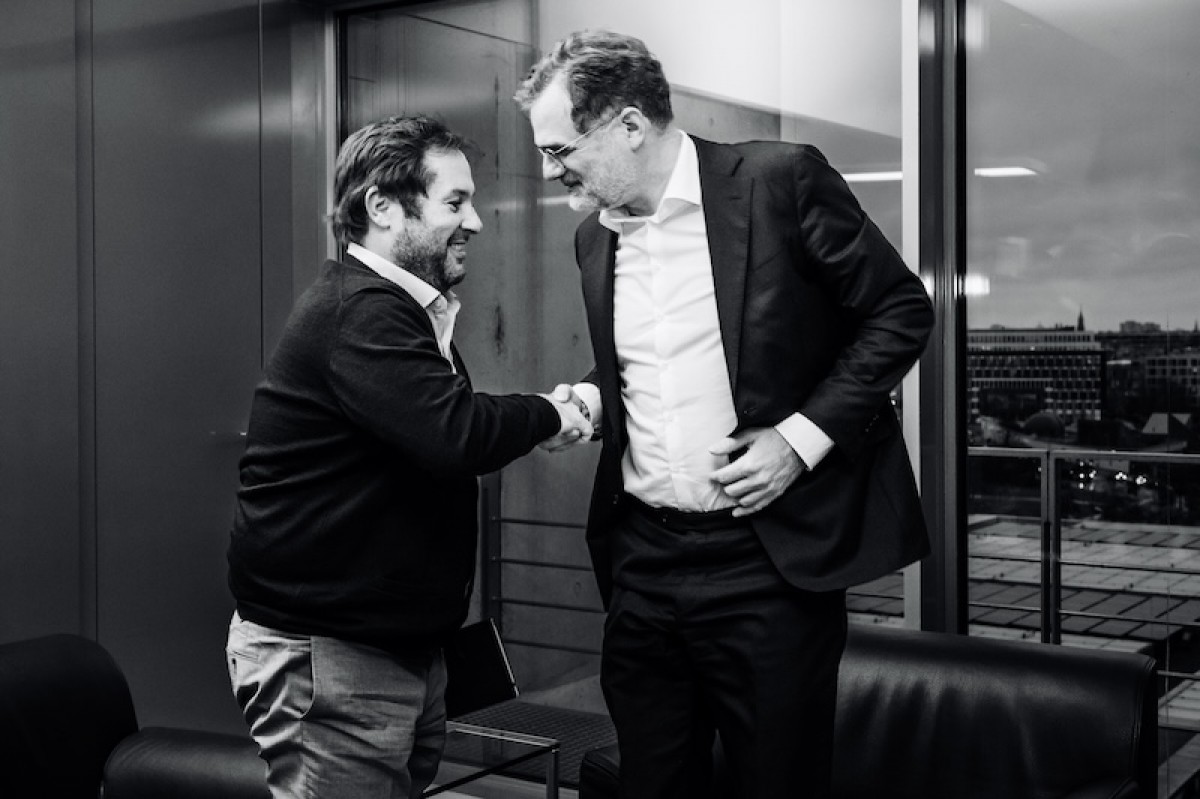
Marc López Plana and Wolfgang Schmidt farewell after the conversation. Photo: Agenda Pública / Patricia Sevilla
Ahora en portada
16 de octubre de 2026
16 de octubre de 2026
16 de octubre de 2026
Noticias relacionadas
Hace 97 semanas
Merkel is out to defend her legacy, Von der Leyen should be taking notes
Hace 96 semanas
Nadia Calviño: "We must ensure that ideas, technologies and companies born in Europe stay here"
Lo más leído