Domingo, 18 de octubre de 2026




Von der Leyen's economic turnaround takes Teresa Ribera to the top of the Commission
Following the announcement of the EU's College of Commissioners, Spain's Teresa Ribera appears to be in a position of great importance for the development of two areas that will be key to the future of our continent: competitiveness and the ecological transition.
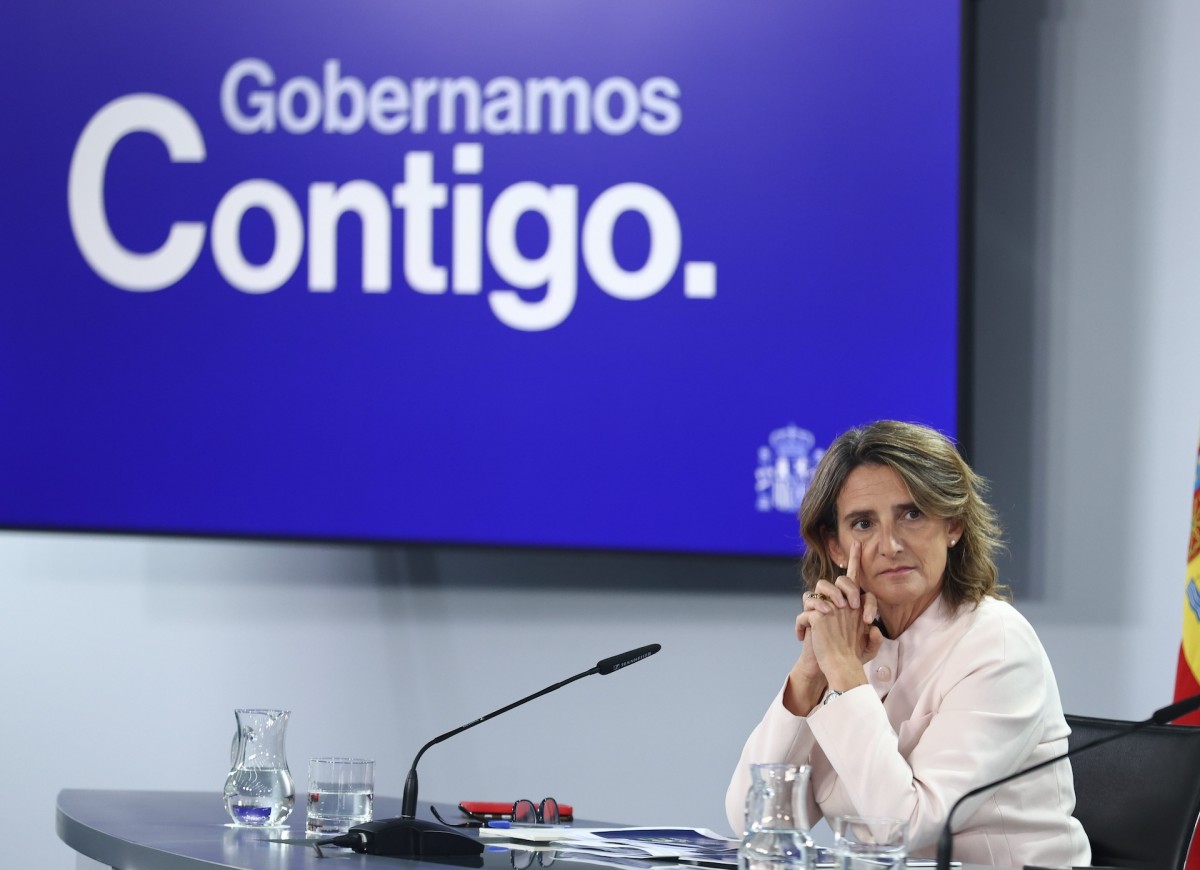
Teresa Ribera will become Executive Vice-President for Clean, Just and Competitive Transition.Eduardo Parra / Europa Press / ContactoPhoto
Economic policy—and particularly industrial policy—is set to define the next European Commission, led once again by Ursula von der Leyen. The EU's new agenda aligns perfectly with the credentials of Spain’s newly appointed commissioner, Teresa Ribera, who is set to become one of the main drivers of the Commission's efforts. President von der Leyen has appointed Ribera as an executive vice-president, entrusting her with oversight of competition policy as well as taxation—especially green taxes—the industrial agenda aimed at reducing emissions, and the energy market.
"The new mandate," von der Leyen explained, "will focus on enhancing European competitiveness." A revamped industrial policy will seek to boost productivity, lower energy costs for businesses, and drive an efficient decarbonization process, narrowing the gap with the US and China in line with recommendations from the recent report by Mario Draghi. Additionally, von der Leyen signaled her intent to reform the EU budget and key spending areas—cohesion and agricultural funds—with a pledge to restructure the Commission once these changes are in place.
Speculation over portfolio assignments within the Commission has been rife since August 30, when the deadline passed for Member States to submit their nominees. Several countries, including Spain, were vying to secure positions overseeing the crucial industrial, technological, and energy development policies that will shape the next five years.
Teresa Ribera, still a vice-president in the Spanish government, was among the frontrunners to join von der Leyen's core team. Ribera has built a solid reputation in Brussels in the field of energy and climate policy, both as the architect of the "Iberian exception" that helped Spain and Portugal cap electricity prices during the recent energy crisis, and through her leadership during Spain’s EU presidency, which saw the completion of a major energy sector reform.
Yet Ribera faced stiff competition from other high-profile candidates for key roles in the new Commission. Some, like Latvia’s Valdis Dombrovskis and Slovakia’s Maroš Šefčovič, had the advantage of continuity, having gained von der Leyen’s trust during the previous five-year term. Ribera’s principal rival, however, appeared to be France’s Thierry Breton, who, despite not having the smoothest relationship with von der Leyen, could point to a successful tenure as Commissioner for the Internal Market.
"The Spaniard has built a strong reputation in Brussels in the fields of energy and climate policy"The surprise came on Monday, just 24 hours after von der Leyen unveiled her new team. Paris abruptly announced the replacement of Breton with Stéphane Séjourné, a move that prompted Breton to accuse von der Leyen of pressuring for the switch to avoid giving France a diminished portfolio. This reshuffle has allowed Séjourné to secure an executive vice-presidency in industrial policy, a portfolio he will share in part with Ribera. However, Ribera's political clout appears significantly greater, owing to her six years in government (compared to Séjourné’s eight months) and the strength of the Socialists in the European Parliament, where they are the second-largest party with 136 seats, while Séjourné’s French liberals rank fifth with 77 MEPs.
Ribera’s credentials in environmental policy, her pragmatic approach to consensus-building—as seen in her handling of the Doñana and Mar Menor crises—and her command of complex dossiers are all in her favor.
Her profile seems to align well with von der Leyen’s objectives. The president will need deft political handling to push through an industrial policy that meets the demands of Europe’s corporate giants while preserving the EU's ambition to lead global climate action and cut CO2 emissions by 90% by 2040, with full carbon neutrality a decade later.
"To Ribera’s favour: her environmental credentials, her pragmatic consensus-building, and her leadership based on a deep understanding of the issues"Neither von der Leyen, Ribera, nor the rest of the Commission are starting from scratch. Rather, this marks the revival of an industrial policy that has long been an unfinished agenda for the EU. The outgoing Commission had already set the ball rolling early in its term, unveiling a strategy for "a new industrial model for Europe" on March 10, 2020. The very next day, however, the World Health Organization declared Covid-19 a global pandemic, and the EU, like the rest of the world, shifted to emergency mode, sidelining much of its legislative agenda.
Since then, the pandemic, Russia’s invasion of Ukraine, and growing competition with China over resources and markets have only strengthened Brussels’ resolve to shore up its industrial base, which employs over 35 million people and accounts for more than 20% of the EU’s GDP. Four years after the previous strategy, the Commission is back, but this time armed with key lessons learned along the way.
The Commission now has a historic precedent to build on: the issuance of joint debt (up to €800 billion) to finance the post-pandemic recovery. In defense policy, too, von der Leyen’s administration approved its first-ever defense strategy last March, aimed at boosting the joint funding of arms procurement, development, and production.
The president has estimated that the EU will need to spend an additional €500 billion on defense over the next decade. She has made it clear that there are only two paths forward: either individual States ramp up military spending—a difficult task for the most indebted—or defense is financed through common debt, as was the case with the pandemic recovery fund.
"The EU needs 'radical change' because its policies, including industrial policy, were designed for 'yesterday’s world'"Von der Leyen already has a demanding agenda to reboot the European economy. Former Italian Prime Minister Enrico Letta, commissioned by European Council President Charles Michel, recently delivered a report recommending deeper integration of key sectors such as finance and energy, and a reform of competition policy to foster the rise of European business giants capable of competing globally.
Meanwhile, a report commissioned from Mario Draghi and published on September 9, just in time for the new Commission, will serve as a blueprint for boosting EU competitiveness. Draghi’s conclusions are familiar: the EU needs "radical change" because its policies, particularly industrial policy, are designed for "yesterday’s world." He advocates a targeted approach, combining subsidies for leading sectors that must compete globally, and tariffs to curb unfair competition from foreign firms propped up by their governments. Draghi’s vision also includes the creation of a "safe asset" or Eurobond to finance European public goods, such as investment in R&D, defense, or energy infrastructure—a formidable task for von der Leyen’s new Commission, with Teresa Ribera standing out as a key figure in this challenge.

Bernardo de Miguel
Corresponsal para asuntos europeos
Es conocido por su labor en distintos países, como México, Tailandia o Reino Unido, y, sobre todo, por la corresponsalía que ejercía en Bruselas para el diario económico Cinco Días y para El País.
Ahora en portada
17 de octubre de 2026
16 de octubre de 2026
Noticias relacionadas
Hace 109 semanas
Un plan para que Europa sea más competitiva
Hace 109 semanas
El informe Draghi empuja a la Unión Europea hacia los eurobonos
Lo más leído