Sábado, 17 de octubre de 2026




CONVERSATIONS
"It is an institutional anomaly that cities do not participate in European policy processes"
Housing, tourism and the power of cities take centre stage in this interview with the mayor of Barcelona. Jaume Collboni argues that cities are the new power centres of the 21st century. He also highlights the need for the Spanish state to support Barcelona as the other great global city, based on the principle of neutrality. This conversation goes beyond the immediate issues that occupy our political and economic news cycle, because Agenda Pública wants to contribute to focusing on the fundamental issues that will affect us most in the long term.

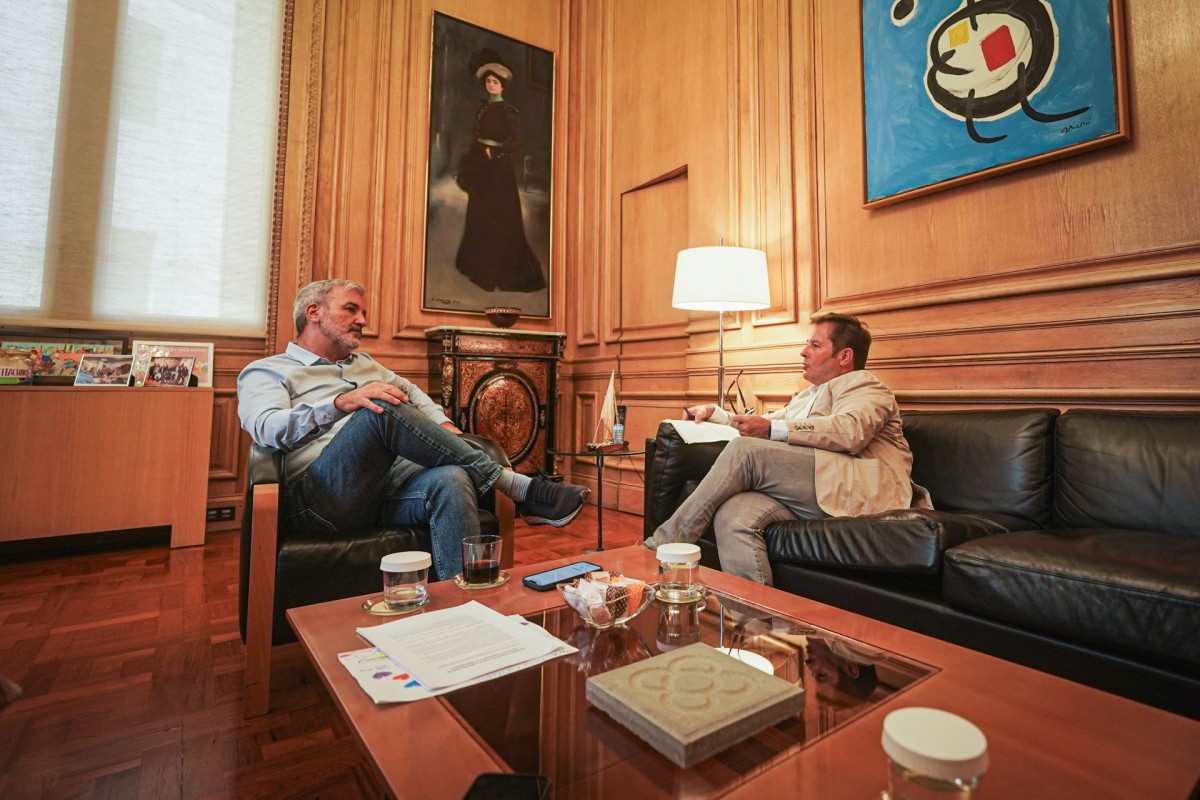
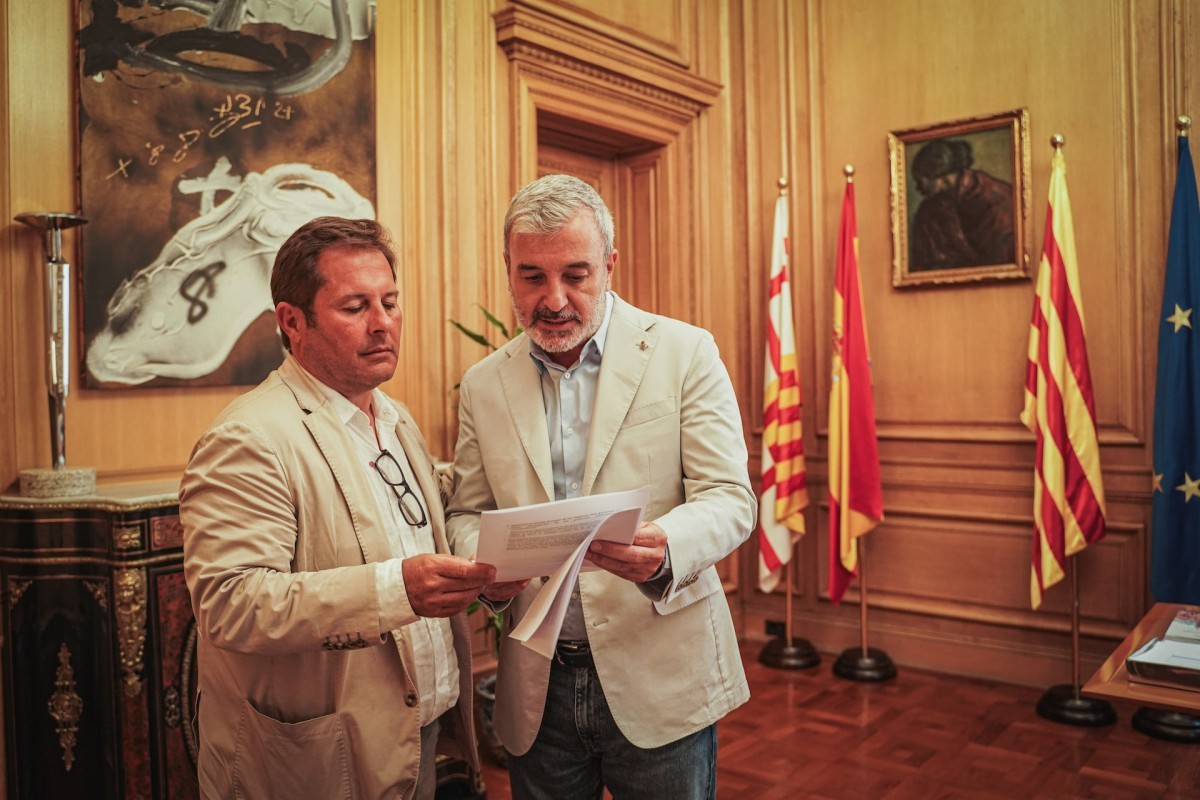
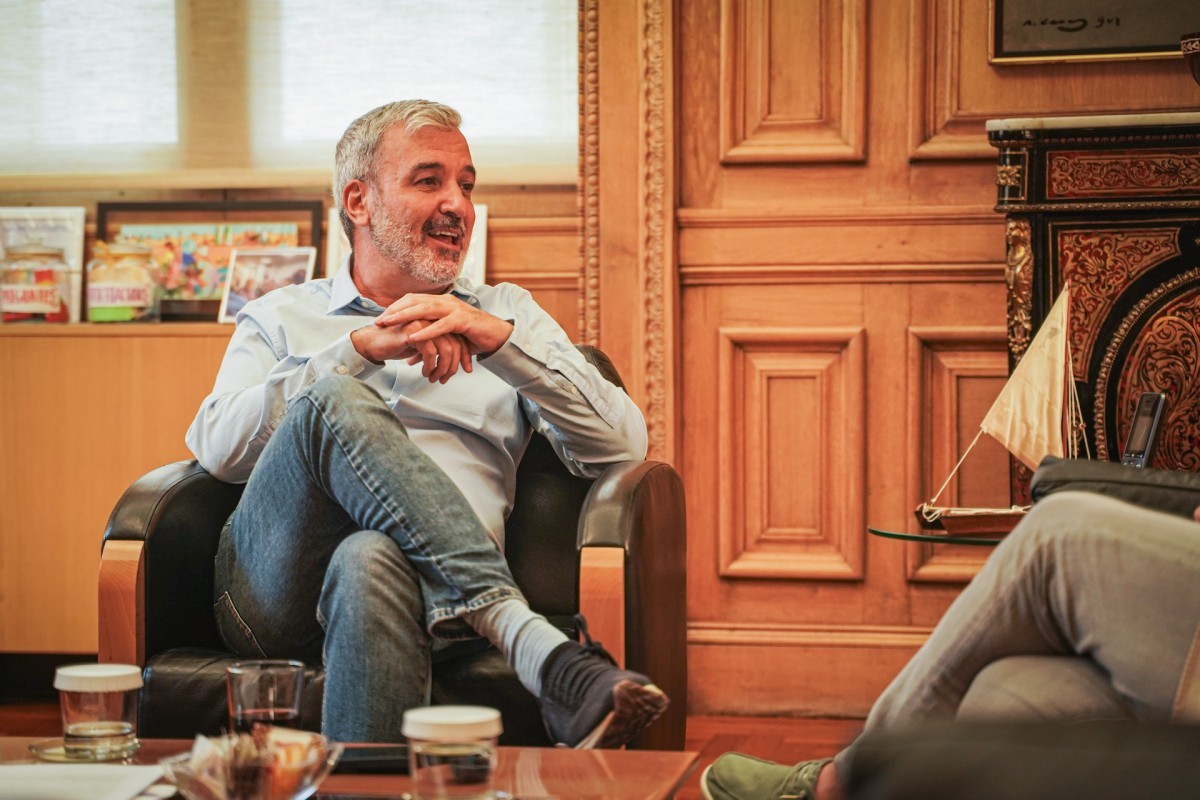
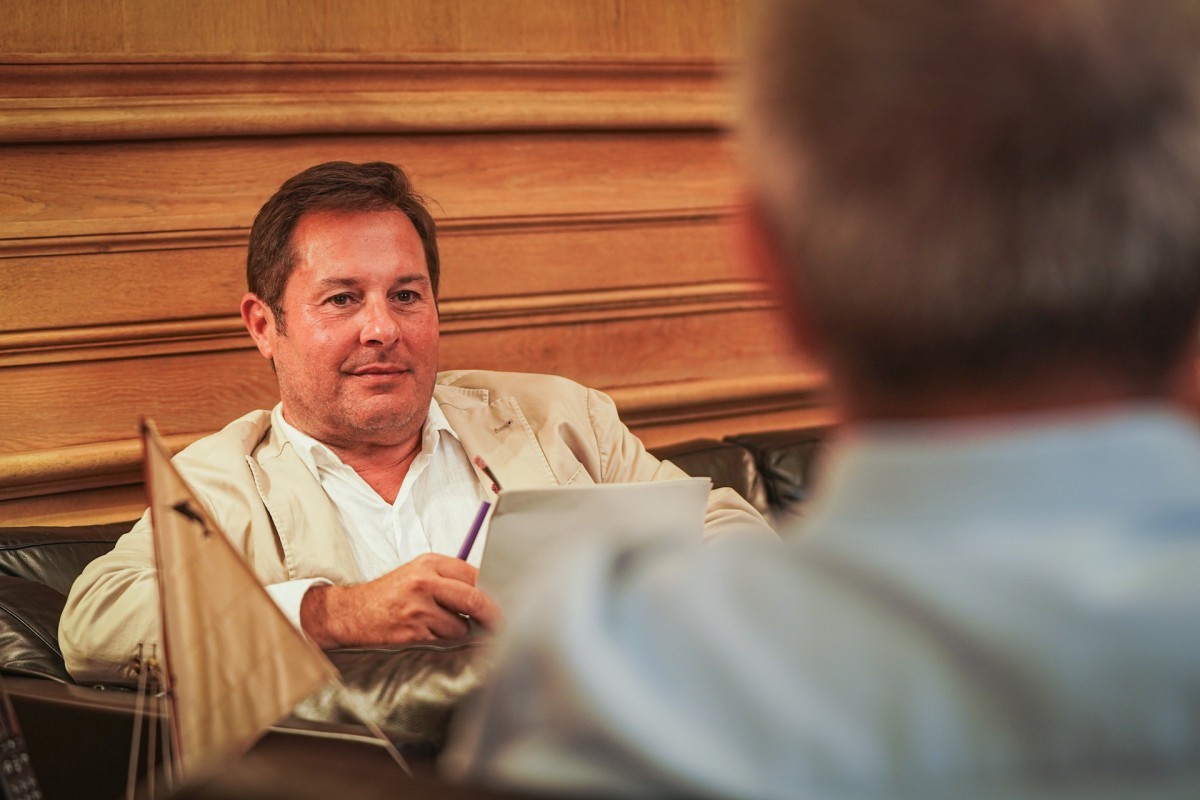
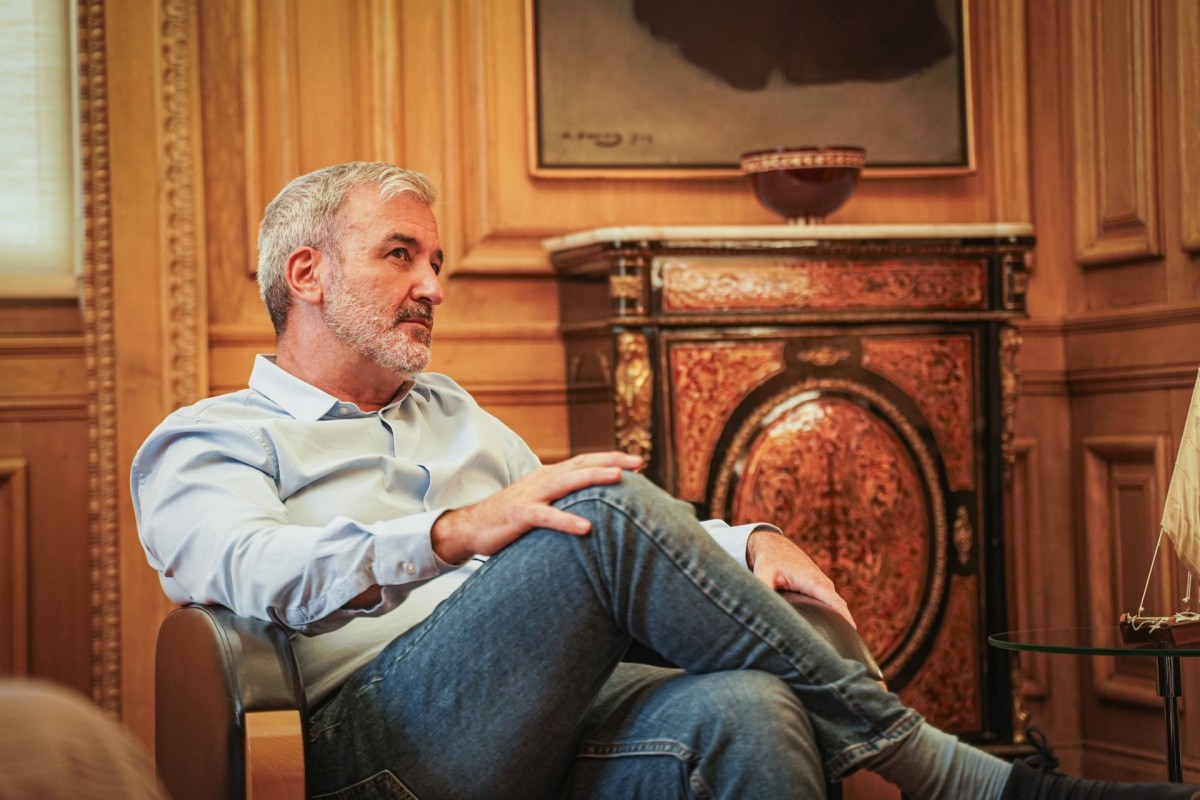
Marc López Plana interviews Jaume Collboni, Mayor of Barcelona.Agenda Pública / Tsun Ho
The mayor of Barcelona, Jaume Collboni, begins the political year by giving an interview to Agenda Pública. Collboni is, after Pedro Sánchez and Salvador Illa, the socialist leader with the most institutional power in Spain. This is not surprising, given his leadership of a global city that competes on the global stage with cities in the category of Paris, New York, Vienna or Rome. In this conversation with our director, Marc López Plana, Collboni discusses his long-term vision for the city. The mayor wants to send a clear message: "If Barcelona does well, Spain will do well".
Collboni became mayor of the city just over a year ago. Since then, he has become a leading progressive politician at the municipal level in his political space in Spain and one of the most recognized progressive voices in large global cities: "I am a mayor of a great city in the world, but above all I am a mayor of the people of the city of Barcelona, who is concerned with how primary healthcare centres will be built, how housing is going to be financed or how the Metro network is going to be expanded." The Collboni Doctrine, a new concept that emerges from this conversation, he says is "to realize the right to a liveable city."
We delve into this conversation to understand his vision for the city and for community. Housing, tourism or the power of cities take the forefront in this interview, in which we move away from the noise. Collboni champions cities as the new centre of power of the 21st century, as well as the need for the State in Spain to support Barcelona based on the principle of neutrality as the other great global city in the country. A conversation outside the usual topics that occupy our public agenda, because Agenda Pública wants to contribute to putting on the table those fundamental issues that, deep down, are the ones that affect us the most.
More than 25% of Barcelonans were born outside Spain.
Jaume Collboni (J. C.): And 51% of Barcelona residents were not born in Barcelona. For the first time in history, those not born in Barcelona are more than those born in Barcelona. This is part of what it means to be a global city and it also generates a sense of loss of identity for a part of the citizenry.
A year later, how do you explain to a citizen of Seville, or any other place in Spain, that you were chosen as the mayor of Barcelona by your party [Partit dels Socialistes de Catalunya – S&D], by the Partido Popular (EPP) and by the Comuns (Green – EFA)?
In first place, a PSC mayor was invested with a progressive program, and everyone knew that it was so. Secondly, the motivations of each of them were different, but they had one point in common: not to go back with an alternative candidacy self-described as an independentist front and which, moreover, represented another generation. The Comuns wanted to avoid a conservative mayor and the PP wanted to avoid a pro-independence mayor and they agreed that I combined these two objectives. Being aware – and we were very clear about this – that we were going to develop our program on which there was no agreement with the other parties that invested me.
How has the city changed a year after your arrival at the mayor's office?
There are several levels of perception of things that have begun to change in the city. We have a cleaner city, with better-maintained public spaces, with a more relaxed and calmer political climate. In addition, citizens already are aware and know, for the most part, that we have launched plans for the transformation of the city in the medium term, something we call the citizens' agenda.
In one year, through the Pla Viure [Living Plan], we have doubled the land available for public housing and we have adopted measures such as the prohibition of tourist flats from 2028 to free up housing for residential use. The Pla Clima [Climate Plan] includes measures against climate change and for the reduction of its effects on the life of the city. The Endreça Pla, which was our first action in government, is making it possible to bring order to public spaces, to shared spaces, from all points of view: security, cleanliness, order... And the Pla de Barris [The Neighbourhood Plan], which we have relaunched, makes it possible to fight against inequalities. In fact, just today [August 22nd], I come from BAOBAB, a success story in integration and social cohesion projects in Barcelona´s communities for children who have no means and who cannot go on holiday.
In these areas, citizens have begun to perceive the fruits of our efforts. And, in general, we have managed to restore normalcy to institutional life. We defend a progressive project, which aspires to articulate progressive majorities inside and outside the City Council, but, above all, we are a government for everyone. I am the mayor of all the people of Barcelona and of all the communities of the city. Those things that were sometimes attributed to the ‘old politics’ is also perceived by many people in the city. And it has also resulted in a certain normalization of institutional relations. I have met with the president of the Catalan Parliament, of Junts (Non-attached), with Mr. Rull, or with the King of Spain normally.
You are the mayor of reference for progressives in Spain. Where would you place the differences with a conservative mayor like that of Madrid?
I don't know if I would compare what is happening in Barcelona with another city. Progressives put above all the guarantee and exercise of social rights, access to housing, health or education, transport as a priority... and for this we use mechanisms for the redistribution of wealth. That is what differentiates us from the right. We want to generate prosperity, we want to be a city that is friendly to economic activity, where it is easy to create new businesses and where there are companies, but our task is to ensure that, through taxes, that wealth that we create becomes the guarantee for social rights, which can be summarized in the right to the city and the right to a liveable city. This is the principle of the Collboni doctrine. By habitable I mean that it is affordable for everyone, especially for the working middle class, and make it compatible with the great challenge that we have in large global cities. The principle behind the Collboni doctrine is that being an open and global city is not only compatible but, additionally, it can also benefit the defence and guarantee of the social rights of the citizens of Barcelona.
That dichotomy that some political options have sometimes tried to establish, that these objectives are incompatible and that you have to choose between them, is not true. Barcelona has historically shown that it is possible to be an open, global city, with investments, with major events, and then have policies of redistribution and guarantee of rights at the same time. And I would say on account of being an open and global city as well.
We are a global city, but above all we are a city on a human scale, and that double dimension of the global city and the human scale is what characterises a progressive project. Recently I have heard some conservative mayors in Spain talk about the inevitability of the phenomenon of tourist flats. That is the opposite of my conception of what a city that prioritizes social rights and the right of access to housing is.
The correspondent in Spain of the Financial Times dedicated an informative piece to mass tourism in the city of Barcelona, just at the moment when you announced the battle against tourist flats. How do you combine being a city that wants to continue receiving tourism with a city that allows its citizens to have a home and with a city that is habitable?
There is a very clear difference between being a city with tourism or being a tourist city. We are not a tourist city nor do we want to be. We are a city that is at the service of the citizens of Barcelona, by birth or by choice, and that puts them at the centre. The tourism industry has to put itself at the service of the city and the preservation of rights, such as the right of access to housing. The project, fundamentally, is that. That requires public intervention. That requires taxation on tourism.
For example, the tourist tax allows us to finance the services that tourists use when they visit us, but it is also making it easier for us to make social return policies. This summer we have started installing air conditioning in the city's public primary schools. We have 160 schools that we are going to power air conditioning with solar energy. This project is a good practice in the fight against climate change, which generates clean energy, and is being developed at the expense of the tourist tax. Thus, there is a social return on the tourist tax.
The approach is radically different. That does not mean that we do not want tourism. Tourism is important to our economy. Tourism represents almost 15% of GDP and more than 100,000 people make a living from it, but limits must be set. That idea of limit, which is relatively new, is accepted by everyone today. Tour operators – those who are most critical of mass tourism – and, obviously, the majority of citizens agree that unlimited growth cannot be achieved and that measures must be taken, some drastic and I would say courageous.
Other than the policy to end tourist flats, we have begun to introduce the concept of areas of great affluence, the ‘Spaces of High Influx’ (EGA), which are 14 areas where there will be public investment for restructuring, such as the Sagrada Familia or Parc Güell. We are also going to adjust the tourist tax, for example, for the arrival of cruise passengers in the city, especially those that dock for less than twelve hours. We are going to deploy policies to de-massify tourism and limit its negative impact on the city, public spaces, and housing. We do not want mass tourism, and we are going to limit it.
Mayor, are two global cities possible in a Spain like ours?
It is a fact. In the main forums of major cities in the world, in C40, in Eurocities, in all the major alliances of cities in the world to which Barcelona belongs, Barcelona is often the only Spanish city present. This is not a recent development, this is something that has been occurring for a long time. We act as an open city and a global city. For example, on climate issues we have been especially active and we will continue to be so. Among other things, because the great global cities of the world, and the European ones in particular, are cities that have progressive mayors. That is already a fact, but obviously we have to have the State in favor or, at least, not have the State against it. From the point of view of the city's presence in international forums, Barcelona continues to have a very relevant reputation and capacity to prescribe public policies. The issue of school air conditioning is one of the good practices that we are going to explain at the Rio summit in November.
And, obviously, our model to manage the impact of globalisation – the social democratic, the progressive – is already seen, for example, in the management of tourism, which is different from that of other cities. Without petulance and with a lot of humility, I believe that these are policies that are opening a path and that they are policies that are going to end up being adopted by all open and global cities. When you learn about the cases of Paris, Rome or Florence and you talk about public policies, or they explain public policies to you, you see that there is a similarity, a continuous line, which is not to deny globalization, not to deny that we are open and global cities, but to face how to manage that globality in favor of citizens based on public intervention.
Would you like the State to separate itself more from Madrid and help Barcelona more?
When there have been Socialist governments, that has been the perception. The great leaps that Barcelona has made since the return of democracy to Spain have been because it had the support of the State and because there were Socialist presidents in Madrid. And I give two examples: one is the Olympic Games and the other is the Mobile World Congress (MWC).
The Mobile arrives as a strategic commitment to the city, not just as a major event. It is an event that comes to transform the economic model of the city; mass tourism must be stopped and the city's economy must be diversified, which is what Barcelona is doing successfully. At the moment, for example, more jobs are being created in Barcelona in the knowledge-technology sector than in the industrial sector, that is because there is a strategic commitment by the State. The MWC puts Barcelona on the world map in terms of technological investments and, at the same time, it has made it possible to develop landing strips for investment in technology, with the example of 22@, our innovation district. This has happened when there has been an agreement with the State.
Then, being aware that we are not the capital of the State, we do claim prominence, especially in the cultural and scientific field. In the Zapatero period, the agreement of cultural and scientific co-capital emerged, which is in force today and which consists of also economically recognising that the institutions and cultural programmes of Barcelona are of interest to the whole of Spain, or that the scientific and research power that Barcelona has must also have economic recognition by the State. Today, Barcelona is the scientific capital of Spain. We have growth projects such as the Mercat del Péix, the Ciutadella del Conocimiento, the Nuevo Clínic or the Caixa Research Institute.
In addition, the arrival of AstraZeneca, with an investment of more than 1500 million euros, shows that Barcelona is positioning itself very quickly in health and life sciences. To have investments like this, which we worked on for two years to get, it is clear that the State has to accompany the strategy.
We are not asking for more than that. We want recognition for our national diversity and for Barcelona's prominence, because if Barcelona does well, Spain will also do well.
Is Barcelona lacking space? In other words, how will we solve the housing problem taking into account that the limits of the city are very defined? Can we solve the issue of the airport at sea?
I would like to start with this idea: Barcelona is far from being fully developed. There is a cliché that this is a city flanked by two rivers, between the mountains and the sea, that it cannot grow. That is not true. At the moment, with the Barcelona 2035 project, we are developing three areas of growth, especially housing and economic spaces, which is the entire Sagrera operation. The station will be finished in the year 2027. We have the whole new phase of the 22@ North and the Marina and Free Trade Zone. These three development areas will provide 50,000 new homes, half of which will be social housing, along with one million square meters of new commercial space. It is not true that we cannot build housing because there is no space. What must be done is to rethink the available spaces and take advantage of the momentum of transformations such as that of La Sagrera. That is Barcelona 2035 which, by the way, will represent a public investment of 10,000 million euros, which is the equivalent in nominal terms of what was done at the Olympic Games.
That is the magnitude of the transformation, without having a great event alone, but looking at the city in a different way. And, obviously, with all the criteria of sustainability, public transport, energy efficiency, etc. That is the first idea.
The second idea is that the reality of Barcelona’s metropolitan area, in my opinion, is no longer limited to the three million inhabitants of the metropolitan administrative area. The metropolitan reality of Barcelona is the metropolitan region of five million inhabitants of the first ring of the administrative area, plus Vilanova, the Valleses and Maresme, and in the future it will require some kind of public policy articulation because it is what gives us scale to solve problems such as housing. There will be no solution to the housing issue without good rail connections or a public housing policy in the metropolitan region. That will also make us more competitive internationally. When I go to China and they ask me how many inhabitants Barcelona has, I say five million. A population of five million gives you some weight at the global stage.
Do we need a larger airport?
We need more transcontinental connectivity so that we do not have to go to Madrid, Paris or London when we want to fly to Asia or the United States. I say it that bluntly so that everyone understands. If Barcelona wants to maintain its status as a city that takes advantage of the opportunities of being a global city for the benefit of the city and its citizens, one of the elements that gives us competitiveness is direct transcontinental connectivity.
We have worked a lot from the City Council because the direct transcontinental connection is what is decisive for talent to come, for investments to come, for people of quality to come... That's what Boston did. Led by the university system, the city proposed the expansion of the airport. In fact, the president of Boston airport was a university professor, he was the representative of the university sector, because to be competitive, to have the best professors and the best students, they needed direct connectivity.
That is my model. I am not the one, nor do I have to be, to define what the track or the extension has to be like. I would say that it must be the most economically efficient and the one that has the least impact from an environmental point of view.
Let us remember that aviation is the great gateway to global connectivity and that is has a net-zero emissions goal by 2050. If Barcelona and Catalonia do not make this expansion, why have we developed the 22@? Why are we going to build the new Fira Montjuïc? Why do we explain ourselves to the world as a city of fairs and congresses, if then the gateway is not well connected at a global level? It is a contradiction to do one thing and not do the other. In short, I trust that the president Illa will have the determination to unblock this matter.
The ‘procés’ expelled the main financial entities from Barcelona. Now a bank wants to buy a bank located in Madrid that, under normal circumstances, would have its headquarters in Barcelona. What does the mayor of Barcelona have to say about this?
The mayor of Barcelona says that, in order to guarantee their future and prosperity, Barcelona and Catalonia have to have financial muscle and financial centrality from the large financial institutions that are Catalan in origin. The mayor has to say that we have to recover the centrality of the financial system in Catalonia, because it is part of the real power that a territory has to develop and progress.
Apart from being a symbol of the economic development of Catalonia, these banks have employees in Catalonia and, above all, they provide a very important service of financing the small and medium-sized economy of Catalonia, with decisions that are taken in Catalonia. The place where decisions are made is relevant, even if it is later said that the dynamics are global, or that they are globalized or European banking groups.
Therefore, the mayor of Barcelona says that we must do everything possible to create the conditions to maintain the headquarters of financial institutions in Catalonia or to recover them, and to preserve banks and financial institutions that are of Catalan origin and that then operate in Spain and in Europe or in the world. It is not easy to undertake, but I am sure that in this new stage that is now opening up in Catalonia we will be able to start creating the conditions for that to happen.
Does the mayor of Barcelona need more power? Should it have the possibility of participating in the governance of a decision of these sort because it affects its capacity to be a global city?
If the answer is binary, the answer would be yes. Not in all cases in the same way, obviously. The regulatory framework of the banking system is of the State and the European Union, so it is perhaps the least practicable example. But there are several progressive mayors (Paris, Rome, London or Warsaw) who work in a network, and I give this as an example of the qualitative leap that the big European cities want to make. We are the last mile of many public policies promoted by the European Union and the Spanish Government. Large cities are the last mile of environmental policies, social cohesion, the digital revolution... It is an institutional anomaly that, sometimes, large cities cannot participate in forums or direct access to funds, nor do we participate in the regulation of some of these policies that we are going to have to end up applying because they are aimed at large urban areas, which is where most people live in the world and in Europe.
In this sense, we launched a manifesto calling for the ability for cities to exert influence at these levels, once the enlargement of the European Union is decided, when the treaties are reformed, to establish levels of dialogue, consultation and participation of large cities in some of these decisions. If not, they will not work. They will be inapplicable. Or, as it has happened elsewhere to some fellow mayors, there will be digital or ecological transformation policies that will be applied and will fail because their respective states defend contrary theses and the funding never arrives.
This is the great movement that we are going to present to the new European Commission to convince them. On the new European political map, the big cities are the bastions of Europeanism, of the defence of human rights, of democracy, of social rights, of cohesion, of the fight against climate change. We are great allies of these public policies, but having states or parastatal organizations that filter these policies makes them impossible to execute. In the case of Barcelona, we have to have much more decision-making capacity in the port and at the airport.
It is an obvious case. Our current decision-making capacity in the port is symbolic, and in the airport it is non-existent, and that is an anomaly.
Does Barcelona need a state law on strategic sectors that allows it to regulate areas such as ports, airports and transport, banking and finance, energy, telecommunications, biotechnology or the water cycle?
I share the intention of the question. If the State or the Autonomous Communities want some of the policies in these areas to be implemented, either large cities and metropolitan areas are listened to and accounted for, or it will not happen. For example, the implementation of renewable energy, of solar panels, in cities is being very costly for us because the regulatory framework has not been consulted with the cities. Funding arrives indirectly, late and poorly. And we are moving at snail’s speed. The electrification in the city of Barcelona to facilitate the penetration of electric vehicles (we have 1000 charging points from a public company and 3,000 in the pipeline) has been done by the city by its own initiative. Because, if I have to wait for a certain European directive to arrive, we will not be able to comply with the electrification and the deployment of low emission zones and the car companies tell me: "Either you electrify the city or my market penetration rate will not be able to rise". In Barcelona we have had to bear the full funding burden of this public policy. But, in neighbouring cities, such as Hospitalet and San Cugat, they have not been able to do it because either they have not had the resources or they had other priorities. It seems to me that it does not make any sense.
I think we have to go case by case. For example, when it comes to port and airport decisions. The port is part of the city. It cannot be that we have only one seat on the port’s board and that we have to depend on whether we understand each other or not, as has been the case with Damià Calvet and Lluís Salvador, with the president of the Port of Barcelona. And the same with the airport. Sometimes they attribute to me the expansion or not of the airport; I would like to be at the table where this is going to be debated because it is going to affect my city.
In this sense, we are already immersed in the reform of the Barcelona City Council. The reform affects the law on large cities of the State, in the first place, and the processing must be done in the Parliament of Catalonia. Over the years, when there has been a conflict of competences, jurisprudence has tended to undervalue the Municipal Charter to the detriment of other laws that have been made in the last 15 years. We have already reviewed the last 15 years so that, for example, the presence of the City Council in the port of Barcelona increases and so that we participate in the management of the airport.
A pact between the PSC (S&D), Esquerra Republicana (Green – EFA) and the Comuns (Green – EFA) has made it possible to choose Salvador Illa as President of Catalonia on the basis of what has been called a solidarity concert or singular financing. Have you calculated what Barcelona could aspire to receive through financing of this nature?
The great accomplishment, the great achievement of this investiture of the Government of Catalonia, is to overcome the stage of the ‘procés’ by breaking the pro-independence and national political blocs. That has a very high political value for Catalonia and for Spain. The media has gone passed this point too quickly. Insist. Due to the citizen’s democratic choice, it has been possible to break the blocs that paralyzed Catalan politics, that divided Catalan society and that made us miss many opportunities, to put it in an elegant way, in the last ten years. That is over, also for Barcelona.
I have not done the math; we have not done the numbers from the point of view of how much the aliquot part could represent for the city. What I can tell you is that at the moment we have nine primary care centres in the city of Barcelona that need to be built new or that need to be expanded. I can tell you that the Generalitat has to finance 1,700 public housing units in the city, for which we have already ceded the land. I can tell you that there is a plan for the growth of the Barcelona Metro, to build twelve new stops between now and 2030, which must be done.
As mayor of Barcelona and as president of the Barcelona Metropolitan Area, I tell you that there has to be money for that, and I have full confidence in President Illa. For some years there has been no money for that: because of the economic crisis, because of different political priorities or because Catalonia was simply not governed. Now we are going to have a government – and Aragonès had already begun to do so to be honest – that is not frontist, that wants to unite and that wants to make progressive policies for all, and a government that is going to govern.
When I speak with President Illa, I will approach him in the same way as I did President Aragonès (ERC). In the first meeting I had with Mr Aragonès, at the reception after his inauguration, he was not very elegant. Then, in the first institutional meeting, I suppose because of my union tradition, my objective was to bring something to my city. I went to the meeting with a list of eleven lots ready for construction. Then, the President Aragonès told me: "Well, we'll talk about this in the future." I told him: "No, Mr President, I am going to leave you the folder with you." "If Incasol is ready to build on them, I will give you the land and we will agree on it within two months." In other words, in the end, public policies must translate into having an affordable city for a working middle class that guarantees social rights. I am a mayor of a great city in the world, but above all, I am a mayor of the people of Barcelona, who care about how we are going to build healthcare centres, how housing is going to be financed or how the Metro network is going to be expanded. That is what is relevant to me and that is what I am going to propose again to President Illa.
Thanks a lot.
Collboni became mayor of the city just over a year ago. Since then, he has become a leading progressive politician at the municipal level in his political space in Spain and one of the most recognized progressive voices in large global cities: "I am a mayor of a great city in the world, but above all I am a mayor of the people of the city of Barcelona, who is concerned with how primary healthcare centres will be built, how housing is going to be financed or how the Metro network is going to be expanded." The Collboni Doctrine, a new concept that emerges from this conversation, he says is "to realize the right to a liveable city."
We delve into this conversation to understand his vision for the city and for community. Housing, tourism or the power of cities take the forefront in this interview, in which we move away from the noise. Collboni champions cities as the new centre of power of the 21st century, as well as the need for the State in Spain to support Barcelona based on the principle of neutrality as the other great global city in the country. A conversation outside the usual topics that occupy our public agenda, because Agenda Pública wants to contribute to putting on the table those fundamental issues that, deep down, are the ones that affect us the most.
Photo: Agenda Pública / Tsun Ho
More than 25% of Barcelonans were born outside Spain.
Jaume Collboni (J. C.): And 51% of Barcelona residents were not born in Barcelona. For the first time in history, those not born in Barcelona are more than those born in Barcelona. This is part of what it means to be a global city and it also generates a sense of loss of identity for a part of the citizenry.
A year later, how do you explain to a citizen of Seville, or any other place in Spain, that you were chosen as the mayor of Barcelona by your party [Partit dels Socialistes de Catalunya – S&D], by the Partido Popular (EPP) and by the Comuns (Green – EFA)?
In first place, a PSC mayor was invested with a progressive program, and everyone knew that it was so. Secondly, the motivations of each of them were different, but they had one point in common: not to go back with an alternative candidacy self-described as an independentist front and which, moreover, represented another generation. The Comuns wanted to avoid a conservative mayor and the PP wanted to avoid a pro-independence mayor and they agreed that I combined these two objectives. Being aware – and we were very clear about this – that we were going to develop our program on which there was no agreement with the other parties that invested me.
How has the city changed a year after your arrival at the mayor's office?
There are several levels of perception of things that have begun to change in the city. We have a cleaner city, with better-maintained public spaces, with a more relaxed and calmer political climate. In addition, citizens already are aware and know, for the most part, that we have launched plans for the transformation of the city in the medium term, something we call the citizens' agenda.
"We have a cleaner city, with better-maintained public spaces, with a more relaxed and calmer political climate"
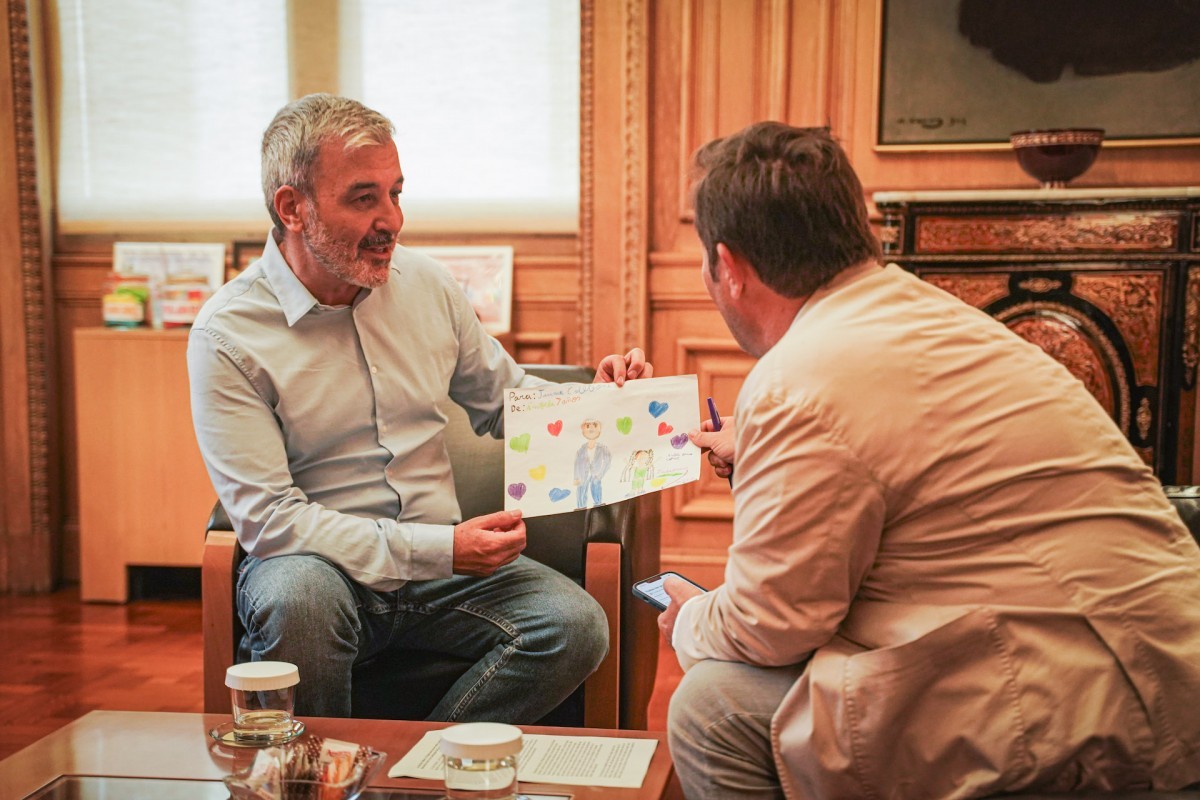
In one year, through the Pla Viure [Living Plan], we have doubled the land available for public housing and we have adopted measures such as the prohibition of tourist flats from 2028 to free up housing for residential use. The Pla Clima [Climate Plan] includes measures against climate change and for the reduction of its effects on the life of the city. The Endreça Pla, which was our first action in government, is making it possible to bring order to public spaces, to shared spaces, from all points of view: security, cleanliness, order... And the Pla de Barris [The Neighbourhood Plan], which we have relaunched, makes it possible to fight against inequalities. In fact, just today [August 22nd], I come from BAOBAB, a success story in integration and social cohesion projects in Barcelona´s communities for children who have no means and who cannot go on holiday.
The Mayor of Barcelona shows the drawing made by a child during his visit to the BAOBAB project. Photo: Agenda Pública / Tsun Ho
In these areas, citizens have begun to perceive the fruits of our efforts. And, in general, we have managed to restore normalcy to institutional life. We defend a progressive project, which aspires to articulate progressive majorities inside and outside the City Council, but, above all, we are a government for everyone. I am the mayor of all the people of Barcelona and of all the communities of the city. Those things that were sometimes attributed to the ‘old politics’ is also perceived by many people in the city. And it has also resulted in a certain normalization of institutional relations. I have met with the president of the Catalan Parliament, of Junts (Non-attached), with Mr. Rull, or with the King of Spain normally.
You are the mayor of reference for progressives in Spain. Where would you place the differences with a conservative mayor like that of Madrid?
I don't know if I would compare what is happening in Barcelona with another city. Progressives put above all the guarantee and exercise of social rights, access to housing, health or education, transport as a priority... and for this we use mechanisms for the redistribution of wealth. That is what differentiates us from the right. We want to generate prosperity, we want to be a city that is friendly to economic activity, where it is easy to create new businesses and where there are companies, but our task is to ensure that, through taxes, that wealth that we create becomes the guarantee for social rights, which can be summarized in the right to the city and the right to a liveable city. This is the principle of the Collboni doctrine. By habitable I mean that it is affordable for everyone, especially for the working middle class, and make it compatible with the great challenge that we have in large global cities. The principle behind the Collboni doctrine is that being an open and global city is not only compatible but, additionally, it can also benefit the defence and guarantee of the social rights of the citizens of Barcelona.
"Being an open and global city is not only compatible but, additionally, can also benefit the defence and guarantee of the social rights of the citizens of Barcelona. This is the principle behind the Collboni doctrine"
That dichotomy that some political options have sometimes tried to establish, that these objectives are incompatible and that you have to choose between them, is not true. Barcelona has historically shown that it is possible to be an open, global city, with investments, with major events, and then have policies of redistribution and guarantee of rights at the same time. And I would say on account of being an open and global city as well.
We are a global city, but above all we are a city on a human scale, and that double dimension of the global city and the human scale is what characterises a progressive project. Recently I have heard some conservative mayors in Spain talk about the inevitability of the phenomenon of tourist flats. That is the opposite of my conception of what a city that prioritizes social rights and the right of access to housing is.
The correspondent in Spain of the Financial Times dedicated an informative piece to mass tourism in the city of Barcelona, just at the moment when you announced the battle against tourist flats. How do you combine being a city that wants to continue receiving tourism with a city that allows its citizens to have a home and with a city that is habitable?
There is a very clear difference between being a city with tourism or being a tourist city. We are not a tourist city nor do we want to be. We are a city that is at the service of the citizens of Barcelona, by birth or by choice, and that puts them at the centre. The tourism industry has to put itself at the service of the city and the preservation of rights, such as the right of access to housing. The project, fundamentally, is that. That requires public intervention. That requires taxation on tourism.
For example, the tourist tax allows us to finance the services that tourists use when they visit us, but it is also making it easier for us to make social return policies. This summer we have started installing air conditioning in the city's public primary schools. We have 160 schools that we are going to power air conditioning with solar energy. This project is a good practice in the fight against climate change, which generates clean energy, and is being developed at the expense of the tourist tax. Thus, there is a social return on the tourist tax.
"The tourist tax allows us to finance the services that tourists use when they visit us, but it is also making it easier for us to make social return policies. This summer we have started installing air conditioning in the city's public primary schools"
The approach is radically different. That does not mean that we do not want tourism. Tourism is important to our economy. Tourism represents almost 15% of GDP and more than 100,000 people make a living from it, but limits must be set. That idea of limit, which is relatively new, is accepted by everyone today. Tour operators – those who are most critical of mass tourism – and, obviously, the majority of citizens agree that unlimited growth cannot be achieved and that measures must be taken, some drastic and I would say courageous.
Other than the policy to end tourist flats, we have begun to introduce the concept of areas of great affluence, the ‘Spaces of High Influx’ (EGA), which are 14 areas where there will be public investment for restructuring, such as the Sagrada Familia or Parc Güell. We are also going to adjust the tourist tax, for example, for the arrival of cruise passengers in the city, especially those that dock for less than twelve hours. We are going to deploy policies to de-massify tourism and limit its negative impact on the city, public spaces, and housing. We do not want mass tourism, and we are going to limit it.
Photo: Agenda Pública / Tsun Ho
Mayor, are two global cities possible in a Spain like ours?
It is a fact. In the main forums of major cities in the world, in C40, in Eurocities, in all the major alliances of cities in the world to which Barcelona belongs, Barcelona is often the only Spanish city present. This is not a recent development, this is something that has been occurring for a long time. We act as an open city and a global city. For example, on climate issues we have been especially active and we will continue to be so. Among other things, because the great global cities of the world, and the European ones in particular, are cities that have progressive mayors. That is already a fact, but obviously we have to have the State in favor or, at least, not have the State against it. From the point of view of the city's presence in international forums, Barcelona continues to have a very relevant reputation and capacity to prescribe public policies. The issue of school air conditioning is one of the good practices that we are going to explain at the Rio summit in November.
"The great global cities of the world, and the European ones in particular, are cities that have progressive mayors"
And, obviously, our model to manage the impact of globalisation – the social democratic, the progressive – is already seen, for example, in the management of tourism, which is different from that of other cities. Without petulance and with a lot of humility, I believe that these are policies that are opening a path and that they are policies that are going to end up being adopted by all open and global cities. When you learn about the cases of Paris, Rome or Florence and you talk about public policies, or they explain public policies to you, you see that there is a similarity, a continuous line, which is not to deny globalization, not to deny that we are open and global cities, but to face how to manage that globality in favor of citizens based on public intervention.
Would you like the State to separate itself more from Madrid and help Barcelona more?
When there have been Socialist governments, that has been the perception. The great leaps that Barcelona has made since the return of democracy to Spain have been because it had the support of the State and because there were Socialist presidents in Madrid. And I give two examples: one is the Olympic Games and the other is the Mobile World Congress (MWC).
The Mobile arrives as a strategic commitment to the city, not just as a major event. It is an event that comes to transform the economic model of the city; mass tourism must be stopped and the city's economy must be diversified, which is what Barcelona is doing successfully. At the moment, for example, more jobs are being created in Barcelona in the knowledge-technology sector than in the industrial sector, that is because there is a strategic commitment by the State. The MWC puts Barcelona on the world map in terms of technological investments and, at the same time, it has made it possible to develop landing strips for investment in technology, with the example of 22@, our innovation district. This has happened when there has been an agreement with the State.
"Today, Barcelona is the scientific capital of Spain"
Then, being aware that we are not the capital of the State, we do claim prominence, especially in the cultural and scientific field. In the Zapatero period, the agreement of cultural and scientific co-capital emerged, which is in force today and which consists of also economically recognising that the institutions and cultural programmes of Barcelona are of interest to the whole of Spain, or that the scientific and research power that Barcelona has must also have economic recognition by the State. Today, Barcelona is the scientific capital of Spain. We have growth projects such as the Mercat del Péix, the Ciutadella del Conocimiento, the Nuevo Clínic or the Caixa Research Institute.
In addition, the arrival of AstraZeneca, with an investment of more than 1500 million euros, shows that Barcelona is positioning itself very quickly in health and life sciences. To have investments like this, which we worked on for two years to get, it is clear that the State has to accompany the strategy.
"If Barcelona does well, Spain will also do well"
We are not asking for more than that. We want recognition for our national diversity and for Barcelona's prominence, because if Barcelona does well, Spain will also do well.
Photo: Agenda Pública / Tsun Ho
Is Barcelona lacking space? In other words, how will we solve the housing problem taking into account that the limits of the city are very defined? Can we solve the issue of the airport at sea?
"Barcelona is far from being fully developed. There is a cliché that this is a city flanked by two rivers, between the mountains and the sea, that it cannot grow. That is not true"
I would like to start with this idea: Barcelona is far from being fully developed. There is a cliché that this is a city flanked by two rivers, between the mountains and the sea, that it cannot grow. That is not true. At the moment, with the Barcelona 2035 project, we are developing three areas of growth, especially housing and economic spaces, which is the entire Sagrera operation. The station will be finished in the year 2027. We have the whole new phase of the 22@ North and the Marina and Free Trade Zone. These three development areas will provide 50,000 new homes, half of which will be social housing, along with one million square meters of new commercial space. It is not true that we cannot build housing because there is no space. What must be done is to rethink the available spaces and take advantage of the momentum of transformations such as that of La Sagrera. That is Barcelona 2035 which, by the way, will represent a public investment of 10,000 million euros, which is the equivalent in nominal terms of what was done at the Olympic Games.
That is the magnitude of the transformation, without having a great event alone, but looking at the city in a different way. And, obviously, with all the criteria of sustainability, public transport, energy efficiency, etc. That is the first idea.
The second idea is that the reality of Barcelona’s metropolitan area, in my opinion, is no longer limited to the three million inhabitants of the metropolitan administrative area. The metropolitan reality of Barcelona is the metropolitan region of five million inhabitants of the first ring of the administrative area, plus Vilanova, the Valleses and Maresme, and in the future it will require some kind of public policy articulation because it is what gives us scale to solve problems such as housing. There will be no solution to the housing issue without good rail connections or a public housing policy in the metropolitan region. That will also make us more competitive internationally. When I go to China and they ask me how many inhabitants Barcelona has, I say five million. A population of five million gives you some weight at the global stage.
Do we need a larger airport?
We need more transcontinental connectivity so that we do not have to go to Madrid, Paris or London when we want to fly to Asia or the United States. I say it that bluntly so that everyone understands. If Barcelona wants to maintain its status as a city that takes advantage of the opportunities of being a global city for the benefit of the city and its citizens, one of the elements that gives us competitiveness is direct transcontinental connectivity.
We have worked a lot from the City Council because the direct transcontinental connection is what is decisive for talent to come, for investments to come, for people of quality to come... That's what Boston did. Led by the university system, the city proposed the expansion of the airport. In fact, the president of Boston airport was a university professor, he was the representative of the university sector, because to be competitive, to have the best professors and the best students, they needed direct connectivity.
"We need more transcontinental connectivity so that we do not have to go to Madrid, Paris or London when we want to fly to Asia or the United States"
That is my model. I am not the one, nor do I have to be, to define what the track or the extension has to be like. I would say that it must be the most economically efficient and the one that has the least impact from an environmental point of view.
Let us remember that aviation is the great gateway to global connectivity and that is has a net-zero emissions goal by 2050. If Barcelona and Catalonia do not make this expansion, why have we developed the 22@? Why are we going to build the new Fira Montjuïc? Why do we explain ourselves to the world as a city of fairs and congresses, if then the gateway is not well connected at a global level? It is a contradiction to do one thing and not do the other. In short, I trust that the president Illa will have the determination to unblock this matter.
Foto: Agenda Pública / Tsun Ho
The ‘procés’ expelled the main financial entities from Barcelona. Now a bank wants to buy a bank located in Madrid that, under normal circumstances, would have its headquarters in Barcelona. What does the mayor of Barcelona have to say about this?
The mayor of Barcelona says that, in order to guarantee their future and prosperity, Barcelona and Catalonia have to have financial muscle and financial centrality from the large financial institutions that are Catalan in origin. The mayor has to say that we have to recover the centrality of the financial system in Catalonia, because it is part of the real power that a territory has to develop and progress.
Apart from being a symbol of the economic development of Catalonia, these banks have employees in Catalonia and, above all, they provide a very important service of financing the small and medium-sized economy of Catalonia, with decisions that are taken in Catalonia. The place where decisions are made is relevant, even if it is later said that the dynamics are global, or that they are globalized or European banking groups.
"The mayor has to say that we have to recover the centrality of the financial system in Catalonia, because it is part of the real power that a territory has to develop and progress"
Therefore, the mayor of Barcelona says that we must do everything possible to create the conditions to maintain the headquarters of financial institutions in Catalonia or to recover them, and to preserve banks and financial institutions that are of Catalan origin and that then operate in Spain and in Europe or in the world. It is not easy to undertake, but I am sure that in this new stage that is now opening up in Catalonia we will be able to start creating the conditions for that to happen.
Does the mayor of Barcelona need more power? Should it have the possibility of participating in the governance of a decision of these sort because it affects its capacity to be a global city?
If the answer is binary, the answer would be yes. Not in all cases in the same way, obviously. The regulatory framework of the banking system is of the State and the European Union, so it is perhaps the least practicable example. But there are several progressive mayors (Paris, Rome, London or Warsaw) who work in a network, and I give this as an example of the qualitative leap that the big European cities want to make. We are the last mile of many public policies promoted by the European Union and the Spanish Government. Large cities are the last mile of environmental policies, social cohesion, the digital revolution... It is an institutional anomaly that, sometimes, large cities cannot participate in forums or direct access to funds, nor do we participate in the regulation of some of these policies that we are going to have to end up applying because they are aimed at large urban areas, which is where most people live in the world and in Europe.
"It is an institutional anomaly that, sometimes, large cities cannot participate forums or direct access to funds, nor do we participate in the regulation of some of these policies that we are going to have to end up applying because they are aimed at large urban areas"
In this sense, we launched a manifesto calling for the ability for cities to exert influence at these levels, once the enlargement of the European Union is decided, when the treaties are reformed, to establish levels of dialogue, consultation and participation of large cities in some of these decisions. If not, they will not work. They will be inapplicable. Or, as it has happened elsewhere to some fellow mayors, there will be digital or ecological transformation policies that will be applied and will fail because their respective states defend contrary theses and the funding never arrives.
This is the great movement that we are going to present to the new European Commission to convince them. On the new European political map, the big cities are the bastions of Europeanism, of the defence of human rights, of democracy, of social rights, of cohesion, of the fight against climate change. We are great allies of these public policies, but having states or parastatal organizations that filter these policies makes them impossible to execute. In the case of Barcelona, we have to have much more decision-making capacity in the port and at the airport.
It is an obvious case. Our current decision-making capacity in the port is symbolic, and in the airport it is non-existent, and that is an anomaly.
Photo: Agenda Pública / Tsun Ho
Does Barcelona need a state law on strategic sectors that allows it to regulate areas such as ports, airports and transport, banking and finance, energy, telecommunications, biotechnology or the water cycle?
I share the intention of the question. If the State or the Autonomous Communities want some of the policies in these areas to be implemented, either large cities and metropolitan areas are listened to and accounted for, or it will not happen. For example, the implementation of renewable energy, of solar panels, in cities is being very costly for us because the regulatory framework has not been consulted with the cities. Funding arrives indirectly, late and poorly. And we are moving at snail’s speed. The electrification in the city of Barcelona to facilitate the penetration of electric vehicles (we have 1000 charging points from a public company and 3,000 in the pipeline) has been done by the city by its own initiative. Because, if I have to wait for a certain European directive to arrive, we will not be able to comply with the electrification and the deployment of low emission zones and the car companies tell me: "Either you electrify the city or my market penetration rate will not be able to rise". In Barcelona we have had to bear the full funding burden of this public policy. But, in neighbouring cities, such as Hospitalet and San Cugat, they have not been able to do it because either they have not had the resources or they had other priorities. It seems to me that it does not make any sense.
"The implementation of renewable energy, of solar panels, in cities is being very costly for us because the regulatory framework has not been consulted with the cities. Funding arrives indirectly, late and poorly"
I think we have to go case by case. For example, when it comes to port and airport decisions. The port is part of the city. It cannot be that we have only one seat on the port’s board and that we have to depend on whether we understand each other or not, as has been the case with Damià Calvet and Lluís Salvador, with the president of the Port of Barcelona. And the same with the airport. Sometimes they attribute to me the expansion or not of the airport; I would like to be at the table where this is going to be debated because it is going to affect my city.
In this sense, we are already immersed in the reform of the Barcelona City Council. The reform affects the law on large cities of the State, in the first place, and the processing must be done in the Parliament of Catalonia. Over the years, when there has been a conflict of competences, jurisprudence has tended to undervalue the Municipal Charter to the detriment of other laws that have been made in the last 15 years. We have already reviewed the last 15 years so that, for example, the presence of the City Council in the port of Barcelona increases and so that we participate in the management of the airport.
A pact between the PSC (S&D), Esquerra Republicana (Green – EFA) and the Comuns (Green – EFA) has made it possible to choose Salvador Illa as President of Catalonia on the basis of what has been called a solidarity concert or singular financing. Have you calculated what Barcelona could aspire to receive through financing of this nature?
The great accomplishment, the great achievement of this investiture of the Government of Catalonia, is to overcome the stage of the ‘procés’ by breaking the pro-independence and national political blocs. That has a very high political value for Catalonia and for Spain. The media has gone passed this point too quickly. Insist. Due to the citizen’s democratic choice, it has been possible to break the blocs that paralyzed Catalan politics, that divided Catalan society and that made us miss many opportunities, to put it in an elegant way, in the last ten years. That is over, also for Barcelona.
"It has been possible to break the blocs that paralyzed Catalan politics, that divided Catalan society and that made us miss many opportunities, to put it in an elegant way, in the last ten years"
I have not done the math; we have not done the numbers from the point of view of how much the aliquot part could represent for the city. What I can tell you is that at the moment we have nine primary care centres in the city of Barcelona that need to be built new or that need to be expanded. I can tell you that the Generalitat has to finance 1,700 public housing units in the city, for which we have already ceded the land. I can tell you that there is a plan for the growth of the Barcelona Metro, to build twelve new stops between now and 2030, which must be done.
As mayor of Barcelona and as president of the Barcelona Metropolitan Area, I tell you that there has to be money for that, and I have full confidence in President Illa. For some years there has been no money for that: because of the economic crisis, because of different political priorities or because Catalonia was simply not governed. Now we are going to have a government – and Aragonès had already begun to do so to be honest – that is not frontist, that wants to unite and that wants to make progressive policies for all, and a government that is going to govern.
"I am a mayor of a great city in the world, but above all, I am a mayor of the people of Barcelona, who care about how we are going to build healthcare centres, how housing is going to be financed or how the Metro network is going to be expanded. That is what is relevant to me and that is what I am going to propose again to President Illa"
When I speak with President Illa, I will approach him in the same way as I did President Aragonès (ERC). In the first meeting I had with Mr Aragonès, at the reception after his inauguration, he was not very elegant. Then, in the first institutional meeting, I suppose because of my union tradition, my objective was to bring something to my city. I went to the meeting with a list of eleven lots ready for construction. Then, the President Aragonès told me: "Well, we'll talk about this in the future." I told him: "No, Mr President, I am going to leave you the folder with you." "If Incasol is ready to build on them, I will give you the land and we will agree on it within two months." In other words, in the end, public policies must translate into having an affordable city for a working middle class that guarantees social rights. I am a mayor of a great city in the world, but above all, I am a mayor of the people of Barcelona, who care about how we are going to build healthcare centres, how housing is going to be financed or how the Metro network is going to be expanded. That is what is relevant to me and that is what I am going to propose again to President Illa.
Thanks a lot.
Ahora en portada
17 de octubre de 2026
16 de octubre de 2026
Noticias relacionadas
Hace 110 semanas
Collboni: "El Estado tiene que apoyar a Barcelona como ciudad global de España"
Lo más leído