Sábado, 17 de octubre de 2026




EXPERT FROM THE CENTER FOR AMERICAN PROGRESS
The world after Trump's victory: "Spain must lead the fight against illiberalism"
"For Europe, Spain presents a unique opportunity. Under the progressive leadership of Pedro Sánchez, it can play a pivotal role in the fight against illiberalism on the global stage." Agenda Pública conversations with Robert Benson, Senior Analyst for National and International Security Policy at the Center for American Progress, a key think tank for the Democratic Party. The expert analyses the situation of the global left after the reelection of Donald Trump.

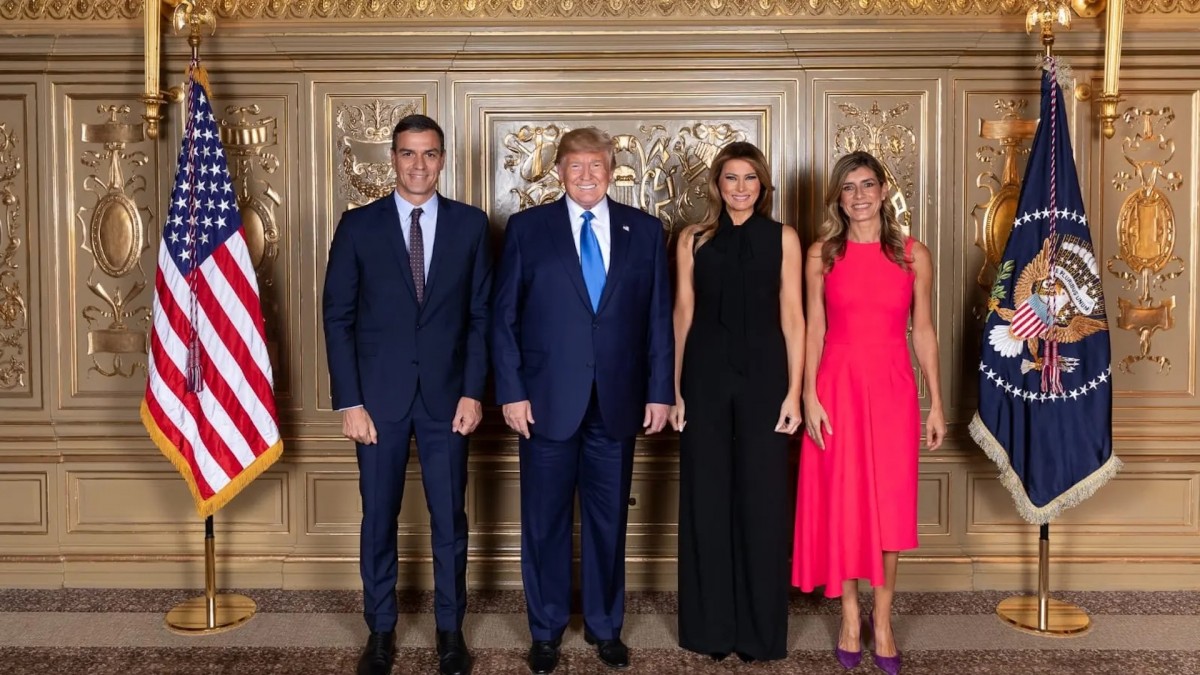
Pedro Sánchez y Begoña Gómez junto a Donald y Melania Trump en 2019.The White House
"Spain has a responsibility that transcends its internal disputes. It must act as a bulwark against authoritarianism and as a bridge between Washington and Europe. Especially on issues like Palestine." So says Robert Benson, Senior Analyst for National and International Security Policy at the Center for American Progress (CAP). Founded by John Podesta, the CAP was born with the aim of countering conservative think tanks and promoting progressive ideas in US politics. It has exerted a notable influence on the Obama and Biden administrations, as well as on the campaigns of Hillary Clinton and Kamala Harris.
In this conversation with Agenda Pública, Benson—who holds a PhD in Political Science from the Free University of Berlin and has a distinguished career at the OECD and the Berlin Center for Social Sciences—analyses from Washington the role of Spain in Europe. As well as the challenges facing liberal democracy in a context marked by the election of Donald Trump as the next President of the US.
The reasons for this collapse can be divided into two general areas. First, there's the political economy explanation: decades of neoliberal globalization have eviscerated the working class. Their towns have been hollowed out, their standard of living has declined, and they feel the Democratic Party hasn't offered a plan to address their struggles. In contrast, Trump and the Republicans have made these voters feel seen and understood.
Second, there's the cultural argument: the MAGA movement represents a backlash against an increasingly diverse, educated country and against the perceived monopolization of opportunities by elites on the East and West coasts. Many people feel socially and culturally alienated from places like Washington, New York, and Los Angeles, and they vote accordingly.
Ultimately, I believe the reality lies in some combination of these factors.

Robert Benson, Senior Analyst for National and International Security Policy at the Center for American Progress. Foto: Robert Benson / CAP
Looking at the political economy angle, the Democratic Party focused on macroeconomic indicators and dismissed these everyday struggles in the messaging. Why didn't they recognize the pain that is now so apparent after the election?
As an analyst, I can see that there was a disconnect between the messaging from the Democratic Party and the lived experiences of ordinary people. The party emphasized macroeconomic successes without addressing the real challenges people face. The fact that the stock market is performing well, does not mean that working-class people can have affordable housing or send their kid to college.
Voters earning under $60,000 decisively supported Trump, while those earning over $100,000 backed Harris. This marks a reversal of historical trends, where Democrats were the party of the working class and Republicans represented business interests. That is certainly not the case after November 5th.
Trump's Republicans successfully adopted a class-based messaging strategy, resonating even with working-class voters of colour. This gave Trump the majority of the Latino vote and nearly a quarter of the African-American male vote. It wasn't about identity politics but economic concerns, which helped Trump form a multi-racial coalition —a significant realignment in US politics.

I’d like to shift focus to a broader issue. Both in Europe and the US, we’re seeing a trend toward illiberalism. Why is this happening?
Two interconnected phenomena are at play. First, democracies are grappling with far-right populist movements aiming to undermine democratic institutions. In the US, this is embodied by the MAGA movement; in Europe, by parties like the AfD in Germany and leaders like Santiago Abascal in Spain.
"This is a dangerous time for democracies and democrats all over the world"Second, on the global stage, authoritarian powers like Russia and China are leveraging their influence to challenge the international rules-based order. Russia’s invasion of Ukraine and China's actions in the South China Sea exemplify this. This is a dangerous time for democracies and democrats all over the world.
What should Europe watch for during Trump's second term to identify democratic backsliding in the US?
There's a real danger in Trump achieving what we call in Washington the trifecta: control of the presidency, the Senate, and the House. Add to that a Supreme Court sympathetic to his agenda, and the implications are significant.
During Trump's first term, institutional resilience and adults in the room helped prevent the worst outcomes. Many of those figures are now gone. Pay attention to who Trump appoints to key positions—this will signal the direction of his administration. For instance, appointing Elise Stefanik as U.N. ambassador would raise concerns, while someone like Marco Rubio as Secretary of State might inspire more confidence.
Another troubling sign is Trump's push for recess appointments, bypassing Senate approval for his Cabinet picks. This reflects a growing power struggle within the Republican Party between institutionalists and MAGA loyalists. If Trump consolidates power, it could mark a decisive shift toward authoritarian governance.
Is it true to say that a significant portion of the US public has embraced authoritarianism, given this election result?
It's a legitimate concern. Trump's authoritarian tendencies stem from his disregard for democratic norms and checks and balances. His supporters, frustrated by Washington's dysfunction, are drawn to his promises to bypass obstacles and deliver results—no matter the cost.
This doesn't necessarily reflect an authoritarian mindset among voters, but rather a willingness to support a would-be authoritarian who claims to improve their lives. However, his priority will be renewing tax cuts for those who are the wealthiest Americans. This is one of the great magic tricks of the 21st century, a billionaire from New York was able to cloak himself as a champion of the working man, while surrounding himself with billionaires like Elon Musk and Peter Teal. This disconnect is alarming.
If authoritarianism is indeed taking hold, how can the US resist?
Democratic institutions won't collapse overnight, but the erosion of norms and attacks on independent institutions can have a chilling effect. It's vital for citizens to hold their representatives accountable and resist authoritarian impulses.
Resistance must come from ordinary citizens refusing to accept these threats to democracy. History teaches us that the instinct is often to look away in the face of repression. Fighting this impulse is crucial. People must actively oppose measures like targeting vulnerable groups, undermining the rule of law, and eroding institutional independence.
"The responsibility to protect democracy will fall on everyday Americans, who must make it clear that authoritarian tactics are unacceptable"Bravery will be needed on a massive scale. The responsibility to protect democracy will fall on everyday Americans, who must make it clear that authoritarian tactics are unacceptable.
How can the left comeback from this point?
The Democratic Party—and the left globally—must introspect. It needs to reconnect with voters outside urban centres like Washington and New York and articulate a vision that resonates with working people.
Internationally, left-leaning parties face similar challenges. In the U.K., former Labour strongholds now back Brexit and Reform UK, a far-right party. In France, traditional Communist Party bastions have turned to Le Pen's National Rally. The US mirrors this trend, with blue-collar regions like West Virginia swinging decisively to Trump.
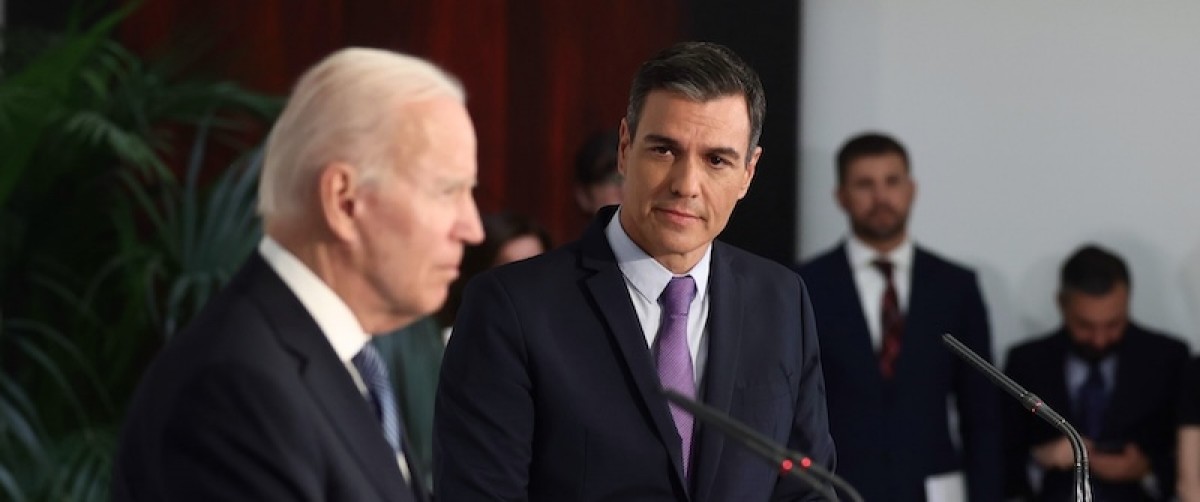
With the departure of Joe Biden and the expected exit of Olaf Scholz in February, the sole progressive leaderships that will remain in the Western liberal democracies will be those of Keir Starmer and Pedro Sánchez. Foto: EUROPA PRESS/E. Parra. POOL / Europa Press / ContactoPhoto
Europe's historical experience with authoritarianism—whether under Franco, Salazar, or Italian fascism—makes it potentially more resilient than the US, which has never had an iliberal experience. Yet, there are troubling exceptions, like the AfD’s rise in Germany and Vox’s growing influence in Spain.
"It's crucial for leaders like Sánchez and PSOE internationally to carry the banner of a compassionate politics because the rest of the EU is unable in its current state"Spain, however, has a unique opportunity. With progressive leadership under Pedro Sánchez, it can play a pivotal role in countering authoritarianism globally. Unlike Germany or France, which are mired in their own domestic crises, Spain is well-positioned to take on a greater leadership role in transatlantic politics and within the G20. It's crucial for leaders like Sánchez and PSOE internationally to carry the banner of a compassionate politics because the rest of the EU is unable in its current state.
Sánchez's government is not as strong as it could seem from the outside. Spain has a divided left and has several domestic issues.
Sometimes external shocks can unite the left, overcoming the divisions that usually weaken it. Spain has a responsibility that transcends its domestic squabbles. It must step up as a bulwark against authoritarianism and as a bridge between Washington and Europe. Specially, on issues such as Palestine.
Global challenges demand courageous leadership, and Sánchez's government has a chance to champion democratic values internationally. The stakes are too high to allow fragmentation or inaction.
Ahora en portada
16 de octubre de 2026
16 de octubre de 2026
16 de octubre de 2026
Noticias relacionadas
Hace 108 semanas
Von der Leyen's economic turnaround takes Teresa Ribera to the top of the Commission
Hace 123 semanas
The EU regulates, the US rules Factors of European backwardness
Lo más leído