Martes, 20 de octubre de 2026




CONVERSACIONES
Nadia Calviño: "We must ensure that ideas, technologies and companies born in Europe stay here"
A few days shy of her first year as president of the European Investment Bank, Nadia Calviño talks to Marc López Plana, director of Agenda Pública, to reflect on the EIB's strategy for the coming years. The main objective of the bank and its president is "to ensure that Europe maintains a strong and competitive voice in the framework of the new world order."

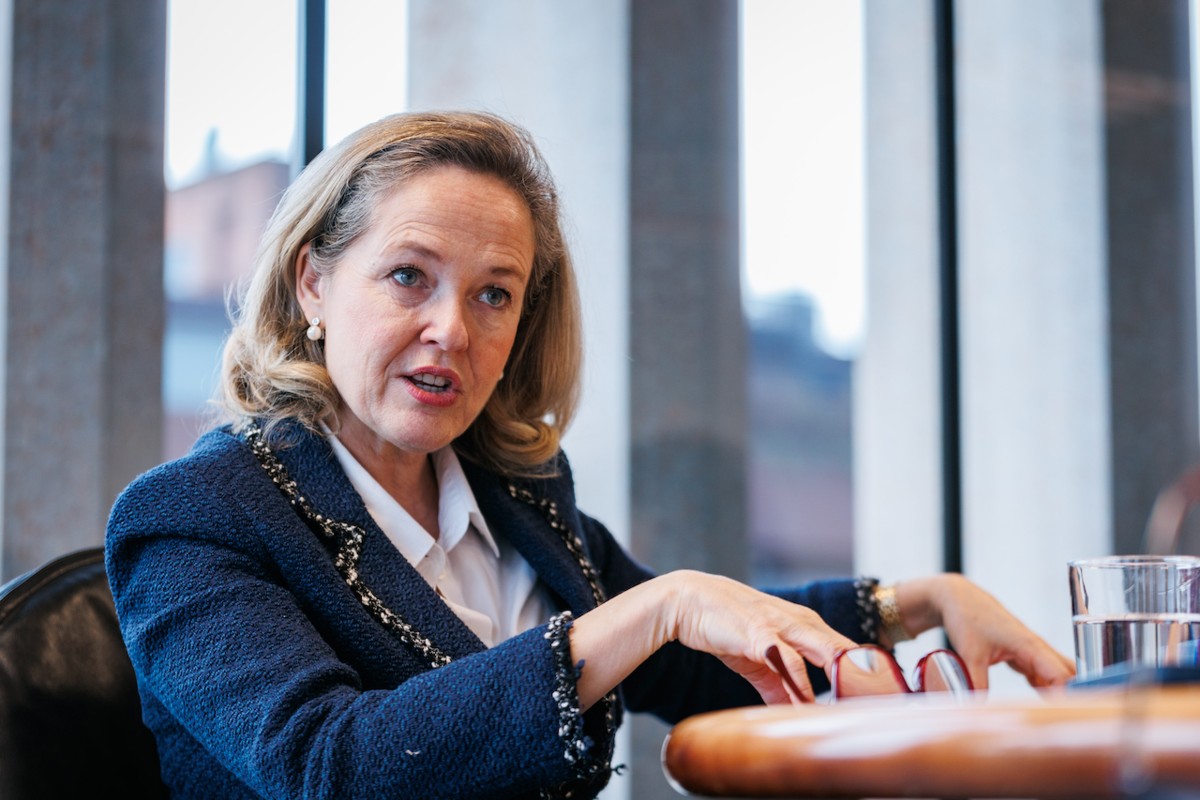
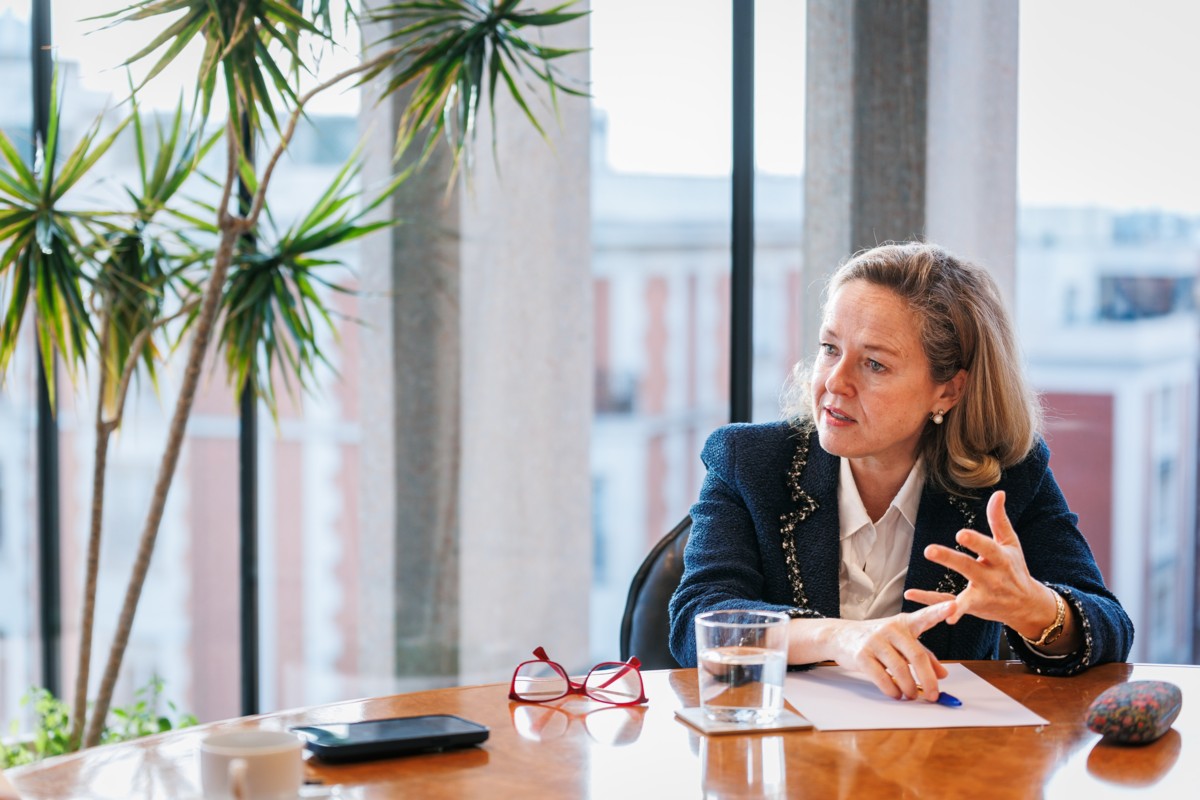
Nadia Calviño, president of the EIB, during the conversation with Agenda Pública. Tania Sieira / Agenda Pública
She is the Spaniard who decides many of the strategic investments in Europe and in Agenda Pública we talked to her. Nadia Calviño, president of the European Investment Bank, is clear: Europe is at stake. "The decisions taken now will be decisive in defining its role in this new world order", she points out.
For the former vice-president of the Spanish government, "it is crucial for Europe to bet on two fundamental levers to ensure its future prosperity: the integration of the internal market and investment." In the conversation with Agenda Pública, with our director Marc López Plana, Calviño outlines the EIB's strategy for the coming years "with more than 50% of its investments in Europe directed towards climate action" and with a clear idea: "We have to ensure that ideas, technologies and companies born in Europe can scale and prosper here."
"We are witnessing a radical change in the foundations of the world order established since World War II", she specifies. "All this calls for a clear strategic orientation, focused on results and efficiency, to ensure that Europe maintains a strong and competitive voice within the new world order", she concludes.
What does a woman, on the one hand, and a Spanish woman, on the other, contribute to the EIB project at this time?
It is very positive that, for the first time, the EIB has a female president and, of course, its first Spanish president. It allows giving a more European vision to the financial arm of the European Union. On a personal level, I bring extensive experience both in the European Commission and as Economy Minister and Vice President of the Government of Spain, having lived through the European presidency. I also add the international dimension as president of the Monetary and Financial Committee of the International Monetary Fund. This allows the EIB to be much better integrated with national institutions, European institutions and international financial institutions.
We live in a process marked by deglobalization and also the war in Ukraine, which is leading the EU to opt for strategic autonomy. How does the EIB contribute to making Europe stronger?
I am not exaggerating when I say that we are witnessing a radical change in the foundations of the world order established after the Second World War. For the last eighty years, we have lived under a system supported by a network of multilateral financial institutions dominated by large Western economies. These have guaranteed financial stability, promoted free international trade under clear rules, consolidated the hegemony of the dollar and promoted the binomial of a market economy and liberal democracy. This model has been very beneficial for both the United States and Europe. In particular, Europe has enjoyed the dividends of peace and a system that has allowed it to become a global commercial and technological leading power.
Europe, in particular, is at a crossroads, and the decisions made now will be decisive in defining its role in this new world order.
What does Europe need not to be left behind in this process of changing the international order?
The Letta and Draghi reports are clear. It is crucial that Europe rely on two fundamental levers to ensure its future prosperity: the integration of the internal market and investment. Ending fragmentation and strengthening integration will ultimately allow European companies to exploit economies of scale, which is necessary to undertake simultaneously the climate transition and competitiveness.
In this context, the EIB, with a triple A rating and a great balance of 600 billion euros, is called upon to play an essential role in mobilizing the public and private investment necessary to face this transformation.
Let's talk about these key elements. Firstly, sustainability. Faced with an incoming US Administration that appears not to be committed to decarbonizing the global economy, Europe's responsibility in leading this effort increases significantly. How do you see the EIB's role in allocating more resources towards a green transition that others do not seem willing to take on or finance?
Beyond the political debates and noise, the truth is that the green transition is already an unstoppable reality. We are in an advanced phase of this energy revolution, led by economic interest and new technologies. This is evident in the global economy and I saw it recently at COP29 in Baku: companies are beginning to understand that the green transition is not only the right thing to do, but also the smartest thing to do. For every euro allocated to resilience and adaptation to climate change saves between five and seven euros in repairs and damages. Investing in prevention and resilience not only mitigates damage, but reduces future costs and losses. As, unfortunately, we have been able to witness in our own country.
In addition, we support energy efficiency in SMEs and distribution networks, such as the recent agreement with Iberdrola, and the decarbonization of heavy industrial sectors through biomethane, green hydrogen and alternative fuels. We finance strategic projects such as battery factories, electric vehicles and sustainable solutions for agriculture and buildings.
The EIB will continue to play a crucial role in ensuring that Europe leads this transformation, turning the green transition into a true European success. This includes betting on revolutionary technologies that decouple economic growth from CO₂ emissions and other polluting gases, moving towards a cleaner, more efficient and competitive economy.
In the face of climate disasters like the torrential storms that caused the tragedy of València, which not only cause human havoc but also serious economic impacts, how can the EIB react quickly and agilely? Additionally, how do you prepare to respond to the increasing frequency of these extreme events, combining prevention with immediate solutions?
In the last year, we have made great progress in the EIB's ability to respond quickly to emergencies. We have implemented mechanisms that enable us to speed up disbursements and reschedule projects, something that we are already putting into practice in the war in Ukraine, but as well in Central Europe, and just recently in València. We were able to redirect 900 million euros very rapidly, and now we are launching a new program of 400 million euros to help SMEs and mid-cap companies in the areas affected by the storms.
In the field of technological innovation, the EIB is called upon to be key for the EU to recover lost ground. Barcelona is today a competitive city at a European and global level, standing out as a hub for investment in deep tech and with projects that demonstrate successful results. Perhaps the European model is not to create a supergoogle as in the United States, but, from the EIB's perspective, how can Europe strengthen its technological capacity to compete with other great powers?
Europe has great talent, leading research centres and top-level startups. We have nothing to envy from other technological superpowers. However, the diagnosis is clear: our main problem is development and consolidation when these companies grow.
To address this issue, we need to make the market more integrated in areas like telecommunications and health. We have twenty-seven different ways to approve services and products, which makes us less competitive than countries like the United States.
We also need to facilitate access to capital. European markets are fragmented and do not efficiently channel savings to European companies. In fact, a large part of European savings ends up financing funds in the United States, which are then acquired by our startups.
58 of the unicorns that developed in 2022 in the United States were born in Europe. This must change. We have to ensure that ideas, technologies, and companies born in Europe can scale and prosper here.
I hope we can soon launch another similar mega fund, which will help consolidate an ecosystem that allows our companies to scale globally. In short, it is not about a lack of talent, but about achieving the necessary scale to compete face to face with the great technological powers. Reviewing the regulatory framework and guaranteeing a competitive environment conducive to innovation are key challenges for the future of Europe.
The problem of scale, as you mentioned, is that Europe has twenty-seven countries and, when deciding where to invest, there is a risk of concentrating only on two or three cities that are standing out, such as Barcelona in the field of deep tech. Wouldn't it be more effective to bet on these few cities so that they grow and become global references?
I do not agree with that view. Precisely, these new technologies benefit enormously from networks and collaboration between multiple actors. For example, in Spain, in the field of chip manufacturing, we have a diverse ecosystem that includes between 180 and 200 companies and research centres distributed from the University of La Laguna in the Canary Islands, through València, Barcelona, Madrid, and Galicia. The development of these networks is key to maximizing the impact of the investment.
To give a specific example, when we promoted the first quantum supercomputer in Southern Europe, we asked the Barcelona Supercomputing Center to coordinate eighteen or nineteen other research centres in Spain. This proves that it is possible and necessary to bring opportunities where the talent is, which is not concentrated in a few cities, but rather emerges in multiple places.
So, wouldn't you agree with the idea of creating three Silicon Valleys in Europe?
All of Europe should become a Silicon Valley! Of course, we must bet on key assets, such as the supercomputer at the National Supercomputing Center or the ICFO in Barcelona, which are world-renowned research centres. However, we must also recognize other emerging ecosystems. For example, the first research centre outside Belgium of IMEC, a world leader in nanotechnology, is being installed in Malaga. This is due to the ecosystem that already exists there, with startups and research centres of large American technology companies.
There has to be an appropriate balance between making great centres and having a network because talent is everywhere. Rich countries do not have more talent than poor countries, just as cities do not have more talent than rural areas. The objective is to create the conditions so that talent can progress and connect with each other.
Finally, let's talk about European defence and security. The EU is facing a war on its borders with Russia's invasion of Ukraine, and the EIB has been approached about considering investments in defence and technological dual-use. What position does the EIB have on this matter, and what is it working on in this area?
Since taking up my role at the EIB in January, I have been acutely aware of the need to scale up the European security and defence industry. As I mentioned earlier, Europe has enjoyed the dividends of peace for 80 years, but the invasion of Ukraine has underlined the importance of strengthening our strategic autonomy. We cannot continue depending on other countries, neither in the energy field nor in the security and defence field.
From day one, we set to work and in May we already took concrete steps: We revised our scope of eligibility for funding and created a dedicated office to promote projects in this area. One of the first decisions was to remove an important restriction: previously, for a project to be considered dual-use, it had to demonstrate that more than 50% of its future benefits would come from civil applications. By removing this requirement, we can now fund a broader spectrum of investments, ranging from border control and military mobility to cybersecurity, drones, space, defence research, demining and decontamination.
We also have a dedicated Vice-President, Robert De Groot, who has visited all fifteen Member States, including Spain, to meet with industry and assess how the EIB can contribute further.
In 2024, we have laid the necessary foundations, and I am confident that next year we will see significant projects at European level that the EIB will finance, thus strengthening our collective ability to ensure peace and security, in Europe and globally.
Thank you, Madam President.
For the former vice-president of the Spanish government, "it is crucial for Europe to bet on two fundamental levers to ensure its future prosperity: the integration of the internal market and investment." In the conversation with Agenda Pública, with our director Marc López Plana, Calviño outlines the EIB's strategy for the coming years "with more than 50% of its investments in Europe directed towards climate action" and with a clear idea: "We have to ensure that ideas, technologies and companies born in Europe can scale and prosper here."
"We are witnessing a radical change in the foundations of the world order established since World War II", she specifies. "All this calls for a clear strategic orientation, focused on results and efficiency, to ensure that Europe maintains a strong and competitive voice within the new world order", she concludes.
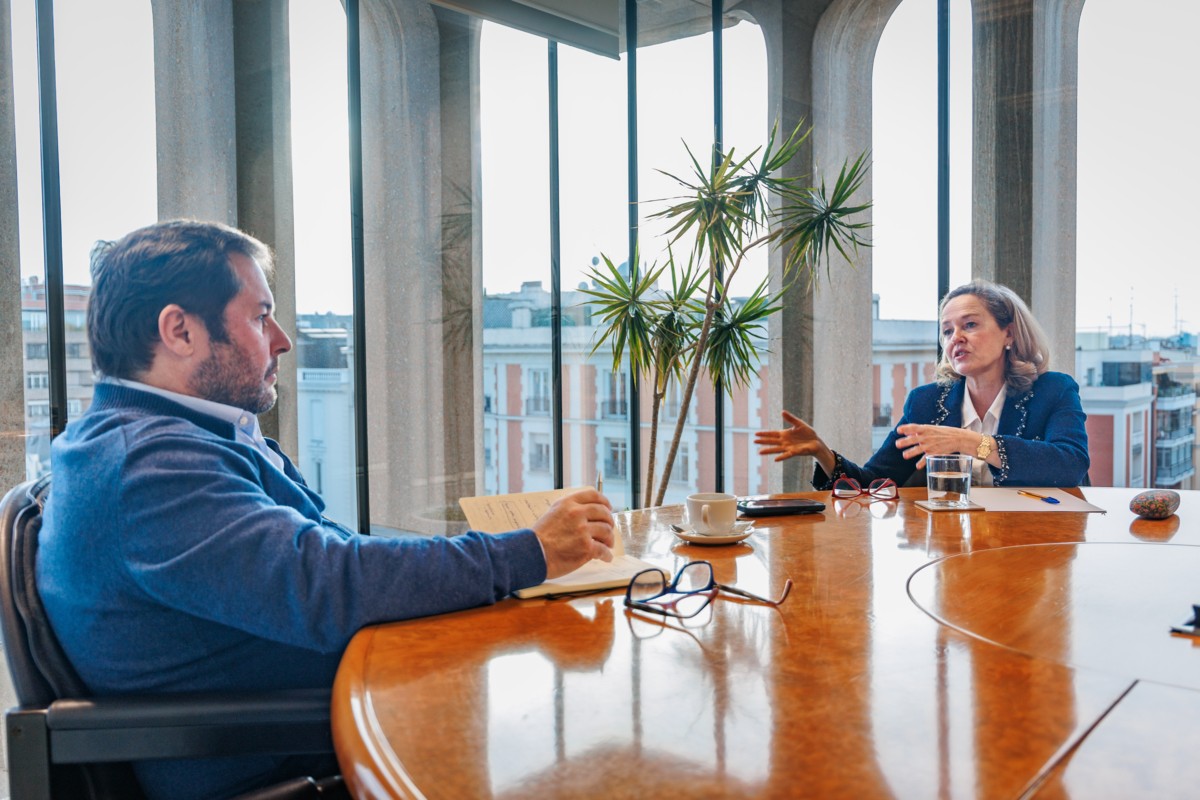
Marc López Plana and Nadia Calviño during the conversation. Foto: Tania Sieira / Agenda Pública
What does a woman, on the one hand, and a Spanish woman, on the other, contribute to the EIB project at this time?
It is very positive that, for the first time, the EIB has a female president and, of course, its first Spanish president. It allows giving a more European vision to the financial arm of the European Union. On a personal level, I bring extensive experience both in the European Commission and as Economy Minister and Vice President of the Government of Spain, having lived through the European presidency. I also add the international dimension as president of the Monetary and Financial Committee of the International Monetary Fund. This allows the EIB to be much better integrated with national institutions, European institutions and international financial institutions.
We live in a process marked by deglobalization and also the war in Ukraine, which is leading the EU to opt for strategic autonomy. How does the EIB contribute to making Europe stronger?
I am not exaggerating when I say that we are witnessing a radical change in the foundations of the world order established after the Second World War. For the last eighty years, we have lived under a system supported by a network of multilateral financial institutions dominated by large Western economies. These have guaranteed financial stability, promoted free international trade under clear rules, consolidated the hegemony of the dollar and promoted the binomial of a market economy and liberal democracy. This model has been very beneficial for both the United States and Europe. In particular, Europe has enjoyed the dividends of peace and a system that has allowed it to become a global commercial and technological leading power.
"Europe is at a crossroads, and the decisions taken now will be decisive in defining its role in this new world order"However, this order is today under profound scrutiny. I do not think it is so much deglobalization, global trade in fact continues to grow. It is more a reorientation of trade flows and a rethinking of the governance system of international institutions. In addition, the technological, green and digital revolutions are rearranging the makeup of international competitiveness.
Europe, in particular, is at a crossroads, and the decisions made now will be decisive in defining its role in this new world order.
What does Europe need not to be left behind in this process of changing the international order?
The Letta and Draghi reports are clear. It is crucial that Europe rely on two fundamental levers to ensure its future prosperity: the integration of the internal market and investment. Ending fragmentation and strengthening integration will ultimately allow European companies to exploit economies of scale, which is necessary to undertake simultaneously the climate transition and competitiveness.
In this context, the EIB, with a triple A rating and a great balance of 600 billion euros, is called upon to play an essential role in mobilizing the public and private investment necessary to face this transformation.
"The EIB has a key role to play in mobilizing public and private investment needed to successfully combine climate transition and competitiveness"All of this requires a clear strategic orientation, focused on results and efficiency, to ensure that Europe maintains a strong and competitive voice within the framework of the new world order. This transformation process not only redefines the whole economy, but also sets the course for sustainability and digitalization, key elements for the future of the continent.
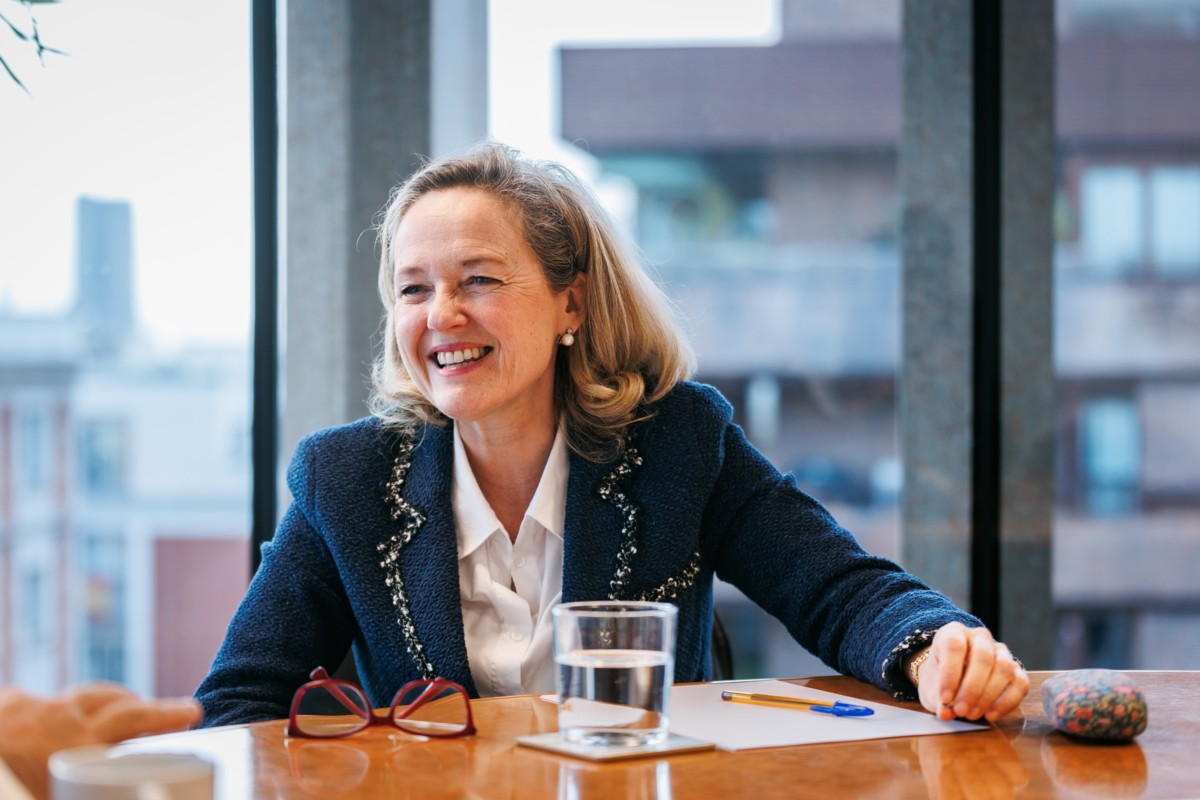
Nadia Calviño, President of the EIB. Foto: Tania Sieira / Agenda Pública
Let's talk about these key elements. Firstly, sustainability. Faced with an incoming US Administration that appears not to be committed to decarbonizing the global economy, Europe's responsibility in leading this effort increases significantly. How do you see the EIB's role in allocating more resources towards a green transition that others do not seem willing to take on or finance?
Beyond the political debates and noise, the truth is that the green transition is already an unstoppable reality. We are in an advanced phase of this energy revolution, led by economic interest and new technologies. This is evident in the global economy and I saw it recently at COP29 in Baku: companies are beginning to understand that the green transition is not only the right thing to do, but also the smartest thing to do. For every euro allocated to resilience and adaptation to climate change saves between five and seven euros in repairs and damages. Investing in prevention and resilience not only mitigates damage, but reduces future costs and losses. As, unfortunately, we have been able to witness in our own country.
"The European Investment Bank has established itself as the 'Climate Bank', with more than 50% of its investments in Europe directed to climate action"In this context, the European Investment Bank has established itself as the climate bank, with more than 50% of its investments in Europe directed towards climate action. We are financing key energy infrastructure, such as interconnections, grid modernization, renewable energy projects such as wind farms (onshore and offshore) and solar, and innovative developments such as the Salto de Chira reversible pumping plant in Gran Canaria.
In addition, we support energy efficiency in SMEs and distribution networks, such as the recent agreement with Iberdrola, and the decarbonization of heavy industrial sectors through biomethane, green hydrogen and alternative fuels. We finance strategic projects such as battery factories, electric vehicles and sustainable solutions for agriculture and buildings.
The EIB will continue to play a crucial role in ensuring that Europe leads this transformation, turning the green transition into a true European success. This includes betting on revolutionary technologies that decouple economic growth from CO₂ emissions and other polluting gases, moving towards a cleaner, more efficient and competitive economy.
In the face of climate disasters like the torrential storms that caused the tragedy of València, which not only cause human havoc but also serious economic impacts, how can the EIB react quickly and agilely? Additionally, how do you prepare to respond to the increasing frequency of these extreme events, combining prevention with immediate solutions?
In the last year, we have made great progress in the EIB's ability to respond quickly to emergencies. We have implemented mechanisms that enable us to speed up disbursements and reschedule projects, something that we are already putting into practice in the war in Ukraine, but as well in Central Europe, and just recently in València. We were able to redirect 900 million euros very rapidly, and now we are launching a new program of 400 million euros to help SMEs and mid-cap companies in the areas affected by the storms.
"We have made great strides in the EIB's ability to respond quickly to emergency situations. We have managed to redirect EUR 900 million to Valencia in a very short time"Looking to the future, our approach must combine immediate reaction with long-term planning. In addition to financing, we can provide technical advice to build and rebuild better, ensuring that infrastructure is more resilient and buildings are adapted to climate change. It is essential that all investments from now on are designed considering that these extreme phenomena will become increasingly frequent.
In the field of technological innovation, the EIB is called upon to be key for the EU to recover lost ground. Barcelona is today a competitive city at a European and global level, standing out as a hub for investment in deep tech and with projects that demonstrate successful results. Perhaps the European model is not to create a supergoogle as in the United States, but, from the EIB's perspective, how can Europe strengthen its technological capacity to compete with other great powers?
Europe has great talent, leading research centres and top-level startups. We have nothing to envy from other technological superpowers. However, the diagnosis is clear: our main problem is development and consolidation when these companies grow.
To address this issue, we need to make the market more integrated in areas like telecommunications and health. We have twenty-seven different ways to approve services and products, which makes us less competitive than countries like the United States.
We also need to facilitate access to capital. European markets are fragmented and do not efficiently channel savings to European companies. In fact, a large part of European savings ends up financing funds in the United States, which are then acquired by our startups.
58 of the unicorns that developed in 2022 in the United States were born in Europe. This must change. We have to ensure that ideas, technologies, and companies born in Europe can scale and prosper here.
"58 of the unicorns that developed in 2022 in the United States were born in Europe"The European Investment Bank can play a key role in this effort. For example, recently we have promoted initiatives such as European Tech Champions, which in just two years has mobilized 2 bilion euros, and we expect to reach 3 billion in 2024. Through this program, two startups were funded in Barcelona during its initial two years. In the second initiative, we managed to create Spain's first mega venture capital fund with a total investment of 1 billion euros.
I hope we can soon launch another similar mega fund, which will help consolidate an ecosystem that allows our companies to scale globally. In short, it is not about a lack of talent, but about achieving the necessary scale to compete face to face with the great technological powers. Reviewing the regulatory framework and guaranteeing a competitive environment conducive to innovation are key challenges for the future of Europe.
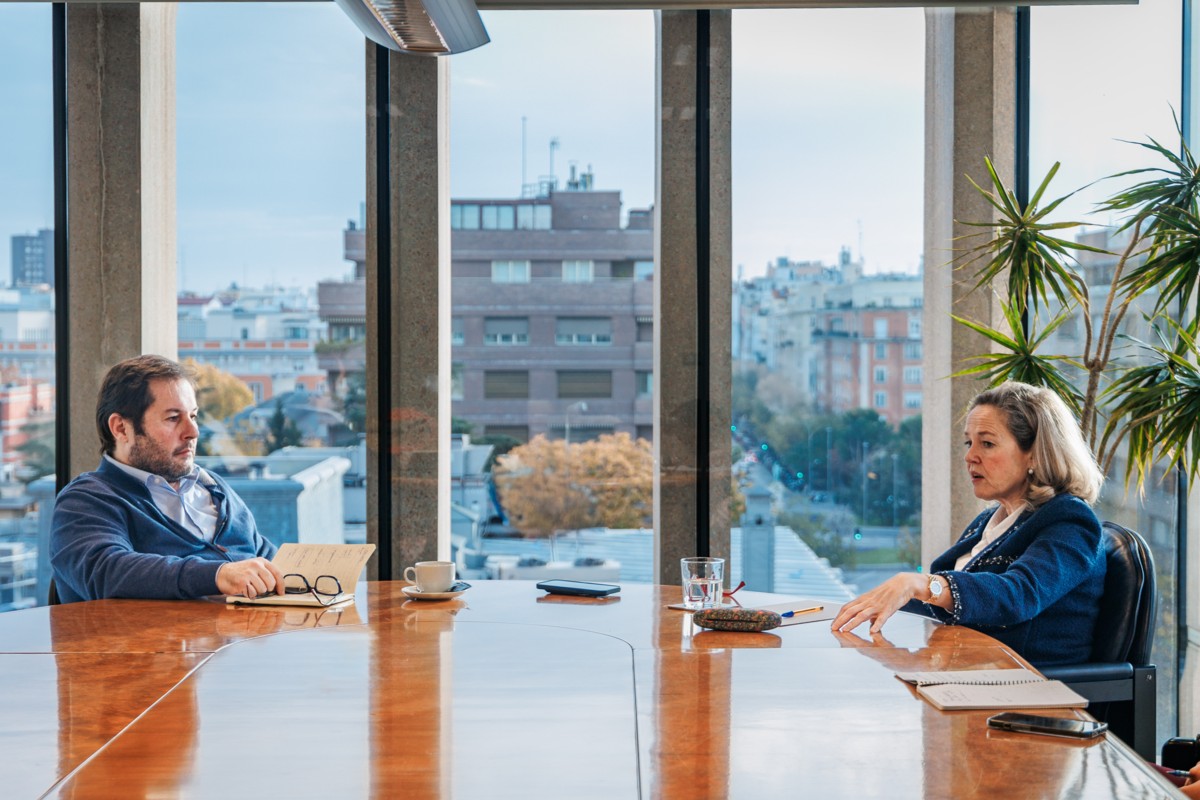
Marc López Plana and Nadia Calviño during the conversation. Foto: Tania Sieira / Agenda Pública
The problem of scale, as you mentioned, is that Europe has twenty-seven countries and, when deciding where to invest, there is a risk of concentrating only on two or three cities that are standing out, such as Barcelona in the field of deep tech. Wouldn't it be more effective to bet on these few cities so that they grow and become global references?
I do not agree with that view. Precisely, these new technologies benefit enormously from networks and collaboration between multiple actors. For example, in Spain, in the field of chip manufacturing, we have a diverse ecosystem that includes between 180 and 200 companies and research centres distributed from the University of La Laguna in the Canary Islands, through València, Barcelona, Madrid, and Galicia. The development of these networks is key to maximizing the impact of the investment.
To give a specific example, when we promoted the first quantum supercomputer in Southern Europe, we asked the Barcelona Supercomputing Center to coordinate eighteen or nineteen other research centres in Spain. This proves that it is possible and necessary to bring opportunities where the talent is, which is not concentrated in a few cities, but rather emerges in multiple places.
So, wouldn't you agree with the idea of creating three Silicon Valleys in Europe?
All of Europe should become a Silicon Valley! Of course, we must bet on key assets, such as the supercomputer at the National Supercomputing Center or the ICFO in Barcelona, which are world-renowned research centres. However, we must also recognize other emerging ecosystems. For example, the first research centre outside Belgium of IMEC, a world leader in nanotechnology, is being installed in Malaga. This is due to the ecosystem that already exists there, with startups and research centres of large American technology companies.
"Networks are what really generate wealth and foster competitiveness, allowing talent and opportunities to be distributed across Europe"The true value of the digital sphere lies not only in physical proximity, but in the ability to create collaborative networks. These networks are what truly generate wealth and foster competitiveness, allowing talent and opportunities to be distributed throughout Europe.
There has to be an appropriate balance between making great centres and having a network because talent is everywhere. Rich countries do not have more talent than poor countries, just as cities do not have more talent than rural areas. The objective is to create the conditions so that talent can progress and connect with each other.
Nadia Calviño, President of the EIB. Foto: Tania Sieira / Agenda Pública
Finally, let's talk about European defence and security. The EU is facing a war on its borders with Russia's invasion of Ukraine, and the EIB has been approached about considering investments in defence and technological dual-use. What position does the EIB have on this matter, and what is it working on in this area?
Since taking up my role at the EIB in January, I have been acutely aware of the need to scale up the European security and defence industry. As I mentioned earlier, Europe has enjoyed the dividends of peace for 80 years, but the invasion of Ukraine has underlined the importance of strengthening our strategic autonomy. We cannot continue depending on other countries, neither in the energy field nor in the security and defence field.
From day one, we set to work and in May we already took concrete steps: We revised our scope of eligibility for funding and created a dedicated office to promote projects in this area. One of the first decisions was to remove an important restriction: previously, for a project to be considered dual-use, it had to demonstrate that more than 50% of its future benefits would come from civil applications. By removing this requirement, we can now fund a broader spectrum of investments, ranging from border control and military mobility to cybersecurity, drones, space, defence research, demining and decontamination.
"By eliminating the requirement that 50% of future profits come from civilian applications, we can now fund a broader spectrum of defense investments"In addition, we have adopted a proactive approach. We are visiting all Member States to identify needs and opportunities for collaboration. I have recently been to Malta, Greece, Cyprus and Bulgaria, and I have just concluded my tour of all twenty seven Member States in Hungary.
We also have a dedicated Vice-President, Robert De Groot, who has visited all fifteen Member States, including Spain, to meet with industry and assess how the EIB can contribute further.
In 2024, we have laid the necessary foundations, and I am confident that next year we will see significant projects at European level that the EIB will finance, thus strengthening our collective ability to ensure peace and security, in Europe and globally.
Thank you, Madam President.
Ahora en portada
19 de octubre de 2026
19 de octubre de 2026