Viernes, 16 de octubre de 2026




LÓPEZ PLANA'S EUROPEAN COMPASS
The success of fibre sparks a regulatory battle in Spain (and Europe)
In this week’s 'Brújula Europea,' Marc López Plana examines how a regulation that once promoted fibre optics in Spain is now facing a different situation. MARCo helped to democratize high-speed fibre, but the sector is debating whether keeping prices under cost discourages forward-looking investment. Amid accusations of a 'natural monopoly’ and a lack of reciprocity, plus European demands for resilience in the digital realm, Spain must either adapt its framework or else consolidate permanent 'de facto aid'.

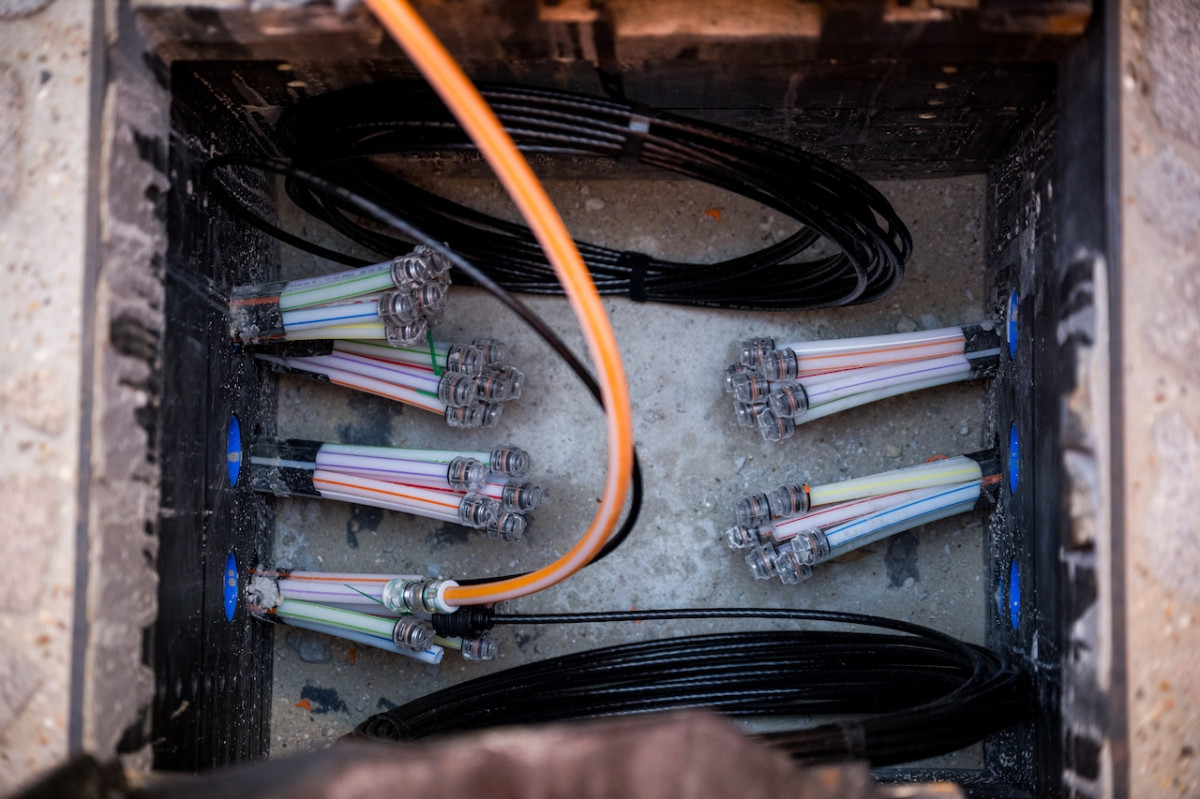
Fiber optic cables. JASPER JACOBS / Belga Press / Europa Press
Among technology policies in Europe, several success stories stand out, and one is the deployment of fibre optics in Spain. Coverage in the country now reaches 96% of households and 99.7% of the population, exceeding the coverage in powerhouses like Germany and the United Kingdom.
Now, in the wake of that deployment, some complicated regulatory debates are starting to arise. In the offices of Spain’s National Commission on Markets and Competition (CNMC) and in the corridors of Brussels, the focus has turned from connecting more citizens to the sustainability of present and, especially, future networks. At the heart of this debate is a regulation known as MARCo (Offer of Access to Records and Conduits), which obliges the incumbent operator, Telefónica, to cede its civil infrastructures to its competitors at regulated prices.
This measure was launched in 2009 as an emergency option, to avoid unnecessary duplication of trenches and to accelerate competition. Today, it’s threatening to become a drag on investment in the sector, raising a question: Does it make sense to apply the regulatory logic of 2009 to one of Europe’s most competitive markets in 2026?
Among European countries, Spain can perhaps boast the most and highest quality alternative civil infrastructures. Many robust options exist beyond Telefónica’s network:
It’s inappropriate to speak of a natural monopoly in a country with hundreds of networks and record levels of competition. And updating MARCo doesn’t mean restricting access, or altering competitive guarantees. It can mean a gradual revision of economic conditions to better suit the current costs of operation, maintenance, and investment.
Since liberalization, Spain’s housing stock has grown by more than 7.5 million new homes. To connect those urban developments, as well as the vast and complex rural expanses, billions of euros of purely private investment have been required. Moreover, the civil network isn’t an inert concrete block: it’s more like a living ecosystem. Over time, wooden posts rot, conduits are damaged by outside forces or by collapse, and access points require constant maintenance.
Certain alternative operators have very insistently warned that any adjustment to the MARCo prices by the CNMC would put their investments at risk. Meanwhile, other approaches to relations between operators tell a very different story. There are cases where the flow is reversed, where Telefónica needs to rent infrastructural space from competitors. When that happens, the applied tariffs aren’t "regulated" at all.
Through the recent Gigabit Infrastructure Act, Europe’s legislative framework has already started to shift direction. The Brussels guideline states that companies providing access to their physical infrastructures should have a fair and reasonable opportunity to recover the costs incurred. Thus, the European regulator understands that placing excessive burdens on a network’s builder undermines the incentive for continuous improvement.
At this juncture, it might be argued that legal uncertainty doesn’t derive from updating a price, but from keeping a regulatory framework static while the economy, inflation, and technology all advance. Rate revisions —whether upward or downward— are a normal and healthy tool in any market democracy. In fact, the CNMC’s own data suggest that, even with adjustments, regulated prices are still below the real recognized costs.
The success of fibre optics in Spain is already history. Now is the time to start financing the future.
Now, in the wake of that deployment, some complicated regulatory debates are starting to arise. In the offices of Spain’s National Commission on Markets and Competition (CNMC) and in the corridors of Brussels, the focus has turned from connecting more citizens to the sustainability of present and, especially, future networks. At the heart of this debate is a regulation known as MARCo (Offer of Access to Records and Conduits), which obliges the incumbent operator, Telefónica, to cede its civil infrastructures to its competitors at regulated prices.
This measure was launched in 2009 as an emergency option, to avoid unnecessary duplication of trenches and to accelerate competition. Today, it’s threatening to become a drag on investment in the sector, raising a question: Does it make sense to apply the regulatory logic of 2009 to one of Europe’s most competitive markets in 2026?
An unrecognizable market and the myth of the "natural monopoly"
When the MARCo regulation came into play, nearly two decades ago, alternative operators scarcely had any infrastructure of their own. The objective of regulators was clear and justified: to facilitate access to existing lines and poles, to boost a static market.
That aim was successfully met. Industry estimates suggest that the use of shared infrastructures meant significant savings for competitors of between 60% and 80% of total deployment costs. Thanks to that policy, Spain was able to democratize high-speed connectivity, attract capital, and sharply reduce the digital divide in rural areas.
"Industry estimates suggest that the use of these shared infrastructures allowed significant savings for competitors of between 60% and 80%"Nevertheless, yesterday’s success can become today’s burden, and some players in the sector are clinging to the notion that civil infrastructures in Spain constitute a "natural monopoly". In response to that hypothesis, a glance at the market data for 2026 shows that the current situation is far from what was initially proposed.
Among European countries, Spain can perhaps boast the most and highest quality alternative civil infrastructures. Many robust options exist beyond Telefónica’s network:
- Cable networks: legacy infrastructures from cable operators, now integrated into giants like MasOrange and Vodafone, cover more than ten million homes.
- Third-party infrastructures: a vast network of usable pipelines from other sectors (energy, water, gas) and public civil works, with a reach rivalling that of the historical operator.
It’s inappropriate to speak of a natural monopoly in a country with hundreds of networks and record levels of competition. And updating MARCo doesn’t mean restricting access, or altering competitive guarantees. It can mean a gradual revision of economic conditions to better suit the current costs of operation, maintenance, and investment.
Capital at risk
One of the mantras most repeated by those opposing an update of access prices is that Telefónica’s infrastructures are themselves a legacy of the pre-1998 era of State monopoly. But this sector has been in the hands of the market economy for over a quarter-century.Since liberalization, Spain’s housing stock has grown by more than 7.5 million new homes. To connect those urban developments, as well as the vast and complex rural expanses, billions of euros of purely private investment have been required. Moreover, the civil network isn’t an inert concrete block: it’s more like a living ecosystem. Over time, wooden posts rot, conduits are damaged by outside forces or by collapse, and access points require constant maintenance.
"The civil network isn’t an inert concrete block: it’s more like a living ecosystem""You can’t demand massive investment in strategic infrastructure while indefinitely prolonging regulatory schemes designed for a different technological cycle", EU telecom-investment analysts claim. Maintaining that capillarity implies the assumption of increasing operating costs. In that sense, the current model perpetuates an asymmetric transfer of value: whoever maintains the network assumes the risk and the inflationary expense, while third parties exploit that infrastructure at prices kept artificially low by regulation.
The paradox of reciprocity and market prices
So much for the monopoly narrative. To respond to the "fair price" argument, we need to analyze the reciprocity of the Spanish market.Certain alternative operators have very insistently warned that any adjustment to the MARCo prices by the CNMC would put their investments at risk. Meanwhile, other approaches to relations between operators tell a very different story. There are cases where the flow is reversed, where Telefónica needs to rent infrastructural space from competitors. When that happens, the applied tariffs aren’t "regulated" at all.
"Certain alternative operators have very insistently warned that any adjustment of the MARCo prices by the CNMC would put their investments at risk"Market sources confirm that other operators charge Spain’s legacy company twice, four times, or even ten times what they themselves pay to use the MARCo network. It’s difficult to argue that a regulated price is "abusive" or harmful to competition when the same operators charge drastically higher prices for an identical service.
European sovereignty and resilience enter the debate
The discussion over pipelines in Spain doesn’t occupy much space in the overall strategic framework that Europe is contemplating. The continent is pursuing ambitious goals: strategic autonomy, digital resilience against cyber threats, the necessary infrastructure for AI, and the modernization of critical networks. All of which requires capital. An enormous amount of capital.Through the recent Gigabit Infrastructure Act, Europe’s legislative framework has already started to shift direction. The Brussels guideline states that companies providing access to their physical infrastructures should have a fair and reasonable opportunity to recover the costs incurred. Thus, the European regulator understands that placing excessive burdens on a network’s builder undermines the incentive for continuous improvement.
"Updating regulated prices in Spain isn’t equivalent to "re-monopolization", as the alarmists claim"Seen this way, updating regulated prices in Spain isn’t equivalent to "re-monopolization", as the alarmists claim. No one at any level is questioning the right of third parties to access those pipelines, and technical and operational access will remain fully guaranteed. The conversation is moving toward gradual application and adaptation of rates to our current economic reality, abandoning the de facto aid that below-cost prices suppose.
Adapt or stagnate
Some critics suggest that a rise in prices would put a halt to implementation. The numbers say something else. The data suggest that the cost of renting conduits today represents a marginal fraction of the total fibre deployment costs for any mature operator. The networks are already built, the public deployment funds (like the ÚNICO program) are about to finalize their mission, and the market is highly consolidated.At this juncture, it might be argued that legal uncertainty doesn’t derive from updating a price, but from keeping a regulatory framework static while the economy, inflation, and technology all advance. Rate revisions —whether upward or downward— are a normal and healthy tool in any market democracy. In fact, the CNMC’s own data suggest that, even with adjustments, regulated prices are still below the real recognized costs.
"Maintaining the ecosystem under those same rules in 2026 doesn’t address market failures, but it might be creating some"Spain achieved leadership in fibre thanks to a bold and interventionist regulation in 2009 that responded to a market failure. Maintaining the ecosystem under those same rules in 2026 doesn’t address market failures, but it might be creating some. If Europe wants its operators to build the financial muscle to compete in the era of AI and secure their critical infrastructures, it needs to ensure that regulation still creates incentives for those who invest in, maintain, and modernize those same infrastructures.
The success of fibre optics in Spain is already history. Now is the time to start financing the future.
Ahora en portada
16 de octubre de 2026
16 de octubre de 2026
16 de octubre de 2026
Noticias relacionadas
Hace 54 semanas
La clave está en las redes… eléctricas
Hace 17 semanas
Cómo España puede ganar en las tecnologías 'deeptech' con las empresas plataforma
Hace 34 semanas
¿Cómo se puede gobernar el desorden digital vigente?
Lo más leído