Jueves, 15 de octubre de 2026




AGENDA PÚBLICA EU
Europe Facing the Great Transition
Javi López, Vice-President of the European Parliament, takes it for granted that a new international order is in the making, but he wonders what role the EU can and should play in that reconfiguration. Here the MEP argues that the answer lies in effective European sovereignty, greater integration in critical sectors, and a foreign policy capable of cooperation, firmness, and geopolitical diversification.
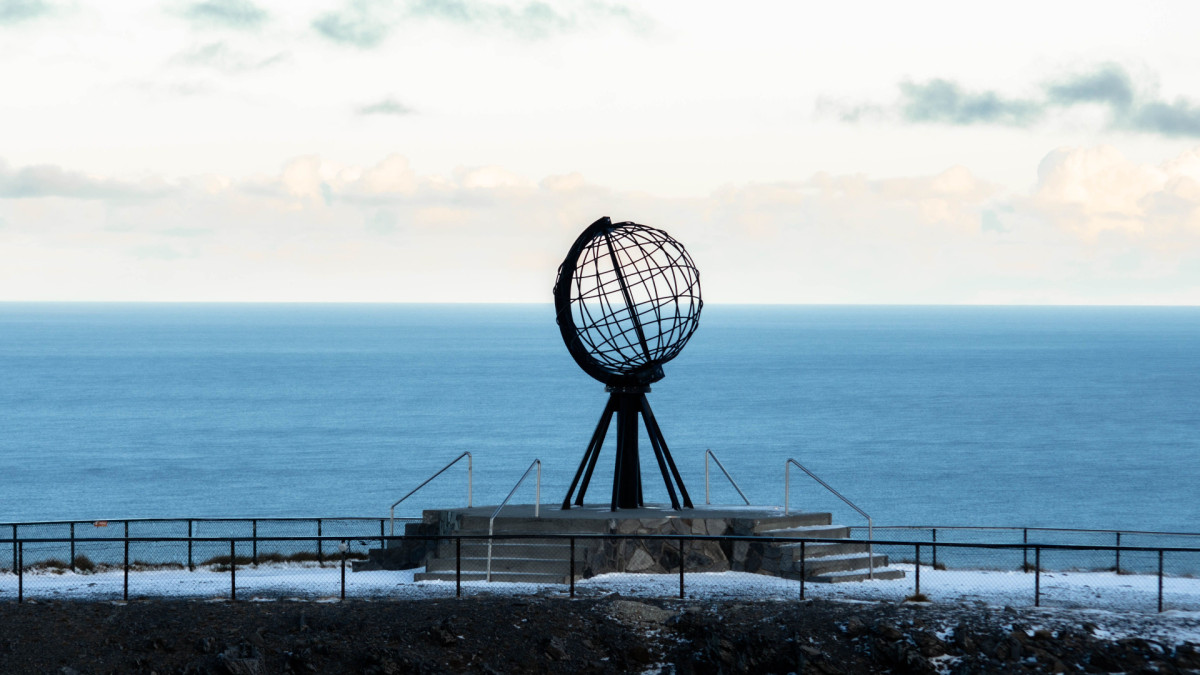
Globe monument on the shores of the Arctic Ocean in NorwayPexels / Thea Cintia Paixão da Silva
Europe isn’t going through another crisis – it’s witnessing the exhaustion of an international order that has structured the world since 1945. This is a moment of exceptional historical depth. Great international balances tend not to dissipate gradually: they collapse when power structures, economic hierarchies, and political legitimacy cease to correspond to reality.
That’s what happened after the Religious Wars and the Peace of Westphalia, which enshrined the principle of State sovereignty. It happened after the Napoleonic Wars and the Congress of Vienna, which established the European balance of powers. And it happened again after the two World Wars, when for decades the liberal order led by the U.S. brought organization to the economy, to security, and to global governance. All of these systems were born of traumatic ruptures and systemic conflicts that redefined the rules of power.
The difference today is that the transition to a new order has already begun, but we still lack a framework capable of stabilizing that change. The equilibrium that emerged after 1945 has rapidly eroded. Institutions continue to exist, but they’ve lost their ability to order the world. Alliances persist, but they no longer carry the same certainties. The rules survive, but they’re questioned by actors who had no part in their design, or who consider their legitimacy depleted.
The historic challenge is therefore to comprehend the depth of our current transition and to contribute to building a new international balance before a major confrontation imposes one by force.
For decades, Europe operated within a relatively predictable framework. The international order that emerged after the Second World War offered a set of institutions, alliances, and balances that (despite their contradictions) made it possible to contain competition among powers and to reduce the risk of direct confrontation. Globalization was interpreted as a process of progressive integration – economic interdependence as a guarantee of stability, and the expansion of liberal democracy as a practically irreversible trend.
That framework hasn’t vanished abruptly, but it has ceased to structure the international reality in effective ways. The problem goes beyond the rise of new powers and affects the deterioration of the very foundations of our prior order. The relationship between economic power, military power, and political legitimacy is again in dispute, and so the international system is entering an inevitable phase of instability.
Defending one’s principles requires proper understanding of the actual terrain on which those principles must be sustained. If an analysis doesn’t adapt to reality, then politics becomes rhetoric.
The current period can thus be viewed as a phase of international interregnum. The old order loses its effectiveness, but the new one doesn’t yet exist. At such times, gray areas proliferate, as do hybrid rivalries and the dynamics of indirect confrontation.
Europe is especially exposed to this transformation. On the one hand, it’s facing a direct threat in its eastern neighborhood, where Russian aggression has reanimated conventional warfare on the continent, calling into question the fundamental principles of European security. On the other hand, it’s observing a drastic reshaping of the role of the United States, whose foreign policy has been reoriented toward a logic of immediate and transactional national interest, often seasoned with contempt for its traditional alliances.
The consequence is the loss of Europe’s strategic automatisms. Although we must avoid a thunderous rupture that would multiply risks, the transatlantic relationship has been forever changed. The strategic convergence built in the second half of the 20th century, structurally aligned by the Cold War, has come to an end. Coinciding interests will continue to exist, but they’ll be more contingent, more negotiated, and less permanent than in previous decades.
In this new scenario, strategic dependence is no longer sustainable, due to simple realism rather than ideologies. Europe needs its own capacity to act precisely at times when other actors choose not to act in the same direction.
Moreover, this evolution is intertwined with an equally profound economic mutation. Globalization no longer responds to the logic of depoliticized efficiency typical of recent decades. Today, it’s traversed by considerations of security, technological rivalry, and strategic competition. Trade, energy, infrastructure, and data have ceased to be purely economic spheres and have become central dimensions of power.
This profoundly alters the assumptions on which Europe built much of its economic model. For years, it was assumed that the liberalization of trade and global integration would generate shared prosperity and political stability. Now it’s evident that interdependence also produces vulnerability. Critical dependencies can be exploited, supply chains can be disrupted, and competitive advantages can be redefined through policy decisions.
Economic neutrality has disappeared.
In this new environment, the dominant economic paradigm in Europe has been showing increasing signs of exhaustion. The idea that the market alone can guarantee efficient allocation in whatever circumstance becomes meaningless in a context where other powers actively use industrial policy, technological control, massive subsidies, and strategic intervention to shape outcomes.
The debate can no longer be reduced to one of intervention or non-intervention. The decisive question is whether Europe has a coherent strategy for effective intervention.
At the same time, authoritarian movements and illiberal forces are increasingly operating at the transnational level. They share resources, narratives, and strategies, taking full advantage of a globalized digital ecosystem. Democracy is no longer being eroded only from the outside, but also from within.
Ultimately, all of these dynamics converge in a fourth transformation: the loss of relative centrality by the West. The international system is being reorganized around new poles of power that don’t necessarily share European priorities, interests, or historical references. This doesn’t automatically imply irrelevance, but it does demand deep adaptation.
Europe has lost its position as the organizing center of the international system and become just one of several relevant actors operating within it.
The response to that situation cannot be withdrawal. It must be to engage in strategic redefinition.
First, our response must be articulated around the idea of effective European sovereignty. Sovereignty doesn’t amount to the recovery of national competences, done in isolation: it consists of building our collective decision-making capacity. In a world dominated by great powers, scale truly matters. And the only scale that can preserve an authentic capacity for influence for the citizens of Europe is the continental scale.
This implies moving forward on integration and the single market, where our effective power is realized: defense, energy, industry, finance, artificial intelligence, critical technologies, and strategic infrastructures. It also involves the development of common financial instruments capable of sustaining long-term investments and reducing structural dependencies.
Sovereignty is not a political statement but the cumulative result of strategic decisions sustained over time.
In addition, Europe must redefine its insertion into geopolitics and the global economy. Diversifying relationships has become a structural necessity, to reduce our vulnerabilities and to expand our room for maneuver. In a world of asymmetrical interdependencies, less dependence on any single actor constitutes a core element of autonomy.
Here Europe needs to abandon both its naivety and the binary logic of automatic alignments. The emerging world won’t be organized around two closed blocs – it will be a space of variable balances, flexible associations, and relationships that are simultaneously competitive and cooperative.
Brazil represents for Europe a crucial partner in the global reorganization of energy, industry, and climate action and in the reconstruction of multilateralism. Ratification of the EU-Mercosur agreement will strengthen our relationship with South America’s principal power and consolidate our links with a region that is key to the green transition, critical minerals, and food security – all at a time of increasing geopolitical competition over both influence and investment.
Mexico occupies a unique position thanks to its industrial integration into North America and its growing geoeconomic weight. The modernization of the EU-Mexico Global Agreement offers Europe an opportunity to strengthen our strategic, economic, and technological relationships and to access new transatlantic value chains in a context of industrial diversification and dependency reduction.
India embodies the logic of multipolar autonomy so typical of emerging great powers: cooperation, but without automatic alignment. The expectation of finalizing the association agreement between the EU and India in record time reflects the growing importance of New Delhi as a first-rate economic, technological, and geopolitical partner; it also reflects Europe’s need to strengthen its presence in the Indo-Pacific.
The relationship with China will be the true measure of Europe’s strategic autonomy. Europe must define its policy toward Beijing in accordance with its own interests, not by catering to the priorities of other powers. This will require that cooperation be combined with firmness, demanding reciprocity, ensuring fair competition, and maintaining stable channels of dialogue while managing our differences in pragmatic ways.
Europe can’t afford to act naively toward China, nor can it engage in systemic confrontation. Europe’s interest is to promote its industrial base and to defend its economic engagement, meanwhile pursuing cooperation on major global challenges that can only be effectively addressed through collaboration between Europe and China.
This approach will be especially important given the risk of Europe getting caught between two simultaneous forces: the threat of Russia in the East and the potential for increasingly transactional policies from a U.S. that’s less committed to European stability. In that scenario, the expansion of relationships and the diversification of interdependencies are more than just tactical options; from a strategic point of view, they are necessities of the highest order.
Because in a multipolar world, having multiple options is equivalent to a geopolitical insurance policy.
But no foreign strategy will be credible if Europe doesn’t first correct its own internal constraints. The European Union still faces enormous difficulties around making timely decisions, coordinating positions, and translating its economic weight into effective political capacity. Institutional fragmentation is reducing its effectiveness precisely when the international context is demanding greater agility and strategic clarity.
Europe needs to reach decisions more quickly, taking greater political risks and abandoning the illusion that permanent ambiguity can be a sustainable strategy. In international politics, indecision isn’t neutral – it has consequences.
Europe still has exceptional assets: its economic scale, technological capacity, regulatory power, institutional stability, and its unique historical experience on the costs of conflict. But assets aren’t preserved through inertia; they depend on the ability to understand the historical moment in which they operate.
Because the great transition is already underway. The balance that arose after 1945 has ceased to bring order to the world; at the same time, the new order has yet to be born. In a void such as that, powers reposition themselves, dependencies become weapons, and wars no longer seem impossible.
Europe is therefore in the act of confronting a unique and historic responsibility: to contribute to building a new international balance without waiting for a new catastrophe to make it possible.
That’s what happened after the Religious Wars and the Peace of Westphalia, which enshrined the principle of State sovereignty. It happened after the Napoleonic Wars and the Congress of Vienna, which established the European balance of powers. And it happened again after the two World Wars, when for decades the liberal order led by the U.S. brought organization to the economy, to security, and to global governance. All of these systems were born of traumatic ruptures and systemic conflicts that redefined the rules of power.
The difference today is that the transition to a new order has already begun, but we still lack a framework capable of stabilizing that change. The equilibrium that emerged after 1945 has rapidly eroded. Institutions continue to exist, but they’ve lost their ability to order the world. Alliances persist, but they no longer carry the same certainties. The rules survive, but they’re questioned by actors who had no part in their design, or who consider their legitimacy depleted.
The historic challenge is therefore to comprehend the depth of our current transition and to contribute to building a new international balance before a major confrontation imposes one by force.
"The equilibrium that emerged after 1945 has rapidly eroded. Institutions continue to exist, but they’ve lost their ability to order the world"That’s the true nature of the present moment. We’re witnessing not just a change of context but simultaneous alteration of the foundations on which the international system was composed. At the same time, changes are underway in terms of rules, economic dependencies, power relations, technological balances, and forms of political competition. In such a scenario, inertia ceases to be prudent and becomes a sort of strategic blindness.
For decades, Europe operated within a relatively predictable framework. The international order that emerged after the Second World War offered a set of institutions, alliances, and balances that (despite their contradictions) made it possible to contain competition among powers and to reduce the risk of direct confrontation. Globalization was interpreted as a process of progressive integration – economic interdependence as a guarantee of stability, and the expansion of liberal democracy as a practically irreversible trend.
That framework hasn’t vanished abruptly, but it has ceased to structure the international reality in effective ways. The problem goes beyond the rise of new powers and affects the deterioration of the very foundations of our prior order. The relationship between economic power, military power, and political legitimacy is again in dispute, and so the international system is entering an inevitable phase of instability.
"The problem goes beyond the rise of new powers and affects the deterioration of the very foundations of our prior order"Europe’s main problem resides less in change itself than in the difficulty of fully assimilating that magnitude of change. Resorting to inherited categories to interpret a radically distinct environment is no sign of stability but rather of strategic mismatch. Effective foreign policy always starts with a correct diagnosis. That diagnosis requires us to accept the fact that today’s world is more competitive, more fragmented, and less regulated than Europe would prefer.
Defending one’s principles requires proper understanding of the actual terrain on which those principles must be sustained. If an analysis doesn’t adapt to reality, then politics becomes rhetoric.
Geopolitics of dependency
Geopolitical reconfiguration is the first axis of this change. The international system is evolving toward an increasingly evident multipolarity in which several powers openly compete for influence, access to strategic resources, and the ability to define the rules of the system. But that redistribution of power hasn’t been accompanied by a new framework for shared governance. On the contrary: it coincides with the progressive weakening of multilateralism and with the return of more direct, more transactional, and less institutionalized mechanisms of power.The current period can thus be viewed as a phase of international interregnum. The old order loses its effectiveness, but the new one doesn’t yet exist. At such times, gray areas proliferate, as do hybrid rivalries and the dynamics of indirect confrontation.
"The international system is evolving toward an increasingly evident multipolarity in which several powers openly compete"In this context, a type of competition is being consolidated that’s reminiscent of imperial dynamics. Sometimes, it adopts the classic form of territorial occupation, as in Ukraine, but it also works through the capacity to project power through economic, technological, financial, and regulatory instruments. Dependencies are used as pressure points, supply chains operate as tools of influence, and critical technologies become agents of strategic control. Coercion takes on more diffuse but no less effective shapes.
Europe is especially exposed to this transformation. On the one hand, it’s facing a direct threat in its eastern neighborhood, where Russian aggression has reanimated conventional warfare on the continent, calling into question the fundamental principles of European security. On the other hand, it’s observing a drastic reshaping of the role of the United States, whose foreign policy has been reoriented toward a logic of immediate and transactional national interest, often seasoned with contempt for its traditional alliances.
The consequence is the loss of Europe’s strategic automatisms. Although we must avoid a thunderous rupture that would multiply risks, the transatlantic relationship has been forever changed. The strategic convergence built in the second half of the 20th century, structurally aligned by the Cold War, has come to an end. Coinciding interests will continue to exist, but they’ll be more contingent, more negotiated, and less permanent than in previous decades.
In this new scenario, strategic dependence is no longer sustainable, due to simple realism rather than ideologies. Europe needs its own capacity to act precisely at times when other actors choose not to act in the same direction.
"Russian aggression has reanimated conventional warfare on the continent, calling into question the fundamental principles of European security"The temptation to interpret this new environment in terms of closed blocs – the West versus the rest – is also profoundly limiting. That reading simplifies a much more complex reality, and it unnecessarily reduces Europe’s room for maneuver. A growing proportion of the world doesn’t recognize itself in that division and refuses to be trapped in its logic of rigid alignment. For the middle powers, insisting on that framework doesn’t broaden alliances: it restricts them.
Moreover, this evolution is intertwined with an equally profound economic mutation. Globalization no longer responds to the logic of depoliticized efficiency typical of recent decades. Today, it’s traversed by considerations of security, technological rivalry, and strategic competition. Trade, energy, infrastructure, and data have ceased to be purely economic spheres and have become central dimensions of power.
This profoundly alters the assumptions on which Europe built much of its economic model. For years, it was assumed that the liberalization of trade and global integration would generate shared prosperity and political stability. Now it’s evident that interdependence also produces vulnerability. Critical dependencies can be exploited, supply chains can be disrupted, and competitive advantages can be redefined through policy decisions.
Economic neutrality has disappeared.
In this new environment, the dominant economic paradigm in Europe has been showing increasing signs of exhaustion. The idea that the market alone can guarantee efficient allocation in whatever circumstance becomes meaningless in a context where other powers actively use industrial policy, technological control, massive subsidies, and strategic intervention to shape outcomes.
The debate can no longer be reduced to one of intervention or non-intervention. The decisive question is whether Europe has a coherent strategy for effective intervention.
European sovereignty in a multipolar world
This diagnosis requires redefinitions of the balance between openness and protection, competition and resilience, markets and public capacity. Rather than replicating other people’s models, Europe needs to develop its own strategy, adapted to its own characteristics. Economic autonomy doesn’t imply isolation. It implies the capacity for decision-making within an environment of conflictive interdependence."The idea that the market alone can guarantee efficient allocation in whatever circumstance becomes meaningless"To that double-mutation we can add a third change that affects the very core of Europe’s democratic systems. Liberal democracies are facing growing tensions stemming from economic, technological, and cultural changes that alter our traditional forms of political intermediation in profound ways. The advent of large digital platforms with the ability to shape the public space has introduced an unprecedented dimension to democratic competition.
At the same time, authoritarian movements and illiberal forces are increasingly operating at the transnational level. They share resources, narratives, and strategies, taking full advantage of a globalized digital ecosystem. Democracy is no longer being eroded only from the outside, but also from within.
Ultimately, all of these dynamics converge in a fourth transformation: the loss of relative centrality by the West. The international system is being reorganized around new poles of power that don’t necessarily share European priorities, interests, or historical references. This doesn’t automatically imply irrelevance, but it does demand deep adaptation.
Europe has lost its position as the organizing center of the international system and become just one of several relevant actors operating within it.
"Regulatory capacity is still an important asset, but it depends more and more on our ability to project economic, technological, and geopolitical power"Here arises one of the West’s main strategic difficulties: the persistence of a vision of the world that remains excessively self-referential. Regulatory capacity is still an important asset, but it depends more and more on our ability to project economic, technological, and geopolitical power. If not accompanied by influence, rules and norms lose their effectiveness.
The response to that situation cannot be withdrawal. It must be to engage in strategic redefinition.
First, our response must be articulated around the idea of effective European sovereignty. Sovereignty doesn’t amount to the recovery of national competences, done in isolation: it consists of building our collective decision-making capacity. In a world dominated by great powers, scale truly matters. And the only scale that can preserve an authentic capacity for influence for the citizens of Europe is the continental scale.
This implies moving forward on integration and the single market, where our effective power is realized: defense, energy, industry, finance, artificial intelligence, critical technologies, and strategic infrastructures. It also involves the development of common financial instruments capable of sustaining long-term investments and reducing structural dependencies.
Sovereignty is not a political statement but the cumulative result of strategic decisions sustained over time.
In addition, Europe must redefine its insertion into geopolitics and the global economy. Diversifying relationships has become a structural necessity, to reduce our vulnerabilities and to expand our room for maneuver. In a world of asymmetrical interdependencies, less dependence on any single actor constitutes a core element of autonomy.
Here Europe needs to abandon both its naivety and the binary logic of automatic alignments. The emerging world won’t be organized around two closed blocs – it will be a space of variable balances, flexible associations, and relationships that are simultaneously competitive and cooperative.
"This architecture for strategic diversification will allow Europe to broaden its room for maneuver in an increasingly competitive and fragmented world"It makes sense for Europe to articulate a repositioning strategy based on its own internal relationships and on cooperation with other actors capable of protecting our shared interests and contributing to the formation of a new multilateralism: Brazil, Mexico, India, and China. More than an alternative bloc or a formal alliance, this architecture for strategic diversification will allow Europe to broaden its room for maneuver in an increasingly competitive and fragmented world.
Brazil represents for Europe a crucial partner in the global reorganization of energy, industry, and climate action and in the reconstruction of multilateralism. Ratification of the EU-Mercosur agreement will strengthen our relationship with South America’s principal power and consolidate our links with a region that is key to the green transition, critical minerals, and food security – all at a time of increasing geopolitical competition over both influence and investment.
Mexico occupies a unique position thanks to its industrial integration into North America and its growing geoeconomic weight. The modernization of the EU-Mexico Global Agreement offers Europe an opportunity to strengthen our strategic, economic, and technological relationships and to access new transatlantic value chains in a context of industrial diversification and dependency reduction.
India embodies the logic of multipolar autonomy so typical of emerging great powers: cooperation, but without automatic alignment. The expectation of finalizing the association agreement between the EU and India in record time reflects the growing importance of New Delhi as a first-rate economic, technological, and geopolitical partner; it also reflects Europe’s need to strengthen its presence in the Indo-Pacific.
The relationship with China will be the true measure of Europe’s strategic autonomy. Europe must define its policy toward Beijing in accordance with its own interests, not by catering to the priorities of other powers. This will require that cooperation be combined with firmness, demanding reciprocity, ensuring fair competition, and maintaining stable channels of dialogue while managing our differences in pragmatic ways.
Europe can’t afford to act naively toward China, nor can it engage in systemic confrontation. Europe’s interest is to promote its industrial base and to defend its economic engagement, meanwhile pursuing cooperation on major global challenges that can only be effectively addressed through collaboration between Europe and China.
This approach will be especially important given the risk of Europe getting caught between two simultaneous forces: the threat of Russia in the East and the potential for increasingly transactional policies from a U.S. that’s less committed to European stability. In that scenario, the expansion of relationships and the diversification of interdependencies are more than just tactical options; from a strategic point of view, they are necessities of the highest order.
Because in a multipolar world, having multiple options is equivalent to a geopolitical insurance policy.
But no foreign strategy will be credible if Europe doesn’t first correct its own internal constraints. The European Union still faces enormous difficulties around making timely decisions, coordinating positions, and translating its economic weight into effective political capacity. Institutional fragmentation is reducing its effectiveness precisely when the international context is demanding greater agility and strategic clarity.
Europe needs to reach decisions more quickly, taking greater political risks and abandoning the illusion that permanent ambiguity can be a sustainable strategy. In international politics, indecision isn’t neutral – it has consequences.
Europe still has exceptional assets: its economic scale, technological capacity, regulatory power, institutional stability, and its unique historical experience on the costs of conflict. But assets aren’t preserved through inertia; they depend on the ability to understand the historical moment in which they operate.
Because the great transition is already underway. The balance that arose after 1945 has ceased to bring order to the world; at the same time, the new order has yet to be born. In a void such as that, powers reposition themselves, dependencies become weapons, and wars no longer seem impossible.
Europe is therefore in the act of confronting a unique and historic responsibility: to contribute to building a new international balance without waiting for a new catastrophe to make it possible.
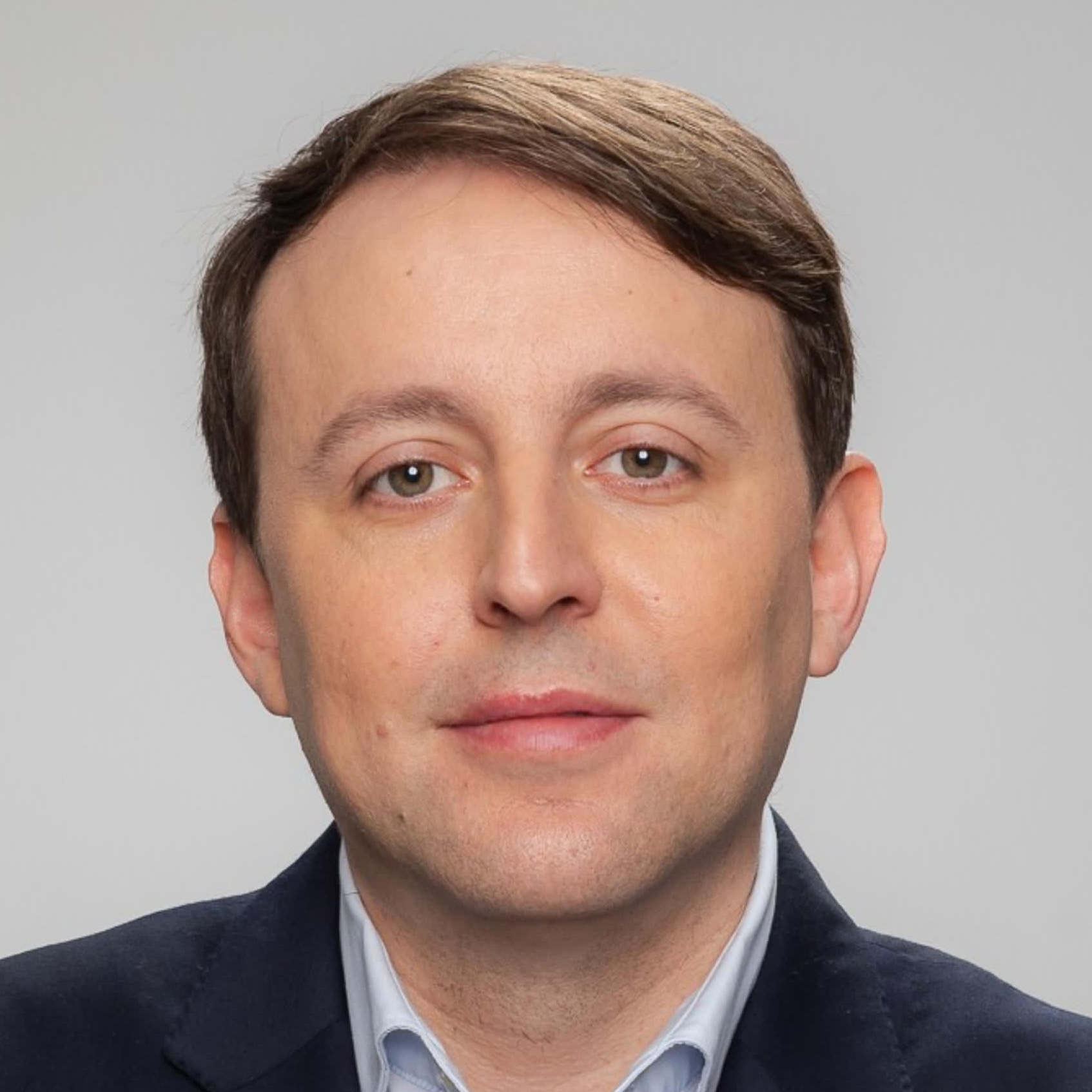
Javi López
Vicepresidente del Parlamento Europeo
Eurodiputado del PSC - PSOE desde el 2014, hoy, ejerce como vicepresidente del Parlamento Europeo. Es Licenciado en Derecho y ha sido Profesor Visitante de Historia de la UE en Blanquerna - Universitat Ramon Llull.
Ahora en portada
15 de octubre de 2026
15 de octubre de 2026
15 de octubre de 2026
Lo más leído