Viernes, 16 de octubre de 2026




FIRMAS TOP
Juan Luis Manfredi: We must "abandon nostalgia" and accept the new reality of the Transatlantic relationship
J. P. Carroll, a National Security researcher and columnist for 'Agenda Pública,' interviews Professor of Journalism Juan Luis Manfredi during his recent trip to the U.S. Manfredi, who held the Prince of Asturias Chair at Georgetown University from 2021 to 2024, discusses transatlantic relations, Spain’s role in the world, and the impact of technologies such as AI and social media on public discourse.
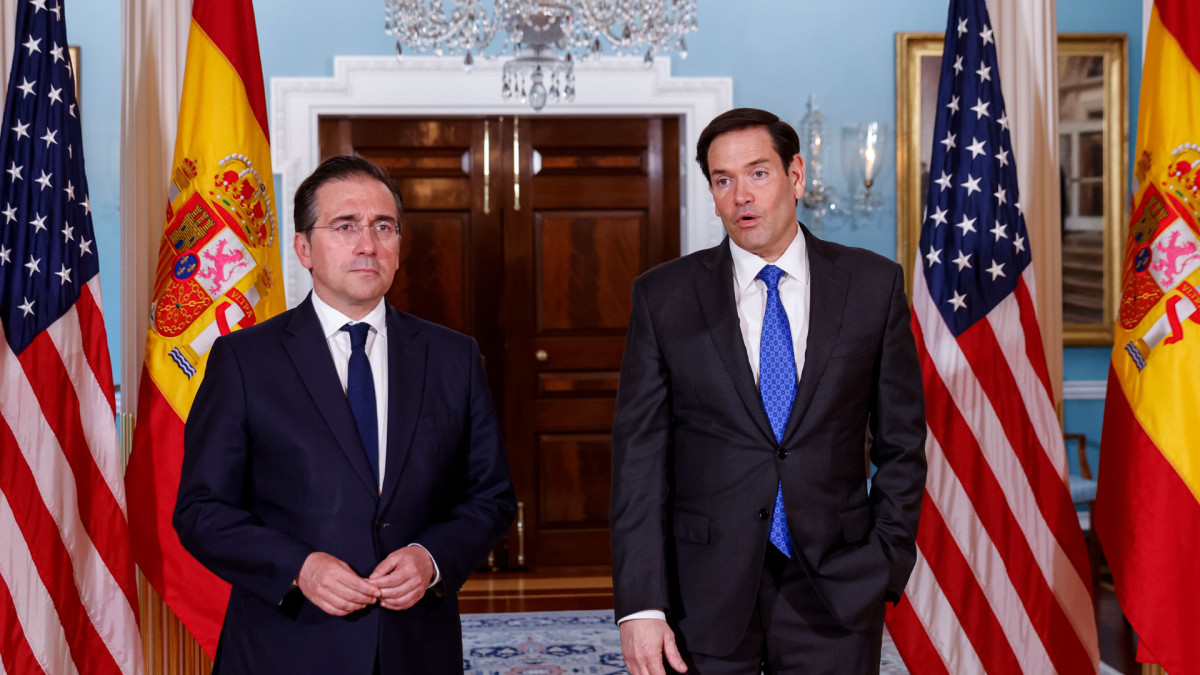
Manfredi and Carroll are engaged in a conversation about the future of U.S.-Spain relations.Mehmet Eser / Zuma Press / ContactoPhoto
This is a conversation with Juan Luis Manfredi, Professor at the University of Castilla–La Mancha, who served as the Prince of Asturias Chair at Georgetown University from 2021 to 2024. This conversation took place in February in Washington, D.C., during Manfredi’s most recent visit to the United States. This interview has been edited for brevity and clarity.
You lived in the United States from 2021 to 2024. What is your reflection on that experience, and how do you see things changing now since you lived here?
The United States has a sense of acceleration right now, which is a characteristic of the Trump presidency: many things happen every day, there is a constant flow of news, and this affects politics, technology, international relations, and economic policy. This dynamic contributes to polarization.
You can also see the politicization of public life: political identity now reflects itself in everyday life much more than during the years when I lived in the U.S. from 2021 to 2024.
How do you see the transatlantic relationship right now, and what might it mean for Spain?
We are going to see far fewer emotional ties based on shared values, identity, and common projects. Transactional diplomacy from the United States – and security treated as a service – is very demanding for Europe. It requires greater defense investment, changes in industrial policy, and the liberalization of the digital market to allow American competitors to enter. These priorities are important for the United States, but the European Union is not prepared to address them quickly.
The United States–Europe relationship will mainly deal with security, geoeconomics, energy, and migration policy. That is where I think Spain needs to develop its own voice more clearly and focus on how it can contribute something distinctive to the European project. Spain has an energy opportunity as an entry hub because of its geography – it connects Europe, North Africa, and the Mediterranean – and this should be developed with more investment. In that sense, Spain has three souls: the American soul, the Mediterranean soul, and the European soul.
As co-founder of an important transatlantic professional network – the Spanish Public Policy Network (SPPN) – and as an academic, how do you see the role of civil society and nonprofit organizations in transatlantic discourse today?
I believe nonprofit actors and civil society organizations such as the Spanish Public Policy Network (SPPN) are essential.
As a professor, journalist, and member of SPPN, my goal is to give meaning to transatlantic relations, and facilitate open spaces for dialogue.
What do you think about emerging technologies such as artificial intelligence and social media, and how they are affecting public discourse? How do you see differences between how the United States and Europe approach these issues?
Emerging technologies — from artificial intelligence to social media — have become the space where meanings and political connections are negotiated.
AI can help us consolidate information from multiple sources, but decisions still need to be made by people. When it comes to social media, we need a better understanding of how to regulate and legislate freedom of expression, because the red line between free speech and hate speech is very, very thin.
Europeans tend to prefer more regulation, while the United States prefers a more free-market approach. But this is an issue that requires much more discussion, and diplomats must remain attentive to it, especially in the current moment of transatlantic relations.
How do you see the celebration of the 250th anniversary of the United States at this moment?
The celebration of the 250th anniversary of the republic reminds us that the United States has been the architect of the liberal international order as we have known it. It promoted democracy and liberal values, free trade, and cosmopolitanism. These values were central to the U.S. role in building the liberal international order. But today, during Trump’s second term, we see multiple spheres of influence and a multipolar world.
It seems the United States has accepted that its capacity is more limited when competing with China and other countries. It shows less interest in being the global hegemon and instead prefers to concentrate its power vertically — from the Arctic to Patagonia — rather than maintaining its historic role as a global power looking both east and west in a globalized world. We will have to see how the United States redefines its strategic alliances based on economics, technology, trade, and energy: the four pillars of foreign policy during Trump’s second presidential term.
 What would you say Europe does not fully understand about the United States today, and what does the United States misunderstand about Europe?
Europe still does not fully understand that the United States — under Trump, but already since the Obama presidency, and through Trump’s first term and the Biden presidency — has been detaching itself from its role as hegemon and is now definitively detached from the liberal international order. We must accept that this is the new reality of the transatlantic partner and therefore offer a relationship that is more pragmatic, more results-based, more focused on energy and trade, and less on ideas and values. At the moment, the United States is not interested in the ideological or political offer coming from Europe.
Hopefully any misunderstandings between Europe and the United States can be resolved through a redefinition of transatlantic relations that abandons nostalgia and instead embraces curiosity and exploration toward new political, educational, and civil society projects. If civil society becomes the channel through which relations between European and American citizens operate, we will have a better political framework.
How would you ideally like Spain and Europe to engage with the United States during this moment of redefining the transatlantic relationship?
My suggestion for the governments of Spain and Europe is that they accept and embrace the political realism coming from the United States. I am not saying Europe should abandon its principles or become purely realist. Rather, it should understand that the world shaped by the euro, Schengen, and programs such as Erasmus belongs to a specific European model.
Today, that model cannot simply be expanded to the United States. If we embrace these realistic principles, we can better define our objectives and interests, resulting in a better relationship with this new United States.
Tell us a bit about your new book, How Disinformation Ruins Public Diplomacy. What is it about?
The book is a proposal that summarizes one of the courses I taught at Georgetown as Prince of Asturias Chair from 2021 to 2024. It focuses on a scenario of deglobalization in which we see the transformation of public diplomacy. Traditionally, public diplomacy functioned as a diplomatic tool based on values emphasized by scholars such as Joseph Nye. Today, however, those values are no longer dominant: democratic and liberal values — and even journalism itself — do not enjoy the same support they had recently. As a result, it has become more difficult to practice public diplomacy without those instruments that once facilitated it, because there are now fewer spaces for public conversation.
This book analyzes how we arrived at today’s situation, where there is less trust in institutions that support public diplomacy. It argues that we should renew interest in the importance of public diplomacy, even in a world where priorities and values are changing in many places.
Thank you.
You lived in the United States from 2021 to 2024. What is your reflection on that experience, and how do you see things changing now since you lived here?
The United States has a sense of acceleration right now, which is a characteristic of the Trump presidency: many things happen every day, there is a constant flow of news, and this affects politics, technology, international relations, and economic policy. This dynamic contributes to polarization.
You can also see the politicization of public life: political identity now reflects itself in everyday life much more than during the years when I lived in the U.S. from 2021 to 2024.
"Trump’s imperial presidency differs from the federalist tradition of the American presidency. Trump’s tariffs reflect the legacy of Alexander Hamilton’s economic vision"Now what I see is politics, politics, politics. We also see constant involvement from the Trump administration with various institutions – whether with the courts or with universities – and this is creating stress for those institutions. That stress weakens institutions, and public trust in them. Trump’s imperial presidency differs from the federalist tradition of the American presidency. Trump’s tariffs reflect the legacy of Alexander Hamilton’s economic vision, and they contrast with Thomas Jefferson’s anti-monarchical vision.
How do you see the transatlantic relationship right now, and what might it mean for Spain?
We are going to see far fewer emotional ties based on shared values, identity, and common projects. Transactional diplomacy from the United States – and security treated as a service – is very demanding for Europe. It requires greater defense investment, changes in industrial policy, and the liberalization of the digital market to allow American competitors to enter. These priorities are important for the United States, but the European Union is not prepared to address them quickly.
The United States–Europe relationship will mainly deal with security, geoeconomics, energy, and migration policy. That is where I think Spain needs to develop its own voice more clearly and focus on how it can contribute something distinctive to the European project. Spain has an energy opportunity as an entry hub because of its geography – it connects Europe, North Africa, and the Mediterranean – and this should be developed with more investment. In that sense, Spain has three souls: the American soul, the Mediterranean soul, and the European soul.
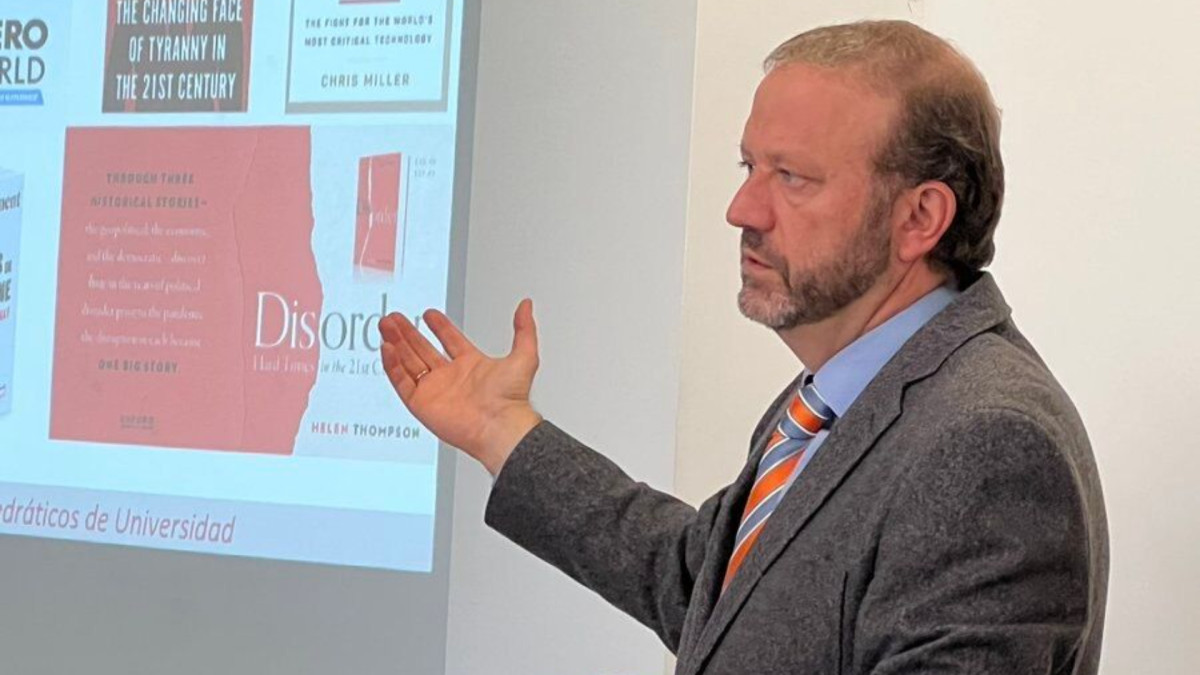
Manfredi is a professor at the University of Castilla-La Mancha. Photo: Juan Luis Manfredi
As co-founder of an important transatlantic professional network – the Spanish Public Policy Network (SPPN) – and as an academic, how do you see the role of civil society and nonprofit organizations in transatlantic discourse today?
I believe nonprofit actors and civil society organizations such as the Spanish Public Policy Network (SPPN) are essential.
As a professor, journalist, and member of SPPN, my goal is to give meaning to transatlantic relations, and facilitate open spaces for dialogue.
"Transatlantic networks are essential for relations between the United States, Europe, and Spain, because they provide opportunities to exchange and coordinate narratives"Within civil society we can serve as strategic infrastructure, because we have the ability to connect talent and mobility on both sides of the Atlantic. We can also promote joint research, including scientific collaboration. Ultimately, transatlantic networks are essential for relations between the United States, Europe, and Spain, because they provide opportunities to exchange and coordinate narratives.
What do you think about emerging technologies such as artificial intelligence and social media, and how they are affecting public discourse? How do you see differences between how the United States and Europe approach these issues?
Emerging technologies — from artificial intelligence to social media — have become the space where meanings and political connections are negotiated.
AI can help us consolidate information from multiple sources, but decisions still need to be made by people. When it comes to social media, we need a better understanding of how to regulate and legislate freedom of expression, because the red line between free speech and hate speech is very, very thin.
Europeans tend to prefer more regulation, while the United States prefers a more free-market approach. But this is an issue that requires much more discussion, and diplomats must remain attentive to it, especially in the current moment of transatlantic relations.
How do you see the celebration of the 250th anniversary of the United States at this moment?
The celebration of the 250th anniversary of the republic reminds us that the United States has been the architect of the liberal international order as we have known it. It promoted democracy and liberal values, free trade, and cosmopolitanism. These values were central to the U.S. role in building the liberal international order. But today, during Trump’s second term, we see multiple spheres of influence and a multipolar world.
It seems the United States has accepted that its capacity is more limited when competing with China and other countries. It shows less interest in being the global hegemon and instead prefers to concentrate its power vertically — from the Arctic to Patagonia — rather than maintaining its historic role as a global power looking both east and west in a globalized world. We will have to see how the United States redefines its strategic alliances based on economics, technology, trade, and energy: the four pillars of foreign policy during Trump’s second presidential term.
ARTÍCULOS RELACIONADOS
Manfredi y Carroll encaran una conversación sobre el futuro de la relación entre EE. UU. y España.Mehmet Eser / Zuma Press / ContactoPhoto
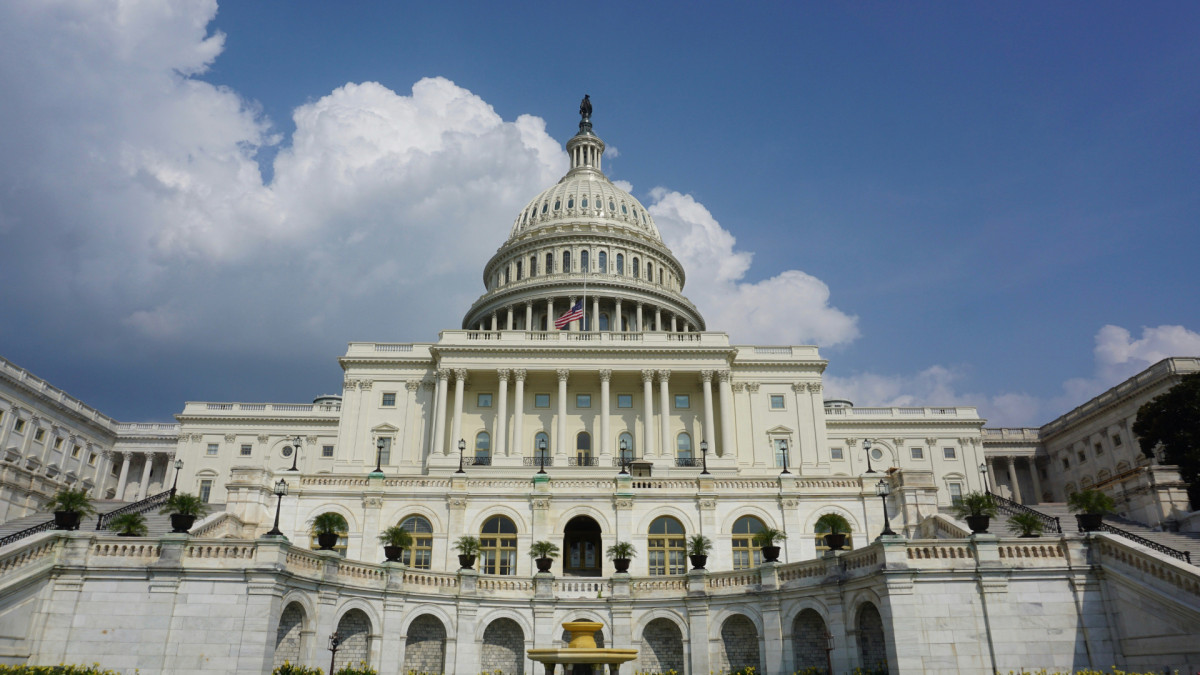
US Congress (Washington D. C.)Unsplash / Quick PS
Europe still does not fully understand that the United States — under Trump, but already since the Obama presidency, and through Trump’s first term and the Biden presidency — has been detaching itself from its role as hegemon and is now definitively detached from the liberal international order. We must accept that this is the new reality of the transatlantic partner and therefore offer a relationship that is more pragmatic, more results-based, more focused on energy and trade, and less on ideas and values. At the moment, the United States is not interested in the ideological or political offer coming from Europe.
"The U.S. sees Europe’s regulatory system — designed to protect consumers — as a weakness rather than a strength"From the American side, Europe is often seen as incapable of change because it is viewed as a very complex political and economic territory that is not particularly innovative. The U.S. sees Europe’s regulatory system — designed to protect consumers — as a weakness rather than a strength.
Hopefully any misunderstandings between Europe and the United States can be resolved through a redefinition of transatlantic relations that abandons nostalgia and instead embraces curiosity and exploration toward new political, educational, and civil society projects. If civil society becomes the channel through which relations between European and American citizens operate, we will have a better political framework.
How would you ideally like Spain and Europe to engage with the United States during this moment of redefining the transatlantic relationship?
My suggestion for the governments of Spain and Europe is that they accept and embrace the political realism coming from the United States. I am not saying Europe should abandon its principles or become purely realist. Rather, it should understand that the world shaped by the euro, Schengen, and programs such as Erasmus belongs to a specific European model.
Today, that model cannot simply be expanded to the United States. If we embrace these realistic principles, we can better define our objectives and interests, resulting in a better relationship with this new United States.
"We must abandon nostalgia and modernize: modernize energy policy, address inflation, strengthen the single market"We need to stop waiting for the tsunami of Trump’s second term to pass and start talking about change in Europe. I do not want to talk about change anymore — I want to see action. We must abandon nostalgia and modernize: modernize energy policy, address inflation, strengthen the single market. It has to be done. It is time for action, not more analysis.
Tell us a bit about your new book, How Disinformation Ruins Public Diplomacy. What is it about?
The book is a proposal that summarizes one of the courses I taught at Georgetown as Prince of Asturias Chair from 2021 to 2024. It focuses on a scenario of deglobalization in which we see the transformation of public diplomacy. Traditionally, public diplomacy functioned as a diplomatic tool based on values emphasized by scholars such as Joseph Nye. Today, however, those values are no longer dominant: democratic and liberal values — and even journalism itself — do not enjoy the same support they had recently. As a result, it has become more difficult to practice public diplomacy without those instruments that once facilitated it, because there are now fewer spaces for public conversation.
This book analyzes how we arrived at today’s situation, where there is less trust in institutions that support public diplomacy. It argues that we should renew interest in the importance of public diplomacy, even in a world where priorities and values are changing in many places.
Thank you.

J. P. Carroll
Analista en Washington D. C. y columinsta de 'Agenda Pública'
MBA Internacional de IE Business School. Máster en Estudios Profesionales (MPS) en Relaciones Públicas y Comunicaciones Corporativas de la Universidad de Georgetown. Es el exdirector adjunto de Medios Hispanos del Comité Nacional Republicano (RNC). J.P. vive en el área de Washington, D. C.
Ahora en portada
16 de octubre de 2026
16 de octubre de 2026
16 de octubre de 2026
Noticias relacionadas
Hace 30 semanas
Juan Luis Manfredi: Hay "que abandonar la nostalgia" y aceptar la nueva realidad de la relación transatlántica
Hace 47 semanas
The Spanish Think Tank Connecting Spain and Washington, D.C.
Hace 44 semanas
De Heritage a Vox: la política transatlántica que empieza a tejerse en España
Lo más leído