Jueves, 22 de octubre de 2026




FIRMAS TOP
The Spanish Think Tank Connecting Spain and Washington, D.C.
In the political heart of the United States, the conversation is about Spain, Europe and public policy. In a moment when the "end of the liberal order" is being debated and its challenges scrutinized, J. P. Carroll, Senior Fellow for National Security and Trade at the Rainey Center for Public Policy, offers an account of a series of events organized by the Spanish Public Policy Network (SPPN) in Washington, D.C., where Spain has acquired an unusually prominent role.
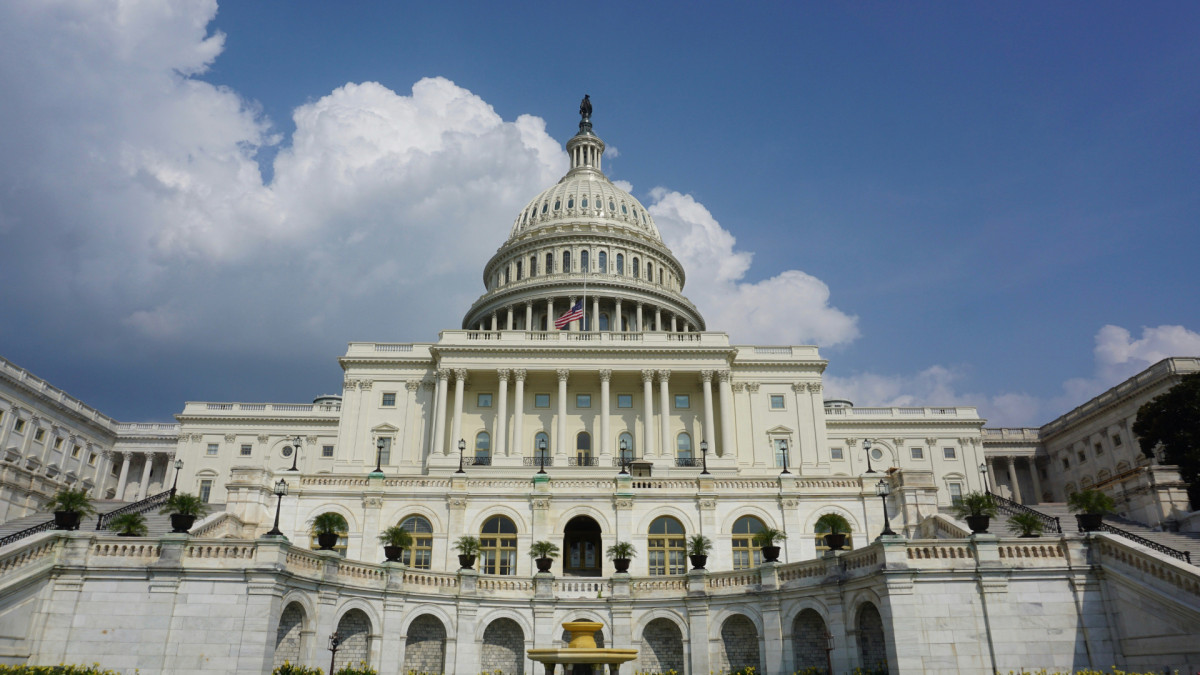
US Congress (Washington D. C.)Unsplash / Quick PS
Early on Saturday morning, a group of 30 some Spaniards gathered by the Georgetown University football field in Washington, D.C. This was not a group of Spanish soccer pros that had mixed up fútbol with football. It was a group of diplomats, business executives, academics, journalists, and students who were up on the 4th floor of the Georgetown University McDonough School of Business’ Rafik B. Hariri Building, talking public policy, trade, emerging technologies such as artificial intelligence, and how to build upon longstanding Spain-U.S. relations.
By the time Saturday morning came around, there was an atmosphere of trust and familiarity amongst the participants. Chatham House rules, allowed for frank and open policy discussions. Beyond discussing the issues of the day, this forum served as a great networking opportunity for its many participants, most of whom were Spanish expats living across the United States. However, this event also attracted Spaniards who flew out from Spain, just for this conference.
The current Prince of Asturias Distinguished Visiting Professor at Georgetown University’s School of Foreign Service, Federico Steinberg, Ph.D., told Agenda Pública, "The SPPN event in Washington, D.C., discussed the main geopolitical, economic, and technological trends shaping the world. The end of the liberal order poses fundamental challenges for the European Union (EU) and Spain, but it is not too late for the EU to be a player – and not a playground – in international politics."
Another panel which ignited a great deal of interest was on "AI and Technology shaping the global order," and looking at Spain’s place in the race for tech innovation. As one speaker memorably put it regarding Spain’s place in the global AI race, "Real Madrid is known for its offense, Barcelona excels in defense, and Spain wants to be the referee [when it comes to A.I. and digital innovation]." However, the mood was lightened as one speaker said, "Yes, A.I. isn’t just coming, it’s here. But humans need humans, we’re social [beings]. That’s not changing."
-1920x1080.jpg)
Per their website, SPPN describes itself as, "A global platform for young Spanish professionals shaping the future of policymaking." The organization was founded back in May 2022 when Juan Luis Manfredi, Ph.D., the then-Prince of Asturias Chair at Georgetown University, and Lidia Guzmán, a then-student in Georgetown’s Master in Public Policy Program.
Reached for comment by Agenda Pública, SPPN co-founder Juan Luis Manfredi, Ph.D., tenured professor at the University of Castilla-la Mancha – and former Principe de Asturias Chair at Georgetown University (2021-2024) – said in part, "During my time in Washington, my interest was in connecting the Spanish talent already living in the United States. They are young and talented. They just needed a space, a point of connection, to meet each other, share their concerns, and move forward."
Guzmán for her part told Agenda Pública, "We have so much to learn, both from the Spanish community here, and from the rest of the people who are here in the United States; and we can take part in those debates and also bring that knowledge back to Spain in some way.’"
Over the course of the summer of 2022, Guzmán reached out to Spaniards at institutions such as Columbia University, Johns Hopkins University, as well as to Spaniards in key diplomatic and multilateral entities such as the Spanish Embassy in Washington, D.C., as well as the IMF. The end-result of that long summer of cold-calls, Zoom coffees, in-person coffees, and focused networking was a gathering in the first weekend of November 2022: And with that, the first Jornadas SPPN was born, in Washington, D.C.
"In the end, what unites this [SPPN] community is two things. First, a passion for public policy and a commitment to Spain [in developing understanding of] how those policies affect our society, our families, our friends, and our neighbors," SPPN President (USA) Victoria Suárez told Agenda Pública.
-1920x1080.jpg)
The work of SPPN also has not gone unnoticed by Spanish officials. When reached for comment on SPPN’s IV Jornadas in Washington, D.C., the Spanish Embassy in Washington, D.C.’s Deputy Chief of Mission, Guillermo Corral, told Agenda Pública, "We always welcome greater dialogue between Europeans and Americans through such forums."
In the interest of transparency, I have known Juan Luis Manfredi for years, dating back to my time as a Georgetown University graduate student, and he played a key role in my deciding to pursue my MBA studies at IE Business School in Madrid. Additionally, about a month ago I joined a SPPN webinar to discuss the thinking of American voters ahead of the upcoming U.S. midterm elections next year. As an American who’s had an up-close look at SPPN, it seems to me that they are building bridges between people through the free exchange of ideas on both sides of the Atlantic. Their work should be commended, and I wish them well.
With that, SPPN Vice President (Spain) Mateo Garcia Silva may have summed things up best, saying, "Georgetown [University] has a motto: Utraque Unum, which means ‘from two, one.’ Utraque Unum was also the motto of the Spanish ‘real de a ocho,’ the first global currency and the first official tender in the United States. The Spanish Dollar eventually led to the creation of the U.S. dollar. And I think that message — Utraque Unum — is exactly what defines SPPN of ‘two worlds, one.’ We … build bridges, we connect, and we reconnect Spaniards who are abroad here in the United States, especially with the public debate in Spain, with the place we come from and where, well … life will tell us whether we end up returning."
"The participants attended meetings at the International Monetary Fund, the Delegation of the European Union in Washington, D.C., and the World Bank"This event was put together by the Spanish Public Policy Network (SPPN) and organized with the support of Federico Steinberg, Ph.D., The Prince of Asturias Chair at the Walsh School of Foreign Service at Georgetown University. It was the 4th annual "Jornadas" gathering in Washington, D.C. and officially kicked off on Thursday, November 13th with a happy hour and then over the course of Friday, November 14th participants enjoyed meetings at the International Monetary Fund, the European Union Delegation in Washington, D.C., and The World Bank.
The SPPN panels addressed today’s challenges
This year’s Jornadas conference theme was "The World Reordering," and this was a constant throughout each and every panel discussion during the day. Panels were diverse in their focus, such as one on "Geoeconomics and the Race for Competitiveness," wherein panelists and attendees alike expressed great concern at Spain and the European Union’s place in the global economy as tariffs have and the ongoing war in Ukraine place great economic pressure on the European Union. One speaker made the important point however that "Europe united is powerful," and that Spain’s competitiveness and attractiveness as a leading economic power is secure within that context.The current Prince of Asturias Distinguished Visiting Professor at Georgetown University’s School of Foreign Service, Federico Steinberg, Ph.D., told Agenda Pública, "The SPPN event in Washington, D.C., discussed the main geopolitical, economic, and technological trends shaping the world. The end of the liberal order poses fundamental challenges for the European Union (EU) and Spain, but it is not too late for the EU to be a player – and not a playground – in international politics."
Another panel which ignited a great deal of interest was on "AI and Technology shaping the global order," and looking at Spain’s place in the race for tech innovation. As one speaker memorably put it regarding Spain’s place in the global AI race, "Real Madrid is known for its offense, Barcelona excels in defense, and Spain wants to be the referee [when it comes to A.I. and digital innovation]." However, the mood was lightened as one speaker said, "Yes, A.I. isn’t just coming, it’s here. But humans need humans, we’re social [beings]. That’s not changing."
"Strikingly, there was little discussion about specific political figures such as the Spanish Prime Minister Pedro Sánchez, Alberto Núñez Feijóo, or Donald Trump himself"The role of the media in our society in a panel titled "Media, news, and polarization," looked into the state of news media today with trust in institutions being low and there being a rise in polarization. The changing habits of news consumers was discussed as more people turn to social media for their news. Notably however, there was little discussion either of Spanish Prime Minister Pedro Sanchez, Partido Popular President Alberto Núñez Feijóo, or even President Trump. This conference was an apolitical policy discussion with a focus on analysis and looking for solutions to challenges.
The public policy sessions drew the attention of many Spaniards in Washington. Photo: John Ganjei
Per their website, SPPN describes itself as, "A global platform for young Spanish professionals shaping the future of policymaking." The organization was founded back in May 2022 when Juan Luis Manfredi, Ph.D., the then-Prince of Asturias Chair at Georgetown University, and Lidia Guzmán, a then-student in Georgetown’s Master in Public Policy Program.
Reached for comment by Agenda Pública, SPPN co-founder Juan Luis Manfredi, Ph.D., tenured professor at the University of Castilla-la Mancha – and former Principe de Asturias Chair at Georgetown University (2021-2024) – said in part, "During my time in Washington, my interest was in connecting the Spanish talent already living in the United States. They are young and talented. They just needed a space, a point of connection, to meet each other, share their concerns, and move forward."
Guzmán for her part told Agenda Pública, "We have so much to learn, both from the Spanish community here, and from the rest of the people who are here in the United States; and we can take part in those debates and also bring that knowledge back to Spain in some way.’"
Over the course of the summer of 2022, Guzmán reached out to Spaniards at institutions such as Columbia University, Johns Hopkins University, as well as to Spaniards in key diplomatic and multilateral entities such as the Spanish Embassy in Washington, D.C., as well as the IMF. The end-result of that long summer of cold-calls, Zoom coffees, in-person coffees, and focused networking was a gathering in the first weekend of November 2022: And with that, the first Jornadas SPPN was born, in Washington, D.C.
"In the end, what unites this [SPPN] community is two things. First, a passion for public policy and a commitment to Spain [in developing understanding of] how those policies affect our society, our families, our friends, and our neighbors," SPPN President (USA) Victoria Suárez told Agenda Pública.
The Georgetown Business School building that hosted the panels. Photo: John Ganjei
The work of SPPN also has not gone unnoticed by Spanish officials. When reached for comment on SPPN’s IV Jornadas in Washington, D.C., the Spanish Embassy in Washington, D.C.’s Deputy Chief of Mission, Guillermo Corral, told Agenda Pública, "We always welcome greater dialogue between Europeans and Americans through such forums."
In the interest of transparency, I have known Juan Luis Manfredi for years, dating back to my time as a Georgetown University graduate student, and he played a key role in my deciding to pursue my MBA studies at IE Business School in Madrid. Additionally, about a month ago I joined a SPPN webinar to discuss the thinking of American voters ahead of the upcoming U.S. midterm elections next year. As an American who’s had an up-close look at SPPN, it seems to me that they are building bridges between people through the free exchange of ideas on both sides of the Atlantic. Their work should be commended, and I wish them well.
With that, SPPN Vice President (Spain) Mateo Garcia Silva may have summed things up best, saying, "Georgetown [University] has a motto: Utraque Unum, which means ‘from two, one.’ Utraque Unum was also the motto of the Spanish ‘real de a ocho,’ the first global currency and the first official tender in the United States. The Spanish Dollar eventually led to the creation of the U.S. dollar. And I think that message — Utraque Unum — is exactly what defines SPPN of ‘two worlds, one.’ We … build bridges, we connect, and we reconnect Spaniards who are abroad here in the United States, especially with the public debate in Spain, with the place we come from and where, well … life will tell us whether we end up returning."

J. P. Carroll
Analista en Washington D. C. y columinsta de 'Agenda Pública'
MBA Internacional de IE Business School. Máster en Estudios Profesionales (MPS) en Relaciones Públicas y Comunicaciones Corporativas de la Universidad de Georgetown. Es el exdirector adjunto de Medios Hispanos del Comité Nacional Republicano (RNC). J.P. vive en el área de Washington, D. C.
Ahora en portada
22 de octubre de 2026
22 de octubre de 2026
21 de octubre de 2026
Noticias relacionadas
Hace 48 semanas