Domingo, 18 de octubre de 2026




LÓPEZ PLANAS'S EUROPEAN COMPASS
Feijóo between Washington, Brussels, and Vox: the challenges of moderation
"The European Union is the necessary anchor for the economic and political project of the PP," argues Marc López Plana, editor and director of 'Agenda Pública', in this analysis of political player Alberto Núñez Feijóo. "I’m a progressive citizen seeking to comprehend – above the daily noise of Spanish politics – a figure who could become the next President of the Government," says López Plana, "from the conviction that understanding Feijóo may also be a way of understanding an essential part of Spain."
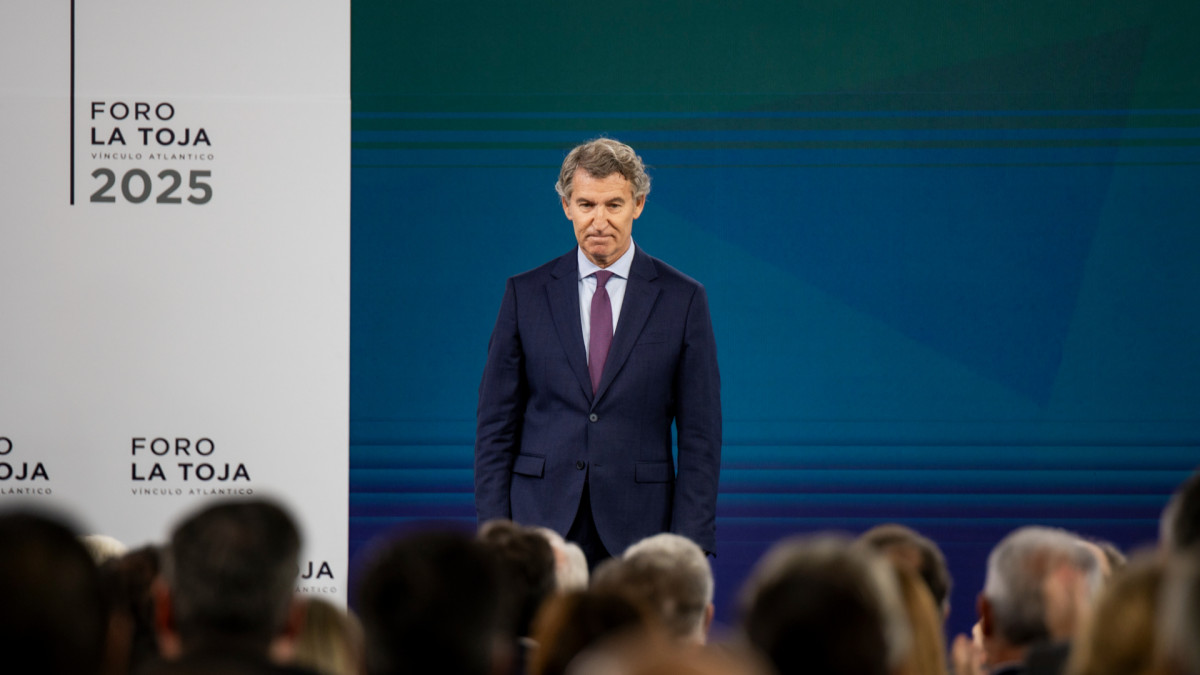
Alberto Núñez Feijóo has been in the center of the political debate during the last weeks.Agenda Pública / Yanka Soto
I’m a progressive citizen seeking to comprehend – above the daily noise of Spanish politics – a figure who could become the next President of the Government. I do this with respect, because Feijóo represents over ten million voters and the Popular Party, currently the leading party in Spain; and I do it from the conviction that understanding Feijóo may also be a way of understanding an essential part of Spain.
The task of defining Spain’s place between a doubtful EU and the turbulent Atlantic requires more than political instinct. It requires method, stability, and a clear conception of the nation.
I confess I was among those who cheered when the PP elected Feijóo leader. I thought he would bring serenity to Spanish politics: a voice of the institutional right, moderate and capable of restarting dialogue with the political center. I saw in Feijóo a chance for non-strident and pragmatic conservatism that could turn down the heat.
"Alberto Núñez Feijóo has never been a politician of impulses, but of method." That’s how those who have worked with him describe him: someone suspicious of improvisation, who asks for "clear roles" before making a decision, avoidant of grand ideological proclamations. "He’s not an ideological extremist of any kind." Within his entourage, the idea circulates that he isn’t looking to build an electoral program but a governmental one.
A former president of Galicia, forged in the Xunta and in public administration, Feijóo came to national politics with a priority: to demonstrate that management, pragmatism, and defense of the liberal State can again be treated as political virtues. The people in his entourage don’t deny the tensions: Feijóo coexists with a party where electoral urgency provokes impatience, and where barons seek to consolidate their own power. One of these, Isabel Díaz Ayuso, seems to have her own agenda; other regional leaders like the president of Andalusia enjoy a status above that of Feijóo. But those who know Feijóo maintain that his strength lies precisely in his quiet discipline: "He distributes the work, carefully delimits who’s responsible for what, and always demands a document in return."
His way of thinking is managerial: before adopting a measure, he asks "what the problem is, what the solution might be, and whether it has worked anywhere." This was the case, for example, in the development of his proposal on migration – inspired by the point-systems used in Canada and Australia.
That distance isn’t merely for tactical reasons but stems from a political conviction that the constitutional and European frameworks are in fact "inescapable restrictions." Against the disruptive language of Abascal’s party, Feijóo seeks to represent institutional reliability. From my perspective, this is his "elephant in the room."
His relations with Ursula von der Leyen, Manfred Weber, and the leaders of the German CDU are part of a strategy for Spain to resume a more influential role in Europe’s popular bloc. The European Union is the necessary anchor for the economic and political project of the PP.
In my conversations with several PP representatives, all agreed that a post-Trump world will not resemble the old one. "Trump sniffed out the nationalist roots and showed they could be built on," and "He’ll disappear, but the movement won’t." They warn that Trumpism isn’t an American anecdote but an underground current that runs through all democracies: weariness with technocracy, loss of faith in competition and the authority of elites, and citizens who vote "with the liver, not with the brain." Here lies Feijóo’s challenge: to understand the new climate without falling into its emotional logic.
According to his entourage, the relationship between Feijóo and Trump wouldn’t be a struggle around morals but a strategic equation. He would avoid the isolation that comes of overt anti-Americanism, but neither would he passively accept one-sided impositions. "With Trump you can’t do theater: you have to talk about interests, not abstract principles," one close aide confided.
That vision – more German than French, more technical than emotional – reflects the way Feijóo views the world: not as a battle of ideologies, but as a game of resistance, alliances, and shared costs. His instinct is always the same: negotiate, add up the numbers, institutionalize. In noisy times like these, sobriety may seem a small thing, but it also might be the only way to survive.
Maybe this style of working "as if he were President of the Government" moves him to pay closer attention to the modern forms of political communication. "Feijóo doesn’t react to the headline of the day; he tries to build politics from evidence." But this approach has a cost in a context where media noise is often confused with public debate – not least in those outlets that are ideologically closest to Feijóo’s party: the PP reacts to the news, but it doesn’t believe the news.
If Sánchez doesn’t manage to get the budgets approved – although he claims that such a failure wouldn’t force his resignation – the inability to move the process forward could start an electoral countdown. In that scenario, a string of defeats in specific territories would weaken Sánchez’s political authority, projecting an image of cyclical exhaustion and building pressure for an early general election.
"If Feijóo comes to power, he’ll be responsible for leading Spain toward maximum possible European integration, and for managing relations with the U.S."If Feijóo comes to power, he’ll be responsible for leading Spain toward maximum possible European integration, and for managing relations with a U.S. governed by Donald Trump (or perhaps JD Vance, more closed and nationalistic in vision, less compatible with Europe).
The task of defining Spain’s place between a doubtful EU and the turbulent Atlantic requires more than political instinct. It requires method, stability, and a clear conception of the nation.
I confess I was among those who cheered when the PP elected Feijóo leader. I thought he would bring serenity to Spanish politics: a voice of the institutional right, moderate and capable of restarting dialogue with the political center. I saw in Feijóo a chance for non-strident and pragmatic conservatism that could turn down the heat.
"Feijóo is the politician who promised to bring calm to politics, but he has been forced to live in a constant state of alert"But national politics seem to have pushed Feijóo into a place that’s not his own; over time, I’ve watched him grow more tense, more edgy. "He isn’t angry, he’s on guard. It’s a question not of temperament, but of context: today in Spain, to be moderate is to expose oneself." That seemingly simple comment sums up Feijóo's paradox: the politician who promised to bring calm to politics has been forced to live in a constant state of alert.
"Alberto Núñez Feijóo has never been a politician of impulses, but of method." That’s how those who have worked with him describe him: someone suspicious of improvisation, who asks for "clear roles" before making a decision, avoidant of grand ideological proclamations. "He’s not an ideological extremist of any kind." Within his entourage, the idea circulates that he isn’t looking to build an electoral program but a governmental one.
A former president of Galicia, forged in the Xunta and in public administration, Feijóo came to national politics with a priority: to demonstrate that management, pragmatism, and defense of the liberal State can again be treated as political virtues. The people in his entourage don’t deny the tensions: Feijóo coexists with a party where electoral urgency provokes impatience, and where barons seek to consolidate their own power. One of these, Isabel Díaz Ayuso, seems to have her own agenda; other regional leaders like the president of Andalusia enjoy a status above that of Feijóo. But those who know Feijóo maintain that his strength lies precisely in his quiet discipline: "He distributes the work, carefully delimits who’s responsible for what, and always demands a document in return."
Feijóo style: method, prudence, and control
Feijóo’s method comes at a cost. He’s rarely spontaneous in front of the cameras. Again, "He’s not angry, he’s tense," and "He’s obsessed with not making mistakes, not causing a headline that will turn against him." That tension derives from life in a political climate where a single verbal slip-up can spark days of crisis.His way of thinking is managerial: before adopting a measure, he asks "what the problem is, what the solution might be, and whether it has worked anywhere." This was the case, for example, in the development of his proposal on migration – inspired by the point-systems used in Canada and Australia.
"In Feijóo there’s an intellectual distrust of excessively doctrinaire speeches, and he is in discomfort with extremes"In Feijóo there’s an intellectual distrust of excessively doctrinaire speeches: "Ideology for him is useful when you lack knowledge. But if there’s evidence, that evidence rules." Hence, his discomfort with extremes, and his insistence on "mixed" management shared between the public and private sectors. The Galician healthcare model, more efficient than the U.S. approach, often appears in his examples.
Feijóo versus Vox: calculated distance
Feijóo’s PP doesn’t want to be shackled to Vox. "Agreeing with Vox may be a last-chance option, but that isn’t his preference," say some in his entourage. "Experience has shown that governing with Vox creates tensions and uncomfortable situations."That distance isn’t merely for tactical reasons but stems from a political conviction that the constitutional and European frameworks are in fact "inescapable restrictions." Against the disruptive language of Abascal’s party, Feijóo seeks to represent institutional reliability. From my perspective, this is his "elephant in the room."
The EU, a silent priority
Feijóo is frequently criticized for a lack of international connections, which he tries to correct. "He never misses a meeting of the European People’s Party when the European Council is set to convene," and he "knows that maintaining a good relationship with the German Chancellor is the most important thing in Europe."His relations with Ursula von der Leyen, Manfred Weber, and the leaders of the German CDU are part of a strategy for Spain to resume a more influential role in Europe’s popular bloc. The European Union is the necessary anchor for the economic and political project of the PP.
"Feijóo is concerned that the promises made by von der Leyen to win the presidency of the European Commission are not being fulfilled"That said, Feijóo is concerned that the promises made by von der Leyen to win the presidency of the European Commission – including a review of the bureaucratic excesses inherited from previous executives – are not being fulfilled. He remains attentive, to ensure that the Commission respects the political pact that guaranteed support for von der Leyen from the European People’s Party and from Spain’s PP in particular.
The transatlantic view
The other major axis that will likely define a potential Feijóo administration is Spain’s relationship with the United States. The leader understands that geopolitical balances are shifting and that Spain cannot limit itself to the role of obedient associate.In my conversations with several PP representatives, all agreed that a post-Trump world will not resemble the old one. "Trump sniffed out the nationalist roots and showed they could be built on," and "He’ll disappear, but the movement won’t." They warn that Trumpism isn’t an American anecdote but an underground current that runs through all democracies: weariness with technocracy, loss of faith in competition and the authority of elites, and citizens who vote "with the liver, not with the brain." Here lies Feijóo’s challenge: to understand the new climate without falling into its emotional logic.
"If he had to deal with Trump, he wouldn’t fight over symbols but seek a pragmatic strategy of constant negotiation"Feijóo wouldn’t let himself be carried away by a game of gestures or by media noise. If he had to deal with Trump, he wouldn’t fight over symbols but seek a pragmatic strategy of constant negotiation, expanding the concept of ‘defense’ beyond its military scope. As a contribution to Western security, Spain might validate its role in the Sahel, or in border management, or in international cooperation.
According to his entourage, the relationship between Feijóo and Trump wouldn’t be a struggle around morals but a strategic equation. He would avoid the isolation that comes of overt anti-Americanism, but neither would he passively accept one-sided impositions. "With Trump you can’t do theater: you have to talk about interests, not abstract principles," one close aide confided.
That vision – more German than French, more technical than emotional – reflects the way Feijóo views the world: not as a battle of ideologies, but as a game of resistance, alliances, and shared costs. His instinct is always the same: negotiate, add up the numbers, institutionalize. In noisy times like these, sobriety may seem a small thing, but it also might be the only way to survive.
The Internal Order: Genova as a Ministry
One of the least visible facets of Feijóo is his obsession with organization. "He runs the party as if it were a government," said an associate. "Minutes are taken at each meeting, then filed with the General Secretariat, to recall who said what, and what was done afterward." According to his collaborators, the digitalization of internal processes, coordination between the parliamentary group and Genova Street, and the creation of a computer system to control legislative initiatives are all proofs of his management culture.Maybe this style of working "as if he were President of the Government" moves him to pay closer attention to the modern forms of political communication. "Feijóo doesn’t react to the headline of the day; he tries to build politics from evidence." But this approach has a cost in a context where media noise is often confused with public debate – not least in those outlets that are ideologically closest to Feijóo’s party: the PP reacts to the news, but it doesn’t believe the news.
The electoral clock
Several of the experts I’ve spoken with agree that the PP may be preparing what they call an "autonomic trap" for Pedro Sánchez: a strategy aimed at forcing or taking advantage of key elections in autonomous communities (whether in Andalusia, Castilla y León, Extremadura, or Aragón) in a context of budgetary blockage.If Sánchez doesn’t manage to get the budgets approved – although he claims that such a failure wouldn’t force his resignation – the inability to move the process forward could start an electoral countdown. In that scenario, a string of defeats in specific territories would weaken Sánchez’s political authority, projecting an image of cyclical exhaustion and building pressure for an early general election.
"Today it’s anyone’s game, and either Sánchez or Feijóo could end up governing Spain in the next legislature"Polls published in recent days increasingly indicate a technical tie between the PSOE and the PP, with Sánchez’s party still able to win the next elections. However, the PP and Vox together would constitute an absolute majority – as would an alliance between the PSOE and the PP. Today it’s anyone’s game, and either Sánchez or Feijóo could end up governing Spain in the next legislature. That legislature won’t be exotic, but part of a wider international context related to global trends. Thus it’s essential that we understand the world of Feijóo and his project for Spain. To be prepared. Because depending on what happens and what’s done in the next few years, Spain and the EU and the world will all be affected. We must do more than pay attention; we must work so that regardless of the scenario, Spain remains a global defender of liberal democracy despite this moment of democratic weakness.
Ahora en portada
17 de octubre de 2026
16 de octubre de 2026
Noticias relacionadas
Hace 52 semanas
Feijóo entre Washington, Bruselas y Vox: los retos de la moderación
Hace 55 semanas
Los tres dilemas de la derecha moderada en Francia
Lo más leído