Sábado, 17 de octubre de 2026




CONVERSATIONS
Carlos Cuerpo: "Europe must reduce its strategic dependencies and quicken the pace of integration"
From the La Toja Forum, Spain’s Minister of Economy presents his vision of the challenges facing Spain and the European Union in a changing international context. Carlos Cuerpo analyzes the recent trade agreement with the United States, which he finds useful for reducing business uncertainty, but ultimately insufficient. He warns of the impact of a "China shock" on key sectors such as steel, defends Spain’s commitment to renewable energies as drivers of competitiveness and investment, and argues that immigration is essential to sustaining economic growth and should not be stigmatized.
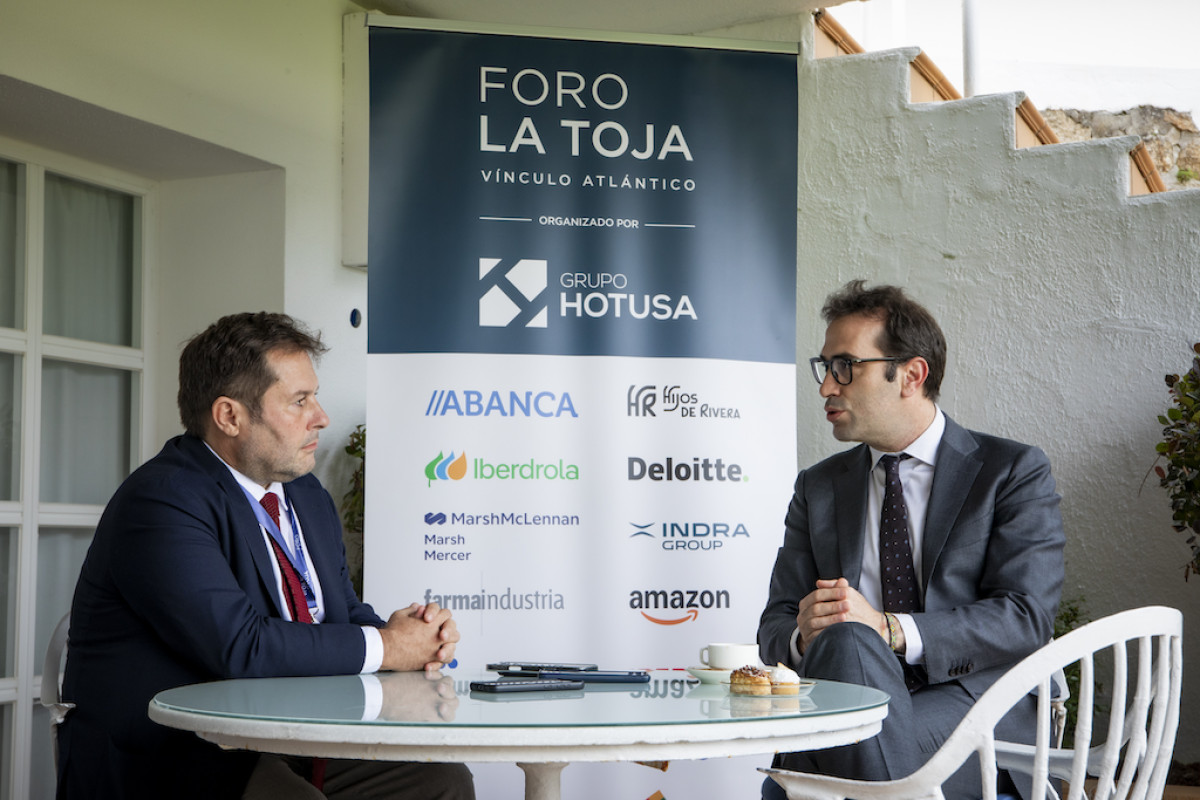
Marc López and the Minister of Economy, Carlos Cuerpo.Agenda Pública / Yanka Soto
Within the framework of the La Toja Forum, Spain’s Minister of Economy Carlos Cuerpo spoke with Marc López Plana, editor and director of Agenda Pública, and addressed the major economic and political challenges facing his country and the European Union. The starting point was the recent trade agreement with the United States, described by Cuerpo as "not the one we would have wanted" but which provides a needed measure of stability for companies and can be taken as an opportunity to strengthen competitiveness.
The conversation ranged to China’s role in the world economy and the risks around overcapacity already affecting Europe, the strategic commitment to renewable energies as drivers of economic security and investment attraction, and the bottlenecks created by strong demand for grid connection. Cuerpo insisted that Spain holds a leading position in green projects – a determining factor in Europe’s reindustrialization and strategic autonomy.
Another central issue was European competitiveness and the need to accelerate integration. To that end, the Minister spoke of the implementation of a "competitiveness laboratory" – an initiative promoted by Spain to increase agility in EU decision-making through coalitions of countries willing to move forward without the need for unanimity among the 27 Member States.
The interview included fundamental questions around citizens’ perceptions. Cuerpo acknowledged the gap between the good evolution of the macro-economy and the feelings of uncertainty that persist, with society still rattled by a decade of successive shocks and structural problems such as housing. Finally, Cuerpo underlined the positive role of immigration in the growth and sustainability of the labor market, dismantling myths that often feed stigmatizing discourses.
The conversation offered an overview of how both Spain and Europe can confront the challenges of globalization in an unstable geopolitical context, reflecting the current government's willingness to blend realism with ambition on the road to a stronger, more competitive, and more inclusive economy.
Maybe it’s convenient to start by contextualizing the agreement, because it draws from two realities. One is the United States – or the new reality of the second Trump Administration – where they’re generally raising tariff barriers with all their trade partners regardless of the negotiation strategy, the size of the partner, or the relative importance of either. The second reality has to do with the European Union. Responsibility in trade is delegated to the European Commission, and negotiations have included, I would say rightly, the priority that unanimity be part of our approach, to avoid division. Without that European position, the results might have been even worse – not in the short term, but maybe in the medium term.
From these two bases of realism, we have to move ahead with the agreement. Here we have perhaps two elements that permit us to be more optimistic than we were before the signing. I’ve already said that this isn’t the agreement we would’ve hoped to reach with the United States, but we need to move integration forward rather than erecting barriers, which always wind up being negative for everyone. That said, we shouldn’t wallow in frustration but try and make the best of the agreement on the table
Another issue is our situation in relative terms, with respect to other partners and competitors in the North American market. Europe isn’t in a bad position there. The role of national authorities and a good objective is to help companies make the most of the situation, transform it into an opportunity, and ensure that our companies are able to navigate. For our part, we still support a plan that’s been on the table from the beginning – since 12 hours after President Trump’s announcement – which includes financing for insurance instruments and personalized services and also what companies have demanded from us: information, economic intelligence, and specifically the ICEX plan [ICEX High Impact on Competitiveness Plan], also known as the ‘500 Plan’, whose goal was to support the 500 companies with the greatest exposure to the U.S, half of which are SMEs.
These 500 companies have been involved in over 70% of exports to the U.S. More than 20% are already working with ICEX on some of the services provided by the plan. In my opinion, that result speaks clearly of the wisdom of this measure. In fact, we’ve now extended it to the ICEX 1000 – the thousand most exposed companies. The goal is the same: let's try to be realistic and make the most of this opportunity while protecting our companies.
It’s said that the China shock will be worse than the Trump shock. What’s your opinion? A few days ago in Brussels, I heard someone say we’d have to change the tariff policy with China.
In many sectors, the challenges faced by companies actually predated the U.S. increase of tariffs. For example, challenges in the steel sector, associated with global overcapacity, which has a lot to do with surpluses exported from Asian countries and from the Middle East.
We have to face both challenges at the same time. On the one hand, there’s the challenge of competing with greater fragmentation, which results from higher tariffs; on the other hand, we have to protect our industries from overcapacity – and those excesses have increased as the U.S. has raised barriers. The redirection of overcapacity is now turning toward Europe, so we have to stay extremely vigilant. We’re working in coordination with the European Commission, actively observing EU customs to monitor for deviations, whether in products from large industries or other sectors: textiles, the primary sector, etc. We’re doing this through continuous monitoring for potential impacts, and we’re proposing – in this case from Spain, but also with other countries – measures that protect our sectors.
One issue has to do with the steel sector. We know that next year, in June, the safeguards that currently protect our companies will end. That’s why we’re already pushing and working with the Commission to replace those safeguards. In fact, a few days ago, Vice-President Stéphane Séjourné proposed a new measure to protect the steel sector. This has to be the way. Beyond that, Europe also needs to think positively, with two clear agendas: serving the internal market, and expanding the network of strategic partners. For example, ratification of the Mercosur agreement, which is fundamental.
At this La Toja Forum, debate has arisen around the production of cheap energy, which Agenda Pública has covered a lot. When talking about defense, don’t we also have to think about that? For example, don’t we need to start thinking that defending ourselves also means that solar panels ought to be produced in Europe?
I’ll start with the issue of our commitment to renewables. In my opinion, there’s a firm commitment in the medium term on the part of this government which has been generating many advantages. The first is linked to the context of economic security: the reduction of dependence on fossil fuels. Spain doesn’t have fossil fuels – no gas, no oil – but we do have the capacity to produce energy through solar and wind power. With the capacity to produce renewables, the commitment became very clear.
This morning, Juanma Moreno Bonilla, the president of the Junta de Andalucía, said: "I need more connection to the grid."
Indeed, what challenges do we face? We have a new one in Spain, which is the boom in demand for industrial projects to be able to connect.
In part we have this problem because we’ve maintained that initial investment effort: a ‘blessed problem’, so to speak. What we have is a lot of people wanting to connect, and we have to provide opportunities to avoid a bottleneck, prioritizing the industrial projects that generate the most added-value for our country. But this must be combined with elements like strategic autonomy and economic security. Obviously, it has to be done across many areas, for example in the solar energy I mentioned, but also in electric cars, and elsewhere.
Europe missed the boat in terms of technological development. So here we have to be realistic and try a double track. First, thinking ahead to reduce strategic dependencies; when we identify a strategic element, the aim must be to reduce dependency, either by diversifying our suppliers or by producing it ourselves. At the same time, we need to attract investments that can allow us to close the technological gap. In my opinion, Spain is working on both flanks, hand-in-hand with the European Commission. This vision has become increasingly internalized.
I'm told you’re "obsessed" with giving considerable strength to the competitiveness laboratory.
Obsessed is the word, yes.
In the end, if we break down our own internal tariffs, it’s because we want to improve our ability to compete. That proposal is Spanish, by the way. How do you see it evolving?
Yes, all this arises from a frustration we sometimes experience in Europe, because we know what we want to do, and we almost all agree, on almost everything – but then we see things taking too long.
What we’re trying to do here is give an extra measure of agility to everything – to governance, and to the decision-making ecosystem within the Union. That’s why we created the competitiveness laboratory, together with other partners. The lab is already alive and functioning.
That way, in collaboration with the Commission, we want projects to advance where we don’t have to wait for all 27 Members States to agree. With this new way of acting, we can move ahead with groups of countries that want to lead the integration, and others will join as soon as they can. The good thing about this laboratory is that projects do come in – like the union of capital markets, plus internal market projects. It’s very flexible, but it’s also essential to keep moving forward in coordination with the Commission, which is what we’ve been doing so far.
Is the government challenged when it comes to explaining how an economy that’s taking off like "a rocket" equates with reality?
Well, this is going to be a big part of my speech here at La Toja, because I believe it’s an essential issue. First of all, I’d say that we have to understand the reality of how the population is feeling today. It’s not only happening in Spain, but worldwide – in all the advanced economies. To a great extent, this has influenced elections in many of the countries around us, because there’s a certain disaffection of the population. It’s essential to understand the origins of that feeling; that’s why it’s so important and also, in my opinion, the catch – there’s positive economic evolution, and yet this ongoing feeling of disaffection, which has two causes.
The first thing to understand – putting ourselves into the shoes of a citizen, not a politician or Minister – what we’ve been through over the past five or 15 years. There’s a whole generation who finds it normal that, every so often, there comes a shock that leaves us uncertain and uneasy. That feeling is really difficult to counteract – for anyone, for any government in the world – and it’s anchored in the fact that this generation has had to endure some very difficult conditions and situations. That’s the starting point.
The second thing to take into account is simple: you have to understand that it’s not a contradiction that things are going well, and yet we’re not where we want to be. One doesn’t preclude the other. But the good situation in macro terms is a necessary condition to getting there. We have to grow, but we have to do it with the ultimate purpose of improving the micro, because we’re not yet where we want to be.
Moreover, in connection with job stability, hourly productivity has been growing, more than during previous stages when the economy was growing but with little or no growth in productivity. The purchasing power of workers has been rising more than in Spain than in our neighbor countries. We’re getting young people to train much more than before. Here’s an essential fact: the unemployment rate is now about what it was in 2004. However, back then, around a third of young people were dropping out of school to enter the job market. Today that’s down to 12%.
These are positive changes, advances we’ve been achieving. The unemployment rate is now at 10.3%, five points below the rate in 2018. The youth unemployment rate has fallen by eight or nine points. A lot is being achieved thanks to our ability to grow. We’re managing to maintain our welfare state – supporting citizens with the social shield, despite rising prices – because we’re growing. We know we’re growing for good reasons.
There are still challenges, and there are still families living under difficult conditions who can’t help but notice – we all notice – the rise in grocery costs. The most essential aspect here is the challenge of housing. We’re aware that housing affects more than day-to-day life – it conditions the decisions made by many families and young people about the future. That’s where our intentions and our work and our ultimate direction originate.
I can’t leave without asking about immigration. There are wild stories about immigration, but we can’t deny the realities of cities and towns in Spain – which you know much better than I do – which are expressing concern. I think it’s important to reflect on this matter.
Without a doubt, it’s an important matter for reflection. In the first place, it’s necessary to distinguish among discourses and to empty out any narratives that try to stigmatize immigration for economic reasons, because that’s simply not the case. When we look at the data – and not just perceptions – we see that the contribution to Spain’s economy through immigration is positive, and even very positive.
We should speak plainly: we have an aging population. In Spain, and in most advanced countries, in order to maintain a constant labor force, we need a constant flow of immigrants to enter the job market and become part of society. That’s what’s happening in Spain, and it’s a fact that immigrants are helping us to maintain our rate of growth and generate opportunities for our economy.
That’s the effort we should making and, in my opinion, any sort of stigmatization has to be separated from the economic discourse. If you remove the economic discourse, what remains is basically an anti-immigration discourse, and that discourse has consequences, including on the perceptions of citizens. I often cite a study by the Iseak Foundation, which conducts surveys to discover the views of the native population toward immigration, then compares those perceptions with reality.
In terms of perceptions, people think there are twice as many immigrants than there really are. Citizens believe that the unemployment rate of immigrants is double what it truly is, and that access to subsidies and transfers from the State are five times higher than the actual amounts. Obviously, all this affects how the population will value policies dealing with the arrival and integration of immigrants.
So the discourse is not just emptied of economic content, but also far from innocuous. It has real effects on how we might be able to improve integration and coexistence in the future. From there, and also from the government, it’s our responsibility to convey a certain message around the contributions of immigration, and also to try – as the President of the Government has said on many occasions – to favor channels of regular immigration: to favor their arrival, their integration, and therefore their contribution to Spanish society.
 Thanks very much, Minister.
The conversation ranged to China’s role in the world economy and the risks around overcapacity already affecting Europe, the strategic commitment to renewable energies as drivers of economic security and investment attraction, and the bottlenecks created by strong demand for grid connection. Cuerpo insisted that Spain holds a leading position in green projects – a determining factor in Europe’s reindustrialization and strategic autonomy.
Another central issue was European competitiveness and the need to accelerate integration. To that end, the Minister spoke of the implementation of a "competitiveness laboratory" – an initiative promoted by Spain to increase agility in EU decision-making through coalitions of countries willing to move forward without the need for unanimity among the 27 Member States.
The interview included fundamental questions around citizens’ perceptions. Cuerpo acknowledged the gap between the good evolution of the macro-economy and the feelings of uncertainty that persist, with society still rattled by a decade of successive shocks and structural problems such as housing. Finally, Cuerpo underlined the positive role of immigration in the growth and sustainability of the labor market, dismantling myths that often feed stigmatizing discourses.
The conversation offered an overview of how both Spain and Europe can confront the challenges of globalization in an unstable geopolitical context, reflecting the current government's willingness to blend realism with ambition on the road to a stronger, more competitive, and more inclusive economy.
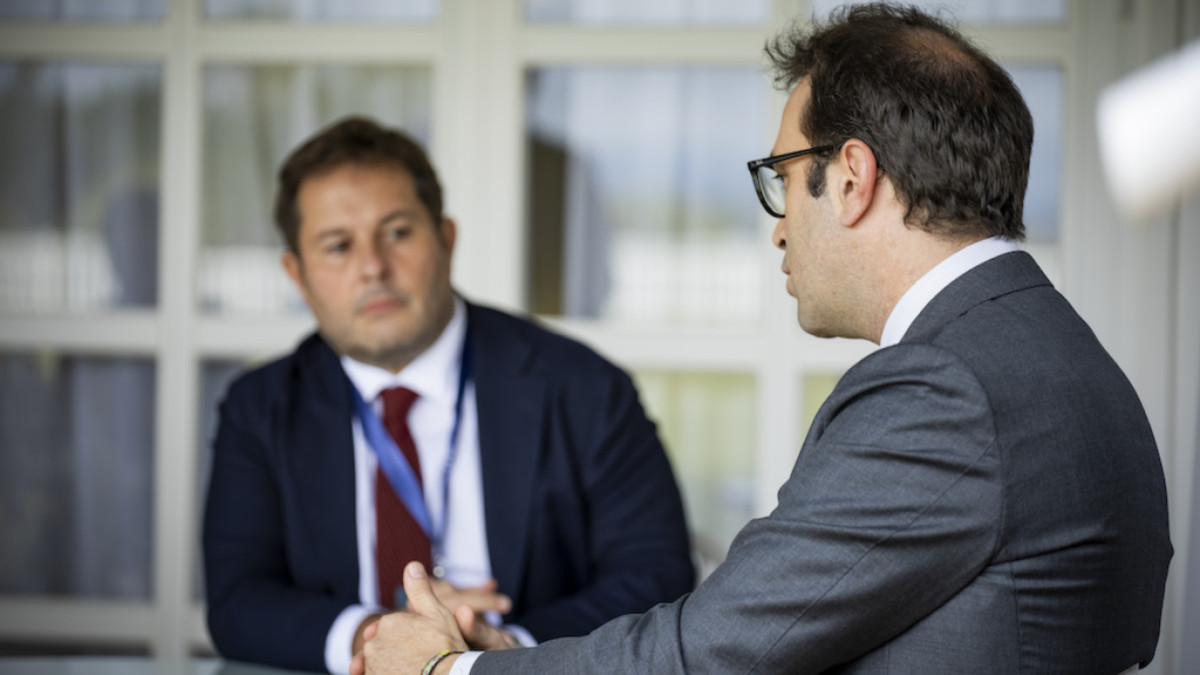
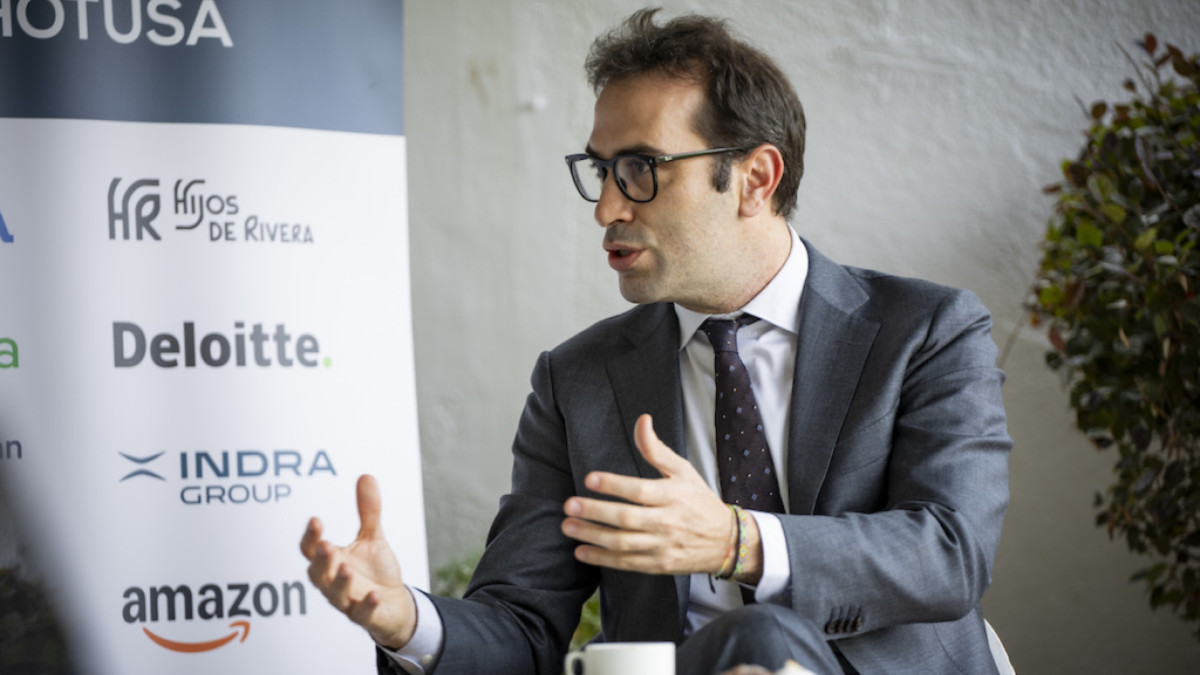
Carlos Cuerpo during the talk with Agenda Pública. Photo: Agenda Pública / Yanka Soto
My first question concerns the trade agreement with the United States. Do you think the signed agreement gives greater security and stability to transatlantic relations?
Maybe it’s convenient to start by contextualizing the agreement, because it draws from two realities. One is the United States – or the new reality of the second Trump Administration – where they’re generally raising tariff barriers with all their trade partners regardless of the negotiation strategy, the size of the partner, or the relative importance of either. The second reality has to do with the European Union. Responsibility in trade is delegated to the European Commission, and negotiations have included, I would say rightly, the priority that unanimity be part of our approach, to avoid division. Without that European position, the results might have been even worse – not in the short term, but maybe in the medium term.
From these two bases of realism, we have to move ahead with the agreement. Here we have perhaps two elements that permit us to be more optimistic than we were before the signing. I’ve already said that this isn’t the agreement we would’ve hoped to reach with the United States, but we need to move integration forward rather than erecting barriers, which always wind up being negative for everyone. That said, we shouldn’t wallow in frustration but try and make the best of the agreement on the table
"This isn’t the agreement we would’ve hoped to reach with the United States, but we need to try and make the best of the agreement on the table"What’s been agreed can help to reduce uncertainty, though it doesn’t eliminate it altogether. We must be aware of that. A reduction in uncertainty is what companies have been requesting, in Spain and in our European partners: we wanted to reach a degree of stability regardless of the final numbers on tariffs. They asked for a vision that would allow them to plan their decisions again, for example in the field of investment. That’s an important element. The agreement also protected an element associated with pharmaceutical products, which would fall within our 15%.
Another issue is our situation in relative terms, with respect to other partners and competitors in the North American market. Europe isn’t in a bad position there. The role of national authorities and a good objective is to help companies make the most of the situation, transform it into an opportunity, and ensure that our companies are able to navigate. For our part, we still support a plan that’s been on the table from the beginning – since 12 hours after President Trump’s announcement – which includes financing for insurance instruments and personalized services and also what companies have demanded from us: information, economic intelligence, and specifically the ICEX plan [ICEX High Impact on Competitiveness Plan], also known as the ‘500 Plan’, whose goal was to support the 500 companies with the greatest exposure to the U.S, half of which are SMEs.
These 500 companies have been involved in over 70% of exports to the U.S. More than 20% are already working with ICEX on some of the services provided by the plan. In my opinion, that result speaks clearly of the wisdom of this measure. In fact, we’ve now extended it to the ICEX 1000 – the thousand most exposed companies. The goal is the same: let's try to be realistic and make the most of this opportunity while protecting our companies.
It’s said that the China shock will be worse than the Trump shock. What’s your opinion? A few days ago in Brussels, I heard someone say we’d have to change the tariff policy with China.
In many sectors, the challenges faced by companies actually predated the U.S. increase of tariffs. For example, challenges in the steel sector, associated with global overcapacity, which has a lot to do with surpluses exported from Asian countries and from the Middle East.
We have to face both challenges at the same time. On the one hand, there’s the challenge of competing with greater fragmentation, which results from higher tariffs; on the other hand, we have to protect our industries from overcapacity – and those excesses have increased as the U.S. has raised barriers. The redirection of overcapacity is now turning toward Europe, so we have to stay extremely vigilant. We’re working in coordination with the European Commission, actively observing EU customs to monitor for deviations, whether in products from large industries or other sectors: textiles, the primary sector, etc. We’re doing this through continuous monitoring for potential impacts, and we’re proposing – in this case from Spain, but also with other countries – measures that protect our sectors.
One issue has to do with the steel sector. We know that next year, in June, the safeguards that currently protect our companies will end. That’s why we’re already pushing and working with the Commission to replace those safeguards. In fact, a few days ago, Vice-President Stéphane Séjourné proposed a new measure to protect the steel sector. This has to be the way. Beyond that, Europe also needs to think positively, with two clear agendas: serving the internal market, and expanding the network of strategic partners. For example, ratification of the Mercosur agreement, which is fundamental.
At this La Toja Forum, debate has arisen around the production of cheap energy, which Agenda Pública has covered a lot. When talking about defense, don’t we also have to think about that? For example, don’t we need to start thinking that defending ourselves also means that solar panels ought to be produced in Europe?
I’ll start with the issue of our commitment to renewables. In my opinion, there’s a firm commitment in the medium term on the part of this government which has been generating many advantages. The first is linked to the context of economic security: the reduction of dependence on fossil fuels. Spain doesn’t have fossil fuels – no gas, no oil – but we do have the capacity to produce energy through solar and wind power. With the capacity to produce renewables, the commitment became very clear.
"Spain was ranked the fifth country in new renewable energy projects worldwide"Not only do we reduce strategic dependence, but those methods are also cheaper, creating a much lower wholesale price than the energy mix we had before. And it’s also cheaper compared to what our main partners have. What does this generate? An element of competitiveness for our companies, but also the attraction of investment. The data I tend to quote here is from the Financial Times. What they call the Green Field Project Report evaluates new investment projects in this area. Between 2018 and 2024, Spain was ranked the fifth country in new renewable energy projects worldwide. I think that speaks clearly of the effects of this direction. For me, at this point, it’s hard to refute the advantages we’ve been achieving, which are positioning us at the global forefront.
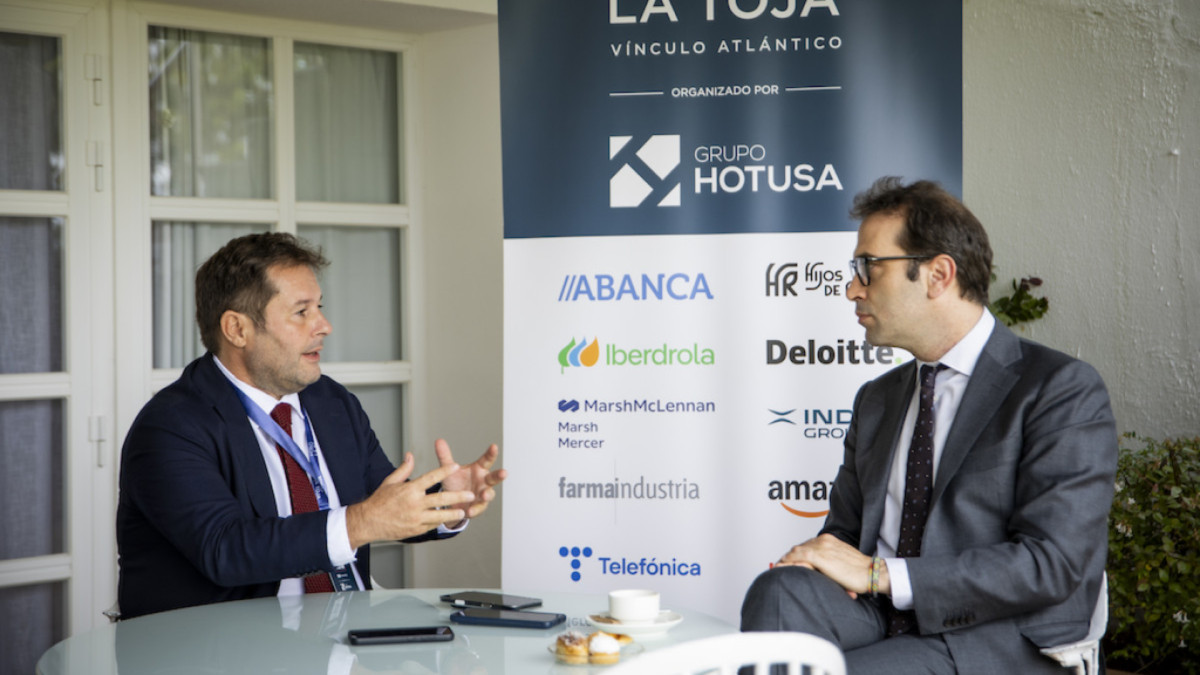
Marc López Plana raises a question during the conversation. Photo: Agenda Pública / Yanka Soto
This morning, Juanma Moreno Bonilla, the president of the Junta de Andalucía, said: "I need more connection to the grid."
Indeed, what challenges do we face? We have a new one in Spain, which is the boom in demand for industrial projects to be able to connect.
In part we have this problem because we’ve maintained that initial investment effort: a ‘blessed problem’, so to speak. What we have is a lot of people wanting to connect, and we have to provide opportunities to avoid a bottleneck, prioritizing the industrial projects that generate the most added-value for our country. But this must be combined with elements like strategic autonomy and economic security. Obviously, it has to be done across many areas, for example in the solar energy I mentioned, but also in electric cars, and elsewhere.
Europe missed the boat in terms of technological development. So here we have to be realistic and try a double track. First, thinking ahead to reduce strategic dependencies; when we identify a strategic element, the aim must be to reduce dependency, either by diversifying our suppliers or by producing it ourselves. At the same time, we need to attract investments that can allow us to close the technological gap. In my opinion, Spain is working on both flanks, hand-in-hand with the European Commission. This vision has become increasingly internalized.
I'm told you’re "obsessed" with giving considerable strength to the competitiveness laboratory.
Obsessed is the word, yes.
In the end, if we break down our own internal tariffs, it’s because we want to improve our ability to compete. That proposal is Spanish, by the way. How do you see it evolving?
Yes, all this arises from a frustration we sometimes experience in Europe, because we know what we want to do, and we almost all agree, on almost everything – but then we see things taking too long.
What we’re trying to do here is give an extra measure of agility to everything – to governance, and to the decision-making ecosystem within the Union. That’s why we created the competitiveness laboratory, together with other partners. The lab is already alive and functioning.
"We’re trying to give an extra measure of agility to everything – to governance, and to the decision-making ecosystem in the Union. That’s why we created the competitiveness laboratory, together with other partners"In fact, next week we have a meeting in Luxembourg where the first practical results will be announced – in this case, in terms of a union of capital markets, which can generate savings and investment through participating countries. In general, you might ask, "What’s the idea with this laboratory?" Well, the idea is to move forward in the integration project with small, voluntary coalitions of countries. What they call coalitions of the willing.
That way, in collaboration with the Commission, we want projects to advance where we don’t have to wait for all 27 Members States to agree. With this new way of acting, we can move ahead with groups of countries that want to lead the integration, and others will join as soon as they can. The good thing about this laboratory is that projects do come in – like the union of capital markets, plus internal market projects. It’s very flexible, but it’s also essential to keep moving forward in coordination with the Commission, which is what we’ve been doing so far.
Is the government challenged when it comes to explaining how an economy that’s taking off like "a rocket" equates with reality?
Well, this is going to be a big part of my speech here at La Toja, because I believe it’s an essential issue. First of all, I’d say that we have to understand the reality of how the population is feeling today. It’s not only happening in Spain, but worldwide – in all the advanced economies. To a great extent, this has influenced elections in many of the countries around us, because there’s a certain disaffection of the population. It’s essential to understand the origins of that feeling; that’s why it’s so important and also, in my opinion, the catch – there’s positive economic evolution, and yet this ongoing feeling of disaffection, which has two causes.
The first thing to understand – putting ourselves into the shoes of a citizen, not a politician or Minister – what we’ve been through over the past five or 15 years. There’s a whole generation who finds it normal that, every so often, there comes a shock that leaves us uncertain and uneasy. That feeling is really difficult to counteract – for anyone, for any government in the world – and it’s anchored in the fact that this generation has had to endure some very difficult conditions and situations. That’s the starting point.
The second thing to take into account is simple: you have to understand that it’s not a contradiction that things are going well, and yet we’re not where we want to be. One doesn’t preclude the other. But the good situation in macro terms is a necessary condition to getting there. We have to grow, but we have to do it with the ultimate purpose of improving the micro, because we’re not yet where we want to be.
"Spain is leading the world in growth and in average job creation. We’ve been creating half a million new jobs every 12 months"n other words, there are still challenges ahead, and these two elements have to be pointed out, without a doubt. We should also be proud of what we’ve accomplished in recent years. At the same time, we have to stay ambitious about the work before us, and aware of our enormous challenges. We should be proud: Spain is leading the world in growth and in average job creation. We’ve been creating half a million new jobs every 12 months.
Moreover, in connection with job stability, hourly productivity has been growing, more than during previous stages when the economy was growing but with little or no growth in productivity. The purchasing power of workers has been rising more than in Spain than in our neighbor countries. We’re getting young people to train much more than before. Here’s an essential fact: the unemployment rate is now about what it was in 2004. However, back then, around a third of young people were dropping out of school to enter the job market. Today that’s down to 12%.
These are positive changes, advances we’ve been achieving. The unemployment rate is now at 10.3%, five points below the rate in 2018. The youth unemployment rate has fallen by eight or nine points. A lot is being achieved thanks to our ability to grow. We’re managing to maintain our welfare state – supporting citizens with the social shield, despite rising prices – because we’re growing. We know we’re growing for good reasons.
There are still challenges, and there are still families living under difficult conditions who can’t help but notice – we all notice – the rise in grocery costs. The most essential aspect here is the challenge of housing. We’re aware that housing affects more than day-to-day life – it conditions the decisions made by many families and young people about the future. That’s where our intentions and our work and our ultimate direction originate.
Spain’s Minister of Economy in conversation. Photo: Agenda Pública / Yanka Soto
I can’t leave without asking about immigration. There are wild stories about immigration, but we can’t deny the realities of cities and towns in Spain – which you know much better than I do – which are expressing concern. I think it’s important to reflect on this matter.
Without a doubt, it’s an important matter for reflection. In the first place, it’s necessary to distinguish among discourses and to empty out any narratives that try to stigmatize immigration for economic reasons, because that’s simply not the case. When we look at the data – and not just perceptions – we see that the contribution to Spain’s economy through immigration is positive, and even very positive.
We should speak plainly: we have an aging population. In Spain, and in most advanced countries, in order to maintain a constant labor force, we need a constant flow of immigrants to enter the job market and become part of society. That’s what’s happening in Spain, and it’s a fact that immigrants are helping us to maintain our rate of growth and generate opportunities for our economy.
"When we look at the data, the contribution to Spain’s economy through immigration is positive, and even very positive"This is growth effect is associated with a larger population and with greater employment, as shown in studies. One specific study from the University of Murcia points out the positive effect on productivity of sectors where immigrants tend to work. Therefore, we have to maximize that contribution and do so by optimizing the integration of immigrants and their families, the second generation in particular.
That’s the effort we should making and, in my opinion, any sort of stigmatization has to be separated from the economic discourse. If you remove the economic discourse, what remains is basically an anti-immigration discourse, and that discourse has consequences, including on the perceptions of citizens. I often cite a study by the Iseak Foundation, which conducts surveys to discover the views of the native population toward immigration, then compares those perceptions with reality.
In terms of perceptions, people think there are twice as many immigrants than there really are. Citizens believe that the unemployment rate of immigrants is double what it truly is, and that access to subsidies and transfers from the State are five times higher than the actual amounts. Obviously, all this affects how the population will value policies dealing with the arrival and integration of immigrants.
So the discourse is not just emptied of economic content, but also far from innocuous. It has real effects on how we might be able to improve integration and coexistence in the future. From there, and also from the government, it’s our responsibility to convey a certain message around the contributions of immigration, and also to try – as the President of the Government has said on many occasions – to favor channels of regular immigration: to favor their arrival, their integration, and therefore their contribution to Spanish society.
Marc López and Carlos Cuerpo at the end of their interview. Photo: Agenda Pública / Yanka Soto
En alianza con
Ahora en portada
17 de octubre de 2026
16 de octubre de 2026
Noticias relacionadas
Hace 53 semanas
Carlos Cuerpo: "Europa debe reducir sus dependencias estratégicas y avanzar con más agilidad en la integración"
Lo más leído