Viernes, 16 de octubre de 2026




AGENDA PÚBLICA EU
A historic opportunity for EU-Latin America relations
Javi López, Vice-President of the European Parliament and Social Democrat MEP, argues that the EU and Latin America have a historic opportunity to strengthen their alliance in a world marked by strategic competition. The upcoming EU-CELAC summit will be key to consolidating a bond based on common values and projecting a renewed multilateralism between the West and the global Sout
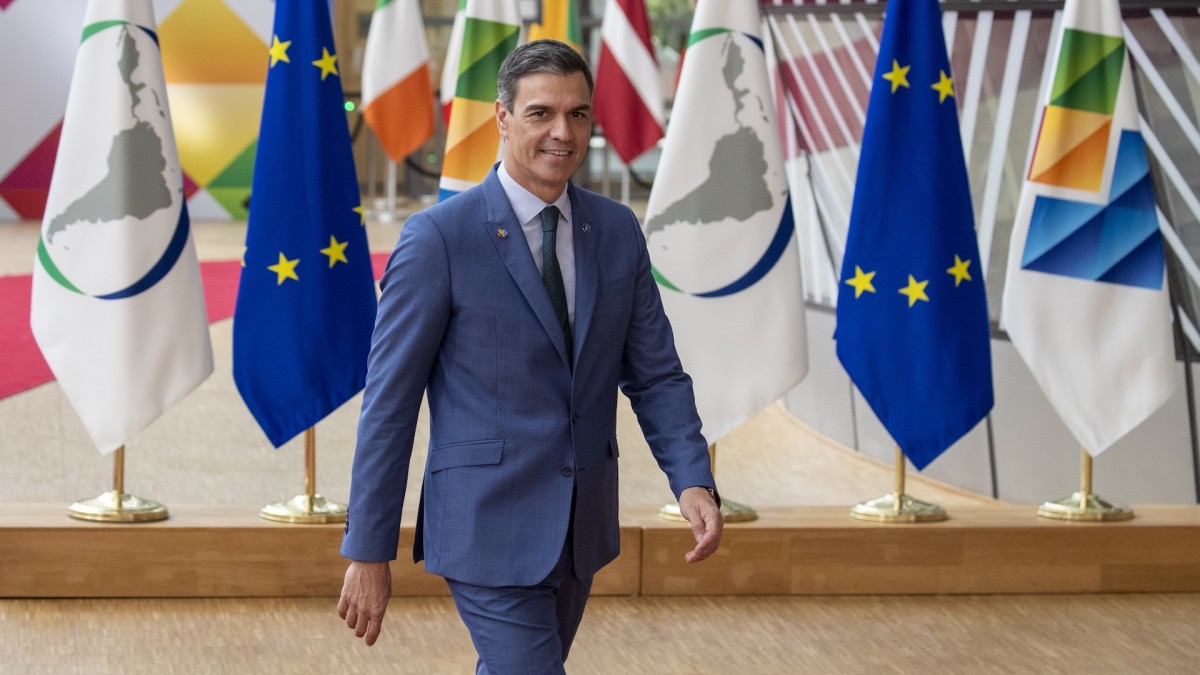
Pedro Sánchez during his arrival at an EU-CELAC summit in 2023.Nicolas Maeterlinck / Zuma Press / ContactoPhoto
The international order is undergoing a profound transformation. The cooperative logic that for decades articulated global relations is being replaced by fierce strategic competition, where the law of the strongest threatens to replace international law.
The European Union, which has been one of the firmest architects and defenders of a rules-based multilateral system, now faces a hostile and challenging context. The structural tensions between the USA and China, the questioning of democratic values in various latitudes, and the temptation of a bipolarity that reduces the complexity of the world to a power struggle between superpowers. This demands a firm and strategic response from Europe. And few regions offer as much potential, as much harmony and as many opportunities as relations with Latin America and the Caribbean.
Both regions share more than values: they share interests and a vision of the world. Europe and Latin America and the Caribbean believe in democracy, in multilateralism, in sustainable development and in a rules-based international order. Latin America and Europe are two lungs of the same political body: that of the democratic world that puts its faith in law and not in force.
A natural bridge between the West and the global south
The relationship between the EU and Latin America is not circumstantial or conjunctural: it is strategic. Both regions total well over one billion people, represent 21% of global GDP and share a third of the votes in the United Nations, a diplomatic weight of the first magnitude. Together, they can exercise responsible leadership in favour of a more just, sustainable and institutionalised global order.
Defending the United Nations Charter, human rights, representative democracy and strong multilateral governance is not a rhetorical exercise: it is a strategic necessity for those of us who believe in a world based on rules and not on the law of the strongest. And to do so without double standards: from Ukraine to Gaza.
The EU is the main foreign investor in Latin America, with more than 741 billion euros in accumulated direct investment up to 2022. In terms of trade, in 2023 bilateral trade in goods and services reached 395 billion euros, with growth of 54% since 2013.
The European Union is Latin America's third trading partner, whilst Latin America represents the fifth trading partner for the EU. Unlike other global powers, Europe does not seek an extractive or unbalanced relationship, but associations based on reciprocity, sustainability, and the generation of added value. It is precisely this model of cooperation—which prioritises respect for sovereignty, transparency, and the rule of law—that makes the EU a preferred partner for the region.
Similarly, the modernisation of the Global Agreement with Mexico and the entry into force of the new agreement with Chile strengthen the institutional framework of our economic relationship. These are examples of how Europe can be a stabilising, reformist and ambitious force in the Western hemisphere.
Millions of Latin American citizens live, work or study in Europe, and thousands of Europeans have made Latin America their home. This network of personal, linguistic, academic and cultural links constitutes a unique relational capital, which reinforces mutual empathy and allows for policies to be designed from a foundation of trust.
In an increasingly disconnected world—emotionally and culturally—this human closeness is a strategic asset. We are, literally, the closest regions in the Atlantic world in terms of language, heritage, and worldview.
In the political sphere we also share aspirations and challenges. Respect for democracy, human rights and the rule of law are cardinal principles for both regions. And whilst there are worrying setbacks in some countries, there is also a growing determination to consolidate democratic institutions, combat corruption and promote social justice.
Brazil, for its part, is a key player in international debates on climate governance and food security. The recent Brazilian presidency of the G20 has highlighted its leadership, its commitment to multilateralism and its willingness to build bridges in an increasingly polarised world. The EU must live up to that ambition.
This momentum is reinforced by the leadership of António Costa and Teresa Ribera in the EU framework, the new President of the European Council and the new First Vice-President of the Commission, who from their experiences have always defended an Atlantic, plural and inclusive vision of Europe. Their commitment to the EU-CELAC Summit and their desire to revitalise the relationship with Latin America are clear signals that Southern Europe can and should play a leading role in designing a more open, connected and ambitious European foreign policy.
This summit should also serve to deepen cooperation in key areas such as energy transition, the fight against climate change, digital transformation and food security. It should also be a space for frank dialogue on the challenges facing our societies: from social inequalities, organised crime to migration management.
It will be a great opportunity to project a Euro-Latin American voice in the world. To remember that there is another Atlantic—that of humanist values, cooperation, and dialogue—that can contribute to shaping a more balanced international order.
In short, this relationship can be more than geostrategy: a community of destiny. Together, our regions can defend a fairer world, where democracy is not a fragile exception; where the economy is at the service of human development, and where multilateralism is the necessary instrument to solve the great global challenges. We are facing a historic opportunity.
"The cooperative logic that for decades articulated global relations is being replaced by fierce strategic competition"In just a few years, the international system that had guaranteed a certain stability after the Second World War has been shaken by growing tensions, nationalist impulses and confrontational dynamics that threaten to fracture global equilibriums.
The European Union, which has been one of the firmest architects and defenders of a rules-based multilateral system, now faces a hostile and challenging context. The structural tensions between the USA and China, the questioning of democratic values in various latitudes, and the temptation of a bipolarity that reduces the complexity of the world to a power struggle between superpowers. This demands a firm and strategic response from Europe. And few regions offer as much potential, as much harmony and as many opportunities as relations with Latin America and the Caribbean.
- Joint population: More than one billion people.
- Combined global GDP: They represent 21%.
- Votes in the United Nations: They share a third.
- Bilateral trade in goods and services (2023): 395 billion euros.
- Accumulated direct investment from the EU in Latin America (until 2022): Well over 741 billion euros.
The EU and Latin America: natural strategic partners
In this framework, Latin America and the Caribbean emerge as key partners. As regions with a deep multilateral vocation, economies with high complementarity and a shared history, the bi-regional link should not only be strengthened, but projected as a fundamental pillar of a renewed, more just and representative international order.Both regions share more than values: they share interests and a vision of the world. Europe and Latin America and the Caribbean believe in democracy, in multilateralism, in sustainable development and in a rules-based international order. Latin America and Europe are two lungs of the same political body: that of the democratic world that puts its faith in law and not in force.
A natural bridge between the West and the global south
The relationship between the EU and Latin America is not circumstantial or conjunctural: it is strategic. Both regions total well over one billion people, represent 21% of global GDP and share a third of the votes in the United Nations, a diplomatic weight of the first magnitude. Together, they can exercise responsible leadership in favour of a more just, sustainable and institutionalised global order.
"The Euro-Latin American alliance represents a bridge between the West and the global south"At a time when the temptation of fragmentation prevails, the Euro-Latin American alliance represents a bridge between the West and the global south. Not only to avoid a dangerous drift towards closed and ideologised blocs, but to open a space for international consensus that reduces tensions and promotes shared solutions.
Defending the United Nations Charter, human rights, representative democracy and strong multilateral governance is not a rhetorical exercise: it is a strategic necessity for those of us who believe in a world based on rules and not on the law of the strongest. And to do so without double standards: from Ukraine to Gaza.
Economic potential of the bi-regional relationship
From an economic perspective, the link between both regions is deep, diversified, and mutually beneficial.The EU is the main foreign investor in Latin America, with more than 741 billion euros in accumulated direct investment up to 2022. In terms of trade, in 2023 bilateral trade in goods and services reached 395 billion euros, with growth of 54% since 2013.
The European Union is Latin America's third trading partner, whilst Latin America represents the fifth trading partner for the EU. Unlike other global powers, Europe does not seek an extractive or unbalanced relationship, but associations based on reciprocity, sustainability, and the generation of added value. It is precisely this model of cooperation—which prioritises respect for sovereignty, transparency, and the rule of law—that makes the EU a preferred partner for the region.
"The signing and ratification of the EU-Mercosur Agreement would be a true 'game changer' for the link between both regions"But the potential is far from exhausted. The signing and ratification of the EU-Mercosur Agreement would be a true game changer for the link between both regions (see European Commission statement and Spain's position). It would represent the largest trade agreement ever signed by the EU in terms of population: well over 700 million citizens. Its economic impact would be immense, but its geopolitical value is even greater: it would demonstrate that it is possible to build an open and fair global order, even in times of uncertainty. History will judge us if we let this opportunity pass due to political myopia or short-term calculations.
Similarly, the modernisation of the Global Agreement with Mexico and the entry into force of the new agreement with Chile strengthen the institutional framework of our economic relationship. These are examples of how Europe can be a stabilising, reformist and ambitious force in the Western hemisphere.
Human, cultural and political links
Beyond economics, relations between Europe and Latin America are woven with human threads.Millions of Latin American citizens live, work or study in Europe, and thousands of Europeans have made Latin America their home. This network of personal, linguistic, academic and cultural links constitutes a unique relational capital, which reinforces mutual empathy and allows for policies to be designed from a foundation of trust.
In an increasingly disconnected world—emotionally and culturally—this human closeness is a strategic asset. We are, literally, the closest regions in the Atlantic world in terms of language, heritage, and worldview.
In the political sphere we also share aspirations and challenges. Respect for democracy, human rights and the rule of law are cardinal principles for both regions. And whilst there are worrying setbacks in some countries, there is also a growing determination to consolidate democratic institutions, combat corruption and promote social justice.
Mexico and Brazil: key actors in the alliance
In this context, Mexico and Brazil occupy a special place. They are the two largest economies in Latin America, have significant geopolitical weight and are officially strategic partners of the EU. With both we share global interests in areas such as energy transition, the fight against climate change, reform of the international financial system and the defence of democracy against external interference."For Spain, this alliance between the European Union and Latin America is not just a diplomatic priority, but a strategic issue of the first order"The modernisation of the Global Agreement with Mexico, currently pending ratification, will strengthen political cooperation, open new commercial spaces and tighten ties in strategic sectors such as digitalisation, innovation, and security.
Brazil, for its part, is a key player in international debates on climate governance and food security. The recent Brazilian presidency of the G20 has highlighted its leadership, its commitment to multilateralism and its willingness to build bridges in an increasingly polarised world. The EU must live up to that ambition.
The role of Spain and European leaders in the relationship
For Spain, this alliance between the European Union and Latin America is not just a diplomatic priority, but a strategic issue of the first order. Due to history, language, human and economic ties, Spain already acts as a natural bridge between both continents, with a unique capacity to forge ties, generate trust and build consensus. A presence and dialogue that has been strongly reinforced during the past five years. At a time of geopolitical redefinition, the strengthening of relations between the regions not only enhances the global voice of the Union, but amplifies Spain's weight within the European project, positioning it as a key player in the architecture of the new multipolar order.This momentum is reinforced by the leadership of António Costa and Teresa Ribera in the EU framework, the new President of the European Council and the new First Vice-President of the Commission, who from their experiences have always defended an Atlantic, plural and inclusive vision of Europe. Their commitment to the EU-CELAC Summit and their desire to revitalise the relationship with Latin America are clear signals that Southern Europe can and should play a leading role in designing a more open, connected and ambitious European foreign policy.
The EU-CELAC Summit 2025: a decisive appointment
In this context, the EU-CELAC Summit to be held on 9 and 10 November 2025 in Santa Marta, Colombia, takes on extraordinary value. It will be an opportunity to renew political commitment at the highest level (see Council Conclusions on EU-LAC relations) and to set an ambitious and operational bi-regional agenda:- Fair and sustainable trade: advancing balanced trade agreements, clear rules, green investment and resilient value chains. Defending trade with demanding standards as an instrument for joint development against those who use it as a pressure tool under the zero-sum logic.
- Defence of multilateralism: strengthening the United Nations system against the serious attacks it suffers and leading together a reform of global governance that reinforces a more inclusive and representative multilateralism.
- Protection of democracy: cooperation against hybrid threats, emerging authoritarianisms and external interference in electoral processes.
This summit should also serve to deepen cooperation in key areas such as energy transition, the fight against climate change, digital transformation and food security. It should also be a space for frank dialogue on the challenges facing our societies: from social inequalities, organised crime to migration management.
It will be a great opportunity to project a Euro-Latin American voice in the world. To remember that there is another Atlantic—that of humanist values, cooperation, and dialogue—that can contribute to shaping a more balanced international order.
"This relationship can be more than geostrategy: a community of global destiny"
Building a global community of destiny
In an international scenario with growing tensions, where bloc logics threaten to divide the world between Washington and Beijing, the Euro-Latin American alliance represents a great buffer to these tensions and a plural vision of the global order. Far from the logic of alignments, Europe and Latin America can build together a foreign policy based on strategic autonomy, cooperation and mutual respect.In short, this relationship can be more than geostrategy: a community of destiny. Together, our regions can defend a fairer world, where democracy is not a fragile exception; where the economy is at the service of human development, and where multilateralism is the necessary instrument to solve the great global challenges. We are facing a historic opportunity.

Javi López
Vicepresidente del Parlamento Europeo
Eurodiputado del PSC - PSOE desde el 2014, hoy, ejerce como vicepresidente del Parlamento Europeo. Es Licenciado en Derecho y ha sido Profesor Visitante de Historia de la UE en Blanquerna - Universitat Ramon Llull.
Ahora en portada
16 de octubre de 2026
16 de octubre de 2026
16 de octubre de 2026
Noticias relacionadas
Hace 84 semanas
Javi López, vicepresidente del Parlamento Europeo: es la hora de la verdad
Hace 92 semanas
Venezuela: ¿son irreconciliables las visiones de la derecha y la izquierda españolas?
Lo más leído