Viernes, 16 de octubre de 2026




INNOVATION
EU can be relevant in AI through frugal development
The European Union has fallen completely behind in the race to develop artificial intelligence. However, Faÿçal Hafied, author of 'A National Deep Tech Strategy for Spain' report for the Elcano Royal Institute, argues that DeepSeek opens up a frugal path that could see Europe make up lost ground.

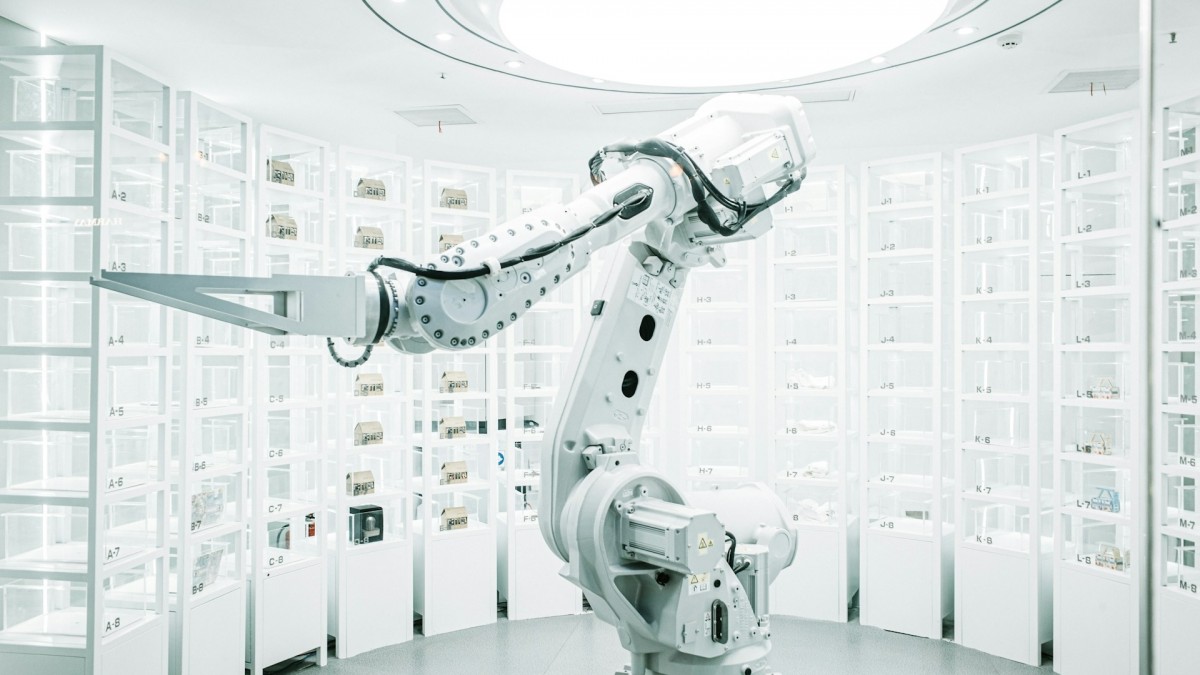
According to Hafied, China's technological development opens up two possibilities, one techno-optimistic and one more sceptical.Unsplash / ZHENYU LUO
Recent announcements about the performance of Chinese AI models are, indeed, a technological shock and challenge for the West. Chinese AI models have effectiveness on par with Western models in certain parameters —sometimes even better—, with fewer resources and in a much shorter development time.
The technological dimension
The first Chinese reasoning model, DeepSeek's R1, wasn't released until September 2024, just days before Alibaba's QwQ, the national tech giant. These models have reduced the American advantage, which was believed to be wider, in just a few months.
Three factors are behind this Chinese advancement:
However, the United States maintains a brief technological advantage, but this could soon be challenged considering recent Chinese advances. US models continue to set performance standards and establish the benchmark in structured reasoning and multistep tasks, especially OpenAI's o1 and o3 models, and Google's Gemini. The North American country is also leading the next wave of AI innovation, with OpenAI and Google announcing they will soon offer "PhD-levels Super Agents" for managing highly complex advanced reasoning tasks.
The West often insists that Chinese models suffer from censorship, but in reality, China has shown great pragmatism in this area, eager not to stifle innovation. Despite initial concerns about the risk of models generating incorrect or politically sensitive information, the Chinese Government quickly adjusted its strategy.
Baidu, for example, developed the ERNIE model but was reluctant to deploy it publicly until ChatGPT's success encouraged them to gradually open access to ERNIEbot, initially by invitation. At the same time, authorities introduced regulations requiring adherence to "fundamental socialist values" and the production of reliable content, but accompanied by a more permissive framework to encourage innovation in generative AI. Alibaba took advantage of this environment to launch its model, Qwen, illustrating China's ability to reconcile state control and global technological competitiveness.
The geopolitical dimension
Beyond the technological clash, recent advances in Chinese AI have a key geopolitical dimension.
This, in turn, calls into question the centrality of the semiconductor industry. In Chip War (2022), Chris Miller described it as "the world's most critical" for AI computing power, but Chinese efficiency has shown that it's possible to compete with fewer microprocessors. The market reaction confirms this: announcements about Chinese AI caused Nvidia's shares to fall 17%, dragging down the Nasdaq (-3.1%) and the price of copper, essential for manufacturing chips.
Furthermore, China is conquering emerging markets thanks to its adaptation to languages underrepresented in Western models. Its AI incorporates languages like Urdu, Bengali, and Swahili, allowing it to position itself in key regions like India, East Africa, and Indonesia. This reinforces global technological fragmentation into two spheres of influence.
Finally, the frugality of its models reduces entry barriers to the sector, challenging US leadership. Compared to the costly infrastructures of Western models, Chinese AI better adapts to environments with low connectivity and high-energy costs, facilitating its adoption in rapidly growing markets and encouraging the emergence of new global competitors.
Chinese advancement in AI and the intense competition generated between Washington and Beijing can be analysed from two opposing perspectives. In one sense, a techno-optimistic perspective points to the potential benefits of pressure exerted by China. By reducing entry barriers to the sector, Chinese progress could challenge monopolies established by some Western companies, thus triggering a wave of innovation driven by greater competition. Additionally, the energy efficiency of Chinese solutions suggests a decrease in carbon footprint and less intensive extraction of minerals needed for processors, batteries, and data centre cooling. Finally, the frugality of Chinese models augurs greater accessibility to this emerging technology for developing countries.
However, a more sceptical perspective focuses on the risks associated with this technological race to dominate AI. Firstly, it warns of the enormous energy dependency it implies, with projects like the US Stargate that alone will consume at least fifty mW, equivalent to a medium-sized city. Secondly, it alerts that the tendency of the United States and China to deregulate AI in their eagerness to take the lead may multiply the social, ethical, and economic problems associated with this technology. Among them, the possible massive destruction of jobs, manipulation of information and threat to democracy, or violation of intellectual property rights in industries such as creative and entertainment stand out.
Where is Europe in the artificial intelligence race?
Europe is falling behind in the field of artificial intelligence due to a combination of structural and regulatory factors. First, the continent suffers from the absence of its own digital giants of the calibre of Google, AWS, Microsoft, and Meta in the United States, or Alibaba, Tencent, and Baidu in China. These companies have made strong investments in the infrastructure necessary to deploy AI, such as data centres, something that no European company has been able to match. As a result, even the most promising European startups in this field, such as French Mistral AI, depend on the cloud infrastructure of American giants, leading to data leakage and loss of technological sovereignty.
A third factor is the lower availability of private capital to finance AI startups compared to the United States. The European venture capital sector is much less developed due to the limited presence of institutional investors such as pension funds, which play a key role across the Atlantic. More restrictive regulations, such as Solvency II in the insurance sector, also limit investment in innovative companies. As a result, European startups have more difficulty obtaining funding as they grow and often end up turning to foreign investors, which promotes their relocation. Moreover, the absence of American tech giants, which typically acquire or finance leading startups (as Google did with DeepMind or Microsoft with OpenAI), deprives the European AI ecosystem of this important source of capital.
Finally, while the United States and China have opted for aggressive deregulation to accelerate AI advancement, the European Union has maintained a much more cautious and protective approach. The AI Act adopted in 2024 regulates applications based on their risk level, imposing strong restrictions in sensitive areas such as facial recognition. Unlike the General Data Protection Regulation (GDPR), which became a global standard, this law may have a much smaller impact, as companies can more easily avoid it by using different algorithms for the European market. Above all, the European norm goes against the deregulation on the other side of the Atlantic and Pacific. While Biden's directive bet on self-regulation, Trump annulled it as soon as he came to power, showing the change in priorities. All this leaves Europe disadvantaged in the AI race.
On January 21, President Trump announced the Stargate project, a $500 billion initiative—ten times more than Biden's CHIPS and Science Act—funded by a consortium of OpenAI, Oracle, SoftBank, and MGX (United Arab Emirates), with technology partners such as Nvidia, Microsoft, and Arm. Its goal is to develop artificial general intelligence (AGI) capable of surpassing human capabilities in all cognitive domains.
This project reflects the US fear of losing its technological leadership, as happened with the Manhattan Project in the face of the Nazi threat, the creation of DARPA after Sputnik in 1957, or the space race driven by Kennedy in 1960. In this context, the initiative can be considered a new Sputnik moment in the face of China's advance.
Europe must react
Given the current panorama of the AI development race, it is necessary for the European Union to act as soon as possible. For this, two paths open before it:
On one hand, it can invest massively to reduce its lag. Faced with Sino-American ambitions and the colossal budget of the US Stargate project, the appropriate reference seems to be the Draghi plan, which proposes mobilizing between 750,000 and 800,000 million euros annually (4% of Union GDP) through common debt to stay in the technological competition. These investments should finance both hardware—especially the semiconductor industry and European cloud operators, whose fixed costs are the highest—and software, less capital intensive but key in AI R&D.
On the other hand, the EU could bet on frugal development, Chinese style. DeepSeek has shown that it's possible to obtain comparable performance to US models with less computing power and less advanced GPUs, questioning the idea that success in AI depends exclusively on massive investments in chips. Thus, although Nvidia continues to lead in AI model training, inference (model use) is an increasingly disputed field by more efficient alternatives.
The technological dimension
The first Chinese reasoning model, DeepSeek's R1, wasn't released until September 2024, just days before Alibaba's QwQ, the national tech giant. These models have reduced the American advantage, which was believed to be wider, in just a few months.
"The new Chinese models have reduced the American advantage, which was believed to be wider, in just a few months"In fact, the computational performance of Chinese models is now on par with that of US AI champions: DeepSeek v3, which wasn't released until December 2024, uses 685 billion parameters compared to Meta's Llama 3.1's 405 billion.
Three factors are behind this Chinese advancement:
- The introduction of incremental innovations in Chinese AI models: Chinese developers have optimized model training efficiency, thanks especially to improvements in Mixture of Expert (MoE) architecture, which allows routing tasks to the most relevant submodels of the neural network. They have also applied known techniques such as model distillation, which involves training smaller and faster models that mimic the results of larger models, as well as mixed precision, which uses reduced precision calculations for certain stages of task processing. Additionally, they have worked on optimizing inter-chip communication, improving how these collaborate with the server and thus reducing bottlenecks.
- Promoting an open-source and transparent approach to models: Unlike US AI models, which are developed in secret for industrial property reasons, Chinese models are accessible as open source. Qwen, Alibaba's model, was the first reasoning model available in this way. This commitment to transparency is attracting a large community of developers and researchers to China, which in turn is promoting the adoption of Chinese models worldwide, especially in countries seeking an alternative to US solutions.
- Targeting mobile applications: Chinese models are designed from the start to be used directly on smartphones and other mobile devices, thus immediately incorporating the hardware limitations of these devices. This is evident in Byte Dance's Doubao 1.5 Pro chatbot, specifically optimized to run on mobile devices. To achieve this, Chinese engineers have had to optimize algorithms and develop lighter models, reducing the required computing power and energy consumption.
However, the United States maintains a brief technological advantage, but this could soon be challenged considering recent Chinese advances. US models continue to set performance standards and establish the benchmark in structured reasoning and multistep tasks, especially OpenAI's o1 and o3 models, and Google's Gemini. The North American country is also leading the next wave of AI innovation, with OpenAI and Google announcing they will soon offer "PhD-levels Super Agents" for managing highly complex advanced reasoning tasks.
"The United States maintains a brief technological advantage"Additionally, the world's largest economy maintains a clear advantage in semiconductors (Nvidia's A100 and H100 GPUs remain the world's best in high-frequency computing) and data centre processing capacity, meaning that US chips, much cheaper, offer a superior cost/performance ratio (measured in teraflops). Finally, US tech giants can offer complete hardware/software solution sets thanks to investment in their cloud infrastructures (Google Cloud, Microsoft Azure, etc.).
The West often insists that Chinese models suffer from censorship, but in reality, China has shown great pragmatism in this area, eager not to stifle innovation. Despite initial concerns about the risk of models generating incorrect or politically sensitive information, the Chinese Government quickly adjusted its strategy.
Baidu, for example, developed the ERNIE model but was reluctant to deploy it publicly until ChatGPT's success encouraged them to gradually open access to ERNIEbot, initially by invitation. At the same time, authorities introduced regulations requiring adherence to "fundamental socialist values" and the production of reliable content, but accompanied by a more permissive framework to encourage innovation in generative AI. Alibaba took advantage of this environment to launch its model, Qwen, illustrating China's ability to reconcile state control and global technological competitiveness.
The geopolitical dimension
Beyond the technological clash, recent advances in Chinese AI have a key geopolitical dimension.
"The frugality of Chinese models reduces entry barriers to the sector, challenging US leadership"First, they question the effectiveness of the US technological containment strategy. Since 2022, Washington has restricted the export of advanced semiconductors to China and pressured its allies to limit Chinese access to critical components. Additionally, ECRA and FIRRMA strengthen control over investments that could strengthen Chinese technology. Despite these measures, China has managed to advance through frugal solutions.
This, in turn, calls into question the centrality of the semiconductor industry. In Chip War (2022), Chris Miller described it as "the world's most critical" for AI computing power, but Chinese efficiency has shown that it's possible to compete with fewer microprocessors. The market reaction confirms this: announcements about Chinese AI caused Nvidia's shares to fall 17%, dragging down the Nasdaq (-3.1%) and the price of copper, essential for manufacturing chips.
Furthermore, China is conquering emerging markets thanks to its adaptation to languages underrepresented in Western models. Its AI incorporates languages like Urdu, Bengali, and Swahili, allowing it to position itself in key regions like India, East Africa, and Indonesia. This reinforces global technological fragmentation into two spheres of influence.
Finally, the frugality of its models reduces entry barriers to the sector, challenging US leadership. Compared to the costly infrastructures of Western models, Chinese AI better adapts to environments with low connectivity and high-energy costs, facilitating its adoption in rapidly growing markets and encouraging the emergence of new global competitors.
Chinese advancement in AI and the intense competition generated between Washington and Beijing can be analysed from two opposing perspectives. In one sense, a techno-optimistic perspective points to the potential benefits of pressure exerted by China. By reducing entry barriers to the sector, Chinese progress could challenge monopolies established by some Western companies, thus triggering a wave of innovation driven by greater competition. Additionally, the energy efficiency of Chinese solutions suggests a decrease in carbon footprint and less intensive extraction of minerals needed for processors, batteries, and data centre cooling. Finally, the frugality of Chinese models augurs greater accessibility to this emerging technology for developing countries.
However, a more sceptical perspective focuses on the risks associated with this technological race to dominate AI. Firstly, it warns of the enormous energy dependency it implies, with projects like the US Stargate that alone will consume at least fifty mW, equivalent to a medium-sized city. Secondly, it alerts that the tendency of the United States and China to deregulate AI in their eagerness to take the lead may multiply the social, ethical, and economic problems associated with this technology. Among them, the possible massive destruction of jobs, manipulation of information and threat to democracy, or violation of intellectual property rights in industries such as creative and entertainment stand out.
Where is Europe in the artificial intelligence race?
Europe is falling behind in the field of artificial intelligence due to a combination of structural and regulatory factors. First, the continent suffers from the absence of its own digital giants of the calibre of Google, AWS, Microsoft, and Meta in the United States, or Alibaba, Tencent, and Baidu in China. These companies have made strong investments in the infrastructure necessary to deploy AI, such as data centres, something that no European company has been able to match. As a result, even the most promising European startups in this field, such as French Mistral AI, depend on the cloud infrastructure of American giants, leading to data leakage and loss of technological sovereignty.
"Europe is falling behind in the field of artificial intelligence due to a combination of structural and regulatory factors"Second, the fragmentation of the European market poses an additional obstacle. The European Union recognizes no less than 24 official languages, which makes it difficult to develop large-scale language models (LLM) as there is less training data for each language. Additionally, the limited size of markets associated with many of these languages reduces incentives to invest in their adaptation.
A third factor is the lower availability of private capital to finance AI startups compared to the United States. The European venture capital sector is much less developed due to the limited presence of institutional investors such as pension funds, which play a key role across the Atlantic. More restrictive regulations, such as Solvency II in the insurance sector, also limit investment in innovative companies. As a result, European startups have more difficulty obtaining funding as they grow and often end up turning to foreign investors, which promotes their relocation. Moreover, the absence of American tech giants, which typically acquire or finance leading startups (as Google did with DeepMind or Microsoft with OpenAI), deprives the European AI ecosystem of this important source of capital.
Finally, while the United States and China have opted for aggressive deregulation to accelerate AI advancement, the European Union has maintained a much more cautious and protective approach. The AI Act adopted in 2024 regulates applications based on their risk level, imposing strong restrictions in sensitive areas such as facial recognition. Unlike the General Data Protection Regulation (GDPR), which became a global standard, this law may have a much smaller impact, as companies can more easily avoid it by using different algorithms for the European market. Above all, the European norm goes against the deregulation on the other side of the Atlantic and Pacific. While Biden's directive bet on self-regulation, Trump annulled it as soon as he came to power, showing the change in priorities. All this leaves Europe disadvantaged in the AI race.
On January 21, President Trump announced the Stargate project, a $500 billion initiative—ten times more than Biden's CHIPS and Science Act—funded by a consortium of OpenAI, Oracle, SoftBank, and MGX (United Arab Emirates), with technology partners such as Nvidia, Microsoft, and Arm. Its goal is to develop artificial general intelligence (AGI) capable of surpassing human capabilities in all cognitive domains.
This project reflects the US fear of losing its technological leadership, as happened with the Manhattan Project in the face of the Nazi threat, the creation of DARPA after Sputnik in 1957, or the space race driven by Kennedy in 1960. In this context, the initiative can be considered a new Sputnik moment in the face of China's advance.
"Faced with this Chinese-American rivalry developing before our eyes, the EU seems to lack ambition"Faced with this Chinese-American rivalry developing before our eyes, the EU seems to lack ambition. On the industrial front, in 2019 it launched the sovereign cloud project Gaia-X, which develops a common sovereign cloud architecture, interoperable at European scale and compliant with GDPR, but which lacks the scale and capabilities of Chinese or American digital giants. The Commission has authorized an IPCEI Microelectronics to promote semiconductor production (which should attract 43 billion euros of investment through public-private leverage). In 2022, the Commission announced a European Chips Act aimed at doubling the European share in global semiconductor production from 10% to 20% by 2030.
Europe must react
Given the current panorama of the AI development race, it is necessary for the European Union to act as soon as possible. For this, two paths open before it:
On one hand, it can invest massively to reduce its lag. Faced with Sino-American ambitions and the colossal budget of the US Stargate project, the appropriate reference seems to be the Draghi plan, which proposes mobilizing between 750,000 and 800,000 million euros annually (4% of Union GDP) through common debt to stay in the technological competition. These investments should finance both hardware—especially the semiconductor industry and European cloud operators, whose fixed costs are the highest—and software, less capital intensive but key in AI R&D.
On the other hand, the EU could bet on frugal development, Chinese style. DeepSeek has shown that it's possible to obtain comparable performance to US models with less computing power and less advanced GPUs, questioning the idea that success in AI depends exclusively on massive investments in chips. Thus, although Nvidia continues to lead in AI model training, inference (model use) is an increasingly disputed field by more efficient alternatives.
"Frugality opens a market space for European actors"Frugality opens a market space for European actors, in the absence of digital giants and due to the EU's decline in tangible infrastructure necessary for the development of this technology. This will require strong concerted action with precise resource allocation, directed at developing semiconductors optimized for inference, creating alternative software ecosystems, and industrial coordination to mutualize R&D efforts. Without such a strategy, Europe risks continuing to depend on US and Asian solutions, never capturing the added value of the new generation of AI models.
Ahora en portada
16 de octubre de 2026
16 de octubre de 2026
16 de octubre de 2026
Noticias relacionadas
Hace 92 semanas
What can the EU do against the challenge of the US cybertycoons?
Hace 86 semanas
Uljan Sharka: "There are thirty-five trillion euros in European savings accounts, we lack ambition"
Hace 89 semanas
DeepSeek: a wound to the ideological pride of Trump and Musk's libertarian doctrine
Lo más leído