Viernes, 16 de octubre de 2026




GEOPOLITICS OF TECH
DeepSeek: a wound to the ideological pride of Trump and Musk's libertarian doctrine
In just Trump's first week back in Washington D.C., US supremacy over China in the AI race has been put in check, one of Biden's key legacies. Paolo Gerbaudo, Senior Research Fellow in Social Sciences at the Complutense University of Madrid, analyses this impact.
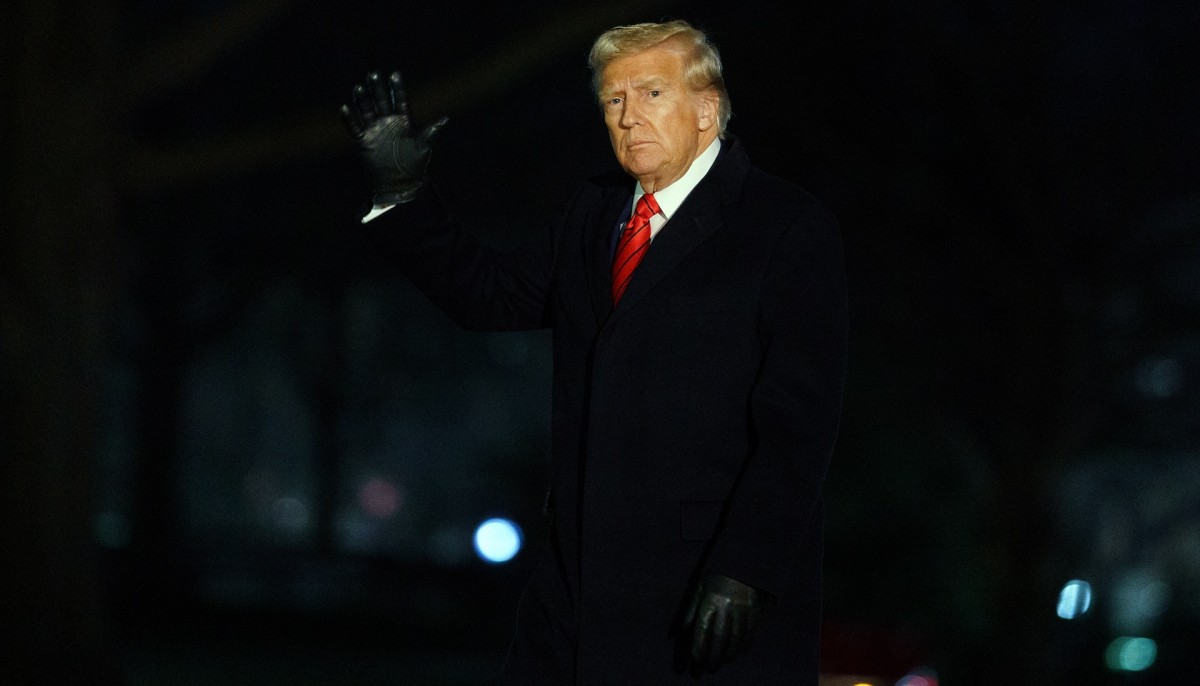
Donald Trump warned yesterday that DeepSeek should be a wake-up call for American industry.Will Oliver - Pool via CNP / Zuma Press / ContactoPhoto
The United States has long viewed artificial intelligence as the key to maintaining technological dominance over China. In Silicon Valley, the powerhouse of digital innovation that has driven growth and profits for decades, AI has been championed as the pathway to continued supremacy. The belief was that advanced algorithms, coupled with cutting-edge microchips and massive investments, would secure the United States' lead over a rising China, already a leader in sectors such as electric vehicles, 5G telecommunications, and quantum computing. However, this week has delivered a sobering wake-up call.
DeepSeek is an artificial intelligence chatbot developed in China that has caught the US tech sector off guard. With a declared development cost of just six million dollars — a negligible amount by Silicon Valley standards — DeepSeek has demonstrated capabilities that surpass many US AI applications, including ChatGPT, particularly in logical reasoning and coding.
These two innovations significantly reduce computational power and energy consumption compared to models that do not employ these techniques. This efficiency means the system relies on fewer advanced microchips, challenging the assumption that AI progress depends on resource-intensive infrastructure.
The fallout has been severe. NVIDIA, the semiconductor giant that became the cornerstone of AI development with its powerful GPUs, has seen its market valuation crash by 17% in a single day, erasing $500 billion —marking the largest day market loss in history. Once valued at over $3 trillion, NVIDIA's reliance on the assumption that AI requires vast computational resources is now being questioned. This has sent shockwaves through other tech giants like Amazon, Google, and Microsoft, which have invested heavily in data centres designed to power AI systems. The success of DeepSeek challenges the wisdom of these enormous investments, suggesting that a smarter, more efficient design can achieve comparable results at a fraction of the cost.
The app also represents a philosophical shift in AI development. Unlike Silicon Valley's proprietary models, DeepSeek is rooted in an open-source framework, allowing a wide range of developers to access, modify, and improve its algorithms. This democratization of AI technology undercuts the US tech sector's business model, which has historically relied on tightly controlled, resource-intensive systems. The open-source approach accelerates innovation and allows smaller players with limited capital to compete, potentially diminishing the dominance of major US firms. This constitutes a major geopolitical threat for the use strategy of global projection of its AI products. As now, many countries within the US sphere of influence (including the European Union) will increasingly look at Chinese alternatives, or try to develop their own AI apps using open-source models.
In the short term, the success of DeepSeek has already made waves, quickly becoming the most popular app on Apple's App Store. Its trajectory is reminiscent of TikTok, another Chinese app that gained global prominence and sparked geopolitical concerns. China, until recently a country that was associated with mass manufacturing of textiles, household goods, and Western technology, is now a technological leader whose apps enjoy enormous popularity among the youth of the West. China is finally gaining an aspect of power which it was believed to be beyond its reach: soft power, the cultural and practical influence that derives from its prominence in advanced digital services. Given the growing global projection these developments reflect and potential implications for US technological leadership, it would not be surprising if DeepSeek is eventually classified as a national security threat, much as it happened with TikTok.
DeepSeek is an artificial intelligence chatbot developed in China that has caught the US tech sector off guard. With a declared development cost of just six million dollars — a negligible amount by Silicon Valley standards — DeepSeek has demonstrated capabilities that surpass many US AI applications, including ChatGPT, particularly in logical reasoning and coding.
"DeepSeek's technological innovations significantly reduce computational power and energy consumption compared to models that do not employ these techniques"DeepSeek introduces two major technological innovations. The first is the adoption of a mixture-of-experts system, in which different AI components are activated only when relevant. The second is the implementation of reinforcement learning during the training phase, where the AI learns from feedback it receives. This system replaces supervised fine-tuning, widely used until now, which requires curated datasets to teach the AI to reason step by step — a process that is time-consuming and resource-intensive.
These two innovations significantly reduce computational power and energy consumption compared to models that do not employ these techniques. This efficiency means the system relies on fewer advanced microchips, challenging the assumption that AI progress depends on resource-intensive infrastructure.
The fallout has been severe. NVIDIA, the semiconductor giant that became the cornerstone of AI development with its powerful GPUs, has seen its market valuation crash by 17% in a single day, erasing $500 billion —marking the largest day market loss in history. Once valued at over $3 trillion, NVIDIA's reliance on the assumption that AI requires vast computational resources is now being questioned. This has sent shockwaves through other tech giants like Amazon, Google, and Microsoft, which have invested heavily in data centres designed to power AI systems. The success of DeepSeek challenges the wisdom of these enormous investments, suggesting that a smarter, more efficient design can achieve comparable results at a fraction of the cost.
"DeepSeek's emergence also exposes the limitations of US geopolitical containment strategy and its efforts to curb China's technological rise"DeepSeek's emergence also exposes the limitations of US geopolitical containment strategy and its efforts to curb China's technological rise. The Biden administration's restrictions on the export of advanced microchips to China were intended to slow its progress in AI development. Instead, China has adapted by using less advanced chips in combination with innovative programming and an enormous talent pool. With six times as many engineering graduates as the United States, China's human capital has proven to be a decisive advantage. DeepSeek's success highlights that even in a technology-driven field like AI, expertise, creativity, and resourcefulness can outweigh sheer financial investment in hardware; something which is beyond the grasp of many Silicon Valley entrepreneurs whose ultimate dream is to eliminate engineers using AI.
The app also represents a philosophical shift in AI development. Unlike Silicon Valley's proprietary models, DeepSeek is rooted in an open-source framework, allowing a wide range of developers to access, modify, and improve its algorithms. This democratization of AI technology undercuts the US tech sector's business model, which has historically relied on tightly controlled, resource-intensive systems. The open-source approach accelerates innovation and allows smaller players with limited capital to compete, potentially diminishing the dominance of major US firms. This constitutes a major geopolitical threat for the use strategy of global projection of its AI products. As now, many countries within the US sphere of influence (including the European Union) will increasingly look at Chinese alternatives, or try to develop their own AI apps using open-source models.
"DeepSeek's rise is also a major wound for the ideological pride of US market capitalism and the libertarian creed espoused by many Trump allies such as Elon Musk"But most importantly, DeepSeek's rise is also a major wound for the ideological pride of US market capitalism and the libertarian creed espoused by many Trump allies such as Elon Musk. It is a demonstration of the effectiveness of China's state-backed approach to innovation and the way by fostering enormous scientific capacity it can lead to the development of highly popular products. By combining government funding with private sector expertise, China has made rapid advancements in other industries, such as electric vehicles, where BYD has overtaken Tesla as the global leader. The same strategy now seems poised to disrupt the AI sector. China's stated aim of becoming the world leader in AI by 2030 no longer seems aspirational but achievable.
In the short term, the success of DeepSeek has already made waves, quickly becoming the most popular app on Apple's App Store. Its trajectory is reminiscent of TikTok, another Chinese app that gained global prominence and sparked geopolitical concerns. China, until recently a country that was associated with mass manufacturing of textiles, household goods, and Western technology, is now a technological leader whose apps enjoy enormous popularity among the youth of the West. China is finally gaining an aspect of power which it was believed to be beyond its reach: soft power, the cultural and practical influence that derives from its prominence in advanced digital services. Given the growing global projection these developments reflect and potential implications for US technological leadership, it would not be surprising if DeepSeek is eventually classified as a national security threat, much as it happened with TikTok.

Paolo Gerbaudo
Profesor de Cultura y Sociedad Digital en el Departamento de Humanidades Digitales del King's College de Londres
Anteriormente, fue profesor asociado de Periodismo y Comunicació, en el Departamento de Medios de Comunicación de la Universidad de Middlesex (Reino Unido) y profesor adjunto de Sociología en la Universidad Americana de El Cairo (AUC, Egipto).
Tiene un doctorado en Medios y Comunicación por el Goldsmiths College (Reino Unido). Sus líneas de investigación se centran en los medios sociales en el activismo contemporáneo, la transformación de los partidos políticos, el populismo, la comunicación política y las sub-culturas juveniles
Ahora en portada
16 de octubre de 2026
16 de octubre de 2026
16 de octubre de 2026
Noticias relacionadas
Hace 109 semanas
Vientos del este: cómo China desarrolló su industria de vehículos eléctricos
Lo más leído