Lunes, 19 de octubre de 2026




ANALYSIS
What can the EU do against the challenge of the US cybertycoons?
Musk's statements on X, and Meta's decision to end strict content verification, are the beginning of a Trump-backed battle to avoid EU regulation. Bernardo de Miguel, a long-time correspondent in Brussels, says that "the defenestration of Commissioner Thierry Breton and the low profile of the current Commission in the face of Musk's interference indicate that Von der Leyen is trying to avoid a head-on clash with the US."
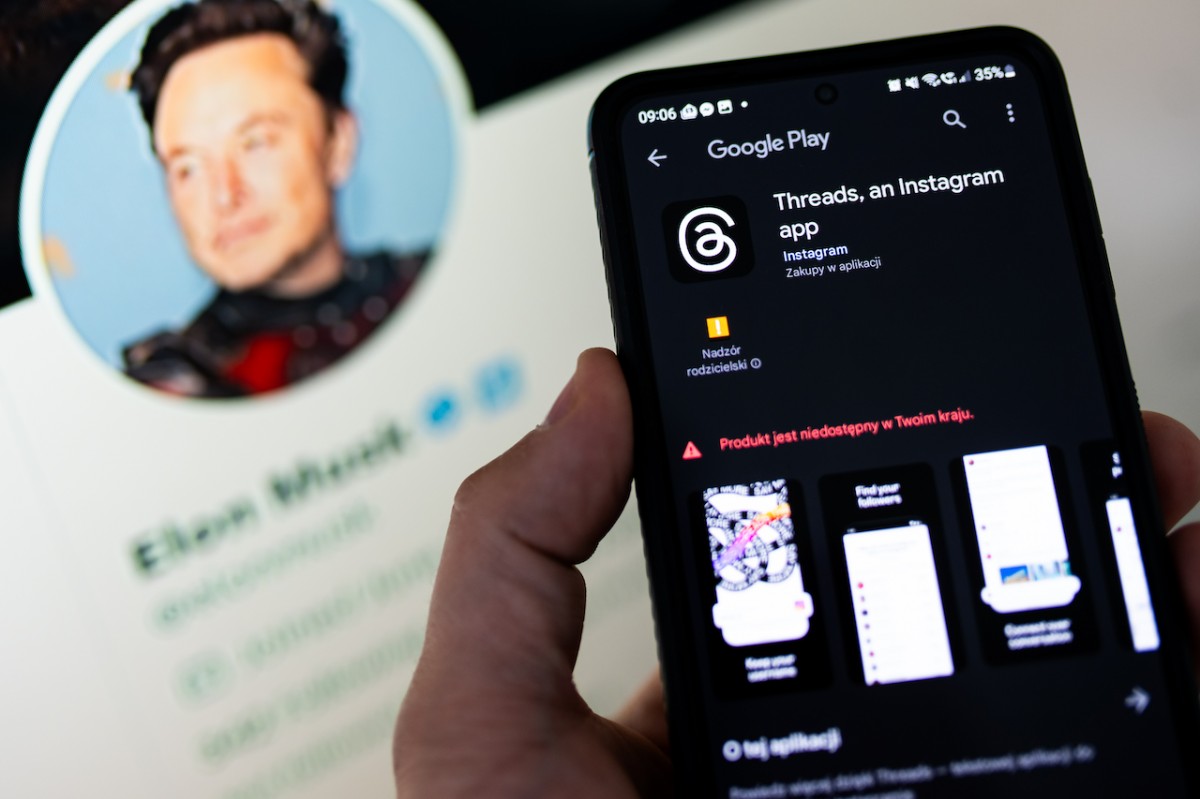
Threads is Meta's response to those users seeking to an alternative to X (formerly known as Twitter).Mateusz Slodkowski / Zuma Press / ContactoPhoto
The large technology companies of the United States (USA), from Meta to Amazon or Twitter (X), contributed financially to Donald Trump's victorious election campaign. Now, they want to take advantage of that successful bet to get rid of any obstacles to their operations, in particular, those imposed by the European Union during the past five years.
The president of the European Commission, Ursula von der Leyen, on sick leave due to pneumonia, has not yet reacted to a challenge that calls into question two of the most important regulations approved during her first term: the digital markets regulation and the digital services regulation. (DMA and DSA, respectively, for their acronym in English). The EU approved both legal texts with the aim of limiting the large digital platforms appeared in recent years, in particular, social networks that have become the main means of communication, information, and entertainment for hundreds of millions of citizens.
The Commission had already begun to apply both regulations rigorously. It had even initiated an investigation against TikTok for its alleged use in the Romanian presidential elections, which were suspended— in an unprecedented decision in Europe, after the victory of a clearly pro-Russian candidate in the first round.
The person responsible for surveillance until recently, European Commissioner Thierry Breton, was very belligerent and even had a personal fight with Elon Musk himself, the billionaire owner of Twitter who has become Trump's right-hand man in recent months.
But, significantly, Von der Leyen forced the departure of the hard-nosed Breton, which has ultimately taken some of the Commission's bite out of the digital arena. The defenestration of the French commissioner, the low profile of the current Commission in the face of Musk's interference in the politics of several European countries, and Zuckerberg's decision to cancel content monitoring on his networks, all indicate that Von der Leyen is trying to avoid a head-on clash with the US that could backfire badly.
At the beginning of the technological revolution at the end of the 20th century, Brussels attempted to bring order by enforcing competition rules. And it waged long legal battles against companies like Microsoft that were as successful in court as they were sterile in the long term. Two decades after the multimillion-dollar sanctions for abuse of a dominant position, Bill Gates' company is still present in the vast majority of European computers. And its biggest rival is Google, also born in the US —also sanctioned by the Commission for abusing its power in the European market.
The Commission's means of confronting these giants are also limited. The first year of application of the DSA (in 2003) had a budget of 26.8 million euros. The human resources assigned to the task began with 29 officials in March 2023 and at the end of that year they totalled 69 personnel. In principle, the monitored platforms must pay for the service through a fee, which raised 45 million that year. But two of them – Facebook and TikTok – have appealed their quota before the General Court of the EU.
Furthermore, Europe cannot afford, neither economically nor socially, to do without networks as ubiquitous as those in the United States. The Commission itself is an addicted user of these communication channels. Von der Leyen, who barely grants press conferences, is lavish with declarative videos on YouTube (owned by Google). And the community department in charge of monitoring the networks recommends following their work through an account on Twitter, Elon Musk's company.
"Mark Zuckerberg has accused Europe of 'institutionalizing censorship'"Billionaire Mark Zuckerberg, leader of Facebook, Instagram and WhatsApp, has not even waited for Trump to take office to launch his first broadside. In a video that sounded like a declaration of war in Brussels, he accused Europe this Tuesday of "institutionalising censorship" and warned that he will collaborate with the new president to "make governments around the world stop persecuting American companies", and to force them to censor more. The tycoon concludes that Trump's victory has marked "a cultural turning point" and, as a first counterattack measure, he has announced that he is ending the strict verification of content on his networks, introduced largely as a consequence of European regulations.
The president of the European Commission, Ursula von der Leyen, on sick leave due to pneumonia, has not yet reacted to a challenge that calls into question two of the most important regulations approved during her first term: the digital markets regulation and the digital services regulation. (DMA and DSA, respectively, for their acronym in English). The EU approved both legal texts with the aim of limiting the large digital platforms appeared in recent years, in particular, social networks that have become the main means of communication, information, and entertainment for hundreds of millions of citizens.
"The EU approved the DMA and DSA with the objective of short-cutting the large digital platforms appeared in recent years"None of these major networks is European. More importantly, technology is advancing at such a rapid pace that Brussels was unable to regulate with its old rules services exposed to abuse of power, manipulation, or circulation of illegal content with almost total impunity. The DMA and, above all, the DSA allows the Commission to intervene decisively and impose corrective measures on platforms whenever it perceives a violation of the rules on, for example, the neutrality or transparency of each network.
The Commission had already begun to apply both regulations rigorously. It had even initiated an investigation against TikTok for its alleged use in the Romanian presidential elections, which were suspended— in an unprecedented decision in Europe, after the victory of a clearly pro-Russian candidate in the first round.
The person responsible for surveillance until recently, European Commissioner Thierry Breton, was very belligerent and even had a personal fight with Elon Musk himself, the billionaire owner of Twitter who has become Trump's right-hand man in recent months.
But, significantly, Von der Leyen forced the departure of the hard-nosed Breton, which has ultimately taken some of the Commission's bite out of the digital arena. The defenestration of the French commissioner, the low profile of the current Commission in the face of Musk's interference in the politics of several European countries, and Zuckerberg's decision to cancel content monitoring on his networks, all indicate that Von der Leyen is trying to avoid a head-on clash with the US that could backfire badly.
"The conflict between the innovative capacity of the US and the regulatory desire of Brussels has been brewing for some time and 2025 may mark a turning point"But the conflict between the innovative capacity of the US and the regulatory desire of Brussels has been brewing for some time and everything indicates that 2025 may mark, as Zuckerberg predicts, a turning point towards technology companies willing to confront regulators thanks to Trump's protection. The offensive could thwart Brussels' umpteenth attempt to rein in the American giants that dominate the digital economy and show the growing dependence of the Old Continent on the other side of the Atlantic.
At the beginning of the technological revolution at the end of the 20th century, Brussels attempted to bring order by enforcing competition rules. And it waged long legal battles against companies like Microsoft that were as successful in court as they were sterile in the long term. Two decades after the multimillion-dollar sanctions for abuse of a dominant position, Bill Gates' company is still present in the vast majority of European computers. And its biggest rival is Google, also born in the US —also sanctioned by the Commission for abusing its power in the European market.
"The application of the DMA and the DSA could be frustrated if American companies resist and if the American Administration interprets the punishment as a protectionist measure"The approval of the DMA and the DSA aimed to reinforce the EU's arsenal to force large platforms to comply with European regulations. But its application could be frustrated if American companies resist. Above all, if the American Administration interprets the punishment of its companies as a protectionist measure that deserves retaliation in the form of tariffs or vetoes on the import of European products.
The Commission's means of confronting these giants are also limited. The first year of application of the DSA (in 2003) had a budget of 26.8 million euros. The human resources assigned to the task began with 29 officials in March 2023 and at the end of that year they totalled 69 personnel. In principle, the monitored platforms must pay for the service through a fee, which raised 45 million that year. But two of them – Facebook and TikTok – have appealed their quota before the General Court of the EU.
Furthermore, Europe cannot afford, neither economically nor socially, to do without networks as ubiquitous as those in the United States. The Commission itself is an addicted user of these communication channels. Von der Leyen, who barely grants press conferences, is lavish with declarative videos on YouTube (owned by Google). And the community department in charge of monitoring the networks recommends following their work through an account on Twitter, Elon Musk's company.

Bernardo de Miguel
Corresponsal para asuntos europeos
Es conocido por su labor en distintos países, como México, Tailandia o Reino Unido, y, sobre todo, por la corresponsalía que ejercía en Bruselas para el diario económico Cinco Días y para El País.
Ahora en portada
19 de octubre de 2026
19 de octubre de 2026
Noticias relacionadas
Hace 92 semanas