Viernes, 16 de octubre de 2026




FIRMAS TOP
The good divorce: An optimistic account of Munich Security Conference 2026
Jeremy Cliffe, columnist at 'Agenda Pública' and editorial director at the European Council on Foreign Relations, reports from the 2026 Munich Security Conference on a "good" transatlantic divorce: for the first time, the US and Europe state their differences frankly. Rubio frames his speech around cultural heritage; Macron, Merz, von der Leyen and Sánchez around defence and values. Cliffe highlights Europe’s push for eurobonds, coalitions of the willing and industrial preference to strengthen sovereignty and inject momentum into economic integration.
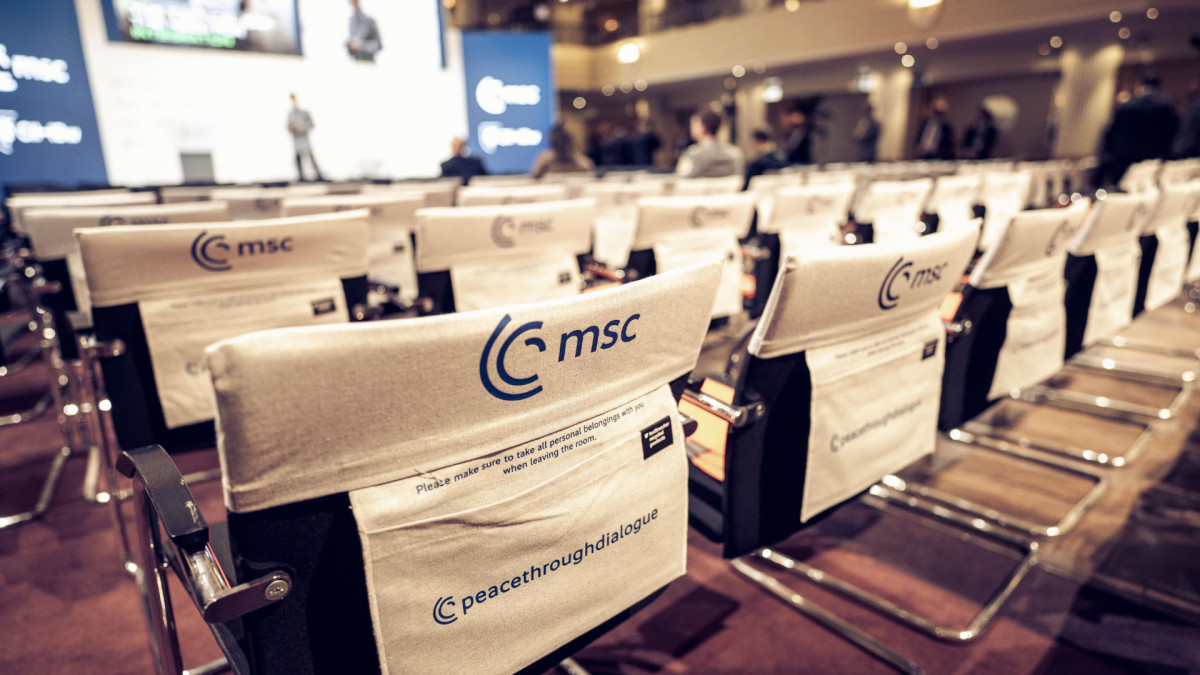
The evening before MSC 2026.MSC / Preiss
There are two ways of seeing this year’s Munich Security Conference.
One is as yet another display of European vassalage and division. On Saturday 14th February, Secretary of State Marco Rubio delivered a speech whose tone was friendlier than that of Vice-President JD Vance last year, but whose content—a patronising overture about shared civilisational kinship—was little different. Yet on its conclusion, it got a standing ovation in the Bayerischer Hof hotel. Among those standing to clap were the German foreign and defence ministers, supposedly the vanguard of the new, more capable Europe. All rather depressing.
Another way of seeing MSC 2026, however, is as proof of a transatlantic relationship grasping its way to a new honesty and openness.
Rubio’s nativist overtures may have been polite, but they were also radical, in their way. Out with universal values and defence commitments (America’s top diplomat did not even mention Ukraine). In with cultural heritage and allegedly shared Western grievances about the "climate cult" and other such evils.
For their part, Friedrich Merz, Emmanuel Macron, Pedro Sánchez, Keir Starmer and Ursula von der Leyen presented a different vision: heavier on policy substance, especially on defence and security, but also on appeals to Enlightenment values. In any comparison with recent history, their break from Rubio was just as radical as his break from them.
In other words: both sides of the transatlantic relationship are being relatively frank about what they want and why it is different from what the other wants. And that is new.
Rubio’s speech in Munich read like that of a conventional Republican primacist trying to make a case for Trumpism. In his telling, shared Western history was a tale of joint derring-do in the name of democracy (for example, the reunification of Germany) but also of a shared cultural heritage (for example, Shakespeare and Mozart). It was a nicer speech than the one Vance had delivered a year earlier. But its fundamental demands were little different: a joint civilisational project to rid Europe of woke in return for the possibility of further American protection. Rubio said little of substance about defence or security. He did not once mention Ukraine.
The mash-up of the traditional and the newly radical was not a surprise; both as that reflects Rubio’s own "journey" (which could yet encompass a showdown with JD Vance for the 2028 Republican candidacy) and it because it tracks the history of the US as a whole. To cite ‘Der amerikanische Weckruf’ (The American wake-up call), a new book by the German-American political scientist Cathryn Clüver Ashbrook, the road from Ronald Reagan via Newt Gingrich to Donald Trump may be a winding one, but it is one road. Like it or not, this—for now—is the face America presents to the world.
Some will see the European and American speeches in Munich as signs of a bad transatlantic relationship. But I would argue that they are a step forward: for the first time in a while, neither the US nor Europe are simply pandering to the other. Both are pronouncing their different visions of the world with a new honesty. Neither seems too concerned with charming the other (Rubio’s speech may have some appeal to the European radical right, but even those parties appear to be turning away from the Trumpian project post-Greenland). All of which might just be the beginnings of a good divorce.
Cathryn Clüver Ashbrook, the German-American think-tanker cited earlier in this piece, insisted that Europeans have badly misunderstood America and the long-term pathologies of its democracy. She argued for a more realistic European stance towards the future of the continent’s security guarantor. [Interview to follow.]
José Manuel Albares, the Foreign Minister of Spain, was robust in insisting that regulating social media is a European geopolitical priority. "It’s the law of the jungle or the law of democracy and international law," he told me, drawing together an anti-coercion, pluralist vision of world affairs with the case for tech regulation. [Interview here.]
Oliver Stuenkel, a German-Brazilian political scientist, was highly persuasive about Europe’s opportunities in a world turning away from the US and (in some cases) concerned about Chinese domination, too. He argued that Europeans could be much more confident about their global appeal in such circumstances. [Interview to follow.]
Benjamin Haddad, France’s Europe minister, put to me a confident case for dynamic European economic integration defying the continent’s current gloom: Eurobonds for common investments; European preference to level the industrial playing field; coalitions of the willing to overcome political deadlocks. [Interview here.]
There is no way back to the cooperative, idealistic 1990s—and quite how cooperative and idealistic they ever were is also a matter for debate. But it is still possible to imagine a good US-Europe divorce, where both sides get some of what they want, share the kids, and ultimately end up on a more honest and equal footing. This year’s Munich Security Conference was an early, partial glimpse of that good divorce. The future of the transatlantic relationship may resemble less a wrecking-ball than a divorced couple that know they are separated, and live their own way, but can still work together when events demand that. Let’s hope so.
One is as yet another display of European vassalage and division. On Saturday 14th February, Secretary of State Marco Rubio delivered a speech whose tone was friendlier than that of Vice-President JD Vance last year, but whose content—a patronising overture about shared civilisational kinship—was little different. Yet on its conclusion, it got a standing ovation in the Bayerischer Hof hotel. Among those standing to clap were the German foreign and defence ministers, supposedly the vanguard of the new, more capable Europe. All rather depressing.
Another way of seeing MSC 2026, however, is as proof of a transatlantic relationship grasping its way to a new honesty and openness.
Rubio’s nativist overtures may have been polite, but they were also radical, in their way. Out with universal values and defence commitments (America’s top diplomat did not even mention Ukraine). In with cultural heritage and allegedly shared Western grievances about the "climate cult" and other such evils.
For their part, Friedrich Merz, Emmanuel Macron, Pedro Sánchez, Keir Starmer and Ursula von der Leyen presented a different vision: heavier on policy substance, especially on defence and security, but also on appeals to Enlightenment values. In any comparison with recent history, their break from Rubio was just as radical as his break from them.
In other words: both sides of the transatlantic relationship are being relatively frank about what they want and why it is different from what the other wants. And that is new.
"At MSC 2026 the US and Europe seem to be emerging onto a newly mature plane where their differences are laid bare with, at least, a degree of acceptance"In relationships theory, there is such a thing as a "good divorce": erstwhile couples that, on separating, articulate their differences openly and negotiate in a civil fashion. During Joe Biden’s presidency the transatlantic couple was still in denial ("America is back", he told the MSC in 2021). Last year, at MSC 2025, Vance’s adversarial speech in Munich saw proverbial plates thrown at the wall. But at MSC 2026 the US and Europe seem to be emerging onto a newly mature plane where their differences are laid bare with, at least, a degree of acceptance.
What is the transatlantic rift really about at MSC 2026?
What, then, are those differences?Rubio’s speech in Munich read like that of a conventional Republican primacist trying to make a case for Trumpism. In his telling, shared Western history was a tale of joint derring-do in the name of democracy (for example, the reunification of Germany) but also of a shared cultural heritage (for example, Shakespeare and Mozart). It was a nicer speech than the one Vance had delivered a year earlier. But its fundamental demands were little different: a joint civilisational project to rid Europe of woke in return for the possibility of further American protection. Rubio said little of substance about defence or security. He did not once mention Ukraine.
The mash-up of the traditional and the newly radical was not a surprise; both as that reflects Rubio’s own "journey" (which could yet encompass a showdown with JD Vance for the 2028 Republican candidacy) and it because it tracks the history of the US as a whole. To cite ‘Der amerikanische Weckruf’ (The American wake-up call), a new book by the German-American political scientist Cathryn Clüver Ashbrook, the road from Ronald Reagan via Newt Gingrich to Donald Trump may be a winding one, but it is one road. Like it or not, this—for now—is the face America presents to the world.
"For the first time in a while, neither the US nor Europe are simply pandering to the other. Both are pronouncing their different visions of the world with a new honesty"And what of the European face? It would be unfair to reduce Europe’s profile at Munich to some polite, relieved applause at Rubio’s speech. The major European leaders who spoke were in certain respects the diametric opposite of Trump’s Secretary of State. Where he led on civilisation, they led on values; Macron, Merz and von der Leyen all referring to the Enlightenment and its European roots in a pointed rebuke to Vance last year. Where Rubio said little about security, they majored on defence realities; Macron and Merz referring to upcoming talks on European nuclear deterrence, for example. Merz even delivered some home truths to America. He warned that its superpower status depends significantly on its allies.
Some will see the European and American speeches in Munich as signs of a bad transatlantic relationship. But I would argue that they are a step forward: for the first time in a while, neither the US nor Europe are simply pandering to the other. Both are pronouncing their different visions of the world with a new honesty. Neither seems too concerned with charming the other (Rubio’s speech may have some appeal to the European radical right, but even those parties appear to be turning away from the Trumpian project post-Greenland). All of which might just be the beginnings of a good divorce.
From speeches to strategy: Europe’s post-Munich agenda
What, then, of the post-divorce, newly single Europe? A "geopolitical power", as Macron put it? MSC 2026, including my own conversations for Agenda Pública, provided more than a few glimpses of that.Cathryn Clüver Ashbrook, the German-American think-tanker cited earlier in this piece, insisted that Europeans have badly misunderstood America and the long-term pathologies of its democracy. She argued for a more realistic European stance towards the future of the continent’s security guarantor. [Interview to follow.]
José Manuel Albares, the Foreign Minister of Spain, was robust in insisting that regulating social media is a European geopolitical priority. "It’s the law of the jungle or the law of democracy and international law," he told me, drawing together an anti-coercion, pluralist vision of world affairs with the case for tech regulation. [Interview here.]
Oliver Stuenkel, a German-Brazilian political scientist, was highly persuasive about Europe’s opportunities in a world turning away from the US and (in some cases) concerned about Chinese domination, too. He argued that Europeans could be much more confident about their global appeal in such circumstances. [Interview to follow.]
Benjamin Haddad, France’s Europe minister, put to me a confident case for dynamic European economic integration defying the continent’s current gloom: Eurobonds for common investments; European preference to level the industrial playing field; coalitions of the willing to overcome political deadlocks. [Interview here.]
"The 2026 Munich Security Report opened with the image of Trump’s destruction of the historic East Wing of the White House. But I left the conference wondering whether that might not be too negative"Writing this on the train back to Berlin from Munich, I find myself reflecting on these conversations at MSC—plus encounters with ECFR colleagues and other contacts from the UK, Sweden and Czechia—as well as the myriad speeches at the Bayerischer Hof. This MSC had been framed around a "wrecking-ball" world. The 2026 Munich Security Report opened with the image of Trump’s destruction of the historic East Wing of the White House. But I left the conference wondering whether that might not be too negative.
There is no way back to the cooperative, idealistic 1990s—and quite how cooperative and idealistic they ever were is also a matter for debate. But it is still possible to imagine a good US-Europe divorce, where both sides get some of what they want, share the kids, and ultimately end up on a more honest and equal footing. This year’s Munich Security Conference was an early, partial glimpse of that good divorce. The future of the transatlantic relationship may resemble less a wrecking-ball than a divorced couple that know they are separated, and live their own way, but can still work together when events demand that. Let’s hope so.

Jeremy Cliffe
Editorial director and senior policy fellow at the European Council on Foreign Relations
He is based in Berlin. Previously he was international editor of the 'New Statesman'. Before that he spent eight years at The Economist, where he served as bureau chief in Brussels and Berlin, and was first the 'Bagehot' (UK) and then 'Charlemagne' (Europe) columnist. He studied at the universities of Oxford and Harvard.
Ahora en portada
16 de octubre de 2026
16 de octubre de 2026
16 de octubre de 2026
Lo más leído