Lunes, 12 de octubre de 2026



EUROPE AND RUSSIA
Putin’s manufactured majority — and why Europe shouldn’t legitimise it
Yabloko's exclusion leaves Russia's elections without the only nationwide list advocating a ceasefire. Egor Kuroptev, director of the EK Strategic Communications Center, examines how a majority is manufactured for Putin and warns Europe: interpreting a result obtained through coercion and fraud as evidence that Russians support the war "turns the Kremlin's domestic coercion into international legitimacy".
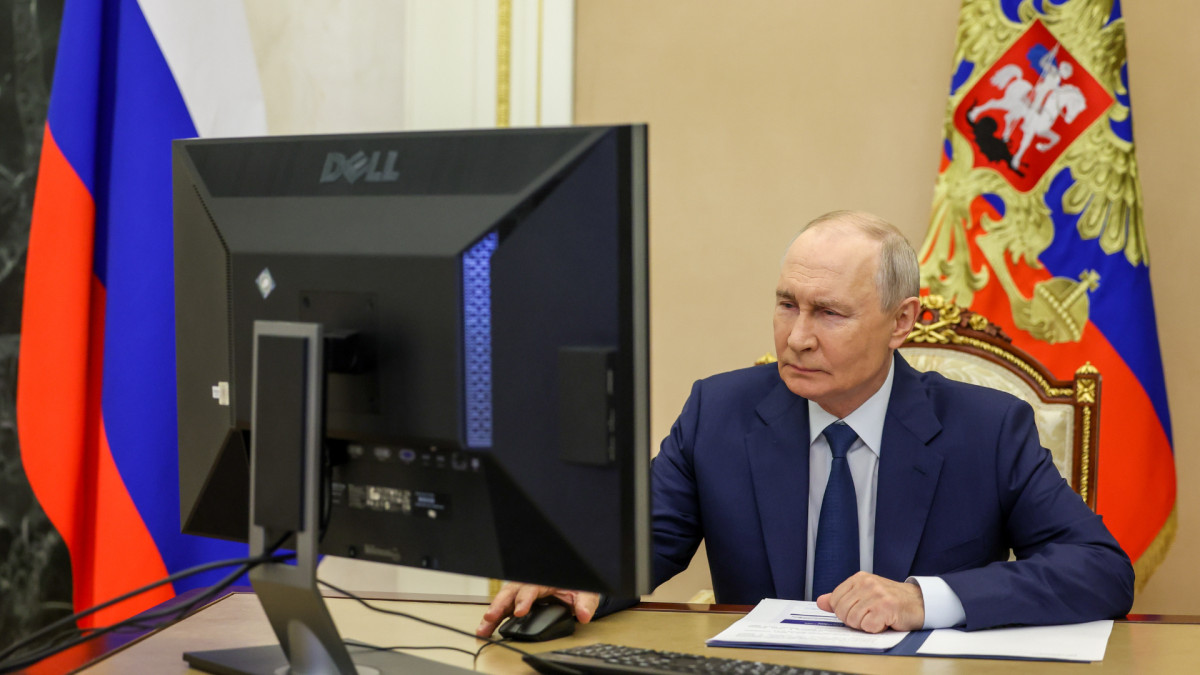
The Russian president demonstrated the possibility of online voting in front of the cameras.Прокофьев Вячеслав / Zuma Press / Europa Press
The most revealing result of Russia's parliamentary election will belong to a party that is not on the ballot. On September 18, Russia began three days of voting for a new State Duma. The winner is already known. What remains uncertain is how much pressure and vote-rigging the Kremlin will need to produce the number Vladimir Putin wants, and how quickly that number will be presented as proof that Russians support a longer war.
For twelve days this summer, citizens had a nationwide, legal way to say the opposite. The Central Election Commission registered Yabloko's party list on July 29. Yabloko is a systemic opposition party that has long tried to survive within the boundaries set by the Kremlin, but its 2026 campaign was distinguished by one proposition no other nationwide list was permitted to offer: a ceasefire and peace. On August 10, the Supreme Court struck the list from the ballot. It rejected the appeal on August 17, and the next day the commission formally removed Yabloko's party list from the ballot papers.
The sequence was more than a routine judicial purge. It became a brief political experiment that the Kremlin ended when the result became politically dangerous.
According to EK Stratcom sources with access to closed Presidential Administration polling, support for Yabloko stood at roughly 10% nationwide and as high as 20% in Moscow. The subsequent ExtremeScan survey revealed the scale of support for the only nationwide pro-peace choice.
Interim results from an ExtremeScan survey of 800 adults conducted between September 4 and 10 found that 18% said they would probably vote for Yabloko if it were allowed to stand. In the survey's vote estimate among those who had already decided which party to support, Yabloko received 24.6% and United Russia 31.8%. The figures expose a constituency the official campaign was designed to erase from the ballot.
The purge continued after the party list disappeared. In September, Novaya Gazeta Europe reported that 34 of Yabloko's 137 candidates in single-member districts had also been removed. The Kremlin's error was not simply allowing Yabloko onto the ballot, however briefly. For twelve days, it allowed Russian society to recognise itself.
Together, these surveys show that negotiations command majority support while renewed mobilisation does not. The Kremlin's electoral machinery is suppressing a demand already present in Russian society.
The reversal did not follow any comparable rise in independent polling. It came after Putin personally entered the campaign, his first direct intervention on United Russia's behalf since 2007. One of Meduza's sources summarised the new instruction: "The president has put his shoulder to it; we are working for him". Once Putin lent the party his personal authority, electoral administrators were no longer permitted to settle for merely plausible numbers. They had to produce numbers worthy of the president.
Meduza's sources —including two vice-governors, political consultants working with regional authorities and a source close to the Presidential Administration— said that higher targets would require intensified "administrative and workplace mobilisation" of public employees and staff of state corporations, together with more direct vote-rigging, euphemistically called "correction". Middle managers designated as "mobilisers" or "brigade leaders" are made responsible for ensuring that particular groups of employees turn out to vote. At the same time, the campaign remains deliberately colourless, giving discontented voters as little reason as possible to appear at the polls. The method is simple: mobilise voters dependent on the authorities and discourage voluntary turnout.
European governments, analysts and media should never repeat the announced United Russia percentage without explaining how the only nationwide pro-peace list was removed, how workplace pressure operated and how sharply independent polling diverged. Treating silence under repression as consent is analytically lazy. Treating an engineered result as a free expression of Russian society is worse: it turns the Kremlin's domestic coercion into international legitimacy.
The Kremlin can manufacture 50%. Europe must not call that consent.
For twelve days this summer, citizens had a nationwide, legal way to say the opposite. The Central Election Commission registered Yabloko's party list on July 29. Yabloko is a systemic opposition party that has long tried to survive within the boundaries set by the Kremlin, but its 2026 campaign was distinguished by one proposition no other nationwide list was permitted to offer: a ceasefire and peace. On August 10, the Supreme Court struck the list from the ballot. It rejected the appeal on August 17, and the next day the commission formally removed Yabloko's party list from the ballot papers.
The sequence was more than a routine judicial purge. It became a brief political experiment that the Kremlin ended when the result became politically dangerous.
Twelve days that exposed the fear
The political field had been cleared in advance. Twelve Yabloko members faced politically motivated criminal cases, eight were in prison and twelve prominent figures had been branded "foreign agents" and barred from standing. The Kremlin appeared to assume that a weakened Yabloko would demonstrate the marginality of the anti-war position. Instead, the party became a rallying point for those who opposed the war."Twelve Yabloko members faced politically motivated criminal cases, eight were in prison and twelve prominent figures had been branded "foreign agents""FOM polling showed that support for Yabloko had risen from 1% on July 19 to 4% on August 9. Positive attitudes towards the party had risen from 2% to 7% over six months. The party reported 8,000 applications for membership —twice its existing membership—, while spontaneous gatherings formed outside the Supreme Court. Around 90 people were detained on August 17.
According to EK Stratcom sources with access to closed Presidential Administration polling, support for Yabloko stood at roughly 10% nationwide and as high as 20% in Moscow. The subsequent ExtremeScan survey revealed the scale of support for the only nationwide pro-peace choice.
Interim results from an ExtremeScan survey of 800 adults conducted between September 4 and 10 found that 18% said they would probably vote for Yabloko if it were allowed to stand. In the survey's vote estimate among those who had already decided which party to support, Yabloko received 24.6% and United Russia 31.8%. The figures expose a constituency the official campaign was designed to erase from the ballot.
The purge continued after the party list disappeared. In September, Novaya Gazeta Europe reported that 34 of Yabloko's 137 candidates in single-member districts had also been removed. The Kremlin's error was not simply allowing Yabloko onto the ballot, however briefly. For twelve days, it allowed Russian society to recognise itself.
"Interim results from an ExtremeScan survey found that 18% said they would probably vote for Yabloko if it were allowed to stand"The demand revealed by that episode is broader than support for a party. In August, according to the Levada Center, 59% were in favour of peace negotiations and 31% favoured continuing military action. Support for negotiations had fallen from the record 67% reached in February, but it remained a clear majority. An earlier ExtremeScan survey posed the cost of the war more directly: 56% preferred halting hostilities, while only 21% accepted a new mobilisation. As the researchers put it, "the price of the war divides the parties more sharply than abstract support does".
Together, these surveys show that negotiations command majority support while renewed mobilisation does not. The Kremlin's electoral machinery is suppressing a demand already present in Russian society.
How to manufacture a majority
The Kremlin's targets have shifted repeatedly. In October 2025, officials wanted at least 55% turnout and 55% for United Russia. By March, the turnout target had fallen to 50%. By July, the target for United Russia in regions with average support had fallen to 45%. Then, in early September, the direction suddenly reversed: 47% in regions with average support, 52–53% in those with greater electoral mobilisation and more than 50% nationwide.The reversal did not follow any comparable rise in independent polling. It came after Putin personally entered the campaign, his first direct intervention on United Russia's behalf since 2007. One of Meduza's sources summarised the new instruction: "The president has put his shoulder to it; we are working for him". Once Putin lent the party his personal authority, electoral administrators were no longer permitted to settle for merely plausible numbers. They had to produce numbers worthy of the president.
"Once Putin lent the party his personal authority, electoral administrators were no longer permitted to settle for merely plausible numbers"Final forecasts from state-aligned organisations place United Russia between 47% and 53%. The September ExtremeScan survey put it at 35.6% among voters who named a party and 23.9% among all respondents. The gap between the figures is obvious. In the same independent survey, only 30.8% expected the national election to be honest; 32.7% expected the result to be significantly altered. Forty-nine per cent said the Duma has no real ability to disagree with the president on important questions.
Meduza's sources —including two vice-governors, political consultants working with regional authorities and a source close to the Presidential Administration— said that higher targets would require intensified "administrative and workplace mobilisation" of public employees and staff of state corporations, together with more direct vote-rigging, euphemistically called "correction". Middle managers designated as "mobilisers" or "brigade leaders" are made responsible for ensuring that particular groups of employees turn out to vote. At the same time, the campaign remains deliberately colourless, giving discontented voters as little reason as possible to appear at the polls. The method is simple: mobilise voters dependent on the authorities and discourage voluntary turnout.
"The method is simple: mobilise voters dependent on the authorities and discourage voluntary turnout"Our own work inside Russia's censored information space demolishes another part of the official story: the claim that anti-war arguments have no audience. From February through August, EK Stratcom's Reset campaign recorded 224.4 million views and 13.9 million reactions across formats. Arguments about peace, prices, censorship and political responsibility still break through inside Russia.
What Europe must refuse
On September 16, Putin cast the vote as a demonstration of unity and support for Russian soldiers. He had already said that the result should confirm "the resilience of the state, the maturity of the political system and its ability to withstand any external threat, blackmail or aggression". This is not ordinary campaign language. The Kremlin needs an image of cohesion that can be shown at home and abroad as political permission for what comes next."The Kremlin needs an image of cohesion that can be shown at home and abroad as political permission for what comes next"After this vote, the next nationwide electoral cycle will take place in 2030–2031. Public opinion will carry less weight in the Kremlin's calculations, while the manufactured majority can be invoked to justify deeper repression, further mobilisation or escalation beyond Ukraine. The Kremlin is already preparing the arguments to justify those decisions to the population.
European governments, analysts and media should never repeat the announced United Russia percentage without explaining how the only nationwide pro-peace list was removed, how workplace pressure operated and how sharply independent polling diverged. Treating silence under repression as consent is analytically lazy. Treating an engineered result as a free expression of Russian society is worse: it turns the Kremlin's domestic coercion into international legitimacy.
"Treating an engineered result as a free expression of Russian society is worse: it turns the Kremlin's domestic coercion into international legitimacy"Once voting ends on September 20, the Kremlin will say that Russia has spoken. But peace was deleted before the country could answer. The question is whether Europe will accept the manufactured number as proof that peace was never wanted.
The Kremlin can manufacture 50%. Europe must not call that consent.
.png)
Egor Kuroptev
Director del EK Strategic Communications Center
Egor Kuroptev es un exiliado ruso y defensor de los derechos humanos. Experto en defensa, contrainteligencia y análisis político, desempeña el cargo de director en el EK Strategic Communications Center.
Ahora en portada
11 de octubre de 2026
10 de octubre de 2026
Noticias relacionadas
Hace 5 semanas
The CIA visit to Moscow: only the tip of the iceberg
Hace 45 semanas