Sábado, 17 de octubre de 2026




FIRMAS TOP
Here are the 7 takes you need to read ahead of the Trump-Xi Summit
From the American Enterprise Institute to the Eurasia Group, analyst J.P. Carroll has compiled the views of seven experts - including alumni of the Trump and Obama administrations - ahead of the major summit between the United States and China. Although most observers agree that they expect little progress, they highlight trade and Taiwan’s security as the key issues at the meeting between Donald Trump and Xi Jinping.
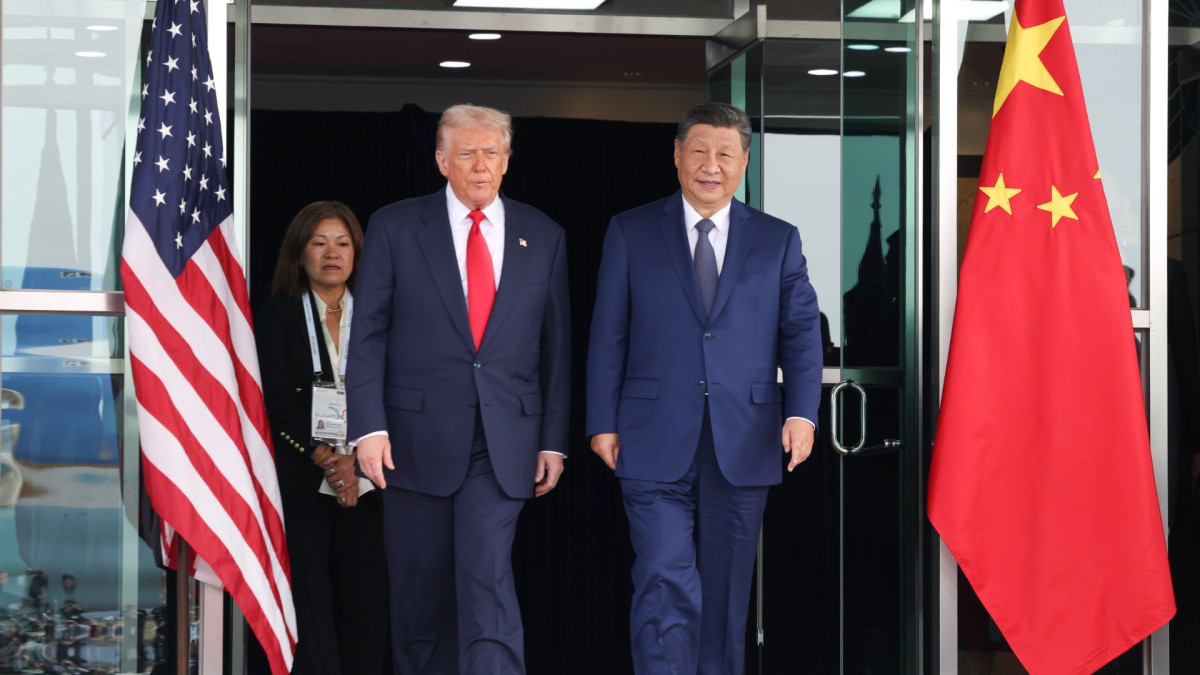
President Donald Trump and his Chinese counterpart, Xi Jinping, in South Korea.Huang Jingwen / Xinhua News / Europa Press
Ahead of President Trump’s summit with Xi Jinping in China, Agenda Publica reached out to a range of policy experts, analysts, and former government officials for their opinion on the upcoming summit between the leaders of the world’s two superpowers. Here is what they told us.
 Alexander B. Gray, Senior Fellow at the American Foreign Policy Council and former Chief of Staff of the National Security Council from 2019 to 2021:
The upcoming U.S-China summit is an important opportunity for Washington to reset the economic relationship in a way that serves American national and economic security interests. Beijing’s ability to use economic coercion against the United States, whether in pharmaceuticals or rare earth minerals, has demonstrated the need to rebuild domestic industrial resilience so that United States has greater policy options in the future.
 Scott Shaw, Vice President, The Cohen Group. He is also a non-resident Senior Fellow at the Asia Society. Shaw is also a former Senior Foreign Service Officer who retired in 2024 – after a 36-year career with the U.S. Department of Commerce – with the rank of Minister-Counselor, and who served as the Deputy Assistant Secretary for China and Mongolia at the U.S. Department of Commerce:
I believe one of the most significant outcomes from the Summit will be the announcement of the Board of Trade and perhaps a Board of Investment. Although both significant, we'll have to see what their structures are to see how durable these new mechanisms will be.
 Lucas F. Schleusener, former U.S. Defense Department official (2012 – 2017) with experience working on U.S.-China relations, who wrote speeches for former Secretaries of Defense Leon Panetta, Chuck Hagel, and Ash Carter:
The Trump-Xi summit should be understood less as a breakthrough opportunity than as a stress test of American policymaking capacity. I would expect the agenda to include trade, technology controls, critical minerals, Taiwan, military-to-military communications, and China’s role in managing the spillover from the war with Iran, especially pressure on energy markets, East Asian economies, and food security in parts of the Global South. Washington is entering this meeting after weakening the very machinery that makes presidential diplomacy effective: the National Security Council process, key Cabinet agencies, and much of America’s development capacity.
.jpg) Dominic Chiu, Senior Analyst of China and Northeast Asia at Eurasia Group:
Dominic Chiu, Senior Analyst of China and Northeast Asia at Eurasia Group:
The Trump-Xi summit will be defined less by dramatic breakthroughs and more by a shared interest in sustaining stability. I expect positive optics and an announcement of deliverables that are relatively low-hanging fruit. These include Chinese purchase commitments in US agriculture and energy products, Boeing aircraft, as well as the announcement of a Board of Trade to formalize dialogue and enable targeted tariff adjustments. We will likely see a preview of these deliverables in the aftermath of the working-level trade talks in Seoul that will take place a day before the summit. Neither side has an appetite to escalate tensions over tariffs right now. Section 301 investigations will likely push tariffs on China modestly up by late summer, remaining below peak IEEPA levels. China could retaliate with a marginal increase in its own tariffs but it will be calibrated. Crucially, I’m not expecting any new tariff to be linked to fentanyl, removing a key political irritant for Beijing that could otherwise have complicated the summit's atmosphere.
The Iran War is certainly adding complexity to the discussions. The recent US sanctions on Chinese entities importing Iranian oil and Beijing's retaliatory blocking measures won’t escalate tensions, but they do signal that the Chinese are more assertive in countering coercive measures from Washington. I expect Trump to ask Xi to put further pressure on Iran on the blockade and cease the purchase of Iranian oil. There might be some language in the official readout post-summit emphasizing concern over the situation, but I don’t think there will be substantive coordination between the two countries beyond that.
 Zack Cooper, Senior Fellow at the American Enterprise Institute:
I think this summit will be more about photo ops than substantive deliverables. The two leaders will certainly announce some purchases by China alongside a number of top American CEOs, but they are unlikely to really address the underlying structural problems in the U.S.-China relationship: trade and Taiwan.
This means that, although the relationship may appear more stable in the short term, the two leaders are not making progress that would ensure stability and protect against crises in the long run.
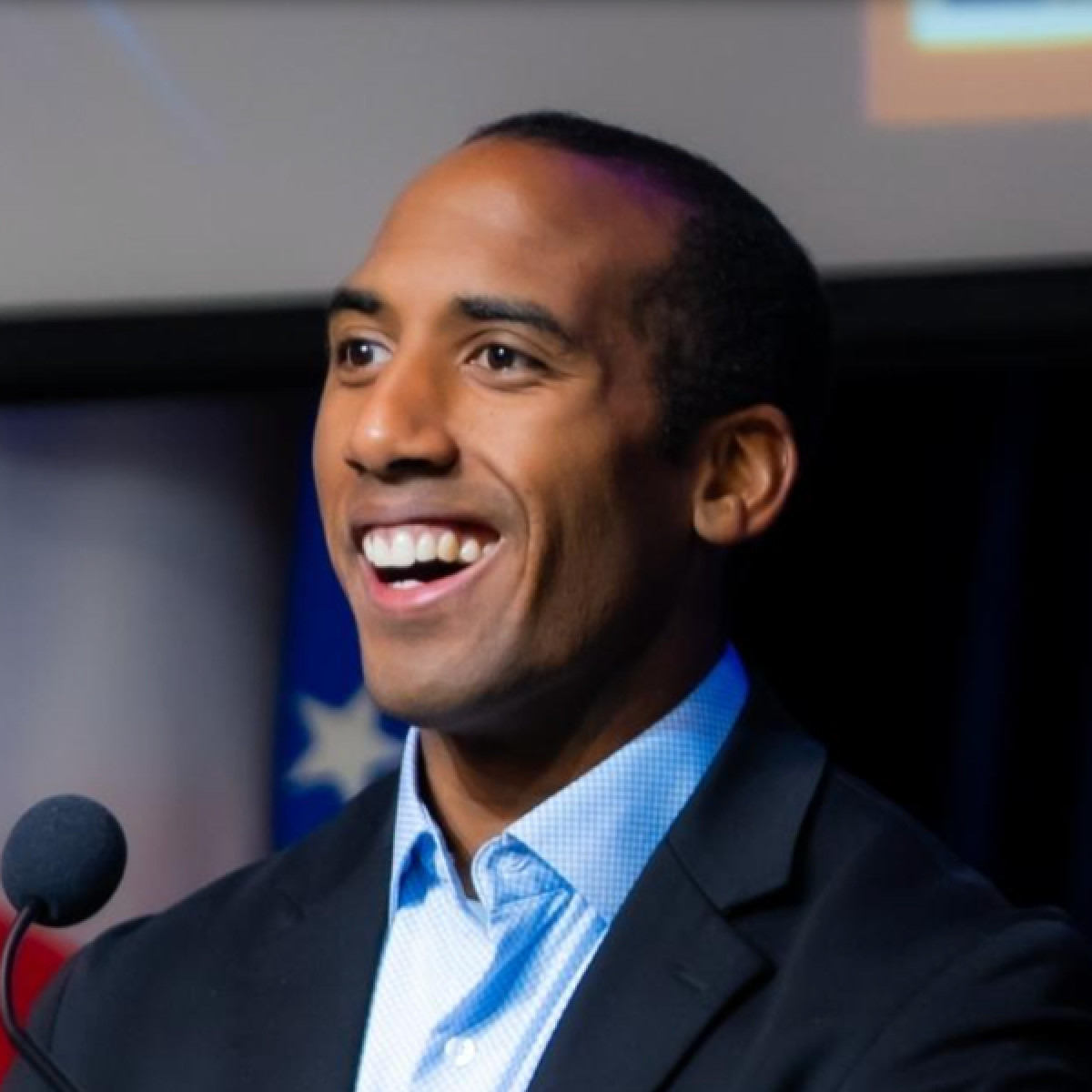 Leland Lazarus, CEO and Founder, Lazarus Consulting:
Both sides are entering this meeting with perceived leverage to pressure the other. Xi will likely take this opportunity as host to depict China as the global stabilizing force, in contrast to Trump as the bull in the china shop. Xi is likely to offer to buy more U.S. agricultural products and Boeing airplanes, as well as increase pressure on Iran to capitulate.
In exchange, Xi will want Trump to further ease chip export restrictions and make a more forceful statement against Taiwanese independence. But what we don't know is just how badly each side is hurting, and what their real bottom line is.
 Ali Wyne, Senior Research and Advocacy Advisor for U.S.-China Relations, at the International Crisis Group:
While the summit is unlikely to produce major breakthroughs, it is essential for Trump and Xi to engage one another regularly, especially since their relationship is likely to play an outsized role in shaping U.S.-China relations for the remainder of Trump's second term.
Alexander B. Gray
The upcoming U.S-China summit is an important opportunity for Washington to reset the economic relationship in a way that serves American national and economic security interests. Beijing’s ability to use economic coercion against the United States, whether in pharmaceuticals or rare earth minerals, has demonstrated the need to rebuild domestic industrial resilience so that United States has greater policy options in the future.
"Beijing’s ability to use economic coercion against the United States has demonstrated the need to rebuild domestic industrial resilience"President Trump seems to understand that, in order to buy time for those industrial policies his administration is pursuing to work, he needs a fundamentally stable US-China relationship in the near term. This stability will benefit the United States and its allies and partners in Europe and Asia, and will offer a unique opportunity for allies to collaborate to increase their economic security resilience in the face of China’s ongoing malign activity.
Scott Shaw
I believe one of the most significant outcomes from the Summit will be the announcement of the Board of Trade and perhaps a Board of Investment. Although both significant, we'll have to see what their structures are to see how durable these new mechanisms will be.
"One of the most significant outcomes from the Summit will be the announcement of the Board of Trade and perhaps a Board of Investment"My expectation, based on similar past bilateral formats, is that they will be useful through 2026 as the two leaders meet 3-4 more times over the course of the year. But as the two sides appear to have different goals and objectives for these formats, when cabinet/Minister-level leadership subsides following this year's marathon of leader encounters, the challenge will be to make these formats both sturdy and effective.
Lucas F. Schleusener
The Trump-Xi summit should be understood less as a breakthrough opportunity than as a stress test of American policymaking capacity. I would expect the agenda to include trade, technology controls, critical minerals, Taiwan, military-to-military communications, and China’s role in managing the spillover from the war with Iran, especially pressure on energy markets, East Asian economies, and food security in parts of the Global South. Washington is entering this meeting after weakening the very machinery that makes presidential diplomacy effective: the National Security Council process, key Cabinet agencies, and much of America’s development capacity.
"The Trump-Xi summit should be understood less as a breakthrough opportunity than as a stress test of American policymaking capacity"That leaves the United States seeking Chinese cooperation from a point of reduced leverage, and Xi Jinping will understand those vulnerabilities clearly. The most likely outcome is not a durable strategic reset, but limited tactical understandings that preserve room for dialogue while Beijing looks for advantage in Washington’s volatility. For U.S. allies and partners, the question is not only what is said at the summit, but whether Washington can turn leader-level engagement into coherent strategy. Personalized diplomacy is not a substitute for disciplined process, expertise, allied coordination, and a clear theory of U.S. interests.
Dominic Chiu
The Trump-Xi summit will be defined less by dramatic breakthroughs and more by a shared interest in sustaining stability. I expect positive optics and an announcement of deliverables that are relatively low-hanging fruit. These include Chinese purchase commitments in US agriculture and energy products, Boeing aircraft, as well as the announcement of a Board of Trade to formalize dialogue and enable targeted tariff adjustments. We will likely see a preview of these deliverables in the aftermath of the working-level trade talks in Seoul that will take place a day before the summit. Neither side has an appetite to escalate tensions over tariffs right now. Section 301 investigations will likely push tariffs on China modestly up by late summer, remaining below peak IEEPA levels. China could retaliate with a marginal increase in its own tariffs but it will be calibrated. Crucially, I’m not expecting any new tariff to be linked to fentanyl, removing a key political irritant for Beijing that could otherwise have complicated the summit's atmosphere.
The Iran War is certainly adding complexity to the discussions. The recent US sanctions on Chinese entities importing Iranian oil and Beijing's retaliatory blocking measures won’t escalate tensions, but they do signal that the Chinese are more assertive in countering coercive measures from Washington. I expect Trump to ask Xi to put further pressure on Iran on the blockade and cease the purchase of Iranian oil. There might be some language in the official readout post-summit emphasizing concern over the situation, but I don’t think there will be substantive coordination between the two countries beyond that.
"Beijing is holding its rare earths card close and calculating it will have more leverage over Trump as the midterms draw closer"We are not expending a pre-emptive extension of the October 30 tariff and export controls truce deadline to emerge during the summit. If it does, however, that would be a clear market-positive signal as it would remove a key source of uncertainty ahead of the midterms. Tech and investment deals are more likely to be deferred. Beijing is holding its rare earths card close and calculating it will have more leverage over Trump as the midterms draw closer. The wildcard remains Taiwan. We are expecting conversations of further deferral of US arms sales to Taiwan. A verbal policy shift on the White House’s official position towards Taiwanese independence is not our base case, but this cannot be ruled out, given that both leaders will have significant one-on-one time without principals to caution Trump against conceding that to Xi. If it happens that Trump agrees to take a firmer stance against Taiwanese independence, the downstream consequences for cross-strait dynamics and US credibility in the region would far outweigh anything else discussed at the summit.
Zack Cooper
I think this summit will be more about photo ops than substantive deliverables. The two leaders will certainly announce some purchases by China alongside a number of top American CEOs, but they are unlikely to really address the underlying structural problems in the U.S.-China relationship: trade and Taiwan.
This means that, although the relationship may appear more stable in the short term, the two leaders are not making progress that would ensure stability and protect against crises in the long run.
Leland Lazarus
Both sides are entering this meeting with perceived leverage to pressure the other. Xi will likely take this opportunity as host to depict China as the global stabilizing force, in contrast to Trump as the bull in the china shop. Xi is likely to offer to buy more U.S. agricultural products and Boeing airplanes, as well as increase pressure on Iran to capitulate.
In exchange, Xi will want Trump to further ease chip export restrictions and make a more forceful statement against Taiwanese independence. But what we don't know is just how badly each side is hurting, and what their real bottom line is.
Ali Wyne
While the summit is unlikely to produce major breakthroughs, it is essential for Trump and Xi to engage one another regularly, especially since their relationship is likely to play an outsized role in shaping U.S.-China relations for the remainder of Trump's second term.
"While the summit is unlikely to produce major breakthroughs, it is essential for Trump and Xi to engage one another regularly"The two leaders should prioritize two tasks in Beijing: extending the trade truce that they reached in Busan this past October and expressing joint support for Iran's return to negotiations. Chinese officials have signaled that Taiwan will also feature prominently on the agenda. While Trump is unlikely to change official U.S. cross-Strait policy, he may be open to discussing U.S. arms sales to the island with Xi, thereby breaking with over four decades of precedent.

J. P. Carroll
Analista en Washington D. C. y columinsta de 'Agenda Pública'
MBA Internacional de IE Business School. Máster en Estudios Profesionales (MPS) en Relaciones Públicas y Comunicaciones Corporativas de la Universidad de Georgetown. Es el exdirector adjunto de Medios Hispanos del Comité Nacional Republicano (RNC). J.P. vive en el área de Washington, D. C.
Ahora en portada
16 de octubre de 2026
16 de octubre de 2026
16 de octubre de 2026
Noticias relacionadas
Hace 22 semanas
Las siete opiniones que conviene leer para entender la cumbre Trump-Xi
Hace 23 semanas
Peter Rough, U.S. analyst: "We should not frame the world as a confrontation between democracies and autocracies"
Lo más leído