Sábado, 17 de octubre de 2026




MODERATE WIN
Portugal elects president: how the socialist Seguro secured a historic victory over the radical right
"A low-profile moderate perceived as a consensus builder": this is António José Seguro, Portugal’s new social-democratic president. Frederico Ferreira, a researcher at the Institute of Social Sciences of the University of Lisbon, offers a post-election analysis of a presidential race in which, although Chega’s radical right has lost, its candidate André Ventura is "claiming to now lead the right" and "he aims for Prime-Minister".
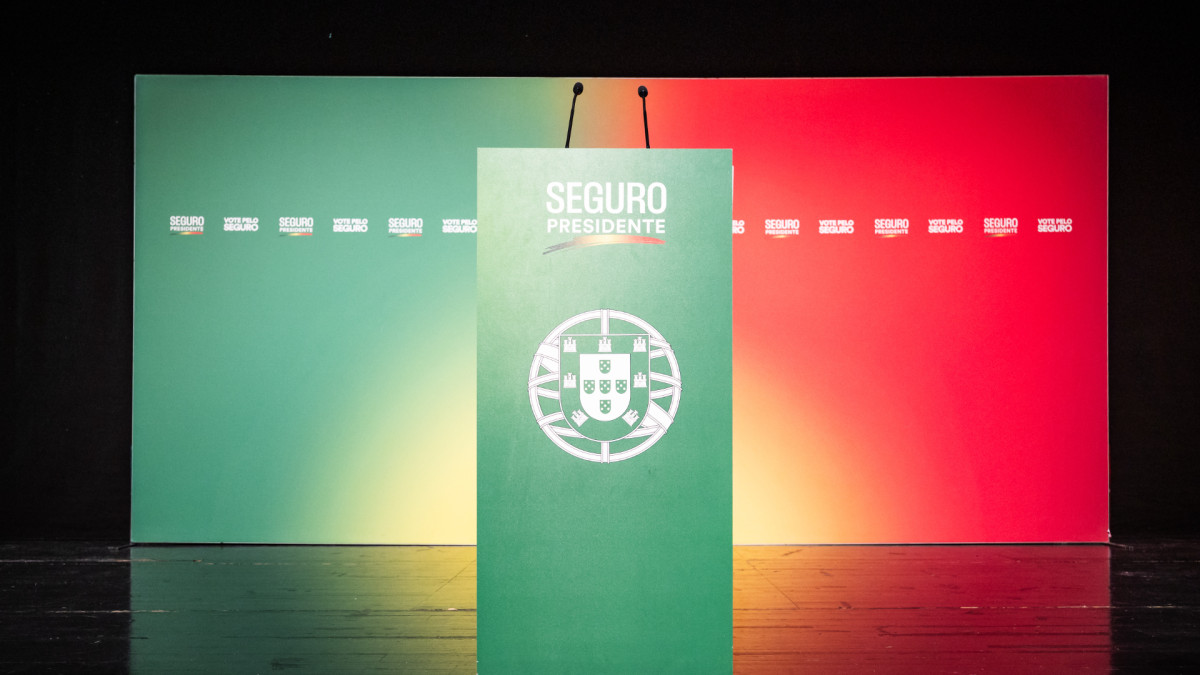
The lectern at candidate José António Seguro’s victory-night event after the first round of the presidential election.Henrique Casinhas / Zuma Press / ContactoPhoto
The second-round of the Portuguese Presidential election came with no surprises: as the Socialist António José Seguro was elected with nearly 67% of the votes (0.8% of the votes yet to be counted), in a race against populist radical right party leader André Ventura. Seguro won in all but two municipalities in the national territory. Turnout approached 50%, even as a series of storms hit the country in the previous weeks and postponed the election in some municipalities. The two contenders moved to the second-round after having received 31% and 24% of the votes respectively, just three weeks ago in the first-round, when as many as a record-high number of 11 candidates ran for Head of State.
It is worth noting that Seguro was not a frontrunner all along. He polled at an average of 10% for the first half of 2025, and 15% in the second semester. In the beginning of October, polls were giving him a 3% chance of winning, and only 5% chance of making it to the second-round. A former leader of the Socialist Party (2011-2014) until António Costa challenged his leadership and defeated him in the party’s first-ever open primaries, Seguro had since been on a rarely seen ten-year political hiatus. Some may have thought he was politically dead. During this period, he managed to remain remarkably insulated from media appearances and internal party politics until, in the Autumn of 2024, Pedro Nuno Santos, then leader of the Socialists, suggested him as a candidate. Seguro quickly confirmed that he was considering it. Yet, the party was hesitant to support him. In the early stages, some spoke against him, other names were put forward as potential candidates, but eventually no one else from the Socialist area really did step up. Still, the party resisted to declare their support until after the October 2025 Municipal elections.
How, then, did such an apparent underdog secured the largest number of votes any Presidential candidate has ever received in the history of Portuguese democracy? Perhaps those very same characteristics that played against him in the past were now playing in his favour. For one thing, he managed to maintain a somewhat neutral profile throughout the campaign, while other candidates frequently inflicted mutual damaged. In fact, the growth in his vote intentions concentrates specifically in the campaign period, where his long experience decisively contrasted with more "entrepreneurial" candidates.
Secondly, the current leadership of the Socialist Party recently adopted a cooperative stance towards the government that very much resembles Seguro’s own past leadership. Having suffered devastating losses in the last two parliamentary elections, the new leader, José Luís Carneiro, has decided to steer the party in the direction of "responsible and constructive opposition", very much aligning with Seguro’s profile.
At the same time, the successive victories of the Aliança Democrática in the last two parliamentary elections, the European Parliament election, and the Municipal election, may have contributed to creating an incentive for voters to counterbalance the distribution of power across the different institutions, discouraging a vote for a right-wing President like the favourite Luís Marques Mendes. Even if the President does not have the prerogative to block such an initiative, voters may have considered important to elect someone from the left at a time in which the mainstream and populist radical right hold together more than the necessary two-thirds of MPs to enact a Constitutional Revision.
The Portuguese President does not hold executive powers but it is also far from representing the purely ceremonial role of many semi-presidential regimes. The President can, for example, dissolve the parliament and call for elections, or declare state of emergency, and he is the Supreme Commander of the Armed Forces. In the eyes of voters, these may have been important aspects to consider given the context of high political instability, domestically and internationally.
In this context, at a time in which the left is still picking up the pieces from their defeats, and the main adversary is the radical right, a low-profile moderate that is perceived as a consensus builder garnishes broad cross-party appeal. Seguro positioned himself in a pivotal role between the left and the mainstream right, in a platform run on stability and protection of democracy.
While Prime Minister Montenegro (AD) did not endorse any of the second-round candidates, we should expect close institutional cooperation between offices. The consequences of the AD’s ambiguity regarding the radical right, however, remain to be assessed. Preliminary data suggest that more AD supporters voted for Seguro than for Ventura, but the door has now been left open: when, for some reason, they decide to switch their vote, they may recall that voting for Chega has conveyed as little rejection as voting for the Socialists.
It is worth noting that Seguro was not a frontrunner all along. He polled at an average of 10% for the first half of 2025, and 15% in the second semester. In the beginning of October, polls were giving him a 3% chance of winning, and only 5% chance of making it to the second-round. A former leader of the Socialist Party (2011-2014) until António Costa challenged his leadership and defeated him in the party’s first-ever open primaries, Seguro had since been on a rarely seen ten-year political hiatus. Some may have thought he was politically dead. During this period, he managed to remain remarkably insulated from media appearances and internal party politics until, in the Autumn of 2024, Pedro Nuno Santos, then leader of the Socialists, suggested him as a candidate. Seguro quickly confirmed that he was considering it. Yet, the party was hesitant to support him. In the early stages, some spoke against him, other names were put forward as potential candidates, but eventually no one else from the Socialist area really did step up. Still, the party resisted to declare their support until after the October 2025 Municipal elections.
"How, then, did such an apparent underdog secure the largest number of votes any Presidential candidate has ever received in the history of Portuguese democracy?"This reluctancy can perhaps be understood in the context of Seguro’s fall from grace from the Socialists leadership. His tenure was characterized by tenuous opposition to the harsh austerity measures implemented by the right-wing government during the troika period, and by a strong stance towards internal criticism growing from within the party’s parliamentary group. It is in this context that Costa imposes a landslide victory against him, with a more reformist left-wing agenda. Seguro was also largely perceived as an uncharismatic leader, lacking a defining political agenda, mobilizing appeal, and leadership traits.
How, then, did such an apparent underdog secured the largest number of votes any Presidential candidate has ever received in the history of Portuguese democracy? Perhaps those very same characteristics that played against him in the past were now playing in his favour. For one thing, he managed to maintain a somewhat neutral profile throughout the campaign, while other candidates frequently inflicted mutual damaged. In fact, the growth in his vote intentions concentrates specifically in the campaign period, where his long experience decisively contrasted with more "entrepreneurial" candidates.
Secondly, the current leadership of the Socialist Party recently adopted a cooperative stance towards the government that very much resembles Seguro’s own past leadership. Having suffered devastating losses in the last two parliamentary elections, the new leader, José Luís Carneiro, has decided to steer the party in the direction of "responsible and constructive opposition", very much aligning with Seguro’s profile.
At the same time, the successive victories of the Aliança Democrática in the last two parliamentary elections, the European Parliament election, and the Municipal election, may have contributed to creating an incentive for voters to counterbalance the distribution of power across the different institutions, discouraging a vote for a right-wing President like the favourite Luís Marques Mendes. Even if the President does not have the prerogative to block such an initiative, voters may have considered important to elect someone from the left at a time in which the mainstream and populist radical right hold together more than the necessary two-thirds of MPs to enact a Constitutional Revision.
The Portuguese President does not hold executive powers but it is also far from representing the purely ceremonial role of many semi-presidential regimes. The President can, for example, dissolve the parliament and call for elections, or declare state of emergency, and he is the Supreme Commander of the Armed Forces. In the eyes of voters, these may have been important aspects to consider given the context of high political instability, domestically and internationally.
"Ventura, and his party Chega, have been rocketing on all fronts since they made it into the parliament in 2019. Today, with 60 out of 230 MPs, they are the second largest party in Parliament."This brings us to consider not only who Seguro is, but who he is not. Emulating a pattern we routinely see in the French Presidential elections, many voters may have opted for Seguro in the second-round as a rejection of the populist radical-right candidate André Ventura. Ventura, and his party Chega, have been rocketing on all fronts since they made it into the parliament in 2019. Today, with 60 out of 230 MPs, they are the second largest party in Parliament. While Ventura certainly did not expect to win this election, he highlighted the significance of getting a higher vote share than the AD in the latest Parliamentary election, while also increasing his first-round support. Claiming to now lead the right, he aims for Prime-Minister.
In this context, at a time in which the left is still picking up the pieces from their defeats, and the main adversary is the radical right, a low-profile moderate that is perceived as a consensus builder garnishes broad cross-party appeal. Seguro positioned himself in a pivotal role between the left and the mainstream right, in a platform run on stability and protection of democracy.
While Prime Minister Montenegro (AD) did not endorse any of the second-round candidates, we should expect close institutional cooperation between offices. The consequences of the AD’s ambiguity regarding the radical right, however, remain to be assessed. Preliminary data suggest that more AD supporters voted for Seguro than for Ventura, but the door has now been left open: when, for some reason, they decide to switch their vote, they may recall that voting for Chega has conveyed as little rejection as voting for the Socialists.

Frederico Ferreira da Silva
Investigador posdoctoral en el Instituto de Ciencias Sociales de la Universidad de Lisboa
Doctor en Ciencias Sociales y Políticas (2019) por el Instituto Universitario Europeo de Florencia, Italia. Su investigación se centra en la opinión pública, las actitudes políticas y el comportamiento electoral.
Ahora en portada
17 de octubre de 2026
16 de octubre de 2026
Noticias relacionadas
Hace 35 semanas
Portugal elige presidente: así fue la victoria histórica del socialista Seguro sobre la derecha radical
Hace 36 semanas
Claves de las elecciones en Portugal: "El candidato de Chega compite por ser el líder de la derecha"
Hace 44 semanas
De Heritage a Vox: la política transatlántica que empieza a tejerse en España
Lo más leído