Domingo, 18 de octubre de 2026




LÓPEZ PLANA'S EUROPEAN COMPASS
How Sánchez could convert a global crisis into political capital
International crises have been known to generate "a temporary boost of confidence," opening "a unique strategic window" for leaders experiencing declines in domestic support. In this edition of Brújula Europea, Marc López Plana explores the extent to which Pedro Sánchez might use this ‘rally-round-the-leader’ effect to gain political advantage – precisely at a time when a new election might be called.

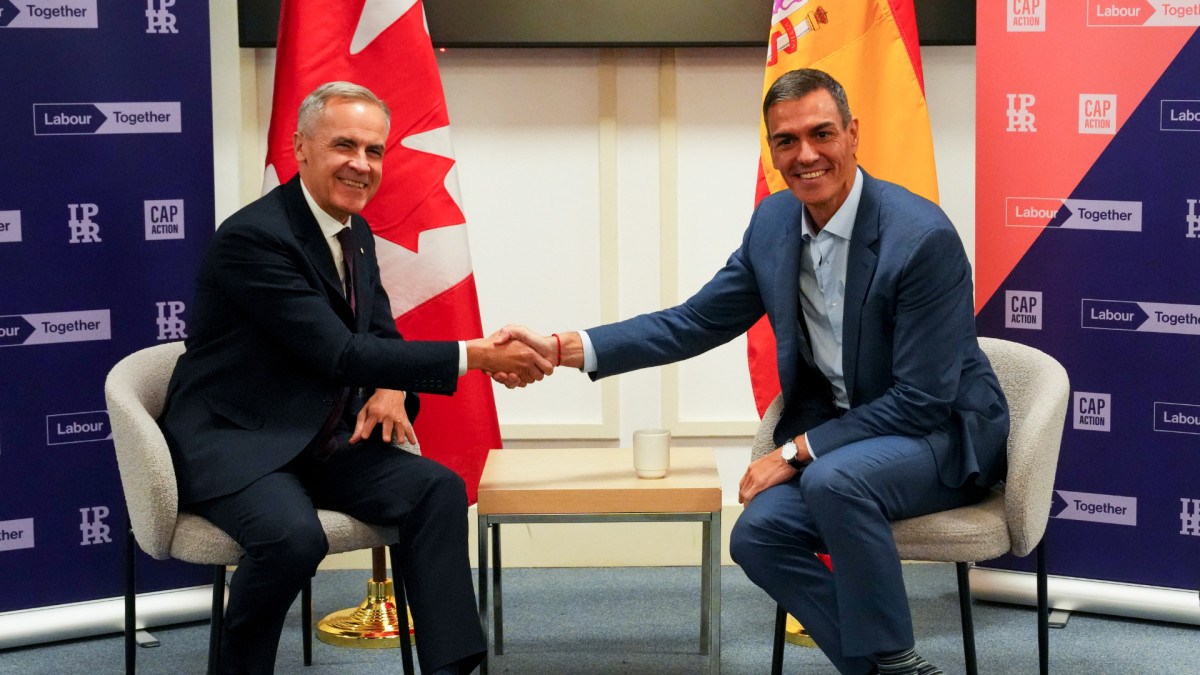
Canadian Prime Minister Mark Carney at a bilateral meeting with Spanish President Pedro Sánchez.Sean Kilpatrick / Zuma Press / ContactoPhoto
In Europe, few political leaders combine domestic political complexity with international relevance as markedly as Pedro Sánchez. Even as Spain’s political landscape passes through a phase of polarization and attrition, the prime minister has managed to occupy a space that few of his European counterparts do: that of visible leadership in the face of external threats and global strategic challenges. This positioning may be generating a classic political-science effect —the rally-round-the-leader, roughly the idea of rallying behind a leader— which, if managed well, can become a powerful electoral and strategic tool, perhaps the last one for Pedro Sánchez.
Leonard argues that Sánchez has shown "political courage" in addressing issues such as technology, where his discourse has been clearer and more proactive than that of other European leaders. Giuliano da Empoli, in the interview we published yesterday, complements this view by noting that Sánchez has probably been "the most vocal European leader" on technological risks and on the "predatory" dimension associated with large platforms, anticipating what others are only beginning to acknowledge. This approach —often isolated in comparison with his peers— reinforces the perception of a leader able to identify and manage global threats before they become domestic crises.
The effect, however, does not last long. The political-science literature and case analyses show that the rally-round-the-leader effect generally lasts from a few weeks to a few months, depending on the intensity of the threat, the leader’s communication, and the public’s assessment of their governing capacity. This is not enduring enthusiasm or ideological alignment. It is, rather, a temporary boost in confidence that can be used electorally or to reinforce institutional legitimacy. During this window, voters tend to prioritize stability over partisan debate, creating a uniquely strategic opening for leaders in a position of domestic fragility.

For Sánchez, the lesson and the data in the chart above are clear: if a public perception of external risk consolidates and is linked directly to his leadership, calling elections during that peak of confidence could turn a fleeting moment into lasting electoral support.
The strategy is not only about capitalizing on threat, but about defining the narrative of Spain as a relevant actor in the international arena. Making different decisions projects Sánchez as a leader capable of managing complex risks, strengthening public confidence in his figure. It is precisely this capacity that activates the rally effect, and what makes it possible for a government worn down at home to turn an adverse context into a political opportunity.
Ultimately, Sánchez appears as a politician who combines resilience, strategic anticipation, and an ability to navigate complex tensions both at home and abroad. His approach to Trump, technology, and migration, together with the way he has projected Spain’s international policy, suggests that leadership in the face of external threats can be a decisive electoral asset. The question is no longer whether Sánchez can benefit from a rally-round-the-leader, but whether he can identify and synchronize the precise moment when public perception, the evolution of the international context, and domestic politics converge. International cases, from Carney in Canada to Mueller’s classic studies in the United States, show that leaders who achieve this synchronization can redefine the political balance in their favor, turning temporary momentum into stability and lasting legitimacy.
At a time when Europe is debating the unity of the Western alliance and technological security is emerging as a central axis of geopolitics, Sánchez’s ability to anticipate, communicate, and capitalize on these dynamics could shape not only his political future, but Spain’s position in the international arena.
"The concept of 'rally-round-the-leader' describes a temporary pattern of support that leaders receive when an international crisis triggers a public perception of risk and a need for unity."Coined by John Mueller in the 1970s, the term describes a temporary surge of support that leaders receive when an international crisis activates, in public opinion, a sense of risk and a need for unity. In Spain’s case, the crisis arrives through European frictions with the United States and the situation in Ukraine, both of which offer fertile ground for international leadership to translate into domestic political capital. Sánchez, unlike many of his European social-democratic peers, has adopted a distinctive stance. Mark Leonard, director of the European Council on Foreign Relations (ECFR), in a conversation to be published this week in Agenda Pública, has stressed that, in the face of Trump, his tone and strategy diverge from the pragmatic management pursued by other European countries.
Leonard argues that Sánchez has shown "political courage" in addressing issues such as technology, where his discourse has been clearer and more proactive than that of other European leaders. Giuliano da Empoli, in the interview we published yesterday, complements this view by noting that Sánchez has probably been "the most vocal European leader" on technological risks and on the "predatory" dimension associated with large platforms, anticipating what others are only beginning to acknowledge. This approach —often isolated in comparison with his peers— reinforces the perception of a leader able to identify and manage global threats before they become domestic crises.
The effect, however, does not last long. The political-science literature and case analyses show that the rally-round-the-leader effect generally lasts from a few weeks to a few months, depending on the intensity of the threat, the leader’s communication, and the public’s assessment of their governing capacity. This is not enduring enthusiasm or ideological alignment. It is, rather, a temporary boost in confidence that can be used electorally or to reinforce institutional legitimacy. During this window, voters tend to prioritize stability over partisan debate, creating a uniquely strategic opening for leaders in a position of domestic fragility.
"Foreign policy and the management of global risks can become strategic assets. The perception of external threat can be transformed into political capital if a leader projects control, clarity, and proactivity. Sánchez has positioned himself at that intersection."Foreign policy and the management of global risks can become strategic assets. The perception of external threat can be transformed into political capital if a leader projects control, clarity, and proactivity. Sánchez has positioned himself at that intersection. According to Leonard, his tone and decisions have marked differences from Europe’s dominant approach on issues such as Trump, migration, and technology, placing Spain in an active and visible role while other governments opted for a more cautious or neutral approach. Da Empoli adds that, in particular, technology is emerging as the central issue that other European leaders tend to relegate, and that Sánchez has tackled it with a level of awareness and visibility that reinforces both his international profile and his image of strategic competence.
Cases of crisis transformed
The Canadian example of 2025 illustrates how a rally can translate into a concrete electoral advantage. After Justin Trudeau’s resignation, Mark Carney took over as leader of the Liberal Party amid heightened tensions with the United States, centering his campaign on the defense of Canadian sovereignty against external threats. He called early elections just weeks later, aligning the vote with the moment when public perceptions of his crisis leadership were at their peak. The result was an electoral surge that allowed his party to overtake the Conservatives and remain in government, showing how synchronizing a rally with the electoral calendar can turn temporary momentum into a tangible advantage. "In just seventy days, Mark Carney had risen by more than twenty-five points in the polls," noted Nacho Molina, senior researcher at the Elcano Institute, in his analysis in Agenda Pública.For Sánchez, the lesson and the data in the chart above are clear: if a public perception of external risk consolidates and is linked directly to his leadership, calling elections during that peak of confidence could turn a fleeting moment into lasting electoral support.
The strategy is not only about capitalizing on threat, but about defining the narrative of Spain as a relevant actor in the international arena. Making different decisions projects Sánchez as a leader capable of managing complex risks, strengthening public confidence in his figure. It is precisely this capacity that activates the rally effect, and what makes it possible for a government worn down at home to turn an adverse context into a political opportunity.
"Mishandling a crisis, the perception of opportunism, or the eclipsing of domestic problems could quickly reverse any gains in popularity."The effect, however, is delicate and requires precision. Mishandling a crisis, the perception of opportunism, or the eclipsing of domestic problems can quickly reverse any gains in popularity. That is why synchronization, clarity of narrative, and consistency in international action are decisive. Sánchez, according to Leonard and Da Empoli, seems aware of this and has developed an approach that integrates technological risks, migratory pressure, and international tensions, projecting an image of competent and strategic leadership even as other European leaders remain more cautious.
Ultimately, Sánchez appears as a politician who combines resilience, strategic anticipation, and an ability to navigate complex tensions both at home and abroad. His approach to Trump, technology, and migration, together with the way he has projected Spain’s international policy, suggests that leadership in the face of external threats can be a decisive electoral asset. The question is no longer whether Sánchez can benefit from a rally-round-the-leader, but whether he can identify and synchronize the precise moment when public perception, the evolution of the international context, and domestic politics converge. International cases, from Carney in Canada to Mueller’s classic studies in the United States, show that leaders who achieve this synchronization can redefine the political balance in their favor, turning temporary momentum into stability and lasting legitimacy.
At a time when Europe is debating the unity of the Western alliance and technological security is emerging as a central axis of geopolitics, Sánchez’s ability to anticipate, communicate, and capitalize on these dynamics could shape not only his political future, but Spain’s position in the international arena.
Ahora en portada
17 de octubre de 2026
16 de octubre de 2026
Noticias relacionadas
Hace 38 semanas
Pedro Sánchez podría convertir la crisis global en capital político
Hace 58 semanas
Virginia Barcones y Pilar Bernabé: "Las emergencias climáticas simultáneas exigen sistemas preparados y coordinados"
Hace 100 semanas
Crisis de la DANA: la negligencia del PP de Mazón ha relanzado a Vox
Lo más leído