Viernes, 16 de octubre de 2026




LÓPEZ PLANA'S EUROPEAN COMPASS
Spain in Brussels: an improbable dialogue reveals that Europe may be starting to resemble Spain a little too much
In this week’s European Compass, Marc López Plana — editor and director of 'Agenda Pública' — considers how constructive dialogues between Spanish Socialists and the Partido Popular within the European institutions are in contrast with the evident polarization of Spain’s national politics. He also warns of a growing risk of "Spanishization" in European politics, underscoring Spain’s strategic responsibility at a time when the consensus that has sustained the European project is showing signs of weakness.

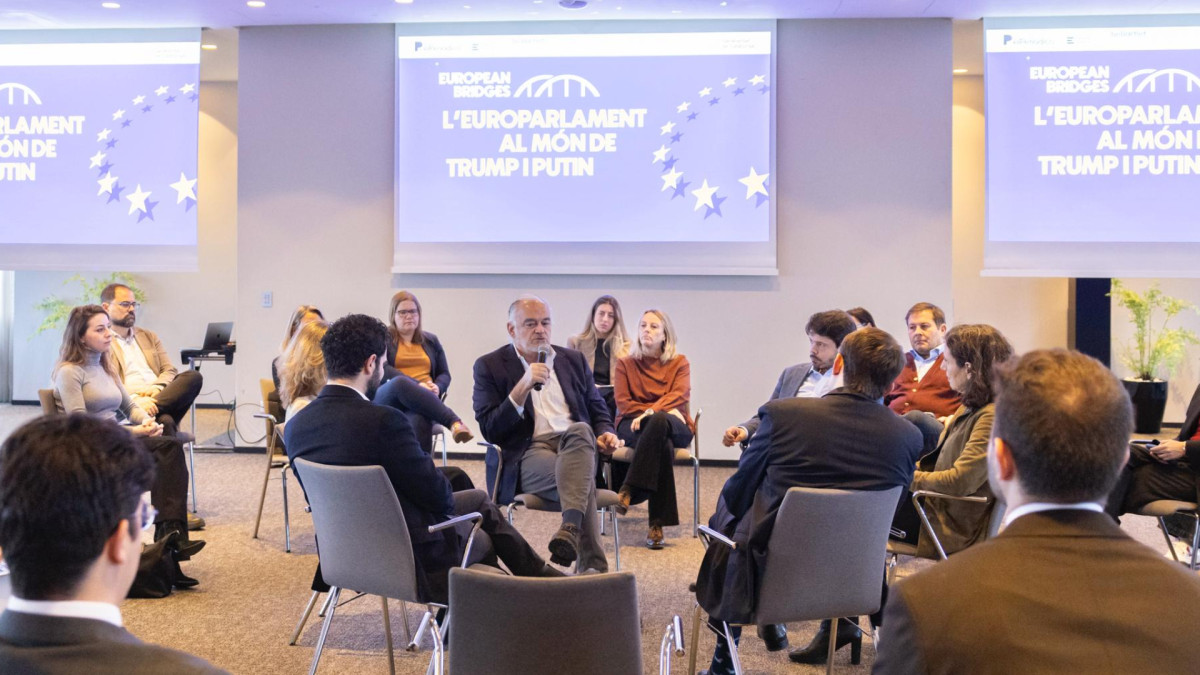
Marc López Plana, editor and director of 'Agenda Pública', at an event alongside MEPs Esteban González Pons and Javi López.Image courtesy
While politics in Spain are immersed in a near-perpetual state of tension, there remains an oasis where conservatives and leftists can speak without need of mediation: the city of Brussels. There in Brussels, one doesn’t hurl insults; one negotiates — and the contrast with Madrid is as clear as it is disconcerting.
However, as European analysts often suggest, Spain continually punches below its weight and behaves as if it can’t quite believe its own strength. Other countries (such as Italy, with special discipline) coordinate their representatives so as to maximize political clout, while Spain tends to transfer the fractures of its national policy to the European sphere. One MEP summarized the irony: Italy Europeanizes its domestic policy; Spain nationalizes the European Union.
And yet this logic changes when business interests come into play. In Brussels, Spain’s Socialists and PP representatives routinely cooperate to defend companies, productive sectors, and common economic priorities. Businesspeople seeking support soon discover that consensus has already been built among the Spaniards. "The problem isn’t Spain," they usually hear. "It’s the other Member States who need to be spoken with." In this way, Brussels showcases something that Madrid often forgets: cooperation isn’t ideologically impossible; indeed, it’s institutionally necessary.
The result has been an ambiguity previously unknown in Brussels: it is no longer very clear who governs Europe. That uncertainty makes decisions less predictable, undermines the role of Parliament, and brings politics at European scale closer to the confrontational scheming commonly seen in some national capitals. Little by little, Europe has been learning to speak the language of blocs.
On top of that political erosion is an equally troubling institutional drift. The debate around the next Multiannual Financial Framework is pointing at the renationalization of certain key policies. Replacing Union-wide programmes (such as agriculture or cohesion) with transfers to be managed in the capitals only strengthens an inter-governmental logic that in turn reduces the roles of the European Commission and Parliament. For decentralized countries such as Spain, the impact would be double: less Europe also means fewer regions. The ambition of achieving a "Europe of Regions" is being eclipsed by the return of the nation state.
That single reference to the EU is made to highlight frictions and inefficiencies, and the message is clear: the administration in Washington is more comfortable dealing with national capitals than with a cohesive Europe. In a world structured by the U.S. versus China, an integrated and regulatory EU seeking greater autonomy becomes an irritant. Old and persistent temptations arise: bilateral instead of communitarian, nation states instead of shared institutions, functional fragmentation instead of collective action. A 19th-century fantasy transposed on a 21st-century continent.
The collapse of the old equilibrium (U.S. security, Russian energy, Chinese trade) is forcing Europe to make some uncomfortable decisions. Today, unity is less an aspiration than an operational necessity. Fragmentation doesn’t restore sovereignty but in fact dilutes it.
And here we find the final paradox. Spain, despite its domestic polarization, remains one of few countries capable of connecting the great European political families. At this critical moment for the EU, Spain can act as a bridge, but with one pre-condition: it cannot export to Brussels the dysfunctions that paralyze its national politics.
Should Europe wind up resembling Spain too much (rigid blocs, unstable majorities, broken consensus), then the costs will be more than institutional — they’ll also be strategic, quietly benefiting those who prefer a Europe that is weaker, less cohesive, and easier to manipulate from the outside.
"The consensus between center-right and center-left that has served for decades as the dependable axis of the European project has been weakening"Nonetheless, this exception to the rule is beginning to erode. In a recent conversation between two Spanish MEPs (Esteban González Pons of the PP and Javi López of the Socialists) there emerged a shared concern: Europe is starting to adopt certain features that are all too familiar in Spain. The consensus between center-right and center-left that has served for decades as the dependable axis of the European project has been weakening, along with the political stability that long distinguished Brussels from many of Europe’s national capitals.
Advantages not taken
I’ve remarked on other occasions that Spain has the rare ability to decisively influence Europe’s two great political families; only Germany can be said to occupy a comparable position. In the European People’s Party, the key delegations are from Germany, Poland, and Spain; in the Socialist group, they are Italian, German, and Spanish. This positioning is the result of Spain’s deeply pro-European transition and its constant political investment in the EU institutions.However, as European analysts often suggest, Spain continually punches below its weight and behaves as if it can’t quite believe its own strength. Other countries (such as Italy, with special discipline) coordinate their representatives so as to maximize political clout, while Spain tends to transfer the fractures of its national policy to the European sphere. One MEP summarized the irony: Italy Europeanizes its domestic policy; Spain nationalizes the European Union.
And yet this logic changes when business interests come into play. In Brussels, Spain’s Socialists and PP representatives routinely cooperate to defend companies, productive sectors, and common economic priorities. Businesspeople seeking support soon discover that consensus has already been built among the Spaniards. "The problem isn’t Spain," they usually hear. "It’s the other Member States who need to be spoken with." In this way, Brussels showcases something that Madrid often forgets: cooperation isn’t ideologically impossible; indeed, it’s institutionally necessary.
"At the European level, the interests of Spanish companies don’t often clash with Spain’s political parties but rather with the interests of other Member States"In the business arena, cooperation between the PP and PSOE is crucial. At the European level, the interests of Spanish companies don’t often clash with Spain’s political parties but rather with the interests of other Member States, whose regulatory, industrial, or commercial priorities can be quite divergent. In Brussels, internal divisions aren’t expressed through ideology but through a country’s strategy.
A less European Europe
This issue can be better appreciated by looking at the evolution of the overall system. Automatic responses that stabilized European politics for decades are now ceasing to work. The cordon sanitaire that marginalized the extremes has become less effective, while the informal grand coalition between Social Democrats and the EPP has lost its power to guarantee. Today’s European People’s Party holds a dominant position that permits it to assemble majorities as appropriate, whether to its left or to its right.The result has been an ambiguity previously unknown in Brussels: it is no longer very clear who governs Europe. That uncertainty makes decisions less predictable, undermines the role of Parliament, and brings politics at European scale closer to the confrontational scheming commonly seen in some national capitals. Little by little, Europe has been learning to speak the language of blocs.
On top of that political erosion is an equally troubling institutional drift. The debate around the next Multiannual Financial Framework is pointing at the renationalization of certain key policies. Replacing Union-wide programmes (such as agriculture or cohesion) with transfers to be managed in the capitals only strengthens an inter-governmental logic that in turn reduces the roles of the European Commission and Parliament. For decentralized countries such as Spain, the impact would be double: less Europe also means fewer regions. The ambition of achieving a "Europe of Regions" is being eclipsed by the return of the nation state.
External pressure and the Spanish paradox
This trend toward withdrawal coincides with a global context increasingly hostile to European integration. The new National Security Strategy published by the U.S. last Friday offers a stark illustration; it mentions Europe some 50 times (more than any other region), but the European Union is invoked only once — and not in praise.That single reference to the EU is made to highlight frictions and inefficiencies, and the message is clear: the administration in Washington is more comfortable dealing with national capitals than with a cohesive Europe. In a world structured by the U.S. versus China, an integrated and regulatory EU seeking greater autonomy becomes an irritant. Old and persistent temptations arise: bilateral instead of communitarian, nation states instead of shared institutions, functional fragmentation instead of collective action. A 19th-century fantasy transposed on a 21st-century continent.
"European divisions are being actively encouraged from the outside, while the consensus that sustained integration is being weakened from within"The coincidence is disturbing. European divisions are being actively encouraged from the outside, while the consensus that sustained integration is being weakened from within. The "Spanishization" of European politics isn’t simply an internal phenomenon but a strategic vulnerability. A fragmented EU is easier to pressure on trade, more dependent on security, and less able to define its own positions vis-à-vis China, Russia, or even the U.S.
The collapse of the old equilibrium (U.S. security, Russian energy, Chinese trade) is forcing Europe to make some uncomfortable decisions. Today, unity is less an aspiration than an operational necessity. Fragmentation doesn’t restore sovereignty but in fact dilutes it.
And here we find the final paradox. Spain, despite its domestic polarization, remains one of few countries capable of connecting the great European political families. At this critical moment for the EU, Spain can act as a bridge, but with one pre-condition: it cannot export to Brussels the dysfunctions that paralyze its national politics.
Should Europe wind up resembling Spain too much (rigid blocs, unstable majorities, broken consensus), then the costs will be more than institutional — they’ll also be strategic, quietly benefiting those who prefer a Europe that is weaker, less cohesive, and easier to manipulate from the outside.
Ahora en portada
16 de octubre de 2026
16 de octubre de 2026
16 de octubre de 2026
Lo más leído