Sábado, 17 de octubre de 2026



AGENDA PÚBLICA EU
Ana Palacio: "The European institutions have not yet come to terms with the magnitude of global change"
The world "has changed" and the European Union must adapt and step up, according to Ana Palacio – Spain’s Minister of Foreign Affairs from 2002 to 2004 – and MEP Adrián Vázquez of the Partido Popular. In this conversation with Rodrigo Pinedo, vice president of 'Agenda Pública', they spoke with regret of setbacks to the rule of law and advised that 'double standards' not be applied to individual Member States based on the 'color' of their government. "A Commission that is seeking to survive politically within the Council will always have an easier time acting in opposition to the ugly ducklings," Vázquez warned.
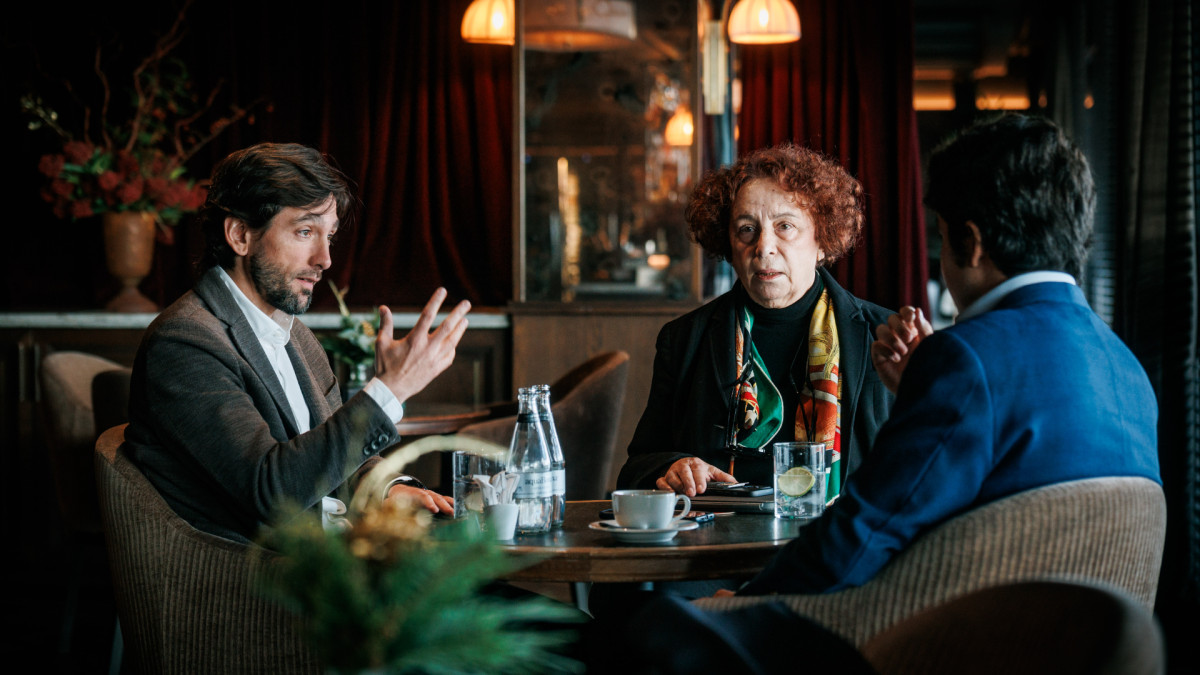
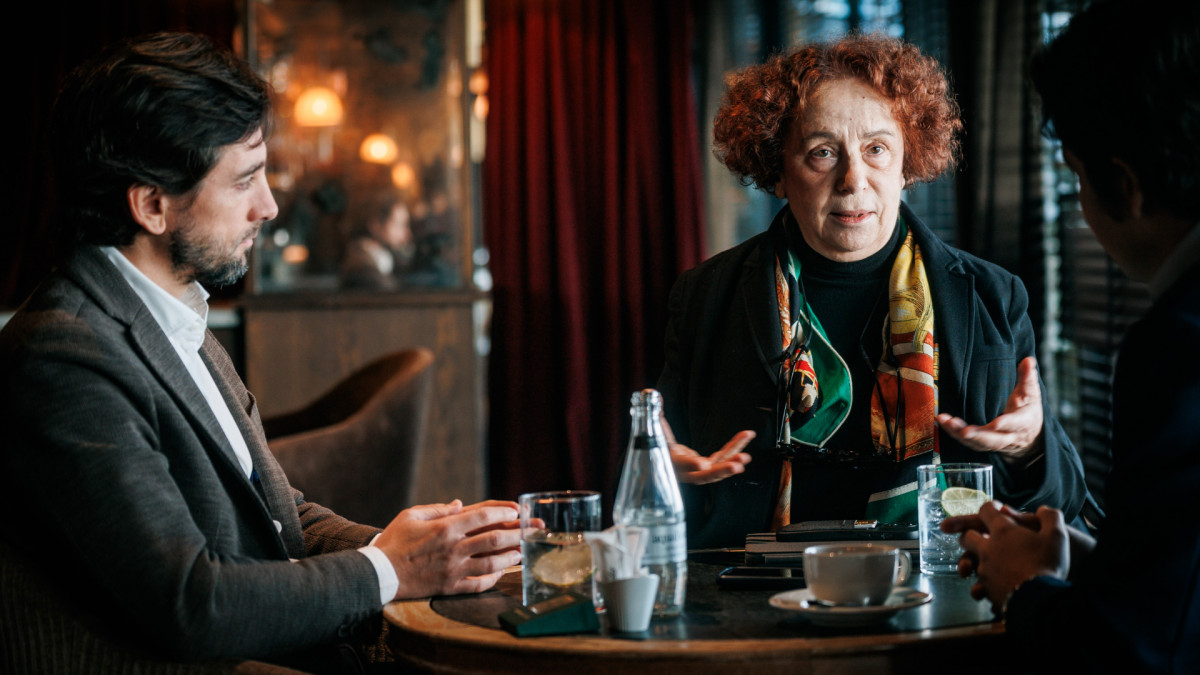
Vázquez and Palacio speak with Rodrigo Pinedo, vice president of 'Agenda Pública'.Agenda Pública / Tania Sieira
Final days of November. It’s beginning to get cold in Madrid, but the public debate is very heated. In the Club Financiero Génova, very near the Supreme Court and Audiencia Nacional, Agenda Pública brought together ex-Minister of Foreign Affairs Ana Palacio and MEP Adrián Vázquez of the Partido Popular to calmly converse about the present and future of the European project.
Both are quite familiar with the EU institutions and share deep concern around the erosion of the rule of law in numerous Member States. Faced with the "growing tendency to concentrate power in the executives" — in Palacio’s words — Vázquez asks that the Commission not apply a ‘double standard’ or focus solely on ‘ugly ducklings’ but that it act also against abuses from "governments formed by respected political parties, center-left or center-right, on which its institutional stability depends."
Both agree on the need to adapt European architecture to the current "unprecedented" global scenario. In Palacio’s opinion, "we need to adapt our decision-making to an environment where problems require real-time responses." She asserts that the combination of effectiveness and respect for the rule of law must be rethought. "We cannot continue to act as in the era of globalization, when international consensus was in force and Europe enjoyed a clear privilege."
Ana, you served as an MEP in the fourth and fifth legislatures. How do you remember that Parliament, and how is the current one different?
Ana Palacio (A. P.): Honestly, I’m not very interested in discussing memories; what interests me is the world today. The European Parliament has evolved. Back then, it was an institution with many aspirations but far fewer powers.
Today it’s a chamber with fundamental powers, but without full parity. And yet I’ve noticed one constant since 1994 – the Parliament often does a poor job of measuring the consequences of its actions. By getting swept up in power and competition, it loses track of the general interest. I’m talking about the institution itself, but also obviously the political groups that operate within it. Their behavior hasn’t changed.
But yes, many things have changed over time. When I arrived, Parliament was just coming to grips with the powers derived from Maastricht. Many of its current powers arrived subsequently, through the Court of Justice, and only later were those consolidated in the Treaties. But the essential institutional dynamics remain very similar.
Nonetheless, I do hold a special memory of those early years. For Spaniards of my generation, Europe was a cause. We came out of Francoism and the slogan that "Spain is different," and what we wanted was precisely to stop being different and be like others. There were very different profiles in Parliament then, but even so, there was a sense of community. Spain was present — it counted, it participated. There was a very strong sense of belonging, which those who didn’t live through the previous era might be incapable of feeling in the same way.
And how would you describe the current Parliament?
Adrián Vázquez (A. V.): What was an aspiration then is today a reality, for both good and bad. During the first two decades of the 21st century, Parliament remained stable, thanks to majorities held by the European People’s Party and the Socialist Party. But the political instability in today’s Europe is reflected in the European Parliament. In 2019, it became necessary for the first time to bring together liberals and Greens in order to politically legitimize the von der Leyen Commission.
A. P.: That’s always been the case. What has changed is the discourse about the European majority. I don’t believe in ‘sanitary cordons’ — I believe that if you’ve got the strength of an elephant, you shouldn’t act like a hinge. In this Parliament, the PP tries to occupy both roles, and that generates tensions. And something similar has been happening on the left in recent months: the Socialist Group dominates, and it drags along the Greens in particular, often defending positions with a kind of alleged moral superiority — for example, in the matter of energy, which clearly doesn’t appear in any treaty.
But isn’t there also a challenge from the right? How do you explain the rise of openly anti-European forces?
A. P.: Yes, of course. Those forces arise precisely due to backsliding around the rule of law. Europe has three anchors — freedom, prosperity, and the rule of law — all on the same level. The rule of law acts as the element that unites freedom and prosperity.
For younger generations today, many things that were absolutely normal for previous generations are no longer guaranteed — for example, buying a house if you have a full-time job and some stability. When that basis of predictability disappears, frustration and disaffection arise.
I recently read a survey suggesting that around 25% of young Spaniards, Italians, and French would have no problem living under autocracy so long as it gave them guarantees of prosperity. That is, they would be willing to exchange freedoms for material security. That should worry us enormously.
Moreover, there’s a geopolitical and intellectual element in the background. A recent book by Dan Wang argues that two models currently coexist: the Chinese ‘engineering model’, which focuses on doing, executing, producing; and a Western model trapped by legal hypertrophy. Wang maintains that we don’t have rule of law but rather ‘rule of lawyers’. And that phrase, which the well-known historian Niall Ferguson repeated in a popular podcast, in reference to the United States, seems correct: our decisions are in danger of suffocation by layers and layers of trials and lawyers.
That danger was also observed in Europe’s expansion to the East. It was said that we couldn’t refuse the incorporation of countries that had lived under autocratic regimes, and that’s perfectly understandable from a historical and moral perspective. But the expansion fostered institutional imbalances that are still noticeable today.
In Portugal — and something similar happened in Spain — it was decided not to enter deeply into this debate. Portugal undertook a serious study on how enlargement might affect the EU in terms of cohesion funds and structural funds; Spain didn’t follow suit. That study was presented to the Parliament of Portugal, but even so, they voted unanimously for enlargement. We who had suffered under dictatorship — Salazar in Portugal, Francoism in Spain — felt that we couldn’t say no to other countries emerging from autocracy who wanted to integrate into the European family.
By this I mean that, clearly, the Eastern wave of incorporation hasn’t had the same results in every case. So we return to the rule of law: Spain didn’t have to change a single law to enter the EU, whether in the social or administrative spheres. Unlike the various technocratic governments, Spain had already built a solid administrative network. There was no Constitution or political rights in that era, but there was functional administrative law, property and commercial registries, specific procedures... things that didn’t exist in the enlargement nations. In many of those countries, there were no reliable records or basic administrative structures, and that kind of institutional tradition can’t be improvised. Spain had been working on it since the Stabilization Plan of 1958.
In such a scenario, where the separation of powers is blurred and power is concentrated in the executive, are we condemned to permanent clashes? In that context, do we need further broadening or deepening of the European project?
A. V.: The report on the rule of law issued in 2020 was precisely thanks to this authoritarian drift and the increasingly blurred separation of powers. It’s not just a question of Poland and Hungary, although those are the paradigmatic examples; the Court of Justice has already made twelve judgments establishing jurisprudence on what is or isn’t the rule of law in Europe.
If we take the European Parliament as an example, the current legislative instability demands that governments in the Council be strong. It’s a mandate of strong national governments, whereas the previous mandate clearly favored the Parliament. That balance has been broken.
With the rule of law, the simple fact that we need country-by-country monitoring already indicates that something is wrong. But there’s another important element: if we look at the infringement proceedings initiated by the Commission, which are numerous, we see a double standard. Certain proceedings with some countries seem more permissive than others, because in the end, the Commission serves as a political executive. And that’s where I think the system starts to enter into danger.
There’s a double standard, and I’m not just talking about Spain, although the Spanish situation is clear: there have been serious violations of the rule of law in this legislature. A Commission that is seeking to survive politically within the Council will always have an easier time acting in opposition to the ‘ugly ducklings’ than against governments formed by respected political parties, center-left or center-right, on which its institutional stability depends.
That’s why I believe that the great battle now — even if it generates a political crisis — is to compel the Commission to also act against those respectable, responsible, pro-European governments that form part of the traditional political families. It can’t only act against those who are viewed as the bad guys, or peripheral, or that make us uncomfortable. If we don’t break that pattern, the rule of law will continue to weaken.

A. P.: At a recent panel discussion, I was the only one who pointed out to the moderator that he shouldn’t just mention the well-known ‘ugly ducklings’. The concentration of power into the executive also occurs in other Member States, which he avoided mentioning for political reasons. Nothing else needed to be said; everyone understood what I meant.
Concerning the debate on institutional balance, I agree that we’re living in a moment clearly dominated by inter-governmental relations. At the same time, however, the Commission has accumulated significant powers that have no legal basis. This has happened because the world has changed, and institutions have had to react quickly. The turning point was the pandemic. During COVID-19, the Commission acted without explicit legal support but with tacit acceptance by the States, because that was the only way to deal with situations that were disrupting the internal market, such as getting vaccines, or the refusal to treat patients simply because they had crossed a border. That was incompatible with the basic functioning of the Union.
My concern is that the European institutions have not yet come to terms with the magnitude of global change. We’re in an unprecedented situation, and we need to adapt our decision-making to an environment where problems require real-time responses. The combination of effectiveness and respect for the rule of law must be rethought. We cannot continue to act as we did in the old era of globalization, when international consensus was in force and Europe enjoyed a clear privilege.
Mark Leonard has described this transformation very well. For years he argued that European regulatory power was envied and admired around the world. That made sense in the prior context, because Europe’s soft power worked. But today, those conditions have vanished. Even so, we’ve conveyed to our citizens the idea that we still have a comparative advantage, although in reality the international environment no longer responds to that scheme.
Joseph S. Nye, the ideologue of soft power, recently died. Is soft power also dead?
A. P.: No, soft power isn’t dead. It’s still fundamental, and one of the biggest problems we face is that the current U.S. administration undervalues it — when not openly despising it completely. The U.S. has thrown away an essential part of its international influence.
Soft power remains an instrument in which Europe must place firm trust. In a world structured around two great powers that tend to create zones of influence, there’s a real opportunity for the European Union. Many countries affected by this redesign prefer not to be framed in either of these areas. They’re looking for an alternative system based on rules and the rule of law. That’s where Europe can offer something different, and where soft power continues to have extraordinary value. We Europeans are recognized as having the know-how for negotiating, for overcoming conflict through agreements and rules.
A. V.: As Ivan Krastev mentioned in a recent interview, the problem with the European elections is that Europe behaves like a bunch of vegetarians sitting at a table full of carnivores. He points out that what we need is to become omnivorous. That image nicely describes the disconnect between the way Europe sees itself and the kind of world in which it’s currently operating.
In just ten years, the Commission has gone from an institution that set the global agenda to a government geared to face crises, which can erupt at any time. That evolution is real. And if there’s a movement of voters toward strong governments, then we have to transform as well, because we’re living in a time where the U.S. and China are very clear examples of governments that act quickly and flexibly in response to an unstable world.
What’s worrying is that neither European citizens nor a portion of the political class seem to be aware of the decade we’re now entering. If we’re not able to sustain the European institutions in this new context, then in five, ten, fifteen years we could be looking at a very profound change in the European project.
The priority now is for the system to survive this political wave. For that to happen, responsibility is needed, but also flexibility, which I find lacking in many MEPs and in various national governments that tend to huddle in on themselves and look for external enemies. That kind of withdrawal favors authoritarian dynamics and brings us back, once again, to the debate on the rule of law, because erosion of the rule of law is directly related to that closure around identity.
A. P.: What we can’t do is address these issues from dogmatism. If we accept that our system is based on three legs — prosperity, freedom, and the rule of law — when we talk about prosperity, we’re also talking about the social State, but de-ideologized. We have to get grounded, leave behind the speeches and analyze our concrete problems. Housing for young people, for example. We don’t need stories or theories. We need to see what works in real practice.
We have to abandon rhetoric and ideologies and be fully aware of what’s changing around us. And if everything is changing, then we have to change accordingly. There’s no alternative.
One very clear example is Mercosur. We’ve been negotiating that for nearly 30 years, 25 on an official basis. It’s a fundamental agreement for Spain, since it refers to our natural area of international relations. We’ve achieved what’s probably the best possible language, with all the guarantees. But if instead of seeking a perfect agreement we had opted for slightly less ambitious rules — and, to be clear, a broader view of what’s truly at stake — then that agreement would likely have already been in place for years. That would have allowed us to exert our influence earlier, move the agenda, defend multilateralism and human rights and our values from an active position. We would have been generating real effects for a long time now, instead of still waiting.
The world has changed, and we no longer operate in the environment that we used to. The rational attitude is to recognize that fact and to ask ourselves what we should change. And yet, when attempts are made to take a timid step forward, such as Omnibus 1, the Parliament immediately buries it. That reaction demonstrates that a part of the system continues to act as if nothing has changed, when everything indicates otherwise.
A. V.: Buried by 31 Socialist MEPs who decided not to respect the line agreed to within the von der Leyen majority — a majority that we’d negotiated precisely in order to give stability to the institutions. That rupture has forced the Popular Party to seek support from the so-called ‘Venezuelan majority’. And here the problem of political responsibility arises.
I don’t want to turn this into a partisan debate, but it’s clear that the Socialist Group — and the European social democratic family in general — has not yet come to terms with its real situation, electorally or socially. They keep to a high moral ground that prevents them from clearly seeing the kinds of challenges we’re facing. Furthermore, they’ve been unable to maintain the voting discipline that guarantees institutional stability. Rather than aligning themselves with a necessary agreement, they prefer to put at risk the continuity of the Commission and, along with it, the solidity of the overall Union as a global actor.
Voting against Omnibus 1 might seem like a minor gesture, but that directive represented a very important step forward in starting to adapt our legislative framework to the world now before us. Then it was blocked from within the very majority that it supposedly wants to protect.
 What should the European Union do right now? If you were in Ursula von der Leyen’s shoes, what would be your number-one priority?
A. P.: If it were up to me to decide, the first thing I’d do would be to sit all the general directorates down, then force them to work together. Go over everything from scratch and, above all, break down internal administrative boundaries. I’m well acquainted with the energy portfolios, and there are environmental policies that clearly clash head-on with energy policies; each defends its own territory, which makes advances impossible. So the first task would be precisely that: to align those forces.
I would convene a group meeting, an internal town hall, and tell them clearly: "The world has changed, and what we’ve done so far, although very valuable, is no longer enough." The European Union has projected enormous regulatory power, and that remains an asset if properly understood. But we need to simplify, eliminate duplication, and support our companies not with more subsidies but by creating a framework that encourages research, innovation, and the ability to compete.
Basically, I’m talking about what the Draghi report has already said. Still, according to the best trackers, only 14% of that report’s recommendations are being applied, although more than a year has passed since it was published. We have to identify what needs simplifying and to act accordingly. We also have to establish mechanisms for intervention when the zeal of one general directorate or another prevails over the resolution of problems.
Energy offers the clearest example, because that’s a front where all tensions converge: geopolitics, the internal market, climate, industry. It’s a point at which the current system is obviously not aligned, where we need real coordination of policies.
A.V.: If I had to sum it up in a headline, I’d say we need a roadmap for the system to survive the next crisis. We’ve built a system so rigid that it often works against its own objectives.
Thank you very much.
Both are quite familiar with the EU institutions and share deep concern around the erosion of the rule of law in numerous Member States. Faced with the "growing tendency to concentrate power in the executives" — in Palacio’s words — Vázquez asks that the Commission not apply a ‘double standard’ or focus solely on ‘ugly ducklings’ but that it act also against abuses from "governments formed by respected political parties, center-left or center-right, on which its institutional stability depends."
Both agree on the need to adapt European architecture to the current "unprecedented" global scenario. In Palacio’s opinion, "we need to adapt our decision-making to an environment where problems require real-time responses." She asserts that the combination of effectiveness and respect for the rule of law must be rethought. "We cannot continue to act as in the era of globalization, when international consensus was in force and Europe enjoyed a clear privilege."
Ana, you served as an MEP in the fourth and fifth legislatures. How do you remember that Parliament, and how is the current one different?
Ana Palacio (A. P.): Honestly, I’m not very interested in discussing memories; what interests me is the world today. The European Parliament has evolved. Back then, it was an institution with many aspirations but far fewer powers.
Today it’s a chamber with fundamental powers, but without full parity. And yet I’ve noticed one constant since 1994 – the Parliament often does a poor job of measuring the consequences of its actions. By getting swept up in power and competition, it loses track of the general interest. I’m talking about the institution itself, but also obviously the political groups that operate within it. Their behavior hasn’t changed.
But yes, many things have changed over time. When I arrived, Parliament was just coming to grips with the powers derived from Maastricht. Many of its current powers arrived subsequently, through the Court of Justice, and only later were those consolidated in the Treaties. But the essential institutional dynamics remain very similar.
Nonetheless, I do hold a special memory of those early years. For Spaniards of my generation, Europe was a cause. We came out of Francoism and the slogan that "Spain is different," and what we wanted was precisely to stop being different and be like others. There were very different profiles in Parliament then, but even so, there was a sense of community. Spain was present — it counted, it participated. There was a very strong sense of belonging, which those who didn’t live through the previous era might be incapable of feeling in the same way.
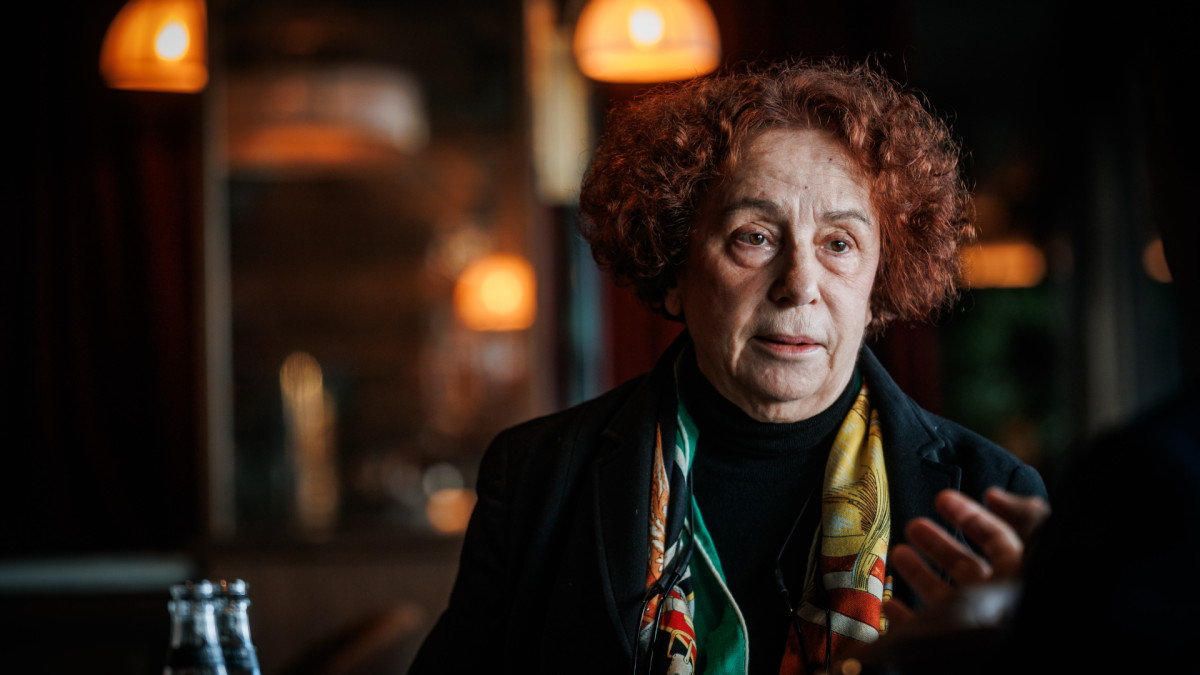
Palacio takes issue with ‘sanitary cordons’. Photo: Agenda Pública / Tania Sieira
And how would you describe the current Parliament?
Adrián Vázquez (A. V.): What was an aspiration then is today a reality, for both good and bad. During the first two decades of the 21st century, Parliament remained stable, thanks to majorities held by the European People’s Party and the Socialist Party. But the political instability in today’s Europe is reflected in the European Parliament. In 2019, it became necessary for the first time to bring together liberals and Greens in order to politically legitimize the von der Leyen Commission.
"In this legislature, for the first time, there’s a real alternative: the so-called ‘Venezuelan majority’, and that bloc has already put forward its first legislative package"In this legislature, also for the first time, there’s a real alternative: the so-called ‘Venezuelan majority’, which combines the votes of the EPP and everything to its right; and that bloc has already put forward its first legislative package. Increasingly, Parliament functions like a national congress, but with one major limitation: in the absence of a stable legislative majority, there’s no possibility of early elections. That generates rigidity. Added to that is a certain lack of institutional responsibility. Sometimes there’s competition not to build sensible agreements but rather to see who can be more demanding.
A. P.: That’s always been the case. What has changed is the discourse about the European majority. I don’t believe in ‘sanitary cordons’ — I believe that if you’ve got the strength of an elephant, you shouldn’t act like a hinge. In this Parliament, the PP tries to occupy both roles, and that generates tensions. And something similar has been happening on the left in recent months: the Socialist Group dominates, and it drags along the Greens in particular, often defending positions with a kind of alleged moral superiority — for example, in the matter of energy, which clearly doesn’t appear in any treaty.
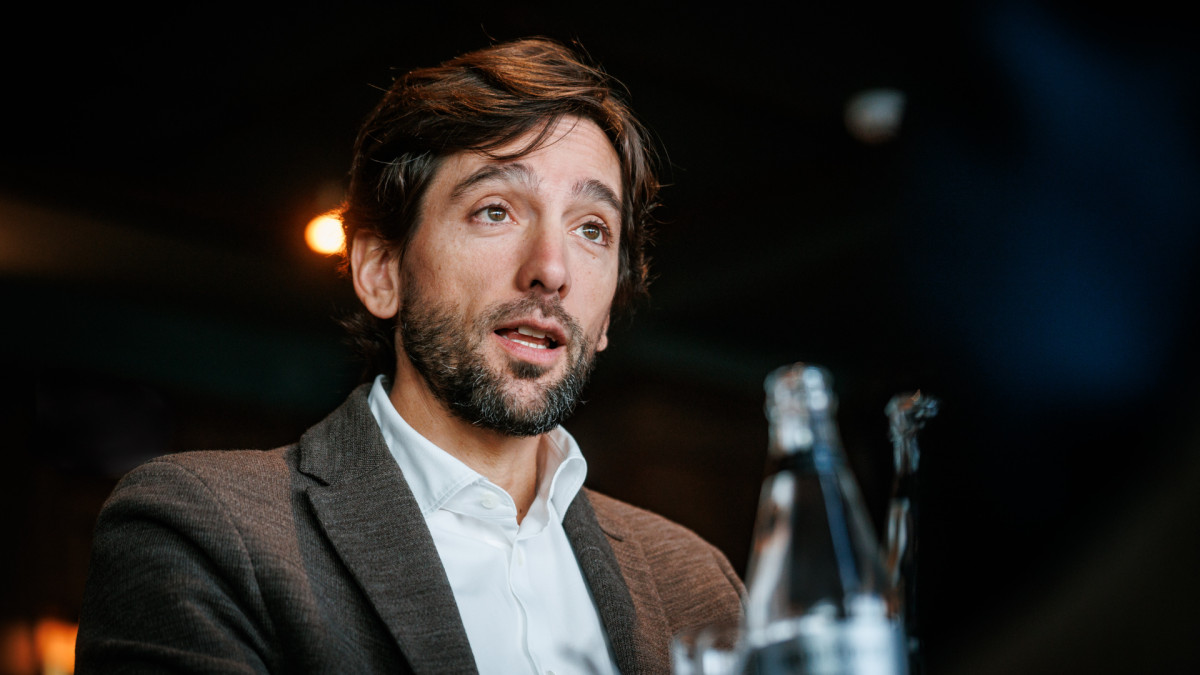
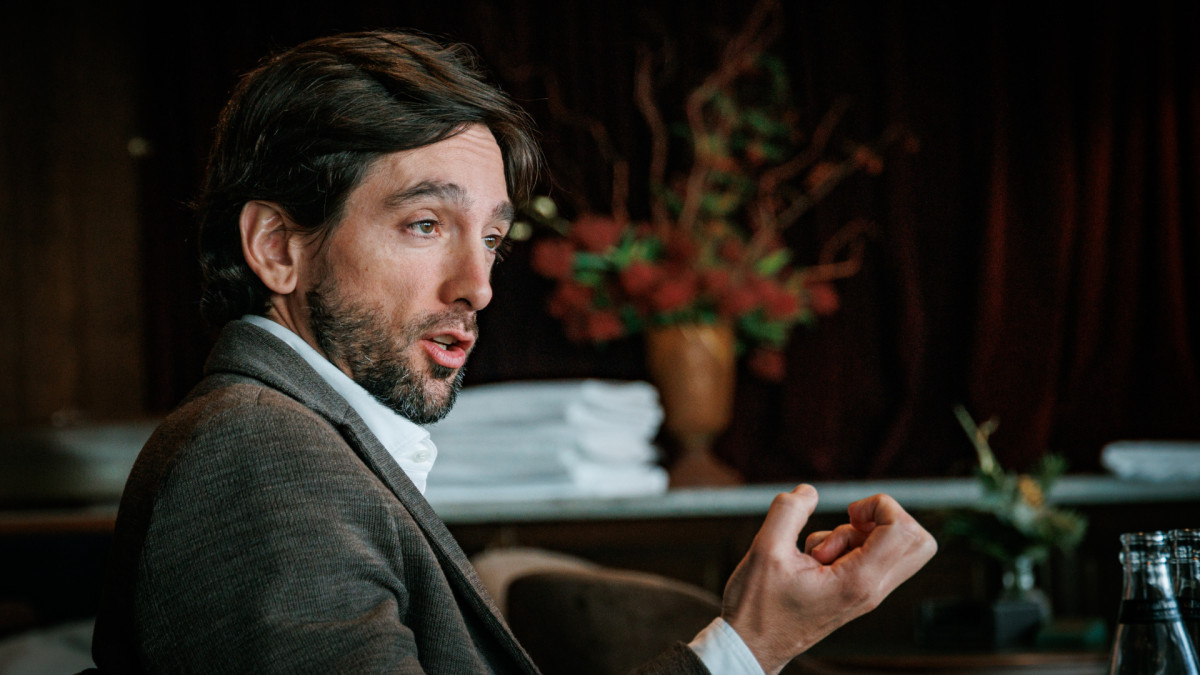
Adrián Vázquez is an MEP for the Popular Party and collaborates with Agenda Pública EU. Photo: Agenda Pública / Tania Sieira
But isn’t there also a challenge from the right? How do you explain the rise of openly anti-European forces?
A. P.: Yes, of course. Those forces arise precisely due to backsliding around the rule of law. Europe has three anchors — freedom, prosperity, and the rule of law — all on the same level. The rule of law acts as the element that unites freedom and prosperity.
For younger generations today, many things that were absolutely normal for previous generations are no longer guaranteed — for example, buying a house if you have a full-time job and some stability. When that basis of predictability disappears, frustration and disaffection arise.
I recently read a survey suggesting that around 25% of young Spaniards, Italians, and French would have no problem living under autocracy so long as it gave them guarantees of prosperity. That is, they would be willing to exchange freedoms for material security. That should worry us enormously.
Moreover, there’s a geopolitical and intellectual element in the background. A recent book by Dan Wang argues that two models currently coexist: the Chinese ‘engineering model’, which focuses on doing, executing, producing; and a Western model trapped by legal hypertrophy. Wang maintains that we don’t have rule of law but rather ‘rule of lawyers’. And that phrase, which the well-known historian Niall Ferguson repeated in a popular podcast, in reference to the United States, seems correct: our decisions are in danger of suffocation by layers and layers of trials and lawyers.
"The President of the Court of Justice has said it openly: there is a growing tendency to concentrate power in the executives"If we want to stop the decline and reassert the rule of law, we must address that context. Europe functioned for decades through a tacit but very strong agreement of respect among the three powers — legislative, executive, and judicial — and that balance is now being broken. The President of the Court of Justice has said it openly: there is a growing tendency to concentrate power in the executives. And that manifests itself through different pathologies, depending on the country.
That danger was also observed in Europe’s expansion to the East. It was said that we couldn’t refuse the incorporation of countries that had lived under autocratic regimes, and that’s perfectly understandable from a historical and moral perspective. But the expansion fostered institutional imbalances that are still noticeable today.
In Portugal — and something similar happened in Spain — it was decided not to enter deeply into this debate. Portugal undertook a serious study on how enlargement might affect the EU in terms of cohesion funds and structural funds; Spain didn’t follow suit. That study was presented to the Parliament of Portugal, but even so, they voted unanimously for enlargement. We who had suffered under dictatorship — Salazar in Portugal, Francoism in Spain — felt that we couldn’t say no to other countries emerging from autocracy who wanted to integrate into the European family.
By this I mean that, clearly, the Eastern wave of incorporation hasn’t had the same results in every case. So we return to the rule of law: Spain didn’t have to change a single law to enter the EU, whether in the social or administrative spheres. Unlike the various technocratic governments, Spain had already built a solid administrative network. There was no Constitution or political rights in that era, but there was functional administrative law, property and commercial registries, specific procedures... things that didn’t exist in the enlargement nations. In many of those countries, there were no reliable records or basic administrative structures, and that kind of institutional tradition can’t be improvised. Spain had been working on it since the Stabilization Plan of 1958.
Vázquez and Palacio share thoughts on the European Parliament. Photo: Agenda Pública / Tania Sieira
In such a scenario, where the separation of powers is blurred and power is concentrated in the executive, are we condemned to permanent clashes? In that context, do we need further broadening or deepening of the European project?
A. V.: The report on the rule of law issued in 2020 was precisely thanks to this authoritarian drift and the increasingly blurred separation of powers. It’s not just a question of Poland and Hungary, although those are the paradigmatic examples; the Court of Justice has already made twelve judgments establishing jurisprudence on what is or isn’t the rule of law in Europe.
If we take the European Parliament as an example, the current legislative instability demands that governments in the Council be strong. It’s a mandate of strong national governments, whereas the previous mandate clearly favored the Parliament. That balance has been broken.
With the rule of law, the simple fact that we need country-by-country monitoring already indicates that something is wrong. But there’s another important element: if we look at the infringement proceedings initiated by the Commission, which are numerous, we see a double standard. Certain proceedings with some countries seem more permissive than others, because in the end, the Commission serves as a political executive. And that’s where I think the system starts to enter into danger.
"There’s a double standard, and I’m not just talking about Spain, although the Spanish situation is clear: there have been serious violations of the rule of law in this legislature"The same is true of parliamentary immunity. You might encounter an MEP from a party that’s part of a government that systematically violates the rule of law. In such cases, the wrong question is asked: "Which do you prefer, a government that violates the rule of law or one that doesn’t?" Such a question shouldn’t exist. If we start managing immunities based on the party to which an MEP belongs, and not on the acts attributed to that MEP, then the system stops working.
There’s a double standard, and I’m not just talking about Spain, although the Spanish situation is clear: there have been serious violations of the rule of law in this legislature. A Commission that is seeking to survive politically within the Council will always have an easier time acting in opposition to the ‘ugly ducklings’ than against governments formed by respected political parties, center-left or center-right, on which its institutional stability depends.
That’s why I believe that the great battle now — even if it generates a political crisis — is to compel the Commission to also act against those respectable, responsible, pro-European governments that form part of the traditional political families. It can’t only act against those who are viewed as the bad guys, or peripheral, or that make us uncomfortable. If we don’t break that pattern, the rule of law will continue to weaken.
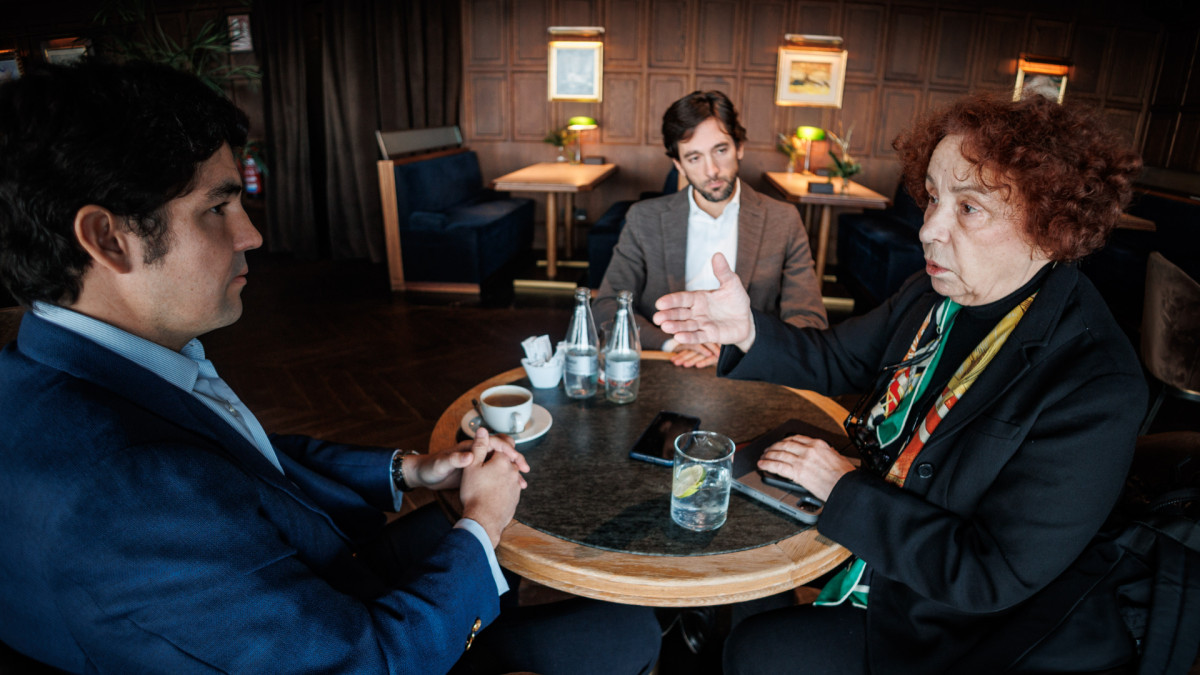
Ana Palacio chats with Rodrigo Pinedo. Photo: Agenda Pública / Tania Sieira
A. P.: At a recent panel discussion, I was the only one who pointed out to the moderator that he shouldn’t just mention the well-known ‘ugly ducklings’. The concentration of power into the executive also occurs in other Member States, which he avoided mentioning for political reasons. Nothing else needed to be said; everyone understood what I meant.
Concerning the debate on institutional balance, I agree that we’re living in a moment clearly dominated by inter-governmental relations. At the same time, however, the Commission has accumulated significant powers that have no legal basis. This has happened because the world has changed, and institutions have had to react quickly. The turning point was the pandemic. During COVID-19, the Commission acted without explicit legal support but with tacit acceptance by the States, because that was the only way to deal with situations that were disrupting the internal market, such as getting vaccines, or the refusal to treat patients simply because they had crossed a border. That was incompatible with the basic functioning of the Union.
"Von der Leyen has acquired a notable political presence and participates in spaces traditionally reserved for Heads of State and government"During this recent period, the Commission has de facto expanded its role, especially in defense. Von der Leyen has acquired a notable political presence and participates in spaces traditionally reserved for Heads of State and government. Institutional evolution has been very significant. The challenge now is how to fit that new role with the formal powers provided for in the Treaties. In areas such as industry, the legitimacy of the Commission is based on the internal market, but in defense there’s no such thing as an internal market per se: most products have one or two buyers at most, and their scope rarely covers the 27 different armed forces.
My concern is that the European institutions have not yet come to terms with the magnitude of global change. We’re in an unprecedented situation, and we need to adapt our decision-making to an environment where problems require real-time responses. The combination of effectiveness and respect for the rule of law must be rethought. We cannot continue to act as we did in the old era of globalization, when international consensus was in force and Europe enjoyed a clear privilege.
Mark Leonard has described this transformation very well. For years he argued that European regulatory power was envied and admired around the world. That made sense in the prior context, because Europe’s soft power worked. But today, those conditions have vanished. Even so, we’ve conveyed to our citizens the idea that we still have a comparative advantage, although in reality the international environment no longer responds to that scheme.
Palacio and Vázquez urge Europe to act in accordance with the geopolitical moment. Photo: Agenda Pública / Tania Sieira
Joseph S. Nye, the ideologue of soft power, recently died. Is soft power also dead?
A. P.: No, soft power isn’t dead. It’s still fundamental, and one of the biggest problems we face is that the current U.S. administration undervalues it — when not openly despising it completely. The U.S. has thrown away an essential part of its international influence.
Soft power remains an instrument in which Europe must place firm trust. In a world structured around two great powers that tend to create zones of influence, there’s a real opportunity for the European Union. Many countries affected by this redesign prefer not to be framed in either of these areas. They’re looking for an alternative system based on rules and the rule of law. That’s where Europe can offer something different, and where soft power continues to have extraordinary value. We Europeans are recognized as having the know-how for negotiating, for overcoming conflict through agreements and rules.
A. V.: As Ivan Krastev mentioned in a recent interview, the problem with the European elections is that Europe behaves like a bunch of vegetarians sitting at a table full of carnivores. He points out that what we need is to become omnivorous. That image nicely describes the disconnect between the way Europe sees itself and the kind of world in which it’s currently operating.
"Today, the Commission functions as a government, similar to national governments, and it acts fundamentally as an institution for crisis management"That diagnosis ties in with what Mark Leonard always reminds us, and here I would include the Commission among the group of governments that need to take the lead. The Commission’s no longer in an aspirational phase or stage where it’s dedicated to setting major global agendas – like the Green Deal might have been at the beginning of the legislature. That cycle is over. Today, the Commission functions as a government, similar to national governments, and it acts fundamentally as an institution for crisis management: first it was the pandemic, now it’s defense, tomorrow it will be another unforeseen issue.
In just ten years, the Commission has gone from an institution that set the global agenda to a government geared to face crises, which can erupt at any time. That evolution is real. And if there’s a movement of voters toward strong governments, then we have to transform as well, because we’re living in a time where the U.S. and China are very clear examples of governments that act quickly and flexibly in response to an unstable world.
What’s worrying is that neither European citizens nor a portion of the political class seem to be aware of the decade we’re now entering. If we’re not able to sustain the European institutions in this new context, then in five, ten, fifteen years we could be looking at a very profound change in the European project.
The priority now is for the system to survive this political wave. For that to happen, responsibility is needed, but also flexibility, which I find lacking in many MEPs and in various national governments that tend to huddle in on themselves and look for external enemies. That kind of withdrawal favors authoritarian dynamics and brings us back, once again, to the debate on the rule of law, because erosion of the rule of law is directly related to that closure around identity.
Vázquez asks for ‘responsibility’ and ‘flexibility’ from his colleagues in the European Parliament. Photo: Agenda Pública / Tania Sieira
A. P.: What we can’t do is address these issues from dogmatism. If we accept that our system is based on three legs — prosperity, freedom, and the rule of law — when we talk about prosperity, we’re also talking about the social State, but de-ideologized. We have to get grounded, leave behind the speeches and analyze our concrete problems. Housing for young people, for example. We don’t need stories or theories. We need to see what works in real practice.
We have to abandon rhetoric and ideologies and be fully aware of what’s changing around us. And if everything is changing, then we have to change accordingly. There’s no alternative.
One very clear example is Mercosur. We’ve been negotiating that for nearly 30 years, 25 on an official basis. It’s a fundamental agreement for Spain, since it refers to our natural area of international relations. We’ve achieved what’s probably the best possible language, with all the guarantees. But if instead of seeking a perfect agreement we had opted for slightly less ambitious rules — and, to be clear, a broader view of what’s truly at stake — then that agreement would likely have already been in place for years. That would have allowed us to exert our influence earlier, move the agenda, defend multilateralism and human rights and our values from an active position. We would have been generating real effects for a long time now, instead of still waiting.
"We’ve passed regulations that harm our own companies in global competition, and yet we don’t apply those same standards to the products we import"The same is true of Spain’s domestic legislation. We’ve been maximalists. We’ve passed regulations that harm our own companies in global competition, and yet we don’t apply those same standards to the products we import. That’s unsustainable. We try to correct it by establishing border mechanisms, but if our regulatory system is so perfect that it doesn’t work in real terms, then we have a problem.
The world has changed, and we no longer operate in the environment that we used to. The rational attitude is to recognize that fact and to ask ourselves what we should change. And yet, when attempts are made to take a timid step forward, such as Omnibus 1, the Parliament immediately buries it. That reaction demonstrates that a part of the system continues to act as if nothing has changed, when everything indicates otherwise.
A. V.: Buried by 31 Socialist MEPs who decided not to respect the line agreed to within the von der Leyen majority — a majority that we’d negotiated precisely in order to give stability to the institutions. That rupture has forced the Popular Party to seek support from the so-called ‘Venezuelan majority’. And here the problem of political responsibility arises.
I don’t want to turn this into a partisan debate, but it’s clear that the Socialist Group — and the European social democratic family in general — has not yet come to terms with its real situation, electorally or socially. They keep to a high moral ground that prevents them from clearly seeing the kinds of challenges we’re facing. Furthermore, they’ve been unable to maintain the voting discipline that guarantees institutional stability. Rather than aligning themselves with a necessary agreement, they prefer to put at risk the continuity of the Commission and, along with it, the solidity of the overall Union as a global actor.
Voting against Omnibus 1 might seem like a minor gesture, but that directive represented a very important step forward in starting to adapt our legislative framework to the world now before us. Then it was blocked from within the very majority that it supposedly wants to protect.
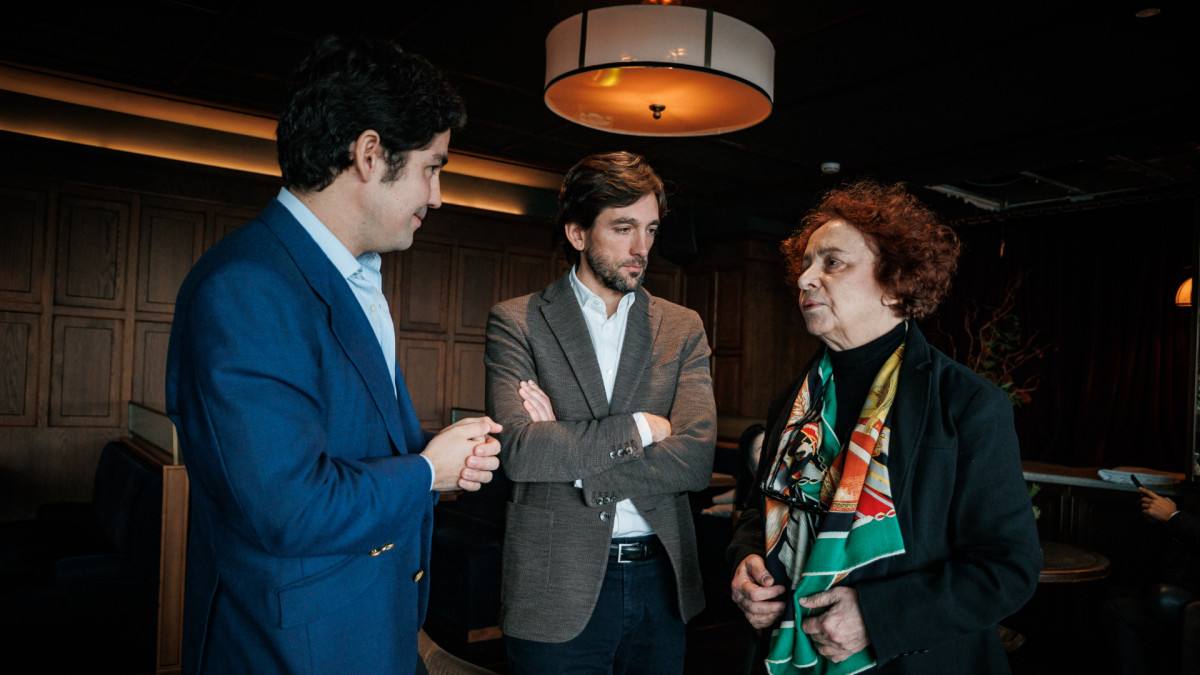
Pinedo, Vázquez, and Palacio conclude their meeting in Madrid. Pboto: Agenda Pública / Tania Sieira
A. P.: If it were up to me to decide, the first thing I’d do would be to sit all the general directorates down, then force them to work together. Go over everything from scratch and, above all, break down internal administrative boundaries. I’m well acquainted with the energy portfolios, and there are environmental policies that clearly clash head-on with energy policies; each defends its own territory, which makes advances impossible. So the first task would be precisely that: to align those forces.
I would convene a group meeting, an internal town hall, and tell them clearly: "The world has changed, and what we’ve done so far, although very valuable, is no longer enough." The European Union has projected enormous regulatory power, and that remains an asset if properly understood. But we need to simplify, eliminate duplication, and support our companies not with more subsidies but by creating a framework that encourages research, innovation, and the ability to compete.
Basically, I’m talking about what the Draghi report has already said. Still, according to the best trackers, only 14% of that report’s recommendations are being applied, although more than a year has passed since it was published. We have to identify what needs simplifying and to act accordingly. We also have to establish mechanisms for intervention when the zeal of one general directorate or another prevails over the resolution of problems.
Energy offers the clearest example, because that’s a front where all tensions converge: geopolitics, the internal market, climate, industry. It’s a point at which the current system is obviously not aligned, where we need real coordination of policies.
A.V.: If I had to sum it up in a headline, I’d say we need a roadmap for the system to survive the next crisis. We’ve built a system so rigid that it often works against its own objectives.
Thank you very much.
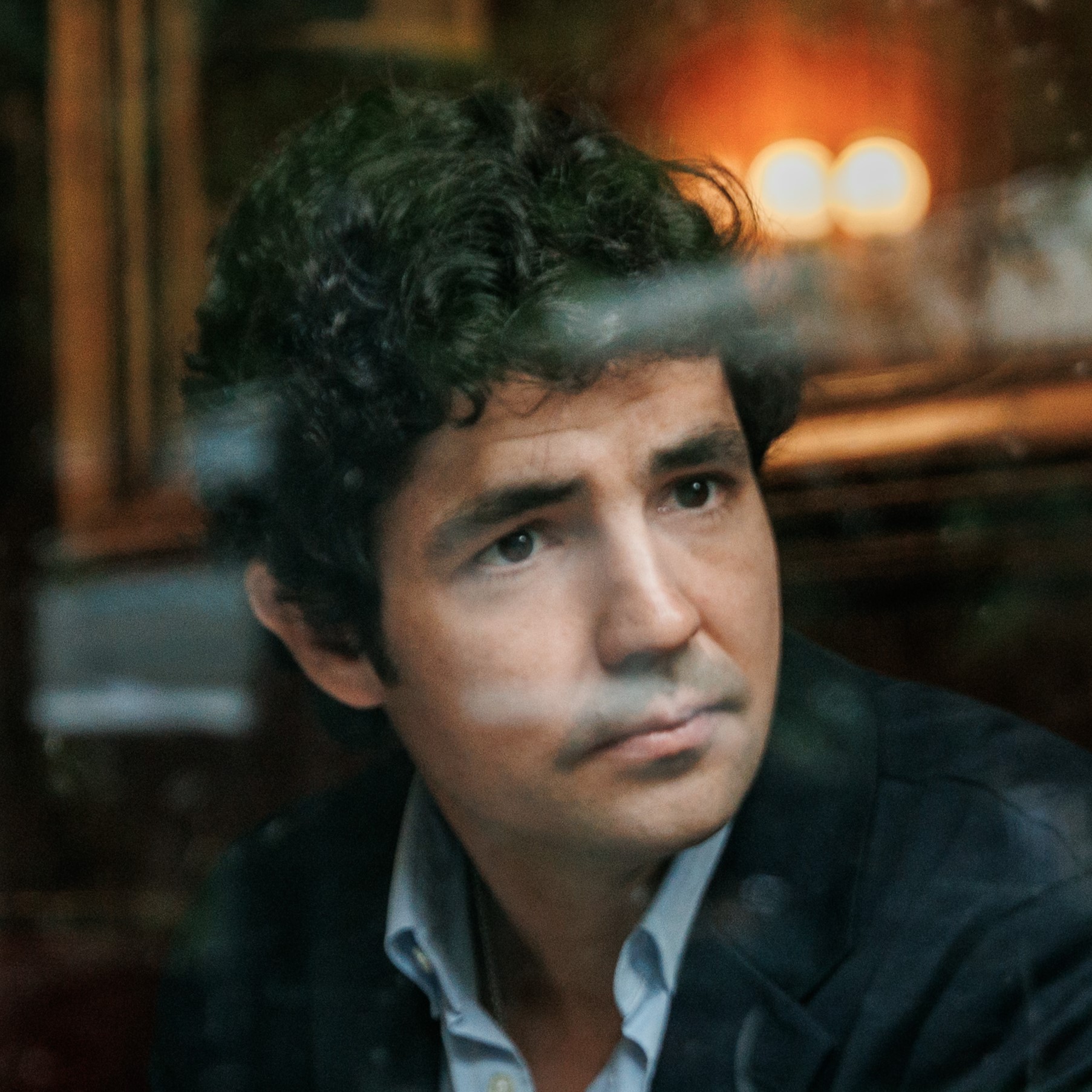
Rodrigo Pinedo Texidor
Periodista y anteriormente vicepresidente de 'Agenda Pública'
Apasionado de los medios. Licenciado en Derecho y Periodismo por la Universidad CEU San Pablo y Executive MBA por IESE, se curtió en distintas redacciones antes de trabajar en comunicación institucional, ocupando, entre otras responsabilidades, el cargo de director de Comunicación del Arzobispado de Madrid. Formó parte de los consejos de administración de TRECE, Cope y, después, Ábside Media. Entre 2024 y 2026 fue consejero delegado de BEKANE Media y vicepresidente de 'Agenda Pública'. Trabaja en comunicación corporativa y es patrono de la Fundación Luca de Tena.
Ahora en portada
17 de octubre de 2026
16 de octubre de 2026
Noticias relacionadas
Hace 47 semanas
'Agenda Pública' en el Europarlamento: el análisis crítico de dos eurodiputados sobre la incertidumbre global
Lo más leído