Viernes, 16 de octubre de 2026




LÓPEZ PLANA'S EUROPEAN COMPASS
'The Moroccan dossier': a test for the PP, the PSOE, and Europe
European and Moroccan politics converge in what has been called ‘the Moroccan dossier’: a strategic test of Spain’s ability to act as an autonomous player in southern Europe. Internal political polarization between the PSOE, the PP, and Vox is preventing the formation of a consistent foreign policy – precisely when Europe needs leadership in North Africa, given France’s departure from the Sahel.

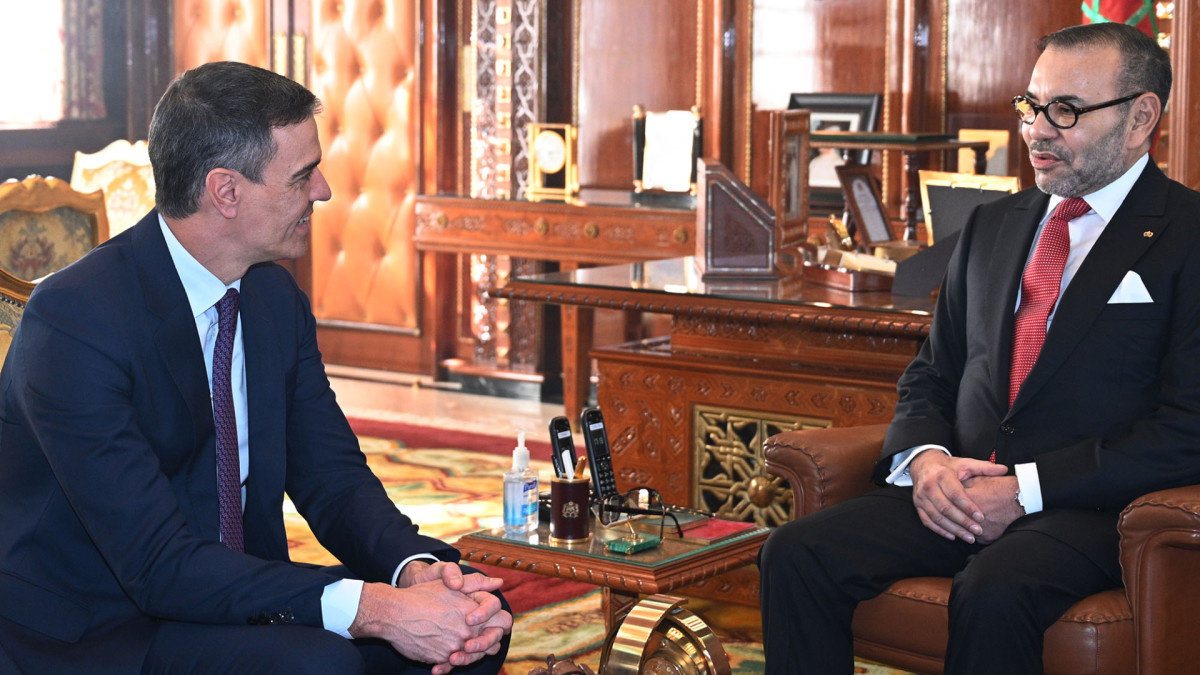
The President of the Spanish Government, Pedro Sánchez, in a meeting with the King of Morocco, Mohammed VI.Pool Moncloa / Borja Puig de la Bellacasa
It’s no mere symbolic act that the PP’s national executive committee is meeting today in Melilla – this is a political statement that underlines Spain’s complicated links with Morocco. In yesterday’s La Vanguardia, Santiago Abascal injected an identity component into our already strained relationship with Morocco, asserting that the "rejection of Islamic immigration will unify Spain."
Relations between Spain and Morocco have been conditioned by an ongoing metamorphosis: the politicization of Spanish foreign policy, which has gone from a one of consensus to a battlefield for partisan confrontation. What was conceived as a space of institutional consistency, based on the defense of common strategic interests, has become an arena for ideological disputes. From the war in Iraq to the recognition of Palestine to official positions vis-à-vis Morocco and Algeria, decisions around foreign policy are no longer a matter of State but instead serve as rallying flags for party identity. This "very domestic foreign policy" has fostered unprecedented volatility: every change of government betokens diplomatic turns, weakening Spain’s credibility in the eyes of both its European partners and its Maghreb associates. In the context of North Africa, this lack of continuity limits Spain’s capacity for leadership while opening space for foreign actors from Rabat to Paris to reinterpret Madrid’s every move in a domestic key.
Brussels has agreed on a diagnosis: if the EU fails to define a common strategy toward the Sahel and Maghreb regions, the bloc’s security and global weight will certainly suffer. Three great challenges associated with the south – migration, energy, and security – all demand vision as well as continuity. Given its historical relations with Morocco and Algeria, a consolidated diplomatic network, and companies with a growing profile in Africa, Spain could step into the void left by France’s departure.
But assumption of that role would require what Spain doesn’t have: a State foreign policy. And that lack is sure to outweigh geographical advantages.
Academic research in international relations agrees that domestic political coherence is a basic condition for any country’s external credibility. When fundamental consensus prevails among the major parties, international commitments gain stability, and diplomatic stances become more predictable. On the other hand, a lack of internal agreement gives partners and allies the impression of a volatile nation whose foreign policy can change with every electoral cycle. Recent studies show that governments with strong internal polarization lose bargaining power and are seen as less trustworthy. Intense political debate is inevitable in a democracy, but when foreign policy becomes an arena for partisan confrontation, both continuity and trust are eroded, and the country’s external influence is reduced.
In the case of Spain, this very dynamic is perceptible in its relations with Morocco and Algeria: without basic political agreements on how to deal with North Africa, Spain projects instability, which weakens its role as a strategic partner within the EU. And that fragility isn’t just diplomatic. When borders, energy security, and military cooperation all figure on same chessboard, vulnerability in domestic political matters translates to vulnerability in external defense, limiting the State’s ability to respond univocally to external pressures or crises emerging from the south.
While Spain is mired in internal debates, Morocco is projecting its own influence as a regional Atlantic power, and Algeria is tightening its ties with other European countries. Madrid carries the potential to act as either a bridge or a weak link.
The future of 'the Moroccan dossier' seems to be gravitating between various scenarios, each with very different implications for Spain and its role in Europe. In one scenario, Spain under a socialist government would maintain a policy of cooperation with Morocco and one of restraint with Algeria, meanwhile acting as a mediator in Brussels. This approach favors stability and predictability but depends on the persistence of a PSOE-led government in Madrid.
Finally, the possibility remains of State consensus being reached between the PP and PSOE, building a common and unified foreign policy that could effectively manage 'the Moroccan dossier'. This scenario would allow Spain to lead the European agenda in North Africa. Although this would be the most favorable option in political terms, it also seems least likely, given Spain’s current internal divisions.
The paradox is that while the PP and PSOE are confrontational rivals in Madrid, in Brussels they share a space of decisive power. Their MEPs hold majorities in the two large political blocs that define the EU agenda: the European People’s Party (EPP) and the Progressive Alliance of Socialists and Democrats (S&D).
If Spain can manage to articulate a shared vision – a policy toward the south that combines cooperation, defense, and development – then the EU’s North African relations could be the starting point for building a stronger, more realistic Europe.
At present, Europe looks to the south and sees in Spain a powerful nation with notable ambitions, but no agreement on how to pursue them. 'The Moroccan dossier' awaits a coherent response, and every gesture counts.
Relations between Spain and Morocco have been conditioned by an ongoing metamorphosis: the politicization of Spanish foreign policy, which has gone from a one of consensus to a battlefield for partisan confrontation. What was conceived as a space of institutional consistency, based on the defense of common strategic interests, has become an arena for ideological disputes. From the war in Iraq to the recognition of Palestine to official positions vis-à-vis Morocco and Algeria, decisions around foreign policy are no longer a matter of State but instead serve as rallying flags for party identity. This "very domestic foreign policy" has fostered unprecedented volatility: every change of government betokens diplomatic turns, weakening Spain’s credibility in the eyes of both its European partners and its Maghreb associates. In the context of North Africa, this lack of continuity limits Spain’s capacity for leadership while opening space for foreign actors from Rabat to Paris to reinterpret Madrid’s every move in a domestic key.
"France’s delicate withdrawal from the Sahel opens the door for Spain to occupy the space left by Paris in the region"Spain could ostensibly assume a central role in Europe’s new policy toward North Africa, but the lack of internal consensus is limiting that possibility. The delicate withdrawal from the Sahel by France – which tried to play gendarme there for nearly a decade – has opened space for Spain. The French-led operations known as Serval and Barkhane were intended to stabilize Mali, Burkina Faso, and Niger against jihadist advances, but those flags have all been withdrawn, leaving behind an array of mercenary networks, military regimes sympathetic to Russia, and expanding presence by China. The vacuum left by France has become a European problem.
Brussels has agreed on a diagnosis: if the EU fails to define a common strategy toward the Sahel and Maghreb regions, the bloc’s security and global weight will certainly suffer. Three great challenges associated with the south – migration, energy, and security – all demand vision as well as continuity. Given its historical relations with Morocco and Algeria, a consolidated diplomatic network, and companies with a growing profile in Africa, Spain could step into the void left by France’s departure.
But assumption of that role would require what Spain doesn’t have: a State foreign policy. And that lack is sure to outweigh geographical advantages.
'The Moroccan dossier' and internal fractures
Spain’s relationship with Morocco is complex. The PSOE favors a pragmatic approach based on cooperation around migration, energy, and security. The PP has oscillated between shows of sovereignty and diplomatic ambiguity. Meanwhile, Vox has injected an identity discourse that radicalizes the rhetoric on immigration and borders."Morocco is not just a neighbor but a regional actor with global ambitions that has placed Spain in a delicate strategic position"Here the concept of 'the Moroccan dossier' developed by Alberto Bueno in Agenda Pública is crucial. According to Bueno, Morocco isn’t simply a neighbor but a regional player with global ambitions that puts Spain in a delicate strategic position. Management of this dossier will require coherence and political consistency, without which Spain could lose influence, both in Rabat and in Brussels, transforming what should be a lever of European leadership into a source of vulnerability.
Academic research in international relations agrees that domestic political coherence is a basic condition for any country’s external credibility. When fundamental consensus prevails among the major parties, international commitments gain stability, and diplomatic stances become more predictable. On the other hand, a lack of internal agreement gives partners and allies the impression of a volatile nation whose foreign policy can change with every electoral cycle. Recent studies show that governments with strong internal polarization lose bargaining power and are seen as less trustworthy. Intense political debate is inevitable in a democracy, but when foreign policy becomes an arena for partisan confrontation, both continuity and trust are eroded, and the country’s external influence is reduced.
In the case of Spain, this very dynamic is perceptible in its relations with Morocco and Algeria: without basic political agreements on how to deal with North Africa, Spain projects instability, which weakens its role as a strategic partner within the EU. And that fragility isn’t just diplomatic. When borders, energy security, and military cooperation all figure on same chessboard, vulnerability in domestic political matters translates to vulnerability in external defense, limiting the State’s ability to respond univocally to external pressures or crises emerging from the south.
While Spain is mired in internal debates, Morocco is projecting its own influence as a regional Atlantic power, and Algeria is tightening its ties with other European countries. Madrid carries the potential to act as either a bridge or a weak link.
Enhanced European cooperation: an opportunity for Spain
Within the framework of 'enhanced EU cooperation' – which allows a limited group of countries to jointly advance in matters of foreign policy or security, without need of full unanimity from the 27 members – Spain could take the lead in articulating common policies toward North Africa, backed by a nucleus that includes Italy, Portugal, Greece, and France. But this formula only works if the nations involved are coherent and predictable, and here Spain’s lack of internal consensus becomes problematic.The future of 'the Moroccan dossier' seems to be gravitating between various scenarios, each with very different implications for Spain and its role in Europe. In one scenario, Spain under a socialist government would maintain a policy of cooperation with Morocco and one of restraint with Algeria, meanwhile acting as a mediator in Brussels. This approach favors stability and predictability but depends on the persistence of a PSOE-led government in Madrid.
"There is the option of a State-level consensus between the PP and the PSOE, which would achieve a unified foreign policy capable of effectively managing the Moroccan dossier and allowing Spain to lead the European agenda in North Africa"A second scenario, conceivable under a PP-Vox coalition government, would adopt tougher rhetoric and strengthen pressures on Rabat. This could increase bilateral tensions and even isolate Spain within the EU, complicating its leadership potential in southern Europe.
Finally, the possibility remains of State consensus being reached between the PP and PSOE, building a common and unified foreign policy that could effectively manage 'the Moroccan dossier'. This scenario would allow Spain to lead the European agenda in North Africa. Although this would be the most favorable option in political terms, it also seems least likely, given Spain’s current internal divisions.
What’s at stake, and what the PP and PSOE ought to do
'The Moroccan dossier' is no minor technical portfolio. Migration, security, energy, and strategic projection all depend on how Spain handles its relationship with Morocco.The paradox is that while the PP and PSOE are confrontational rivals in Madrid, in Brussels they share a space of decisive power. Their MEPs hold majorities in the two large political blocs that define the EU agenda: the European People’s Party (EPP) and the Progressive Alliance of Socialists and Democrats (S&D).
"Coordination between the PP and the PSOE could be the key for the South to stop being a border and become a driving axis of European action"If the two Spanish parties were to bring to Brussels a unified perspective on the Sahel and Maghreb regions, they could exert significant influence in shaping a genuine policy for Europe vis-à-vis its southern neighbors. But again, this capacity for influence – which Spain possesses like no other Mediterranean country – becomes diluted when domestic rivalry prevents the articulation of a common strategy. Europe is seeking to strengthen its overall strategic autonomy and define its role in Africa, and coordination between the PP and PSOE parties could help redefine the southern frontier less as of a border than an axis for European action.
If Spain can manage to articulate a shared vision – a policy toward the south that combines cooperation, defense, and development – then the EU’s North African relations could be the starting point for building a stronger, more realistic Europe.
At present, Europe looks to the south and sees in Spain a powerful nation with notable ambitions, but no agreement on how to pursue them. 'The Moroccan dossier' awaits a coherent response, and every gesture counts.
Ahora en portada
16 de octubre de 2026
16 de octubre de 2026
16 de octubre de 2026
Noticias relacionadas
Hace 48 semanas
El dosier marroquí: la prueba europea que separa a PP y PSOE
Hace 49 semanas
La directora del 'think tank' noruego de seguridad y defensa: "Europa atraviesa una fase de inestabilidad de largo recorrido"
Hace 71 semanas
El dosier marroquí: la prueba geopolítica de España ante Trump
Lo más leído