



Former Number 2 at the Spanish National Intelligence Service: "European cooperation has become an obligation, not an option"
Beatriz Méndez de Vigo, former secretary general of the National Intelligence Center (CNI), with one of the longest internal careers in the service, spoke with Marc López, editor and director of 'Agenda Pública'. Their conversation covered such fundamental issues as the culture of defense in Spain, European cooperation, technological challenges, and how the threats faced by democracies have been evolving.
Méndez de Vigo strongly defends the role of the CNI as an "absolutely accredited and prestigious" service, composed of "ordinary people who do extraordinary things." She reminds us that no single service can cover every base; and yet, in a context of transnational threats, international cooperation is no longer an option but a necessity.
In Europe especially, cooperation has evolved from strong compartmentalization to what she describes as "the obligation to share." At the same time, she warns of the legal and political limits: "An intelligence service with the power to decide isn’t typical of a democratic state." For that reason, any jump toward a hypothetical European service would first require political will and a clear legal framework.
Beyond that, the biggest challenges lie in technology. The ex-secretary general of CNI maintains that technology’s impact will prove "even greater than that of the Industrial Revolution." She explains that new tech will make it possible to foresee threats, but it will also multiply risks such as disinformation, cyberattacks, and strategic uses of immigration. "We’re entering a world where an attack is no longer necessary to destabilize societies," she advises. Below is a full account of our conversation.
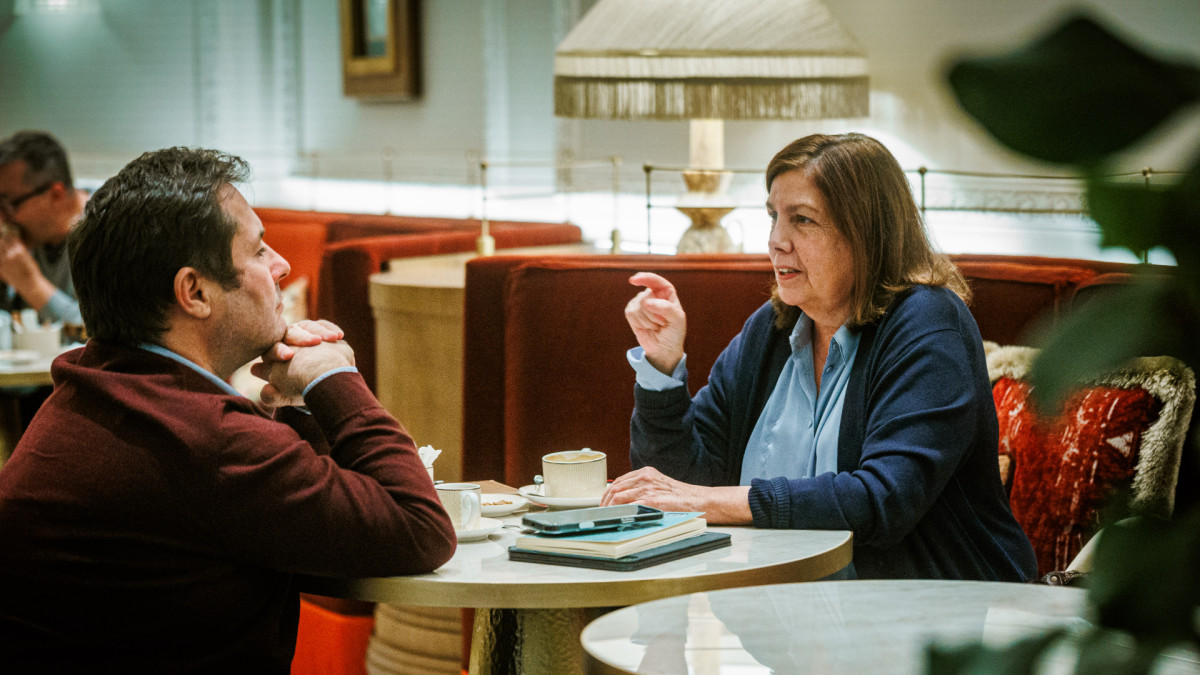
Marc López Plana and Beatriz Méndez de Vigo have a chat. Photo: Agenda Pública / Tania Sieira
Why do you think the debate on intelligence issues is more open in other countries?
We have to widen the focus a bit. In Spain, there’s little discussion about defense, little about security and, consequently, little about intelligence. Here we don’t have a well-established concept of defense. Nor is there a sturdy civic culture around what defense is, despite the fact that it concerns us all. We’re not sufficiently aware of its importance, how it affects us, and how much its absence can leave us open to harm.
For all those reasons, we fail to perceive the threats that might make us think more about security and defense issues. We believe that we live in a fairly safe environment. We don’t feel it when the threats are clear and obvious, as one would in other European countries.
And why don’t we feel it?
Perception is one thing, reality is another.
"We believe that we live in a fairly safe environment. We don’t feel it when the threats are clear and obvious, as one would in other European countries"In recent years, efforts have been made to raise awareness and to involve Spaniards in what we mean by defense and security, but we need to advance much further in that direction. Historical and geographical circumstances have had their influence: we didn’t participate in either of the last two major conflicts on European soil, which contributes to the lack of threat perception, even when the threat is real.
What does it mean to be secretary general of the CNI?
I held the office for five years. The secretary general is the second on board for all purposes and the right hand of the CNI director: you replace him or her when necessary, and you take on any role that he or she delegates related to the direction and management of the Center. In addition, by statute, the general secretary is head of all staff – a responsibility that usually falls to someone within the agency.
I had three predecessors. One is the current Secretary of State, Esperanza Casteleiro, who served as secretary general from 2004 to 2008. First she was secretary general, then the government appointed her Secretary of State as well as CNI director. She’s spent much of her career at the Center and, after some time in other government positions, she’s returned as both Secretary of State and director.
The first woman appointed Secretary of State and CNI director was Casteleiro’s predecessor, Paz Esteban, who was also a member of the Center.
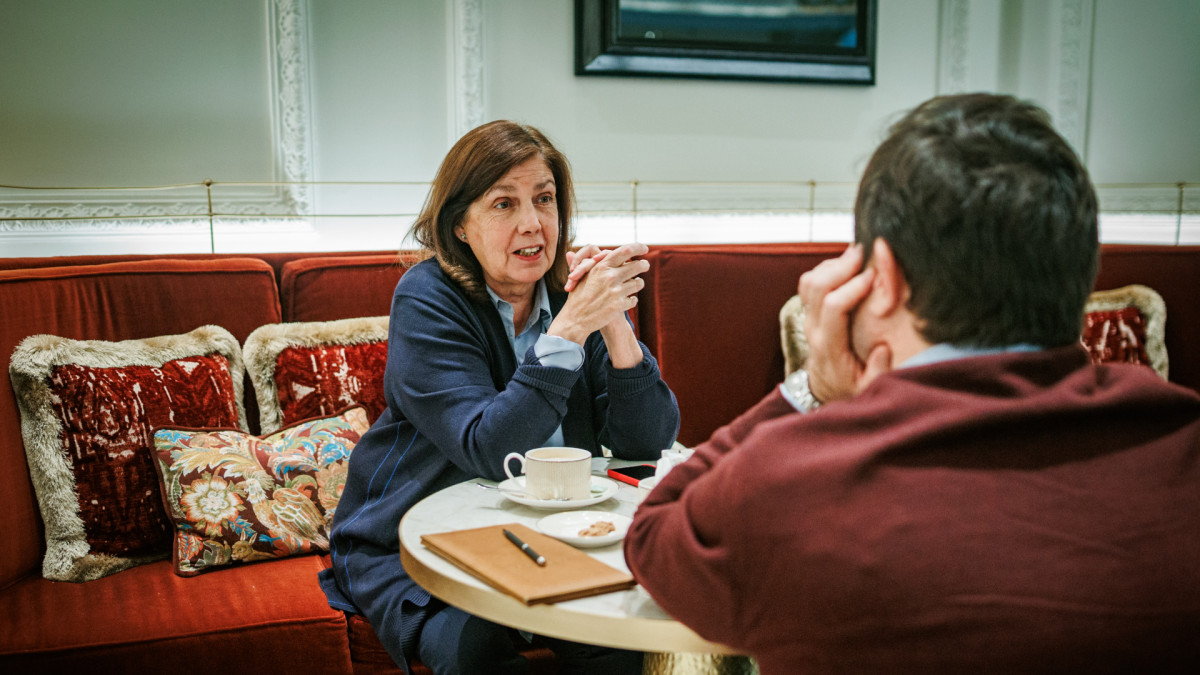
Before Méndez de Vigo, three other women held the position of secretary general of the CNI. Photo: Agenda Pública / Tania Sieira
What did it mean that a woman was appointed director and Secretary of State?
Nothing particularly relevant, I don’t suppose. It had to happen sooner or later. Yes, it was important because it had already happened in other European services, and in the United States. If I remember correctly, the first woman director of the CIA had just been appointed when I was in China.
More relevant was that she came from within, a statutory member of the CNI, which had never happened before. In any case, what’s really significant is that she needs to be the right person, capable of assuming what the dual post of Secretary of State and CNI director entails: it’s a position of great responsibility that deals with issues of enormous complexity and, in many cases, extreme sensitivity.
How does being the general secretary compare to other European or international intelligence services?
I’d already worked at the Center for over 30 years, and I’d been in charge of relations with other services, so I had a fairly deep knowledge of what they were doing and, above all, their capabilities. Being in charge of that department within the director’s office gives you the chance to understand many things; you come to know the Center and its capabilities very well.
Does our intelligence service rate well at the European and international levels?
My opinion might not be objective, but it’s still valid. I was proud to be secretary general of the CNI. It’s a position that I’d never dreamed of achieving. The CNI offers a very long-term career, and the people who work there are extraordinary. There’s a phrase I like a lot that defines us very well: "We’re normal, ordinary people, but we do extraordinary things."
"These days, no intelligence service or agency can be excellent at everything: it’s materially impossible. That’s why cooperation is so essential in modern intelligence"The CNI isn’t just ‘comparable’ – it’s an absolutely accredited service, prestigious and acclaimed for the way it fulfills its duties. In some areas, it’s classified as a leader. But I also want to emphasize that, these days, no intelligence service or agency can be excellent at everything: it’s materially impossible. Some services have superior capabilities because they have a longer tradition, more experience, or more resources, but none can cover everything. That’s why cooperation is so essential in modern intelligence. Threats are transnational, they know no borders. A threat can be designed in one place, then carry out logistics in another, then be executed in a third.

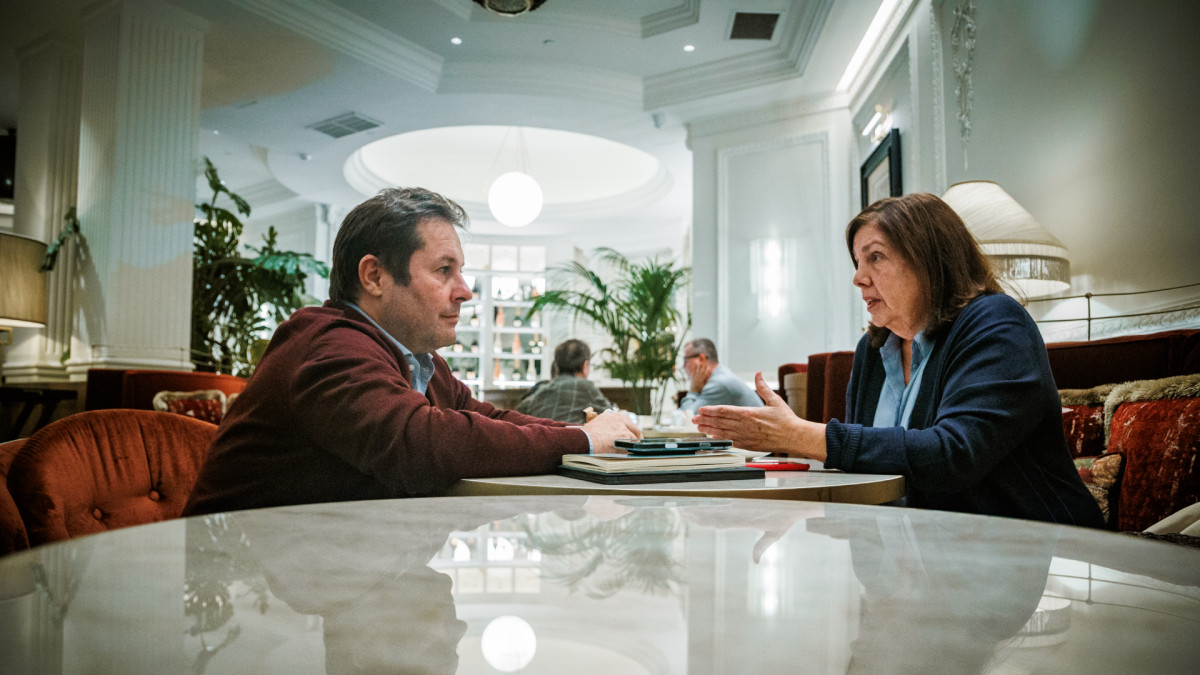
The former secretary general of the CNI puts the agency at the forefront of European intelligence. Photo: Agenda Pública / Tania Sieira
Is it easy to coordinate information and analysis at the European level?
Yes. We’re talking about common interests and shared threats. No one can do it all alone, so enabling cooperation that’s both useful and effective isn’t too complicated.
What’s very important right now is the path already traveled. We’ve already moved from the need to compartmentalize – with access to essential information only – to the need to share. And now we’re entering a third phase, especially with the other European services: the obligation to share.
Should there be an intelligence directive at the European level?
There’s been a debate for years about creating a European intelligence service. In the EU, we have two particular reports of reference on security and defense matters that meet in a tangential way.
I’m not so much talking about setting up a service, but about setting intelligence targets at the European level. In Spain we have a National Intelligence Directive.
In Spain we have a National Intelligence Directive, yes.
Might it be good to implement a similar directive at the European level, even if there’s no European service?
But who would meet the goals established? That sounds to me like building a house from the roof down. The controversy over creating an exclusive intelligence service for Brussels gets revived every time there’s a major crisis or major attack. In meetings at the highest levels, there are always voices calling for a European service.
"The controversy over creating an exclusive intelligence service for Brussels gets revived every time there’s a major crisis or major attack"First of all, there’s an unresolved legal problem: Article 4.2 of the Treaty of Lisbon, which leaves national security exclusively in the hands of the Member States. There are those who believe that reality has outpaced this rule, but legally it hasn’t. The treaty remains in force, and no one has yet proposed that it be modified. A number of problems could be solved or become solvable if the political will were greater.
Second, there are already institutions working on intelligence in Brussels. Cooperation is fluid and effective; 9/11 gave special urgency to building that cooperation. There are both formal and informal structures already at work on intelligence.
There are two reports of reference that hardly mention intelligence, but that focus on security and defense. The first is the Strategic Compass for Security and Defense (2022), which is the EU’s response to Russia’s invasion of Ukraine. It offers a global vision and guidelines until 2030, structured across four pillars: action; investment and optimization; threat prevention and citizen protection; and working in associative ways.
On the practical front, the Compass establishes the Single Intelligence Analysis Capability (SIAC), the EU Intelligence and Situational Center (INTCEN), and the Intelligence Division of the EU Military Staff (EUMS INT). These are the only units with the capacity to receive, process, assess, and disseminate intelligence.
The second reference is the Niinistö Report (2024), commissioned from the former President of Finland by the President of the Commission. It focuses on security and defense and warns of new risks and threats to Member States that might even call into question the notion of the welfare state. It calls for the EU to prepare for what is coming: structures, protocols, and procedures for reacting to crises quickly, not a posteriori. Where it addresses intelligence, it acknowledges that the Member States aren’t ready for a European service, but it urges greater cooperation in counterintelligence and counterespionage and warns that European institutions are also the focus of attacks.
For now, the Member States have opted for strengthening their cooperation, moving forward step by step, and avoiding duplication or violations of the legal framework.
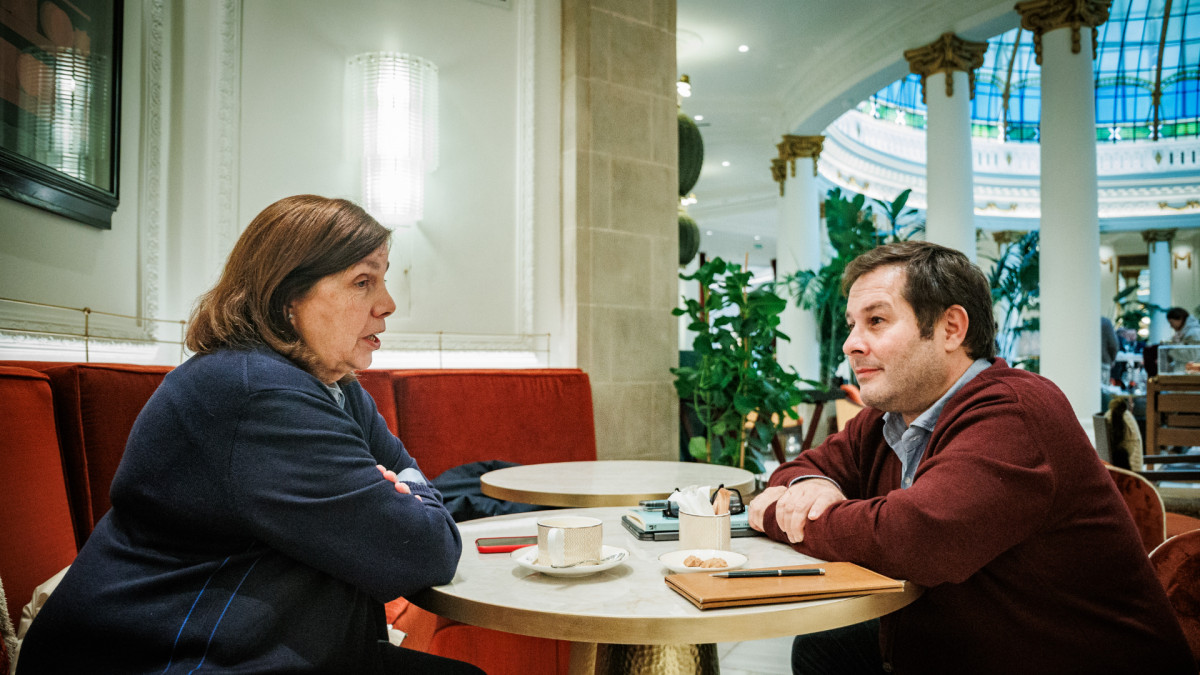
López Plana explores the possibility of raising certain intelligence issues to the European level. Photo: Agenda Pública / Tania Sieira
And what would your position be on how that should evolve?
I’ll respond with something that applies both nationally and in Brussels: the intelligence services don’t decide – they advise. A service that makes decisions isn’t typical of a democratic state. If policymakers consider that reality demands a European service – if they feel that need – they’ll create one. If they believe that the current system works, they won’t. We’ll have to see what feedback they give, the politicians who receive the intelligence.
The advisory role of the CNI is very comprehensive, because in Spain there’s only one national service, while other countries have several. In Spain, the CNI covers both domestic and foreign intelligence; it includes the National Cryptologic Center (for cybersecurity) and the National Security Office, responsible for the protection of classified information for both NATO and the EU. Strategic intelligence – what’s being worked on currently in Brussels, through the SIAC – is useful because it enhances external action as well as security and defense policy, and it reduces the chance of error when confronting risks.
A key aspect of cooperation is the rule that prevents sharing information with a third party without the consent of the agency that provides it.
I think two elements drive evolution in the world of intelligence. On the one hand is technology, and within the world of technology, open sources.
It’s a real challenge for everyone, but also for the CNI. There are experts who claim that this implementation – this use of new technologies – will mean changes even greater than the Industrial Revolution caused in its time, and the service will have to face that challenge. There’s going to be a major generational shift, and that shift is likely to drive wider use as well as better and more effective knowledge about technology.
New technologies will even be able to generate predictions and profiles on how to combat threats. And then there’s whatever’s going to happen with society as a whole, and the service will have to deal with that challenge, coupling new technologies for the fulfillment and development of our activities, and therefore the fulfillment of our objectives.
The challenge faced by CNI operates in two directions: the need to integrate technology into its capabilities, and the simultaneous need to counteract others who use technology to mount threats.
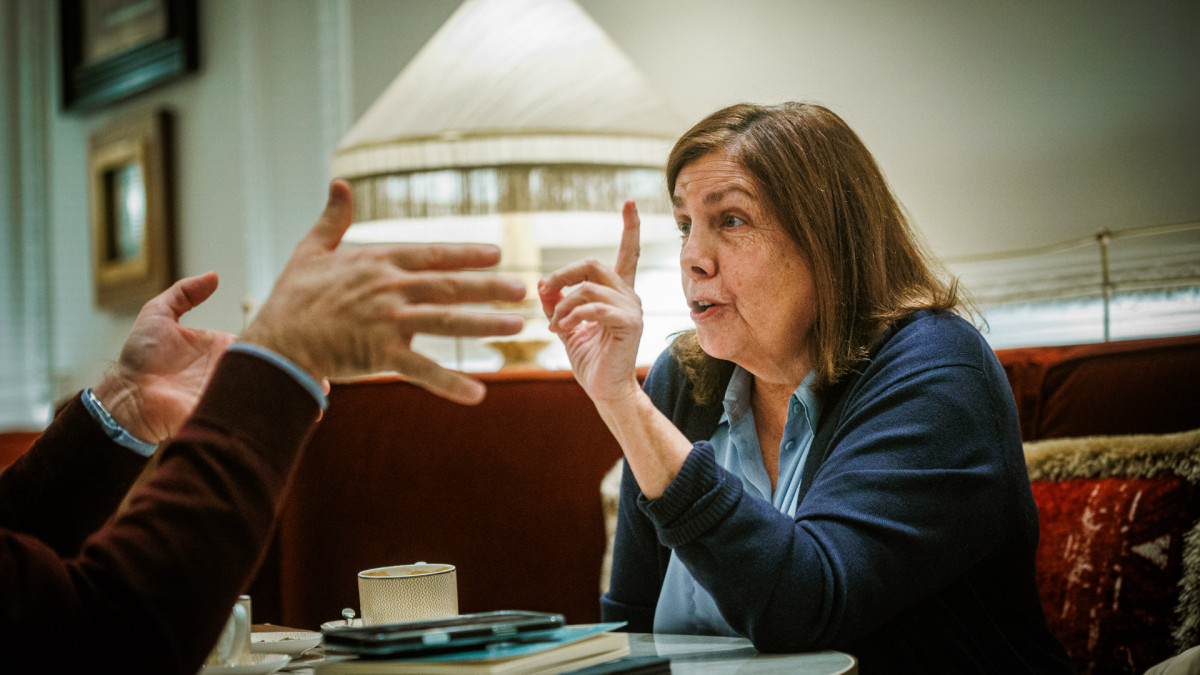
According to the former secretary general, intelligence centers need to develop their own technologies while counteracting others. Photo: Agenda Pública / Tania Sieira
We’re entering a world where attacks or military actions are no longer necessary to destabilize societies.
We’re talking about new threats being added to the old ones, which haven’t disappeared. The invasion of Ukraine in 2022 proves the point: drones coexist with battle tanks. In addition to the classic threats we have disinformation, immigration, and cyberattacks, among many others. Cyberattacks don’t involve any risk for those who execute them; they don’t require large investments, compared to other tools, and it is very difficult to attribute authorship. Also, they often create ‘backdoors’.
These new threats require new capabilities.
And here we get back to the basic issue: the Center doesn’t act on its own. It’s political power that determines the priorities for intelligence, and that provides the resources to acquire new capabilities. To that end, we have the Government Delegate Commission for Intelligence Affairs, now chaired by the First Vice-President.
The work will grow and change. You can’t stay anchored in old threats. It’s necessary to address disinformation, irregular immigration – analyzed not from the humanitarian dimension (reception and integration) but from the perspective of an intelligence service – meaning its possible uses – and the role of the mafias that control the flows.
During your time as secretary general, economic intelligence was promoted.
An intelligence service obtains information by its own means, which aren’t accessible to other agencies. That’s the core of the Center. Then it disseminates that intelligence in order to prevent, detect, or neutralize risks or threats against national security, but also to defend national interests, both at home and abroad. Economic intelligence is part of that defense: situating national economic interests in the best position possible, so that the government can make decisions with some advantage and also minimize risks. Competition from other countries is intense in this area.
Thank you very much.
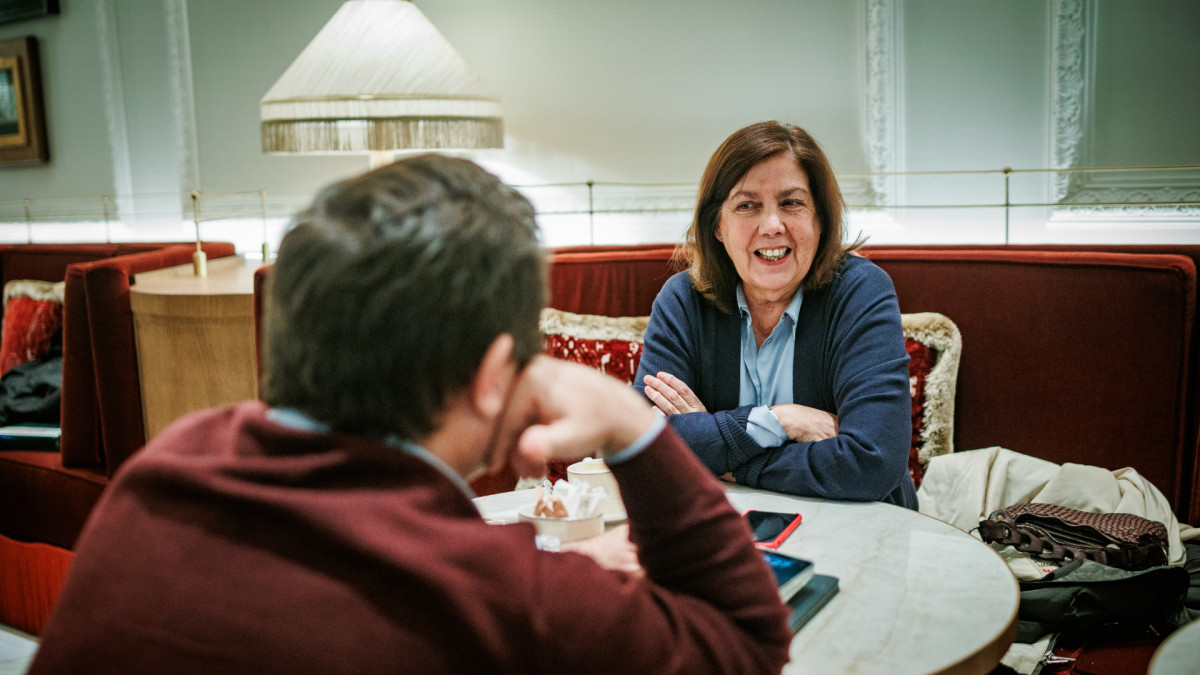
The conversation highlighted new areas of threat in which the intelligence service must be prepared. Photo: Agenda Pública / Tania Sieira