Sábado, 17 de octubre de 2026




TRADE HISTORY
Eighty years ago, the United States reduced high tariffs to promote world peace
History professor at Bentley University, Cyrus Veeser, explains that tariffs "undermined cooperation and world peace" eight decades ago in the United States. At that time, Secretary of State Cordell Hull's influence made it possible to "significantly reduce tariffs" and "benefit both sides." This historical figure is contrasted with Donald Trump by the economic history expert, who warns that in the current situation, "conflict in the commercial sphere can lead to actual military conflict".
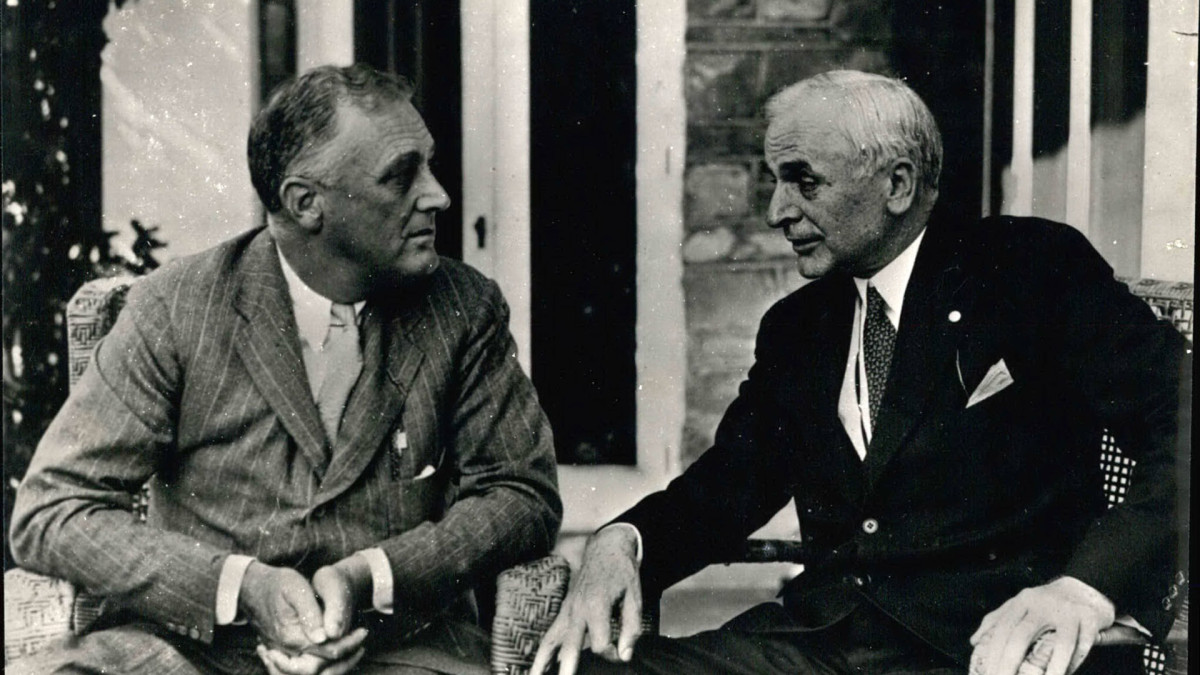
Secretary of State Cordell Hull (right) with President Franklin D. Roosevelt (left)Keystone Pictures USA / Zuma Press / ContactoPhoto
Since "Liberation Day" last April, economists, politicians and ordinary citizens worldwide have tried to measure the impact of Donald Trump’s on again, off again, up again, down again tariffs on global trade and inflation. But a look back at century-old arguments about protection shows that when the United States moved to reduce tariffs in 1935, it did so not simply to restructure global trade. By the mid-1930s, the stakes were even higher.
After World War I, the United States became the world’s largest creditor nation, lending billions of dollars a year to nations across the globe and profoundly impacting world financial stability. Although the Smoot-Hawley tariff of 1930 is the poster child for trade-destroying protection, the United States in fact already raised tariff rates twice in the 1920s. By restricting access to the U.S. market with the Emergency tariff of 1921, the Fordney-McCumber tariff of 1922, and then Smoot-Hawley in 1930, Washington made it harder for borrowing nations to sell their products and thus earn what they needed to pay their debts. The contradiction between extensive global lending and an increasingly protected home market was a factor in bringing on the Great Depression.
After Franklin Roosevelt named him Secretary of State in March 1933, Hull found his commitment to freer trade checked by the high tariffs then in place. Convinced that it was "virtually impossible to develop friendly relations with other nations in the political sphere so long as we provoked their animosity in the economic sphere," Hull tried an end run around the Smoot-Hawley tariff in 1935. Hull convinced Congress to pass a law that allowed the president to negotiate reciprocal trade treaties that could lower existing tariff rates. The reciprocal treaties included an unconditional most-favored-nation (MFN) clause, which meant the bilateral tariffs applied to any country with MFN status. That trick allowed Hull to significantly lower U.S. tariff rates even while Smoot-Hawley technically remained in effect. After 1945, Hull’s reciprocity principle became the basis for GATT, the General Agreement on Tariffs and Trade, which helped reduce tariff barriers worldwide starting in 1947 and evolved into the World Trade Organization in 1995.
Cordell Hull’s reciprocal trade treaties, in contrast, came out of tough, fact-based bilateral negotiations and delivered advantages for both sides. Rather than further restricting trade, Hull’s reciprocal treaties made it freer. Critically important to Hull, by promoting "better economic feeling” the reciprocal treaties "brought better political "feeling." Nations that had "expressed bitter resentment against us became our friends."
Hull’s essential insight—that discriminatory trading practices enflame political tensions that can lead to war—has been largely forgotten in today’s controversy over tariffs. It seems unlikely that the animosity now being stoked with China, for example, will remain confined to tariff policy. China has many other economic weapons to deploy—selling off its large stock of U.S. dollars and T-Bills, for example, or restricting exports to the United States of pharmaceutical ingredients and rare earth metals.
Most frighteningly, conflict in the realm of trade can lead to actual military conflict. Those in Washington who today favor the broad imposition of high tariffs either have forgotten, or never learned, why the United States abandoned its high tariff policy almost a century ago.
After World War I, the United States became the world’s largest creditor nation, lending billions of dollars a year to nations across the globe and profoundly impacting world financial stability. Although the Smoot-Hawley tariff of 1930 is the poster child for trade-destroying protection, the United States in fact already raised tariff rates twice in the 1920s. By restricting access to the U.S. market with the Emergency tariff of 1921, the Fordney-McCumber tariff of 1922, and then Smoot-Hawley in 1930, Washington made it harder for borrowing nations to sell their products and thus earn what they needed to pay their debts. The contradiction between extensive global lending and an increasingly protected home market was a factor in bringing on the Great Depression.
"For Cordell Hull, unfettered trade went hand in hand with peace, while high tariffs and trade barriers were in tune with war'"Even before the crash, a young Democratic congressman from Tennessee became the leading public voice against high tariffs. Cordell Hull focused his attacks not simply on the economic damage done by tariffs, but on the way that protection undermined global cooperation and peace. To Hull, the First World War "was the culmination of years of intense, bitter rivalry among a number of daring and desperate powers." The economic roots of the Great War gave Hull an insight that stayed with him for the rest of his life: "Unhampered trade dovetailed with peace; high tariffs, trade barriers, and unfair economic competition, with war."
After Franklin Roosevelt named him Secretary of State in March 1933, Hull found his commitment to freer trade checked by the high tariffs then in place. Convinced that it was "virtually impossible to develop friendly relations with other nations in the political sphere so long as we provoked their animosity in the economic sphere," Hull tried an end run around the Smoot-Hawley tariff in 1935. Hull convinced Congress to pass a law that allowed the president to negotiate reciprocal trade treaties that could lower existing tariff rates. The reciprocal treaties included an unconditional most-favored-nation (MFN) clause, which meant the bilateral tariffs applied to any country with MFN status. That trick allowed Hull to significantly lower U.S. tariff rates even while Smoot-Hawley technically remained in effect. After 1945, Hull’s reciprocity principle became the basis for GATT, the General Agreement on Tariffs and Trade, which helped reduce tariff barriers worldwide starting in 1947 and evolved into the World Trade Organization in 1995.
"In the current context, Trump has used tariff pressure for political purposes, especially in the cases of India and Brazil"Like America First, reciprocity is a term that Donald Trump has borrowed from the 1930s without understanding its true meaning. Trumpian reciprocity did not entail bilateral negotiations with trading partners. In the cases of India and Brazil, Trump has used the tariff power unilaterally for political purposes—reducing India’s trade with Russia and ending Brazil’s prosecution of former president Jair Bolsonaro.
Cordell Hull’s reciprocal trade treaties, in contrast, came out of tough, fact-based bilateral negotiations and delivered advantages for both sides. Rather than further restricting trade, Hull’s reciprocal treaties made it freer. Critically important to Hull, by promoting "better economic feeling” the reciprocal treaties "brought better political "feeling." Nations that had "expressed bitter resentment against us became our friends."
Hull’s essential insight—that discriminatory trading practices enflame political tensions that can lead to war—has been largely forgotten in today’s controversy over tariffs. It seems unlikely that the animosity now being stoked with China, for example, will remain confined to tariff policy. China has many other economic weapons to deploy—selling off its large stock of U.S. dollars and T-Bills, for example, or restricting exports to the United States of pharmaceutical ingredients and rare earth metals.
Most frighteningly, conflict in the realm of trade can lead to actual military conflict. Those in Washington who today favor the broad imposition of high tariffs either have forgotten, or never learned, why the United States abandoned its high tariff policy almost a century ago.

Cyrus Veeser
Doctor en Historia, experto en historia económica y comercial
Cyrus Veeser es profesor de Historia en la Universidad de Bentley (Massachusetts). En el pasado fue receptor de la beca Fullbright y formó parte del centro Charles Warren en la Universidad de Harvard. Sus campos de investigación abarcan desde la modernización en las colonias hasta la historia económica y empresarial de Estados Unidos.
Ahora en portada
17 de octubre de 2026
16 de octubre de 2026
Noticias relacionadas
Hace 57 semanas
Hace ochenta años, Estados Unidos redujo los aranceles para promover la paz mundial
Lo más leído