Viernes, 16 de octubre de 2026



EU-U.S. TRADE AGREEMENT
The least bad option for a weak player
"Only Sabine Weyand, the Commission's chief trade negotiator, remained stern-faced," notes Thorsten Benner about the photo of Trump and Von der Leyen following the unequal trade agreement between the EU and the US. For the director of the Global Public Policy Institute (GPPi) in Berlin, "Brussels is only as strong as its member states allow it to be," and Europe chose to give in to gain time. But he warns: "The impending China shock is much more existential than the Trump shock."
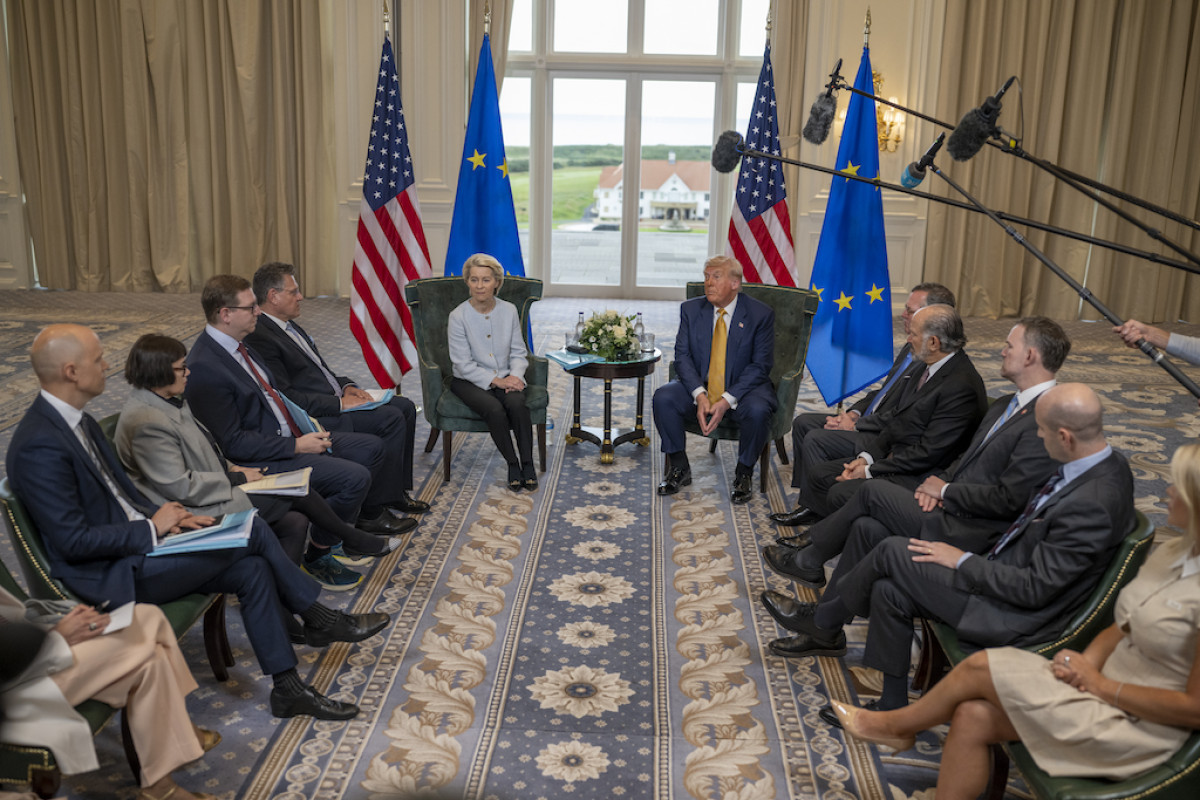
President Donald J. Trump participates in a bilateral meeting with European Commission President Ursula von der Leyen.White House / Zuma Press / ContactoPhoto
After concluding the EU-US trade deal in Scotland last Sunday, US president Donald Trump and EU Commission president Ursula von der Leyen posed with their negotiating teams for a transatlantic family photo — smiling in unison and giving choreographed thumbs-up signs. Only Sabine Weyand, the EU Commission’s top trade official, stood with a stony expression. She had every reason to. The deal is one-sided, reminiscent of the unequal treaties Western powers forced on China in the late 19th century. The EU, usually so self-confident and doctrinaire in trade talks with weaker partners, now looks weak and hypocritical. Europe resembles a vassal that surrenders without a fight to an extortionist hegemon on his private estate.
Still, it’s too easy to blame the EU Commission for the outcome. Europe had no good options. Von der Leyen wasn’t negotiating with Trump solely on trade — Europe’s existential military and security dependencies on the U.S., especially in defending against Russia’s war of aggression, were always part of the equation. Also, Brussels is only as strong as the member states allow it to be. And they were divided and indecisive.
Sure, the EU could have hurt the U.S. economically and escalated in hopes of a better outcome. The best moment for that would have been in the spring, when both China and Canada were pushing back against Trump’s tariffs. That would have increased pressure on the U.S. president.
But would it have been wise? Such an escalation could have jeopardized preparations for the June NATO summit. NATO Secretary-General Mark Rutte banked on winning Trump’s commitment to NATO and Ukraine through flattery and grand promises. The Dutchman staged the taming of Trump as a Gesamtkunstwerk — a total work of art. Even behind closed doors, he doesn't deviate from the script of flattery and optimism. So far, the gamble has paid off: Trump touted the at this stage largely illusory "5% pledge" by European allies as a major victory and has scaled back his pro-Putin rhetoric.
Yet given Europe’s military weakness and vulnerability, the hope of buying a few more years of protection from Trump justifies the risk and cost. Yes, it’s humiliating for proud Europe to be paraded like this by a brutalist like Trump. But it’s also the deserved consequence of failing to invest in military and technological strength and to deepen the single market with determination.
It is more than negligent that the looming China shock receives so little attention in the European public debate. It's high time for a course correction after the summer break.
"Only Sabine Weyand, the Commission's chief commercial officer, remained stern-faced."
Still, it’s too easy to blame the EU Commission for the outcome. Europe had no good options. Von der Leyen wasn’t negotiating with Trump solely on trade — Europe’s existential military and security dependencies on the U.S., especially in defending against Russia’s war of aggression, were always part of the equation. Also, Brussels is only as strong as the member states allow it to be. And they were divided and indecisive.
Sure, the EU could have hurt the U.S. economically and escalated in hopes of a better outcome. The best moment for that would have been in the spring, when both China and Canada were pushing back against Trump’s tariffs. That would have increased pressure on the U.S. president.
But would it have been wise? Such an escalation could have jeopardized preparations for the June NATO summit. NATO Secretary-General Mark Rutte banked on winning Trump’s commitment to NATO and Ukraine through flattery and grand promises. The Dutchman staged the taming of Trump as a Gesamtkunstwerk — a total work of art. Even behind closed doors, he doesn't deviate from the script of flattery and optimism. So far, the gamble has paid off: Trump touted the at this stage largely illusory "5% pledge" by European allies as a major victory and has scaled back his pro-Putin rhetoric.
"Brussels is only as strong as the member states allow it to be. And they were divided and indecisive."Von der Leyen has chosen a similar approach. She accepted a 15% tariff and made grand but largely illusory promises — like buying U.S. energy — that Trump could sell as a win. Of course, embracing and surrendering to Trump is a tactic with substantial costs and risks. In the current setup, the result is manageable for Germany’s export industry. But there’s no guarantee Trump won’t change the remaining tariffs in ways that severely hurt German and European exporters. Even now, Brussels and Washington are already tussling over how to interpret the agreement.
Yet given Europe’s military weakness and vulnerability, the hope of buying a few more years of protection from Trump justifies the risk and cost. Yes, it’s humiliating for proud Europe to be paraded like this by a brutalist like Trump. But it’s also the deserved consequence of failing to invest in military and technological strength and to deepen the single market with determination.
"The impending China shock is far more existential than the Trump shock."Europe would be wise to channel its rage and shame over the unequal treaty with Trump into building its own strength. At the same time, European and German decision-makers especially must not lose sight of the far greater threat looming over core industries — from cars to machinery to chemicals — posed by systemic competition with China’s state capitalism. The impending China shock is far more existential than the Trump shock. Trump and his allies envy Germany and Europe for having retained more industrial substance than the U.S., which is a vital prerequisite for military reconstruction. That industrial base is now at stake.
It is more than negligent that the looming China shock receives so little attention in the European public debate. It's high time for a course correction after the summer break.

Thorsten Benner
Cofundador y director del Global Public Policy Institute (GPPi) de Berlín
Etiquetas
Agenda Pública in English Ahora en portada
16 de octubre de 2026
16 de octubre de 2026
16 de octubre de 2026
Lo más leído