

Ben Hodges: "What worries me most is the silence of senior U.S. military leaders"
Retired General and former Commander of the U.S. Army in Europe Ben Hodges talks to 'Agenda Pública' about the future of NATO, Donald Trump, and the geopolitical situation. The war veteran, who will be present at the next edition of the La Toja Forum, asserts that the concept of European strategic autonomy is "a phrase without substance" and points out that "Trump wants to have the same power a vers Putin."

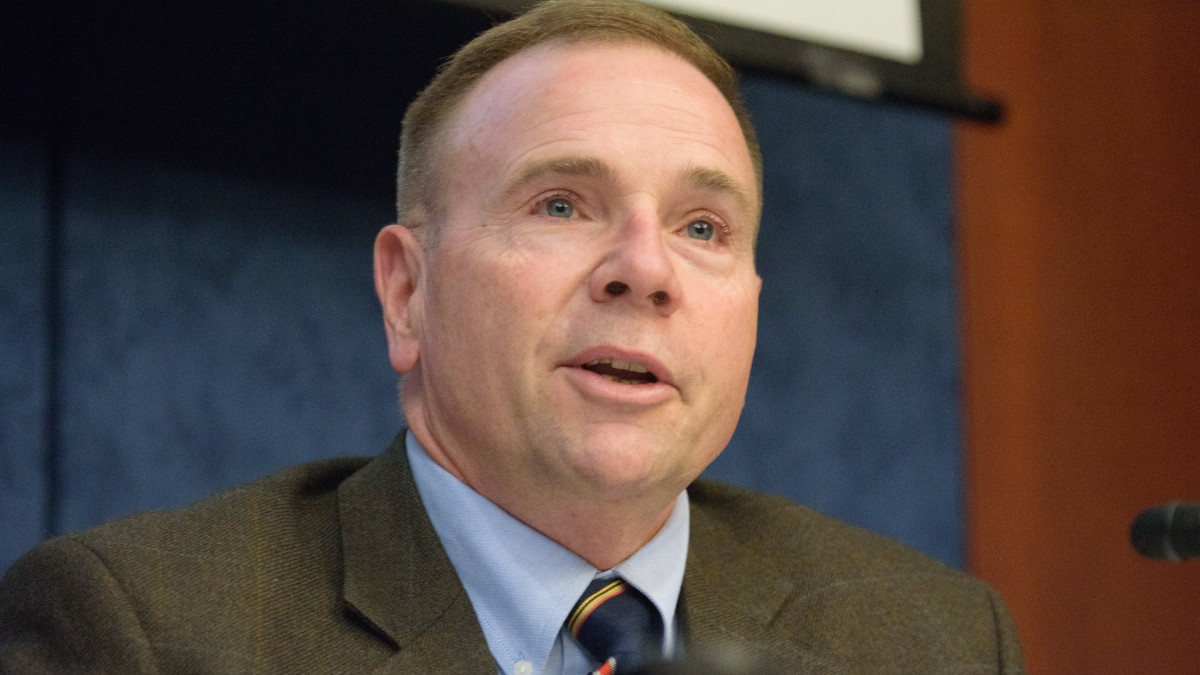
In this conversation with the Director of Agenda Pública, retired General Ben Hodges, former Commander of the U.S. Army in Europe, analyzes not only the future of NATO and the war in Ukraine but also the internal political drift in Washington under Donald Trump’s leadership. The general denounces that the former president uses the deployment of the National Guard as "a demonstration of power" and describes the presence of armored vehicles in the capital as "political theater." Hodges warns of the seriousness of the "silence" of senior military leaders in the face of this erosion of constitutional norms and fears that the Department of Justice is being used as "a political tool." "What worries me most is the silence," he concludes, pointing to the lack of institutional resistance to what he describes as a dangerous instrumentalization of power.
What do you think is NATO’s future, and how could Trump influence it?NATO is an alliance of 32 nations, not just the United States and 31 others. Even if the U.S. is not actively leading, the other 31 nations still benefit from maintaining collective defense. That’s the point: to ensure deterrence, and if deterrence fails, to provide defense.
President Trump has done significant damage to NATO. He has questioned American commitment and echoed Kremlin talking points. To be fair, his criticism pushed several nations to increase their defense spending, although many were already on that path. Overall, however, he has damaged trust. I don’t think NATO is doomed —Congress remains strongly pro-NATO— but most European leaders do not trust him, and that is a major problem.
At the last NATO summit, Prime Minister Sánchez of Spain refused to increase Spain’s contribution to 5% of GDP. Many countries may not meet this target. What is your view on this?
I hope the Spanish government recognizes its responsibility within the alliance. Most countries are moving toward the 2% target, even if not all have reached it yet. Spain should understand the importance of this—not just for NATO as a whole, but also for Spain itself.
Some argue, "Russia will never invade Spain." But that misses the point. Spain’s navy, special forces, and other contributions are critical. Spain participates in NATO’s forward presence in Latvia. These commitments are part of collective defense.
It is also about ensuring that Spanish service members have the best equipment, training, and conditions. Defense spending is not only about wars abroad—it is about protecting your own soldiers.
Moreover, if Europe is attacked, Spain will also suffer—through energy disruptions, food shortages, and refugee flows. Spain has been a reliable ally for a long time, and I hope the government reconsiders its position.
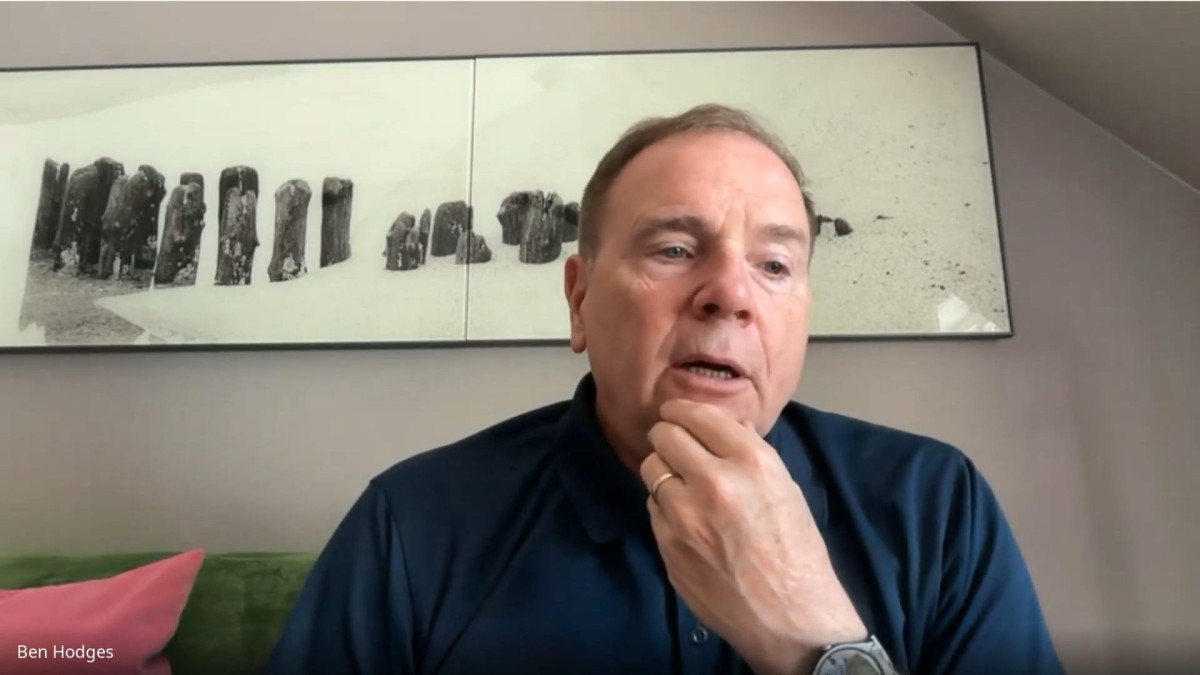
Ben Hodges during his interview with 'Agenda Pública'
Let’s discuss European strategic autonomy. What is your view on this concept?
In practice, we have seen the opposite: Europeans waiting for the Americans to act, especially regarding Ukraine.
Honestly, I have never met anyone who can clearly explain what "European strategic autonomy" really means. It’s a phrase without substance.
"I have never met anyone who can clearly explain what "European strategic autonomy" really means"Europe has enormous tools —frozen Russian assets, a huge economy, industrial power— but many countries still buy Russian oil and gas. Some allow exports that indirectly reach Russia.
The European Union as a whole vastly outweighs Russia in terms of economy, population, and industry. But because it does not always act collectively, Russia—whose economy is roughly the size of Spain’s—can still dictate policy.
That said, I was impressed at the recent Washington summit. European leaders —Prime Minister Meloni, President Macron, Chancellor Merz, Prime Minister Starmer, President von der Leyen, and NATO Secretary General Rutte— stood united in support of President Zelensky. They demanded security guarantees, a ceasefire, and the return of kidnapped Ukrainian children. That unity was important and sent a clear signal to President Trump.
🇪🇺 "No estoy seguro de que exista una autonomía estratégica europea".
— Agenda Pública (@a_publica) September 2, 2025
🪖 @general_ben, antiguo comandante del Ejército de los EE. UU. en Europa, lamenta que los países europeos no sumen esfuerzos frente a Rusia.
Lee la conversación completa aquí 👉 https://t.co/o5lziYmGvE pic.twitter.com/zCaDY0VCml
What happened behind the scenes at that meeting?
I don’t know all the details, but I am rather certain of one thing: none of those leaders trusts Trump.
The issue is that they still did not agree on what "security guarantees" for Ukraine actually mean. Without clear commitments —troops on the ground, aircraft in the skies, or ships in the Black Sea— Moscow will not take them seriously. The Russians see the ambiguity. Each European leader must go home and justify these commitments to their parliaments. The lack of American leadership is painfully clear.
Do you believe Trump truly wants to end the war in Ukraine?
His approach is doomed because he never acknowledges the fundamental truth: Russia is the aggressor.
He keeps saying he "inherited" the war and claims it would never have happened under him. But the war was already ongoing during his first term.
I think he wants to be the one to "make the deal." He dreams of a Nobel Peace Prize. He talks about wars he supposedly ended, but nobody can really name them.
"Trump has never told Putin to withdraw from Ukraine"He would like the killing to stop, yes. But he is not willing to do what is necessary. He has never told Putin to withdraw from Ukraine. Neither he, Vice President Vance, nor Secretary Rubio has done so.
He has not used America’s economic leverage or defined what success would look like. In this sense, he is similar to President Biden—neither has clearly defined an end state of this war. Trump seems to hope the problem will simply disappear so he does not have to confront Putin directly.
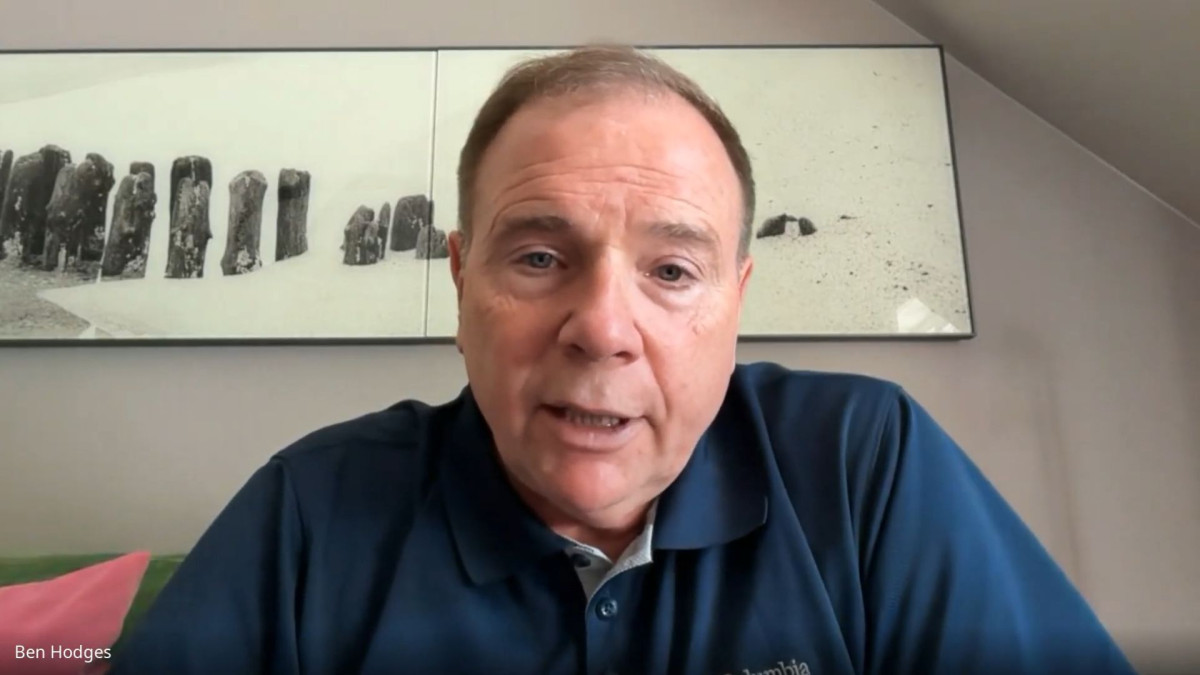
Ben Hodges during his interview with 'Agenda Pública'
Why does Trump have such a special relationship with Putin?
There is also speculation that the Russians may have compromising material—related to Jeffrey Epstein or real estate deals. Perhaps yes, perhaps no. But whether or not that is true, Trump’s actions effectively make him a Russian asset.
I cannot fully explain it. Part of it, I think, is envy. Trump wants the same power Putin has. He wants to be admired by autocrats. That is one factor.
"Trump’s actions effectively make him a Russian asset."He has dismantled parts of the U.S. intelligence community and weakened the FBI’s counterintelligence capabilities. All of this directly benefits Moscow.
Then there is Trump’s personality: he believes his charisma alone can solve problems. The Kremlin uses him and openly mocks him. Yet he never reacts. That is extraordinary.
Let’s turn to China. Isn’t China the real threat for the United States and Europe?
The primary threat from China is economic and technological. They steal intellectual property, use state subsidies to distort markets, and violate industrial agreements.
Militarily, they have a large navy and significant forces, but almost no operational experience. An invasion of Taiwan would be extremely costly, both for them and globally.
This is why Ukraine matters. China is observing closely. If the U.S. appears flexible on sovereignty and territorial integrity, it sends a dangerous signal to Beijing.
President Trump has an opportunity here. If he took a strong stand against Russia, it would also deter China. That could repair much of his damaged legacy.
I am personally more concerned about incidents in the South China Sea—Chinese aircraft or ships harassing U.S. or allied forces, potentially escalating into conflict. The risk of miscalculation is very high.
Regarding U.S. domestic politics, what does the deployment of the National Guard in Washington, DC, and Los Angeles means?
This is not about security; it is a display of power.
First Los Angeles, then Washington, DC. They even deployed a Marine battalion, which is illegal—but nobody in the Pentagon stopped it. Congress did not push back. The Department of Justice is being used as a political tool.
Look at Washington: it has the lowest crime rate in 30 years. Yet armored vehicles were deployed in the capital. This is political theater.
What worries me most is the silence. Generals and admirals swore an oath to the Constitution, yet I do not see and hear them pushing back on this. And, especially the former military leadership should speak out much more, in my opinion.
Trump has also threatened New York, Chicago, and Baltimore. Some governors are preparing legal resistance. But the failure of leadership—in both military and civilian offices—is clear. They are tolerating an erosion of constitutional norms.
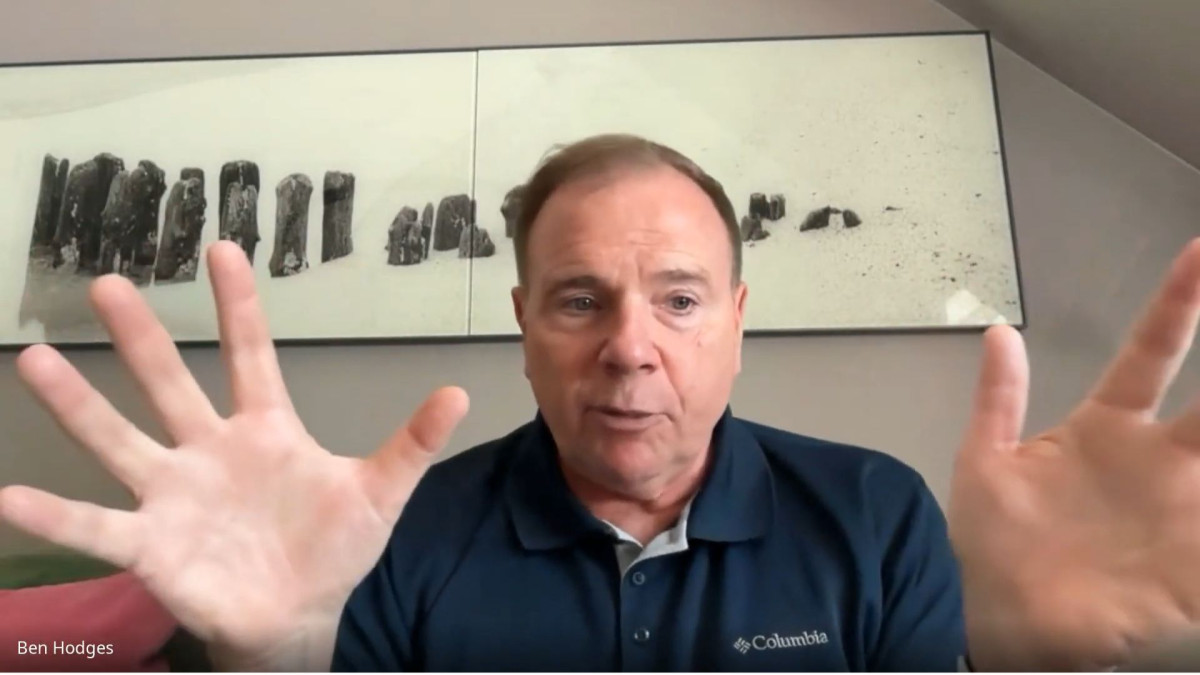
Ben Hodges during his interview with 'Agenda Pública'
As an experienced general, what is the future of war with current technology?
You must distinguish between the nature of war and its character. The nature of war never changes: violence, confusion, and uncertainty are eternal.
But the character of war is changing—drones, unmanned systems, long-range precision strikes, artificial intelligence. Ukraine has demonstrated how drones and long-range missiles can neutralize Russia’s Black Sea Fleet without a traditional navy. That is a major shift.
However, some fundamentals remain. You cannot occupy territory with drones alone. You still need soldiers, ammunition, tanks, and logistics.
Artificial intelligence will accelerate the pace of operations, challenging leaders who must make decisions in near real-time.
One last question: what happened with John Bolton and the FBI raid?
Pure retribution. Nothing seems to justify the raid on his house. The goal was to ruin him and send a message.
I expect similar actions may target Chris Christie, General Milley, H.R. McMaster, or even former Secretary Pompeo.
Governor Gavin Newsom, however, is a different case. Trump is clearly intimidated by him. California is too large to be challenged directly, and Newsom has been very effective at countering Trump’s attacks. If they ever find something against him, they will use it, but so far, Newsom has been smart and careful.